Contrary to what is written online, there are a lot of varied climbing venues on the island. It’s a brilliant way to learn about the island’s geology, have a laugh and get to see a place from a totally different perspective. We will take a look at how to plan your climbing trip, how to book a guide and how to rock climb independently here. Read on for a full guide on everything you need to know about rock climbing in Madeira…
Madeira’s sheer mountain faces, deep gorges and coastal rocky outcrops provide a playground for outdoor activities. The adventure-seekers living here have harnessed every element to play with. Hiking, rock climbing, canyoning, coasteering, diving and snorkelling, cycling, paragliding… the list goes on. If you’ve got the energy, the island will match your spirit!
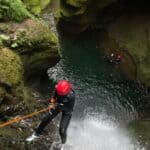

The island’s volcanic rock offers a variety of spectacular climbing venues for each ability. Combining rock climbing with travel is one of my favourite things to do.
It’s an opportunity to learn about what has literally created the place you’re exploring and what the nature means to local climbers. Climbing also rewards you with new friends and stunning views that not everyone gets to see.
Tip: See our Madeira Travel Page for a complete overview of all our travel guides about Madeira!
Disclaimer: This posts might contain affiliate links, meaning that if you make a purchase through these links, I may earn an affiliate commission. Thank you for helping to support this website!
Madeira experiences & travel resources
Top outdoor experiences
- Sunrise hike from Pico do Arieiro to Pico Ruivo
- Whale watching & Sunset sailing tour
- Canyoning Adventures in Madeira
- Coasteering in Madeira
Madeira Travel Resources
Why go rock climbing in Madeira?
Madeira is a plate of a volcano that thrusted up out of the Atlantic Ocean so the island has some striking geological formations. It’s also mostly made up of black basalt rock that was formed by volcanic magma which cooled rapidly, which in turn, gives pretty good friction when you’re climbing.
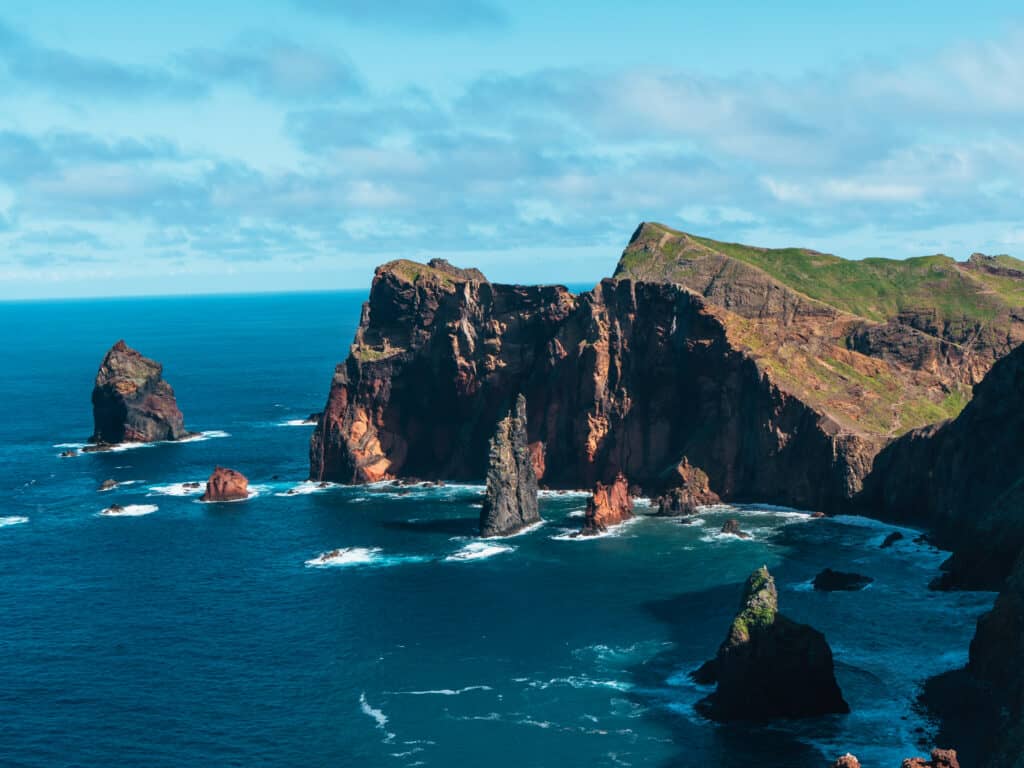
While Madeira isn’t famed for being a hot-spot destination for climbing, I was surprised to discover there are venues for sport, trad, multi-pitch, bouldering and deep water soloing dotted all over the island. Most of the tourists flock to the hiking routes so there’s a good chance you’ll have the crags to yourself.
One last thing. Madeira’s sub-tropical climate means you can climb all year round. Different parts of the island experience more rain than others and you’ll probably encounter the odd shower, but overall it’s dry and sunny. Climbing is as much of a mental game as it is physical so being in such peaceful, sunny areas with incredible views you are guaranteed a great day out.

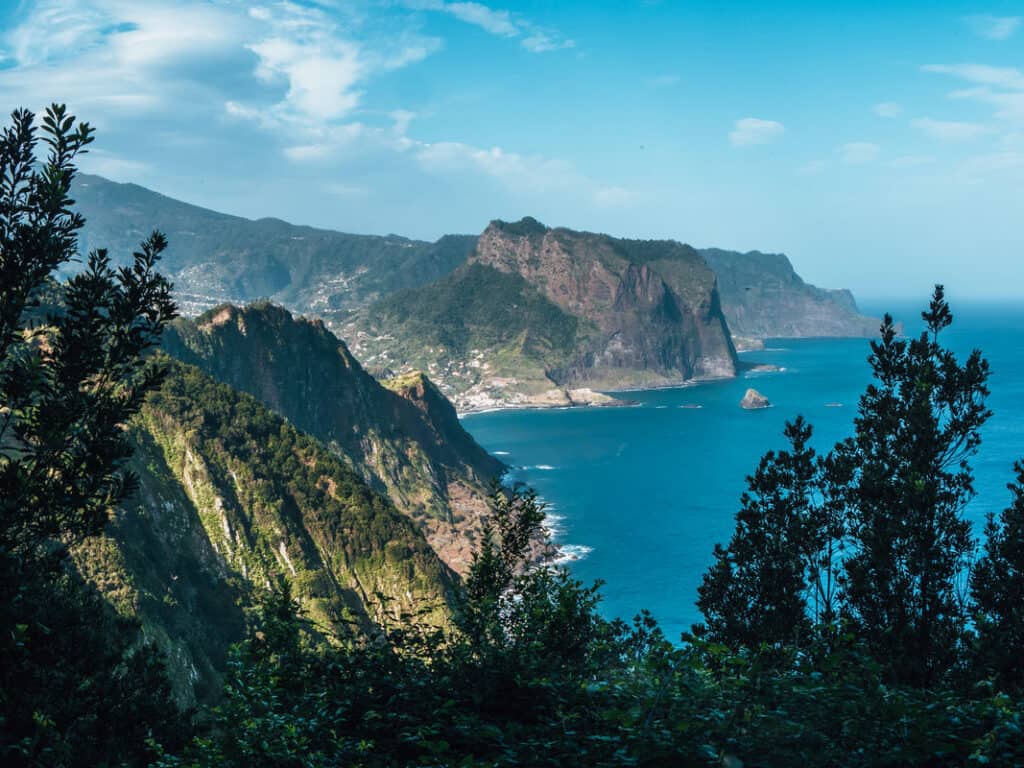
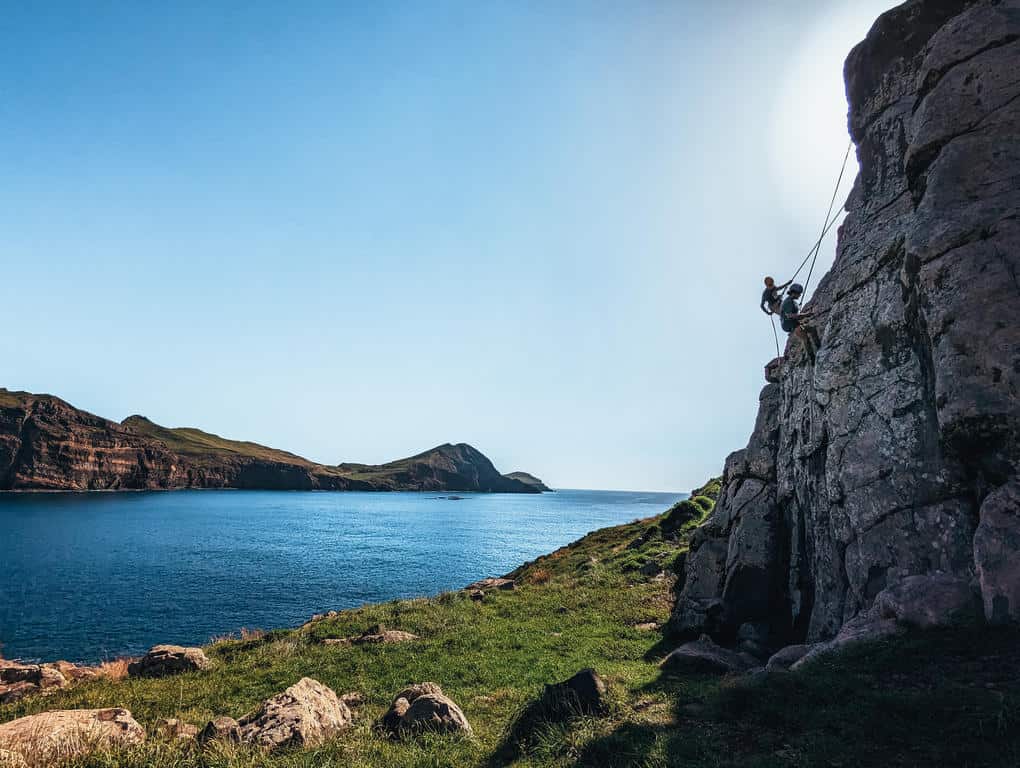
Incredible views while rock climbing near Sao Lourenço
What types of rock climbing can you do in Madeira?
Sport climbing
Set up: The climber has a rope tied to a harness around their waist. A belay partner uses a device, clipped into their harness, to feed rope while the climber ascends. The belayer is positioned at the bottom of the route and is essentially holding the other end of the rope to catch the climber if they fall.
Sport climbing routes have bolts drilled into the rock which a lead climber then clips into as they ascend the route. It’s then up to the climber to do some vertical dancing and piece together the dot-to-dots. If you’re a newbie, don’t stress about this. Your main job is to enjoy it.

There are three ways to sport climb: top roping, seconding and leading. Again, if you’re a beginner, you don’t need to worry about this yet because you’ll be top roping (simplest and safest way to climb).
Many of the sport crags are dotted along the east coast of the island, near the São Lourenço peninsula. This is the driest part of the island because it was the first part to erupt from the sea.

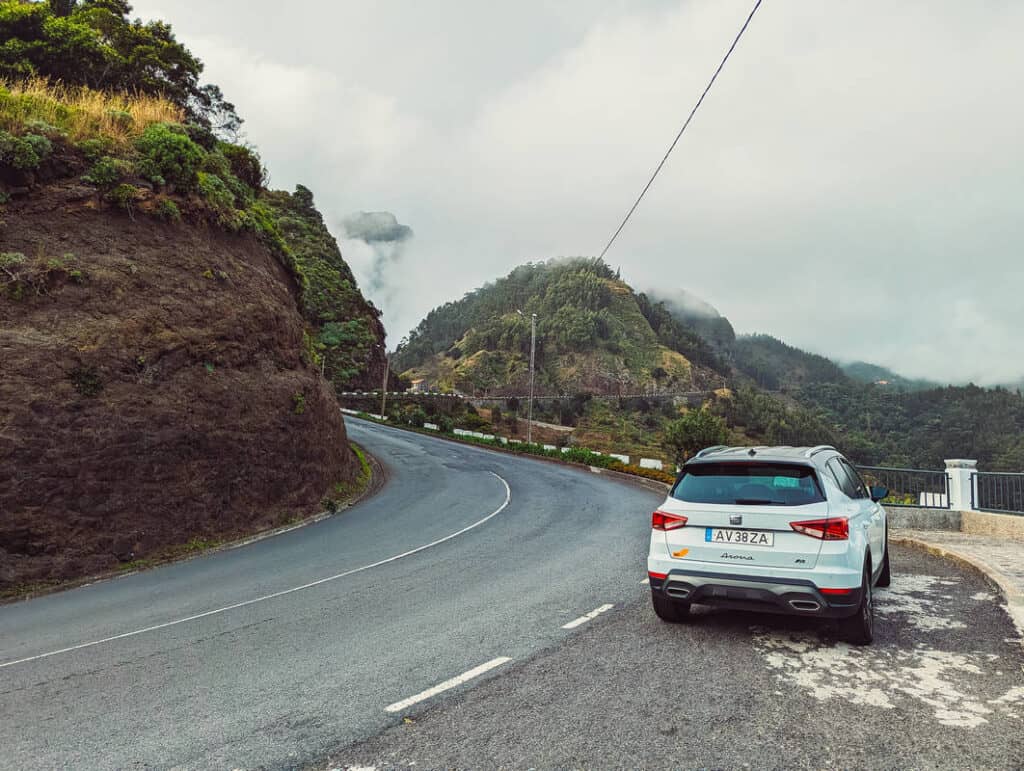
On our way to the climbing spots on the Sao Lourenço Peninsula
Trad & Multi-pitch
Set up: Same set up as sport climbing.
Trad climbing, known as traditional climbing, does not have bolts drilled into the rock. It’s up to the lead climber to place devices called protection into the rock as they ascend. It’s also up to the climber to place this protection well because it’s their lifeline if they fall. Beginners, don’t be horrified, you won’t have to worry about this just yet.
There are three ways to trad climb: top roping, seconding and leading. Again, if you’re a beginner, don’t stress about this because you’ll likely be top roping a sport route (simplest and safest way to climb).
If you’re climbing a longer route, perhaps up a mountain, it will be broken down into stages. These are called pitches. A multi-pitch route usually involves two/three climbers who start at the bottom and progress their way up.

A lead climber will start and make their way up to the top of a pitch, where they anchor themselves to the wall. They then switch to becoming a belayer for the next person to ascend. Multi-pitch routes involve sport style and trad style or a combination of both.
There are a lot of trad routes dotted all across the island, but I was told the most impressive ones are in the central mountainous region. In the mountainous part, there are plenty of multi-pitch trad routes that involve a long approach and border into mountaineering territory. I wasn’t told about many sport multi-pitch routes, so I would consult a guide about this.

Bouldering
Set up: Bouldering involves short routes on… boulders! Some people call it the purest form of climbing because it’s very simple. All you need is your shoes, chalk and some safety mats. The routes are known as ‘problems’ which focus less on endurance (which you need in sport/trad) and more on technical ability and power.
There are some boulder venues near Funchal. Head to 27 Crags to find out more!

Deep water soloing
Set up: Deep water soloing does what it says on the tin. Often at beautiful sunny spots, the routes are above deep water and you solo your way up the rock to complete them. You climb without a rope and either top-out or you fall into the water. On our trip in January, the sea temps were about 22C so it’s a sweet island to swim and climb.
The island’s rocky outcrops make Madeira a great destination for DWS. I’d really recommend getting in touch with local climbers before heading out. Venues can change due to the weathering on the rock so it’s important to speak to someone who knows the area.
Indoor climbing
If the weather is rubbish or you feel like you need to brush up on your skills, Funchal has an indoor bouldering wall. The Madeira Climbing Center has several short routes suited to different abilities.
Need Travel Insurance for Outdoor Activities in Madeira? I use and highly recommend HeyMondo Travel Insurance. As a reader of Journal of Nomads, you get a 5% discount off your insurance plan!
Is there Via Ferrata in Madeira?
Via ferrata is a climbing route, which varies from scrambling to rock climbing level, that has been fixed into the rock. It is characterized by steel cables, metal rungs or ladders. The climber attaches themselves onto the steel cable with equipment clipped into their harness. Currently there are no via ferrata routes on Madeira.
Do I need a guide for rock climbing in Madeira?
If you’re a beginner, it’s important you climb with experts who can belay you safely and know the area intimately. We were taken out by the tour operator Epic Madeira, who offer climbing days which can be tailored from total novice to pro, depending on experience.
Our guides, Ronaldo and Peter, took us out to near Caniçal. on the east of the island. We parked up at the trailhead for Vereda da Ponta de São Lourenço and our approach to the crag was about 10 minutes.
Ronaldo and Peter gave us a safety briefing and assessed our experience prior to climbing and then offered up some routes. They took care of fixing ropes so we could warm up and get a feel for the rock.

For context, I’ve been climbing outside for about a year and they were able to find me some routes that tested me but I equally enjoyed. I also led my first 6a which was exciting!
We were so impressed by our guides’ energy and eagerness for adventure. I learned so much about the island’s geology and how this connects with Madeira’s climbing history. Peter had also bolted some of the routes on the island so he was very knowledgeable about the best spots to head to.

Booking a guide for half a day is not only a great way to get to know the best venues of Madeira, but ease yourself into the sport’s culture here.
You’ll also be put in touch with some of the most experienced climbers living in Madeira, who will gladly help you out for the rest of the trip. Ronaldo and Peter also provided us with loads of recommendations to make the most of the island’s lesser-known swimming spots, restaurants and places for poncha.
Even if you are experienced, it’s good practice to get in touch with the local climbing community and learn about the culture.
If you want to plan your trip independently, read on.

What gear do I need to bring for rock climbing?
If you’re a beginner and you book a day out with Epic Madeira, they can provide a harness, shoes, helmet, belay plate, rope etc. Alternatively, just get in touch with the operator and they will be able to advise what to bring for the day.
I have my own climbing gear but I didn’t have it in me to schlep a 60m rope on a plane (the sole purpose of our trip wasn’t just to climb). It didn’t matter because the operator provide ropes.
If you’re planning an independent climbing trip and you need to rent some equipment while you’re on the island, you can rent gear – apart from shoes – from the group. They also provide transport services if you need to get to a crag, which nicely brings me onto the next topic…
Can I climb independently in Madeira?
Yes, you climb here independently! There isn’t a topo book available but you can find almost all of the routes on 27 Crags. I was told there isn’t a Facebook group for climbers, but there is a Whatsapp group connecting local climbers on the island.
Another way to get to know climbers on the island is getting down to the indoor wall in Funchal, (the Madeira Climbing Center) and speaking to people there. Alternatively, book yourself for a half-day climbing session with a guide. This will benefit the island’s local tourism and you can ask for the island’s best spots before heading out on your own.

When is the best time to go rock climbing in Madeira?
You can climb all year round in Madeira. It’s more to do with what temperature you’re comfortable climbing at and what style you’re climbing. The island’s sub-tropical climate means it does rain in short, heavy showers fairly frequently, but when it’s over the rock dries out pretty quickly.
The beauty of Madeira’s diverse micro-climates is that if it’s raining in one area, you can probably find another crag on another part of the island without rain!
- Sport/trad/multi-pitch: In June, July and August temps can hit 25-27C so it will be toasty if the sun hits the rock. Some people find it way harder to climb when the sun is beating down your neck especially if you’re on a long route. I’d say climbing in winter, spring and autumn is best for these types of climbing.
- Deep water soloing: You’ll probably want warmer sea temps for your dives so I’d say summer/autumn is the optimum time for DWS (unless you’re used to swimming in the North Sea, in which case, it will be like swimming in warm milk).
- Bouldering: Ideal conditions all year round.

I hope this travel guide gave you lots of useful information and inspiration for climbing in Madeira! I’d really recommend giving it a try here and I’d love to know what routes you’ve got up to. If you have any questions or remarks, let me and other readers know in the comments below.