
If you’re planning to visit Turkey, here are some helpful travel tips and advice on the top things to know before traveling to this beautiful country!
With 38 million visitors in 2018, Turkey is one of the most visited countries in the world.
And for good reason: traveling to Turkey is safe, enjoyable, simple, and inexpensive.
Due to a dearth of current information available online, I decided to create this guide to assist people planning trips to Turkey. I hope you enjoy it and have a safe journey.
Make sure to check out this list of travel accessories to improve your experience.
Disclaimer: This posts might contain affiliate links, meaning that if you make a purchase through these links, I may earn an affiliate commission. Thank you for helping to support this website!

1. Best time to visit Turkey
The best time to visit Turkey is from early April until the end of May. The temperatures are great and everything is in full bloom.
Summer (June – August) can be incredibly hot, with temperatures reaching 38°C (100°F), but it can still be a lot of fun if you dress correctly for the heat. Bring sunscreen, UV umbrellas, and plenty of water.
There will be some sites, such as Ephesus and Cappadocia, where the heat would be unpleasant between 12 and 5 p.m. throughout the summer.
The low season for tourism is November through March, during winter. It can be quite cold around that time, with snowfall in some areas.
Fall (September & October) is also a fantastic time to visit Turkey, but it is also the busiest season. Around this time, the weather in most of Turkey is mild.
Read: The 13 most beautiful and unique places to visit in Turkey

2. How is the weather in Turkey
The weather in Turkey varies depending on which region of the country you visit.
It’s a massive country that spans two continents and has a diversified landscape.
Turkey’s climate varies from a desert-like dry climate to scorching hot summers and bitterly frigid winters.
The northeast is cooler, the center (near/west of Cappadocia) is desert hot/cold, and the Mediterranean region, including Istanbul, has hot summers and moderate winters.
Reading Tip: Top 17 Things to do in Istanbul

3. Costs to visit Turkey
Food costs somewhere between $1 for street food to $5 for a meal at a cute restaurant.
A drink, appetizer, dessert, and main dish at a fine restaurant can cost up to $20. This is VERY GOOD when compared to “western” costs.
Within the country, flights go from $20 to $60 each way and it costs $1 per hour to take a Bla Bla Car.
Public transportation start at 15 cents (1,50 lira) and each journey is rarely more than $1 (8 lira). Except for when you want to take a taxi from Istanbul airport to the historic center. That will cost you $15-20 USD (about 130 lira).
Foreigners pay $5-$10 USD (40-80 lira) to enter the musea.
For a full day of fun + lunch, organized day tours start at $30 USD.
Accommodation depends on where in Turkey you are visiting. Hostels start at $10 per night; Airbnbs start at $20 per night, and hotels start at $30 per night. Book your accommodation in Turkey in advance!
For a full overview on travel costs in Turkey, read: How much does it cost to travel in Turkey
4. What language do they speak in Turkey
English is not commonly spoken in Turkey. The majority of people were unable to communicate in English.
Pictionary is a must, as is remembering a few Turkish words. The majority of local people can’t even say “yes” or “no” in English.
When I asked if they spoke English, some moaned and shrugged their eyes. In Istanbul, I encountered more French or German speakers than English speakers.
To get by, I had to learn a lot of Turkish words. Learn how to say the fundamentals in Turkish for allergies, impairments, and diet restrictions if you have them.
Reading Tip: How to learn a new language while traveling
5. How to get around in Turkey
It’s fairly easy to travel around in Turkey.
If you’re on a tight budget but have a lot of free time, you can take the bus, which costs around $10-$20 each way. You can also hitchhike!

Reading Tip: Hitchhiking in Turkey: The good, the bad and the untold stories
However, if you plan ahead of time, you can get flights within Turkey for $20-$60 each way. It will save time and energy and it’s a pleasant mode of transportation.
Every passenger told me that the overnight bus ride was unpleasant and that they couldn’t sleep.
Is it worth it to lose a few hours and a full night’s sleep for $10-$30? Airport shuttles can be arranged through your hotel/homestay for around $12 USD each trip.
Public transit in cities is quite efficient. Buses are an excellent way to travel between cities. Even trains, such as the Dogu Express Train, pass through some regions of the country. Here’s a great resource for public transport in Turkey!
Taxis are a different story, which brings me to my next point…
6. What you need to know about taking taxis in Turkey
Taxis in Turkey are renowned for deceiving and defrauding passengers.
My first cab ride was fantastic. But I had to show him how to go to my hostel, and he made a wrong turn at the start. The roads were windy and I believe it was an honest error.
However, they will sometimes act as if they are lost, as if they don’t understand you, or as if they aren’t stopping to wrack up the meter.
They’ll swiftly turn off the meter so you don’t see the final price. They can act as if they don’t have any change, so carry tiny cash notes for taxi journeys. Always use your GPS to show that you know where you’re going.
When I originally arrived in Istanbul in late May, Uber didn’t work. By mid-June, though, I had the option of using Uber to call a metered taxi.
In Istanbul, this became my go-to technique for taking taxis. The final meter number would then be entered into the Uber app. So take a photograph of the meter and let them know you’re doing so.
It’s awful that you have to take all of these measures, making it a stressful process from beginning to end… However, it is better to be cautious than sorry.
Also, don’t give cash to Uber drivers. It has already been debited from your Uber account using your credit card.
I gave cash to the first two Uber drivers, who knowingly took the money. One had the guts to ask for more money despite the fact that he was being paid through Uber!
Later, I discovered it had already been paid for with my credit card. I reported to Uber and received a refund.
However, I found that Uber cab taxi drivers were increasingly kinder than non-Uber cab taxi drivers, most likely because they care about their star rating, which is one of Uber’s best features.
One of the downsides is that they charge an exorbitant commission, which isn’t fair… Unfortunately, cab frauds are all too common, and this seemed like the best way to stay safe.
Reading Tip: Is Turkey safe for traveling?
7. Do you need a visa to travel to Turkey?
To find out what your country’s specific requirements are for entering Turkey, go to the Turkish Ministry of Foreign Affairs’ website.
If you’re eligible for an e-visa, you’ll receive it very quickly by filling out the online application on the official Electronic Visa Application website and pay $20.
I applied for and acquired my Turkey visa while standing in line to meet the border officer because my first trip to Turkey was unexpected.
Because the bar code, the approval page, and the number will be an online link, remember to print or screen record them. The approval information will not be sent to you through email.
A multi-entry visa is valid for a period of up to 90 days.
Reading Tip: What happens when you overstay your visa for Turkey

8. Websites banned in Turkey
Booking.com won’t let you reserve a hotel room in Turkey if you’re already there. This made it extremely difficult for a last-minute traveler like myself to secure a hotel room using the website.
In Turkey, Wikipedia is prohibited. So do all of your research ahead of time, or use Google’s “cache” function if it’s accessible for your specific search listing.
PayPal is unavailable in Turkey. Without access to my PayPal account, I struggled to complete key commercial activities. I had no intention of using a proxy to use PayPal in Turkey. However, the good news is that if you have the PayPal mobile application, you may access your PayPal account using it.
9. Wifi problem
To receive the passcode to access the free wifi, most places require a European or Turkish phone number.
This includes the Istanbul airport, which is important to be aware of because you may need to obtain your online visa when you arrive.
The simplest way around this is to have an international phone plan, buy a Turkish SIM card, or have a buddy with a Turkish phone number who can spot you the internet passcodes.
I discovered that the internet in hotels and Airbnbs would frequently go down. It was aggravating when I needed to get work done but had to grab my laptop and go restaurant hopping until I could get a reliable connection.
So, though the internet/wifi in Turkey normally works in most locations, it’s often excessively slow, and around 15% of the time in Turkey, it wouldn’t work at all.
Reading Tip: 10 best non-touristy cities to visit in Turkey

10. How should you dress in Turkey
Turkey is a country with a wide range of topography, politics, and culture.
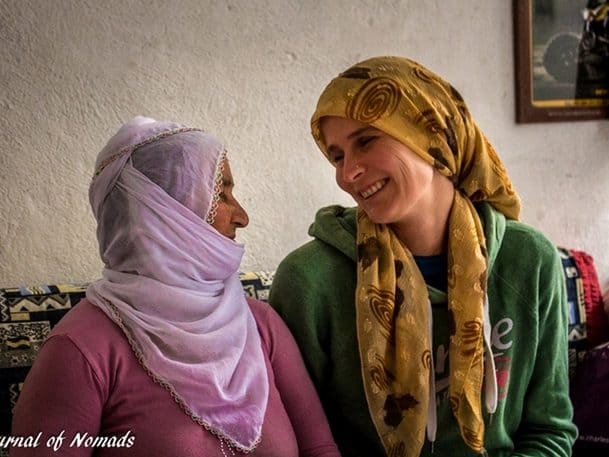
As a result, you might come across a woman dressed in a little black dress and then round the corner to find another woman who is completely covered except for her eyes.
There are traditional areas of Turkey, such as Kayseri, and others where you feel like you’re in Los Angeles (like Izmir).
Even Istanbul has numerous separate neighborhoods. Its Moda neighborhood, which is young and hipster, is similar to Brooklyn. Sultanahmet, the city’s historic quarter, is teeming with museums, marketplaces, and century-old buildings.
When considering what to wear in Turkey, pack conservative clothing for when you notice a shift in culture and don’t want to stand out, as well as your more “summery” clothing for areas where you feel more at ease.

These are my 10 travel tips for visiting Turkey. Hope you enjoyed reading this post and will implement these strategies into your travels in the beautiful country of Turkey.
Do you have more useful tips for visiting Turkey? Let other readers know in the comments below!
About the author:
Hello everyone! I am Doruk Karadag, a full-time student in Ankara, Turkey, and also a travel blogger at toptiertraveler.com.
I have always had a passion for traveling and I hope you enjoy reading my posts. To find out more about me and my blog, you can check out my socials: Facebook, Twitter and Pinterest.