
This ULTIMATE list of digital nomad visas includes the countries that have adapted and created visa programs to support and encourage the ‘digital nomads‘ way of living and working. They’ve opened up their borders and added themselves to a growing number of accessible destinations for remote working.
Disclaimer: This posts might contain affiliate links, meaning that if you make a purchase through these links, I may earn an affiliate commission. Thank you for helping to support this website!

What is a Digital Nomad/Remote Worker?
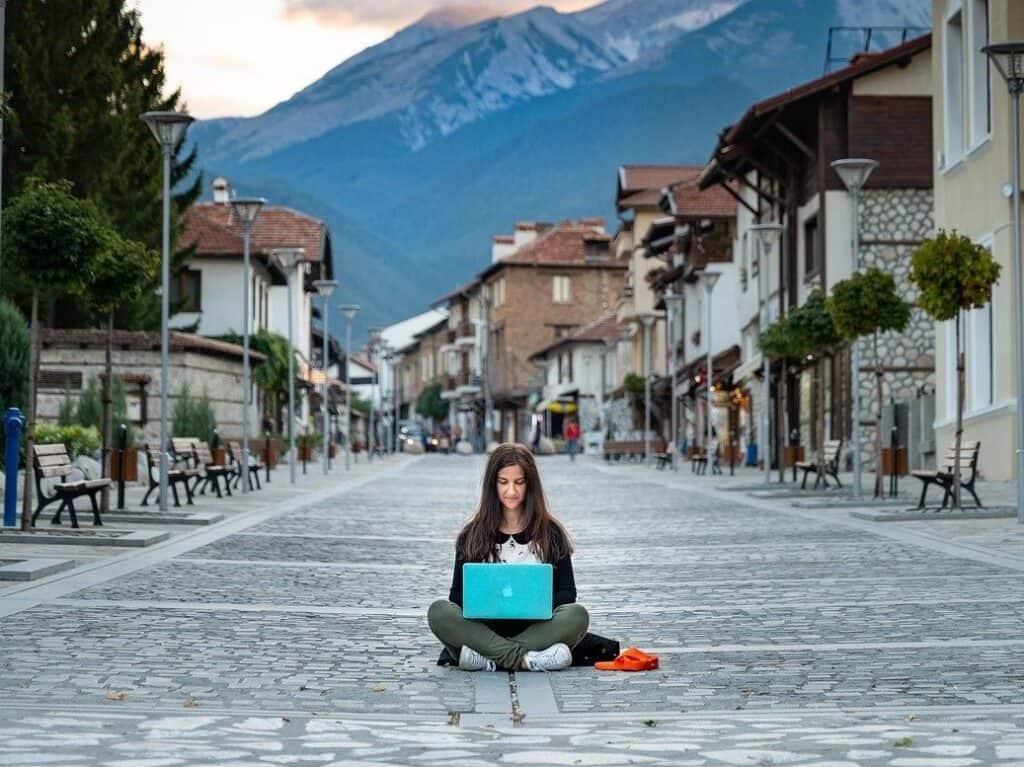
The name, ‘digital nomad’ describes somebody with a love for travel, who enjoys a nomadic type of lifestyle and is able to do their job remotely, from anywhere in the world.
Using their smartphone or computer, digital nomads or remote workers are able to work entirely independently no matter what country they find themselves in, allowing them to travel and work in different countries other than their country of residence.
Coffee shops, libraries, hotels or anywhere with a WIFI connection can instantly become the perfect working space for a remote worker.
Reading Tip: How to make money while traveling the world – 12 best travel jobs
What are Digital Nomad Visas?
A ‘digital nomad visa’ is a travel permit that allows workers from different countries to legally work remotely and independently in countries other than their own.
As a remote worker, you can normally stay and work in a country for up to a year, however, the duration of stay on this type of visa can vary depending on the regulations for each individual country.
There are now more and more countries offering this unique visa that has been specially created for and aimed at long-stay remote workers and their particular way of working.
Reading Tip: Become an Online Teacher – The Complete Guide to Teaching English Online including 37 Schools and Platforms for you to teach!
How do digital nomad visas work?
For some countries, the concept of digital nomad visas is still so new that authorities have no idea how to deal with it yet, and the process is very bureaucratic.
If you have a destination in mind, it’s important to note that not all countries call this type of visa a ‘Digital Nomad Visa’. Sometimes the appropriate visa may be known by a slightly different name.
It’s also important that you check the visa requirements and application process of your destination country carefully as each country offering this type of visa has different policies and regulations.
Normally, as an applicant, you will need a valid passport, proof of a regular and steady income and other additional documents providing proof of travel and health insurance.
Most of the countries that offer digital nomad visas require you to pay a processing/application fee and the amount can really vary.
It’s also fantastic to note that many of these visa applications have been adapted to include a remote workers’ family and any dependents. There is usually a stated price for a single person, then for a couple or spouse and any extra or added dependents so be sure to tick the correct boxes when filling it in!

Some ask eligible applicants to submit their applications online and others will ask that applications are sent through a particular embassy or consulate.
The rules and regulations regarding Covid 19, including any necessary vaccinations and certificates, will have their own part to play in your application depending on your destination. Make sure that you do the research and prepare everything you need to apply with time to spare.
The processing time can also vary depending on the country. Sometimes it can be a matter of days but for others, it can take a couple of months to process so it’s worth planning ahead just in case. There are travel agents and agencies out there who can assist you if you require some help with your application.
Always be sure to follow and respect countries’ visa laws. The last thing you want is to find yourself in a tricky situation before your new life has even begun!
Reading Tip: What is the best travel insurance for long-term travelers and digital nomads?
Do digital nomads need work visas?
So, maybe you’re sitting reading this and wondering whether ‘digital nomads’ need work visas? As in, you’ve visited a country on a tourist visa and you find yourself with the offer of some freelance online work.
Well, there ARE ways that you can temporarily work in foreign countries without a work visa.
In Bali for example, there are thousands of ‘digital nomads’ who spend their time doing remote work on tourist visas that they have to renew every couple of months.
However, governments are becoming more aware of this loophole, and right now due to the current Covid 19 pandemic, borders are currently closed to tourists making this method impossible for the time being.
It’s also important to point out the difference between a remote worker and a ‘digital nomad’ and how that affects the way they can work on different visas.
A ‘digital nomad’ can also be classed as a remote worker, however, the term ‘remote worker’ doesn’t mean that a person is necessarily a ‘digital nomad’. Still with me?
The difference is, if you class yourself as a ‘digital nomad’, your permanent working residence could be anywhere, meaning you’re not tied to an office. You basically carry your ‘office’ on your back like a snail and can set up and work from ‘home’ in a number of various destinations.
This difference is important when discussing visa options as generally speaking, national regulations allow tourists to work whilst they are staying in a number of travel destinations.
So why apply for a digital nomad visa?
Because of Covid 19, many countries that relied heavily on tourism to support their economies have been forced to rethink the ways that they can bring people back across their borders.
Encouraging more long-term, remote workers on these new ‘digital nomad visas ‘ can offer countries a positive solution to help in the rebuilding of their tourism sectors.
Another point that’s important to note is the effect that the pandemic has had on people’s work lives and that there are now more people working from home than ever before. Companies have had to adapt to suit the restrictions in place because of Covid 19, thus changing how people work entirely.
Many people can now work completely independently of location, opening up new opportunities to them that didn’t even exist before the pandemic, packing up and moving their families across the world, whilst still working online for the same company back home.
Whether you’re looking for a change of scenery or a complete change of lifestyle, this new and now globally recognized remote way of working is well and truly established and has opened up the world in ways that we could never have imagined.

Below I have compiled a list that includes all of the current countries that offer legal and official ‘digital nomad visas’ or similar visa programs.
23 Countries with Digital Nomad Visas
This is our ULTIMATE list for any budding digital nomad, eager to push the boundaries and discover which countries have digital nomad visas so that you can step out of the office and set up somewhere more exotic!
Digital Nomad Visas in the Caribbean
1. Antigua and Barbuda
Antigua and Barbuda allow digital nomads the opportunity to apply for a ‘Nomad Digital Residency Visa’ that permits you to work between each of the islands for two years.
You will need to provide 11 different documents in your application along with proof of your current income which needs to be $50,000 a year minimum.
To apply, this visa will set you back $1500 for a single applicant, $2000 for a couple and $30,000 for a family.
2. Anguilla (UK territory)
You can apply for Anguilla’s digital nomad remote visa online from wherever you find yourself in the world.
The visa costs $2000 for a single person and $3000 for a family to stay for the duration of a year.
3. Barbados
The ‘Barbados Welcome Stamp’ offers successful applicants the opportunity to stay in Barbados for up to a year.
The application will set you back $2000 yet allows you to start working online as soon as you arrive as you admire the beautiful scenery surrounding you.
Your total yearly income must be at least $50,000 in order to apply, so again, this doesn’t make it highly accessible to all digital nomads.
4. Bermuda
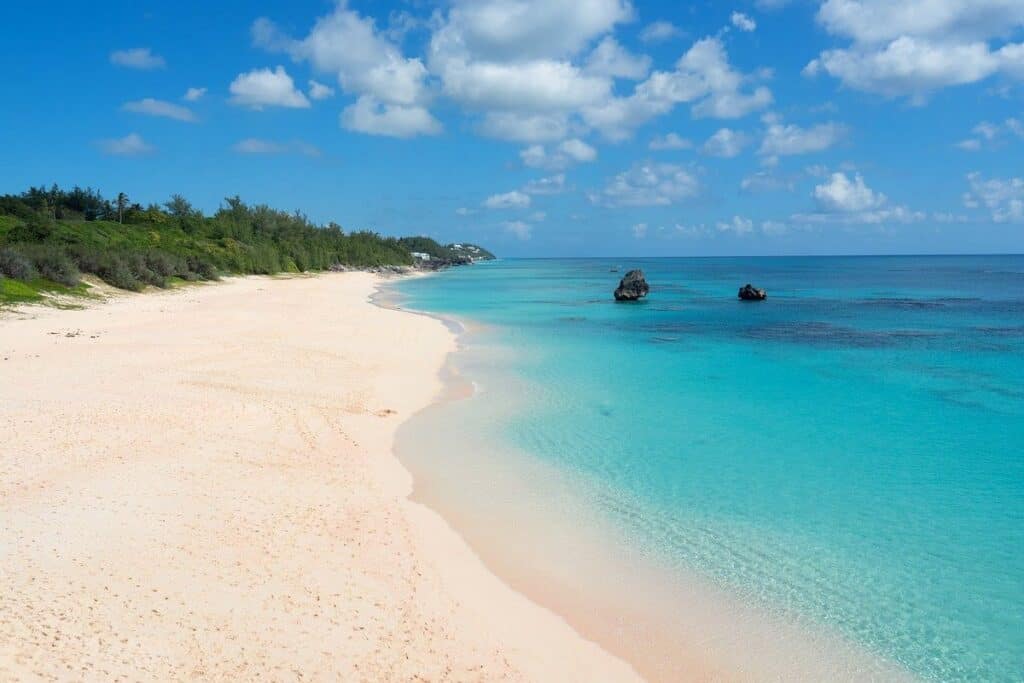
The ‘Work from Bermuda Certificate’ offers applicants the chance to live and work in Bermuda for up to a year.
This application process only takes a mere 5 days to process. Any family members who wish to apply must submit a separate application.
To apply, you will need to pay a non-refundable fee of $263 and provide proof of employment, medical insurance including other documents that state you have no criminal record.
You also have to show that you have enough of an income to support yourself for the time you are based there.
5. Cayman Islands
This Digital Nomad Visa most likely only appeals to a small percentage of digital nomads. After providing bank references, proof of a valid passport, and medical insurance, you must pay a credit card processing fee that sits at 7% of the total application fee.
As well as a very high yearly income, you must pay a processing fee of $1469 that covers two people for a year and then you pay more for any children or dependents you may have at $500 per person.
Single applicants are required to have a minimum yearly income of $100,000 and it’s more for a couple $150,000 and $180,000 for a family.
6. Curacao
The visa available for remote workers to apply for in Curacao is called ‘@Home’.
Digital nomads can work for up to six months on this visa which can also be extended for up to a year.
For the application, you must provide passport details, medical insurance, and proof of funds that will support you whilst you stay in Curacao.
This visa costs $294 and families can apply together, paying $500 per person for any children or dependents.
7. Dominica
The ‘Work in Nature Extended Stay VISA’ is open to digital nomads who wish to stay and work a little longer than on the other Caribbean Islands.
This visa is valid for 18 months and allows you to really settle in and get to know this stunning place.
8. Montserrat
The ‘Montserrat Remote Work Stamp’ is a year-long program that will cost you $500 for a single person, $750 for a family including three dependents/children, and then an additional $250 for every extra family member after that.
However, applicants must make a minimum of $70,000 income per year which does make this destination available to higher earning nomads.
One of the smaller Caribbean Islands, if you’re looking for some alone time to work and soak up the sun, then this is your place.
Digital Nomad Visas in Africa
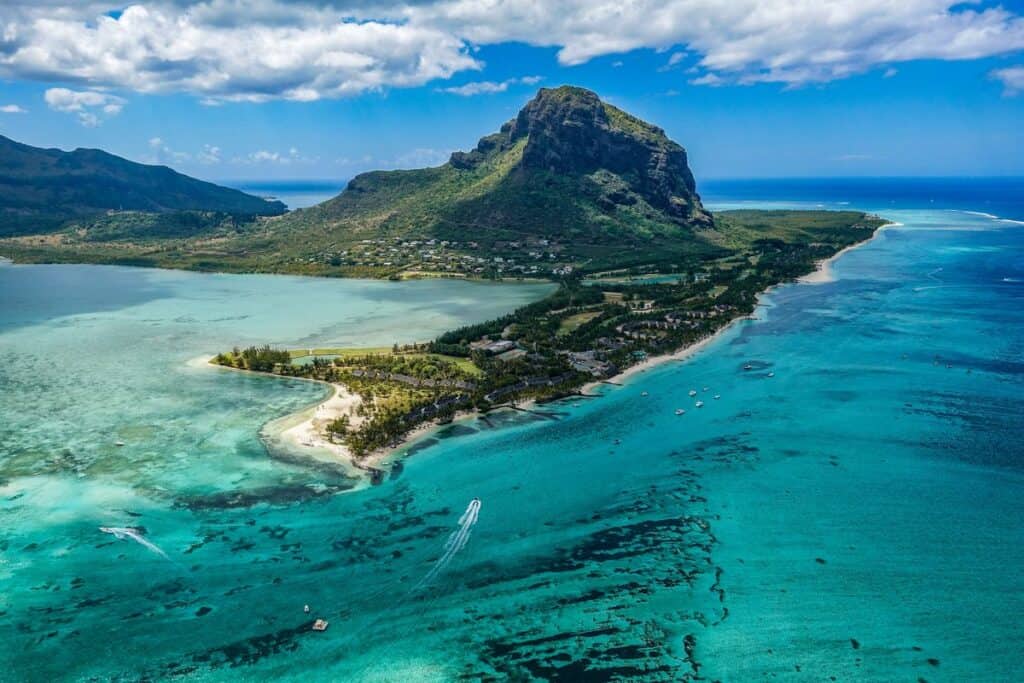
9. Mauritius
The ‘Premium Visa’ is a year-long visa that has just recently been launched, specially targeted at remote workers and digital nomads.
This is currently the only African nation to offer this type of visa and wait for it, this visa is FREE to apply for!
You need to earn at least $1500 per month and although it currently only lasts for one year, this visa is renewable if you feel the urge to stay longer.
All you need to apply is proof of medical and travel insurance, a valid return ticket out of the country, along with details of your long stay plans and you must be the owner of a location-independent business, or work for a business based outside of Mauritius. What a deal.
Coming soon…
Cape Town is one of the cities that is busy working to develop its own digital nomad visa scheme soon.
Digital Nomad Visas in Europe
10. Croatia
Known as the land of a thousand islands, Croatia’s ‘digital nomad residence permit’ is a relatively recent one and proving to be a very popular one.
The terms state that as a single occupant, you need to make a minimum of $2700 a month and have at least $5000 in your account upon entry into the country.
You can stay for up to a year and you will need valid health insurance to apply.
To apply, you must either head to a Croatian Embassy or Consulate or you can also apply whilst in Croatia.

11. Czech Republic
The ‘Zivno’ program has some tight conditions attached to it.
Although the processing fee will cost you nothing, not only do you need to book a year of accomodation in advance, you also have to prove that you have qualifications or experience relevant to a particular industry in the country.
The visa grants you a year’s stay with the possibility to extend your stay but it comes up as one of the trickiest visas to obtain.
12. Estonia
Estonia was the first country in the world to introduce its ‘digital nomad residency‘ visa program which provides the holder with access to public services through digital identity.
Applicants must show that they earn €3504 a month and also provide paperwork that shows that they have made that amount or more in the 6 months before applying.
A full supporter of the ‘digital nomad’ and their way of working, their e-residence keeps businesses transparent and the terms include owning a business that is location independent, working remotely, or as a freelancer for a non-Estonian based company.
13. Germany
Germany currently offers a visa for remote workers called ‘Aufenthaltserlaubnis für Selbständige Tätigkeit’.
It’s a special freelance visa that allows self-employed visitors and freelancers from other countries to stay in Germany for six months that can be extended up to three years.
The visa processing fee will cost you $100 and it pays to apply early for this visa as it can take up to 4 months to process and then be approved. It also helps if you speak German or have a German-speaking friend to assist you with your application.
The visa terms state that you must have health insurance, provide proof of your finances and income, have a German address along with showing that you can provide services that will help the German economy – showing you have work clients based in Germany.
This last point is a tricky one, as not all digital nomads will have these professional connections to the country.
However, Berlin is another city – like Cape Town – that is currently developing its own unique digital nomad visa so don’t forget to add Germany to your list!
14. Greece
With a relatively cheap cost of living along with a rich culture, delicious food, and many islands to explore, Greece makes an excellent destination for any digital nomad.
Newly launched this year in October 2021 is the Greece digital nomad visa for non-EU/EEA citizens. This visa will grant you permission to stay and work in Greece for your own registered company or freelance for a foreign company based outside of Greece.
It benefits from good internet speeds as well as a low cost of living, that’s if the golden beaches aren’t enough to tempt you there.
It costs €75 and lasts for up to a year however it can be extended to 3 years in total. You must show that your monthly earnings are at least €3500 and if you are traveling there with a spouse, you will need to add 20% more and then an extra 15% extra for each child.

15. Iceland
If you feel yourself being lured by the dramatic landscapes and snowy glacier adventures, then Iceland is the place for you.
You can apply online for their visa program, and as a remote worker, you must prove that you own your own business or work freelance for a company outside of the country.
You can only stay for 6 months and your minimum monthly income must be at least $7800, which sits slightly higher on the scale, for a couple you must earn at least $12,000 per month.
Again, travel and health insurance are a must and the visa processing fee is only $60.
16. Malta
Malta is a beautiful destination that has a visa program for remote workers called the ‘Nomad Residency Permit’.
To apply, the processing fee will cost you $300, slightly on the higher scale however family members can all apply through the one application and so do not have to pay extra to apply individually.
This program is aimed at visitors from outside of the EU and grants them permission to stay for up to a year, with the possibility of an extension.
Your minimum monthly income must be at least $2700 and additionally, you must be able to prove that you have the funds to either rent or buy an apartment there.
17. Norway
If you’re drawn to the Scandinavian way of life and dream of fjords and forest-covered lands, Norway is the country for you.
Norway’s digital nomad visa program requires the applicants, like Germany, to show that they have relevant qualifications in their chosen field, along with providing a Norwegian address and a written statement from a Norwegian landlord.
If you want to apply, you will need to find your nearest Norwegian Consulate or Embassy and get the appropriate documents listed on Norway’s Directorate for Immigration website.
The minimum yearly salary sits up at $35,719, before tax, which isn’t accessible for all remote workers. As per, you have to either own your own company or work freelance for a company based outside of Norway in order to be eligible to apply.
18. Portugal
Portugal’s digital nomad visa is one of the cheapest visas to obtain in the world.
To apply, you have to provide proof of your monthly earnings that only need to be at least $600, and once you’ve been in the country for five years, a channel opens up to you in which you can apply for permanent residency in the country! How marvelous is that?
I might also add that you also have to learn Portuguese in order to apply for citizenship, a small part for you to play for the perks you receive in exchange.
19. Georgia
Georgia is a stunning country tucked in the Caucasus mountains and its digital nomad visa is one of the most recent ones to be released.
Developed during the pandemic, the country decided that it would be a great way to attract long-term visitors into the country when their economy plummeted due to Covid 19 regulations.
The program is called “Remotely from Georgia” and entitles the successful applicant to stay for up to a year.
To be eligible, you must earn at least $2000 per month or provide proof of savings totaling $24000 in the bank however there is no processing fee which is a bonus.
With its rich and interesting history, let Georgia truly lure you in with its low cost of living and stunning landscapes.
Reading Tip: How much does it cost to live and travel in Georgia?

Coming soon…
An Italian visa for digital nomads has yet to be announced. However, non-EU nationals who want to work remotely from Italy, are able to apply for a self-employment visa.
With the creation of Croatia’s digital nomad visa, the former Yugoslavia nation, North Macedonia has decided to develop its own visa program as well, another one to watch.
Spain is currently working on its own version of a digital nomad visa. It has been proposed that long-stay visitors could apply for a visa that would grant them a year in the country which could then be extended to two years.
There is a draft bill that is in the works at the moment called the Startups Law, so hopefully it won’t be too long before remote workers can add Spain to their list of accessible destinations.
In October 2021, Romania’s digital nomad visa passed the draft legislation, so keep your eyes peeled for more developments in early 2022.
Cyprus is also working on it’s own Digital Nomad Visa that will be valid for up to a year and then can be renewed and extended for another two years, for a total of three years.
To apply, you must have medical insurance and police-checked documents from your country of residence. You must prove that your monthly income is at least €3500 plus an extra 20% for your spouse and an extra 15% for any dependents.
Digital Nomad Visas in Asia
20. Dubai
Dubai offers a luxury lifestyle in the middle of the desert. With quite an expensive cost of living, it may not be suited to all digital nomads.
However, their visa program is more accessible for remote workers who have large families as you can bring a number of members for a relatively low fee.
As an applicant, the processing fees will cost you $287, and you are required to provide proof of your monthly earnings that need to be at least $5000 along with documents stating that you either own your own company or are alternatively employed by a company outside of Dubai and have been for at least a year previous to your application.
Health insurance is also a must as well as payslips and bank statements from the past three months before submitting your application.
Coming soon…
AAt the moment, there is no official digital nomad visa for Bali, however, Indonesia has recently announced that they are looking to implement one later this year so watch this space.
Thailand also doesn’t currently offer an official digital nomad visa, but it’s certain that one will come out in the next few years.

Digital Nomad Visas in Central America
21. Costa Rica
Costa Rica was the first country in South America to launch their visa for remote workers, ‘Rentista’.
Firstly, this visa doesn’t stipulate a time frame for your duration of stay, however, the majority of visitors usually only stay for a couple of years.
To apply, you must prove that you have been earning at least $2500 for the past two years previous to your application as well as continuing to make at least the same amount every month going forward.
It was declared on 20th November 2021 that Costa Rica is working on developing a digital nomad visa alongside its current ‘Rentista’ program.
22. Mexico
Mexico’s digital nomad visa is one of the most accessible visas to obtain. The terms state that you must work remotely for a company based outside of Mexico or own an entirely location-independent business.
As long as you can provide proof of your minimum monthly earnings of at least $1620, you are eligible to apply.
23. Panama
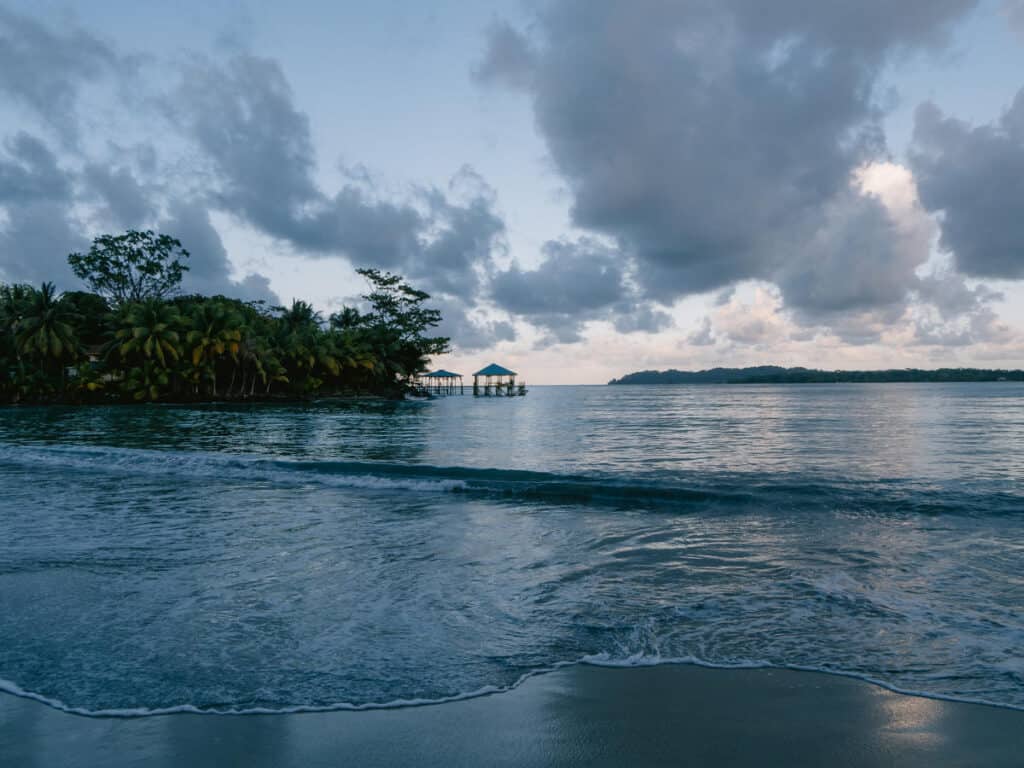
Another country to launch its own version of digital nomad visa earlier in 2021 is Panama.
Its warm climate and high standard of living attract many expats each year and now, as a remote worker, you can go and spend some time soaking up that Central American sun.
The visa program is called the ‘Short Stay Visa for Remote Workers’. It was created in the hope to attract long-stay visitors to the country after the economy was devastated due to the effect of Covid 19 and the restrictions put in place to keep visitors out of the country.
If you work remotely as a freelancer for a company outside of Panama, you are able to apply and if successful, can stay for a duration of nine months initially that can then be extended for up to 18 months.
To apply, you will need to have medical insurance that covers Panama, a valid passport, proof of funds to travel out of the country after your visa expires, a clean criminal record and provide proof that your annual salary is at least $36000.
Although it won’t be accessible to all, it’s certainly a program to aspire to.
Coming soon…
This year, Belize is also working on a new program for remote workers called ‘Work where you Vacation’, which is being developed to help encourage tourists to stay for longer and work remotely.
Long gone are the days of stuffy and overheated office cubicle spaces, this new way of working is fast becoming more and more accessible for working people across the world.
Japanese technologist Tsugio Makimoto, predicted 20 years ago that remote working and the rise of ‘digital nomads’ would not only encourage nations to ‘compete for citizens’ but prompt a ‘decline in materialism and nationalism’.
What foresight when talking about a relatively new phenomenon that didn’t even exist a few years ago. With more and more digital nomad countries appearing, changing, and adapting their visa programs in such a short period of time, the world is literally opening up its doors.
I hope that this list finds its way into your life in a way that sparks the beginning of a new chapter for you and possibly your family too. Thanks for reading!
Related Posts:
The Complete Guide to Teach English Online with 37 Online Teaching schools and Platforms

How to Make Money While Traveling the World including the 12 Best Travel Jobs

How to become a House Sitter – The Complete Guide to House Sitting

Is this a reliable long-Term travel Insurance? Safetywing Review
