Have you got some questions about travelling to Madeira? In this ultimate Madeira travel guide, we’ll cover everything you need to know for planning your trip to the Portugese island.
We’ll take a look at how to make the most of all that Madeira has to offer, the logistics of your trip and the sensible planning stuff. So read on for the full Madeira travel guide plus 20 things to know before you go…
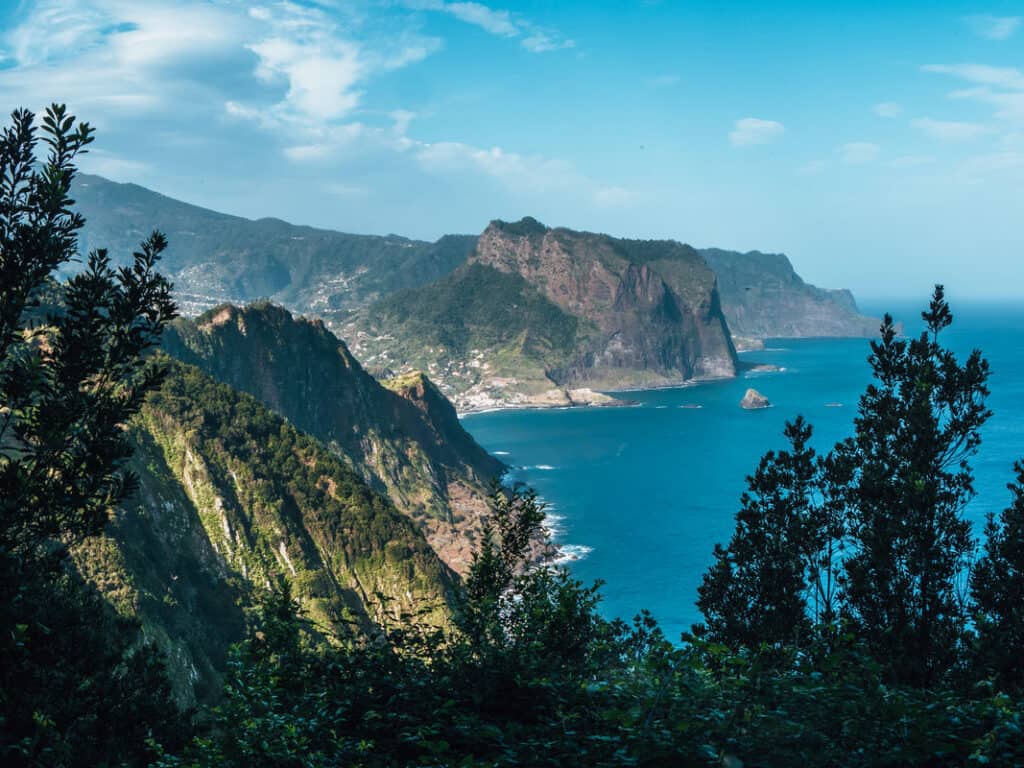
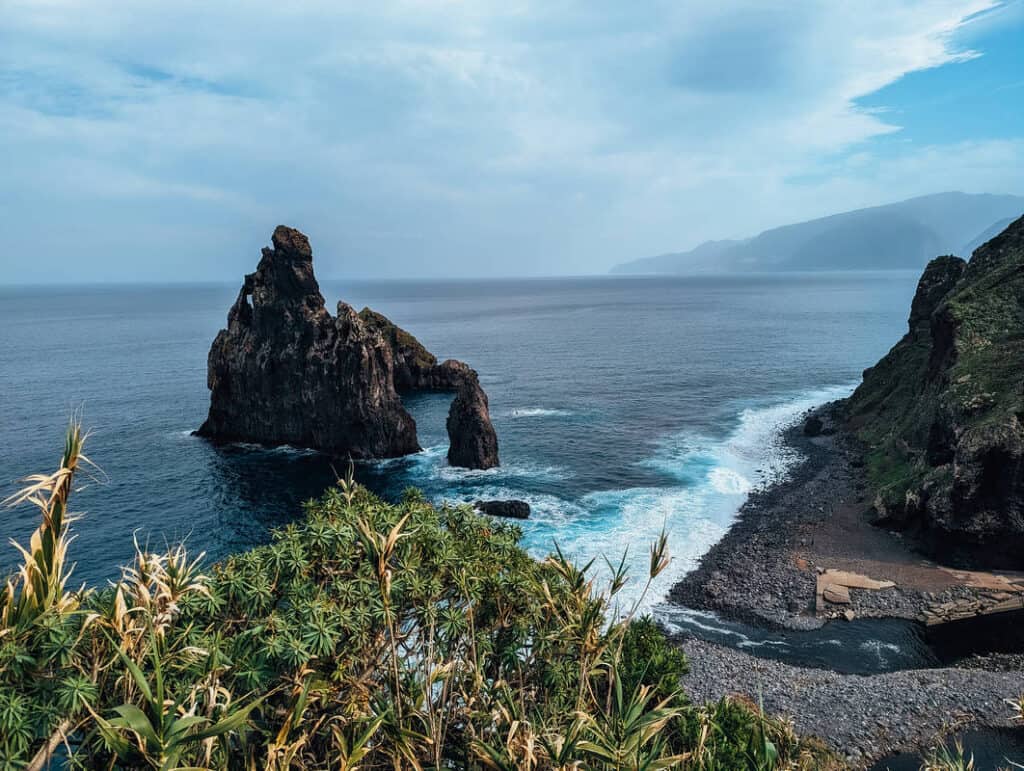
Madeira is a Portuguese island situated off the west coast of Morocco and north of the Canary Islands. The volcanic island’s striking terrain makes it an incredibly unique place. Its dramatic slopes are densely populated with green vegetation and a skyline of jagged mountain peaks beckon you to explore.
Madeira is known by many as the ‘pearl of the Atlantic’ for many reasons including a constant subtropical climate, exotic fruits, spectacular coastlines and extraordinary landscapes.
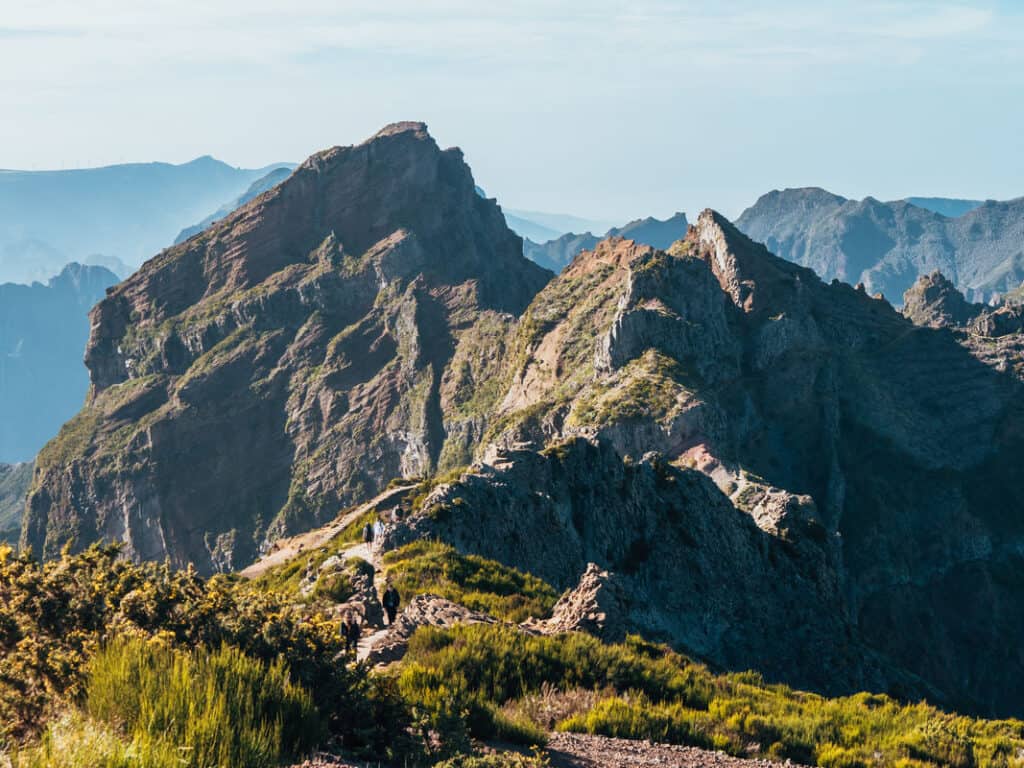
Madeira’s skyline of jagged mountain peaks makes it a hiker’s dream destination
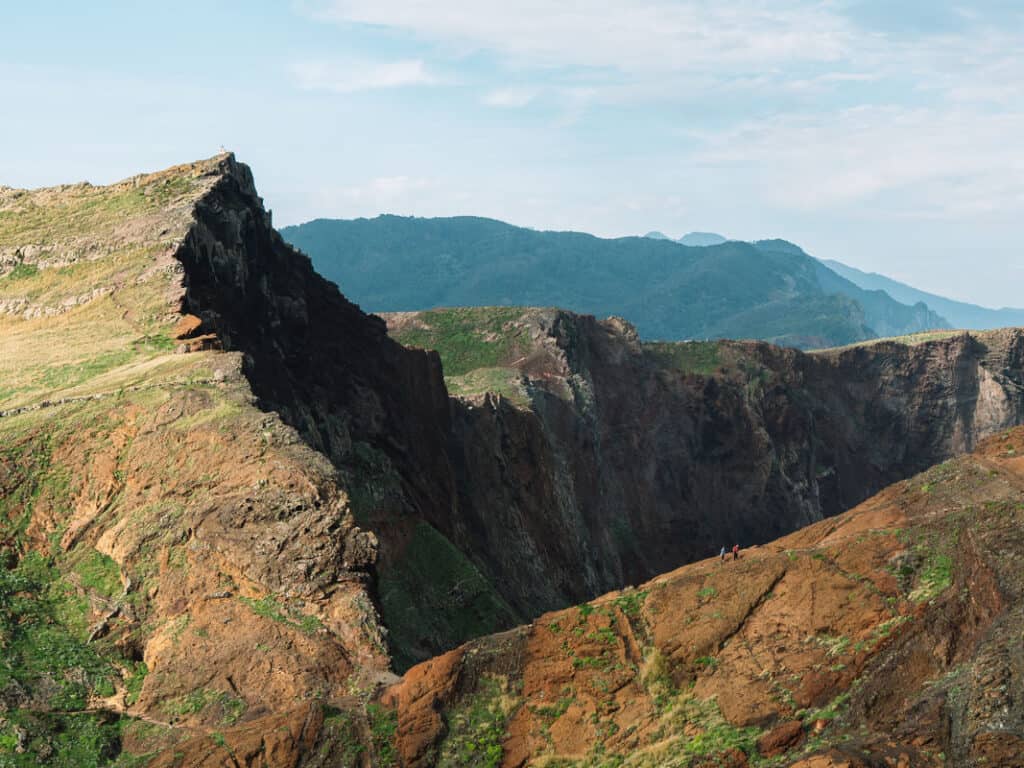
The island’s staggering geological formations are down to it essentially being a plate of a volcano that once thrusted up out of the Atlantic Ocean. Its basalt rock crags, coastlines and mountain peaks have shaped much of its tourism and visitors are encouraged to discover its history.
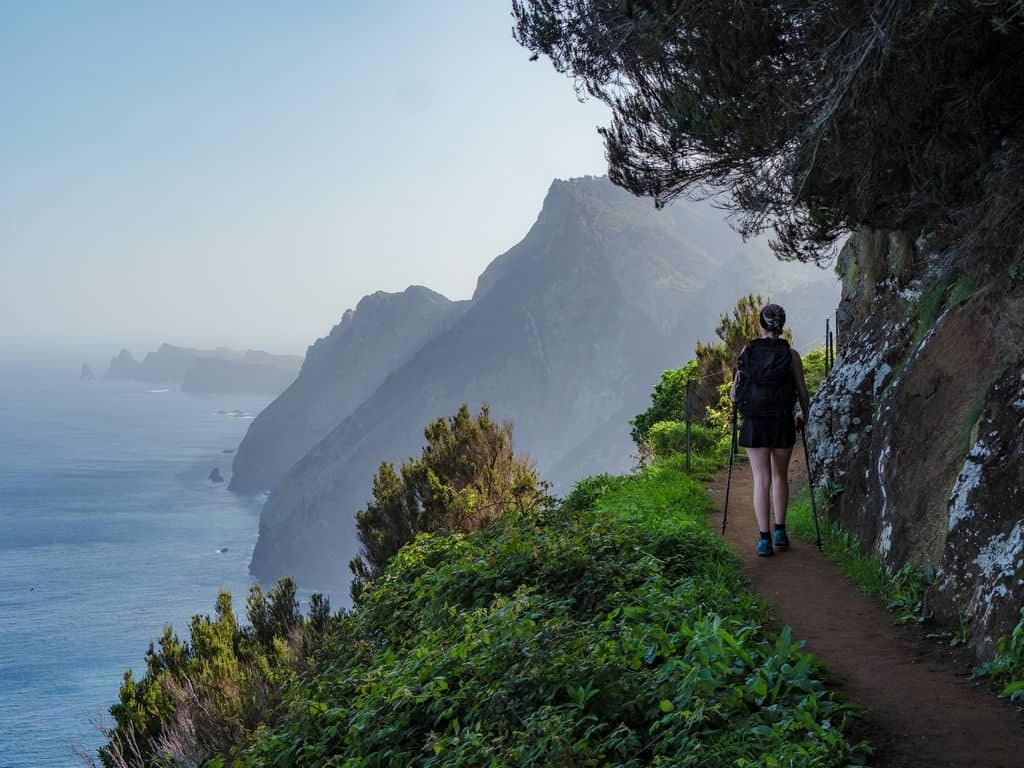
One of the island’s main charms is its web of walking trails. From calm coastal rambles to challenging mountain scrambles, there are routes for every hiker. The trails are found on most good navigation apps which means there is scope to get creative and plot your own route.
For such a small island, it has a mighty amount to offer tourists, especially for adventure-seekers. The valleys are carved out by roaring waterfalls and gushing streams which has provided a constant supply of canyoning openings making Madeira one of the best places in the world for canyoning.
Madeira’s elements also provide a playground for rock climbing, surfing, snorkeling, cycling, paragliding… the list goes on…

Cynthia and I took two weeks to explore Madeira in January, but we needed far more time! The island has such a peaceful energy and while there’s so much to physically do, it’s also a place to relax.
We wanted to pass on everything we learned from our trip and help you have just as much fun. So please read on for our ultimate Madeira travel guide!
Tip: See our Madeira Travel Page for a complete overview of all our travel guides about Madeira!
Disclaimer: This posts might contain affiliate links, meaning that if you make a purchase through these links, I may earn an affiliate commission. Thank you for helping to support this website!
Madeira experiences & travel resources
Top experiences
- Sunrise hike from Pico do Arieiro to Pico Ruivo
- Walking Tours in Madeira
- Whale watching & Sunset sailing tour
- Canyoning Adventures in Madeira
Madeira Travel Resources
1. Visiting Madeira: Madeira entry requirements
Schengen zone citizens
Schengen zone citizens can travel visa-free to Madeira.
Non-EU/EEA and UK citizens
Non-EU/EEA and UK citizens can enter Portugal without a visa and stay there for up to 90 days within 180 days for tourism, business trips, visiting family or friends, or any other short-term purposes.
US citizens
US citizens are allowed to travel to Portugal for up to 90 days for tourism or business without a visa.
2. When is the best time to visit Madeira?
This totally depends on what you want to get out of your adventure but Madeira is a superb destination anytime of year. Thanks to its subtropical climate, Madeira gets sunshine all-year round with warm temperatures ranging around 18C-22C in winter, spring/autumn 20-24C and around 24C-28C in summer.
What I loved about Madeira was that it had diverse microclimates.
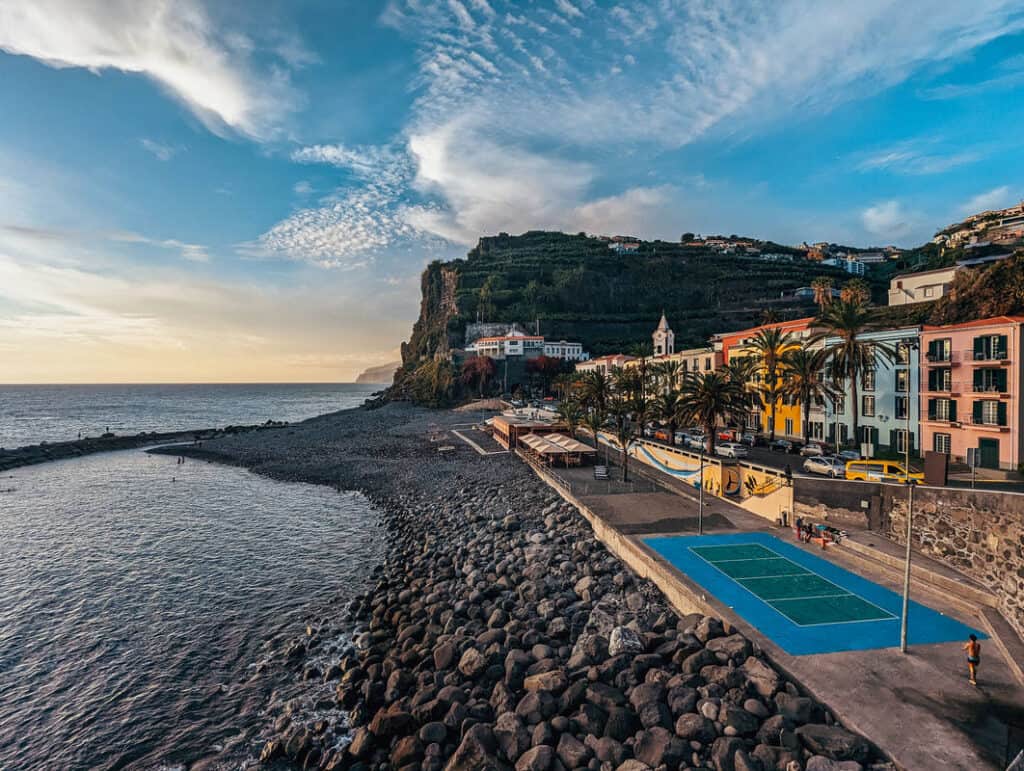
In the southern town of Ponta Do Sol, you’ll get sun all-year round. The east of Madeira, which was the first to thrust up out of the Atlantic as a shield volcano, is the driest. Meanwhile the central mountainous part can get more changeable weather because of the higher elevation. The northern area is more green, more humid and more likely to have rain.
2.1) What is the best month to go hiking in Madeira?
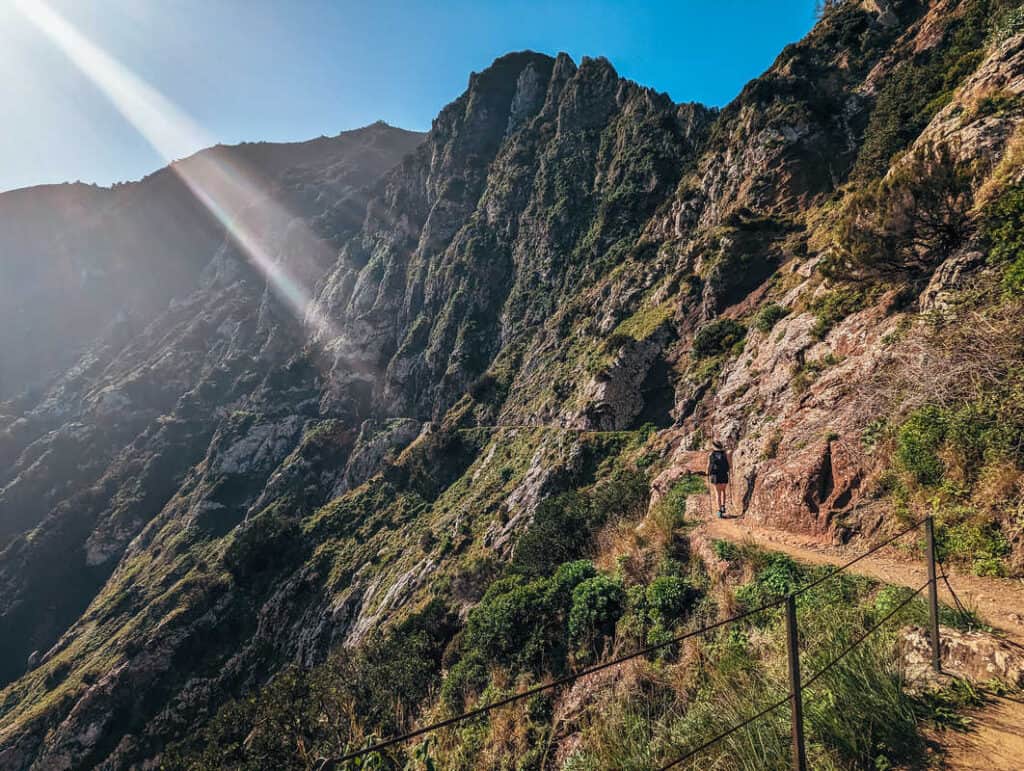
During our trip in late January to early February, we had average temperatures of 22°C which was pleasant for hiking. Some of the trails had little shade, but in those temperatures it was just lovely to be out in the sunshine without any serious risk of heat stroke/dehydration.
Hiking in summer would make for a sticky time and it’s not easy schlepping up a mountain with the sun bearing down on you. You’d also probably have to go on your adventures in the morning and evening which makes it a little harder to plan. If you want to explore the best of Madeira’s mountains and trails, organize your trip for winter, early spring or autumn.
2.2) What is the best month to go canyoning in Madeira?
With about 128 canyoning openings in Madeira, you can do it all year round. The water temperatures in the water runs don’t vary too much, but the air temperature will make a difference especially if you’re spending hours in the water.
If you’re travelling to the island purely for canyoning, I’d recommend booking a trip in spring/summer/autumn when it will be over 25C outside.
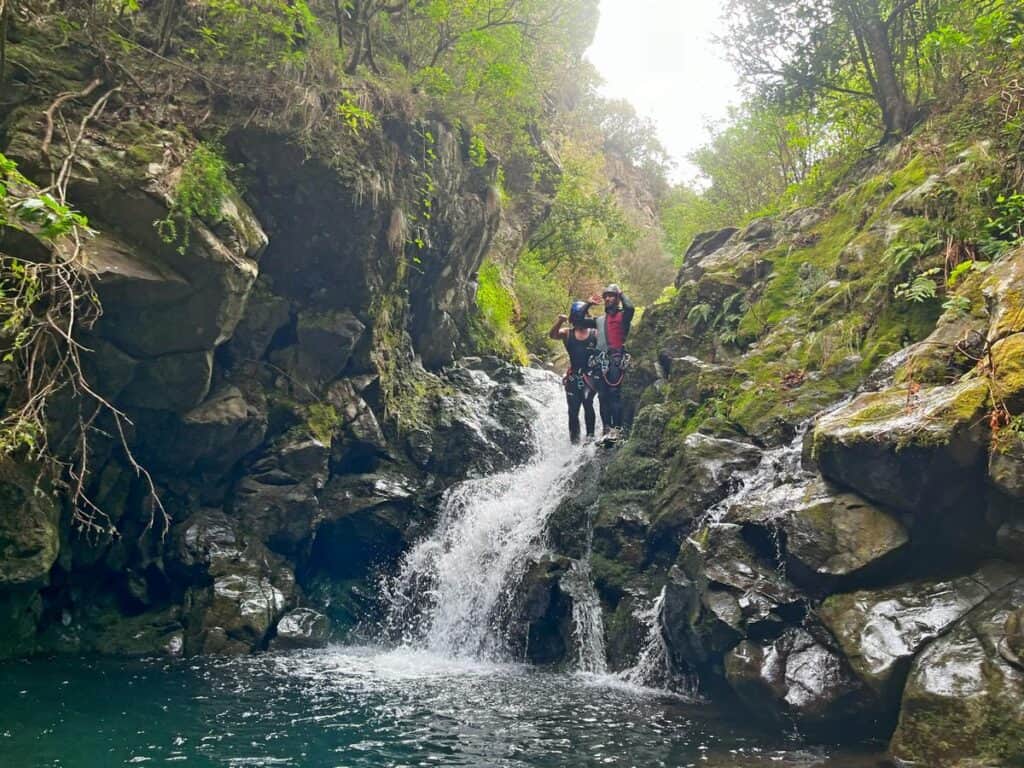
Madeira is known for being one of the best destinations in the world for canyoning
2.3) When is the tourist season in Madeira?
As a result of its alluring all-year round sunshine, Madeira is popular with tourists throughout all seasons. Locals have told me that Madeira gets incredibly busy in July.
If you want to head to some of the popular trailheads, it’s important to plan your activities earlier or later in the day due to parking and busy coach-loads of people (even in winter!).

2.4) What is the hottest month in Madeira?
The hottest month in Madeira is August, with an average temperature of 27°C. July also hits a similar temperature. If you’re planning to do some hiking during this time, I’d stick to other months. The levada walks are very sheltered by the forests, but the mountainous region is very exposed to the sun.
2.5) Should I visit Madeira in winter?
Cynthia and I traveled to Madeira in the height of winter and we both agreed it was a brilliant time to be out there. We both would love to come back again in this time of year.
I live in England and Cynthia lives in Belgium. In January, gloomy gray clouds hog the sky and it’s miserable… we were both desperate for some sunshine and beautiful surroundings. Madeira gave us more than enough vitamin D and was such a good tonic for the winter blues.
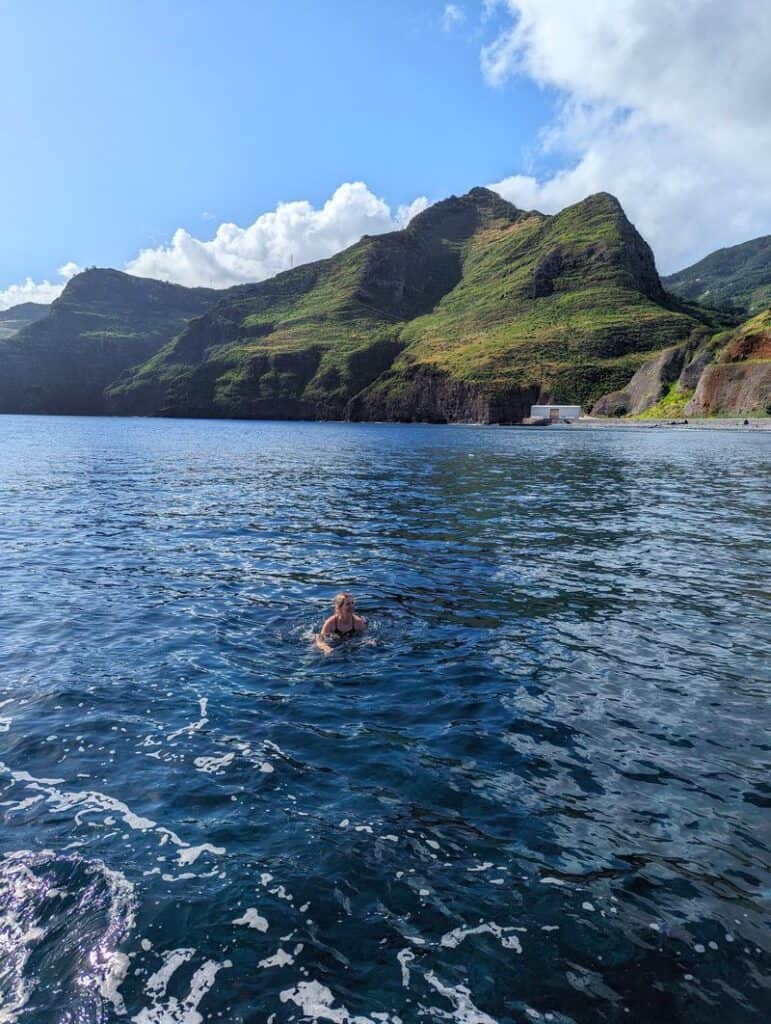
Practically, we found that the winter temps in Madeira were ideal for hiking and exploring the island. The sea was around 20C (very warm for that time of year) but I was told it is usually a little cooler at 18C in winter. If you’d like to swim in warmer waters, hold off booking a trip until the autumn when the sun has heated up the sea.
3. Travel insurance for Madeira
‘Oh, I won’t need insurance’. Stop it. Yes you do. Accidents happen when you least expect it and if you don’t have insurance you can get in all sorts of sticky situations.
Funnily enough, on our trip in Madeira, we were staying with a friend of Cynthia’s. For context, she had explored some really remote parts of the Earth and hadn’t had any accidents. When we were there, she severely sprained her foot just by walking to the shop and she couldn’t walk for weeks!
It just goes to show that anything can happen at any time so spend a few quid and get yourself insured. We recommend HeyMondo as a reliable all-round insurer.
Need Travel Insurance for Outdoor Activities in Madeira? I use and highly recommend HeyMondo Travel Insurance. As a reader of Journal of Nomads, you get a 5% discount off your insurance plan!
4. What is the best way to get to Madeira?
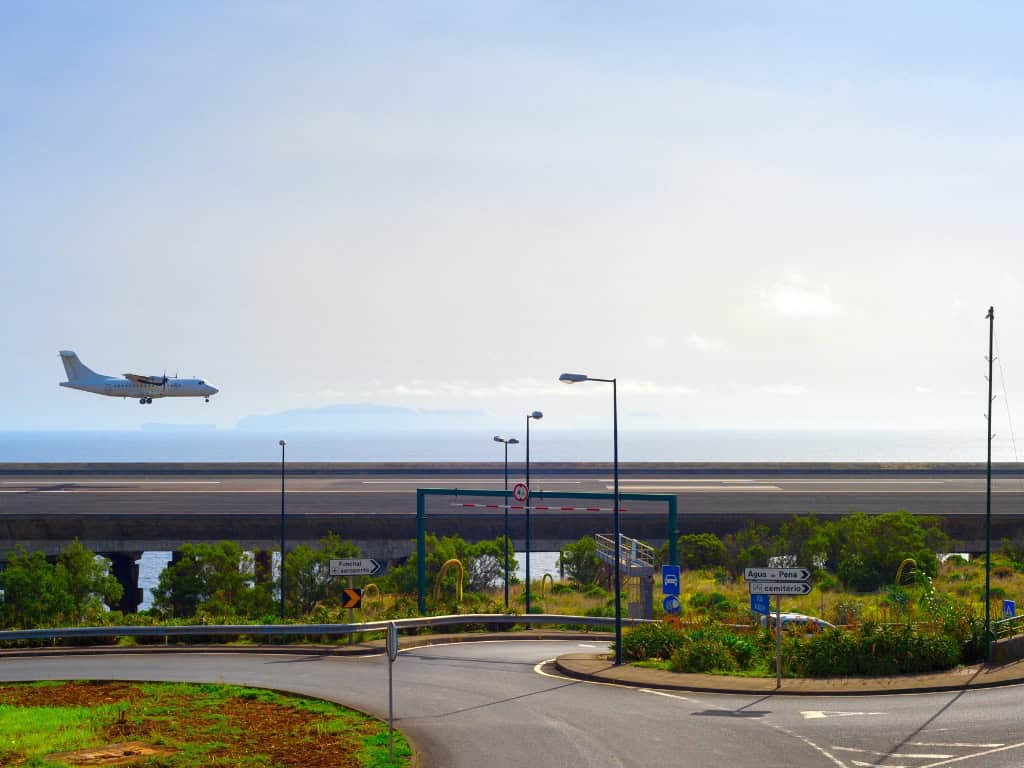
The only way to get to Madeira is by flying into its airport (Aeroporto do Funchal). The airport is 13km away from Madeira’s capital Funchal.
Although the airport is commonly known as Aeroporto do Funchal, it was officially renamed Cristiano Ronaldo International Airport in 2016. Ronaldo was born in Funchal and grew up in the nearby parish of Santo António.
The architecture of the runway is pretty spectacular as the structure is a huge platform supported by hundreds of pillars!
The airport mainly hosts flights from Europe, so if you’re flying outside of Europe you may have to consider transfers into your journey. The most important thing to mention is Madeira has one of the only airports in the world with wind limits in place.
This means if there are strong winds, flights will be diverted or canceled. It does happen pretty regularly, so remember to get good travel insurance covering flight issues.
5. Transportation in Madeira: do I need to rent a car in Madeira?
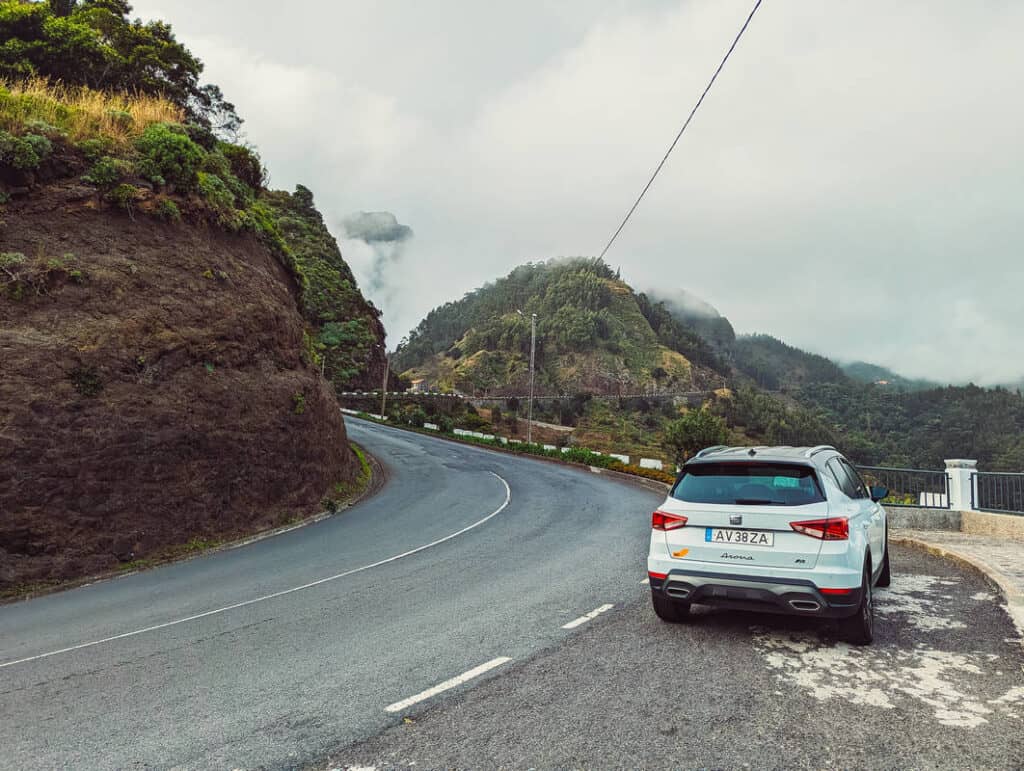
In short, yes, you will need to rent a car in order to get about the island. Many of the trailhead and canyoning starting points are remote and near impossible to reach without a car.
5.1) Car rental services from Funchal airport
Hiring a car is a fantastic way to access the island’s myriad of mountains, beaches and forests. Madeira is a small island and if you’re located centrally, most places take one hour or less to drive to. The best place to rent a car is at Funchal Airport.
I’ve written a full guide on everything you need to know about driving in Madeira which you can read here. It’s got lots of helpful tips and advice that we learned during our trip.

5.2) Parking in Madeira
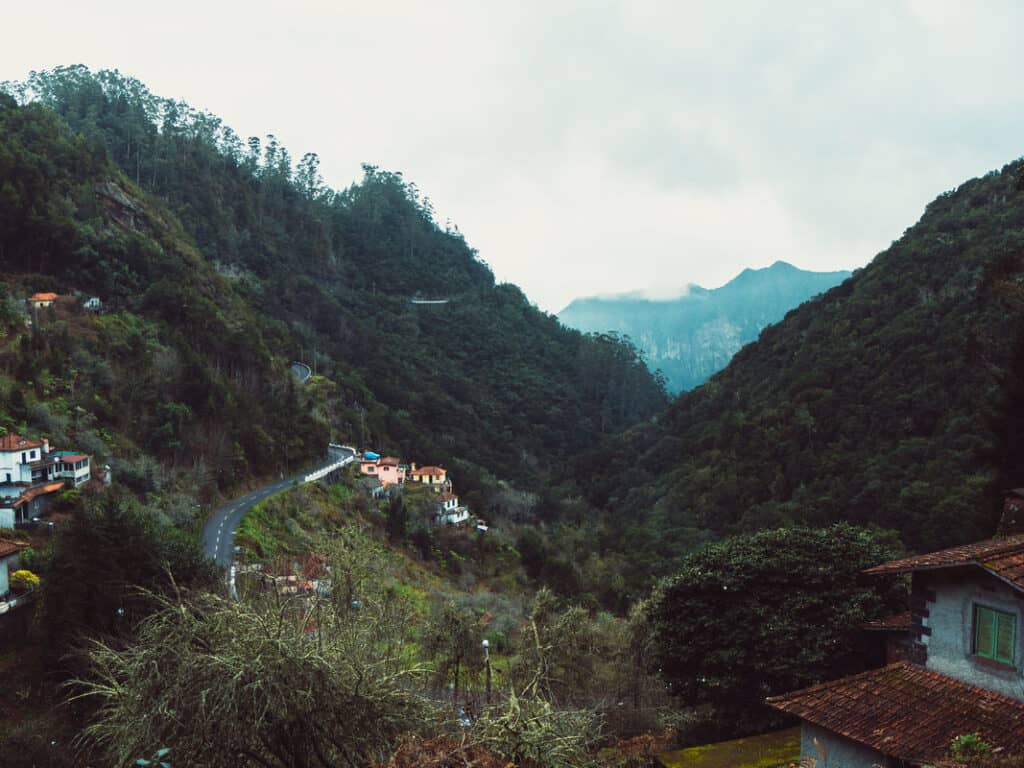
Visitor parking for visitors seems to be a total bugbear for the locals and we were on the receiving end during our stay. We thought it was important to include in this Madeira travel guide.
When we arrived at our accommodation, we were loosely told of a parking spot. It was clear of private parking signs, wasn’t near a yellow line (which means no parking in Madeira) and there were plenty of spaces available in the surrounding area.
On our third day, we walked down and found a threatening note pinned on our car from a resident who said they would call the police if we parked there again and some *other lovely language*. Within minutes, some locals came out of their homes and stared us down. We scuttled away before they got out their pitchforks.
We couldn’t help finding the situation funny (Cynthia kept the note as a token of our stay) but we were obviously confused because we had played everything by the rules. Even other locals said we had not done anything wrong.
It was probably some tetchy neighbors who hated visitors. Nevertheless, it’s something to bear in mind. Also just make sure you double check with your accommodation about delegated parking spaces, don’t park in spots that are labeled ‘estacionamento privado’ and don’t park on yellow lines.
5.3) Public transport in Madeira: Buses
In our time on the island, we didn’t see many buses. I did some research while I was there to see if it was possible to travel to other parts of Madeira from Ponto do Sol but the timetables were pretty difficult to navigate and the services weren’t regular.
Timetables for buses leaving from Funchal to urban areas can be found here, while timetables for buses leaving Funchal to the inter-urban areas can be found here.
5.4) Public transport in Madeira: Taxis
Taxis in Madeira are yellow saloon cars with two blue stripes across the vehicle’s body. Taxis that drive outside of Funchal don’t use a taxi-meter and work on a kilometer basis. The government sets prices for pre-defined routes which can be found on the back of the front seat.
From what I’ve read online, you can usually haggle on the price with the driver – just do it before you set off on your journey.
The app Bolt is in operation on the island, but it doesn’t have many drivers using it outside Funchal. I tried to use it twice from Ponto do Sol but didn’t have any success.
Note: If you can’t drive but want to make your Madeira trip happen, there are ways where you could organize transfers (sadly it won’t come cheap!). Take a look at GetYourGuide and get in touch with local tour companies.
5.5) Hitchhiking in Madeira
Cynthia and I passed hitchhikers during a trip. Annoyingly, we couldn’t pick them up because one time they waited in dangerous parts of the road where it was impossible to stop. The following time we passed another hitchhiker, they started wildly flapping their arms and jumping up and down while running towards us. It wasn’t the way to say ‘hey, I’m going to be chill in your car’.
Needless to say, if you’re going to hitchhike here, make sure you wait on a part of the road where it’s safe for the driver to pull over, and flag down a car safely.
6. How many days do I need in Madeira?
Madeira is an amazing destination for adventure-seekers. There are endless activities to get stuck into… these include hiking, canyoning, rock climbing, coasteering, surfing, paragliding, diving, trail running and cycling.
However, Madeira is also a destination to rest. There are numerous yoga days and mountain meditation retreats to choose from. The island has so many forces of nature and it’s good to take some time to appreciate it.
Cynthia and I spent two weeks on the island and we were desperate to extend our trip. There was so much more to explore!
The magic of Madeira is that you can pack in a lot of activities and also take everything in at an easy pace. The people living here are very relaxed and we felt a calm energy with the quality of life. I’d recommend anytime from 10 days to two weeks to get a taste for everything Madeira has to offer.
7. What activities can I do in Madeira?
7.1) Hiking along the levadas and veredas
Hiking is definitely one of Madeira’s main attractions. From calm coastal rambles to challenging mountain scrambles, there are routes for every walker.
Levada, meaning to carry, is an irrigation system that collects water and transports it across the island. The routes often start perched up high in the mountains and snake their way down into villages, towns and cities.
The island’s web of waterways span about 3,100km and are some of the longest irrigation systems in the world. Some of the channels are about 600-years-old and the structures are synonymous with Madeira.
Nowadays, the channels are used for human consumption, electrical energy and agricultural uses. However, they are also a brilliant source of inspiration for hikes because the systems wind into some seriously beautiful and remote places on the island! They are known as levada walks.

The word vereda translates to path. Madeira’s veredas can widely vary from a simple route in the forest to a trickier mountainous path.
In the mountainous region, the trails are named by PR which are a useful tool to find trailheads and plot your distance/difficulty.
Madeira is pretty unique in that its trails are clearly marked and maintained. This means it’s really easy to shorten/lengthen versions of routes and link up mountains and beauty spots.

7.2) Canyoning in Madeira
The valleys are carved out by roaring waterfalls and gushing streams which has provided a constant supply of canyoning openings. Madeira is known for being one of the best places in the world for canyoning and it’s synonymous with outdoor lovers on the island.
Adventure groups can cater for total beginners to experts and Madeirans really encourage you to give canyoning a go.

7.3) Rock climbing in madeira
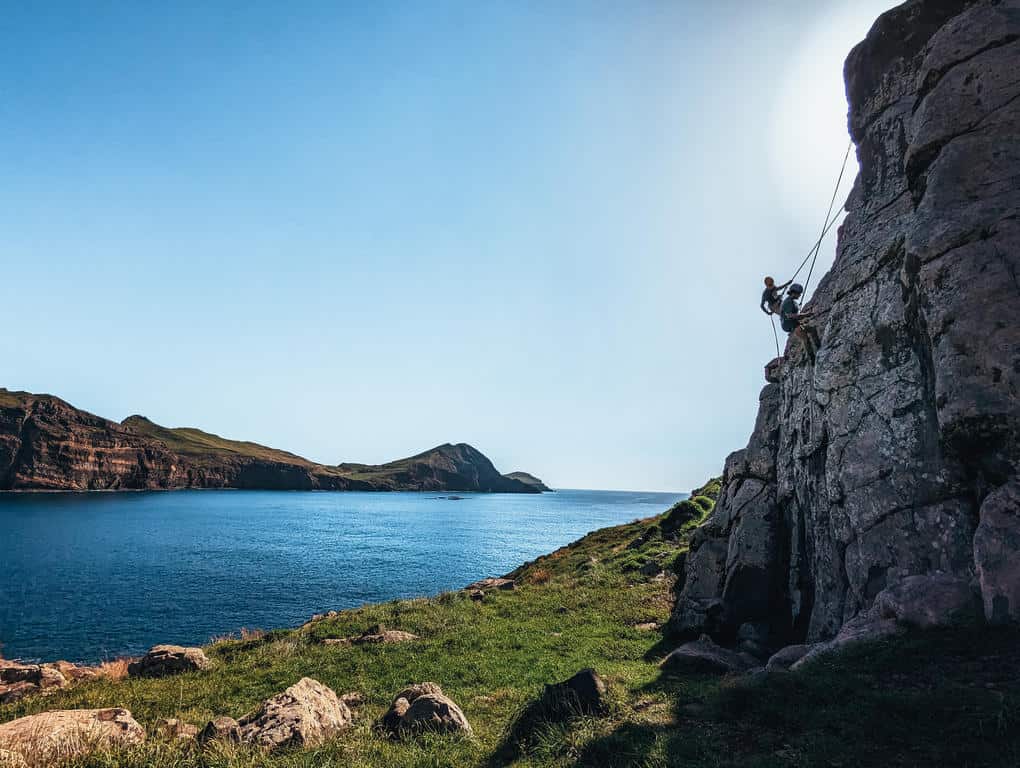
Contrary to what you’ll find written online about climbing in Madeira, there are a lot of varied climbing routes here.
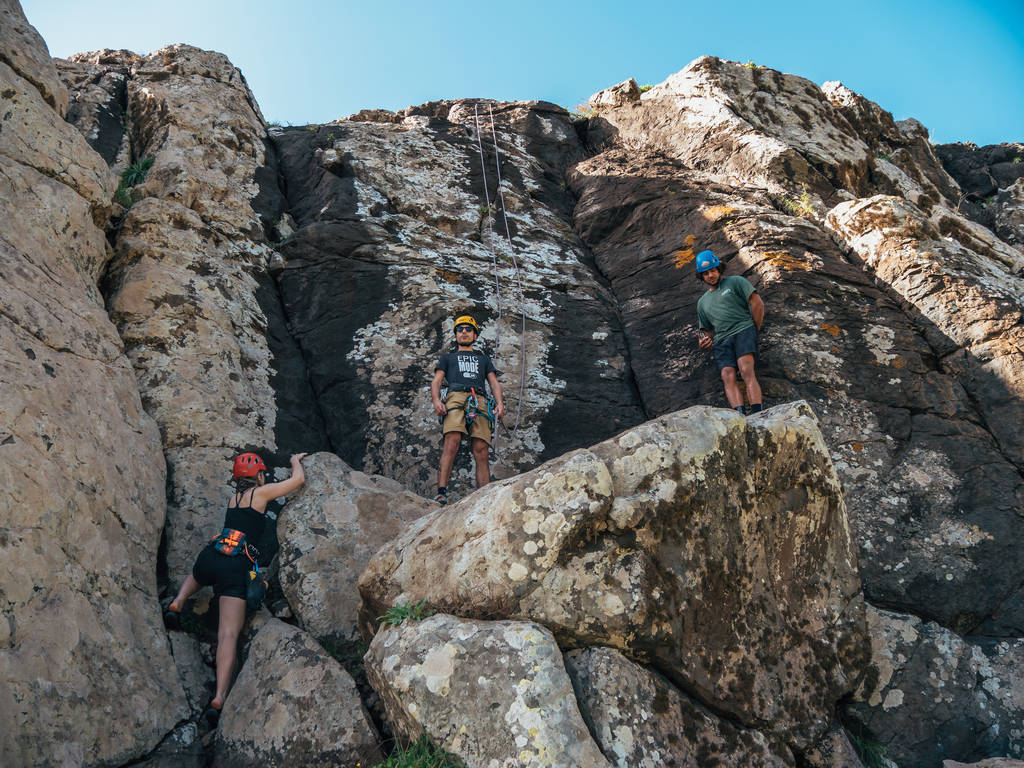
There are venues for sport, trad, multipitch, bouldering and deep water soloing dotted all over the island. I was really impressed how even at the easier venues, there were magnificent coastal views.
The climbing community here is really welcoming and it’s easy to link up with locals. Alternatively, if you’re new to climbing and want to give it a go, there are groups that can provide equipment and training for the day.
7.4) Coasteering in Madeira
If canyoning seems a little too daring and you want to opt for an activity more chill, why not try coasteering?
Coasteering takes place exclusively on the coastline and involves lots of cliff jumps, swimming and some scrambling.
Coasteering is less committing than canyoning – if you want to sit it out, you can! Large groups can be taken for this reason and is more inclusive than canyoning. Many tour operators on the island also offer this activity.
7.5) Snorkeling and diving in Madeira
Staggered all along the volcanic coastline are rocky outcrops which harbor incredible marine wildlife. The eastern shores are some of the finest for seeing thousands of unique fish and sealife.
I’d really recommend heading to Beach Pedra D’eira, Caniçal for snorkeling. It’s a tiny pier that’s tucked away from the tourist spots. The turquoise waters here shimmer in the sunlight so it’s generally a lovely place to chill. Once you start exploring beneath the water, there are so many brightly-coloured fish, marine animals and plants to swim up to.

If you’re wanting more of an organized snorkeling or diving trip, here are some tours we recommend:
7.6) Surfing in Madeira
Did you know Madeira is a surfing destination? The island is known for having constant swells which attracts surfers from across the globe.
Something to note is that Madeira is a volcanic island with rocky crags and very little sand. This means it isn’t the easiest, especially when you’re just starting out learning.
Madeira Surf Centre has a great article with a map locating spots across the island. They also provide lessons ranging from total beginners to advanced.
According to Surfer Today, the best site with one-to-six foot waves for beginners is Fajã da Areia (north of the island). Meanwhile, the west coast is a hit with intermediate and advanced surfers. There are also spots which can whip up 50-foot waves, like in Ponta do Pargo!
Note: If you’re heading out to Faja, be careful of where you put your feet. There are lots of sea urchins there!

8. Madeira travel guide: Where are the best hiking spots in Madeira?
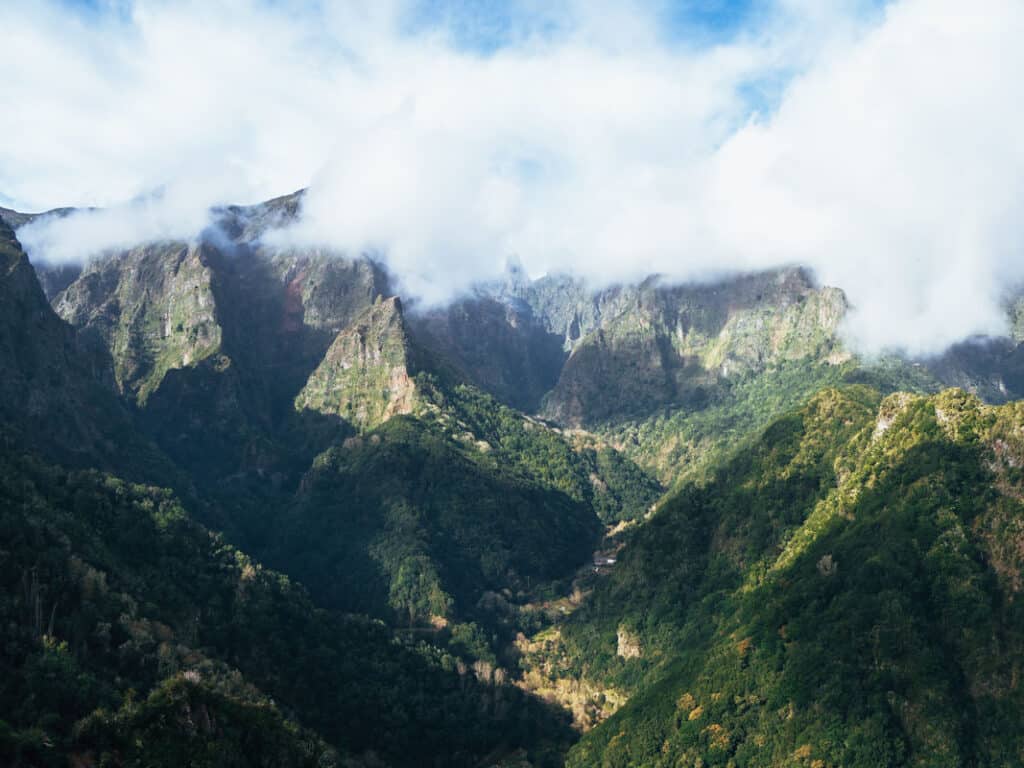
Madeira’s skyline of vibrant jagged peaks and its web of walking paths makes the island a hiker’s dream destination.
The island’s trails are clearly established and widely available on navigation maps. This energized me to create routes that linked the heavily-trodden tourist ones to peaceful wild paths.
Here are our recommendations for some lesser-known trails which are varying in ability and terrain. You can read my full hiking guide for Madeira here.
- Caldeirão Verde Levada Trail: 13km out and back, 3 hours, easy-moderate, bring torch (tunnels)
- PR 8 – Footpath of Ponta de São Lourenço: 6km out and back, 3 hours, easy-moderate, can get very busy (go early or in late afternoon)
- Pico Grande via Caminho Real da Encumeada PR 12: 9.5 km out and back, 4.5 hours, moderate-hard
- PR14 Levada dos Cedros: 10.5km circular, 3 hours, easy-moderate, not very busy
- Levada do Larano – Boca do Risico: 9.2 km out and back, 3 hours, easy, part of bigger 24 km trail: Caniçal’s Levada Larano Footpath
- Levada do Moinho – Levada Nova: 10km loop, 3.5 hours, moderate, bring torch (tunnels)
- Chao dos Louros to Pico Ruivo: Point-to-point 13km, +1600m -1000m descent, 5 hours, hard
9. Money and currency in Madeira
9.1) Currency in Madeira
The currency in Madeira is the Euro. Currently €1 equates to $1.01 USD or £0.85 British sterling.
9.2) ATMs in Madeira
The majority of hospitality businesses take credit/debit cards but it’s a good idea to have some cash with you, especially for parking in touristy spots or hiking trailheads.
9.3) Exchanging money in Madeira
Currency exchange offices are open Monday to Friday and Sundays from 09:00 to 19:00, closing for an hour between 13:00 to 14:00. On Saturdays the offices open from 09:00 to 19:00. Outside these hours, exchanges can be made at some hotels.
9.4) Tipping in Madeira
While tipping isn’t expected like it is in the United States, the wages in Madeira for hospitality services are fairly low so it’s a good idea to tip.

10. Packing list for Madeira
- Waterproof coat and trousers: Madeira has a whole range of microclimates and the thunderstorms here are whoppers. It’s best to bring a lightweight coat that will battle a heavy, but short, shower.
- Trail runners/walking boots. What shoes should I bring to Madeira? Ah, the age-old question. This completely depends on what you prefer on your feet. I prefer trail runners that aren’t waterproof so they can drain and dry quickly. It also helps me move faster. Other people prefer better ankle support and waterproof boots. Keep in mind it is hot and you’re only really likely to get your feet wet if it rains or if you’re heading on some of the levada walks.
- Small ankle gaiters. I didn’t need to use these but brought them out with me just in case. Small lightweight gaiters help prevent dust/small rocks/mud from getting in your shoes. If you accidentally get caught in rain, they’re a pretty useful item to have.
- Head torch. On average, Madeira gets about 8 hours of sunshine daily, so you’ll probably grasp as much of the day as you can. If you’re out hiking and you haven’t made it down to a village in time for dusk, it will get dark awfully quick. Also on some of the levada trails, there are long tunnels so a head torch is an essential piece of kit.
- Hiking poles. Granted, you probably won’t need these on the shorter hiking routes, but Madeira does have some steep trails. Poles are like an extra pair of legs and are so useful for boosting you up high ascents, preventing falls and stabilizing you across streams.
- Lightweight t-shirt. If you’re hiking on the island, you’re likely to sweat a lot. Don’t wear cotton because it absorbs moisture and is a nightmare to dry out. Stick to polyester.
- Shorts/skort. Cynthia and I didn’t anticipate how hot the island would be, even in January. We had to head to Decathlon and pick up some skimpier clothes to hike in!
- Longer leggings/midlayers. In the evening, temperatures can get cooler and it’s always smart to pack warmer bottoms and a fleece.
- Battery pack and cords for phone/camera. Always an essential if you’re heading out for a long day.
- European plug adapter. Madeira uses TYPE C, like many other EU countries.
- Swimwear. It became a daily ritual for Cynthia and I to go swimming in the sea after a long day of hiking. Even when we went in January, the water temperatures were 22 degrees. Bliss.
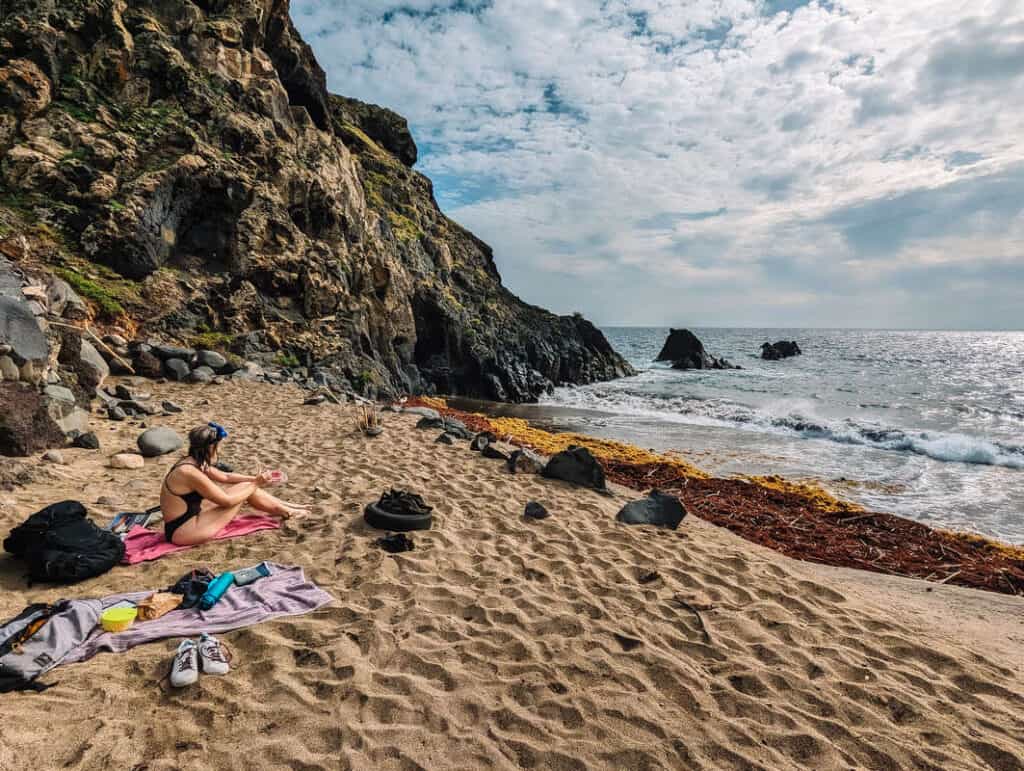
- Beach shoes. The island is essentially a whole plate of volcanic rock so many of the coastlines are pebbled beaches or rocky outcrops. Beach shoes are super useful to stick on your feet to get into the sea with ease or to explore the waterfalls.
- Mosquito repellent. Sadly, yes you need this. Madeira has a sub-tropical climate meaning it has hot summers and mild winters.
- Water bottle. Hiking in hot temps means it’s essential to keep hydrated. The water is clean in Madeira and you can drink from the taps.
11. Food and drink in Madeira
It won’t come as much surprise that Madeira is a seafood paradise. Most restaurants serve octopus, salmon, sardines and prawns accompanied with fries.
The supermarkets are packed with typical Western food, great bakeries and super fresh fruits and vegetables.
11.1) What is Madeira’s signature dish?
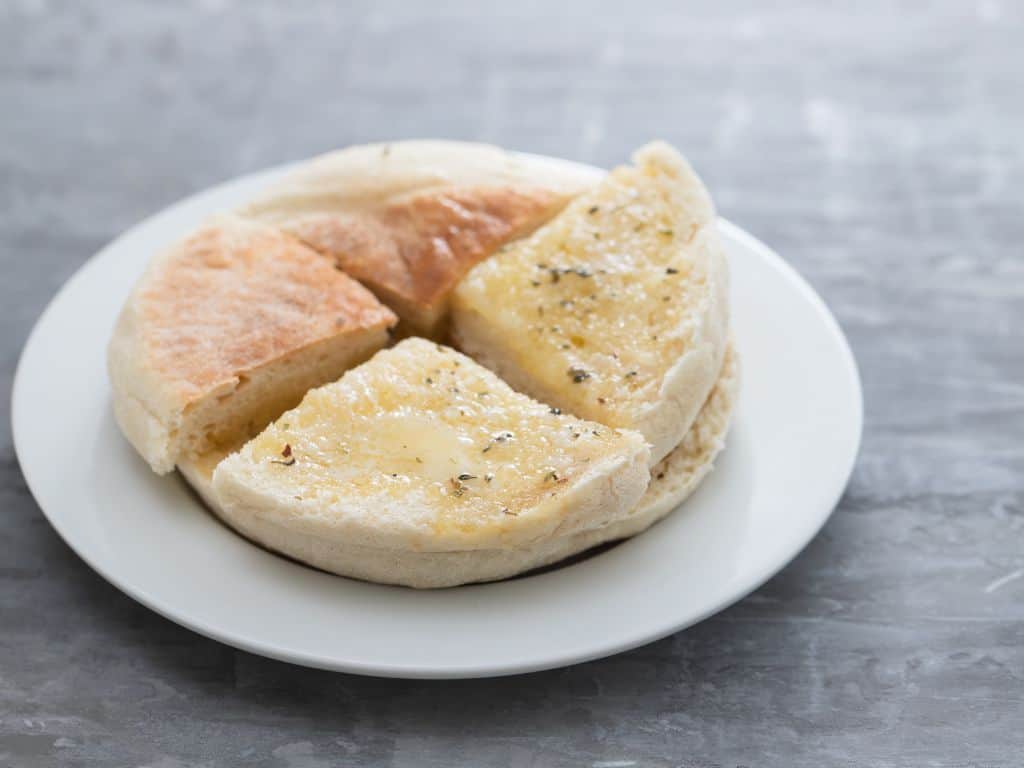
One of the island’s specialties is its Bolo do Caco. This is basically a slab of garlic bread stuffed with delicious herbs. Many cafes serve Bolo do Caco with fillings like ham, cheese or octopus. We loved this dish and ate it really regularly!
Filete de Espada, also known as scabbard filet, is a type of black fish that swims deep in Madeiran waters. The dish is typically made with passion fruit and banana sauce. Head to Funchal for the best restaurants.
Another seafood speciality to try are the lapas (limpets). These are usually fried and then served with a splash of lemon juice and some butter.

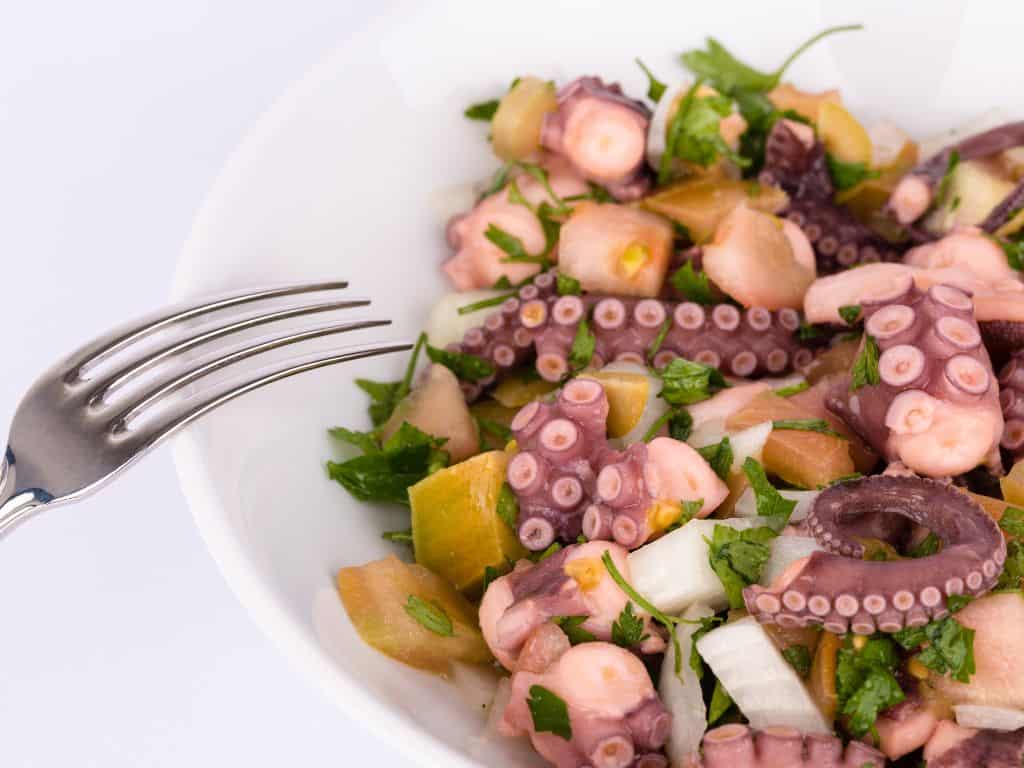
Another common dish you can find is insalata di polpo (octopus salad). Let’s just say it wasn’t Cynthia’s favorite thing in the world… she likened it to pickled octopus on vinegar lettuce.
11.2) What is Madeira’s signature drink?
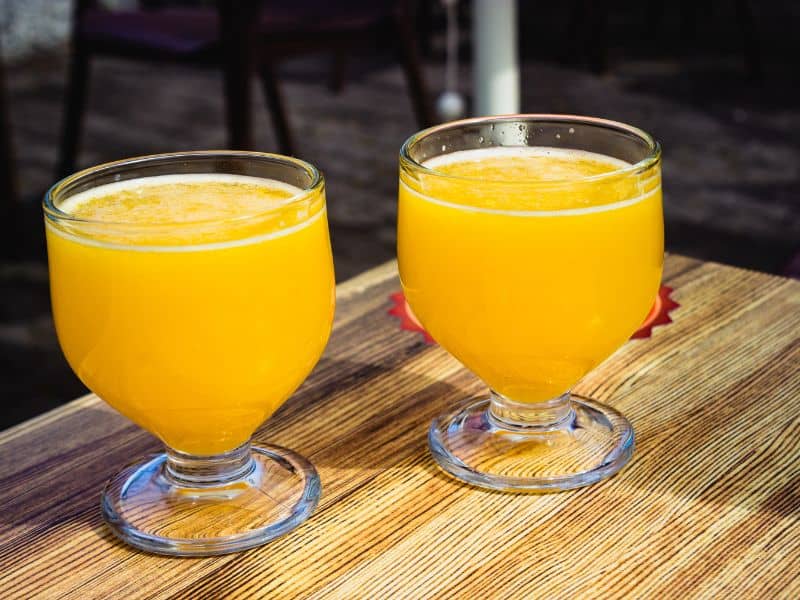
Poncha is Madeira’s signature boozy drink. It’s made up from rum, lemon and honey. The strength will hit you like a sack of spuds but it’s very tasty. Many restaurants and bars make the drink up in a huge jug, like rum punch. Look out for other variations too – I tried passion fruit and it was delicious.
12. Accommodation in Madeira
12.1) Airbnb in Madeira
There are plenty of Airbnb rental properties available in Madeira, but they don’t come cheap. I’d recommend widening your search to camping pods, tipis or basic huts… there are some gorgeous little places tucked away in secluded spots that are often much cheaper than apartments.
12.2) Hostels in Madeira
There are a range of hostels to choose from dotted all along Madeira’s coast, but I struggled to find any situated in the mountainous regions. Take a look at Booking.com to check them out.
12.3) Co-living in Madeira
If you’re planning to stay longer than a fortnight and don’t want to fork out thousands on an apartment, there are co-living spaces available for like-minded people on the island. Search for co-living groups on Facebook here.
12.4) Camping in Madeira
With the island’s vast hiking opportunities, why not combine it with a camping trip? There are campsites across the island which you can find on this useful website.
If you fancy a multi-day hiking trip, the trails provide endless wild camping spots and you’ll be guaranteed some of the most magnificent views of the island. Set up camp at dusk, pack away in the morning and follow the no trace rules.
13. What area to stay in Madeira
There’s no hard and fast rule about which area is best to stay in Madeira. As heads up, it’s not cheap to find accommodation on the island and you’ll likely be based around what can fit your budget (see above).
Your location doesn’t matter too much because most places on the island take one hour or less to travel to.
Cynthia and I stayed in the stunning southern town Ponta do Sol (it means point of the sun and it gets the most sun on the island). It was a fantastic base for us to explore Madeira. There was a rocky beach, gorgeous sunrises and levada walks from the town. Practically, Ponta do Sol had a small shop, bank, post office and gas station.
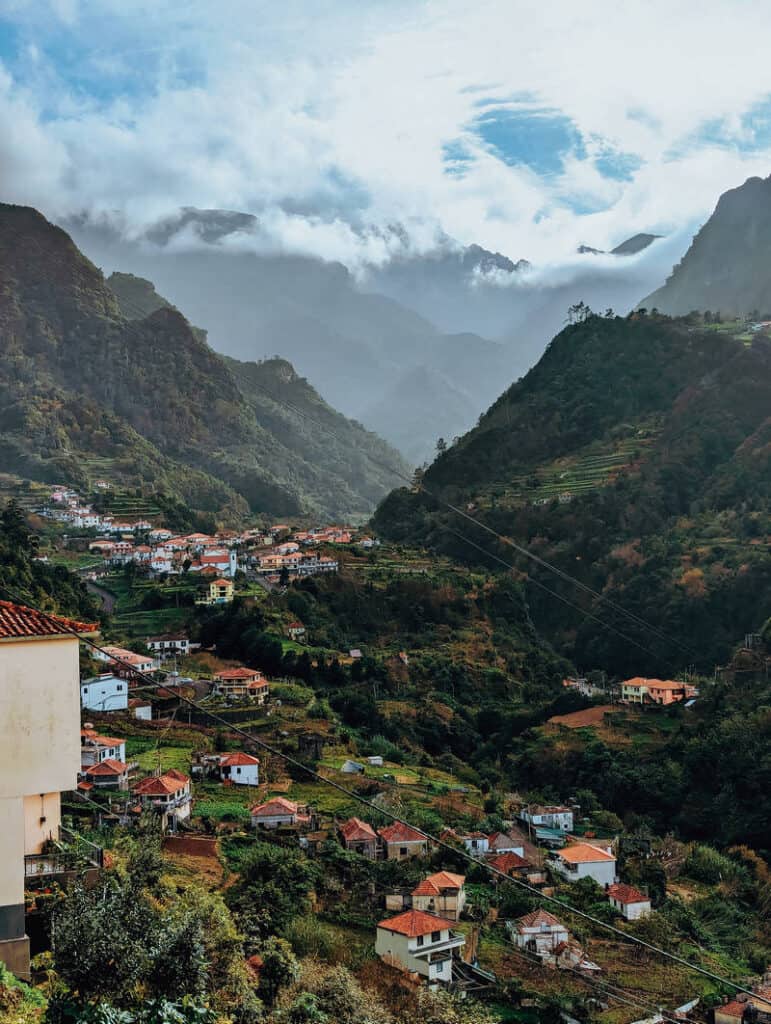
If you’re more drawn towards the mountains, you’ll likely want to base yourself in the north/south, ideally below or above the mountainous region. The west is known for surfing, while the east has some of the best swimming spots. The north of the island is far less touristy and is considered wilder.
If you can’t drive, you’ll likely have to base yourself in Funchal and arrange transfers from the capital. However, I’d highly recommend hiring a car for your trip. It’s near impossible to get to some of the wilder spots in nature without a hire car.
14. What languages are spoken in Madeira?
Madeira is an autonomous region of Portugal so the primary language is Portuguese. English is taught as a second language in schools, so many Madeiran people speak it.
14.1) Useful phrases to know for your trip in Madeira
I also suggest you install the Google Translate App for Portuguese and download it so you can use it offline.
15. What religions are practiced in Madeira?
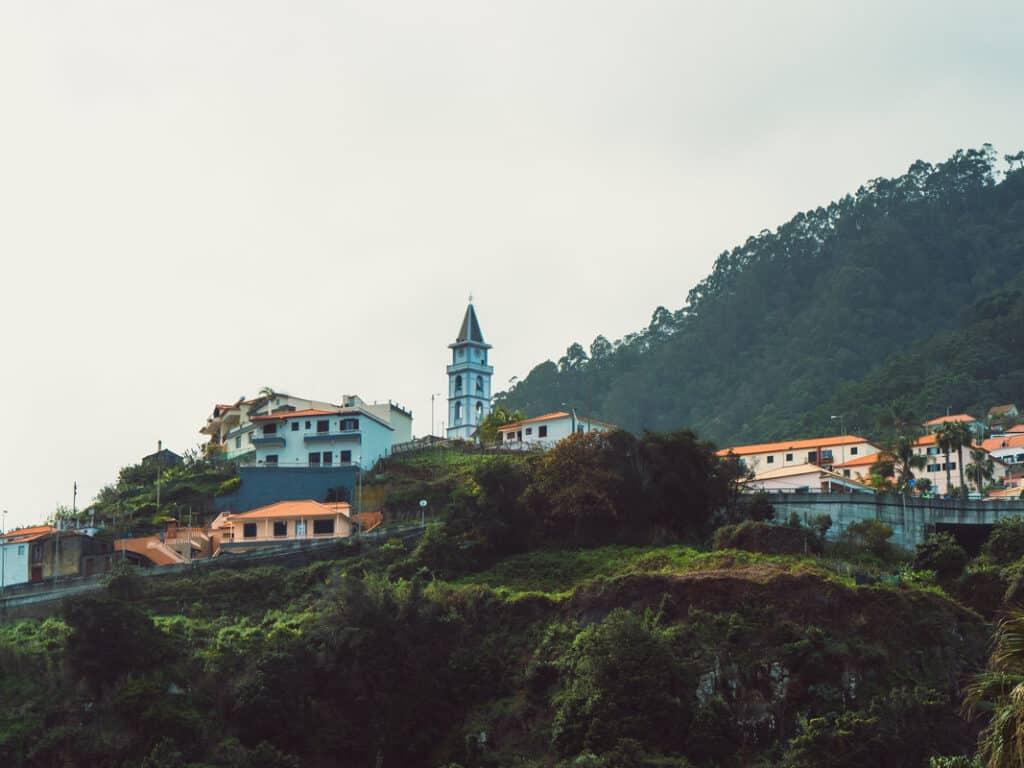
The majority of people in Madeira practice Christianity, with Catholicism being its largest denomination. You’ll see that a lot of the houses are adorned with small shrines of saints and some of the trailheads have tiny chapels which are intricately decorated.
16. How is the internet in Madeira?
16.1) Mobile data
I use a British SIM card called EE. I bought a European add on and my coverage was excellent for the entire time I was there. The only time I obviously didn’t have coverage was in lowlands of the mountains and deep in the forests.
Cynthia had the same experience with her Belgium SIM. Most European and American SIMs will have easy add on options available for your trip.
16.2) Wi-Fi
You won’t struggle to find Wi-Fi. It’s very established in hospitality facilities, homes and tourist destinations.
17. Is it expensive in Madeira?
17.1) Accommodation
I’ve touched upon this earlier, but compared to other Portuguese areas, Madeira is more on the expensive side with rental homes. There are ways around this though, like co-living during your stay. Scroll up to 12. for more information.
17.2) Supermarkets
Madeira is a small island, so most things need to be imported which is why you have to be careful what you pick at the supermarket (for some bizarre reason pasta sauce was €6?).
There’s always ways to eat cheaply though, and we found groceries that worked for our budget.
On the plus side, some of the island’s fruits and vegetables come at a total bargain. Fish too is caught locally and is good value.
17.3) Restaurants
Cynthia and I ate out at a few cafe bars where the dishes were good value with good portion sizes. We were able to get a plate of food and a glass of wine for around €12-15.
18. Are drones allowed in Madeira?
Yes, drones are allowed in Madeira. You don’t need to declare anything but ensure you pack it in with your hand luggage, not hold luggage.
Also, please be respectful and safe when flying. If you’re at the top of a summit or in a precarious place, think about hikers and climbers who could be scared easily by the sound of a drone. Same goes for wildlife being disturbed by the sound or movement or a drone.

19. Culture and etiquette in Madeira
Although many of the elderly people practice Catholicism, the majority of people dress according to the weather and there aren’t any strict dress codes to adhere to.
Spitting and littering is a big no-no in Madeira. Madeira is such a green clean island and its vast amount of thriving plants are no doubt partly down to Madeirans keeping their surroundings clean.
20. Tours in Madeira
There are plenty of tour groups and guides to choose from for all kinds of activities and excursions.
During our trip, the adventure group Epic Madeira took us out for some climbing and canyoning. Their guides were super knowledgeable and friendly, with their focus being combining safety with having a laugh.
Epic Madeira offers rock climbing, coasteering, climbing and hiking trips. If you’re looking for equipment or a specific transfer, they’ll also be able to help you out. The staff are really into supporting the island’s tourism so if you want to do an activity they don’t offer, they’ll be able to put you in touch with a popular tour group. Contact them here for more information.
If you’re looking for transfers or heading to busy trailheads, take a look at GetYourGuide and get in touch with local tour companies.

I hope this Madeira travel guide covers all of your questions and helps you with planning your trip. Madeira is such a spectacular place and we’re really excited to share what we’ve learned with you. If you have any other queries or insights, please comment below or contact us!