
What are the things to prepare for traveling long-term? What do you need to keep in mind and how can you be prepared for anything when you’re going on a long-term trip? Here’s an international travel checklist with an overview of what you need to prepare and know before going on a long-term adventure.
Post originally written on March 22nd, 2021, updated on July 15th, 2025.
I still remember that feeling of excitement when I was preparing for my first solo long-term trip.
I was going to travel for a year to Australia and New Zealand. I had little travel experience and not really a clue what I was doing. I felt nervous and anxious about leaving my family, friends, and home but also thrilled for the adventure ahead.
When you’re about to go on a long-term trip, there are a lot of things to take care of – f.eg. finding reliable and affordable long-term travel insurance, such as Safetywing. And while you’re preparing for that adventure into the unknown, you might also go through a variety of emotions for the upcoming trip.
You might feel overwhelmed at times by all the things you need to do at home (storing your belongings, arranging a postal address, saying goodbye to your loved ones), nervous about the trip ahead (am I really ready for this??) and hopefully also very excited for this new adventure.
I can fully relate to these feelings as I’ve been through it myself many times.
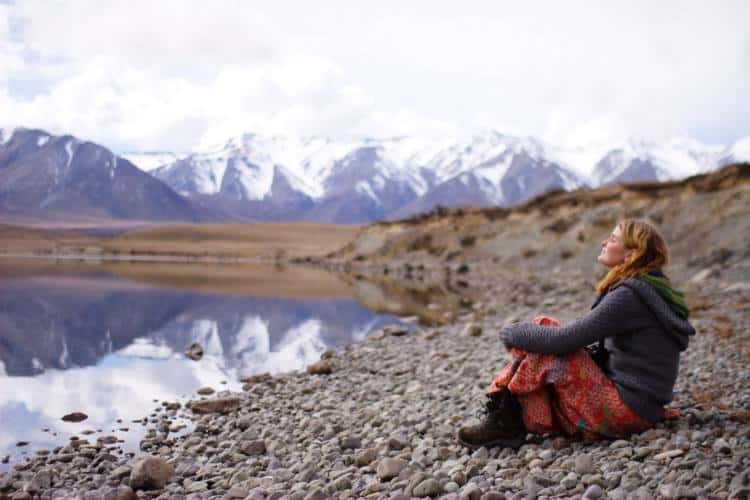
I’ve been living a nomad life for 10 years now. Every time I’m about to leave my home base and set out on a new adventure, I have to prepare myself physically and mentally for the next chapter of my journey.
Reading Tip: Why I decided to leave the grind and become a nomad
Throughout the years I’ve learned a lot through trial and error. Realizing you can’t enter a country because your passport is going to expire within 6 months or having your credit card blocked because you forgot to tell your bank you’re traveling to a new destination isn’t fun…
To avoid making the same mistakes, I’ve started making an international travel checklist for myself with all the things to prepare before traveling to my next destination(s).
I’m also sharing some useful tips and resources so you’re prepared for anything while traveling long-term!
Disclaimer: This posts might contain affiliate links, meaning that if you make a purchase through these links, I may earn an affiliate commission. Thank you for helping to support this website!

International Travel Checklist – Essential documents to prepare before traveling
1. Get a passport with enough visa pages
Depending on how many countries you’re going to visit, make sure you have enough visa pages available in your passport.
Some countries request having a blank page for either an entry stamp or a visa. If you don’t have any blank pages left, you might be refused entry.
Upon applying for a new passport, check how many pages the standard passport of your country of residency has. If you’re planning on traveling a lot, you should consider requesting a 52-page passport.
Most countries also require your passport to have six months of remaining validity. As you never know how your trip will go, just always make sure your passport is valid for 6 months beyond your planned trip.
If you’re already traveling and you notice that you’re running out of visa pages or passport validity, you should be able to renew your passport in your embassy or consulate abroad.
Just keep in mind that it will take longer to receive a new passport when you apply for one abroad than it would in your home country.
2. Check the visa requirements of your destination(s)
Never forget to check the visa requirements of your destination(s) before you leave on your trip. Some countries offer a visa upon arrival, other countries require you to apply for a visa in advance.
Nowadays most countries have an e-visa portal through which you can apply for a visa online. However, there are still countries that only issue visas at their embassies.
For a few countries, such as China, you have to apply in person in your country of residency. Keep this in mind if you’re f.eg. planning an overland trip from Europe to Asia!
A great resource for checking the visa requirements for each country and how to apply is iVisa. This service also offers assistance if the application process turns out to be a bit complicated.
Another tip is to always keep track of the time you have on your visa. This might seem obvious but is often overlooked.
I once miscalculated the days on my 30-day visa for Bali. Upon departure at the airport, an immigration officer kept questioning me for more than an hour why I had overstayed my visa.
I wasn’t even aware of it until I realized I had miscalculated with one day… I had to pay a fine and was able to catch my flight to Malaysia just on time.
So don’t make the same mistake as me and also, don’t leave on the last day of your visa in case your flight is delayed or gets canceled… You don’t want to be stuck at the airport like Tom Hanks in The Terminal. I’ll tell you later on in this article what to do in case of flight cancellation.
3. Get an international driver’s license
You might initially not have plans to rent a car and drive yourself but if you go on a long-term trip, it’s always good to be prepared for anything. You never know that you suddenly feel like going on a road trip or that you have to drive in an emergency situation.
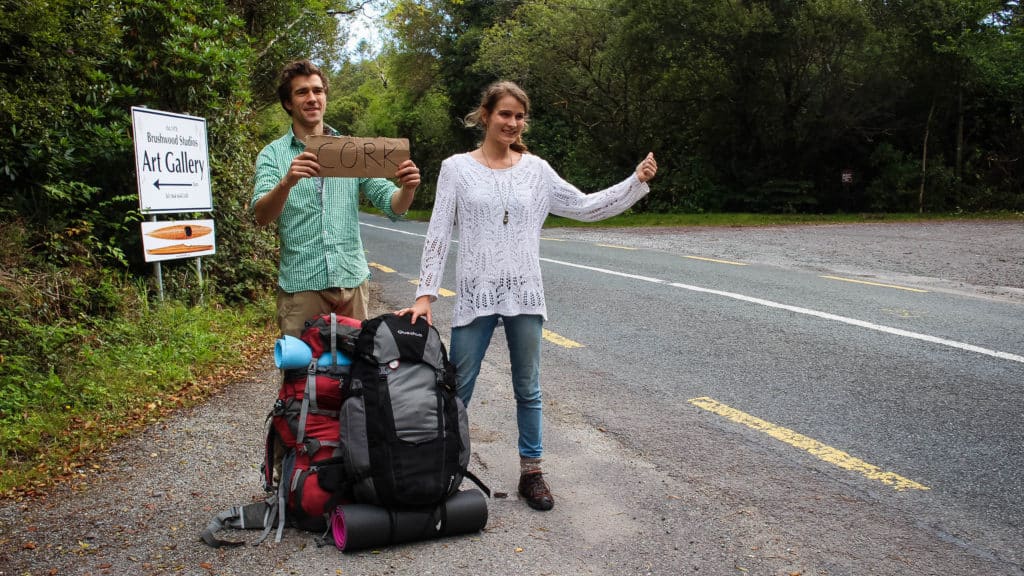
When I was hitchhiking from Ireland to Central Asia, I had no intention of driving myself but it gave me peace of mind knowing that I could if something would happen.
Not all countries require an international driver’s license but it’s good to have one in case you run into any issues.

4. Get proof of vaccination if required
Depending on where you’re going, you might need to get certain vaccinations. You can check here to see if your destination requires any mandatory vaccinations.
When I traveled to Africa many years ago, I had to get vaccinated for yellow fever or I wasn’t allowed to enter certain countries. I also got vaccinated for Hepatitis A & B, typhoid, diphtheria and tetanus. I’m telling you, I’m prepared for anything…
5. Get an international debit or credit card, a travel card and cash
I always travel with 2 cards: an international debit card supported by Visa and a travel card. It’s good to have a backup in case one of the cards gets lost or stolen. That’s why you should never put your cards together in your wallet or handbag but instead keep them in separate places.
Most countries have ATMs nowadays but you need to check beforehand if you’re better of with a card supported by Visa or MasterCard. In countries like Kyrgyzstan, most ATMs only accept Visa cards.
Don’t forget to notify your bank that you’ll be using your card abroad. You don’t want them to block your debit or credit card when you need to withdraw money from an ATM abroad.

I also have a travel card from Wise (formerly known as TransferWise). You can easily open an account online and apply for a debit card that you can use worldwide to withdraw money at a very low fee (1.75%).
Some countries don’t have well-functioning ATMs yet, like Uzbekistan, so it’s also very useful to bring some emergency cash. US Dollars are accepted worldwide and usually have one of the best exchange rates.
And last but not least, carry local currency with you in case you go to a shop or restaurant that doesn’t accept credit cards.
Tip: Most airports have ATMs nowadays but charge a larger fee than ATMs in cities. The rates to exchange money at the airports are also usually higher. Only withdraw or exchange enough money to get from the airport to your hotel or hostel and get some local currency once you’re in the city.
6. Make copies of your travel documents
Once you have all of the above documents in order, make paper copies of them. It’s handy to have paper copies of your passport, driver’s license, etc. in case you lose your original ones or if they get stolen. That’s why you should store the copies in a separate bag than where you keep the original ones.
Tip: If you travel in countries that are known for bribing officials, never hand over your original documents. Give them a paper copy instead and say that you left the original ones in your hotel room.
Fortunately, I’ve never been in such a situation but I’ve heard horror stories of travelers in which the officials would only return their passports after they paid a huge bribe…
I also always have a scanned copy of my documents on my phone and on an online account that I can access on any device.
Things to prepare in case of unexpected circumstances
7. Get long-term medical travel insurance
Chances are that nothing will happen when you’re on the road but look at what 2020 has taught us…
From catching a weird virus to motorcycle accidents, lost luggage at the airport, pickpocketing, breaking your leg while skiing, or falling during a horse trek, bad luck can strike you at the most unexpected moment.

Having medical travel insurance will be a blessing when you have to go to the hospital, as you don’t want to spend your entire travel budget on medical costs.
The one that suits my needs the most is the SafetyWing Nomad Insurance Complete. It’s an insurance for unexpected and ongoing health issues with extended travel protection.
This travel insurance coves not only emergencies, but also routine check-ups, mental health care, maternity, burglary, canceled accommodation, and delayed luggage (I had this happen already a few times, not fun…).
This is perfect for long-term travelers, nomadic families, and anyone who’s looking for borderless healthcare. It covers you in every country of the world, except for Iran, North Korea, and Cuba.
The SafetyWing Nomad Insurance Essentials has a monthly subscription model and you can cancel whenever you want. It’s sometimes hard to know how long you’ll be on the road for. With this plan, you don’t have to pay for coverage you don’t need, and you can cancel your subscription very easily.
The SafetyWing Nomad Insurance Complete is a year-long commitment. You can either pay monthly or pay the full year in advance (-and get a 10% discount.
Another advantage of this company is that you can buy a policy even when you’re already traveling. You don’t necessarily have to be in your home country when you set it up, a requirement that many other insurance companies have.
Reading Tip: Looking for reliable long-term travel insurance? Here’s my SafetyWing Review
8. Know what to do in case of flight cancelation or flight problems
It can always happen that your flight gets delayed or canceled. Especially nowadays, due to the current situation, many airlines cancel flights last-minute.
Like many other travelers, I’ve had this happening to me in 2020. That’s when I found out about Flightright.
Flightright is a great platform to help you get to know your rights in case your flight is delayed or canceled, and they also offer assistance with flight problems caused by corona.
What to do if my flight is canceled? I firstly contact my airline to see if I can get a replacement flight or a refund. On top of that, I also check if I’m entitled to flight cancellation compensation.
To know how much compensation I can get for my canceled flight, I use Flightright’s free compensation calculator. They offer great advice to know your rights as a passenger and what you should do to claim your compensation.
If the airline refuses to pay, Flightright also has a team of travel law experts that offer legal services to enforce your claim.
So in case you’d encounter any problems with your flight (delays, cancellations, strikes, overbooking,…), definitely check out Flightright’s platform as they tell you in detail what you’re rights are and what to do!

9. Know who to contact in case of emergency
Keep the contact information of your local embassy on your phone or write it down and keep it close in case you encounter problems with local authorities.
I once had trouble with some police officers in Kyrgyzstan who were claiming I needed proof of registration to travel in the country. That wasn’t true as these regulations had changed in the last year.
These police officers were just trying to get a bribe out of me. I kept my calm but when they started using threats like having me arrested, I took out my phone and told them I was going to call my embassy. They immediately left me alone.
It’s also not a bad idea to register with your local embassy. You can email them or give them a quick call as soon as you’re at your destination.
If there would be an unforeseen problem in the country, your government will know that you’re there and will help you get to safety.
I’d also recommend installing the TripWhistle app on your phone. This app maps your location, allows you to text or send your GPS coordinates to someone, and provides you with the emergency numbers for the police, the fire department, and medical services in nearly 200 countries.

10. Keep a list of emergency contact info and stay connected with your home
As I often travel alone, I always carry a list with the contact details of my mother and sister in the form of a small card. I keep one in my wallet and one in my backpack.
I do this in case something would happen to me so medical professionals know who to contact.
If you have allergies, I would also write them down on a card. In case you need treatment and you can’t answer questions, the doctors at least will know what you’re allergic to.
I know that the list above seems a bit gloomy. I’m a very positive person and the chances that something happens on the road are very slim. It’s just always better to be safe than sorry and to be prepared for anything!
Now let’s move on to fun things to prepare for your upcoming adventure!

More Useful things to prepare for travel
11. Essential travel items
I’ll soon make a post of what I carry in my backpack as a long-term traveler. But no matter your destination and how long you go traveling, these are the items you should always pack:
- small first-aid kit including bandaids, antibacterial ointment, paracetamol, medicine for stomach illness,…
- hand sanitizer and toilet paper
- small flashlight
- portable charger
- universal travel adapter
- reusable water bottle with a filter so you can safely drink tap water wherever you are
- pen and paper: very useful to take notes, fill in papers at customs,…
- protein bars or snacks: if you want to be prepared for anything, make sure to have some food with you!
- thread and needle travel kit: very handy when there’s a rip in your bag or clothing
Read: What’s in My Camera Bag – Essential Gear for Travel Photographers

12. Useful travel apps
It’s crazy to think that when I started traveling in 2011, smartphones and travel apps didn’t exist yet.
I used to find my way around places by using a foldable paper map, find accommodation by reading suggestions from a guide book or knocking on doors,… So much has changed in the last decade!!
I might sometimes feel nostalgic about those good old-school travel days but some travel apps have made things a lot easier.
Here are the travel apps I find most useful and are worldwide accessible:
- Google Maps or any GPS app to find your way around places. I also download maps for offline use.
- Google Translate: this app translates into 103 languages, has access to nearly 60 languages for offline use, offers camera translation in 37 languages (handy to read signs or menus) and has two-way instant speech translation available in 32 languages
- XE Currency Converter: this app quickly provides up-to-day currency rates and you can also use it offline.
- GlobeTips: this app advises you how to tip appropriately in more than 200 countries. It also offers a tip calculator.
- Booking.com: there are many apps that help you find (last-minute) accommodation. I always use the booking.com app to find good deals that suit my budget.
13. Book first night accommodation
I’m an adventurous traveler and like spontaneous travel but I always book my first night’s accommodation in a new country in advance.
I’m usually tired after a flight or a long day of overland travel and it puts my mind at ease knowing that I have a place to relax for at least one night upon arrival.
It gives me the time to arrive, to adjust to my new environment, to explore the area, and prepare for the next steps of my journey.
Reading Tip: The Ultimate Guide to Finding Cheap and Free Accommodation around the World
14. Research your destination
I always do some research about the countries I’m visiting. Not only to have an idea of which places I would like to see but also to have some knowledge about the local culture and customs.
I don’t want to be an ignorant traveler thinking that the rules and etiquette from my home country are the same everywhere else in the world.
Research the dress code. You really don’t want to be that girl wearing short dresses in a conservative country or that guy wearing shorts and sandals while visiting religious sites.

Know what is allowed and not to avoid misunderstandings. When I was hitchhiking from Ireland to Central Asia, I had to be very aware of my hand gestures. In some countries, a thumbs-up means the same as putting up your middle finger…
Remember that you’re a visitor. If you invite someone into your home, you would like them to respect your rules and customs. Do the same when you’re traveling, even if those customs don’t align with yours. It’s part of the travel experience.
15. Learn basic phrases
People love it when they hear you’re trying to speak their native tongue. They’ll react with amazement, give you a big smile, and won’t label you as “just another tourist”.
They’re happy when a foreigner puts effort into learning their language, even if it’s just basic phrases like “hello, how are you, thank you,…” and they’ll respect you for that.
By learning the basics of the local language, doors that otherwise would remain closed have opened.
I’ve been countless times invited for a drink, a meal or a sleeping place. People quickly open up if they hear you’re putting effort into learning their language.

Learning the local language has been a very enriching experience and taught me more about the country than if I would just visit its historical and tourist sites.
Reading Tip: 7 Reasons why you should learn a foreign language
16. Be flexible and have a positive and open mindset
There’s this saying ” If you want to make God laugh, tell him about your plans”. This is oh so true!
Nothing ever goes as planned, especially when you’re traveling. Unexpected things will happen. It’s part of the adventure and the journey.
I’ve learned to be flexible, have an open mind, and approach unforeseen events with a positive mindset. Every challenge is an invitation to learn and whatever came my way, it always brought me where I’m supposed to be.

I hope this travel checklist is helpful and that you’re feeling more prepared for your upcoming adventure! If you’d have more questions, feel free to leave a comment or send me a private message.
Do you have more things to add to this international travel checklist? Do you have more tips and resources that are useful to be prepared for anything on the road? Let me know in the comments below!
MORE USEFUL POST ABOUT LONG-TERM TRAVEL:

The Ultimate List of 23 Countries with Digital Nomad Visas (for remote workers)

What is the best Affordable Travel Insurance for Backpackers? The 3 Best Backpacker Travel Insurance Companies Compared
Travel and volunteer abroad for free with these 4 work exchange programs

The Complete Guide to Teach English Online with 37 Online Teaching schools and Platforms

4 Realistic and Best Ways to Find Free Accommodation for Travellers

Thank u for the advices 😉
Planning to travel the world in several months,
everything helps to feel a bit less nervous and overwhelmed
Best wishes from Russia
You’re welcome Sky! New beginnings can feel overwhelming and scary. Let me know if you have questions and wishing you the best with this new step! Cynthia
Your article is very helpful, especially for the beginner.
Thank you Jay