
Thinking about renting a car in Morocco? It’s one of the most rewarding ways to explore the country but it also comes with a few surprises. From navigating chaotic city traffic to driving through mountain passes, here’s everything you need to know about renting a car in Morocco, including essential driving tips, costs, and what to expect on the road.
Renting a car in Morocco changes the way you experience the country. While cities like Marrakech, Fes, and Casablanca are relatively easy to navigate using taxis and trains, Morocco really opens up once you leave those urban centers behind.
The Atlas Mountains, remote Berber villages, desert landscapes, and hidden coastal roads are places you simply won’t reach as easily without your own transport.

During my recent trip, I explored Morocco by car, and while it gave me a level of freedom I wouldn’t trade for anything, there were definitely a few things I had to figure out along the way.
This guide brings everything together so you know exactly what to expect before renting a car in Morocco.
Tip: See my Morocco Travel Page for a complete overview of all my travel guides and blog posts about Morocco!
Disclaimer: This posts might contain affiliate links, meaning that if you make a purchase through these links, I may earn an affiliate commission. Thank you for helping to support this website!
Morocco Travel Planner
Planning a (road) trip in Morocco? These are the tools I personally use to make it smooth and flexible:
✈️ Search for flights to Morocco: Compare routes and prices
🚗 Car rental: Compare prices and find reliable companies
📍 Navigation: Download offline maps on Google Maps or Maps.me
📶 Stay connected: Get an eSIM for easy mobile access. Journal of Nomads readers get 15% off with code CYNTHIA
🛏️ Accommodation: Find riads, boutique hotels and desert camps
🛡️ Travel insurance: I use either HeyMondo or SafetyWing, depending on the length of my trips and insurance needs
🎟️ Book tours & experiences → Check day trips, desert tours and local experiences
Is renting a car in Morocco worth it?
Whether renting a car in Morocco is worth it really depends on the type of trip you’re planning.
If your itinerary is focused purely on cities, you can comfortably rely on public transport. Trains and buses connect the main hubs efficiently, and taxis are cheap and widely available.
But the moment you want to go beyond that, to drive through mountain passes, stop in small villages, and take your time on scenic routes, having your own car makes all the difference. I’d especially recommend it if you’re traveling with children!
Where to rent a car in Morocco?
You’ll find plenty of car rental options in Morocco, especially in major cities like Marrakech, Fes, Rabat, Casablanca, and Tangier, as well as at international airports.
While it’s possible to arrange a rental on arrival, booking in advance online is by far the better option. Not only does it give you a clearer overview of prices and availability, but it also helps avoid last-minute stress and unexpected conditions.
One platform that makes this process very straightforward is DiscoverCars. It compares both international and local rental companies, which often results in better prices and much more transparency.
From my personal experience, the whole process is very easy to use. You can simply browse their website or install their app, select the car that suits your trip, and immediately see what’s included in the price.
I also highly recommend choosing their full coverage plan. It’s always a good idea to have full insurance when renting a car in Morocco, and their prices are very reasonable, making it a stress-free choice.
Once you book, you receive a clear voucher with all the essential information. This includes what documents you need to bring, exactly what costs are already covered, and which fees you won’t have to pay anymore, such as additional insurance at the rental desk.
It also outlines the required deposit, what to check when picking up and dropping off the car, and what to do in case of damage or an accident.
Having all this information upfront makes a big difference when you arrive, especially in a new country where things can otherwise feel a bit unclear.

Cost of renting a car in Morocco
Renting a car in Morocco is generally quite affordable, especially compared to Europe, and fuel prices are also significantly cheaper, which makes road tripping across the country even more budget-friendly.
Prices vary depending on the season, the type of car, and how early you book, but you can expect daily rates to start relatively low. Budget cars are usually the most economical option and are perfectly suitable for most standard routes.
On average:
- Budget car: €10-€25 per day
- Mid-range car: €25-€50 per day
- SUV/4×4: €60+ per day
Costs increase if you opt for a larger vehicle, automatic transmission, or additional extras (like GPS or child seats). Insurance coverage is another factor that can influence the total price, and it’s something you shouldn’t overlook (see below).
Insurance: what you really need to know
Car rental insurance in Morocco is one of those things that might seem straightforward at first, but it’s worth paying close attention to.
Basic insurance is typically included in the rental price, but it often comes with a high excess. This means that in case of damage, you could still be responsible for a significant amount.
For that reason, I personally recommend choosing full coverage insurance. Driving conditions in Morocco can be unpredictable at times, especially in cities or remote areas, and having that extra layer of protection gives real peace of mind.
When booking through platforms like DiscoverCars, you can clearly see what’s included and upgrade your coverage if needed, which makes the whole process much more transparent.

Practical tips for renting a car in Morocco
1. Always double-check online reviews and what’s included in the contract
With so many car rental companies operating in Morocco, it’s worth taking a bit of time to read online reviews before choosing one.
While many companies are reliable, scams and unclear practices do occasionally happen, especially with smaller local providers. Doing a bit of research beforehand can save you a lot of stress later on.
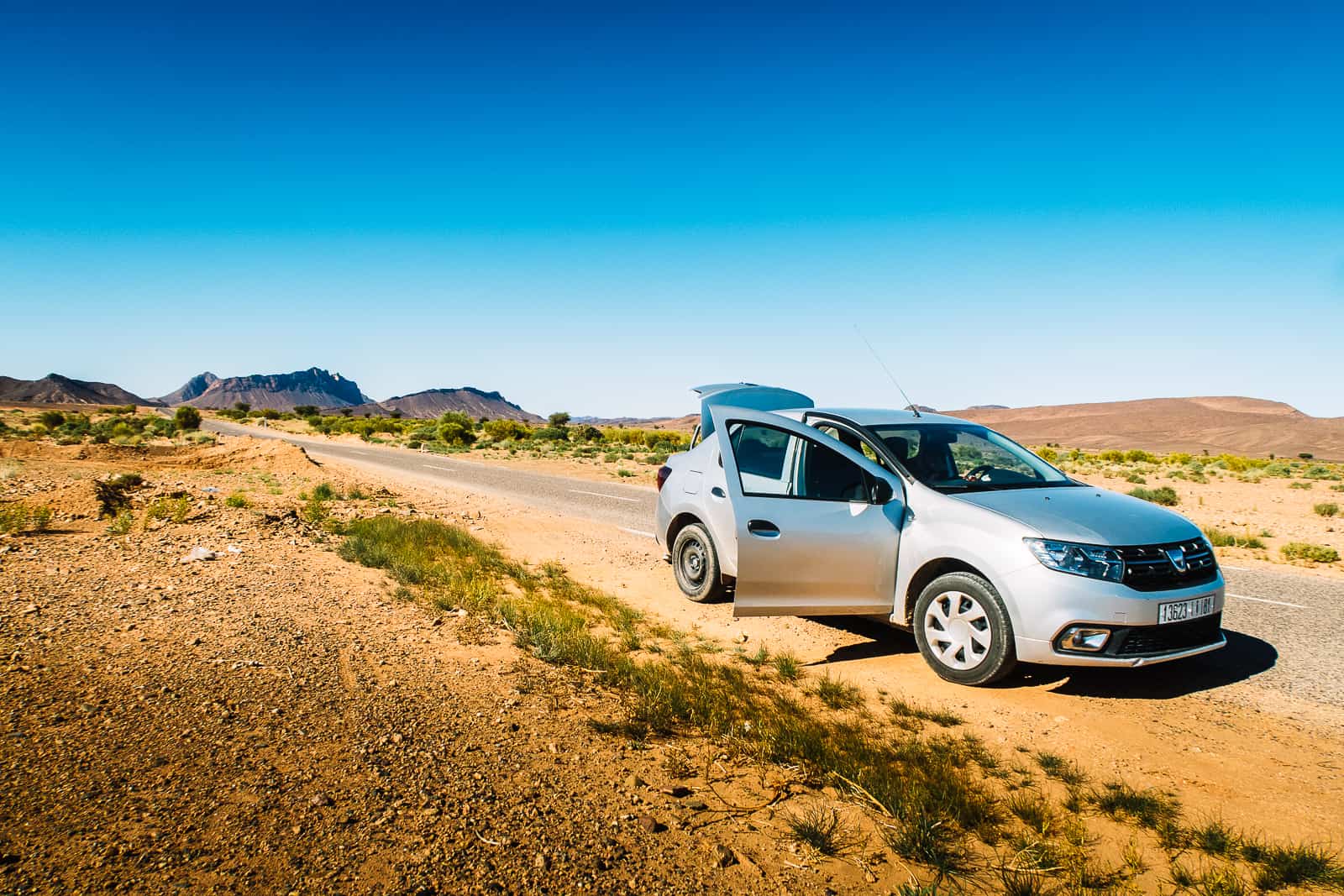
One of the most important things to do when picking up your rental car is to inspect it carefully. I always recommend taking photos or a video of the vehicle before driving off, so you have clear proof of any existing damage. During our trip, I made sure that every dent and scratch on the exterior was properly noted in the contract.
It’s also a good idea to read your contract carefully, especially when it comes to additional fees. Check whether things like cleaning costs are already included. If they’re not mentioned, any attempt to charge you for them later could be questionable.
2. What documents do you need to rent a car in Morocco?
Renting a car in Morocco is relatively straightforward when it comes to documentation. In most cases, you don’t need an international driving permit as your valid driver’s license from your home country is usually enough, as long as it matches the details in your passport.
When picking up the car, you’ll typically need:
- Your driver’s license
- Your passport
- A credit card in your name
The rental company will provide you with a contract, proof of rental, and insurance documents. It’s best to keep these close while driving, along with your passport, as you may pass police checkpoints during your trip. Most of the time, tourists are waved through, but it’s always good to be prepared.
3. Credit card and deposit requirements
When renting a car in Morocco, a credit card is essential. The rental company will place a hold on your card as a security deposit.
The deposit that was held on my credit card at pickup was €1115, so it’s important to check your credit limit in advance to make sure you can cover this deposit. If your limit is too low, you may run into issues when trying to rent the vehicle.
Do you need a 4×4 in Morocco?
For most travelers, a standard car is more than enough. If you’re following common travel routes between cities, visiting places like the Atlas Mountains, or heading towards the desert via paved roads, you won’t need a 4×4.
A larger vehicle only becomes necessary if you plan to drive off-road or explore very remote areas where road conditions are less predictable.

Driving in Morocco: what’s it really like
Driving in Morocco can feel a bit overwhelming at first, especially when you leave the airport and enter city traffic for the first time.
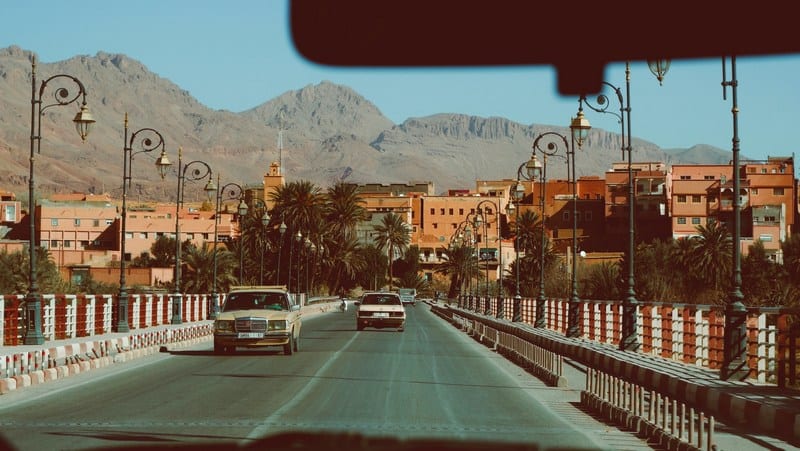
In larger cities, traffic tends to be busy and sometimes downright chaotic. You’ll quickly notice a mix of cars, scooters, pedestrians, and even animals sharing the road, often with a very flexible interpretation of traffic rules.
Once you leave the cities, however, everything changes. Roads become quieter, landscapes open up, and driving turns into a much more relaxed and enjoyable experience.
Main roads between cities are generally in good condition, while mountain roads can be narrow, winding, and occasionally steep. In rural areas, you might come across unpaved roads, especially when heading off the main routes.

One thing you’ll encounter quite regularly are police checkpoints. These are normal and part of everyday travel in Morocco. In most cases, you’ll simply be waved through or briefly checked, as long as you follow instructions and remain polite.
Driving Rules in Morocco
Understanding the driving rules in Morocco is essential before getting behind the wheel. While many rules are similar to those in Europe, the way they are applied in practice can feel different…
Official rules of the road
- In Morocco, driving is on the right-hand side of the road, and you give way to traffic from the right at intersections.
- While seat belts are officially mandatory, you’ll notice that not everyone wears them. We even had a taxi driver in the chaotic center of Marrakech who stopped my partner from putting his seat belt on, saying “no, no, not needed”, almost as if it was offensive. That said, always wear your seat belt tho…
- Speed limits are clearly indicated and generally follow this structure: 60 km/h in urban areas, 80-100 km/h on secondary roads and 120 km/h on highways. Speed controls are frequent, and police often use radar checks, so it’s important to respect the limits at all times.
- Another important detail is documentation. You should always carry your driver’s license, your passport and your car rental documents in case the police want to check you.
- You’ll also notice that roundabouts are very common in Morocco and there are two types to be aware of:
- On roundabouts without traffic lights, vehicles already on the roundabout have priority, so you simply enter when there’s a safe gap.
- Roundabouts with traffic lights work differently: if you’re already on the roundabout, you may need to stop and give way to traffic entering from your right if they have a green light. If you enter the roundabout on green, you have priority.
Even though rules are in place, driving in Morocco often requires a certain level of adaptability. When in doubt, approach slowly, watch the flow, and take your time.
Following the rules isn’t always enough and you have to proceed with caution. Being alert, patient, and aware of your surroundings is just as important as local drivers often don’t respect the established rules, and it is hard to predict when they will give way.
What to watch out for on the roads in Morocco:
- Lanes are more of a suggestion than a rule. Don’t be surprised if drivers don’t stick to their lane. It’s very common to see cars driving in the middle of the road, whether it’s a small rural road or a modern highway. Sometimes a two-lane road suddenly turns into three, four, or even five “lanes” of cars.
- Watch out for pedestrians: people don’t always use crossings or bridges. You’ll see pedestrians – including children – crossing busy roads and even highways, especially if the nearest bridge is far away. Always slow down when approaching villages or populated areas.
- Be extra aware of motorbikes and scooters: motorbikes often weave between traffic and can appear out of nowhere. They don’t always follow the same rules, so it’s important to keep an eye on your mirrors and surroundings at all times.
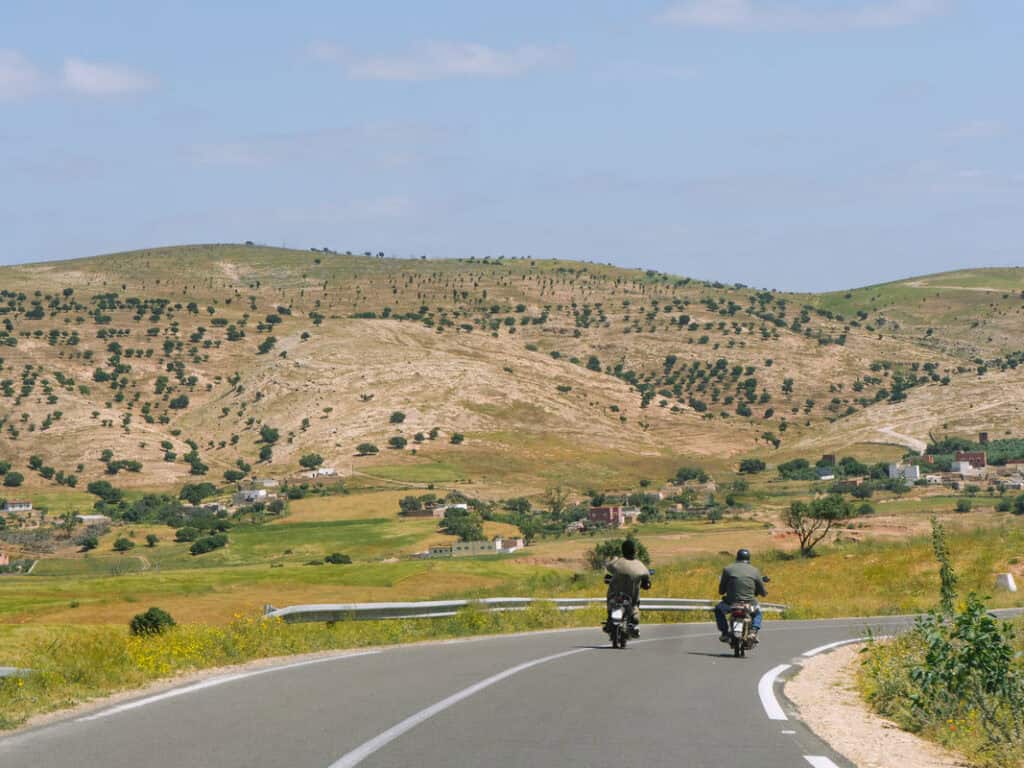
- Avoid driving at night if you can: driving in Morocco becomes much more challenging after dark. Even though cities are generally well-lit, roads feel busier and more unpredictable at night, especially if you’re still getting used to the driving style.
- Expect the unexpected after sunset: outside cities, lighting can be very limited, especially in mountainous areas where your headlights might be the only source of light. You may encounter:
- pedestrians in dark clothing
- cyclists or motorbikes without lights
- animals like dogs, donkeys, or carts
- slow-moving vehicles that are hard to see
It’s also worth knowing that vehicles driving very slowly (under 20 km/h) aren’t always required to use lights, which makes them even harder to spot.

Parking in Morocco
In cities, parking is usually paid. You’ll either find ticket machines or someone managing the parking area. Very often, someone will approach you as soon as you park and offer to “watch” your car for a small fee – this is completely normal. The standard rate is around 20 MAD per day, and in return, they’ll keep an eye on your vehicle.
In busier areas, you’ll also notice attendants in high-visibility vests guiding you into parking spots. It can feel a bit unexpected at first, but they’re there to help you park safely and avoid tight situations.
One thing to keep in mind: don’t just park anywhere, even if it looks quiet or convenient. Cars can get towed, and fines can be quite high. Also, avoid leaving valuables in your car, especially overnight or in less secure areas.
Once you get used to the system, parking in Morocco is actually quite easy to manage.
Practical tips for driving in Morocco
Driving in Morocco is an adventure, but a few simple things can make your experience much smoother and stress-free.
Here are the practical tips I found most useful on the road:
- Download offline maps before you go. Mobile coverage can be unreliable, especially in the mountains or remote areas. Having offline maps (like Google Maps) saved on your phone is a lifesaver and makes navigation much easier.
- Always carry cash (small change is key). Cash is essential when driving in Morocco. You’ll need it for toll roads, parking, and small expenses along the way. Try to keep smaller bills and coins handy, as you won’t always get change easily.
- Be prepared for toll roads. Toll roads (péage) are common on highways and are usually the fastest and most comfortable way to travel between cities. You take a ticket when entering and pay when exiting, typically in cash. When approaching the toll booths, choose the lanes marked with a green arrow or green cross as these are for cash payments. Avoid the lanes marked with a “J”, as these are reserved for the electronic Jawaz system, which requires a prepaid tag.
- Keep your fuel tank topped up. While petrol stations are widely available, distances can still be longer than expected in remote areas. I found it best to refill when the tank drops to around half, just to be safe. Petrol stations are not self-service. There’s always an attendant who fills up the car for you. You simply tell them how much fuel you want or the amount you’d like to spend, along with whether you need petrol or diesel.
- Most petrol stations on the highways (Aire de service) are well-equipped and often have small cafés, restrooms, and sometimes even shops, making them a convenient place to take a break during a long drive. Some of them even have small playgrounds, ideal if you’re traveling with children.
- Use your horn when needed. It might feel strange at first, but honking is a normal way of communicating on the road in Morocco. A quick beep can let others know you’re there, especially around bends or when overtaking.
- Take your time and don’t rush. Driving in Morocco isn’t about speed – although some drivers might give you the opposite idea… Roads can be unpredictable, and things don’t always go as planned, which is part of the experience. Give yourself extra time and enjoy the journey.
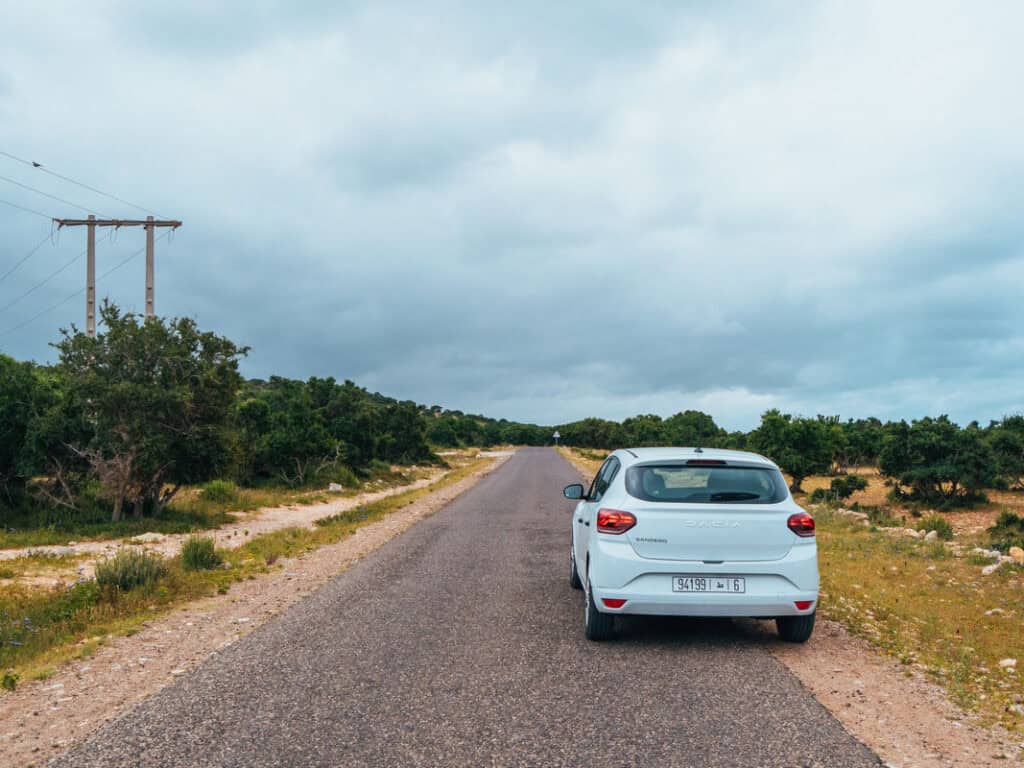
Final thoughts: should you rent a car in Morocco?
Renting a car in Morocco isn’t just about getting from one place to another, it’s about everything in between.
Yes, it might feel a bit chaotic at first. But once you settle into the rhythm of the road, it starts to make sense… and even becomes part of the adventure. Some of the best moments happen when you least expect them: a random stop for tea, a scenic road you didn’t plan to take, or a place you only found because you had the freedom to explore.
If you’re looking for flexibility, a bit of adventure, and a more real connection with the country, then renting a car in Morocco is absolutely worth it!
If you’re planning your trip, I’d really recommend booking your rental car in advance as it makes everything smoother once you arrive.
I personally used DiscoverCars during my trip, and it made the whole process very straightforward. You can easily compare different rental companies, see exactly what’s included in the price, and avoid unexpected costs at the counter.
👉 Check availability and prices here to find the best option for your trip.
Booking ahead not only gives you better deals but also peace of mind, which is exactly what you want before hitting the road in a new country.
Would you feel comfortable driving in Morocco, or would you prefer another way to explore the country? Let me know in the comments below!
Related Posts
Best eSIM for Morocco? My Honest Experience Using Simify During a Morocco Road Trip

Morocco Itinerary 2026: 3 Best Routes for a Morocco trip Through Imperial Cities, Atlas Mountains & Sahara
19 Very Useful Things to Know for Backpacking in Morocco in 2026 – The Complete Travel Guide to Morocco
The 17 Best Places to visit in Morocco in pictures

The Honest Guide to Meknes Morocco and Volubilis – 9 best things to do and what to skip
16 Top Things to do in Marrakech Morocco – The Complete Guide to Morocco’s Red City
Is Morocco expensive – Morocco Budget Guide for 2026

11 Best Things to do in Rabat Morocco – The Complete Guide to Morocco’s Capital City

I have driven in Morocco and prefer to hire a driver. I have driven ambulances and emergency vehicles in the US and will never drive in Morocco again. The laws are not adhered too, just words.
What is the age limit to rent a car as South African citizen?
Hi Annemarie, sorry, I don’t know the answer to that. Maybe you can inquire at the car rental place?
i am happy to read this amazing article.. keep uploading thank you..
Pueden conducir las mujeres sin problema?