
Updated November 2025 for 2026 travel
Are you dreaming of exploring Morocco, a country where desert dunes meet the ocean, blue cities rise from the mountains, and time slows down with the rhythm of the call to prayer?
Whether you have 7 days, 10 days, or 2 weeks, this guide offers 3 complete Morocco itineraries to help you experience the best of this stunning country. Each route can stand alone or can be combined into one long, unforgettable journey.
I fell in love with Morocco years ago and kept returning. The color, rhythm, hospitality, and raw landscapes still surprise me every time. This widely varied country is safe to travel to and has truly stunning waterfalls, photogenic and colorful cities, arid mountains, great surfing beaches, and a vast desert!
If you’re torn between imperial cities, the Sahara, and the sea… good news: you don’t have to choose. Start with one itinerary below or stitch two (or all three) into an unforgettable 2- to 3-week adventure!
Tip: See my Morocco Travel Page for a complete overview of all my travel guides and blog posts about Morocco!

Disclaimer: This posts might contain affiliate links, meaning that if you make a purchase through these links, I may earn an affiliate commission. Thank you for helping to support this website!
Morocco Travel Planner
Planning a (road) trip in Morocco? These are the tools I personally use to make it smooth and flexible:
✈️ Search for flights to Morocco: Compare routes and prices
🚗 Car rental: Compare prices and find reliable companies
📍 Navigation: Download offline maps on Google Maps or Maps.me
📶 Stay connected: Get an eSIM for easy mobile access. Journal of Nomads readers get 15% off with code CYNTHIA
🛏️ Accommodation: Find riads, boutique hotels and desert camps
🛡️ Travel insurance: I use either HeyMondo or SafetyWing, depending on the length of my trips and insurance needs
🎟️ Book tours & experiences → Check day trips, desert tours and local experiences
At-a-Glance: Which Morocco Itinerary Fits You?
The North: Imperial Cities (7–10 days): Tangier → Chefchaouen → Fez → Meknes → Rabat → Casablanca → Marrakech
Best for: first-timers, architecture lovers, photogenic medinas, history.
The South: Sahara & Atlas Mountains (7–10 days): Marrakech → High Atlas → Aït Ben Haddou → Draa Valley → Merzouga (Sahara) → Todra Gorges → Dades → Marrakech
Best for: desert, mountain passes, kasbahs, road-trip feels.
The Coast: Surf & Sun (7 days): Agadir → Tamraght/Aourir → Taghazout → Tamri → Imsouane → Sidi Kaouki → Essaouira (option to continue to Rabat)
Best for: winter sun, surf, easy seaside living, mellow towns.
Good to know (2026): Trains remain the easiest way to move between major cities (ONCF). Buses fill the gaps. The South is best with a rental car (or a small group tour/driver). For high-altitude treks near Imlil/Toubkal, a licensed guide is required, and checkpoints enforce this.


Practicalities – Things You Need to Know Before You Go
Before diving into your Morocco adventure, here are a few essentials that will make your journey smoother, safer, and far more enjoyable. These are things I’ve learned through my own travels across the country, from the blue-washed alleys of Chefchaouen to the sun-baked dunes of the Sahara, and the surfer towns that stole my heart on the Atlantic coast.
How to get to Morocco
Morocco is wonderfully easy to reach!
- Tangier is perfect if you’re arriving from Spain. The ferry from Tarifa takes less than an hour, and the crossing itself already feels like stepping into another world.
- Casablanca and Marrakech are the main international hubs with frequent direct flights from Europe.
- Agadir is your best entry point if you’re heading straight for the coast or planning a surf trip: easy-going, sunny, and a great place to begin slowly.
Once you arrive, you’ll notice how connected everything is: trains link the major cities in the north and center, while long-distance buses and shared taxis reach even the smallest towns (see below “How to get around Morocco”).

When to Go to Morocco
Morocco’s beauty shifts with the seasons, and each region has its rhythm:
- Spring (March-May) is a dream: wildflowers in the valleys, warm but not scorching days, and fewer crowds.
- Autumn (September-November) mirrors that same balance- perfect temperatures, golden light, and clear skies.
- Winter (December-February) brings snow to the High Atlas and sunshine to the coast, ideal for surfing in Taghazout or hiking around Imlil under crisp skies.
- Summer (June-August) can be hot, especially inland, but it’s a great time to explore the mountains or the breezy Atlantic shore.
If you’re flexible, plan your trip around Ramadan. Traveling during this period offers a quieter, more introspective glimpse into Moroccan life, though expect shorter café hours in smaller towns.
Money & Connectivity
In the cities, ATMs and cards are widely accepted, but always keep some cash on hand for small shops, taxis, and market snacks.
Morocco’s currency is the Moroccan dirham (MAD), and while prices are fair, haggling in souks is part of the experience.

Wi-Fi is surprisingly good in most riads and cafés. If you’re working on the road or need reliable data, grab an eSIM or a local SIM card from Maroc Telecom or Orange. Speeds are fast enough for digital nomads, even from a rooftop terrace in Tinerhir or a surf café in Tamraght.

Safety
Morocco is one of the safest countries to travel in North Africa, and I’ve always felt comfortable moving around, even solo.
That said, as in any popular destination, keep an eye on your belongings in crowded medinas and be cautious with overly “helpful” strangers who offer to guide you to your riad (unless you’ve asked them).
Most encounters, though, are genuinely kind. Moroccans are very hospitable and often go out of their way to help travelers.
If you’re a solo woman traveler, you’ll find that Morocco is increasingly familiar with female backpackers. A friendly “La, shukran” (“No, thank you”) can work wonders if you’d like to move on politely.
Dress & Respect
Morocco is modern yet traditional, and how you dress affects how you’re perceived, especially outside big cities.
In medinas and rural areas, modest clothing is appreciated: think loose trousers or long skirts, light scarves, and covered shoulders.
On the coast and in Marrakech, locals are used to seeing tourists, but a sense of respect always goes a long way.
And one last thing: always ask before taking someone’s photo, especially in markets or villages. Sometimes a smile and a short conversation first can open doors you never expected.



How to get around Morocco
Traveling through Morocco is an adventure in itself. The country’s landscapes change faster than you expect. One moment you’re passing forests and snow-capped peaks, and a few hours later you’re surrounded by palm trees and desert dunes. Whether you hop on a train, share a taxi, or rent a car, getting from place to place is part of the adventure here.
Trains: The Easiest Way to Travel Between Cities
If your route includes Tangier, Rabat, Casablanca, or Marrakech, the train is your best friend. Morocco’s ONCF railway network is comfortable, affordable, and surprisingly efficient.
You can book tickets online or directly at the station. I usually buy mine a few days before departure.
Tips:
- If you’re traveling light, keep your bag with you instead of stashing it above.
- Trains between Casablanca and Tangier now include a high-speed line (Al Boraq), cutting travel time to just over two hours.
For me, the train is the perfect way to ease into Morocco: quiet, scenic, and ideal for writing travel notes while the world outside blurs by.

Buses: Slower, Scenic, and Great for Reaching Smaller Towns
Once you move away from the main north–south line, buses are the next best way to travel. Morocco’s two major companies, CTM and Supratours, are reliable and comfortable, connecting more remote towns like Chefchaouen.
You can book online or buy them at the terminal, but in busy seasons (spring/autumn), definitely get them a few days in advance. They have luggage storage, some air-conditioning, and occasional Wi-Fi, and one or two rest stops during long rides.
Note: if you’re prone to car sickness, these bus rides might be heavy for you as a lot of roads are very windy… Bring a plastic bag or consider renting a car.
Grand Taxis: Shared Adventures on the Road
For shorter distances or mountain routes where buses don’t go, hop into a grand taxi, Morocco’s iconic shared cars that connect towns and villages. They usually depart once they’re full (six passengers is the magic number).
- Where to find them: Every town has a grand taxi station.
- How to ride: You can pay for just your seat or hire the entire taxi if you want more comfort or to stop along the way.
- Average fares: Expect to pay about 50 -100 MAD for short regional rides (for example, Marrakech to Imlil or Fez to Meknes).
Renting a Car: Freedom and Flexibility
If you’re traveling through Southern Morocco (especially the Sahara and Atlas regions), renting a car makes the journey smoother and far more flexible.
- Why it’s worth it: Many scenic stops and villages are only accessible by small detours, and with your own car, you can pause for photos, picnics, or unplanned tea breaks with Berber families.
- Driving conditions: Roads are generally good and well-marked. The Atlas passes are winding but spectacular. Take your time, and avoid night driving due to unexpected livestock crossings.
- Requirements: Bring an international driving permit, and always check the car carefully before leaving the rental office (take photos of existing scratches).
- Fuel: Gas stations are frequent along main routes, less so in remote desert areas, fill up whenever you can.
If you’re nervous about driving, you can also hire a local driver for a few days. It’s more affordable than you might think, and you’ll gain a personal translator along the way.


Northern Morocco Itinerary (7-10 Days): The 4 Imperial Cities Route
Tangier → Chefchaouen → Fez → Meknes → Rabat → Casablanca → Marrakech
Below is a detailed 10-day itinerary. For a shorter option (7 days), follow the same itinerary but spend only 1 night at each city, and skip Akchour (day trip from Chefchaouen) and Volubilis (near Meknes).
Morocco’s north is a journey through color, culture, and time. From Tangier’s coastal breeze to Chefchaouen’s blue alleys, from the ancient medinas of Fez and Meknes to the energy of Marrakesh and Rabat, this route captures the soul of the country.
This itinerary is perfect for first-time visitors who want to combine history with sensory experiences.
Day 1: Arrival in Tangier, overnight in Tangier
Tangier is a beautiful coastal city that can be reached by ferry from Spain or by airplane. If you take an early ferry from Tarifa or an early flight, you’ll have the whole day to explore the city.
Tangier has an aura of mystery. It was a hot spot for spies and international intrigue during the second world war. It was also the favorite city and home of many literary expats such as William Burroughs and Paul Bowles.
Some of the places to visit in Tangier in one day are:
- the Phoenician Tombs
- Old Kasbah
- Grand Socco & Cinema Rif
- Berber Farmer Market
- Sour al Maagazine
- Cap Spartel and the Caves of Hercules as a half-day trip
Where to stay in Tangier
- Top pick for low-budget: Syrah Home
- Top-pick for mid-range: Dar Nour
- Top pick for riad: Riad Tingis


Day 2: Tangier to Chefchaouen, overnight in Chefchaouen
From Tangier, buses to Chefchaouen depart daily from the Gare Routière (main bus station).
- CTM bus: 3 hours, 45 MAD + 10 MAD for luggage.
- Departure times: around 8 am and 12 pm, you can check schedules on ctm.ma.

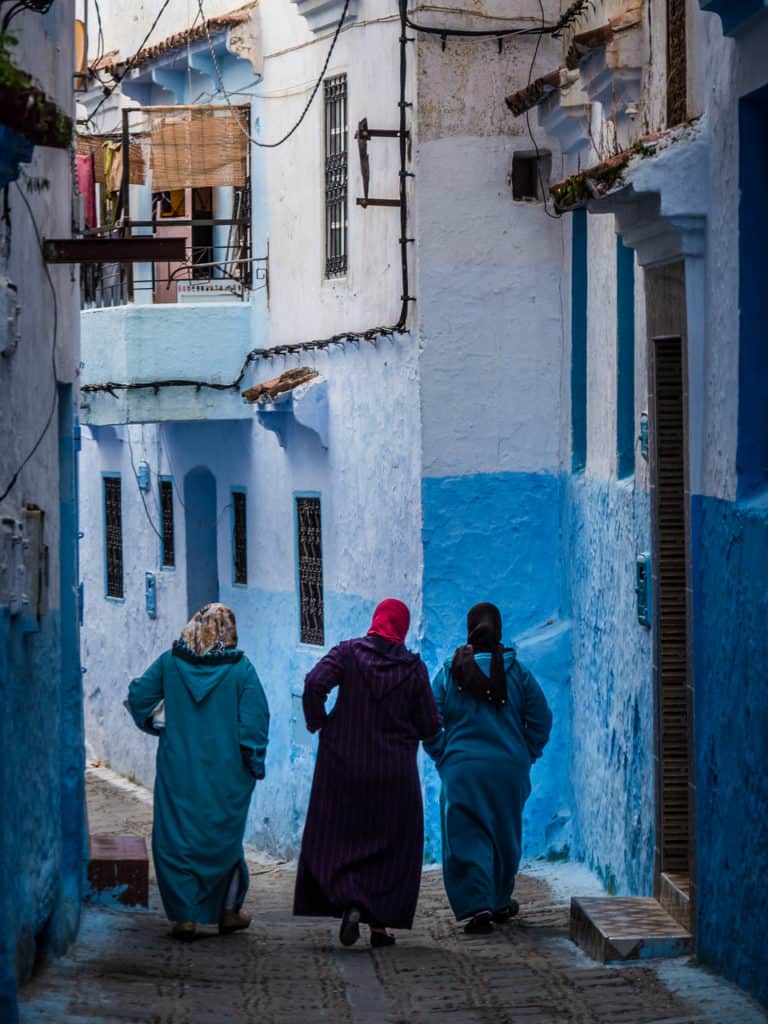
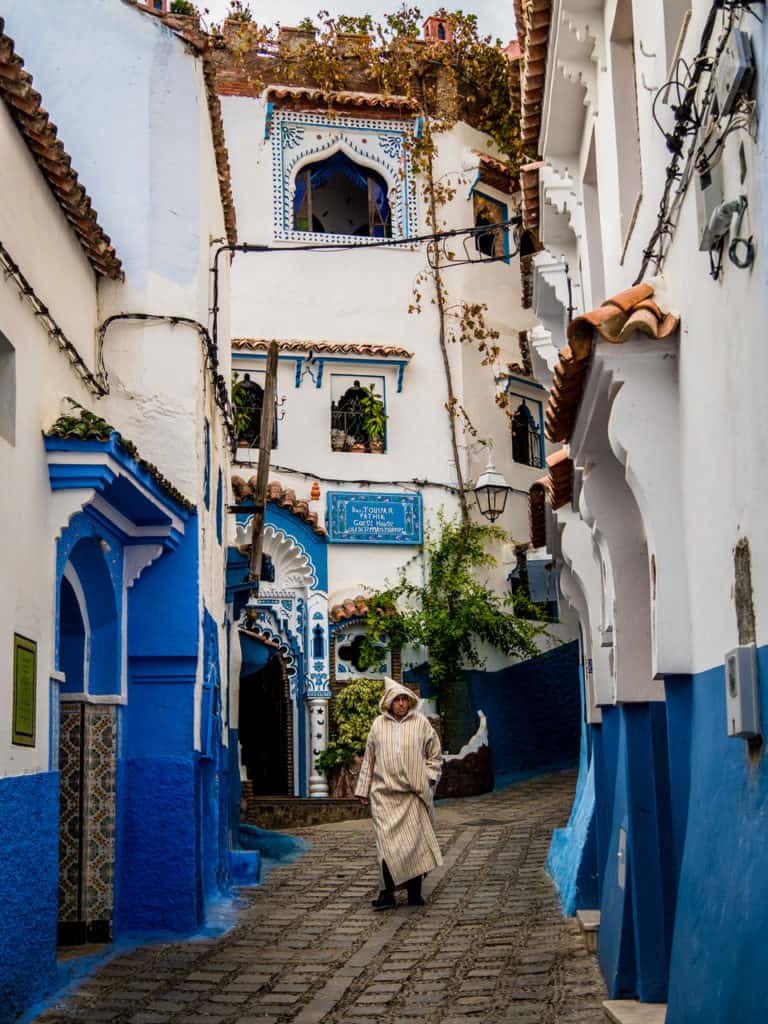
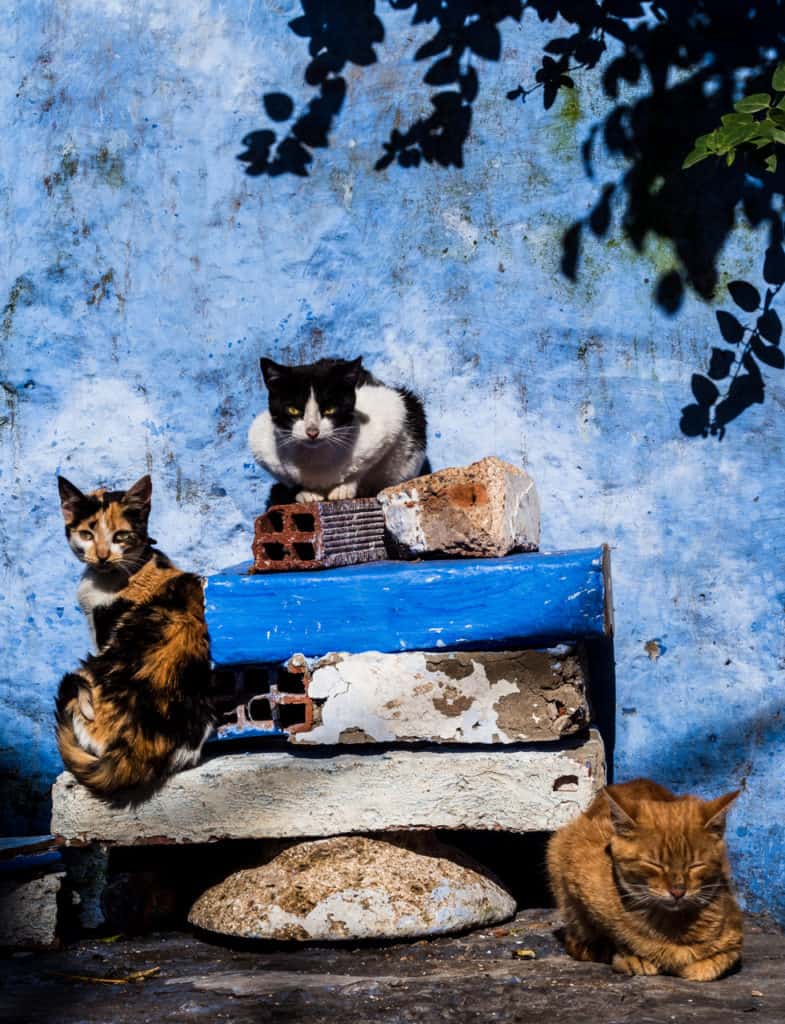
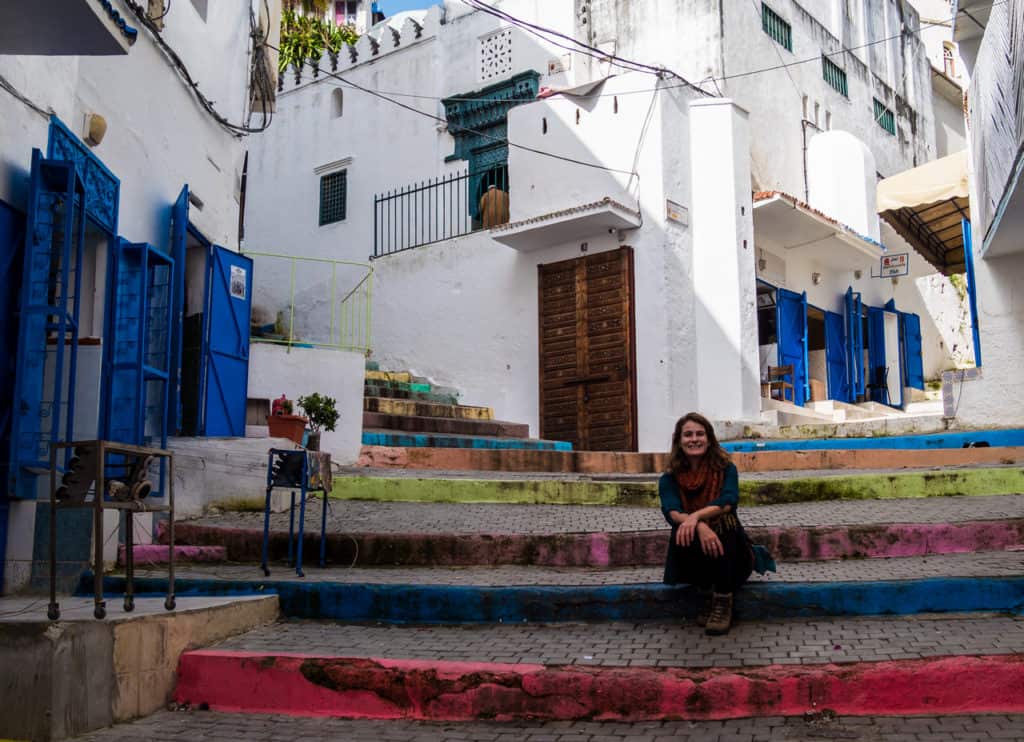
The road winds through the Rif Mountains, green, hilly, and dotted with olive trees. Once you arrive in Chefchaouen, you will be charmed by the blue colors of the Medina. It’s one of the prettiest towns I’ve seen in Morocco because of its blue-washed streets and buildings. That’s why it got nicknamed “the Blue Pearl of Morocco”.
There are many different theories as to why Chefchaouen is so blue. Some say that the shades of blue on the walls keep the mosquitoes away, others believe that the blue helps to keep the houses cool during the warm summer months.
The most popular theory is that it was painted blue by the Jews who fled to Chefchaouen to escape the Spanish Inquisition in the 15th century.
There are so many fun things to do in this small town. You can get lost in the maze of streets, shop at one of the many little bazaars or get a panoramic view of the city from the Spanish mosque.
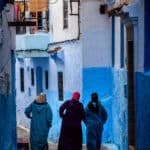
Where to stay in Chefchaouen
- Top pick for low-budget: Dar Dadicilef
- Top-pick for mid-range: Dar Elrio
- Top pick for riad: Riad La Santa

Day 3: Day trip to the Akchour Waterfalls, overnight in Chefchaouen
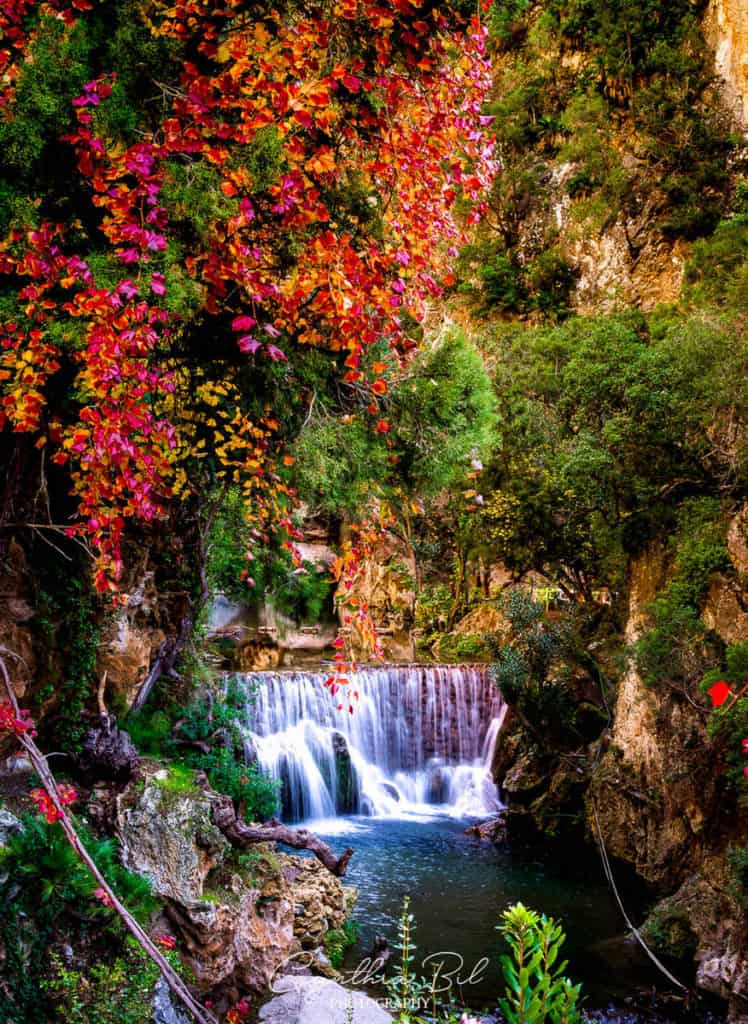
Most people assume that Morocco is a vast arid desert but the northern part of the country is very lush and has some gorgeous waterfalls. Some of the most beautiful waterfalls in Morocco are the Akchour waterfalls in the Rif mountains. This series of waterfalls is a lot calmer and less visited than the Ouzoud waterfalls near Marrakech.
Akchour is a small town with one street on which you can find a few restaurants. The town is the base of the hike to the waterfalls and it’s located just 45 minutes from Chefchaouen by car.
I explain in my guide to the Akchour waterfalls how to hike to the last waterfall from the small town. You’ll hike through green valleys to a series of waterfalls cascading into turquoise pools. It takes about 5-6 hours of hiking, so start early and bring snacks. The trail is well-marked and you’ll find small cafés along the way for tea or tagine.

At the end of the day, it will be easier to return to Chefchaouen by taxi and overnight there instead of sleeping in Akchour.

Day 4: Chefchaouen to Fez, overnight in Fez
The next city on this itinerary is Fez. However, the distance between Chefchaouen and Fez is 200 km and driving between the two cities takes almost 4 hours by car and around 6 hours by bus. So the fifth day of this itinerary will be mainly a driving day.
It’s very easy to take a morning bus from Chefchaouen to Fez but I recommend buying your ticket in the bus station the evening before.
- CTM bus: 6 hours, ~75 MAD + 5 -10 MAD luggage.
- Departures: around 7:30 am and 12:30 pm. Check the timetables here.
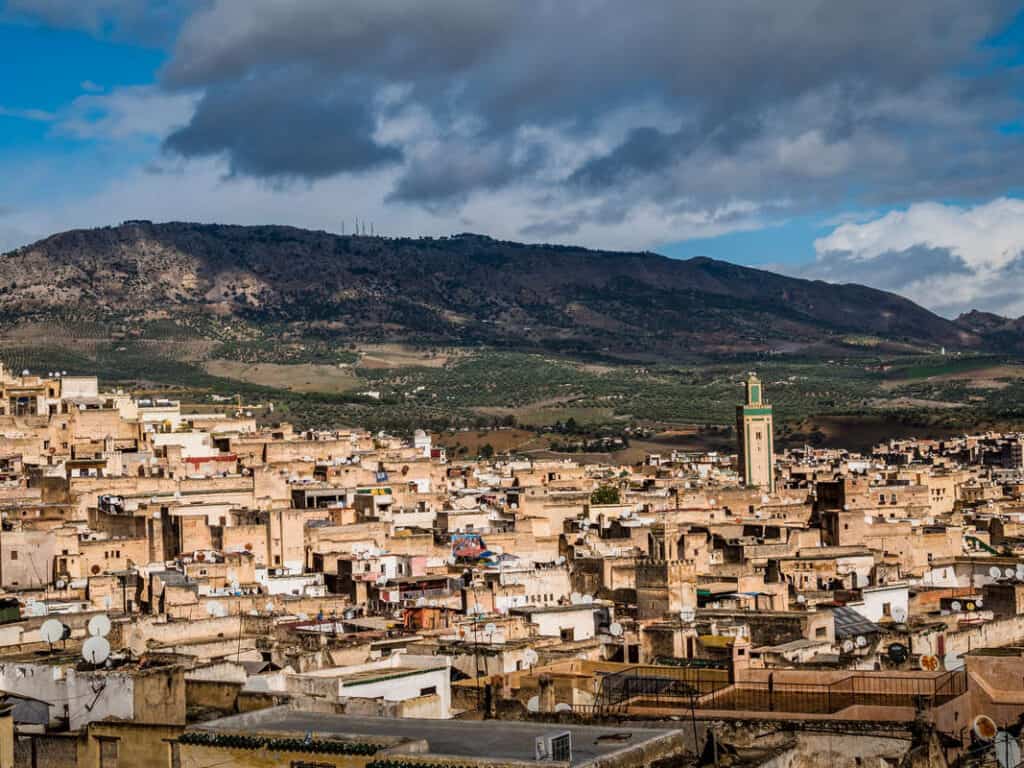
You’ll pass through mountains and small rural villages before arriving in Fez, Morocco’s oldest imperial city. Check into your riad in the medina, a labyrinth so intricate even Google Maps occasionally gives up.
If you still have energy, walk up to the Borj Nord viewpoint for a sweeping sunset over Fez’s 9,000 alleys and ancient rooftops.
Where to stay in Fez
- Top pick for low-budget: Funky Fes
- Top-pick for mid-range: Medina Social Club
- Top pick for riad: Dar Essoaoude
Day 5: Fez, overnight in Fez
Fez is one of the most important cities in Morocco. It’s a destination rich in culture, traditions, delicious dishes and so much more!
Fez has one of the first universities and the oldest medieval Medina in the world. It’s a city that offers something new and exciting to do each day. Here are a few of the things you shouldn’t miss in Fez:
- the Chourara tanneries
- Al-Attarine Madrasa
- Royal Palace
- Marinid Tombs
The tanneries of Fez is one of the most iconic places in the city and also in the whole country! The tanneries are still operating today in the way they did during the medieval ages.

Day 6: Fez to Meknes, overnight in Meknes
Meknes is just a 45-minute train ride from Fez and worth a (half) day visit before traveling onward to Rabat. You can find the train station in Fez here and book your train tickets online. Once you arrive in Meknes, you’ll need to take a taxi if you want to reach the old city where most of the interesting sites are located.
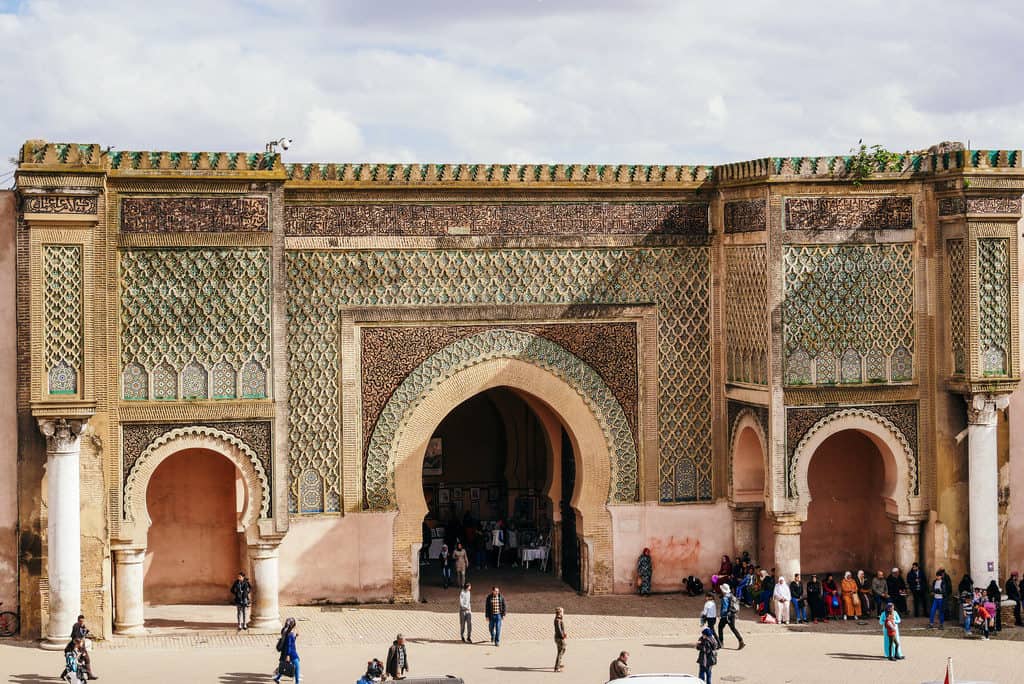
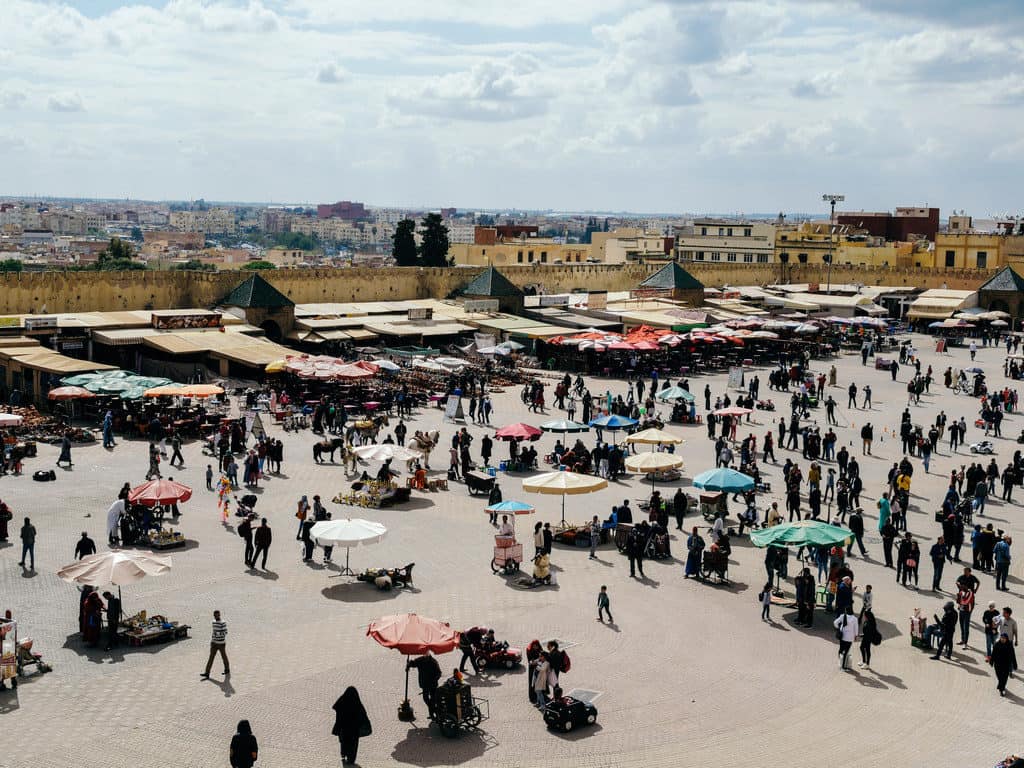
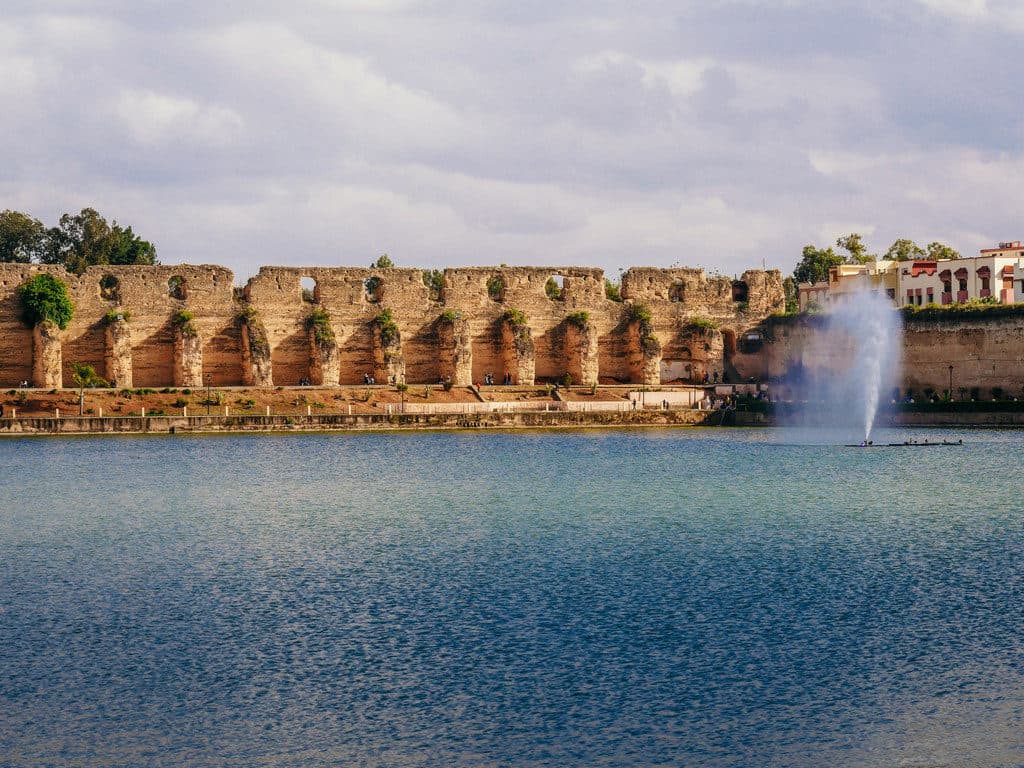
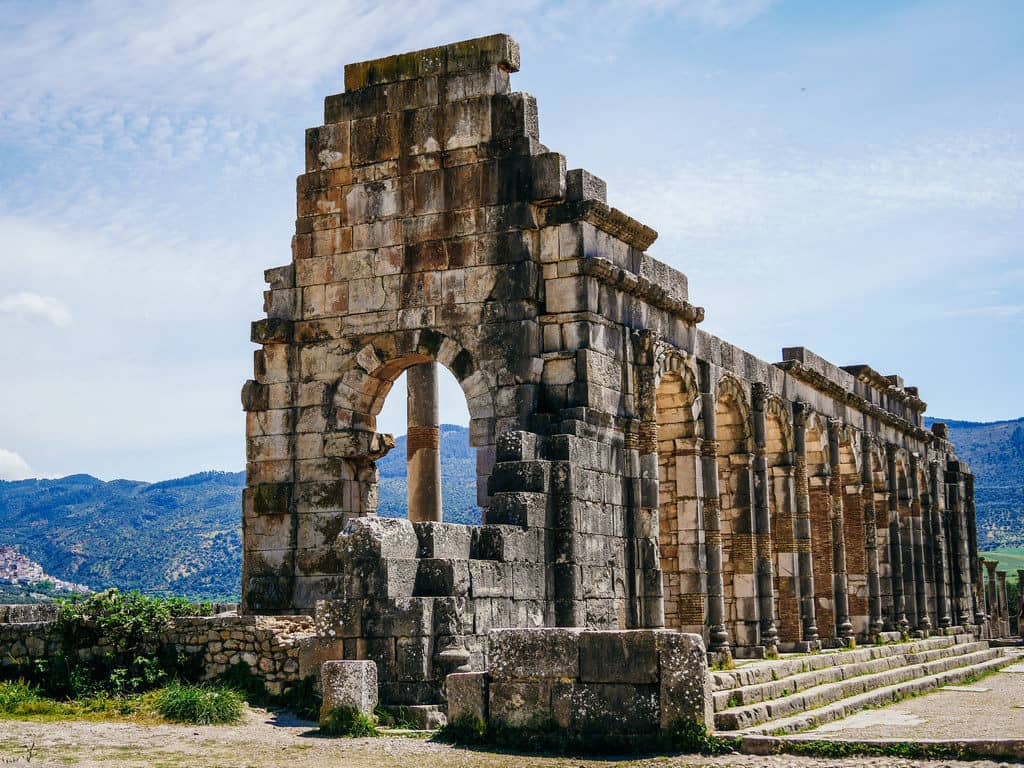
Meknes is one of the 4 imperial cities in Morocco, along with Fez, Rabat and Marrakesh. The city is on the world Unesco World Heritage List because of its beautiful medina and ruins of the royal palace. Some of the places worth visiting in Meknes in one day are:
- the Bab Mansour Laleuj and other beautiful gates around Meknes
- the Bou Inania Madrasa
- Place Hedim (also called Lahdim square)
- Souk of Meknes
- Volubilis (you’ll need at least half a day for this visit)
Where to stay in Meknes
- Top pick for low-budget: Riad Idrissi
- Top-pick for mid-range: Riad Dar Meknes Tresor
- Top pick for riad: Riad Zyna
Day 7: Meknes to Rabat, overnight in Rabat
Catch the train from Meknes to Rabat Ville early in the morning. The train journey takes a little more than 2 hours. You can book your train tickets online.
Rabat, Morocco’s capital city, has a long and rich history and is a great place to visit many captivating historical landmarks. Rabat also has its own blue city that reminded me of Chefchaouen in so many ways.
Whether you are a lover of history, architecture, or nature, Rabat will find a way to seduce you. Here are the places I recommend on a day visit to Rabat:
- Hassan Tower and mausoleum of Mohammed V
- Rabat’s cemetry
- Kasbah des Oudaias
- the Andalusian Gardens
- Old medina of Rabat
Where to stay in Rabat:
- Top pick for low-budget: Dar wassim el ghali
- Top-pick for mid-range: Dar Lalla Aicha
- Top pick for riad: Riad Dar Karima


Day 8: Rabat to Casablanca, overnight in Casablanca
Casablanca and Rabat are located very close to each other. You can look online on the ONCF website for the timetable of the trains going between Rabat and Casablanca.
There is a train that leaves every 30 minutes and it takes about 50 minutes from Rabat Ville train station to reach Casablanca. The price of a ticket is between 35 and 80 MAD.
I’d suggest to travel to Casablanca in the morning so you have time to visit the following highlights in this metropolis:
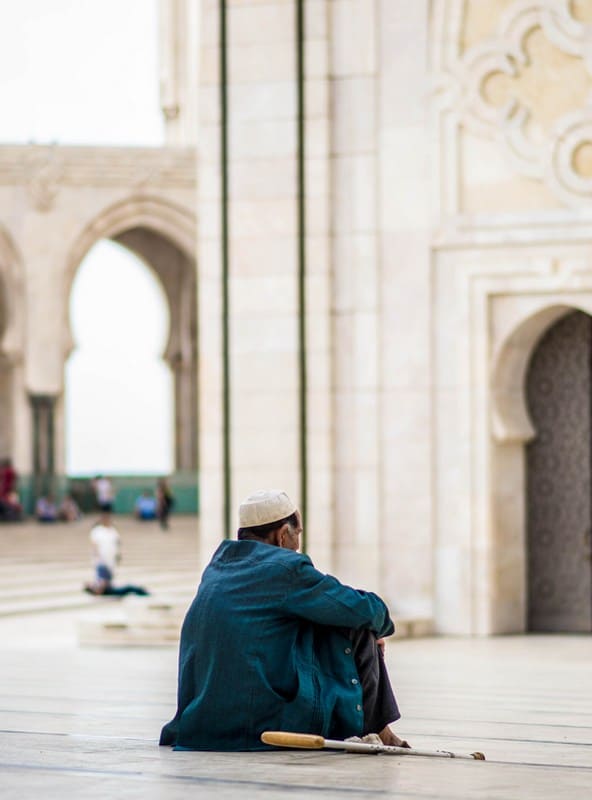
- Hassan II mosque
- Casablanca Cathedral
- Mohammed V Square
- Mahkama du Pacha
- Casablanca Old Medina
Where to stay in Casablanca:
- Top pick for low-budget: L’Hostel a Casablanca
- Top-pick for mid-range: Property located in a quiet area near the train station
- Top pick for high-end: Mosquee and Sea View Casablanca


Day 9: Casablanca to Marrakesh, overnight in Marrakesh
The cheapest and most convenient way to travel from Casablanca to Marrakesh is by train.
There are eight trains per day between Casablanca and Marrakesh departing every couple of hours. Travel time between the two cities is around 2 hours and a half. Ticket prices and time schedules can be found on the ONCF website and here’s the train station in Casablanca from where you have to depart.
Marrakesh is the last of the imperial cities on this Morocco itinerary and its history stretches back a thousand years. Morocco is even named after Marrakesh!

Marrakesh can feel a bit intimidating at first, especially if it would be the first place to visit in Morocco. But if you follow this itinerary, it’s a good place to finish your trip in Morocco.
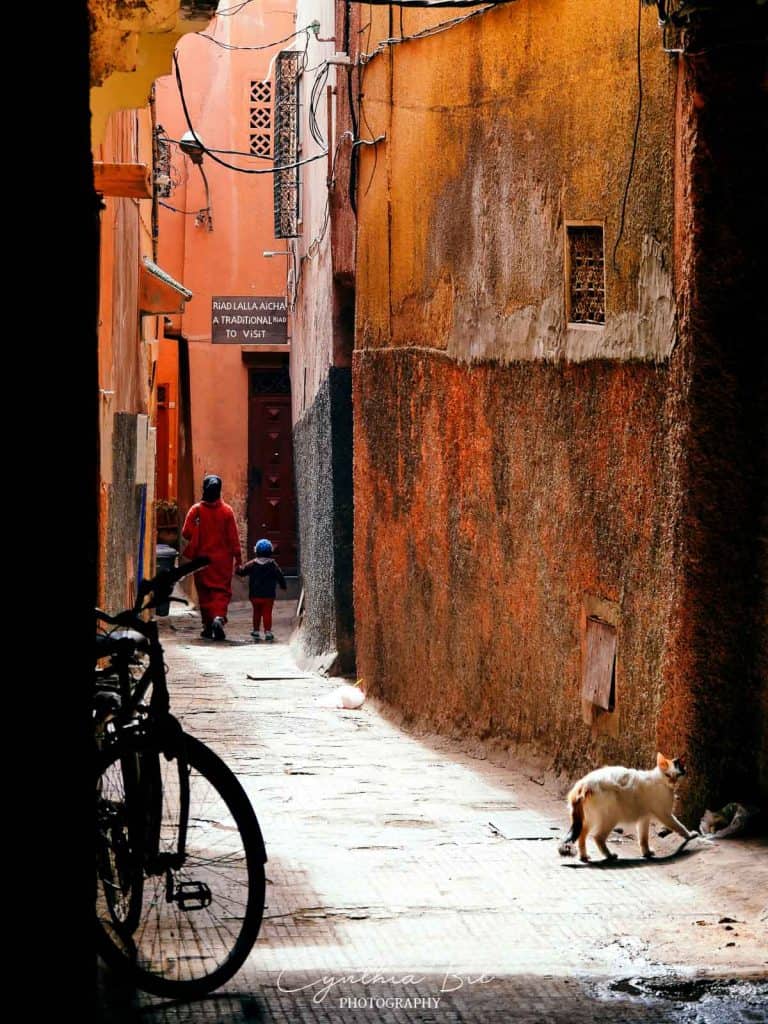
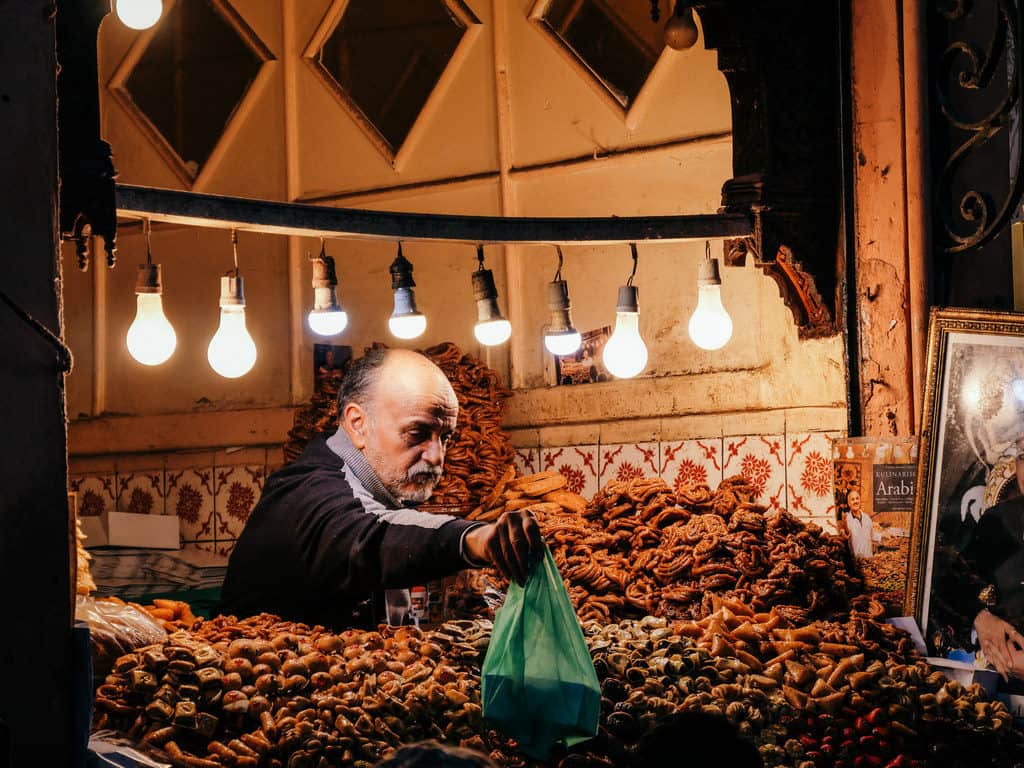
On your final day in Morocco, I recommend to visit the following places in Marrakech:
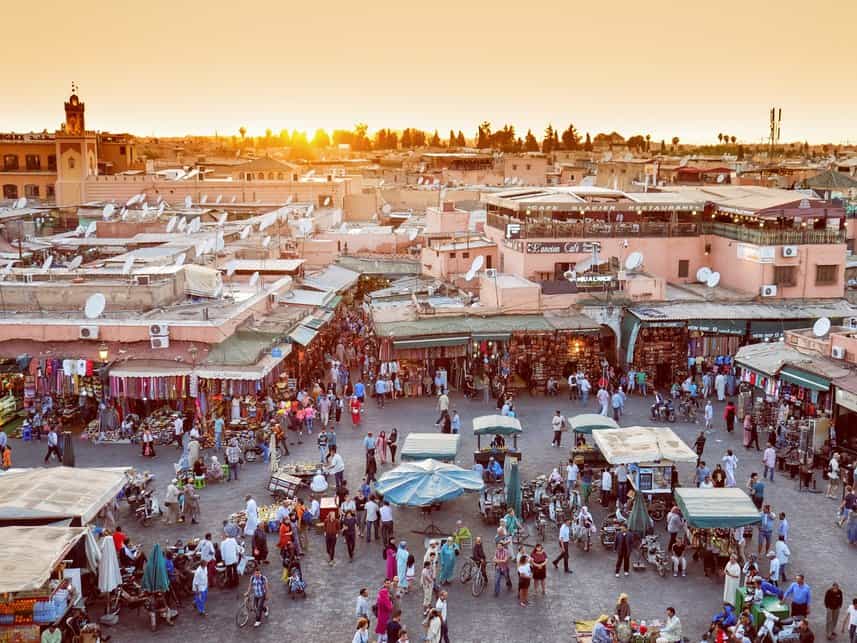
- Jemaa el Fna Main Square
- Jardin Majorelle
- Marrakech souk and medina
- the Saadian tombs
- Koutoubia mosque
- Ben Youssef Madrasah

Where to stay in Marrakesh:
- Top pick for low-budget: Kasbah Red Castel Hostel
- Top-pick for mid-range: Dar Mirai
- Top pick for riad: Riad les 2 Portes


Day 10: Departure from Marrakesh
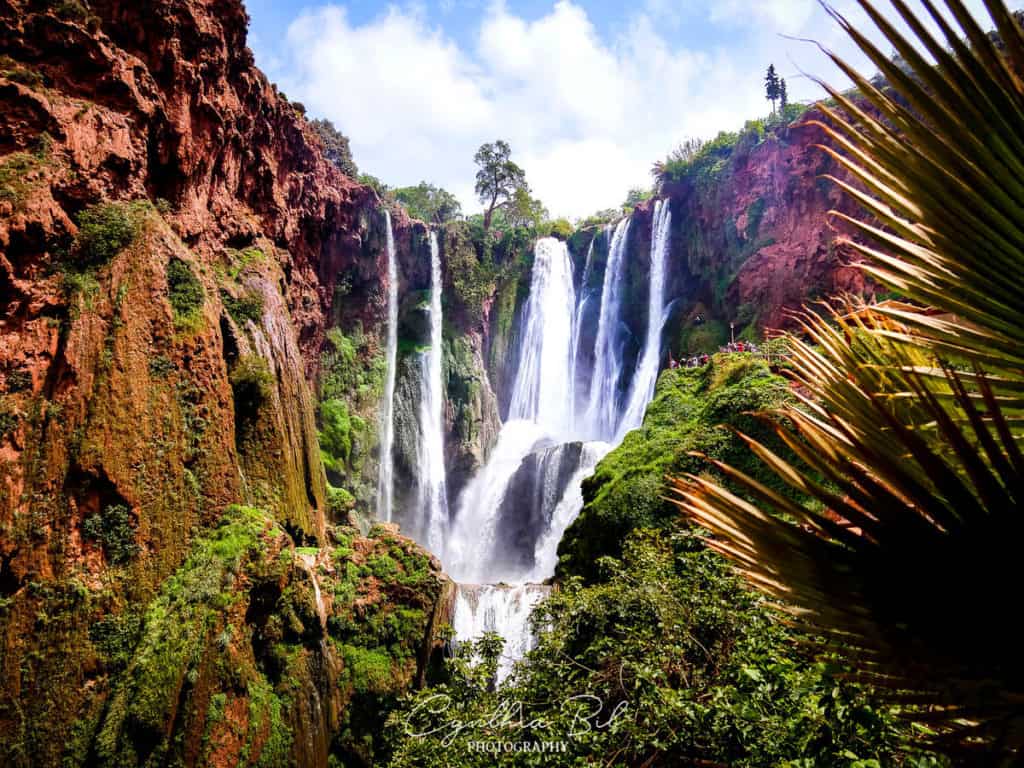
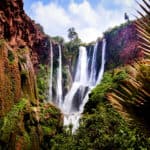
Today is the last day of your trip in Morocco (sad face). I hope you had an amazing time! In case your flight leaves at night and you have the time and energy to go on one final trip, I would recommend going on a day trip to the Ouzoud Waterfalls.
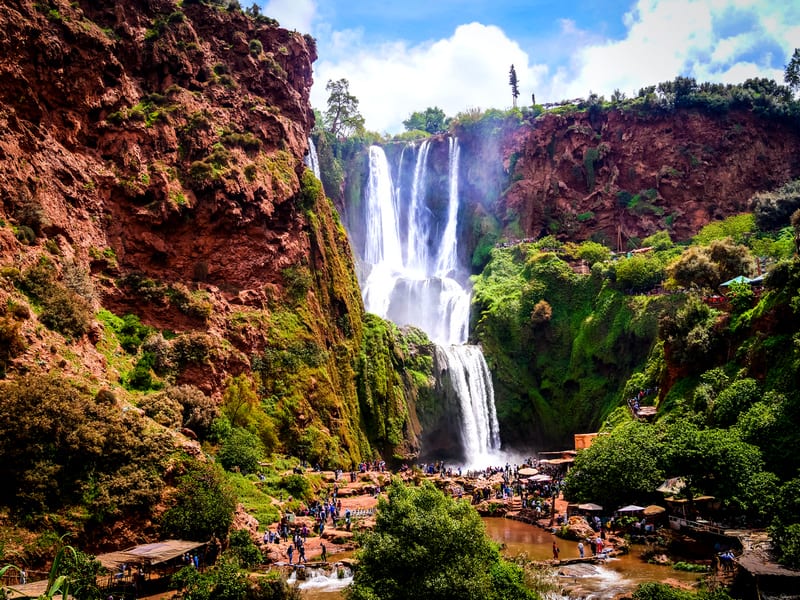
The Ouzoud Waterfalls is the second tallest waterfall in Africa. It’s a popular touristic destination and one of the most visited and photographed natural sites in Morocco!
The easiest way to get there would be by booking a tour so you definitely make it back on time for your flight. You could, of course, also choose to spend your last day exploring more of Marrakech.
In case your trip isn’t over yet and you’re looking for a longer itinerary, keep reading! Below is another detailed Morocco itinerary to visit more places in the centre and south of the country.
Southern Morocco itinerary: 10 days through The Sahara and Atlas Mountains
Marrakech → Imlil (Atlas Mountains) → Aït Ben Haddou → Draa Valley → Merzouga (Sahara Desert) → Todra Gorges → Dades Valley → Marrakech
If Morocco’s north is about colors and cities, the south is about nature. This route takes you across the High Atlas Mountains, through remote Berber villages, to the golden dunes of the Sahara, where nights are filled with drumming and desert wind. It’s the Morocco of your dreams: winding roads, kasbahs rising from the dust, and a sky that feels endless.
Whether you travel by rental car, shared taxi, or organized tour, this itinerary will show you the country’s wild, cinematic beauty.
Day 1: Arrival in Marrakech, overnight in Marrakech
Marrakech is Morocco at full volume : red walls, orange trees, and the call to prayer echoing over rooftops.
Arrive at Marrakech Menara Airport and take a short taxi to the medina (100-150 MAD).
Here are Marrakech’s highlights:
- Square Jemaa el Fna
- Visit the leather tanneries
- Visit Jardin Majorelle, a stunning botanical garden
- Get lost in the souks and the back alleys of Marrakech and buy souvenirs for friends
- Visit the Saadian tombs
In the evening, you can walk around the center square Jemaa el Fenaa and see how Marrakech has a whole different vibe at night.

Where to stay in Marrakesh:
- Top pick for low-budget: Kasbah Red Castel Hostel
- Top-pick for mid-range: Dar Mirai
- Top pick for riad: Riad les 2 Portes

Day 2: Marrakesh – Imlil (Atlas Mountains), overnight in Imlil
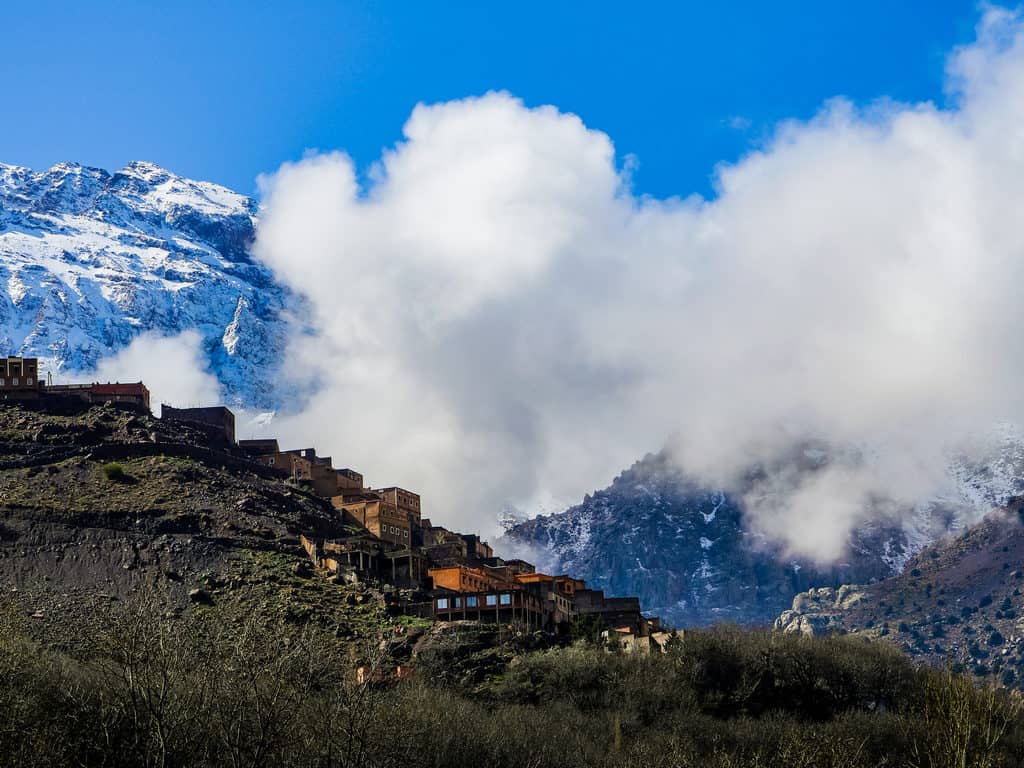
The small village of Imlil, just an hour and a half driving from Marrakesh, sits at 1800 meters altitude in the high Atlas Mountains of Morocco. It’s located at the base of Toubkal, the highest mountain peak in the country and one of the “easiest” peaks above 4000 meters to climb.
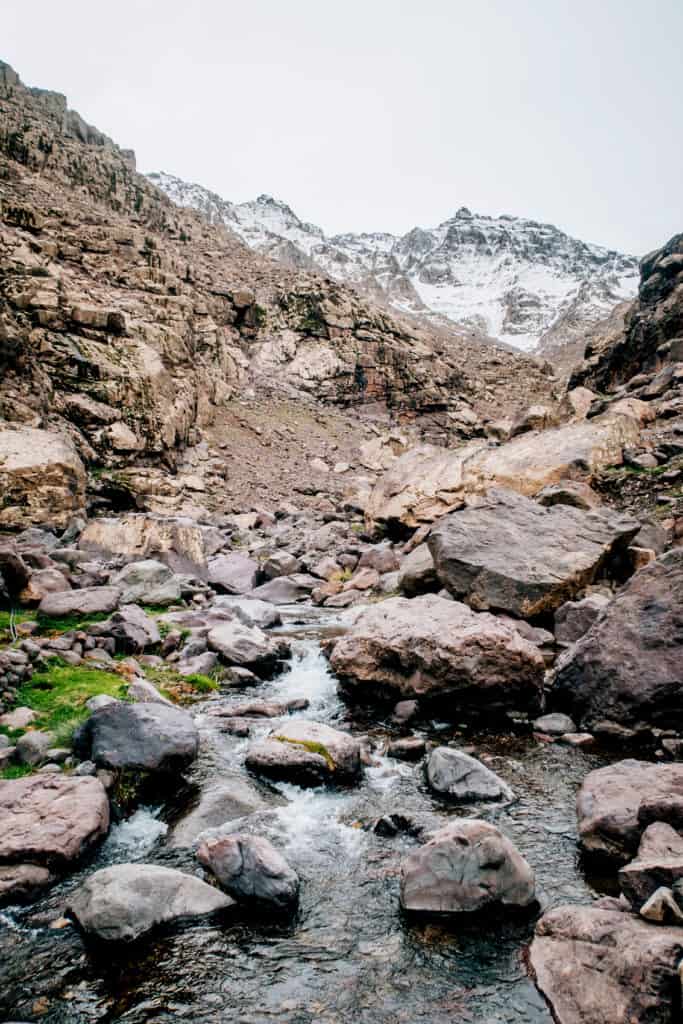
There are plenty of beautiful hikes around Imlil. The most popular one is the Mount Toubkal Trek. If you’re not up for this trek, which I cover in this itinerary, I’ll share some alternative day hikes in the area.
You can spend the afternoon hiking to nearby villages or the Imlil waterfall, a gentle introduction to Berber mountain life.
Imlil is very easy to reach from Marrakesh by public transport. The small mountain village is just 60 km from Marrakesh so getting there doesn’t take much time (75-90 minutes).
The easiest way is to take a shared taxi – or a grand taxi as they are called in Morocco – from the Bab Er-Robb taxi station. Once you get to this taxi station, it’s possible to hire the whole taxi for yourself for 250 MAD to 300 MAD or you can share it with other passengers. If you wait for the taxi to fill up, the price will be much lower (around 50 MAD to get to Imlil).
You can also reach Imlil by taking a bus to Asni (here’s the bus station in Marrakesh) and then catching a taxi for 10 MAD from there to Imlil.
Tip: Bring warm layers! Even in spring, nights here can drop close to freezing.

Where to stay in Imlil:
- Top pick for low-budget: Dar Amadine
- Top-pick for mid-range: Berber Family Lodge
- Top pick for riad: Riad Dar Omar
Day 3: Trek to Toubkal (or day hike in Imlil), overnight in mountain refuge
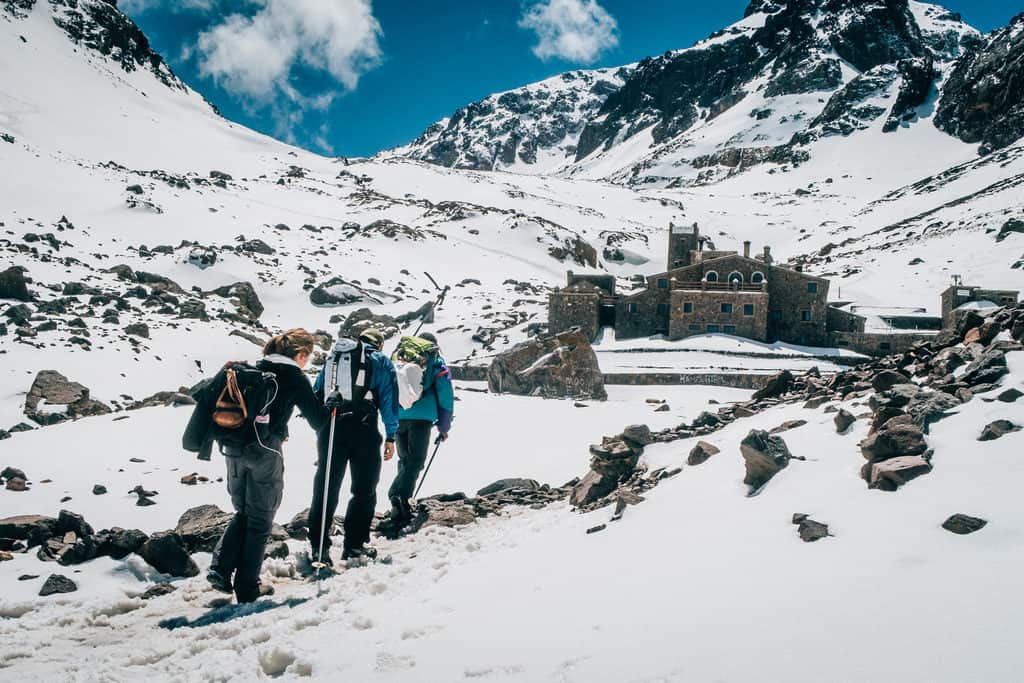
Today will be the first day of 2-day trek to Mount Toubkal. You’ll hike around 5 hours from Imlil to the mountain refuge on the way to the summit. It is mandatory to hike to Toubkal with a licensed guide (there are police checkpoints that verify you are accompanied by one).
I have a detailed guide about this trek (where to book a tour or get a guide, how much it costs, what you need to know, etc) so if you’re interested in the 2-day trek to the highest summit of Morocco (4167m), definitely read my guide below:
Alternatively, if this trek sounds too strenuous, you can do a nice day hike (17km) from Imlil to the nearby village of Asni and spend the night in Imlil.


Day 4: Toubkal to Imlil (or day hike in Imlil), overnight in Imlil or Marrakesh
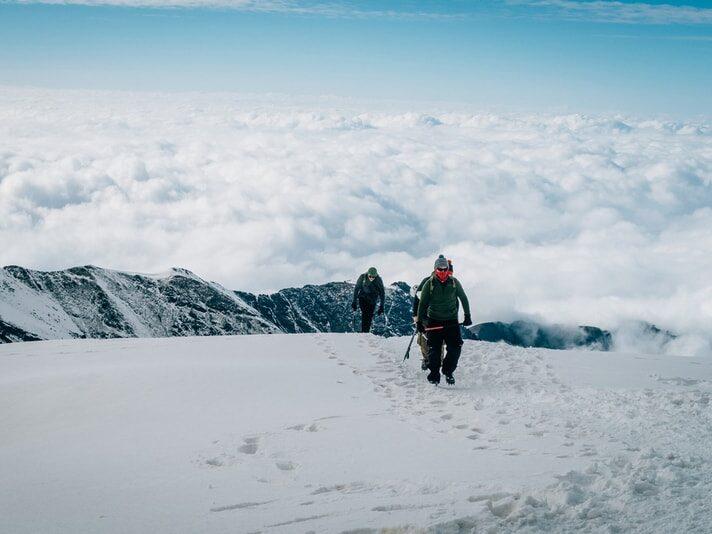
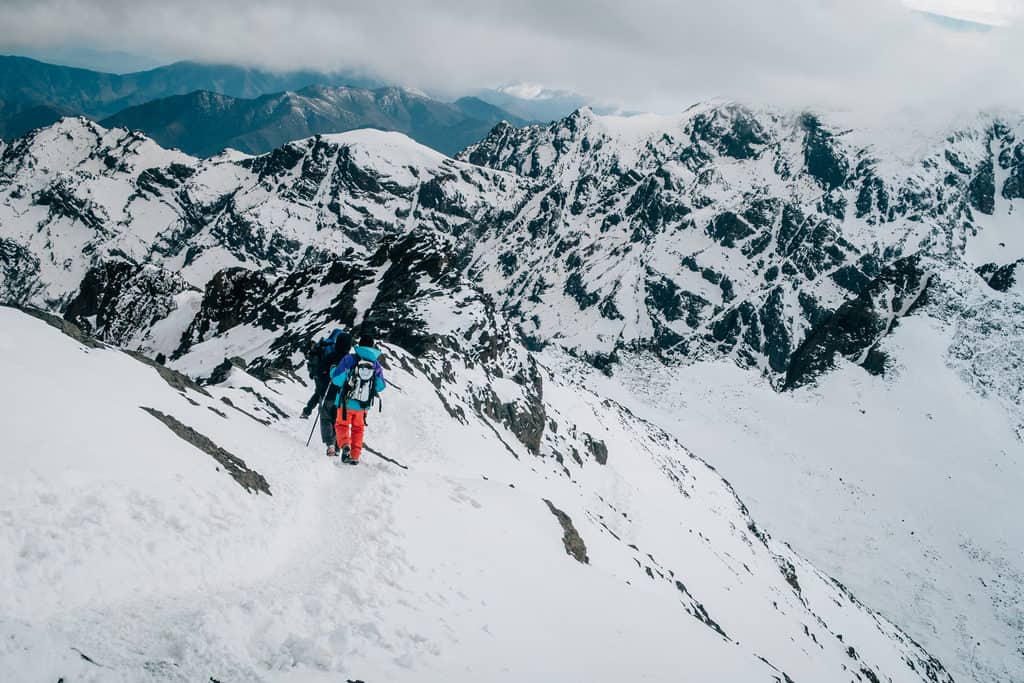
If you’re doing the trek to Mount Toubkal, your guide will wake you early in the morning to set off and reach the summit as the sun rises.
The views from the summit are amazing: across the mountains to Marrakech to the north, and the start of the Sahara to the south. During the ascent you will get more stunning views of the Atlas Mountains, and you’ll hike back to Imlil through green valleys and Berber Villages. The total duration of today’s hike is about 7 hours.
Alternatively, if you didn’t do the trek to Mount Toubkal, you can go on a nice and easy hike from Imlil to the waterfall of Armound.
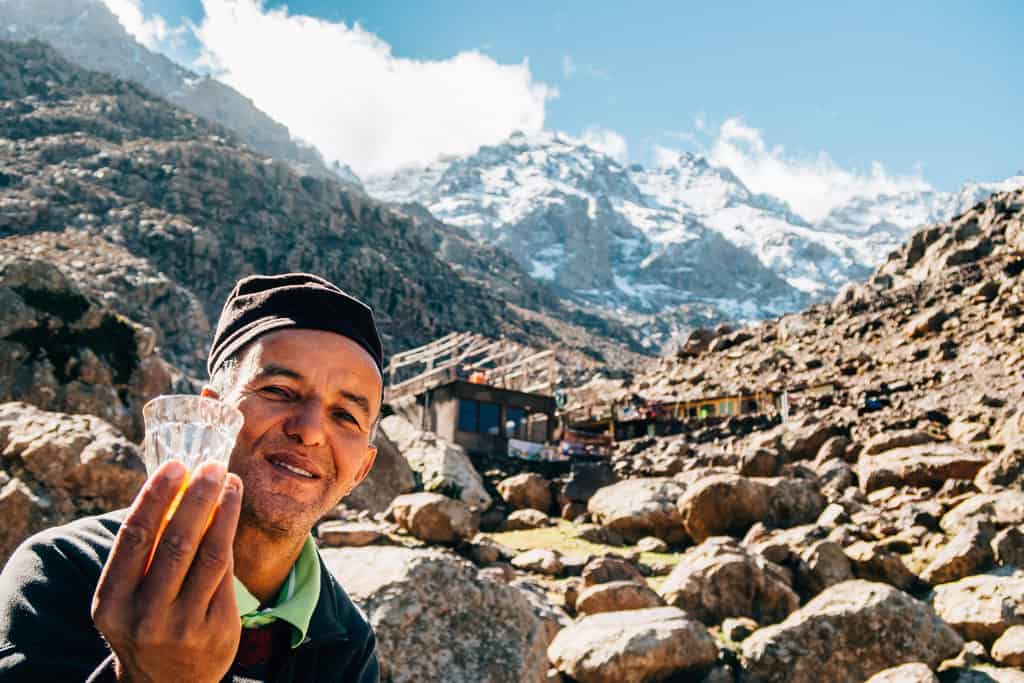

You can choose to spend another night in Imlil or head back to Marrakesh ( 1,5-hour drive) and spend the night there. This latter will be the easiest option if you’re traveling by public transport.
You can find grand taxis to Marrakesh at the taxi station in Imlil. The price should be around 50 MAD if you wait until the taxi fills up or 300 MAD to have the taxi for yourself. You’ll get dropped off at the same place where you took the taxi to Imlil from Marrakesh.
Day 5: Marrakesh/ Imlil – Ait Ben Haddou – Ouarzazate, overnight in Ouarzazate
Leave Marrakech as early as possible to travel towards the High Atlas mountains. This drive is one of Morocco’s most beautiful: snow-capped peaks, clay villages, and valleys that change color with the light. Along the way, you’ll be driving through the mountain passage of Tizi n’Tichka that stands at an altitude of 2260m.
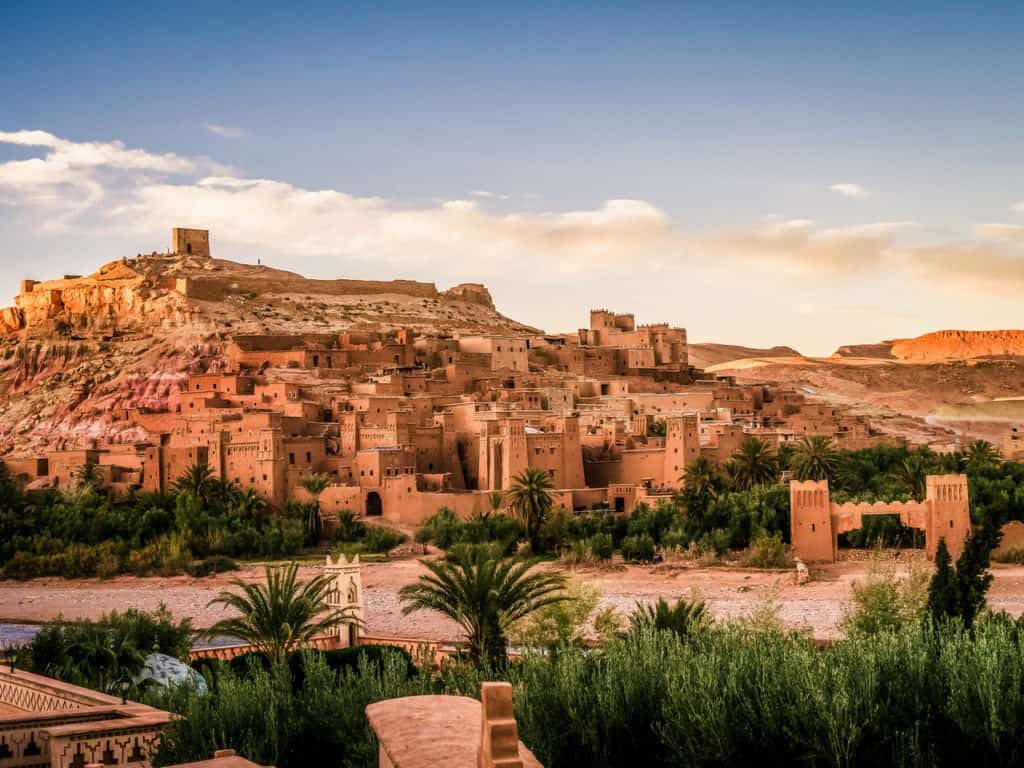
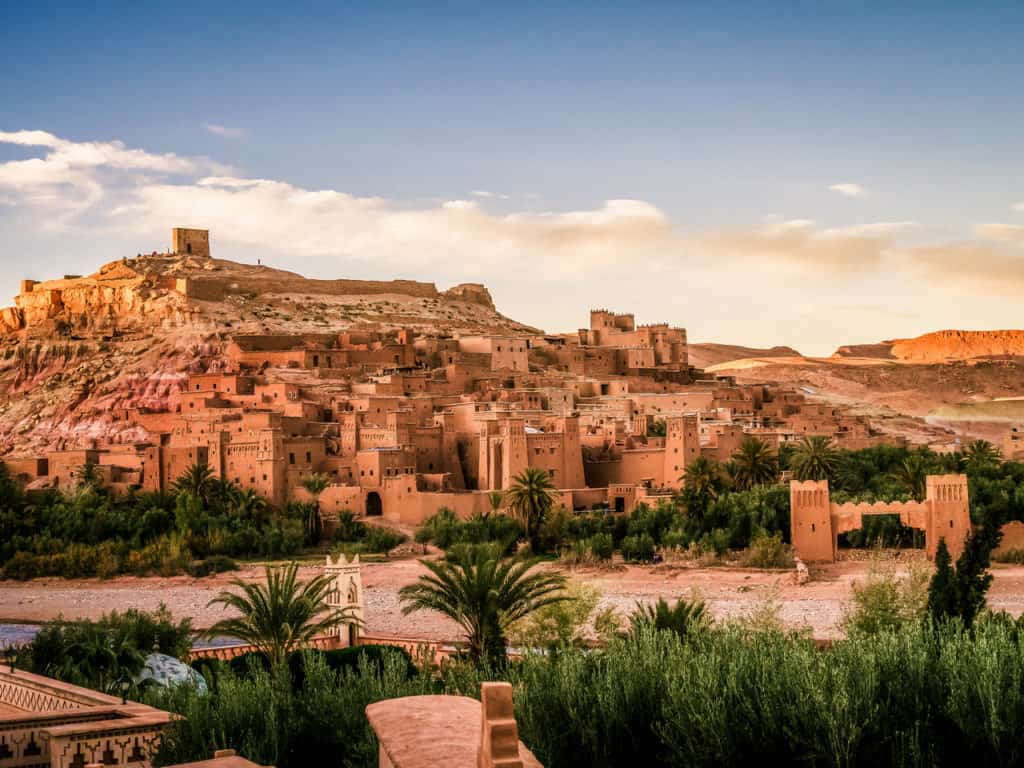
Halfway down the other side lies Aït Ben Haddou, a UNESCO-listed ksar (fortified village) built from mud and dreams.
It’s appeared in films from Gladiator to Game of Thrones, but nothing compares to seeing it in real life.
Explore the narrow lanes, climb to the old granary, and watch the desert sunset from the top. Then continue 30 minutes to Ouarzazate, the “Hollywood of Morocco.”
How to get from Marrakech to Aït Ben Haddou by public transport
Go to the CTM bus station near Marrakech train station (or use Supratours) and take the bus to Ouarzazate. The bus ride takes about 4 to 5 hours and a ticket costs around 100 MAD.
In Ouarzazate, take a shared taxi (30-minute ride) to Aït Ben Haddou (30- 40 MAD). After visiting Aït Ben Haddou, return to Ouarzazate the same way (shared taxi).
Where to stay in Ouarzazate
- Top pick for budget: Hotel Dar Rita
- Mid-range suggestion: Ecolodge La Palmeraie Ouarzazate
Day 6: Ouarzazate – Agdz – Draa Valley – Nkob, overnight in Nkob
Today, you’ll be exploring the South of Morocco. This part of the country is absolutely magical! No need to hurry in leaving Ouarazazate that morning since the final destination is only two hours away by car.
This village is known for its 45 Kasbahs or mud castles. It’s a beautiful and unique site in Morocco that showcases the architectural genius of the ancient Berber tribes who lived in the area. Take your time. Stop for tea in small villages, walk among the date palms, let the desert pace you.

How to travel from Ouarzazate to Nkob by public transport
At the main taxi station in Ouarzazate, take a shared taxi to Agdz (1 hour, 25-35 MAD). In Agdz, switch to a shared taxi to Nkob via the Draa Valley (1,5 hours, 30-40 MAD).
Where to stay in Nkob
Nkob is a village that is known for its mud kasbahs and most accommodations in town conserve that lovely charm of the ancient terracotta and mud buildings. Here is a riad I recommend in Nkob that has the traditional architecture of the region:
- Riad Nkob: a haven of peace and the perfect place to relax after a long journey. The owner has a lovely little garden where he grows most of the fresh vegetables he cooks with.
Day 7: Nkob – Alnif – Rissani – Merzouga (Sahara desert), overnight in Merzouga
After breakfast, you’ll leave the rocky region of Nkob and start driving towards the desert and the sand dunes of Merzouga. There are plenty of small towns along the way where you can stop to have lunch. I suggest stopping in Rissani to visit this beautiful mosque.
After you visit the mosque, you’ll be very close to Merzouga and you’ll start seeing more and more sand dunes appearing on the side of the road.
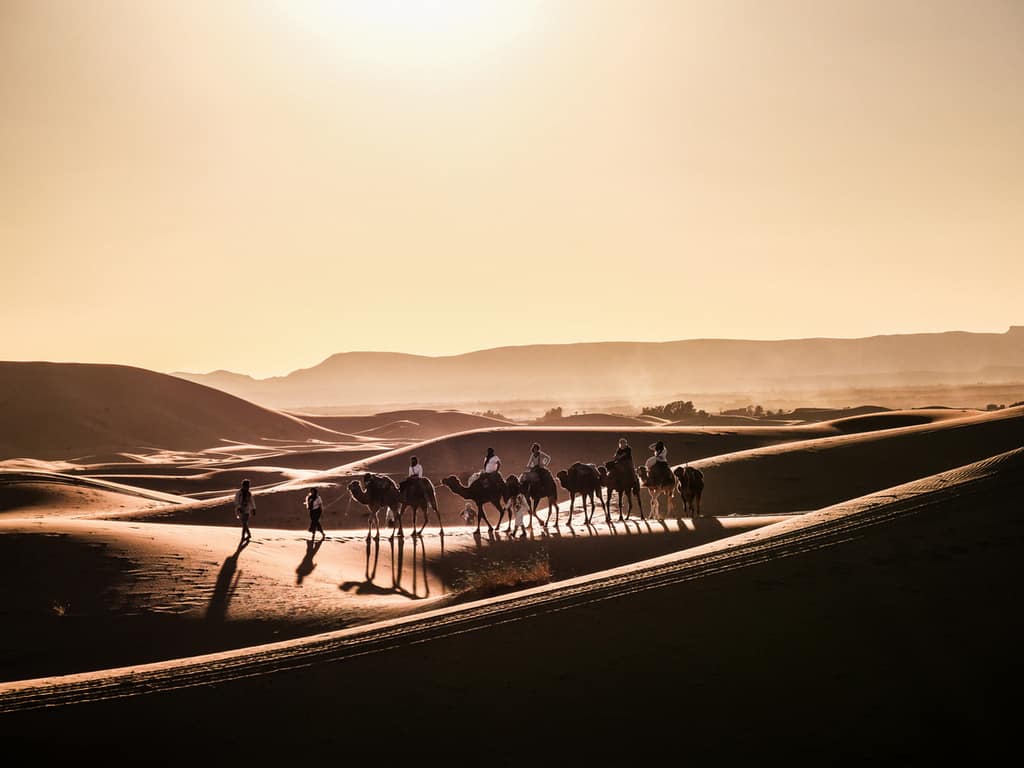
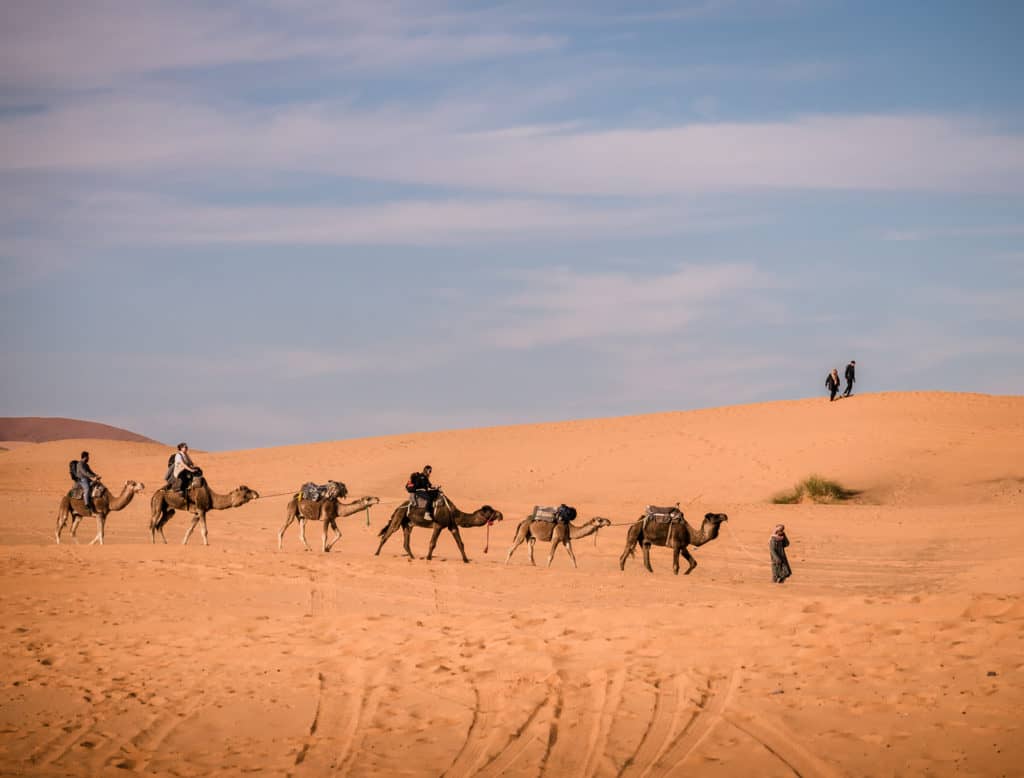
After you arrive in Merzouga in the late afternoon, you can go on a 2-hour camel trek into the desert. A wonderful dinner and music will await you at your desert camp. After the party is over, prepare yourself to see the stars as you have never seen them before.
Most of the desert camps in Merzouga offer a similar standard package: a camel ride into the desert where the camp is located, a dinner with traditional music, a night in a traditional Berber tent and breakfast the next day.
You could choose some camps from this list or read How to plan a desert trip to Merzouga to find out which desert camps are the best.
Tip: Bring warm clothes: desert nights can drop below 5°C, even in spring.


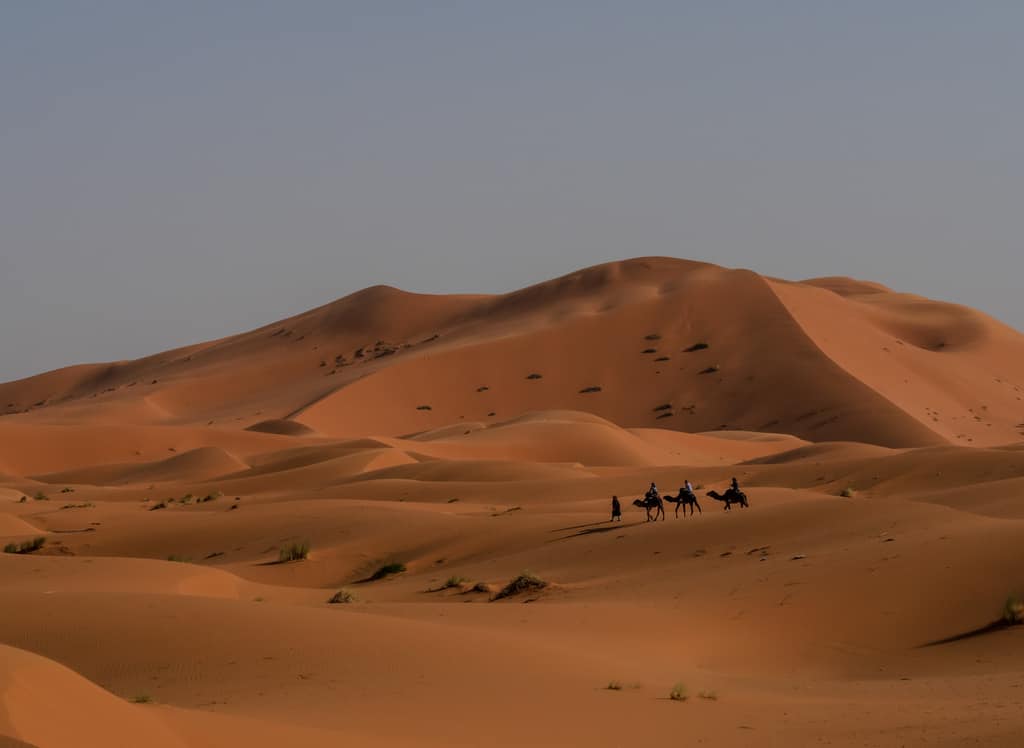
How to get from Nkob to Merzouga by public transport
This is the most patchwork day of the itinerary, but it’s doable.
- Option A: Public transport + shared taxis (most flexible):
- Shared taxi from Nkob to Tazzarine (25 MAD, 25 minutes)
- Shared taxi or bus from Tazzarine to Rissani (40-60 MAD, 2 to 3 hours)
- Shared taxi from Rissani to Merzouga (20-30 MAD, 45 minutes)
- Option B: Direct shared taxi from Nkob to Rissani: not always possible, but ask your guesthouse. When available, it saves an hour or two.
Day 8: Exploring the Sahara desert
The 8th day of your trip will be to discover the Sahara Desert. You can wake up early to climb to the highest dune of the desert to witness the sunrise.
After breakfast, the desert camp owner will take you back to town by camel. From there my suggestion for the day is to take a pleasant long walk to Lake Dayet Srij where you can see flamingos in spring.
Another fun thing to do in the desert is to rent a board and do some sandboarding. Read this guide to find all the cool free activities you can do in Merzouga.

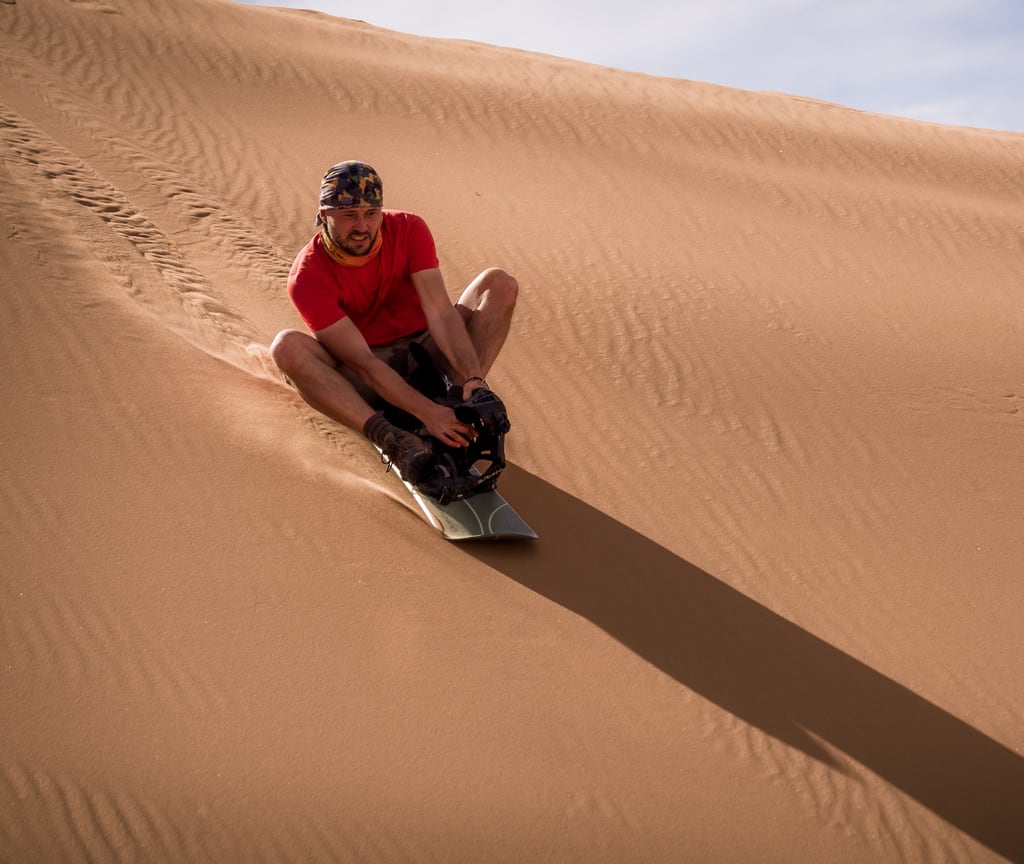
In the afternoon, you’ll go to your hotel in Merzouga where you’ll be able to relax after a day of fun activities. It will also be the ideal place to see an unforgettable sunset over the dunes of Erg Chebbi.
Here are some of the places I recommend in Merzouga:
- Auberge Camping La Liberté: located very close to the sand dunes and organizes camel and 4×4 tours in the desert.
- Auberge Les Roches: located right beside the desert of Erg Chebbi, where you will find palm trees and a pool. BBQ facilities are available in the hotel and free Wi-Fi access is provided in public areas. The center of Merzouga is a 10-minute walk away from this hotel while you can find an oasis just 20 minutes away.
Day 9: Merzouga – Todra Gorges – Dades Valley, overnight in the Dades Valley
Today you’ll leave Merzouga and visit the famous Todra Gorges and see incredible cliffs that stand at 300 meters high. You’ll be surrounded by walls that have been carved over the course of millions of years and you’ll get the chance to see a very unique canyon in Morocco.
These huge rock walls attract rock climbers from all around the world who want to ascend the hundreds of routes of solid, reddish limestone. Check out my post about Things to do in the Todra Gorges Tinerhir to see awesome pictures of the place and find other activities that you can do nearby.
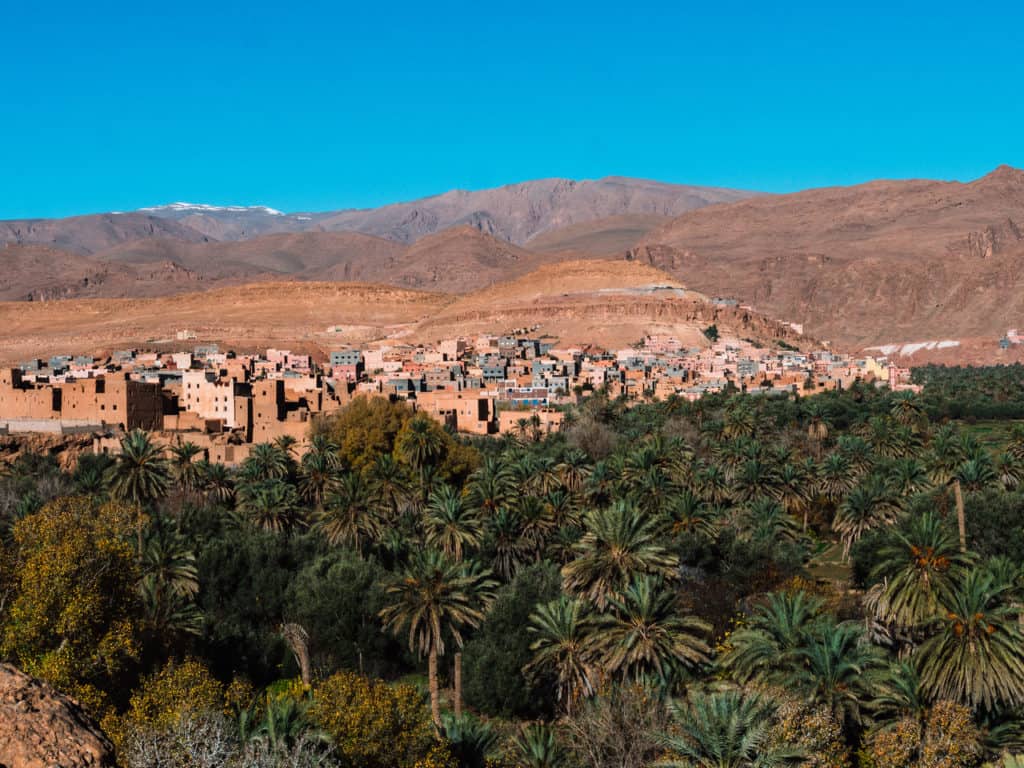
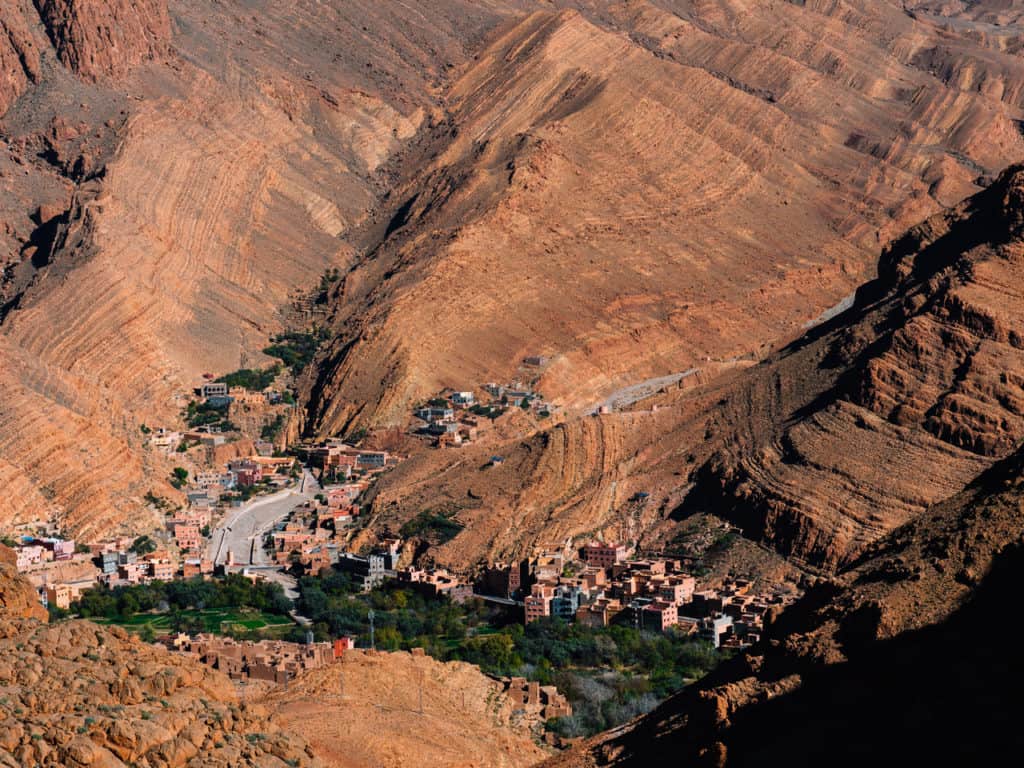
From there you’ll continue your journey north through the Dades Valley, also known as the road of a Thousand Kasbahs. You will witness breathtaking landscapes as you head back towards Marrakech. The final stop for the day will be in Boumalne Dades.
How to get from Merzouga to Boumalne Dades by public transport
This is the least straightforward day using public transport, but still doable.
- How to travel from Merzouga to Todra Gorges by public transport
- Take a shared taxi from Merzouga to Rissani (20-30 MAD, 45 minutes)
- Take a shared taxi from Rissani to Tinghir (45 MAD, 2 hours)
- Take a shared taxi from Tinghir to the Todra Gorges (30 MAD, 25 minutes)
There is no direct public transportation between the Todra Gorges and the Dades Valley, but there are 3 options:
- Option A: take a private taxi (fastest). This will cost 150-250 MAD, depending on the season.
- Option B: public transport via Boumalne Dades:
- taxi back to Tinghir
- Shared taxi or bus to Boumalne Dades (1 hour, 20-30 MAD)
- Shared taxi up the valley to your guesthouse (10–30 MAD)
- Option C: spend the night in Tinghir and take a bus or shared taxi to Marrakech from there on day 10
Where to stay in Boumalne Dades
Day 10: Dades Valley – Skoura – Marrakech, departure from Marrakech
After a delicious breakfast, you’ll be heading towards Marrakesh. You’ll follow the beautiful Rose Valley until you reach the great Atlas Mountains again. The road curves along this valley, which is one of the most fertile in the south of Morocco. The valley of the roses is known for its apricots, its roses, and its beautiful traditions that come from the Berber culture.
This is the last day in the south of Morocco before you pass the High Atlas Mountains. The view will be amazing, and you’ll have the opportunity to see many different types of mountain landscapes but it will be a long drive (5 hours).
An optional stop can be at Skoura Oasis, where you enjoy last views of palm groves and kasbah ruins, and where you’ll find peaceful cafés off the main road. You’ll arrive in Marrakech by late afternoon.
How to get from Dades Valley to Marrakech by public transport
There is usually one CTM bus that connects Boumalne Dades to Marrakech. The ride takes around 6 to 7 hours and a ticket costs 120 – 150 MAD.
Another option is to take a shared taxi to Ouarzazate (1,5 hours, 40 MAD) and then a direct bus from Ouarzazate to Marrakech (4,5 hours, 110 MAD).
Where to stay in Marrakech
- Top pick for low-budget: Kasbah Red Castel Hostel
- Top-pick for mid-range: Dar Mirai
- Top pick for riad: Riad les 2 Portes

Coastal Morocco Itinerary (7 Days)
Agadir → Tamraght/Aourir → Taghazout → Tamri/ Paradise Valley→ Imsouane → Sidi Kaouki → Essaouira
This 7-day route is perfect if you want a softer, more spacious journey. It’s ideal for surfers (from beginners to advanced), solo travelers craving community, and anyone who wants a slower rhythm of travel along one of the beautiful coastlines in Africa.

Day 1: Arrival in Agadir, overnight in Agadir
Agadir is Morocco’s most relaxed coastal city with its wide golden beach, long promenades, and year-round sunshine. Arrive at Agadir Al-Massira Airport and take a taxi (150 – 200 MAD) or an airport shuttle into the city.
Tip: If you’re renting a car for this route, Agadir is the easiest place to pick it up.
Spend the day easing into Morocco:
- Walk along Agadir’s long beach promenade.
- Visit the Agadir Marina for a smoothie, fresh juice or simple lunch.
- Head to Agadir Oufella for sunset and panoramic views across the bay.
Agadir is the perfect soft landing before heading north into smaller, more intimate surf towns.

Where to stay in Agadir
- Budget: Dinosaur Anza Surf House
- Mid-range: Le Riad Villa Blanche
Day 2: Agadir – Tamraght & Aourir, overnight in Tamraght or Aourir
Tamraght and Aourir are twin villages nestled between the ocean and the hills. They have a soft, grounded energy, slower than Taghazout, more spacious and less touristic.
The days here follow a simple rhythm:
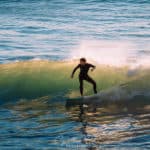
- Morning surf at Banana Point, a mellow right-hander ideal for all levels.
- Cardamom coffee in a coastal café.
- A walk through the small streets, where bananas, spices, and fresh pastries mix in the air.
- Sunset yoga on a rooftop terrace.
If you’re interested in surfing:
- Best from October to April, but swells appear year-round.
- Board rental:100 -150 MAD/day.
- Surf lessons: 250-300 MAD.
How to get from Agadir to Tamraght/Aourir by public transport
The cheapest option is to travel by bus (bus #32 or bus #33) from Agadir to Tamraght or Aourir. These buses run frequently throughout the day, the ride takes about 30 minutes and it costs 7 to 10 MAD.
You could also take a shared grand taxi from the taxi stand near Batoir Market. This costs 15 to 20 MAD and it takes about 20 minutes to reach one of the beach towns.
Where to stay
- Budget: Lunar Surf House
- Mid-range: Dar Al-Andalus
Day 3: Tamraght – Taghazout, overnight in Taghazout
Taghazout is Morocco’s legendary surf town: colorful, creative, and buzzing with life. It used to be a sleepy fishing village; today it’s a blend of surf culture, yogis, digital nomads, and local Berber life.
Spend the day exploring:
- Surf famous spots like Anchor Point, Panorama, or Hash Point (depending on your level).
- Wander the narrow streets painted in blue and white.
- Stay for sunset at Panorama Beach, where surfers silhouette themselves against golden waves.
Tip: If you work remotely, Taghazout is one of the best places along the coast for co-working spaces and strong Wi-Fi.

How to get from Tamraght to Taghazout by public transport
Taghazout is only 7 km north of Tamraght. You can get there in two easy ways:
- By taxi: 10-15 minutes, 20-30 MAD
- By local buses: Bus #32 or #33,15 minutes, 5-7 MAD
- You could even walk along the beach at low tide, about 1 hour and beautiful!
Where to stay in Taghazout
- Best budget pick: Golven Surf
- Best mid-range choice: Taghazout Life
- Top Riad: Riad Dar Sarah
Day 4: Day trip to Tamri or Paradise valley
Tamri is a quiet spot north of Taghazout with fewer cafés, fewer tourists, and more nature. The beach is huge and wild, backed by sand dunes where the desert seems to spill into the sea.
Things to do at Tamri:
- Surfing uncrowded waves (intermediate level and up).
- Long reflective walks.
- Sandboarding in the nearby dunes.
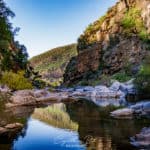
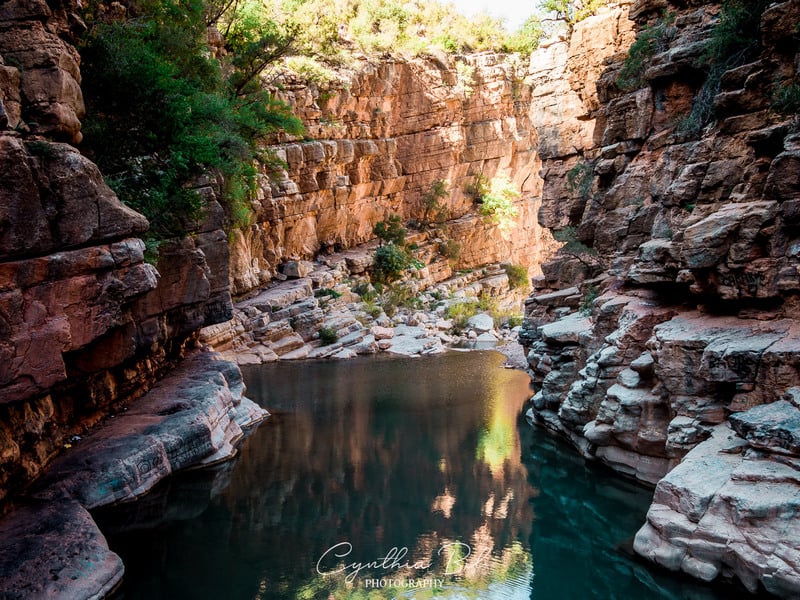
If you’re craving a peaceful day, this is what I recommend for day 4. Alternatively, you could go on a day trip from Taghazout to Paradise Valley.

How to get from Taghazout to tamri by public transport
Catch a northbound local bus (commonly going toward Tamri or Imi Ouaddar, 20-25 minutes, 8-12 MAD) or take a shared taxi from the Taghazout taxi stop (20 minutes, 20-30MAD).
How to get from Taghazout to Paradise Valley by public transport
Read the detailed description in How to visit Paradise Valley.
Day 5: Taghazout – Imsouane – Sidi Kaouki, overnight in Sidi Kaouki
Imsouane is a simple fishing village and is known for “The Bay”, one of the longest right-hand waves in the world. You can ride a single wave for nearly a minute.
If you don’t surf, you might want to skip Imsouane (or just stop by for a brief visit) and head to Sidi Kaouki.
Sidi Kaouki has a wilder feel with its long, empty beaches. It’s perfect for kite-surfers, beach wanderers, horse riding (150 – 200 MAD/ hour), and soulful travelers who want the sea without the crowds. Definitely spend the night here so you can watch the sunset, they’re unreal here!

HOw to get from Taghazout to Imsouane and Sidi Kaouiki by public transport
From Taghazout, take a northbound local bus heading toward Tamri, Imi Ouaddar, or Essaouira (via the coastal road). These buses pass through Taghazout every 20-40 minutes. Get off in Tamri. A ticket to Tamri costs around 10 MAD and it takes about 25 minutes.
At the Tamri taxi station, take a shared grand taxi directly to Imsouane. These leave when full (usually 4-6 passengers) and a seat costs around 50 MAD. The journey takes about 40 minutes.
From Imsouane, take the CTM bus to Essaouira (1 hour, 40 MAD). In Essaouira, you can take a shared taxi to Sidi Kaouki (25 minutes, 20 MAD).
Where to stay in Sidi Kaouiki
- Budget: IBI Surf House
- Mid-range: House of Omm
Day 6: Sidi Kaouki – Essaouira, overnight in Essaouira
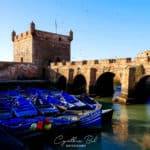
Your final stop is Essaouira, a UNESCO-listed coastal town filled with art studios, music cafés, fishermen, and white-washed medina walls painted with blue trim.
It’s creative, relaxing, musical, and photogenic, one of my favourite places in Morocco!
Things not to miss:
- Wander the medina (slower and friendlier than Marrakech)
- Visit the Skala de la Ville ramparts (Game of Thrones filming location).
- Browse local art – Essaouira’s galleries are some of the best in Morocco.
- Watch fishermen bring in the day’s catch at the port.
- End the day with a sunset on the beach, where camels rest and musicians play.


How to get from Sidi Kaouiki to Essaouira by public transport
Take a shared taxi (25 minutes, 20 MAD) or take bus #2 (30 minutes, 7 MAD) from Sidi Kaouiki to Essaouira.
Where to stay in Essaouira
- Budget: Chill Art Hostel
- Mid-range: Riad Baladin
I hope these three Morocco itineraries will help you plan your perfect trip around Morocco. If you have questions or comments concerning any of the destinations mentioned in these itineraries let us know in the comments below. Have a great time in Morocco!
Day 7: Essaouira
Enjoy your final day in Essaouira, where the sea breeze drifts through the medina, the sound of gulls above the ramparts, and the scent of grilled fish drifting from the port.
When you’re ready to leave, getting to your airport (Essaouira or Marrakech) is simple.
How to get from Essaouira to Essaouira airport
Essaouira Airport is small, quiet, and only 15 km from the city, the easiest departure option. Taxis run all day from the medina and Bab Doukkala so there is no need to book one in advance. It takes about 20 minutes to reach the airport and the cost is 120-150 MAD.
How to get from essaouira to Marrakech
If your international flight leaves from Marrakech, the connection is easy. Take a Supratours Bus (3 hours, 70-100 MAD). The bus drops you next to Marrakech Train Station. From the station, take a petit taxi to the airport (100 MAD, 20 minutes).
A faster option is taking a shared Grand Taxi from Bab Doukkala (2,5 hours, 80-120 MAD per seat. The taxi drops you off at the Marrakech taxi stand, from where you can take a petit taxi to the airport.

I hope this guide helps you plan your trip to Morocco! If you have any questions, additions or concerns, don’t hesitate to leave a comment below or contact me. Have a fantastic journey!
These posts might interest you:
Best eSIM for Morocco? My Honest Experience Using Simify During a Morocco Road Trip

Renting a Car in Morocco: Complete Guide with Driving Tips (2026)

Morocco Itinerary 2026: 3 Best Routes for a Morocco trip Through Imperial Cities, Atlas Mountains & Sahara
19 Very Useful Things to Know for Backpacking in Morocco in 2026 – The Complete Travel Guide to Morocco
The 17 Best Places to visit in Morocco in pictures

The Honest Guide to Meknes Morocco and Volubilis – 9 best things to do and what to skip
16 Top Things to do in Marrakech Morocco – The Complete Guide to Morocco’s Red City
Is Morocco expensive – Morocco Budget Guide for 2026

Amazing blog! Very interesting.
Thank you!
This is a great resource. Can you update it with a Rabat-centric itinerary?
Thank you!
Amazing Blog, Thank you for sharing your amazing content & Ideas, Pictures about Morocco, Keep posting with us
Thank you Marina!