Complete travel guide on how to visit Turkistan Kazakhstan, including a comprehensive list of the best things to do and places to visit in Kazakhstan’s spiritual and historical center.
The ancient Silk Road city of Turkistan – also often written as Turkestan-, once the spiritual capital of the Turkic world, is located in the South of Kazakhstan.
The city was founded over 15 centuries ago and is now a living museum preserving the echoes of its past amidst the bustling rhythms of modern life. As the cultural and spiritual capital of Kazakhstan, it holds a profound place in the nation’s heritage, seamlessly blending the old with the new.
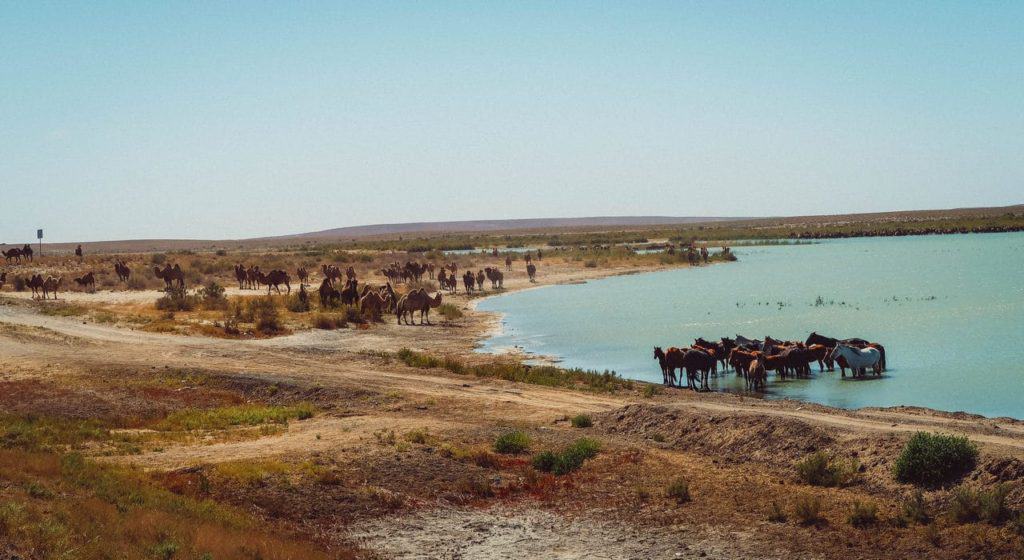
I visited the city for the first time in 2017. It was a welcome change after almost one week of driving through the endless and featureless steppes of Western Kazakhstan.
Once known as Shavgar, Turkistan was one of the most important commercial centers of the Silk Road, the trade route between Europe and China. It was also the capital of the Kazakh khanate (an area ruled by a Khan) where the ceremonies of enthronement took place.
Turkistan is nowadays a large industrial, educational and cultural city. It didn’t look so different from the other cities we had seen so far in Kazakhstan, except that it had a lot more trees and character and there were a lot more local and foreign tourists wandering its streets.
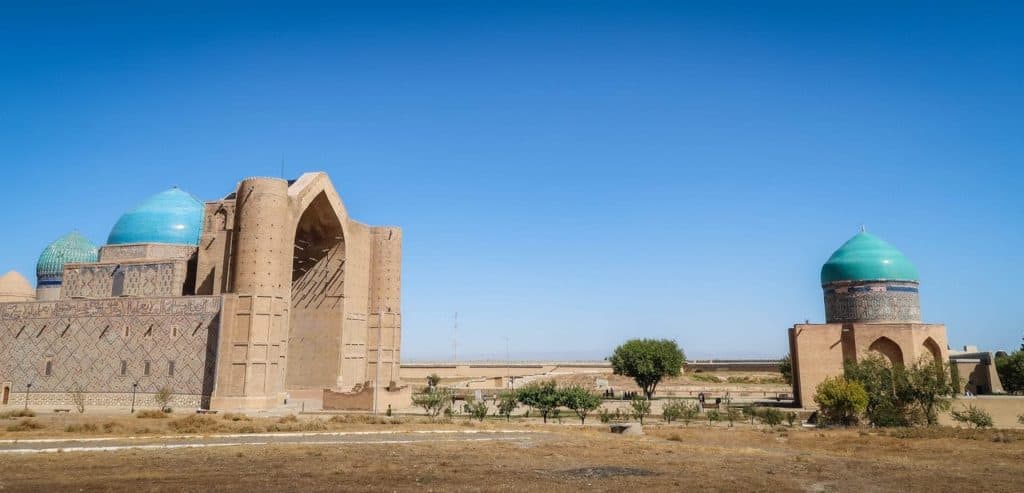
The ancient site of Turkestan lies on the edge of the city. Once we arrived there, it was hard not to notice the dazzling turquoise dome of the mausoleum.

Visiting Turkistan will give you a good sense of what the glory days of the Silk road in Kazakhstan were like as its home to some of the most stunning buildings. It’s like a tinier version of Uzbekistan, all concentrated into one area.
Here’s the complete travel guide to Turkistan and how to visit this city as a day trip from Shymkent.
Tip: See my Kazakhstan Travel Page for a complete overview of all my travel guides and blog posts about Kazakhstan!

Disclaimer: This posts might contain affiliate links, meaning that if you make a purchase through these links, I may earn an affiliate commission. Thank you for helping to support this website!

Plan your trip to Shymkent
Where to stay
- Best budget pick: Art House Sweet Home
- Best guesthouse choice: Aidana Plaza Hotel
- Top high-end hotel: Rixos Khadisha Hotel
Top experiences in and near Shymkent
- Highlights of Shymkent Walking Tour
- Silk Road Tour of Kazakhstan
- Hiking in Sayram Ugam National Park
Plan your trip to Kazakhstan
A little bit of history about turkistan Kazakhstan
Turkistan holds a significant place in the history of Central Asia. Its origins date back to the 4th century when it was known as Shavgar, a prominent trade center on the Silk Road. Over centuries, it evolved into a major cultural and spiritual hub.
In the 11th century, the city became associated with the revered Sufi scholar and poet Khoja Ahmed Yasawi, whose teachings and followers significantly influenced the region’s Islamic culture. His mausoleum, constructed under the patronage of Timur (Tamerlane) in the 14th century, remains a landmark of Turkistan, symbolizing its historical and spiritual importance.

In the 19th century, Turkistan came under the control of the Russian Empire, marking a new chapter in its history. The Russian influence brought about infrastructural developments and a reconfiguration of the city’s administrative importance within the empire’s vast territories.
However, despite these changes, Turkistan maintained its cultural and spiritual identity. The city continued to be a center of Islamic scholarship and a testament to the enduring legacy of Khoja Ahmed Yasawi’s influence on the cultural and religious landscape of Central Asia.
Following Kazakhstan’s independence from the Soviet Union in 1991, Turkistan has experienced a revival as a historical and cultural center. Recognizing its rich heritage, the Kazakh government has invested in the preservation and promotion of Turkistan’s historical sites.
In 2018, Turkistan was designated the capital of the newly formed Turkestan Region, further cementing its role as a key city in Kazakhstan. Today, Turkistan is a vibrant blend of ancient traditions and modern developments, continuing to attract pilgrims, historians, and tourists alike, eager to explore its storied past and its significance in the wider narrative of Central Asia.

When to visit Turkistan
The best time to visit Turkistan, Kazakhstan, is during the spring and autumn months.
From April to June, the weather is mild and pleasant, with temperatures ranging between 15°C to 25°C (59°F to 77°F). This period is ideal for exploring the city’s historical sites and enjoying outdoor activities without the discomfort of extreme temperatures. The landscape also comes alive with blooming flowers and greenery, providing a beautiful backdrop for sightseeing.
Autumn, from September to October, offers similarly favorable conditions, with temperatures cooling down from the summer heat, making it perfect for walking tours and cultural excursions.
Summer in Turkistan, from June to August, can be quite hot, with temperatures often exceeding 30°C (86°F), which might be challenging for some visitors. Winter months, from November to March, can be cold, with temperatures sometimes dropping below freezing.


Turkistan Entrance fees and opening hours
You can walk around Turkistan’s historical sites for free but you have to pay an entrance fee if you want to go inside Yassawi’s mausoleum. Locals pay 200 KZT, foreigners 500 KZT. The entrance fee to the Historical Cultural Etnographic Center is also 500 KZT.
The complex is open daily from 9am until 6pm.
How much time do I need to visit Turkistan
You need 3 to 5 hours to see all the tourist attractions in Turkistan. That’s why I recommend visiting Turkistan as a day trip from Shymkent.
How to get to Turkistan from Shymkent
Getting to Turkistan from Shymkent is quite straightforward, as the two cities are well-connected by road and rail. Here are the main options:
How to get to Turkistan by car
You can rent a car in Shymkent or get a (shared) taxi. The distance is approximately 160 kilometers, and the journey typically takes around 1.5 to 2 hours, depending on traffic and road conditions.
How to get to Turkistan by bus
There are daily mashrutkas (minibuses) operating between Shymkent and Turkistan. They depart from Samal Bus Station, Shymkent’s main bus station and offer an affordable and comfortable way to travel. The journey takes approximately 2 hours and costs 1500 KZT per person. Make sure you tell the driver to drop you off at the mausoleum once it comes into sight.
To get back from Turkistan to Shymkent, get to the Merey Bus Station to take the mashrutka going to Shymkent. It should cost you no more than 1200 KZT and takes about 1.5 hours to get back to Shymkent.
How to get to Turkistan by train
Kazakhstan’s national railway company operates regular trains on this route. The train ride between Shymkent and Turkistan takes about 2 to 3 hours, offering a scenic and relaxing way to travel. Tickets can be purchased online via the KTZ website or at the train station in Shymkent. You can take minibus 2, 10 or 13 to go from the train station to the city center or the mausoleum. Price: 50 KZT.
There are also overnight trains between Almaty (20 hours) and Turkistan. There’s also an international train connection to Tashkent, the capital city of Uzbekistan, but for this you’ll need an Uzbekistan visa! For more information about train schedules and tickets, go to tickets.kz

Where to stay in turkistan and Shymkent
I recommend to visit Turkistan as a day trip from Shymkent. However, I’ll also share my recommendations if you’d like to spend the night in Turkistan.
Where to stay in Shymkent
There are many lodging options in Shymkent that can be used as a great base to visit nearby places, varying from budget hostels to high-end hotels.
- Best budget option: Art House Sweet Home
- Top mid-range choice: Aidana Plaza Hotel
- Recommend high-end hotel: Rixos Khadisha Hotel
Where to stay in Turkistan
- Best budget option: Turkistan Gallery Hostel
- Top mid-range choice: Karavansaray Turkistan Hotel
- Recommend high-end hotel: Hampton by Hilton Turkistan
What to see and do in Turkistan
1. Mausoleum of Khoja Ahmed Yasawi
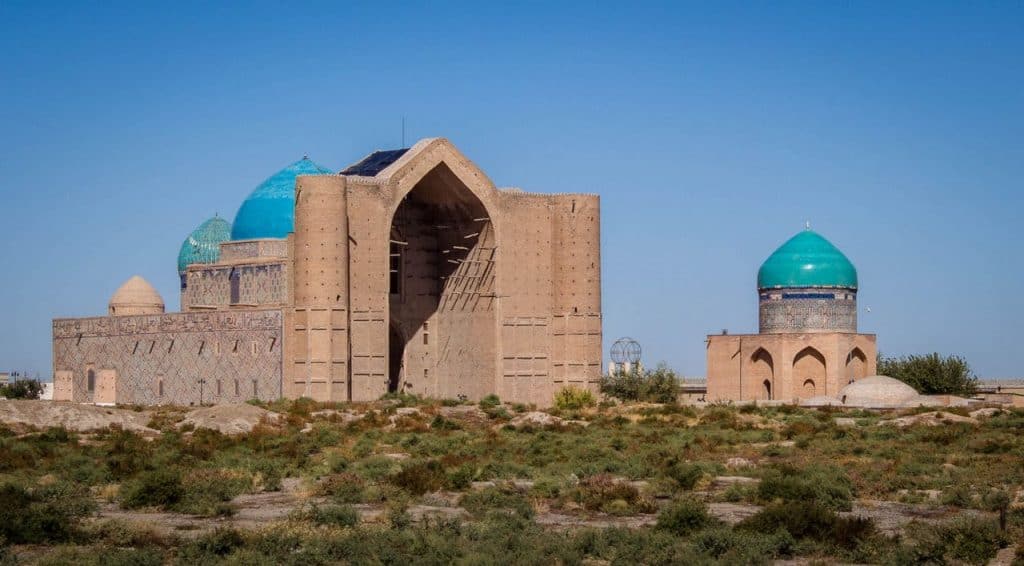
This UNESCO World Heritage site is Turkistan’s most iconic landmark. This mausoleum is described as a masterpiece of medieval architecture. It was built between 1397 and 1405 on the orders of Amir Timur, who ruled over Central Asia. That’s why this mausoleum resembles his other creations in Uzbekistan, also known as “Timurid architecture”.
The mausoleum houses a museum that provides insights into the life and teachings of the revered Sufi mystic, Khoja Ahmed Yasawi. Over the centuries, it has drawn countless pilgrims, making Turkistan a focal point for Sufi Islam in the region. The city’s religious significance earned it the moniker “the Second Mecca of the East.”
Yasawi played a very important role in the Islamic world as he was a religious teacher who converted many Turkic people with his teachings and poems to the Islamic religion. He was considered to be a saint and Muslim pilgrims came from far and wide to see his mausoleum.

When Timur started the new construction of this mausoleum, it quickly became the new standard for Islamic architecture and it attracted even more devout followers. However, the construction was stopped in 1405 with the death of Timur but Turkistan remained an important religious center of spirituality.
Although the mausoleum is unfinished, it is still an amazing piece of architectural artwork! There are a total of 34 different rooms and chambers inside with a massive bronze cauldron in the center of the hall, used for religious purposes.


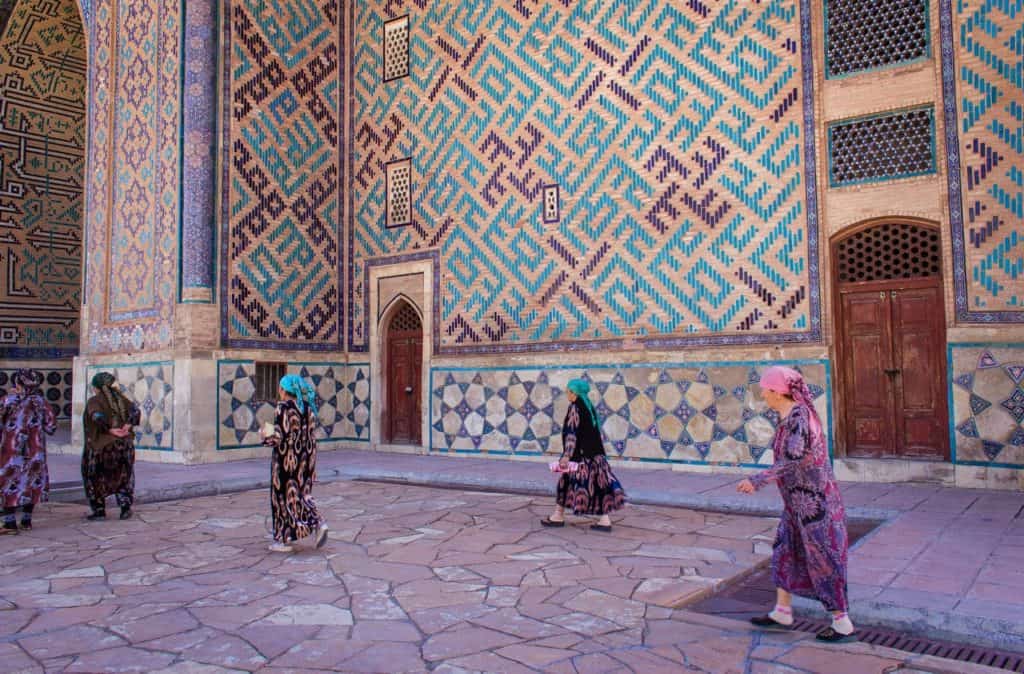
The dome on the top of the mausoleum is the largest of its kind in Central Asia. I was especially fascinated by the astoundingly beautiful mosaic patterns on the outside of the building. The mausoleum was recognized as a UNESCO World Heritage Site in 2003.

The mausoleum isn’t the only building you can visit on the ancient site of Turkestan.
2. Hilvet Underground Mosque
Surrounding the Mausoleum of Khoja Ahmed Yasawi are other significant structures such as the Hilvet Underground Mosque and an old bathhouse with a well nearby that has religious importance to the people.
The Hilvet Mosque, an underground prayer hall, offers a unique glimpse into early Islamic practices and architecture in the region. It is said that Kozha Ahmed Yassawi spent the last years of his life in this mosque and it’s now used as a house for underground meditation.

3. Mausoleum of Rabia sultan Begum
Located right next to the Mausoleum of Khoja Ahmed Yasawi, you will find the Mausoleum of Rabia Sultan Begum, which is a much smaller mausoleum but still impressive to see.
This mausoleum is dedicated to Rabia Sultan Begum, who was a prominent figure in the region’s history. She was the wife of Abdulatif Sultan and the mother of Sultan Abdulatif, both of whom were influential leaders in Central Asia during the 15th century.
Constructed in the 16th century, the structure exhibits the classic elements of Timurid architecture, characterized by intricate tile work, harmonious proportions, and a blend of Persian and Central Asian styles.
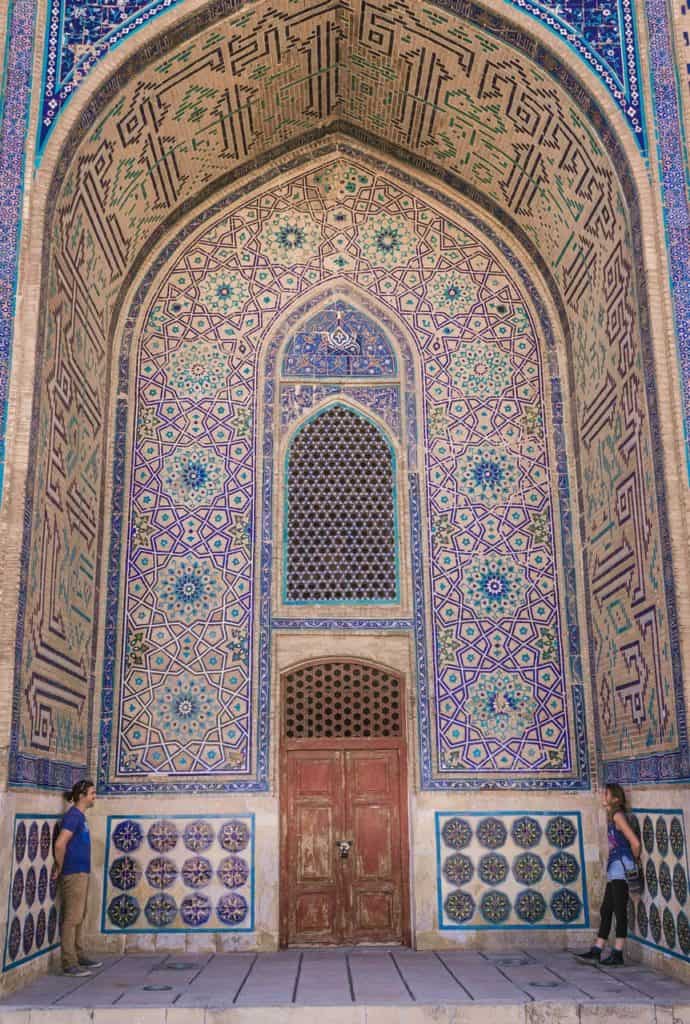
The exterior of the mausoleum is adorned with beautiful blue and turquoise tiles, featuring geometric patterns and floral motifs that reflect the sophisticated craftsmanship of the time. The entrance is marked by an iwan, a traditional vaulted hall, leading to the interior where the tomb of Rabia Sultan Begum is located. Inside, the mausoleum is decorated with elaborate frescoes and mosaics, creating a serene and contemplative space.

4. Friday Mosque
The Friday Mosque, also known as the Juma Mosque, was constructed in the 19th century and exemplifies the rich Islamic architectural heritage of the region.
The mosque’s architecture is characteristic of traditional Central Asian styles, featuring a simple yet elegant design that focuses on functionality and communal worship. The building is constructed primarily from brick and wood, with large, open spaces to accommodate the congregational prayers held every Friday, which is the holy day in Islam. The interior is modestly adorned, with intricate woodwork and traditional geometric patterns that are common in Islamic art.
The Friday Mosque serves as the main gathering place for weekly Friday prayers (Jumu’ah), where the local Muslim population comes together to worship and listen to sermons.

5. Turkistan Historical and Cultural Ethnographic Center
This center offers a comprehensive look at the region’s history, culture, and traditions. There are 3 floors of exhibitions that include artifacts from various historical periods, traditional costumes, and displays that highlight the rich cultural heritage of Turkistan and the surrounding area.


6. Karavan Saray
Opened in 2021, the Karavan Saray is a modern cultural and entertainment complex designed to evoke the historical essence of the Silk Road caravanserais, which were roadside inns where travelers and traders could rest and recover during their long journeys.
The Karavan Saray is inspired by the design of ancient caravanserais, featuring elements such as large courtyards, arched entrances, and intricate tile work that reflect the rich cultural heritage of the Silk Road. The complex is designed to provide a sense of stepping back in time while offering modern comforts and facilities. Visitors can explore its various sections, each thoughtfully crafted to recreate the atmosphere of historic trade and travel hubs.
The Karavan Saray serves multiple functions, including accommodations, dining, shopping, and entertainment. It houses luxurious hotels, themed restaurants, and shops selling traditional crafts and souvenirs. The complex also features performance spaces where traditional music, dance, and cultural shows are regularly staged, offering a vibrant glimpse into the region’s artistic traditions.
In addition to its cultural and commercial offerings, the Karavan Saray includes educational exhibits and interactive displays that provide insights into the history and significance of the Silk Road. These exhibits explore the trade routes that connected East and West, the goods that were exchanged, and the cultural interactions that shaped the civilizations along these routes.
Turkestan is definitely a place worth visiting if you plan on traveling to Kazakhstan. It’s one of the must-go-to places if you want to learn more about Central Asia’s rich heritage.
I’m always happy to hear about your experiences! If you have any updates or suggestions that should be included in this guide,please let me know in the comments below or contact me!
Related Posts

Skiing in Kazakhstan – A Guide to Skiing in Shymbulak Ski Resort in Almaty
19 Best Things to do in Almaty Kazakhstan – The Complete Guide to visit Almaty City
The Complete Hiking Guide to Sayram Ugam National Park, one of the most beautiful Kazakhstan National Parks
Caspian Sea Ferry: 8 Things you Need to Know about how to cross the Caspian Sea from Baku to Aktau by ferry in 2026 – A Comprehensive Guide
Is Kazakhstan safe to travel in 2026? 15 Useful Things to know before you go
3 ways to get from Almaty to Tashkent by land: crossing the Kazakhstan Uzbekistan border
Mangystau Kazakhstan: Complete Travel Guide (2026) to Bozzhyra, Torysh, Sherkala & More

Best Tips and complete Packing List for Traveling in Central Asia in 2026 – When to go and what to wear when visiting Central Asia