
Here is a handy guide on what to wear in Uzbekistan, what to pack and what you need to know before visiting Uzbekistan. Whether you’re questing into the mountains or sightseeing in the ancient Silk Road cities, I’ve got you covered. Read on for my top tips and advice before you set off on your adventure!
I’ve traveled extensively through Uzbekistan—not just once, but five times—exploring every corner from the snow-dusted peaks of the Tien Shan Mountains to the golden dunes of the Kyzylkum Desert, and wandering through ancient Silk Road cities like Samarkand, Bukhara, and Khiva. With each journey, I fine-tuned my approach to packing, learning what works (and what doesn’t) in this land of rich traditions, changing climates, and unforgettable hospitality.
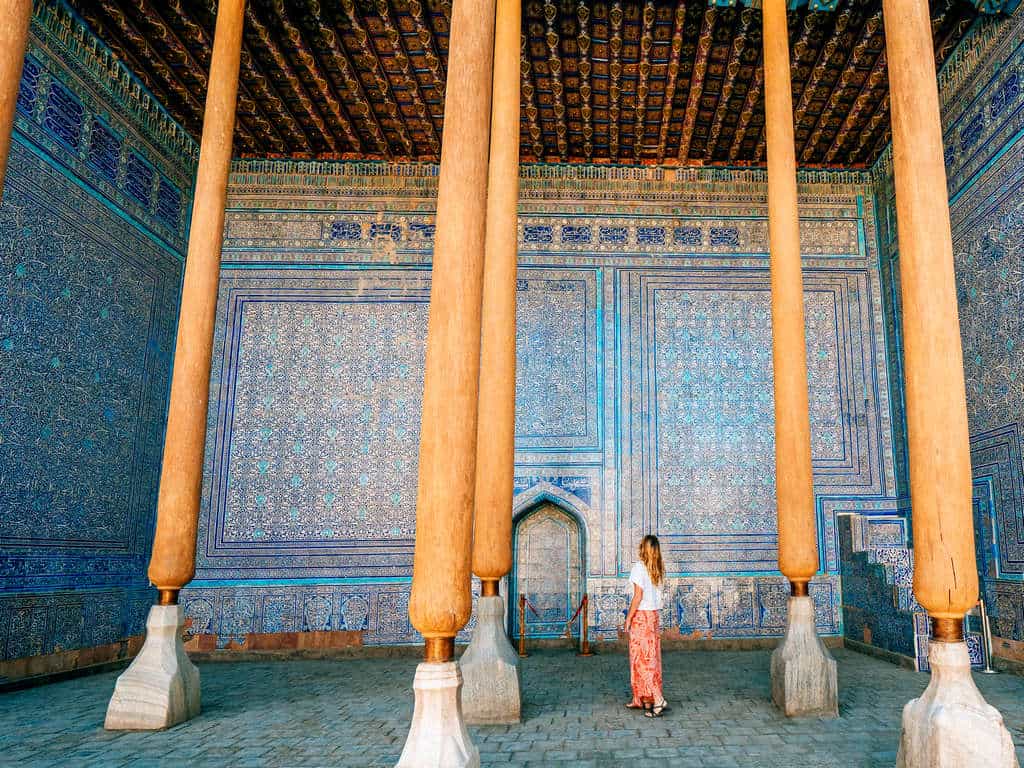
In this post, I’ll share practical tips on how to dress respectfully and comfortably while traveling through Uzbekistan, whether you’re trekking in the mountains, braving the desert heat, or marveling at the mosaics in historic madrassahs.
This is more than just a packing checklist, it’s a guide based on real experiences that will help you feel prepared and confident as you embark on your own adventure through one of Central Asia’s most captivating countries!
Tip: See my Uzbekistan Travel Page for a complete overview of all my travel guides and blog posts about Uzbekistan!
Step into the heart of the Silk Road and experience Uzbekistan beyond the guidebooks: from the blue domes of Samarkand to remote desert landscapes and hidden mountain trails.
Join the 14-day Highlights of Uzbekistan Adventure Tour and experience the country in a deeper, more meaningful way!
Disclaimer: This posts might contain affiliate links, meaning that if you make a purchase through these links, I may earn an affiliate commission. Thank you for helping to support this website!
1. When is the best time to visit Uzbekistan?
Uzbekistan has a continental climate with hot summers, cold winters and wet shoulder seasons. Most cities and villages are located at altitudes below 1000 meters, with scorchingly hot summers and cool winters. The shoulder seasons are usually rainy and cool.
The best time to visit all the highlights in Uzbekistan is during the shoulder seasons: from mid-April until the beginning of June and from mid-September until the beginning of November. The temperatures during these seasons are pleasant, and it shouldn’t be too hot to visit the Silk Road cities and the Kyzyl Kum desert. It’s also the perfect weather to go hiking in the mountains in Uzbekistan.
One downside: May and September are high season in Uzbekistan so you’ll encounter lots of crowds in the cities.
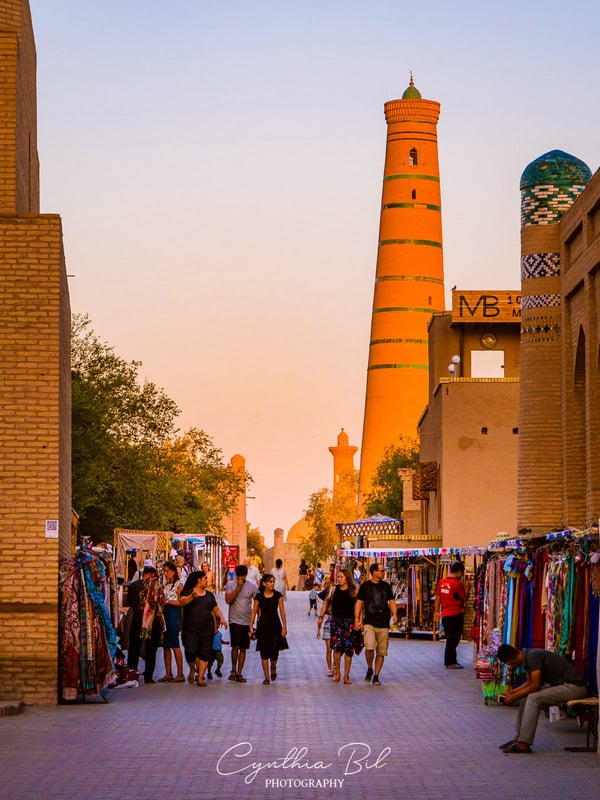
July and August are the hottest months of the year in Uzbekistan. With temperatures ranging from 35° C to sometimes even up to 40° – 45° C, visiting Uzbekistan during the summer can be quite uncomfortable.
Winter is also a great time to visit Uzbekistan for anyone who wants to avoid crowds. If you dress warmly and you don’t mind grey skies, you’ll have a good time visiting the Silk Road cities. If you’re lucky, you’ll get to see a magical winter wonderland. I once traveled to Uzbekistan in December but unfortunately, I arrived a bit too late (or was it too early?) to see the cities fully covered in snow. You can also go skiing in the Chimgan Mountains.


2. Uzbekistan Travel Essentials
Here’s what you definitely need to bring on your trip to Uzbekistan.
2.1 Travel documents you need before visiting Uzbekistan
☑ Passport: your passport needs to be valid for at least 6 months when entering Uzbekistan.
☑ Visa: The visa requirements for Uzbekistan have become more accessible in the last few years. A lot of nations are now eligible for visa-free travel or can apply for an e-visa without needing to go to an embassy.
Starting from 1 February 2019, citizens of the European Union, Canada, Australia, New Zealand, the United Arab Emirates, Israel, and many more countries can travel to Uzbekistan visa-free for a period of 30 days. As of January 1st, 2026, citizens of the USA can now also enter Uzbekistan visa-free for 30 days.
Citizens of 75 countries, including India and China, have been granted the right to receive an electronic entry visa for a period of 30 days.
In case you need visa support, I recommend the services of iVisa. Always bring a printed version of the e-visa.
If your country of citizenship isn’t on any list, you’ll need to apply for a visa at the Uzbek Embassy.
☑ Travel Insurance: This isn’t mandatory to visit Uzbekistan but I strongly advise getting coverage. You just don’t never know when you may need it! You should get cover for theft, illness, and activities when traveling to the mountains or desert. If you don’t have travel insurance yet, I highly recommend HeyMondo as it covers medical costs, theft and outdoor activities at higher altitudes.
Need Travel Insurance for Central Asia? I use and highly recommend HeyMondo Travel Insurance. As a reader of Journal of Nomads, you get a 5% discount off your insurance plan!

It is generally a good idea to have paper and electronic copies of all important documents such as your passport, visas, tickets and insurance.
2.2 Money in Uzbekistan
The Uzbekistani Som (UZS) is the official currency used in Uzbekistan. Banknotes circulating in Uzbekistan: 1000, 2000, 5000, 10,000, 20,000, 50,000 and 100,000 som. Coins circulating in Uzbekistan: 50, 100, 200 and 500 som.
I always use the Xe.com app to convert and stay up-to-date with the current exchange rates.
It will be hard to exchange money in advance as most (western) countries won’t have the currencies of Central Asia available at the banks. That’s why you should bring the following:
☑ USD Dollars: widely accepted in Uzbekistan and easy to exchange at any of the local banks or exchange offices (make sure your bills are crisp and clean or they might give you a lower rate!). It might also be cheaper to exchange USD (or EURO) instead of using an ATM, depending on your withdrawal fees. The best place to exchange money in Uzbekistan is at one of the banks in Tashkent as they give the best exchange rate.
☑ Visa or Mastercard: while cash is still king in Uzbekistan, you can nowadays pay by credit card at most restaurants and hotels in the major cities. Tashkent, Samarkand, Bukhara, and Khiva nowadays all have ATMs where you can take out US dollars and/or Uzbek Som with a VISA card. There are also 2 ATMs at the international airport in Tashkent.
It is slowly becoming more common practice, but it would be wise to carry some cash rather than depending on your card whilst traveling in Uzbekistan. Withdraw local currency at the ATMs before going to rural areas as you won’t be able to find ATMs or pay by card there.

☑ Moneybelt: as western people, we’re nowadays so used to pay cashless and not carry around much money so you might feel more comfortable with having a moneybelt to travel safely with cash and important documents.
2.3 First Aid travel Kit
You should always bring a compact first aid kit with personal medication on any of your trips. Here’s what you definitely should bring along in your kit:
☑ Anti-diarrheal medicine: yes, I’m afraid that this is an essential… 80% of the travelers I’ve met struggle at some point with stomach issues in Central Asia, due to a certain bacteria in the food. I always have Furazolidone tablets (which you can buy over the counter at a local pharmacy) as it has proven its worth. These tablets tackle the bacteria causing bowel problems within a day.
☑ Paracetamol: always handy to have along for any aches or pains.
☑ Compeed for blisters: handy if you make long walks in the cities or go hiking in the mountains
☑ If you’re planning to head into the desert or mountains, here’s a great compact first aid kit specially made for traveling and outdoor adventures.
2.4 Toiletries
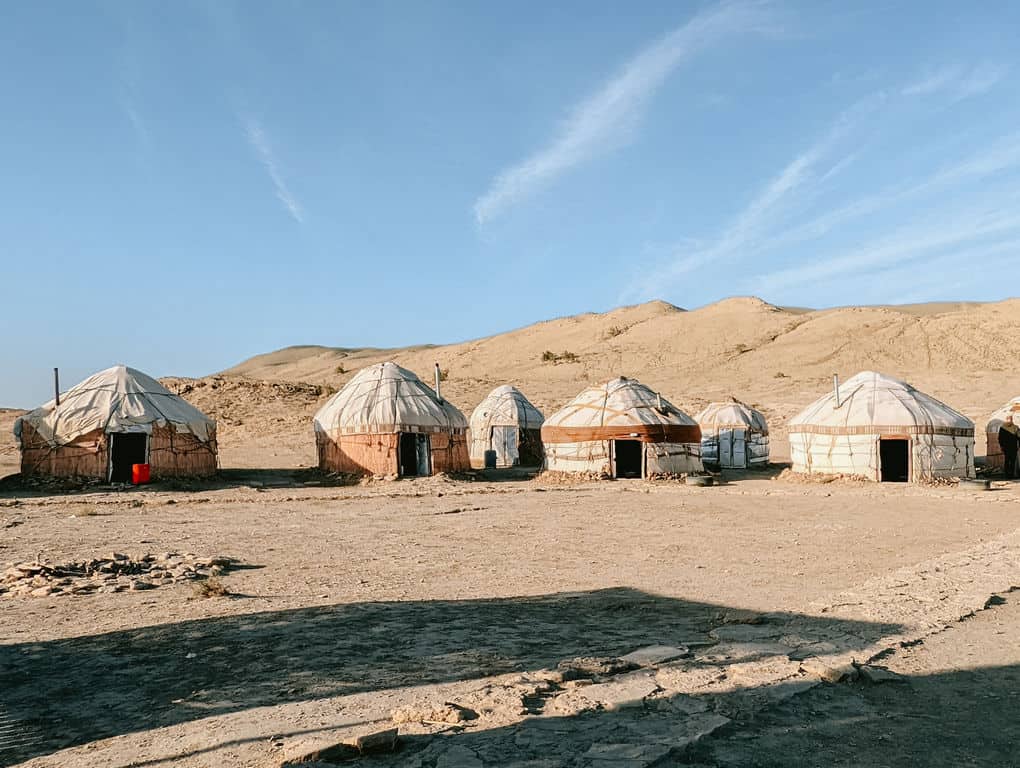
Aside from the usual toiletries such as toothbrush, toothpaste, shampoo and soap, you should also bring the following, especially when traveling to rural villages or planning a yurt stay:
☑ Biodegradable toilet paper: Except for the major cities and tourist hotels, most toilets you’ll encounter will be squatting toilets (train those upper leg muscles, ladies!). Some squat toilets have toilet paper but of the rough type, some don’t have toilet paper at all. So it’s a must to bring your own toilet paper, preferably the compostable one, to stay eco-friendly. Also, a must if you go hiking (toilets are non-existent in the mountains…).
☑ Hand sanitizer: It’s always good to have on you. Many Uzbeks wash their hands and faces in springs before they eat, so you could do this, too, but remember your stomach won’t be used to the water.
☑ Biodegradable wet wipes: some homestays and most yurt camps don’t have hot showers (except for the fancy tourist yurt camps and even then it’s not always certain you’ll have hot water. That’s why I always carry biodegradable wet wipes to freshen myself up until I’m back at a hot water source.
☑ Travel towel: a microfibre towel the perfect travel towel as it’s small, light-weight and dries quickly.
☑ Sun block and lip balm: It’s important to bring good sunscreen with you, even if it’s not very hot. Summer or winter, the sun in Uzbekistan is strong. I recommend bringing SPF 30-50. Don’t buy sunscreen in small local grocery or corner shops as it’s often not of good quality or can even be fake. If you forgot to bring some, buy it in a large supermarket in the city.
☑ Do I need insect repellent for Uzbekistan? No, the heat in Uzbekistan is dry, so there aren’t many mosquitoes. If you’re camping near streams and rivers, you’ll probably need to pack some repellent just in case.

2.5 Water bottle and filter systems
I strongly advise against drinking tap water in Uzbekistan! Buy bottled water in the local supermarkets or better, bring a reusable water bottle to reduce the use of plastic. A reusable water bottle will also come in very handy when heading to the countryside.
If you want to save money on buying water, you could refill your bottle with tap or spring water but then you have to filter the water very well using a steripen or filter – see my explanation below.
☑ water bottle with a filter system: these are reusable bottles that filter water using a microfiltration device. When you drink tap water or even mountain spring water using a water bottle with a filter, any dirt, bacteria or parasites will be trapped in the fibers of the filter, while the clean water passes through. It’s not only good for your belly and wallet, but it’s also great for the environment because you don’t have to buy any plastic bottles of water. I often used and highly recommend the Lifestraw Water Filter Bottle.
☑ filter or steripen: if you already have a reusable water bottle, you don’t need to buy a new one, of course. I nowadays use a steripen, a compact and lightweight device which uses ultraviolet light to sterilize water. I never encountered any stomach problems while using it (and I’ve been drinking a lot of spring water in the mountains!). You can also buy a seperate Lifestraw Filter.
2.6 Electronics and camera gear
☑ Travel adaptor: the power sockets in Uzbekistan are of type C and F (the same as in Europe). The standard voltage is 220 V and the standard frequency is 50 Hz. In case you need an adaptor, I use and recommend this all-in-one Universal Travel Adaptor as you can use it worldwide.
☑ Portable charger: a portable charge is handy to have in case of a power outage (which sometimes happens, even in the major Central Asia cities), during long bus or train rides, or if you’re planning a yurt stay (no electricity there) or camping. I use and recommend the Anker Powercore as it has a 26,800mAh cell capacity providing at least 5 full charges for my phone. I can even charge my camera batteries with it!

☑ Camera gear: If you’re a professional and/or passionate photographer, you can’t visit Central Asia without capturing its beauty on camera! Below is an overview of the gear I use. You can also read my Photography essentials guide for more information and a detailed overview:
- Camera: Panasonic LUMIX DC-90
- Main lens: Panasonic Lumix G Vario 14-140mm f/3.5-5.6
- Wide-angle lens for landscapes and architecture: Leica DG Vario-ELMARIT 8-18mm f/2.8-4.0
- Prime lens for portraits: Leica DG Summilux 15mm f/1.7
- Tripod: Manfrotto Compact Action Tripod (Hybrid Head)
☑ Drone: Drones are strictly prohibited in Uzbekistan. If you would try to bring one in, it will get confiscated and you might spend your holiday in prison instead of in its stunning cities…

2.7 Useful travel apps to use in Uzbekistan
The wi-fi connection in big cities like Tashkent and Samarkand is usually reliable and relatively fast. There’s also internet connection in Bukhara and Khiva but it can be slow.
If you’re doing a bit of sightseeing and heading from city to city, you can buy a UCELL SIM at a stand at the airport. It costs around $10 for a month of unlimited data. For remote mountains, find a Uzmobile shop. Local use Uzmobile in the mountains and they got a signal really regularly.
If you need to stay connected at all times during your trip (work or personal reasons), you can also opt to rent a Wi-Fi pocket device in Uzbekistan. This device works like a home wi-fi router and allows you to stay connected at all times. It also has unlimited date plans and you can use the connection on multiple devices and even share it with your fellow travelers. You can read more about this Wi-Fi service here.
Here are some useful apps to use while traveling in Uzbekistan:
☑ Maps.me: This is a very practical app to find your way in Uzbekistan. You can download the map of the country for offline usage. The app gives you accurate directions and shows you where you can find the nearest restaurants, bus stations, ATM, hotels, places with wi-fi, points of interest. It also tells you the number of the bus you need to take when you travel within a city.
☑ Wikiroutes: Wikiroutes is a handy app if you travel by public transportation. It shows you the bus and/or metro route and tells you where to hop on and off.
☑ Google Translate: Translates written and spoken Russian or Uzbek. Only Russian is available to download for offline usage.
☑ Xe currency: a very handy currency conversion app that always uses the latest rates in effect. It’s useful to keep track of how much things cost in Uzbekistan This app also works offline.
☑ Booking.com: I made all my reservations for hostels and guesthouses in Uzbekistan through this hotel and hostel booking website, which is also available as a phone app. No other app comes close to it in terms of inventory and price.
☑ Yandex Go Taxi: Yandex is the Central Asian version of Uber. I used this app to get around the major cities in Uzbekistan by taxi without having to bargain for the price and/or getting ripped off by a taxi driver. You can also use Yoko Taxi to get around Bukhara.
3. What to wear in Uzbekistan – Uzbekistan dress code
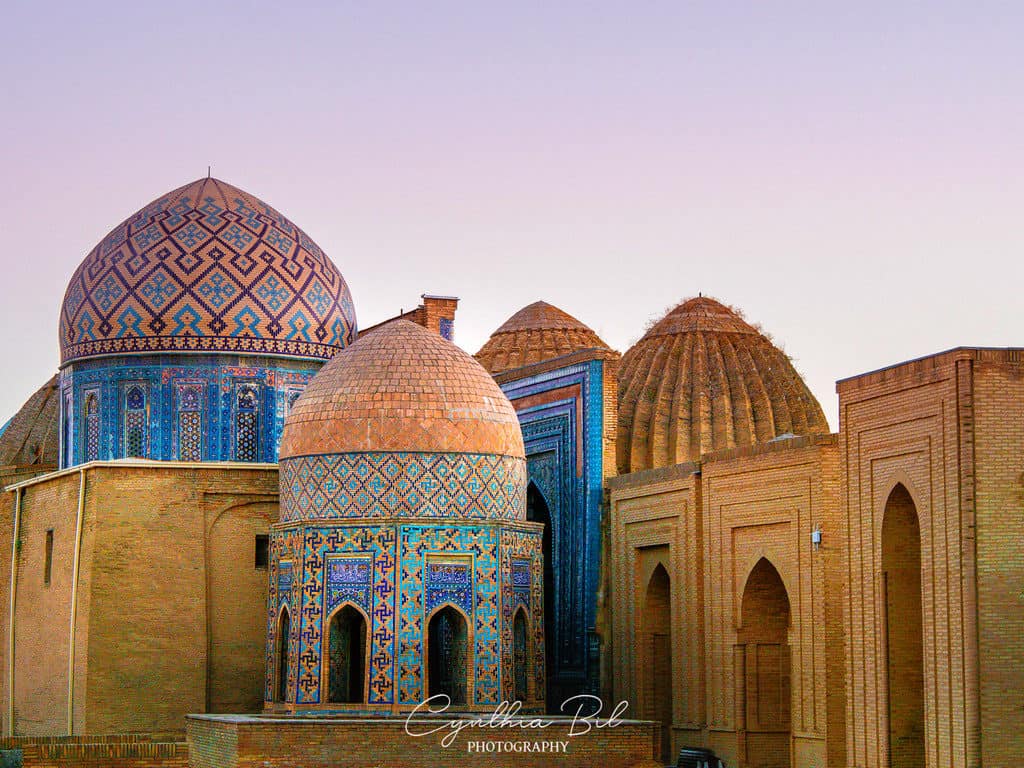
As of the time of writing this, 96% of Uzbekistan’s population is Muslim. This means it’s incredibly important to be respectful of their traditions. I’ve grouped the advice on the months/seasons people travel to Uzbekistan.
3.1 What to wear in Uzbekistan in summer (June through to mid-September)
Uzbekistan will be roasting during this time but you will still need to dress respectfully. Temperatures in July and August can soar up to 40°C (depending on where you head), so it’s important you know what to expect!
While you’ll see young girls and women walking around in short skirts, dresses, and shorts in Tashkent (Uzbekistan’s capital) during summer, most of Uzbekistan and especially its rural areas and villages are conservative.
It’s okay to wear shorts, dresses, skirts and tops or T-shirts with short sleeves in the capital cities or tourist places like the Silk Road cities, but it’s disrespectful to parade around in revealing mini-skirts, dresses, and crop tops. If you’re an influencer who wants a nice photo for Instagram, please remain respectful of the culture.
If you like to explore less-touristic places like small towns and villages, dress modestly. Wear a T-shirt or a tunic over long trousers or a long skirt. Knee-length shorts or skirts are also fine, just don’t walk around the village in a vest top and short shorts/skirts. If you visit mosques and religious sites, even in tourist cities, cover up your shoulders.
Try to avoid cotton fabrics because they soak up sweat, weigh more with the sweat…which will make you sweat more. If you’re headed to the cities, wear lots of linen or lightweight fabrics.
You’ll see many women wearing beautiful colored scarves tied around their heads. This is a cultural thing so women don’t have to cover their hair, but sometimes you may want to out of respect, especially if you’re going into sacred sites. A scarf is also very useful if you’re travelling out of the city by car because the roads are often dry and dusty so you’ll need to cover your face.
What to wear as a male tourist in Uzbekistan in summer:
- T-shirts, long-sleeved shirts, button-up shirts
- Knee-length shorts, long trousers
- Comfortable sneakers, sandals
What to wear as a female tourist in uzbekistan in summer:
- Loose-fitting tops and T-shirts (don’t show cleavage or belly buttons), loose-fitting long-sleeved shirts or blouses
- Knee-length shorts, dresses and/or skirts, long loose-fitting trousers, maxi dresses or skirt
- Leggings but wear then a long shirt or tunic on top
- Comfortable sneakers, sandals
- Scarf (to cover shoulders and/or head at religious sites)


3.2 What to wear in Uzbekistan in spring and fall (April – May, mid-September – October)
Because summer is belting hot, these months are the most popular time for tourists. Depending on where exactly you’re heading, the temperatures will average from mid 20°C to early 30°C. My advice is to pack the summer list above but add the following:
- Waterproof lightweight coat. Unlikely you will get caught in a big shower, but it could happen.
- A fleece or warm sweater
3.3 What to wear in Uzbekistan in winter (November through to March)
Winter can totally vary – I traveled to Tashkent in December once and the temperatures were mild. And yet earlier this year, I spoke to a mountain guide who told me the temperatures in Khiva plummeted to -20°C.
It’s really important you research, in detail, about where in Uzbekistan you’re travelling to and anticipate what you could face. For example, the desert in winter (including Khiva) can be incredibly cold so bring loads of layers, a down coat, gloves, hats, wool thermals etc. The same advice goes for winter adventures in the mountains. You must be prepared and know what you’re doing up there. There’s no mountain rescue so you must dress appropriately for the activity you’re doing.
4. What to pack for hiking in Uzbekistan
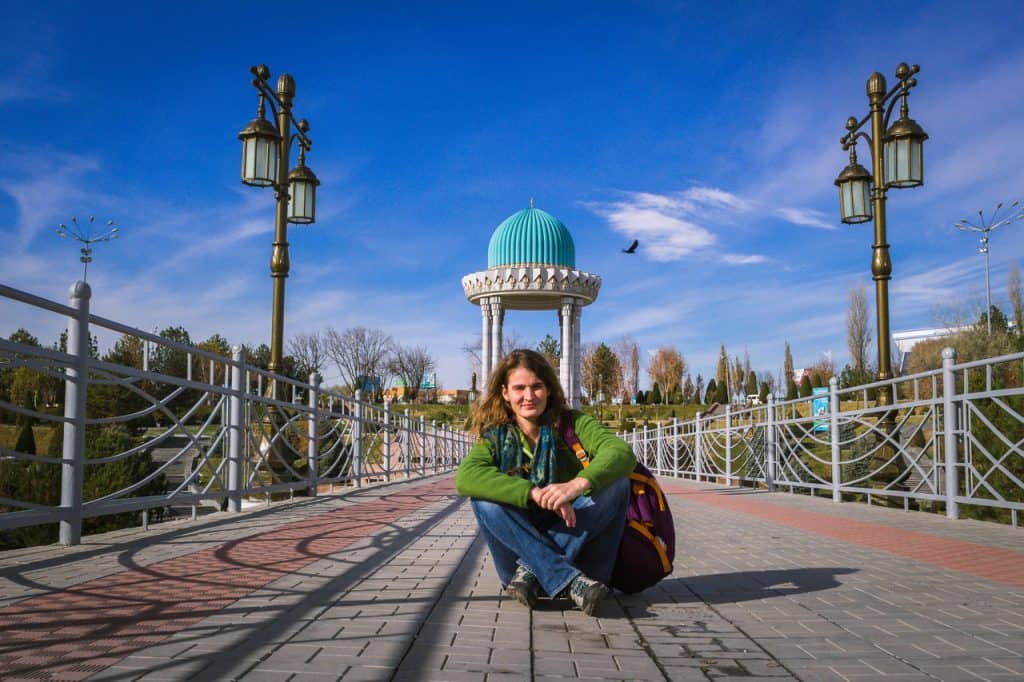
Here’s everything you need to pack before hiking in Uzbekistan. This is written on the assumption you’ll be hiking in late spring, summer and early fall. If you want to know more about hiking in Uzbekistan’s mountains, read of my guide here. Remember to include the essentials list that I wrote above in your day bag too!
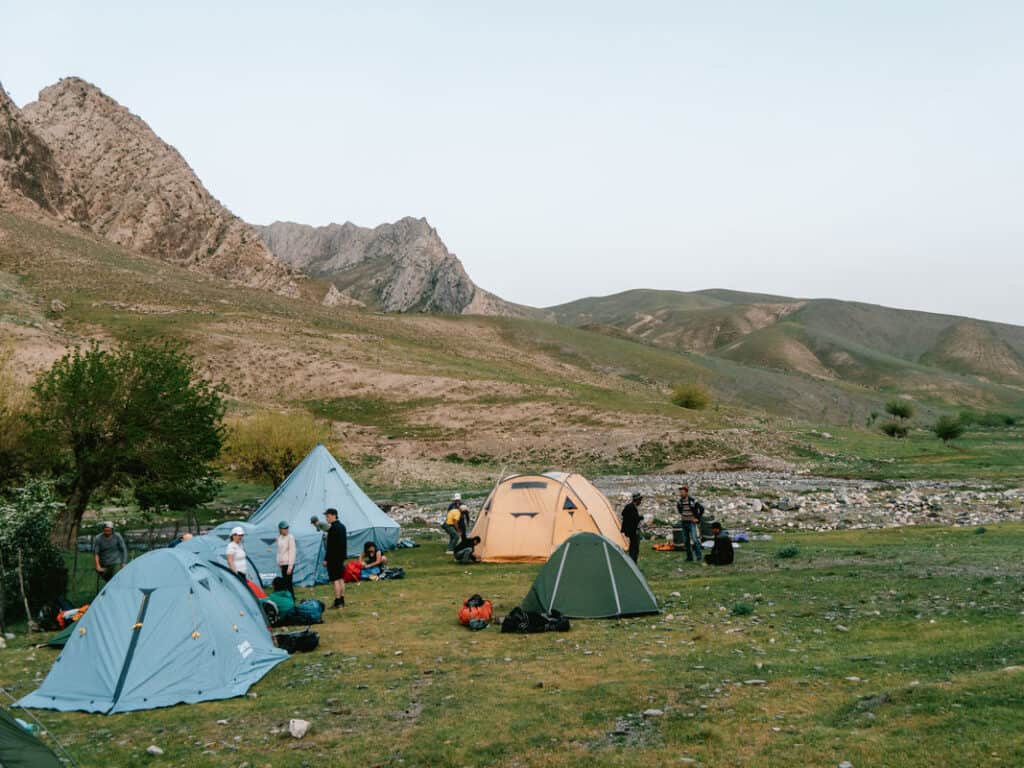
When packing, keep it as light as possible. Every little gram clocks up and trust me, the difference between 8kg and 15kg on your bag is huge. Wear the same top/trousers/knickers for as long as you can handle it 😉
☑ Rain jacket: bring a lighweight rain jacket that can endure wind and rain. Here’s a waterpoof hiking jacket I recommend for him and for her.
☑ Rain pants: this is also a necessity. If there’s a lot of wind and your hiking pants are wet, you’ll get cold easily. Here are rain pants I recommend for him and for her.
☑ Poncho: a poncho is lightweight and compact and it covers both you and your backpack.
☑ Raincover for your backpack: you want to keep your daypack and/or backpack with your sleeping gear dry in the mountains!
☑ Trail runners or lightweight walking boots. Trail runners were perfect for me when I hiked in Uzbekistan in May. You won’t want massive clunky boots when the majority of walking will be on dry ground. On my trip, there were many river and stream crossings. My trail runners were not gore-tex, meaning they usefully dried very quickly too.
☑ Hiking socks: I really recommend to get merino wool hiking socks! They keep your feet dry, they’re not too warm on hot days and they’re just super comfortable! I have 2 pairs of these hiking socks and I’m really happy with them!
☑ I brought a Buff headband, which I think is one the most useful clothing items I own. You can use it as a headscarf to protect from sun, sweat-mopper, scarf if you get cold, hair bobble, and if it all goes to pot, a tourniquet.
☑ Polyester or similar material t-shirt (no cotton, it absorbs sweat in a seriously pungent way and doesn’t dry when you wash it).
☑ Long, lightweight hiking trousers or gym leggings. You can wear hiking shorts but not too short in case you’re ending your hike at a village.
☑ Hat and sunglasses: to protect your head and eyes from the sun
☑ Hiking GPS or offline GPS App: comes in very useful when the path isn’t clear. I recommend using the apps maps.me (download the maps for offline use), Wikiloc or All Trails (you need to pay for offline use). You can connect these apps to the Garmin Foretrex Waterproof Hiking GPS. Check out its features here.
☑ Hiking poles: These are like an extra pair of legs and are so great for balance, tricky ledges and river crossings.
☑ Emergency survival whistle: How small it might be, this whistle could save your life when you end up in an emergency situation – you want to shout for help but your voice is lost in the wind. Blowing in a whistle is less tiring and the noise can be heard from miles away across the mountains. Any shepherds or other hikers who might be in the area will be able to hear you and locate your position by following the noise. An emergency survival whistle doesn’t have to cost much and definitely doesn’t take much space!
☑ Biodegradable wet wipes: to refresh yourself when you don’t have a water source nearby.
☑ A Swiss Army Knife is so handy to have. It has so many of the tools you’ll need in the mountains; knife, scissors, a bottle opener, a can opener, tweezers (if you end up with a nasty splinter) … even a toothpick.
☑ Head light: handy during power outages in the city but definitely an essential when going on a camping trip in the mountains or staying at a yurt camp. The tourist yurt camps run on generators which don’t always function very well. A yurt camp run by local families often don’t have (much) electricity so a head light will come in handy to find your way to the outdoor toilets at night.

If you’re hiking and camping, you’ll also want to consider these:
☑ Lightweight tent: Having a good tent is very important! It has to shelter both you and your backpack from all the elements. Ideally, you have a lightweight one as some tents can be pretty heavy. Here’s a 2-person lightweight tent I recommend for trekking.
☑ Sleeping bag: You’ll need a lightweight sleeping bag that can keeps you warm at night. When camping in Uzbekistan in spring or fall, temperatures can go down to 10°C at night. My 3-seasons sleeping bag is comfortable until -2°C/ 28°F and is pretty compact to travel with.
☑ Inflatable sleeping pad: I invested in a Sea-to-Summit Lightweight Sleeping Pad. They’re lightweight to carry, comfortable to lay on and insulate your body well from the cold ground.
☑ Inflatable pillow: I usually put my head on my scarf wrapped around my backpack but it’s not as comfortable as having a lightweight inflatable pillow…
☑ Camping cookware, cutlery, and mug: You’ll need some good cookware to use on your camping stove. I recommend this lightweight cooking set, a spork-knife, collapsible camping bowls that you can use as a plate or a bowl and a lightweight thermal mug.
☑ You may struggle finding a gas canister in Uzbekistan, so I’d recommend a Trangia-style stove as it will be easier to buy fuel.
☑ Bring matches, not lighters. It’s dangerous to bring lighters in hot temperatures, but lighters may also not work in higher altitudes.
5. What to pack for horse riding in Uzbekistan
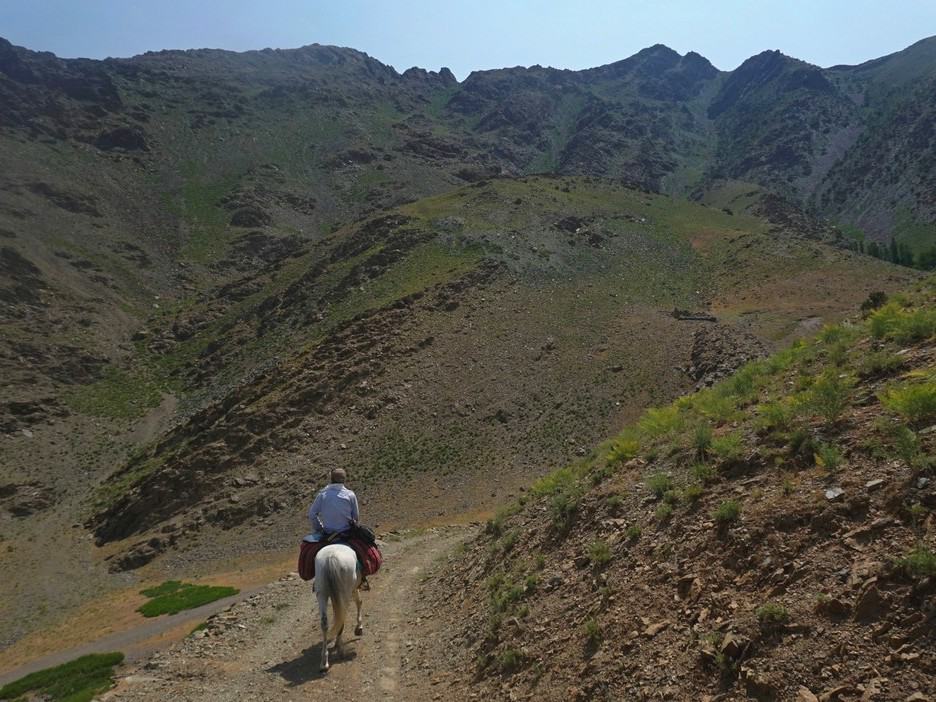
Here’s a handy packing list if you’re about to go on a horse trek in Uzbekistan. This is written for the warmer seasons and remember to read the essentials list above!
If you’re doing a multi-day horse trek, it’s likely you will have to carry all your luggage with you. For everyone’s sake, keep it as lightweight as you can. You will feel the benefit and so will the horse. Wear the same top/trousers/knickers for as long as you can handle it 😉
☑ Polyester or similar material t-shirt (no cotton, it absorbs sweat in a seriously pungent way and doesn’t dry when you wash it).☑
☑ Long, lightweight hiking trousers. You won’t want anything too heavy and must cover your ankles for the stirrups (and your legs out of respect).
☑ Waterproof jacket and trousers. Don’t use a rain poncho as it can scare the horses.
☑ Ankle-high hiking boots: High boots will protect your ankles in the stirrups while horse riding and will give you more protection while hiking on the rough mountainous terrain in case certain parts would be too steep on horseback. Here are good hiking boots for him and for her.
☑ Sweater with zipper: bring a sweater that you can easily take off or put on without losing control of the reins while riding. Also good to bring along in case it’s windy on the mountain passes.
☑ Hat and sunglasses: to protect your head and eyes from the sun and ones that don’t fall off easily
☑ Padded cycling pants: The saddles in Central Asia are very hard. Padded cycling pants or underwear (for him and for her) will give you a soft layer to sit more comfortably in the hard saddle. Tip: wear comfortable underwear, no strings or thongs…
☑ Equestrian helmet (optional). The horse riders in Uzbekistan (and Central Asia) don’t use helmets. Some tour companies offer helmets but not all. You can always bring your own to make you feel more safe.
☑ Biodegradable wet wipes: to refresh yourself when you don’t have a water source nearby.
6. some final important things you need to know before you go to Uzbekistan
Here are the dos and don’ts of what to remember while you’re in Uzbekistan:
☛ Bread is sacred in Uzbekistan. Try not to leave chunks on your plate or drop it on the floor. Especially don’t put it under your lap and save for later. Or throw it down a toilet ?! (a mountain guide told me about one tourist doing this and it deeply upset the guest house owner).
☛ In homes and guest houses, remove your shoes before going inside. Even if you don’t need to, it’s a sign of respect in Islam.
☛ Uzbekistan is very religious. Don’t be that person with your thighs/ shoulders/ chest/ breasts out.
☛ Try to learn some basic Uzbek phrases. I learned from many villagers that while they were happy to speak Russian, they absolutely loved it when I spoke their language. Also, download the Google Translate app. This was SO helpful. You can download languages offline which enables you to chat to people when there’s no signal.
☛ Don’t blow your nose at the table. Apparently it’s incredibly disrespectful and it will not go down well. By all means, itch your nose or wipe away snot with a tissue, but don’t go gung-ho and start emptying the bats in the cave.
☛ Veggies/vegans! At the guesthouses, it’s a huge sign of honour to present the guest with meat at dinner. You could try not eating the meat but it would be pretty disrespectful. I don’t eat meat in the UK (hadn’t eaten it for years!) but appreciated where I was and how kind it was of the host to cook me it so I ate it. Same goes for the other dishes with dairy etc really. Staying with mountain villagers, it’s near impossible to be vegan.
☛ If you need to go to the toilet but there’s no toilet around (like in the mountains), don’t pee out in the open but be discreet and hide behind the nearest rock or tree (yes, even if you’re a guy!). Also, don’t pee or poo near a water source…
☛ If you’re a smoker or you’re needing to light a fire when camping, bring matches. The guides warned me not to use lighters because of the high temperatures. It’s a known fact that most car fires in Uzbekistan are started because people accidentally leave their lighters on a seat.
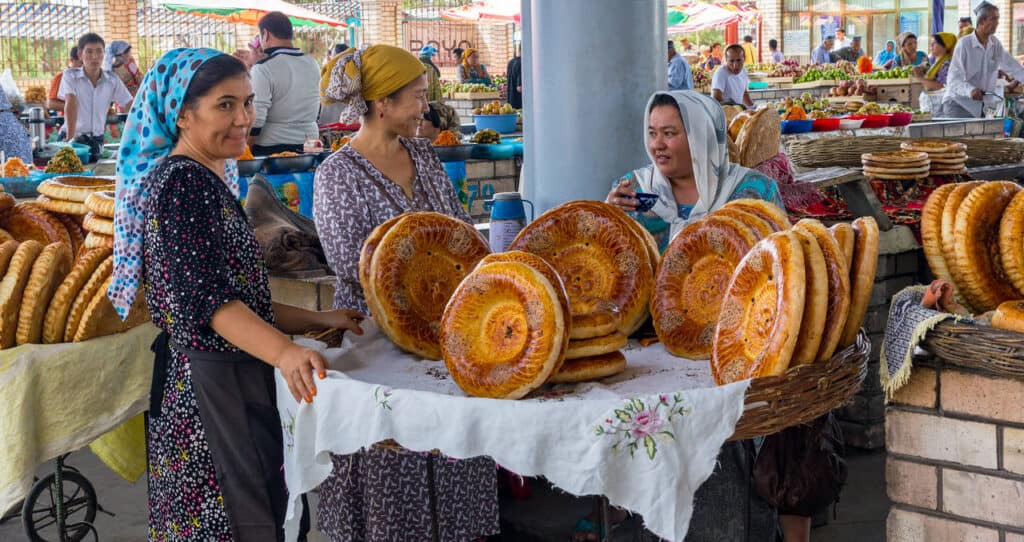
I hope this guide is useful for planning your trip to Uzbekistan. I wish you amazing adventures and feel free to contact me or comment below if you have questions or useful updates/ information to share!
Related Posts
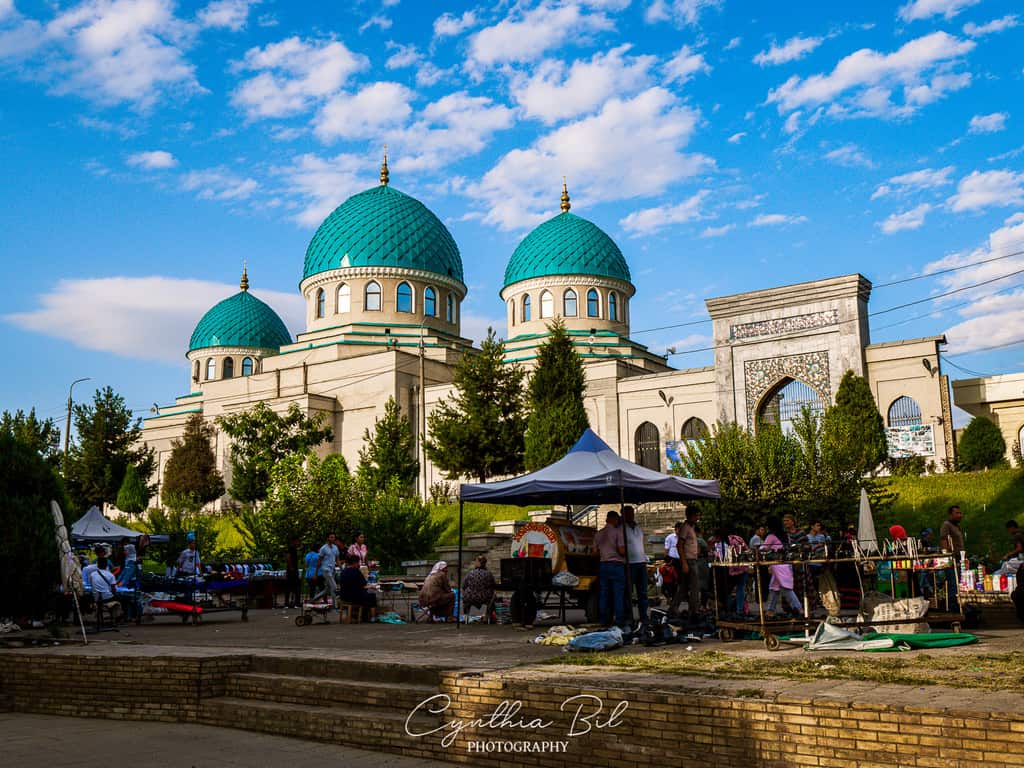
The best way to get from Tashkent to Osh and from Osh to Tashkent, crossing the Dostyk border (Kyrgyzstan – Uzbekistan)
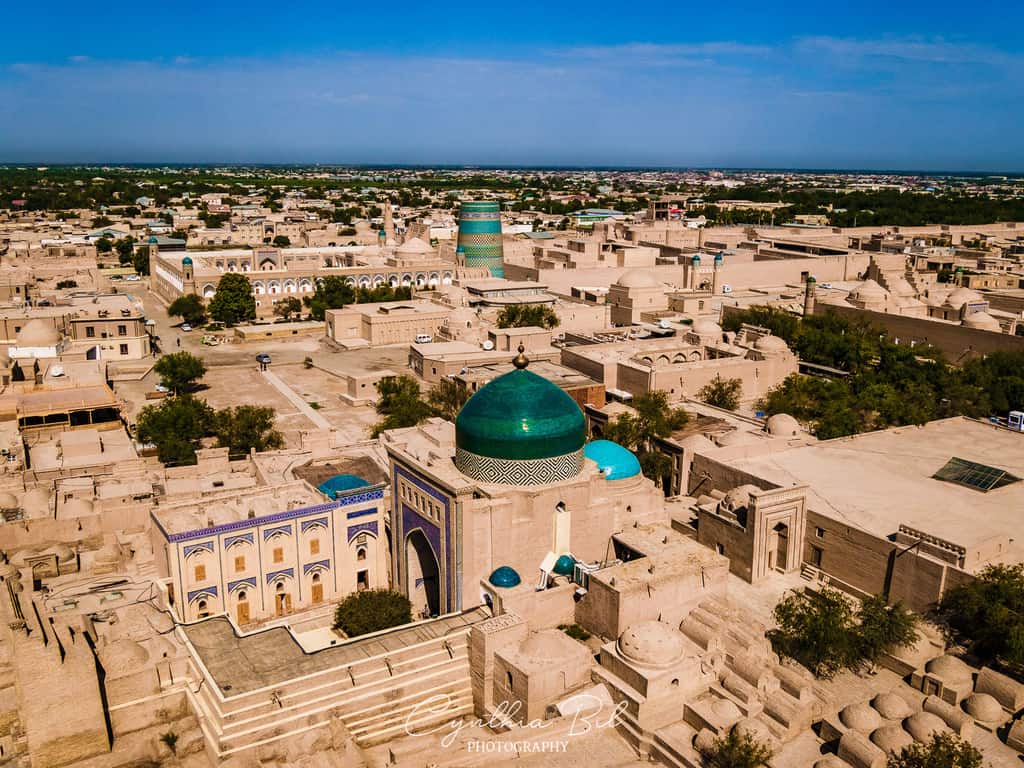
Uzbekistan Travel Itinerary (2026): 1, 2, 3 & 4 Week Travel Routes + Tips
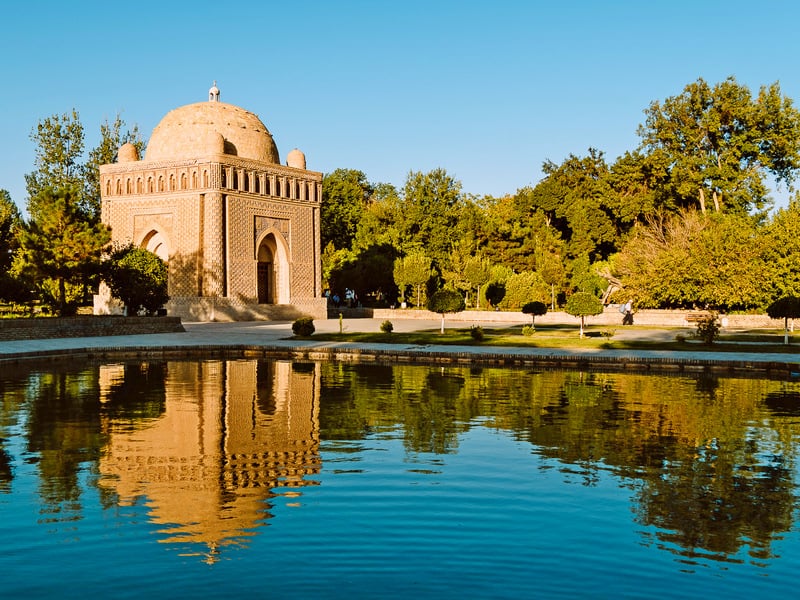
Uzbekistan Money Guide (2026) – How much does it cost to live and travel in Uzbekistan?
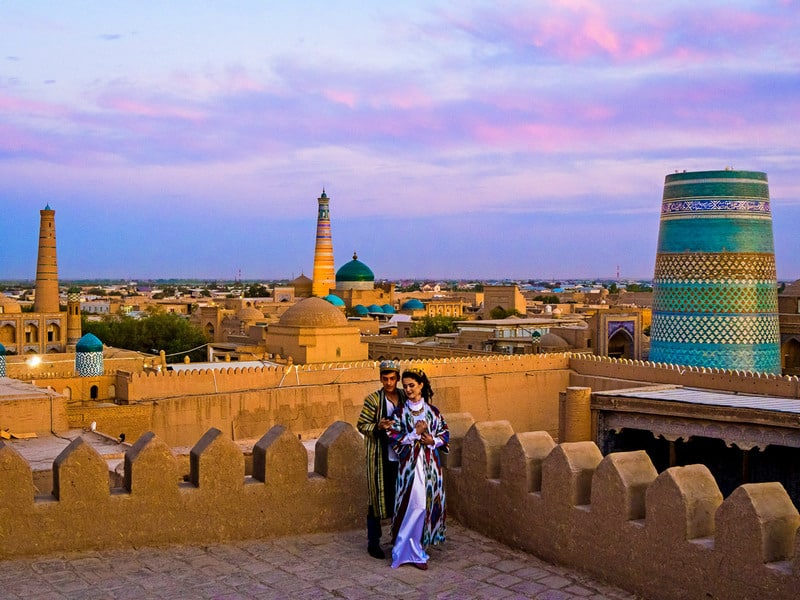
What are the Best Places to visit in Uzbekistan in 2026?
Everything you need to know about horse riding in Uzbekistan+ 3 best horse trekking destinations in Uzbekistan

Many thanks for this very helpful guide. Myself and a friend are going on. small guided group tour, so not huge adventurous, but many of your tips are very useful especially with regard to culture and etiquette. It is so important to be respectful of people in their own country. Wee will be going mid September and we are both looking forward to it very much, Thanks again
Hi Gill, I’m happy my tips are useful! Wishing you already a beautiful trip and adventure!
This guide is fantastic – thank you so much, Cynthia! 🌏 I’m planning a trip to Uzbekistan in October, and your advice really helped me feel more prepared. Especially the tips about respectful clothing and what to pack for rural areas – so useful! I also didn’t know about the matches vs. lighters and the bread etiquette 🍞. I saved your page and will check out your Samarkand and Bukhara guides next.
PS: I love that you included specific apps and safety tips – many packing lists skip those details. Can’t wait to explore this beautiful country! ✨
I’m very happy to hear this! Enjoy the preparations for your trip!