
In this guide for Tajikistan food and other Central Asian dishes, we take a look at some of the most authentic – and delicious – meals to tuck into. We also provide some tips for eating out during your trip.
Dinnertime is integral to the community and the kindness of Tajik people. You will likely eat with many families who will welcome you into their homes and share their produce with you… Embrace it all and you’ll have such a brilliant time!
Tip: See my Tajikistan Travel Page for a complete overview of all my travel guides and blog posts about Tajikistan!
Embark on the adventure of a lifetime: join the Pamir Highway Adventure Tour or explore the Highlights of Tajikistan, including the Jisue and Wakhan Valleys and the stunning Fann Mountains!

Disclaimer: This posts might contain affiliate links, meaning that if you make a purchase through these links, I may earn an affiliate commission. Thank you for helping to support this website!

1. What is Tajikistan food like?
The food in Tajikistan is typically Central Asian but with the added influence from Afghanistan and Russia. With plenty of dairy and grilled meat in dishes, it’s traditional to be served bread (non) and tea with every meal.

Meals originate from the nomadic times and continue to be traditional so a lot of ingredients are seasonal. If you’re especially curious about Tajikistan food, I’d recommend heading in late summer. You’ll be spoiled for choice with fruit such as watermelons, pomegranates, grapes, figs, peaches and apricots.
2. Tasty Tajikistan foods to try
2.1 Non
With every meal in Tajikistan, you’ll be served non. The bread is often decorated with sesame seeds and an egg glaze. The bread is very filling and is perfect hiking fodder!
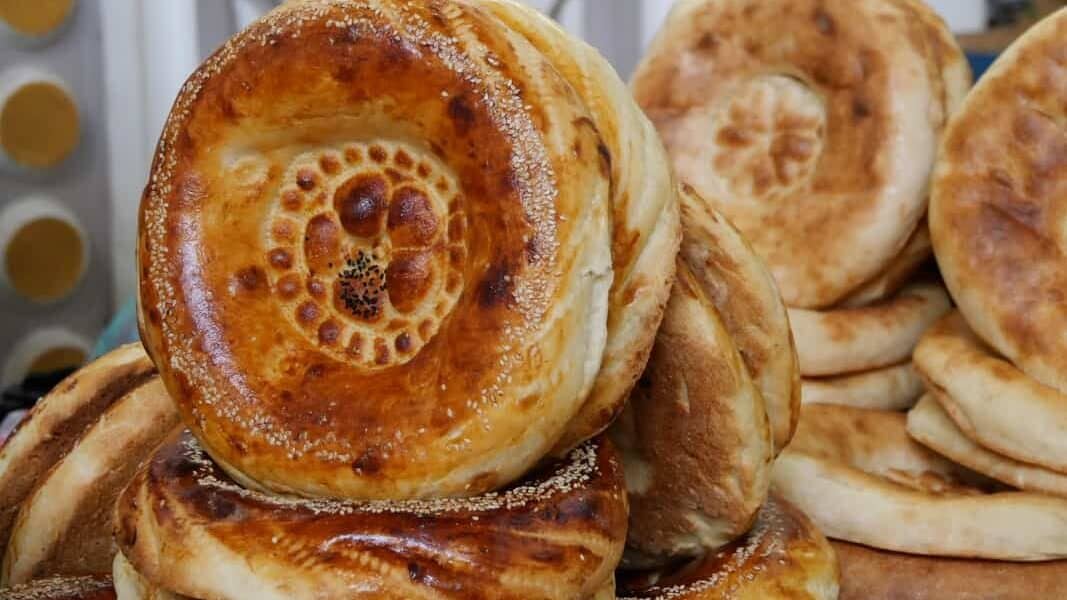
Non is usually glazed with sesame seeds
2.2 Qurutob
I’d really recommend trying Tajikistan’s national delicacy – qurutob – in Dushanbe! It’s a delicious dish made up of flaky pastry, veggies, yoghurt and, if you want meat with it, lamb.
This unique salad dish gets its name from ‘Qurut’, which are salted, dried balls of yoghurt that have been soaked and then the mixture is used as a base for the dish.
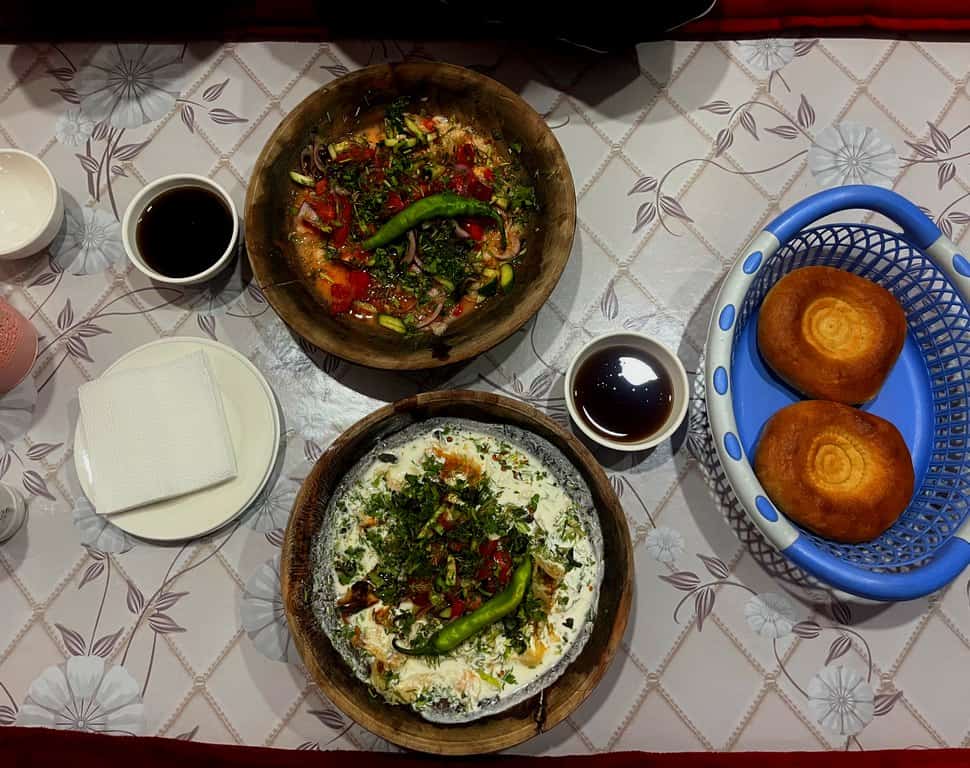
It’s traditionally a dish made to be shared with others using your hands and it’s commonly served on a large plate called a tabaq.
2.3 Oshi Palav
Oshi Palav (pilaf/Plov) is one of the most beloved dishes eaten in Tajikistan and it is widely eaten in Central Asia. UNESCO has recognised it as part of the country’s cultural heritage and there are hundreds of varying recipes for this famed Central Asian dish.
The dish is commonly made as a family meal or made in larger quantities to celebrate special occasions such as weddings.
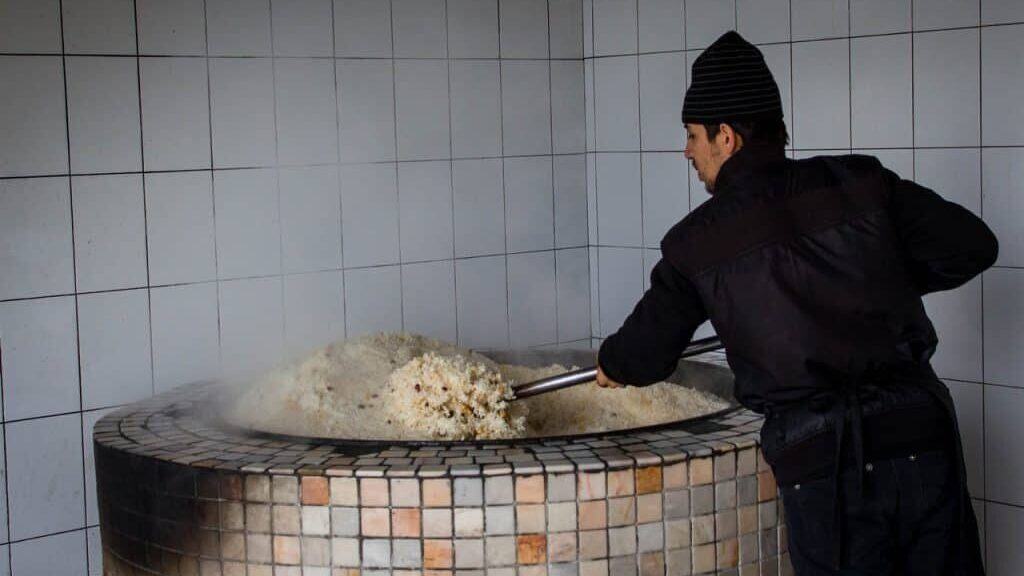
It is traditionally prepared in a large cooking pot (a Kazan) and the most famous version is made with a base of onions, carrots, and meat that is sautéed in fat.
The rice is then added, topped up with water and simmered until everything is cooked. Sometimes additional ingredients are added such as chickpeas, other vegetables, raisins, and fruit.
2.4 Yak butter
If you head east to Murghab, you must try the yak butter. Murghab’s immense elevation means its people can farm on the alpine meadows.
Yaks are popular for farming in this district as they well suited to cope with the harsh weather conditions and altitude. They munch on the alpine grass, which is untouched and nutrient-rich.

Yak butter is so delicious!
This in turn means their milk is some of the purest in the world. I was offered yak butter at a yurt camp we stayed at and it was the creamiest, nourishing thing I’ve ever tried.
It’s also fascinating to see how fresh produce is made on site while the yaks roam free. Read more here for the full guide to travelling the Pamir Highway.
2.5 Sambusa
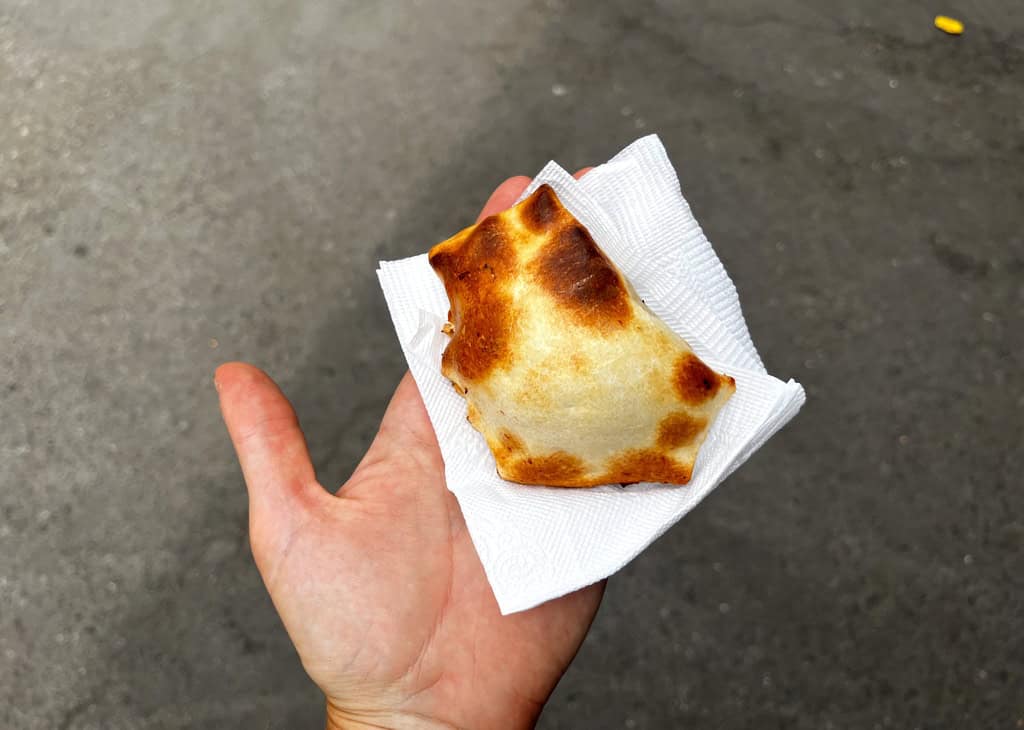
Sambusa is a savoury meat pastry with origins dating back as far as the 10th century. The world knows it for its famous triangular shape and Tajiks sometimes choose to fry them or bake them.
You will find a few different types of sambusas in Tajikistan, some filled with meat and others using vegetarian ingredients.
2.6 Shurbo
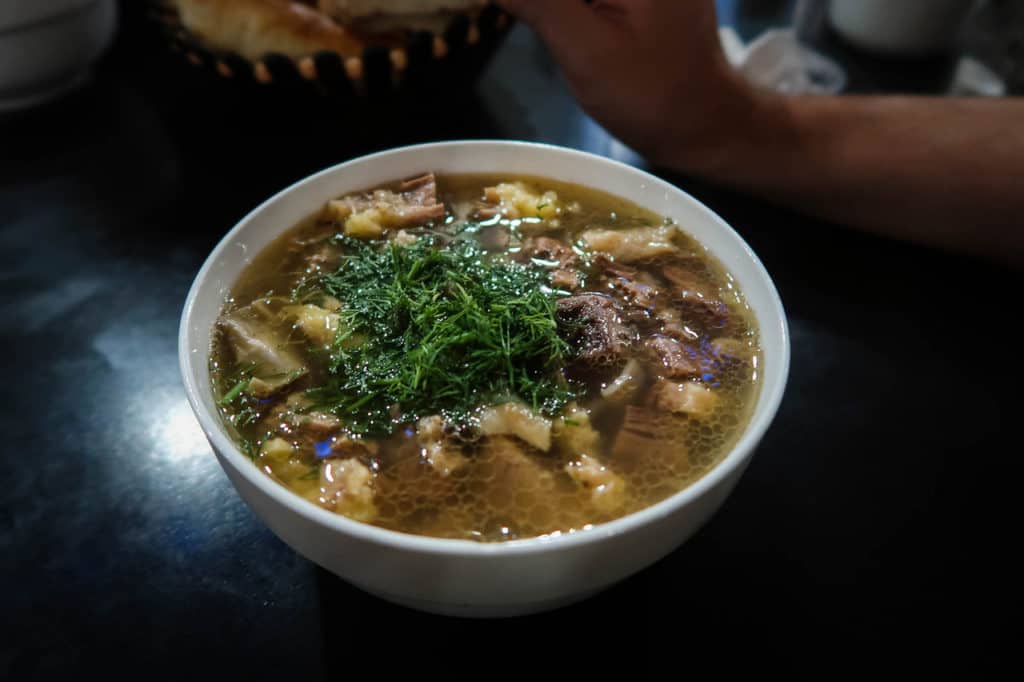
Shurbo is a hearty Tajik soup made using a medley of vegetables and meat, usually either mutton or beef. It’s commonly served alongside non or fatir breads.
2.7 Shakarob
Shakarob is a form of qurutob (tomato and onion salad) that has been made without using meat but includes chakka- a type of Middle Eastern dairy named as cheese or yoghurt. It’s a great dish to be enjoyed later in the evening in Tajikistan as it’s light and easy to prepare. It’s also a great choice for vegetarians visiting Tajikistan.
There is an exceptional restaurant that specialises in Shakarob in Dushanbe. Scroll down to WHERE TO EAT IN DUSHANBE.
2.8 Watermelon
Watermelon is a staple fruit of Tajikistan and you’ll often find it offered as part of lunches and desserts in homestays and guesthouses.
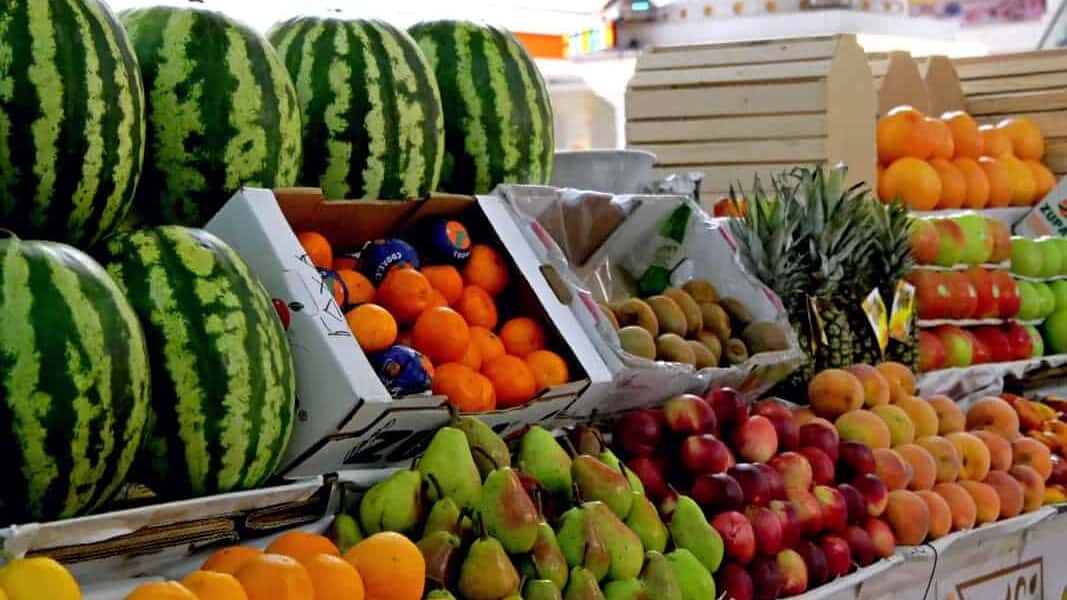
Make sure you tuck into some on your trip. It’s incredibly refreshing and tastes far better than the imported watermelons we get back home!
2.9 Chakka
Chakka (in some regions called suzma) is a very popular sour dairy product in Tajikistan which is eaten both as an independent food and as a condiment with many dishes. Chakka is prepared from djurgot (sour yogurt) or katyk (kefir), which is poured into a cheesecloth or gauze and tied at an elevated height so that the excess liquid can drain for 8-10 hours.
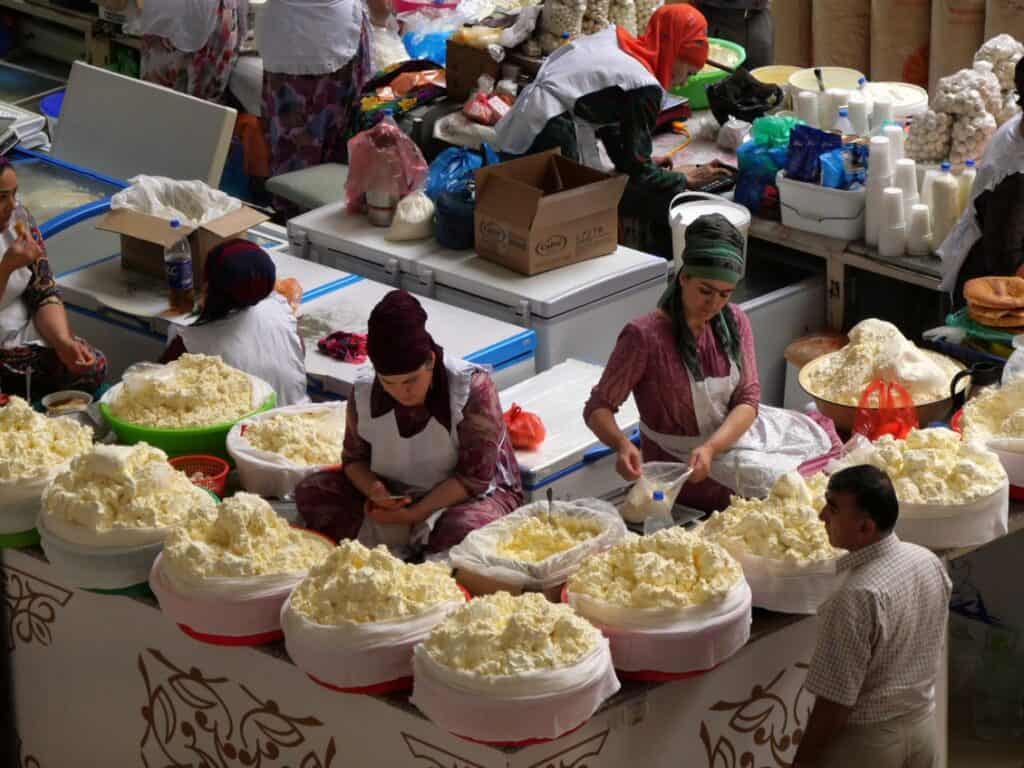
You’ll likely see many people making dairy products in Tajikistan
2.10 Kurut
Kurut (kuruti) is dried chakka that has been formed into small round, square or oblong shapes. When fresh it is soft and crumbly, and after hardening can be dissolved in water or eaten as a jawbreaker snack. The most delicious variety of kurut contains added salt, and kurut with pepper can also be found. Tajikistan is famous for kuruti mastchoh, which is made in the country’s Matcha Mountains.
3. Central Asian dishes
Here are some classic dishes you’ll likely come across in Central Asia.
3.1 Mantu/Manti
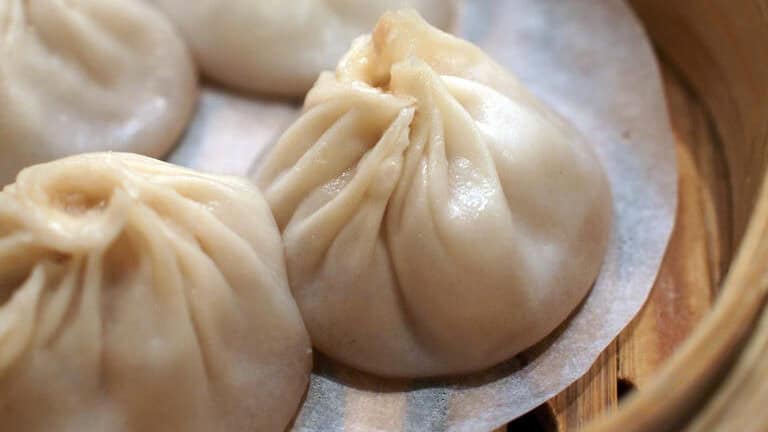
Mantu are Afghan dumplings that you will be served across Central Asia. Traditionally, they are filled with spiced meat and onion nd can be served with chives and yoghurt.
The shape and size of the mantu differ in regions across Central Asia!
3.2 Shashlik
Shashlik is a staple meat dish of Central Asia. On the streets of bustling cities, you’ll often see the smoke from the sizzling skewers.
The word ‘shashlik’ comes from the Russian word for ‘shish kabob’. Traditionally, the dish is made with lamb however beef, chicken and venison are used instead. Horse meat is also popular.
3.3 Kazan Kabob
‘Kazan kabob’, as its name suggests, is a dish that is prepared in a kazan, a large cooking pot also commonly used to make plov.
Marinated meat such as mutton or beef is fried with potatoes and then covered and steamed in a kazan on a low heat. When the meat is fully cooked it is finally served with onions and some fresh vegetables.
3.4 Obi non
‘Obi non’, also known as ‘lepyoshka’, is a type of round, flat Uzbek bread that has been baked in a traditional clay oven called a ‘tandyr’. Similar to Indian naan bread, it’s thicker and then decorated on top. Additional meat, nuts, seeds and raisins are sometimes added.
It is considered one of the most important foods in Uzbekistan and is eaten with just about anything. It can be made in a variety of ways and changes slightly from region to region.

Tandyrs, the traditional clay ovens used to bake ‘obi non’
3.4 Beshbarmak
Beshbarmak is the national food of both Kyrgyzstan and Kazakhstan as it originates from their shared nomadic past. The name means ‘five fingers’ because nomads traditionally eat this dish with their hands.
Beshbarmak is usually made from chopped boiled meat (beef or mutton) mixed with noodles and chyk, an onion broth. Traditional beshbarmak is made from horse meat.
3.5 Laghman
Laghman is an Uyghur dish made from meat, vegetables and noodles. Bozo laghman comes with fried noodles and gyozo laghman with boiled noodles and broth.
4. Is vegetarian/vegan food available in Tajikistan?
I’m a vegetarian and in my time spent in Tajikistan staying with families at homestays, I was able to stay meat-free… well to a certain degree 😉.
Cooking meat for the guest is a really big honour for Tajik families. If you are not necessarily part of a tour group, it’s something to consider and gauge whether it would be disrespectful to your host to turn down the meat.
Most families who hosted us were absolutely fine in removing meat from the meals we were offered. I ate a lot of potatoes, rice, eggs, cucumber and tomatoes.
Most Tajikistan food in the mountains was cooked with meat residue, so while you may not physically be eating meat, it’s really difficult not to have some contact with it. Meanwhile, being a strict vegan in Tajikistan is near impossible unless you bring your own food.
I’d strongly recommend bringing some protein supplements, especially if you are vegan, to maintain nutrition.
Many Tajik families are working farmers, so slaughtering and preparing livestock is part of their daily life. If you are squeamish about animal slaughter or have a strong moral opposition to the consumption of animals, you may have to rethink your trip.
In Dushanbe, you’ll have no problem finding delicious vegan and vegetarian places to eat (scroll down to WHERE TO EAT IN DUSHANBE).
5. What is the national drink of Tajikistan?
Green tea is the most commonly served beverage and also the national drink in Tajikistan. It is a very large part of Tajik culture and you’ll be offered it before, between as well as after a meal. It is served from a fine china teapot into handleless cups known as piala. Black tea is also popular, especially during winter.
Just as a side note, if you are staying high up in the mountains in a guesthouse and are struggling to sleep with the altitude, you may want to pass on the tea. It tends to be packed with caffeine 😉.
5.1 Alcohol in Tajikistan
Tajikistan is a Muslim country, meaning that alcohol is not really allowed. Despite this, you will find vodka served in most cafes and eateries. Vodka also remains a very popular drink, especially for the Tajik generation who grew up during Soviet Rule.
Some shops sell beer, but be respectful and don’t get carried away. Be considerate when drinking alcohol in the more conservative parts of Tajikistan, (especially as a woman, where traditions are very different).

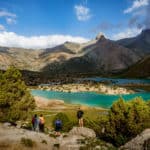
6. Can I drink the water in Tajikistan?
No, do not drink the water anywhere in Tajikistan. Western tummies are not built for the water in Tajikistan Always opt for sealed bottled water – even in the hotels.
If you’re headed into the mountains, it’s critical you take a water filter and purification tablets. Filters such as the Sawyer brand are very good. Do not drink straight from rivers or streams. Even if you haven’t seen signs of human civilization, there will likely be animal contamination in the water.

Tajikistan does not have advanced waste disposal systems. In the mountain villages, waste is often tipped into a large pit or thrown off the side of a hill so it’s worth bearing this in mind.
Need Travel Insurance for Central Asia? I use and highly recommend HeyMondo Travel Insurance. As a reader of Journal of Nomads, you get a 5% discount off your insurance plan!

7. Digestive issues in Tajikistan
Western stomachs are not strong enough to handle the water in Tajikistan and you’ll likely get travellers’ tum while you’re out there so prepare yourself mentally for getting some diarrhoea (that’s sometimes half the battle when you’re not ready!).
Only drink bottled water while you’re out there. However, if you’re staying in a guesthouse or a yurt, sometimes the plates or vegetables will be washed in the water so it does become really difficult to avoid.

You’ll likely get poorly in your trip!
In the days before your trip, line your stomach with activated charcoal. Pack plenty of anti-diarrhoea medication, anti-cramping medication and wipes in preparation for the inevitable 😉.
If you do get digestive issues, dose up on immodium and eat plain food like bread and crackers and keep hydrated with plenty of hydration salts. When you can’t eat, Dextro Energy pills are a great sugar boost.

8. Tipping in Tajikistan
From an ethical view, Tajikistan is one of the poorest countries in Asia and tipping the services of a local guide or tipping at a restaurant is a positive way to help out not just tourism there, but its people.
I’d recommend tipping anything from 15-20% of the bill.
9. Where to eat in Dushanbe, Tajikistan
Caf. This is a lovely Eastern European coffee shop. Great coffee and lots of salads and lunch items on offer.
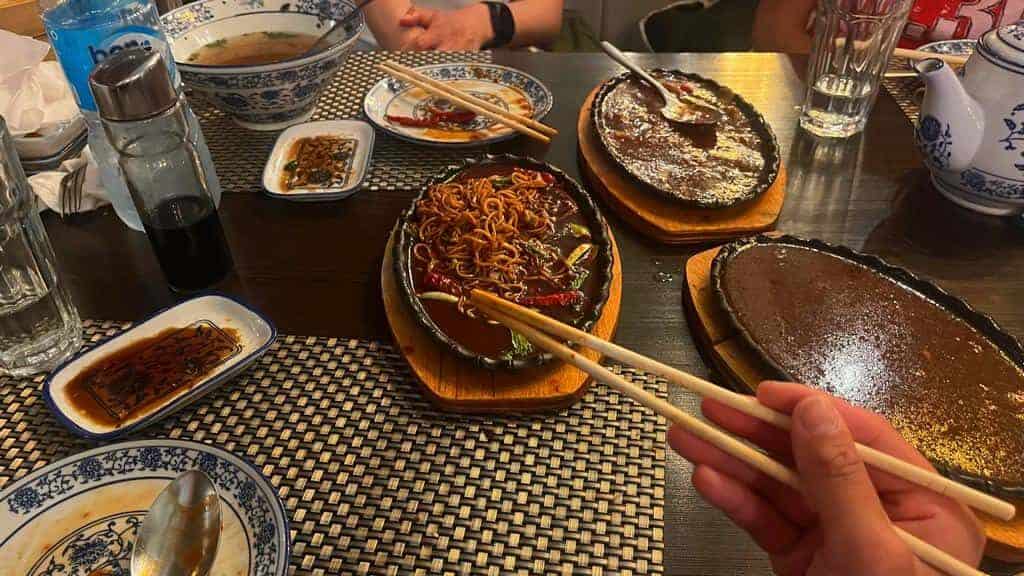
Lan’chzhou. This is a great Western Chinese noodle restaurant. It has a wide variety of options and offers vegan and veggie dishes.
Qurutob Restaurant Noor. If you’re after some authentic Tajik cuisine, make sure you visit here. This place prides itself on its delicious Qurutob and Shakarob.
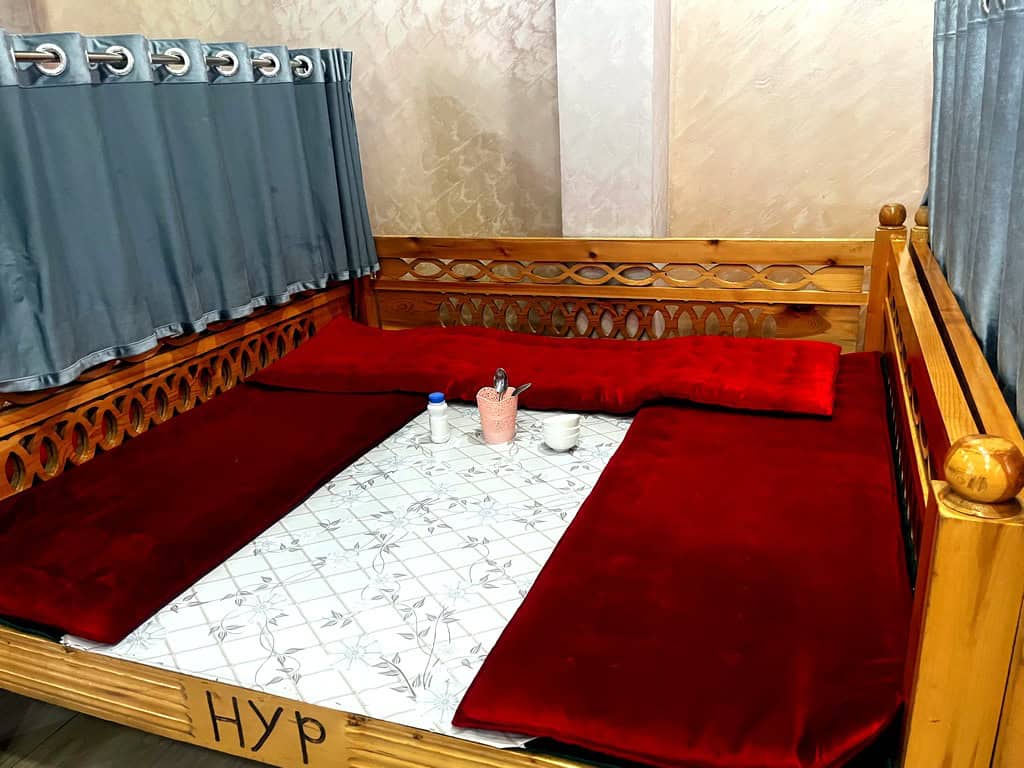
This restaurant offers private booths, veggie options and is always bustling with locals. Make sure you’re hungry because a half-size portion is about the size of a bowling ball 😉.
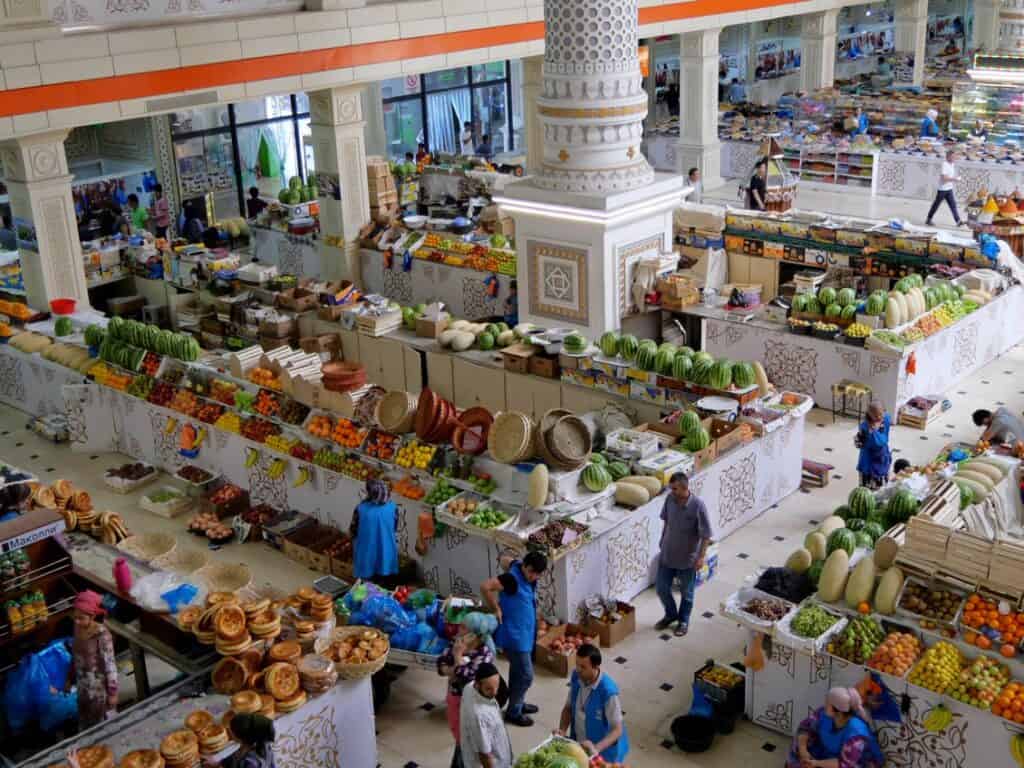
Mehrgon Market. There are hundreds of market stalls offering Tajik sweet treats and hot food. The delicacy to try here is the sambusa… these are triangular pastry parcels filled with vegetables and lamb. They are cooked in a large tandoor oven.
Merve Restaurant. This is a popular Turkish restaurant and the food is amazing! I would recommend the pide, which is a cheesy bread with different toppings.

10. Useful things to know about Tajikistan food and eating out
Bread is sacred in Central Asia. When at guesthouses, it’s so important not to waste bread or leave large chunks of it uneaten on your plate. A guide once told me about some tourists that once flushed bread down a toilet in a homestay which deeply offended the owner.
Take off your shoes before entering homes. This is a fundamental part of respect in Islam and you must remove shoes before entering yurt camps and homes.
Veggie/vegan meals. You will likely eat with many Tajik people who will welcome you into their homes. Providing meat at dinner is a huge sign of honour to you, the guest. I’ve touched on this earlier, but it is possible in most Pamiri homestays to ask for dinner without meat, but broth etc is obviously still cooked with meat residue. Vegetable selection depends on seasonal produce. Many Tajik families are working farmers, so slaughtering and preparing livestock is part of their daily life.
Download Tajik and Russian on Google Translate. This was so helpful to chat to people at dinnertimes. You can download the two languages offline and then use it as a basic form of communication in homestays. If you have space on your phone, I’d also download Kyrgyz. In Murghab, people are predominately from Kyrgyzstan.
Greet people with hand on heart. A gracious way to say hello to Tajik people is by slightly bowing your head and placing your right hand on your heart. The main greeting is “As-salaam Alaykum” which means “peace be upon you”.
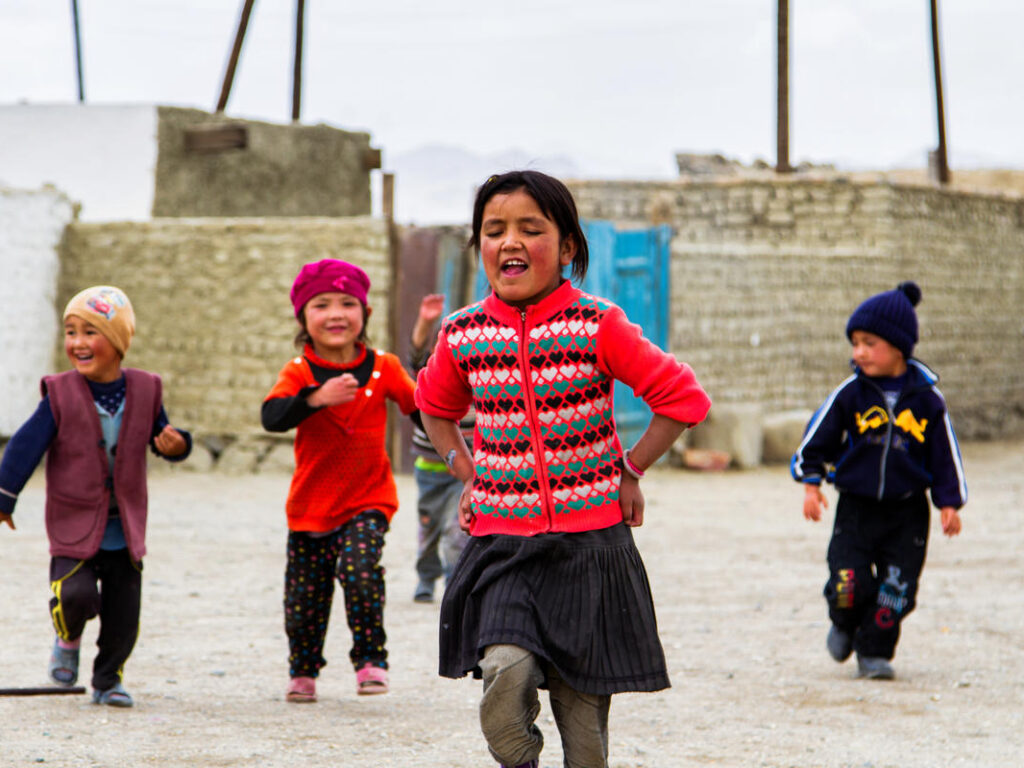
Ramadan. Think about booking your trip outside of Ramadan dates. It will be harder to access food during the religious holiday… and guides will be more tired!
Allergies. While most Tajikistan food (especially in the mountains) is simple and prides itself on local produce, people with allergies may struggle to find food that they can eat and translating that to hosts could be difficult. Someone in our group who had coeliac disease brought their own food and supplements and managed the trip well, but it’s totally dependant on the severity of the condition. If you have any questions, I welcome you to ask and I can put them to our partners, Visit Alay.

I hope this Tajikistan food guide has answered all your questions for eating out and given you some inspiration with what to try! As a vegetarian, I love Central Asian cuisine and I’m sure you will find some dishes to enjoy. If you have any questions or would like to chat further about your trip, please feel free to message us!
Related Posts

13 Best Things to do in Dushanbe: A complete City Guide

Is Tajikistan safe to travel in 2026? 18 Useful Things to Know before you go

Hiking in Tajikistan: 6 Mighty Mountain Trails to Explore
How to travel the Pamir Highway in Tajikistan: a Complete Guide

Best Tips and complete Packing List for Traveling in Central Asia in 2026 – When to go and what to wear when visiting Central Asia
