
In this in-depth travel guide we will provide you a varied selection of the best things to do in Dushanbe and practical tips of how to get about in Tajikistan’s capital. From where to stay, where to eat and day trips in and around the city… we’ve got you covered!
Dush means ‘Monday market day’ and people have lived and travelled through the area for thousands of years.
According to Britannica, Soviet Union officials built a new city on the site of three former settlements. It was known as Stalinabad in 1929 before being renamed Dushanbe in 1961.

Emomali Rahmon was elected president in 1994 and has been re-elected regularly. You’ll see many murals of him on official buildings.
Most of the streets in the city are named after writers and philosophers and there’s definitely a sense of pride among the Tajiks about their capital.
Geographically, Dushanbe lies along the Varzob River in the Gissar valley, in the west of the country. As of 2024, Dushanbe has a population of around 1.56 million people.
Read on to prepare for your trip to Tajikistan’s capital city!

Tip: See my Tajikistan Travel Page for a complete overview of all my travel guides and blog posts about Tajikistan!
Embark on the adventure of a lifetime: join the Pamir Highway Adventure Tour or explore the Highlights of Tajikistan, including the Jisue and Wakhan Valleys and the stunning Fann Mountains!

Disclaimer: This posts might contain affiliate links, meaning that if you make a purchase through these links, I may earn an affiliate commission. Thank you for helping to support this website!
1. Is Dushanbe worth visiting?
Dushanbe is a modern city beaming with bright lights and high street shops. It’s incredibly clean and there are lots of parks to walk around in.
Practically, the city is ideal for picking up everything you need for a trip in the mountains i.e. gas canisters, basic food bits and mobile phone SIM cards. There’s also hundreds of lovely hotels at affordable prices.
So it’s a great base if you’re exploring the Silk Road, the Pamir Highway or the Fann Mountains, but from a sightseeing perspective, there’s not a lot to do.
Another element is that it is incredibly different to the smaller towns and villages dotted along the Pamir Highway… I found it a little jarring to go from the peace of the mountains to a bustling city.
Overall though, I found plenty to entertain myself with and I enjoyed exploring Dushanbe.
2. Entry Requirements for Tajikistan
2.1 Visa requirements
It depends on what country you’re travelling from, but residents from more than 80 countries including all EU member states, the US and Australia are eligible for visa-free entry for 10 days. Caravanistan has a lot of helpful information here.
If you are staying more than 10 days, you will need to register at the OVIR office, at either Khorog or Dushanbe. A travel company such as our partners Visit Alay can help you with this.

Other countries, such as the UK, are exceptions to this. You can apply for a 45-day visa through the e-visa service, where you can include the GBAO permit (read below). You won’t need to register through the OVIR service.
Get your e-visa sorted in plenty of time before your trip. I am from the UK and went through this e-visa service but I was rejected the first time. I had to pay an extra $50 fee and get a letter of invitation from our partner, Visit Alay, before I was granted it.
2.2 Permits for Tajikistan
A great deal of the Pamir peaks are in the Gorno-Badakhshan Autonomous Oblast (GBAO) district, a province in eastern Tajikistan. You likely want to travel here if you’re wanting to explore some of Tajikistan’s most breathtaking scenery.
As a security measure because of the neighbouring border with Afghanistan, a GBAO permit is needed and you can apply for one here. You may also need a letter of invitation which can be obtained from a travel company.

You will need a GBAO permit if you’re heading to eastern Tajikistan
If you’re looking to head to the Tajik National Park or Lake Sarez you will need to buy a permit for each day. Pamir Eco Tourism and Pamir Trail can assist with this.
No permits are needed for the Fann Mountains, but you do need to pay a small daily fee to the forest ranger at Alauddin Lake and by one of the camps by the smaller lakes near Kulikalon, according to Talakai.org.
3. Is Dushanbe safe?
Dushanbe is a safe city to travel to.
Because of the suffix ‘stan, Central Asian countries are often associated with danger. In a world where there is so much conflict and polarized views, there is a lot of information out on social media and online so it can be very difficult to get an understanding of a place.
It’s understandable that Westerners have concerns when travel advisories strongly recommend not to go.
A trip to Tajikistan does require a lot of planning but its culture and wilderness is so worth it. With the correct risk assessments, gear, equipment and medicines, it counts for a lot and will stand you a greater chance of being much safer.
Need Travel Insurance for Central Asia? I use and highly recommend HeyMondo Travel Insurance. As a reader of Journal of Nomads, you get a 5% discount off your insurance plan!

Some government advice warns about low-level robberies in Dushanbe. I never experienced anything like this, nor did I feel on edge when walking at night.
I’d recommend just being more street-wise incase of pick-pockets in the markets and be careful walking around walking on your own late at night, just like you would in any capital city.
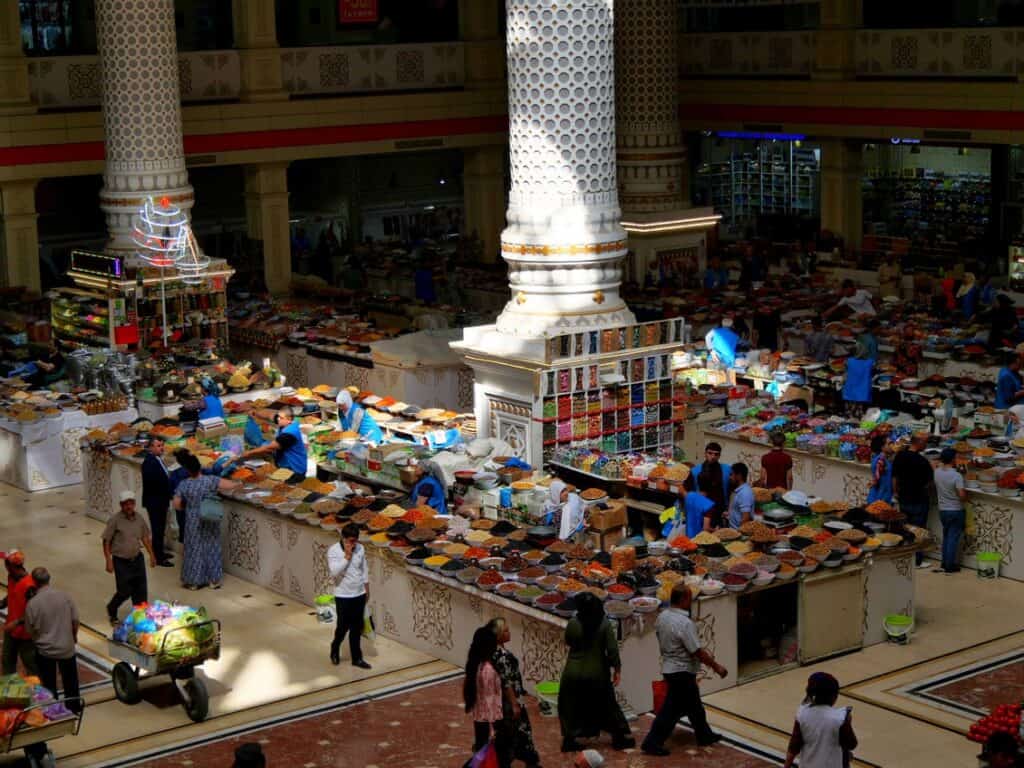
Something I’d like to mention is that I’ve been in way more danger in the streets of some UK/European cities and I was only treated with warmth and kindness during my time in Tajikistan.
Again, similar to any another busy city, road safety is a big one. Cross busy roads at the allocated place, because there are often streams of traffic in certain spots and it can get chaotic.
Smoking is not allowed in the streets of Dushanbe, however that doesn’t seem to deter people. I would be really careful about this rule as you’ll easily be identified as a tourist.
3.1 Is it safe to drive in Tajikistan?
Most of the roads in Tajikistan are dirt tracks so they are uneven, dusty and merciless on vehicles.
If you’re heading from Dushanbe into the Fann Mountains or along the Pamir Highway, you absolutely need to travel in a 4WD. I would not recommend renting one, but hiring a driver instead. There are so many obstacles on top of the dirt tracks, including mudslides and river crossings so you need to go with a skilled driver who know their vehicles intimately or join a tour.
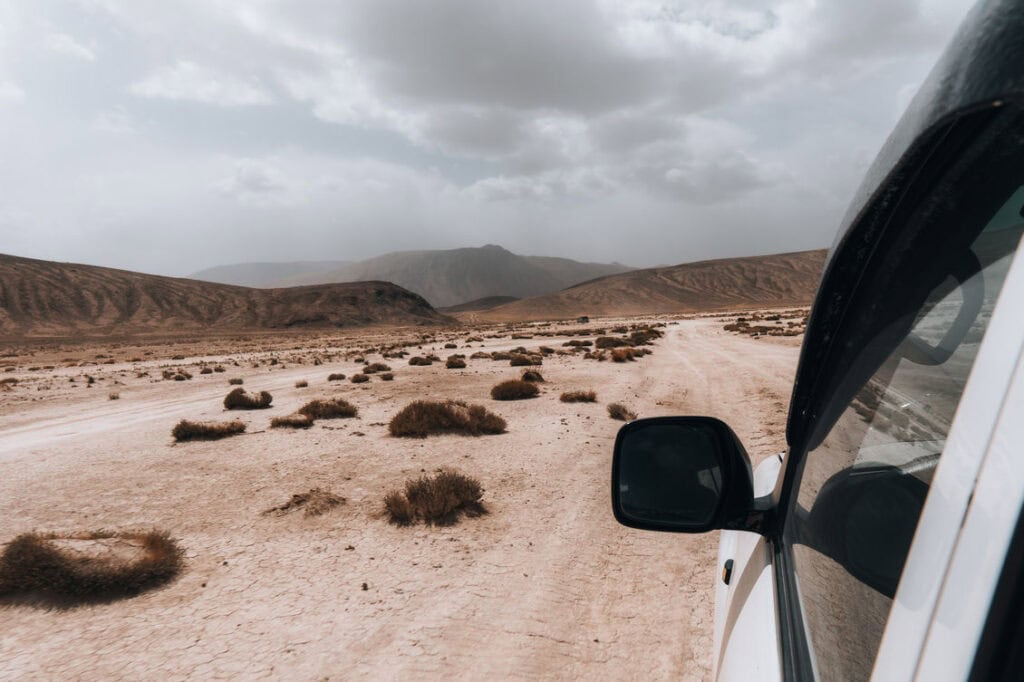
Punctures and minor breakdowns are a regular occurrence and it’s important to factor this into your trip.
The only real danger on the roads was on a huge section of track leading out of Dushanbe towards Khorog. The route is under construction as part of a huge investment project and it’s currently a single vehicle track.
This sounds ok, but the road is teetering over a steep cliff precipice, the dust is so thick that you cannot see more than a few meters ahead of you, and you come withing kissing distance of massive oncoming lorries… so yeah, slightly hairy!

For cyclists wanting to explore the Pamir Highway, the tunnels outside of Dushanbe, near the Nurek Dam, can also be frightening.
There are no lights in the tunnels and sometimes huge trucks can veer into incoming traffic. There is no exhaust extraction so bring a good face mask.
3.2 Police and documents in Dushanbe
Some tourists have reported issues when arriving at Dushanbe International Airport and being told their ‘documents aren’t in order’. Do NOT pay any ‘fines’ and ask to see the chief of police if you are questioned. Always print out several copies of your visa and passport. You’ll be asked for copies in hotels and at checkpoints.
There are several checkpoints in Tajikistan. Again, if you are asked to pay any fines, do not pay anything and ask to see the chief of police.
If you are driving with your own car into the country, I’ve read about a small import tax but you should not have to pay any other fines/taxes.
In Dushanbe, you’ll see police officers stopping vehicles on the side of the road. The government has issued strict laws which say tourists and their vehicles should not be stopped. Have your printed passport copies with you.
4. When is the best time of year to visit Dushanbe, Tajikistan?
You’ll most likely be visiting Dushanbe en route to see the country’s staggering nature. Most people travel to the mountains from early June to late September.
Dushanbe lies at an elevation of 706m (2316ft) so its lower altitude means it gets incredibly hot during summer months. If you’re planning to spend some time solely in Dushanbe, late May and late August is a really lovely time to be in the city.
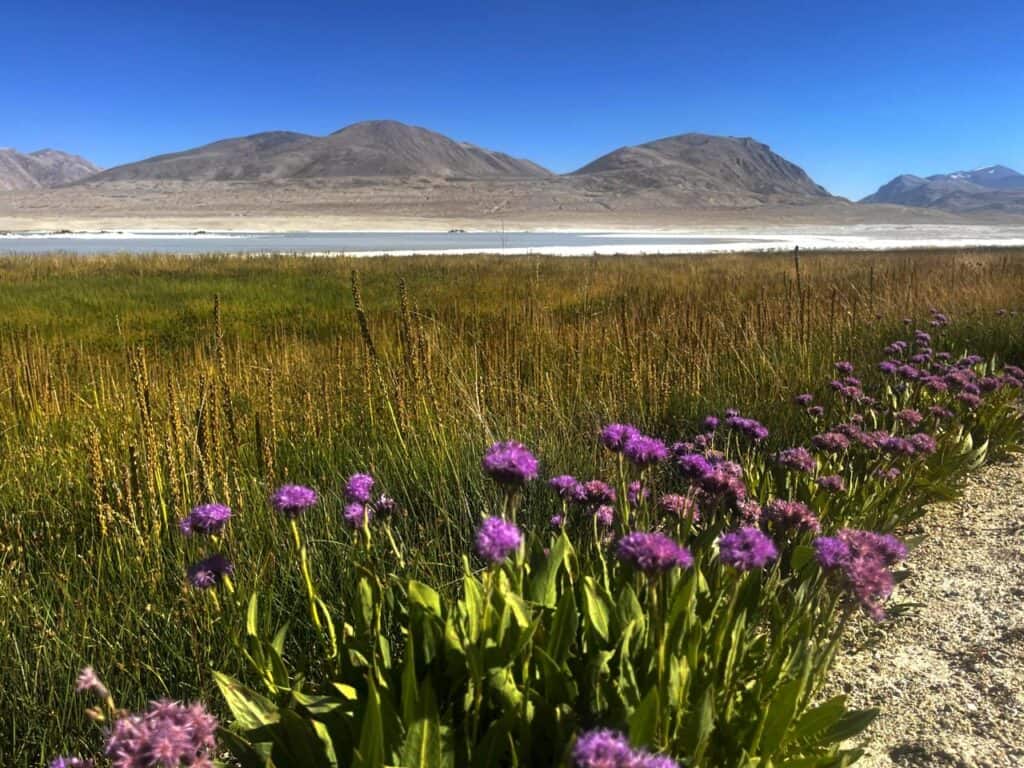
Most people travel to the Pamir Mountains from early June to late September
5. What to wear in Dushanbe, Tajikistan
Tajikistan is a predominately Muslim country, it’s so important to respect this.
A great deal of countries in the world have Western influences so many visitors can fall into the habit of applying these ideals and expectations to remote places. While Dushanbe is more liberal than the smaller mountain villages, it’s still important to dress appropriately.
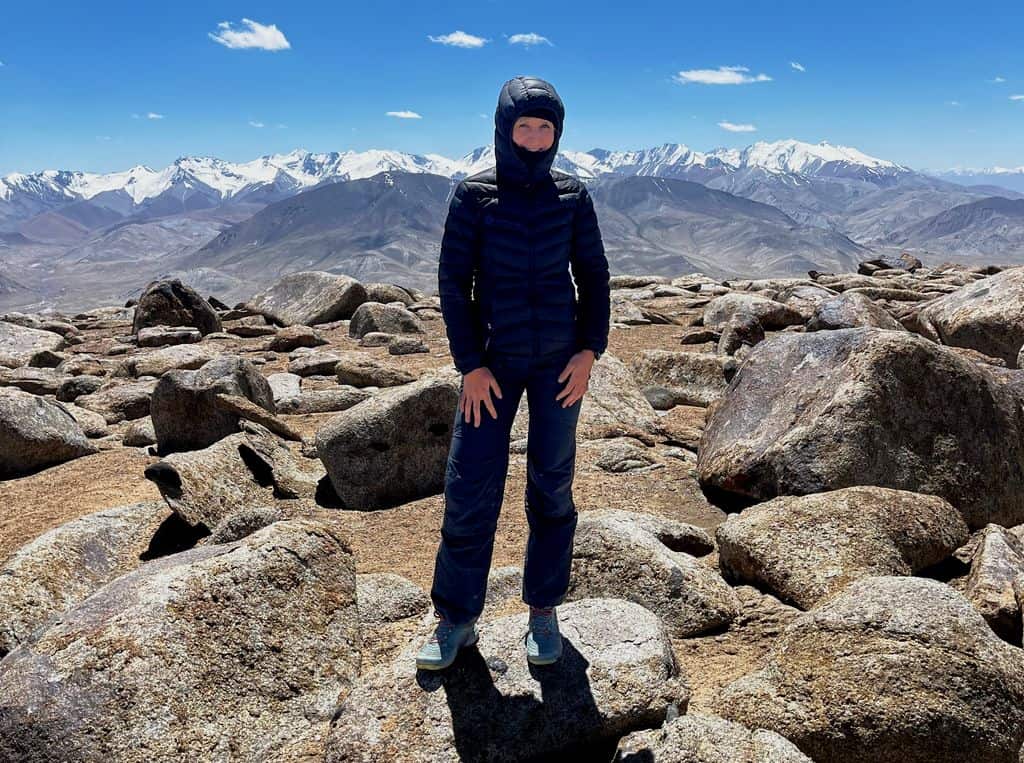
In the remote parts I would suggest clothing that covers shoulders, chest, back and full leg. In Dushanbe you may get away with less clothing, but bear in mind you’re likely to get attention anyway because you’re a tourist.

6. How to get from Dushanbe airport to the city
Dushanbe International Airport is usefully located about 10km (6.2miles) from the city center.
Most hotels and hostels offer free taxi transfers to and from the airport so it’s worth checking that out when you’re booking.
Another option is hailing a taxi. Avoid taxi ‘sharks’ who crowd around the main entrance – they fish for tourists and will overcharge. According to Caravanistan, you can walk about 200 meters north, through the parking lot, to Ahmadi Donish Street. Agree your price before you get in the car.
Some drivers may not know the accommodation you are staying. It’s useful to have the contact number of your hostel/hotel to hand so the driver can call them.
7. How to travel around in Dushanbe
7.1 Walk in Dushanbe
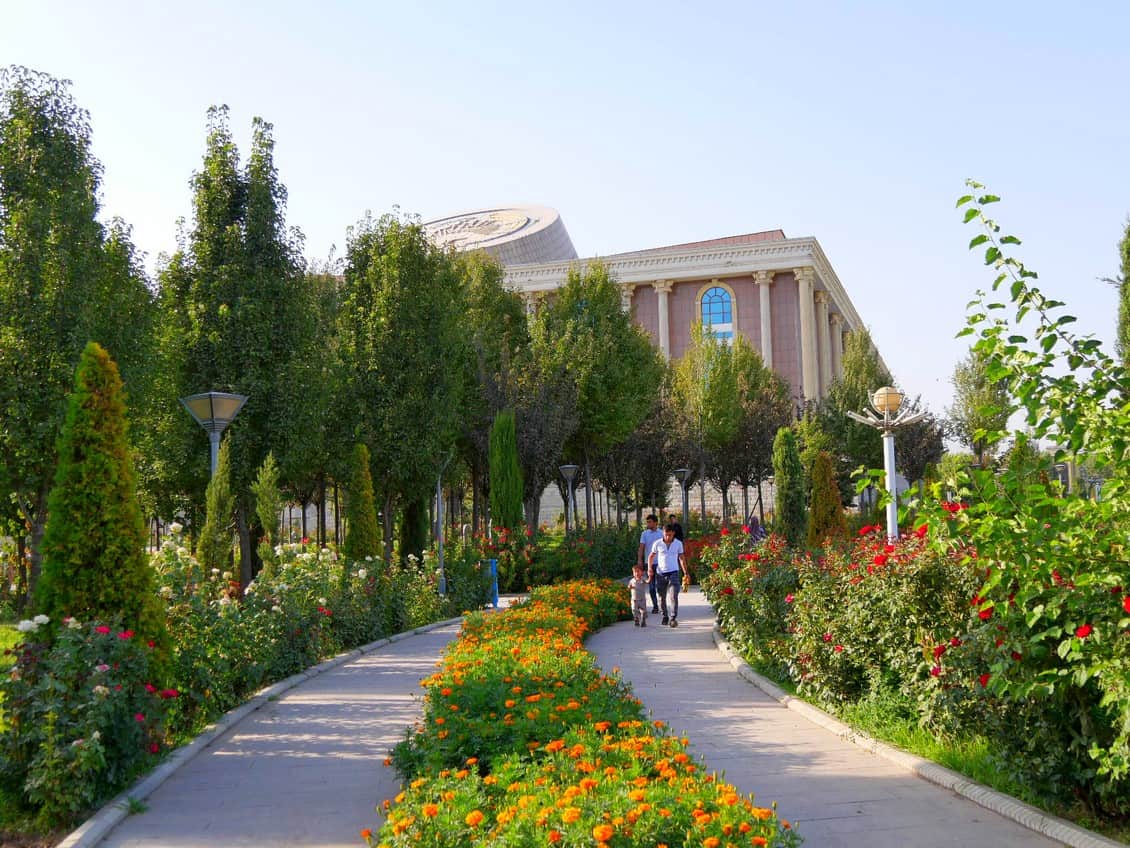
Walking is a great way to discover a place intimately and Dushanbe is a pretty city to walk around.
If you base yourself centrally, you’ll be able to access most amenities. Just bear in mind you may want to plan walking around for later in the afternoon due to the heat! I used the Google maps app which was excellent for navigating in the city.
7.2 Taxis in Dushanbe
I used the app Rakhsh Taxi to get about Dushanbe and it was pretty reliable. A Tajik guide told me that the Yandex Go app also works in Dushanbe.
If you’re needing a taxi transfer to your hotel/hostel from the airport, most places offer this as a free service. Taxi drivers can sometimes be pushy (especially around Dushanbe Airport!) and charge you more. Make sure you agree a price before you set off.
It’s useful to have the contact number and address of your hostel/hotel to hand so the driver can call them if they are not quite sure where it is.
7.3 Buses in Dushanbe
I had no experience getting a bus in Dushanbe, but I’ve read in different tourist forums that it can be pretty fiddly trying to get one because you need a bus card. Apparently the bus cards are only available at specific kiosks and you need a Tajik phone number in order to buy this.
Forum Caravanistan also reported that buses fill up quickly and if you have a large backpack sometimes you won’t be able to get on.
8. How to get from Dushanbe to the Fann Mountains and Panjakent
There are shared taxis running from Dushanbe, through to parts of the Fann Mountains and onwards to Panjakent (near the border of Uzbekistan). Caravanistan has a useful forum of advice here.
It does depend on where exactly you need to get to though. I’ve read that not many shared taxis run to places like Artuch (base camp for Kuli Kalon Lake and other areas) due to the roads.
Hitchhiking is common in Tajikistan – but bear in mind you’ll probably need to speak Farsi/Tajik/Russian and ensure you offer somani/US dollars.
You could also organize a private driver to take you to the Fann Mountains, which is a far easier option given the roads leading out of Dushanbe.
If you want more information, please feel free to contact me and I can put you in touch with reliable drivers.
9. How to get From Dushanbe to Khorog
From what I was told by locals, there are several marshrutkas leaving Dushanbe each morning to Khorog. A post on travel forum Caravanistan has said that this takes about 12 hours. The shared taxis are 4WDs which leave from Badakhshan car station to Khorog.
The marshrutkas are incredibly cheap but be prepared to wait longer – I was told by our guide that they can get full quickly and you’ll need to anticipate adding on extra days if there is no room. Many locals need to use them for business or visiting their families, so you may want to give them priority.
Please remember you’ll need your GBAO visa to enter this region.
10. How to get from Dushanbe to Samarkand
There are regular shared taxis leaving Dushanbe which travel to the border via the city of Panjakent. Follow the above advice provided by Caravanistan. Cynthia crossed this border and it is a simple process. You can either take a shared taxi or a bus to central Samarkand from there.

11. How to get from Dushanbe to the Pamir Highway and Osh
Many people start in Dushanbe to travel across the Pamir Highway before finishing in Kyrgyzstan’s second largest city, Osh.
The Pamir Highway unlocks a mesmerizing journey exploring Tajikistan and offers some of the most rugged landscapes in the world. I’ve written a full guide about the journey here.
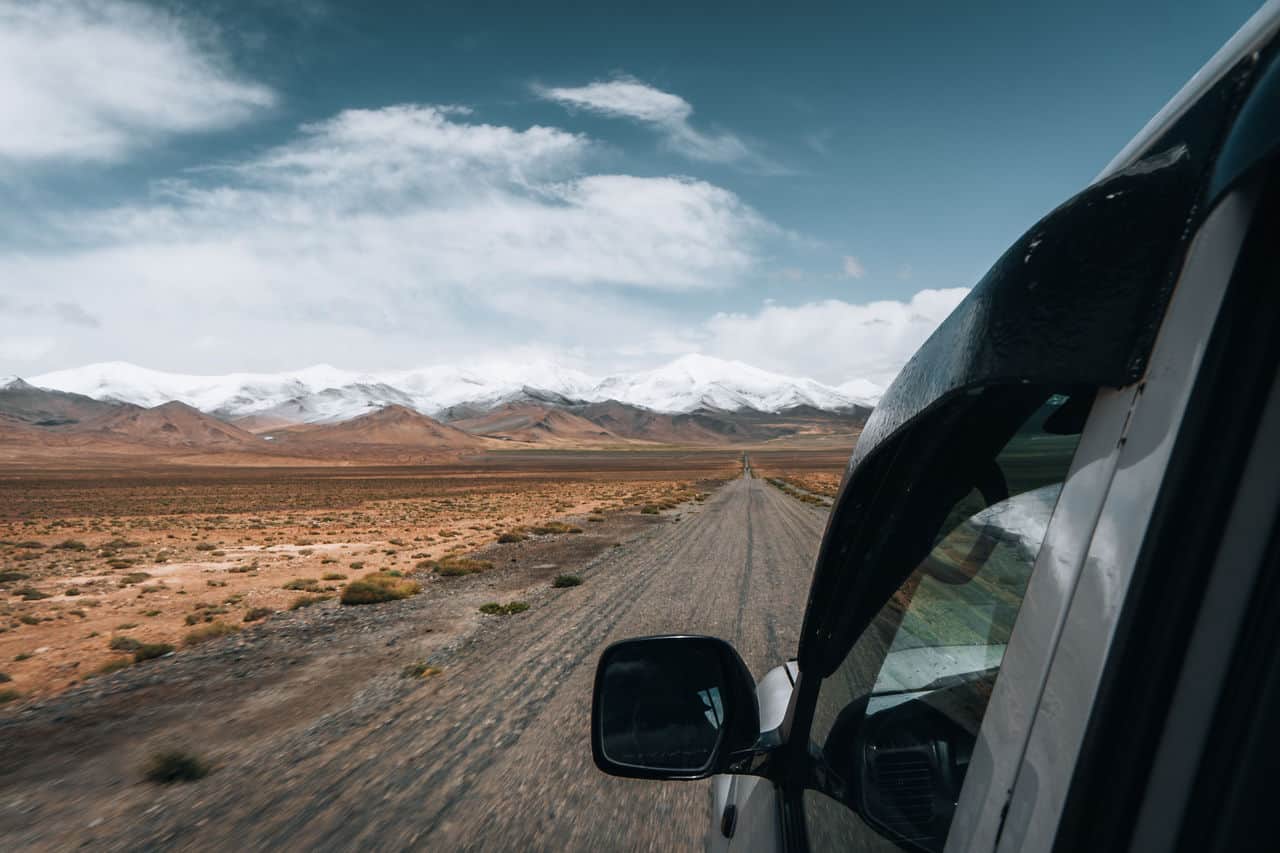
Beginning in Dushanbe does give you the main advantage of being at 706m (2316ft) of elevation and slowly progressing in height, because the Pamir Highway hits elevation levels of 5000+m.
You can travel the Pamir Highway from Dushanbe to Osh using the services of a local tour agency.
We also offer an incredible 11-day Pamir Highway adventure Tour or a 17-day highlights of Tajikistan adventure tour to the Pamir Highway and Fann Mountains.
Embark on the adventure of a lifetime: join the Pamir Highway Adventure Tour or explore the Highlights of Tajikistan, including the Jisue and Wakhan Valleys and the stunning Fann Mountains!

Kyrgyzstan’s second largest city, Osh is a popular starting/end point of the Pamir Highway journey
There are no current direct flights from Osh to Dushanbe. However, as of March 2025, the Kyrgyz – Tajik border has officially opened to its nationals, which means more flights may become available between the two cities.
Please remember you’ll need your GBAO visa to drive through the Gorno-Badakhshan Autonomous Province.
12. How to get from Dushanbe to Bishkek
There are direct flights which take about 1hr 30 minutes between Dushanbe and Bishkek. Somon Air operates between the two and costs about $230.
As I mentioned above, the Kyrgyz – Tajik border is now open for each nationality which means more flights may operate in the future.
13. Places to see and things to do in Dushanbe
1. See Dushanbe at night
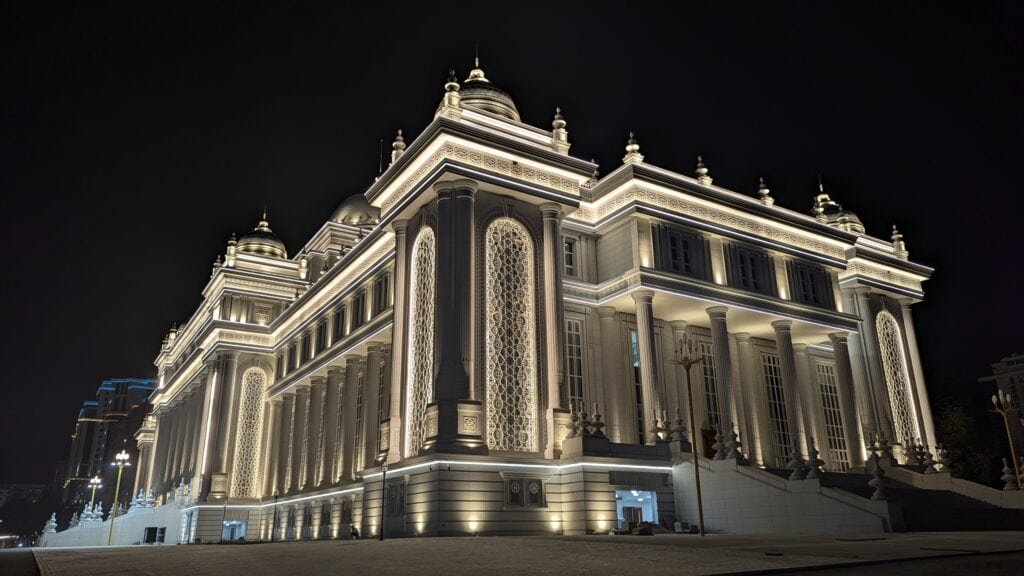
Most of Dushanbe’s impressive buildings are glazed with bright lights which illuminate the city at night. Because Tajikistan is predominately a Muslim faith country, most of the locals socialise in dessert cafes and shisha bars which open late.
Another reason why you’ll want to head out at night is because Dushanbe gets scorching hot in summer months.
It’s well worth walking down Rudaki Avenue to see the lights and grab a cold sweet drink.
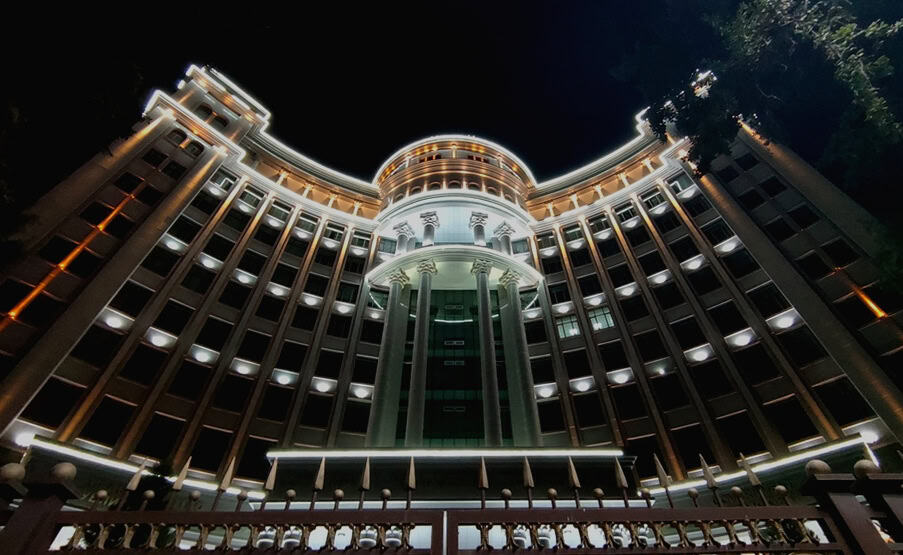
(photograph by Vakaris Saulys)
2. Mehrgon Market
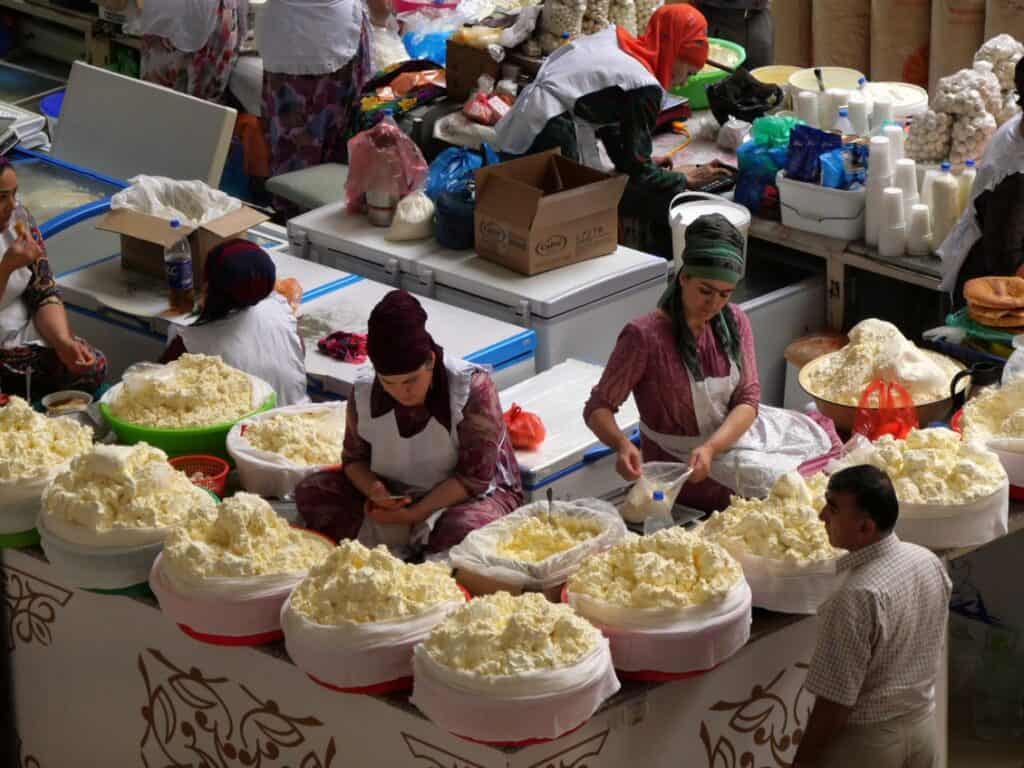
If you’ve got a few hours spare, go and meander in the stalls of Mehrgon Market. Piles of herbs and spices – vivid in so many colours and flavours – tower over stall owners who chatter away.

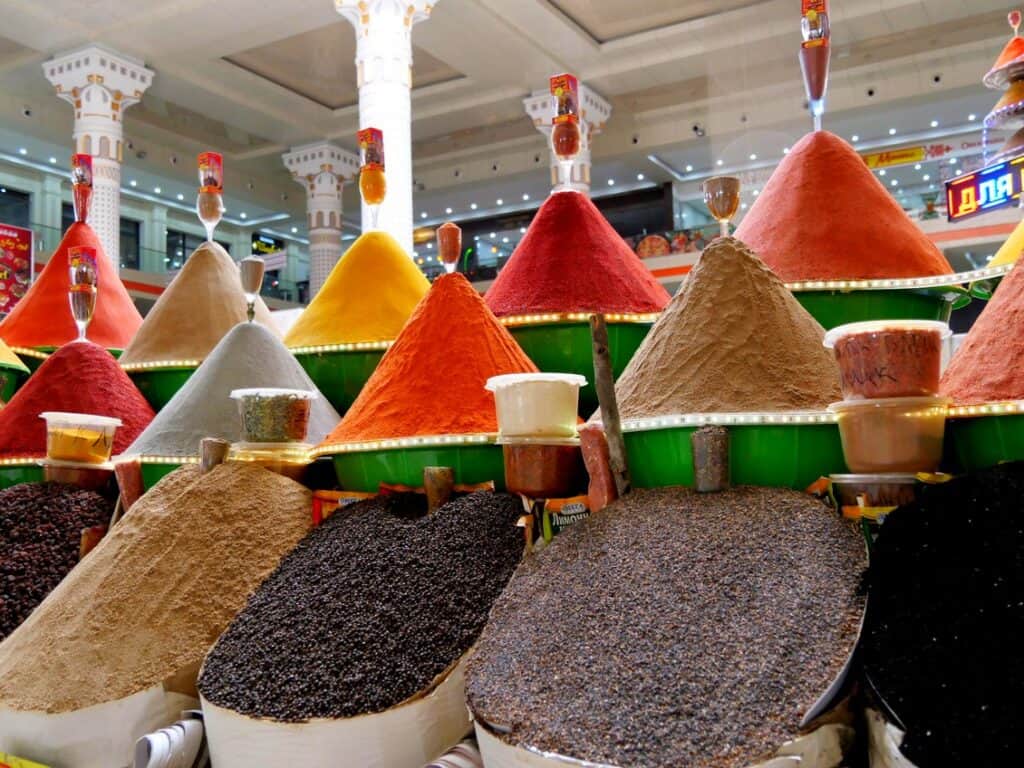
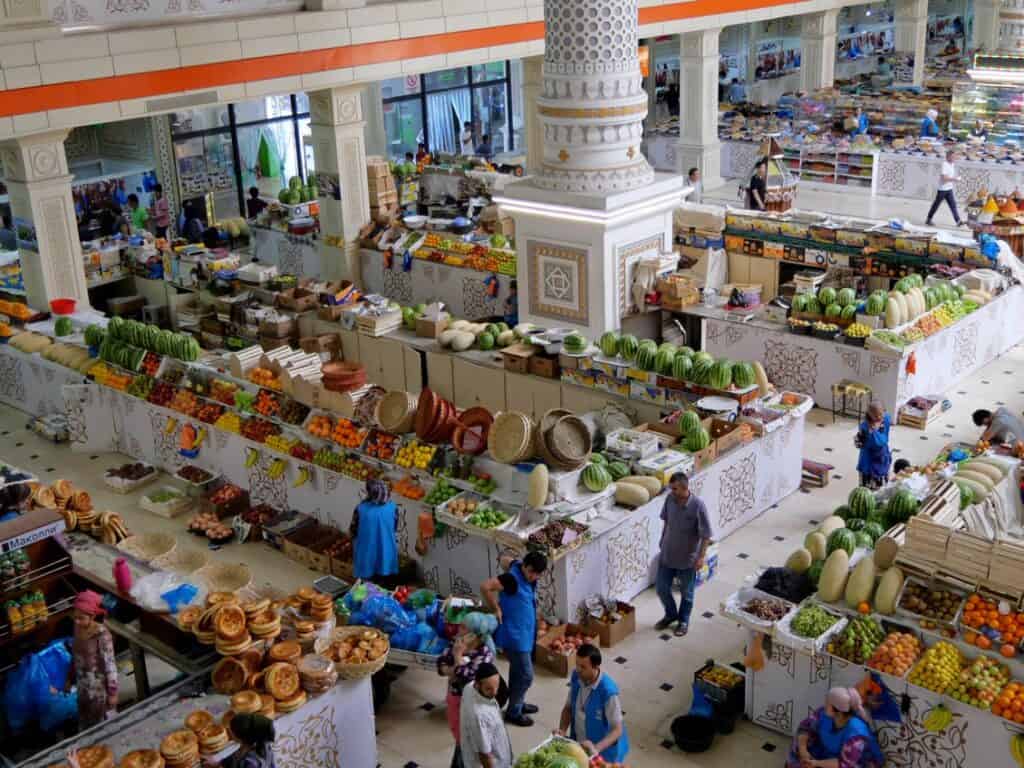
One of my favourite spots was a woodwork stall in the outdoor part of the market. The little business there made wooden bowls for Qurutob – Tajikistan’s national dish.
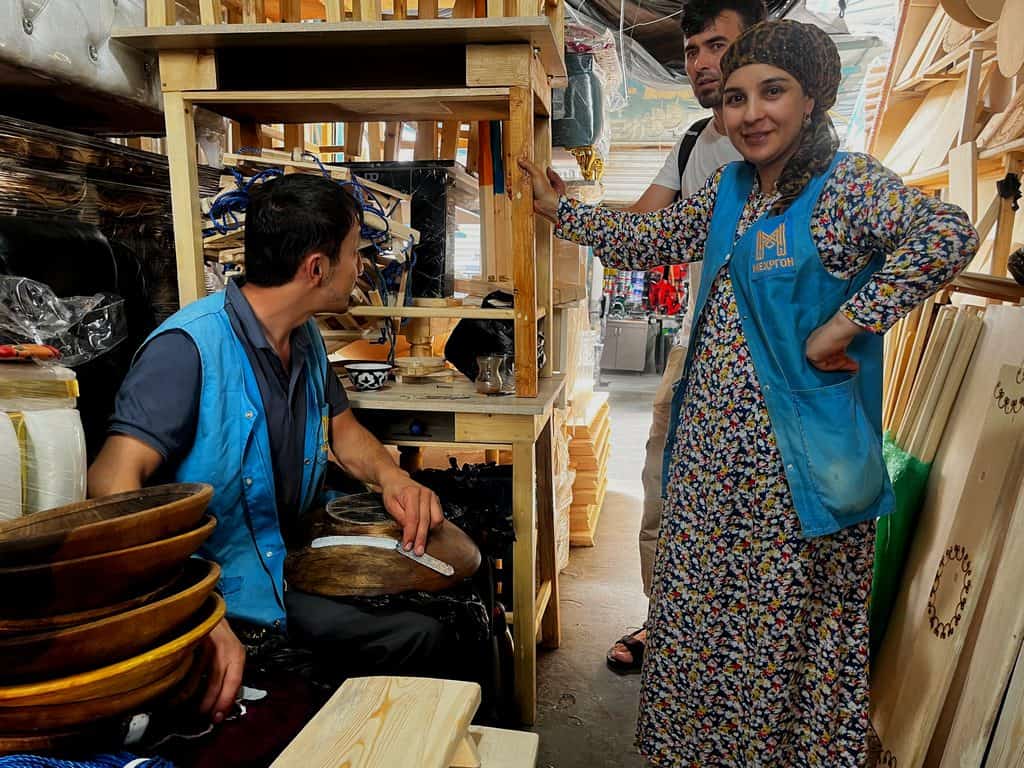
My favourite part of Meghron Market… a woodwork stall!
3. Rudaki Park
If you’re wanting to find some shade in the baking sun, head to Rudaki Park. It is a meticulously designed garden with hundreds of trees, statues and fountains.
The park is dedicated to Abu Abdollah Jafar ibn Mohammad Rudaki, born in 858 AD, who is celebrated as the ‘father of literature’ in Tajik and Persian literature. He is known for being among the first to use modern Persian language in poetry.
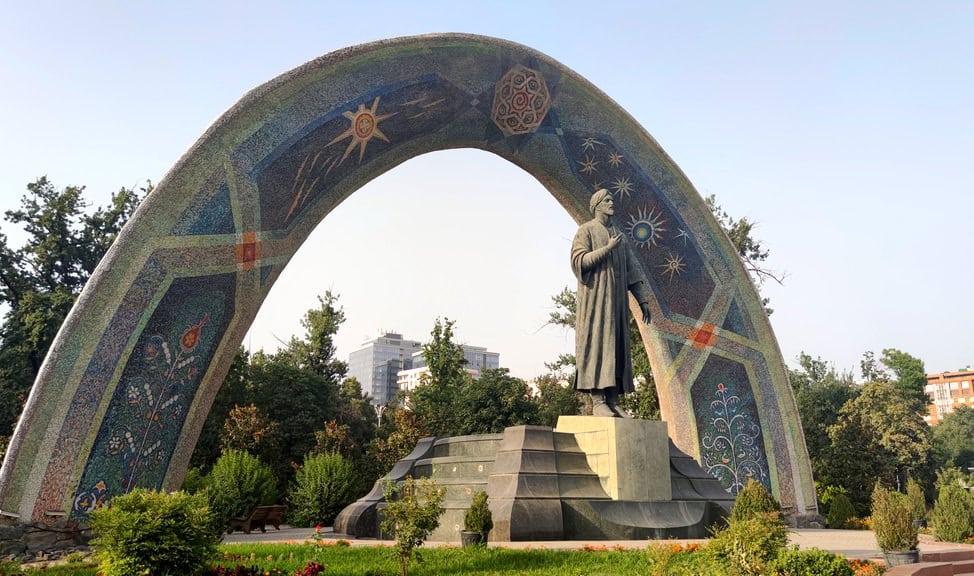
Statue of Rudaki (photograph by Vakaris Saulys)
4. Monument of Ismoil Somoni
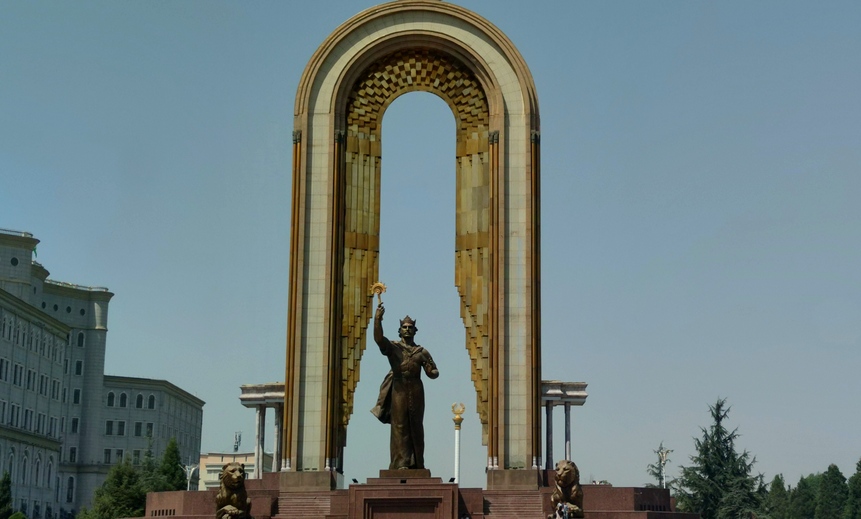
This won’t take much time but it’s worth gazing up at a magnificent bronze statue of Ismoil Somoni, the founder of the Samanid empire.
The Samanid empire is known as the first Tajik nation and the monument – which is 13m tall – is to “remember the national unity and the revival of Tajikistan”.
The statue was created in 1999 to celebrate the 1000th anniversary of the Samanid state.
(photograph by Vakaris Saulys)
5. Climbing gym / indoor swim
When I was in Dushanbe, I headed down to X-Fit where you can do some indoor sport climbing. There is an instructor to belay you while you can top-rope some routes.
There is also an indoor pool if you wanted to swim. Please bear in mind from a cultural aspect that bikinis and tiny speedo shorts won’t be the most appropriate thing to wear!
6. Walk around Victory Park
Victory Park is a huge green space offering expansive views over Dushanbe. The park commemorates fallen soldiers, with a granite slab honoring Tajik soldiers who were awarded the title of Hero of the Soviet Union.
Head here for a peaceful walk at sunset and you’ll be gifted gorgeous views over the city.

7. National Library of Tajikistan
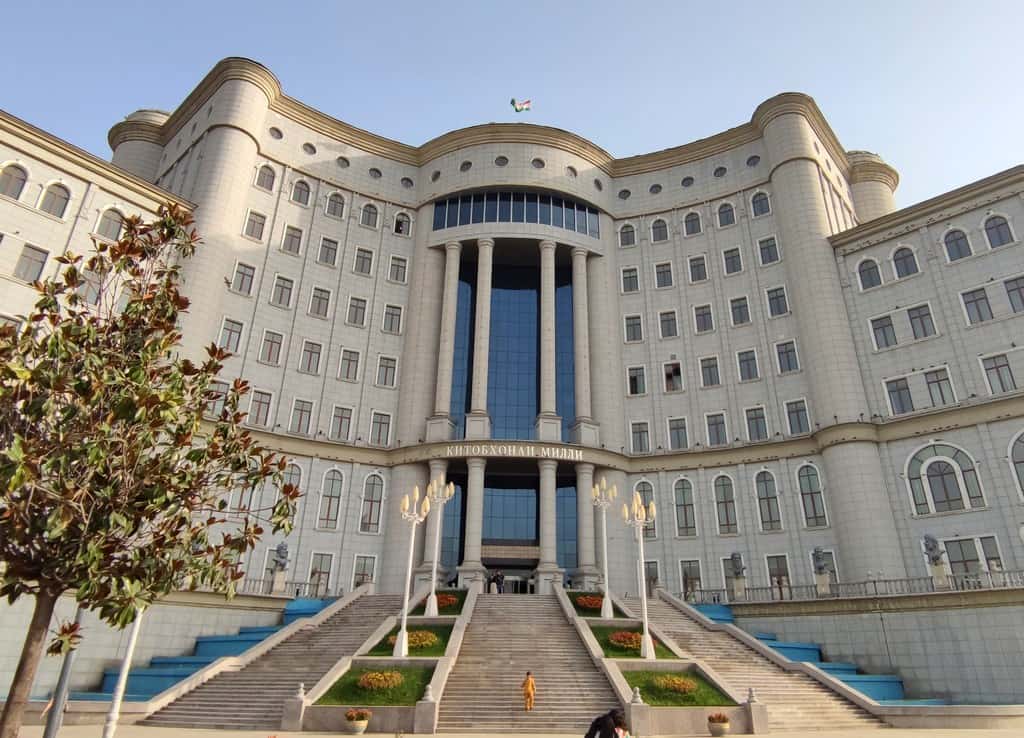
The library itself is an impressive design as it is shaped like an open book. The nine-storey site was opened in 2012 and is considered to be the biggest library in Central Asia!
According to local sites, it is open daily from 08:00-22:00.
The largest library in Central Asia (photograph by Vakaris Saulys)
8. Try Tajikistan’s national delicacy
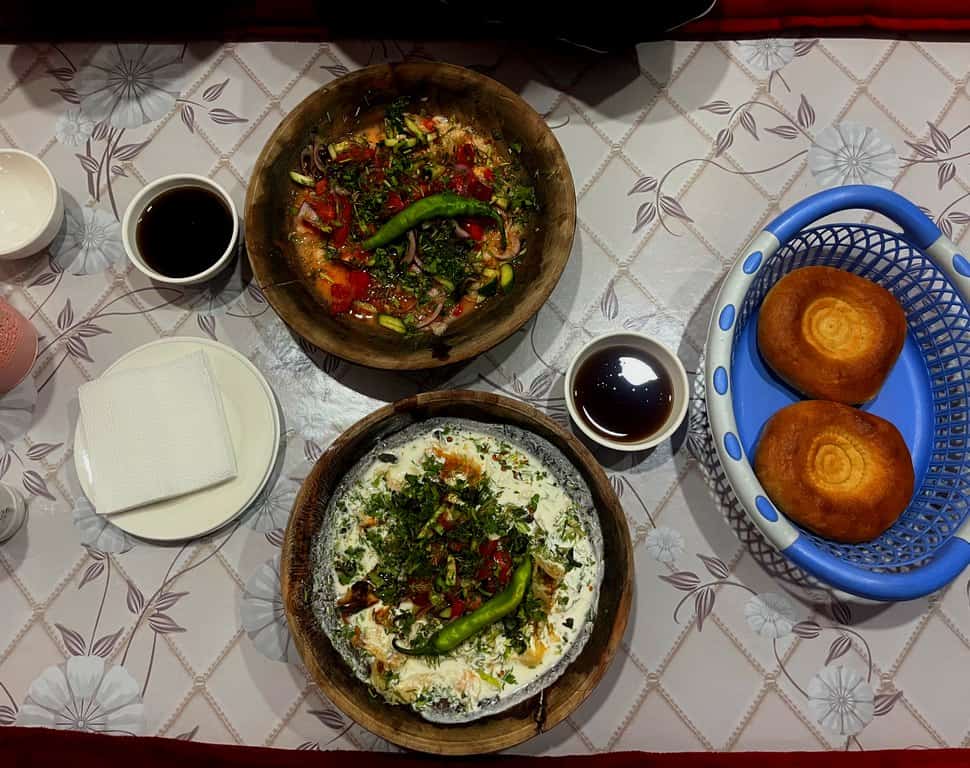
I’d really recommend trying Tajikistan’s national delicacy – qurutob – in Dushanbe! It’s a delicious dish made up of flaky pastry, veggies, yoghurt and, if you want meat with it, lamb. Scroll down for where to eat qurutob in Dushanbe.
Qurutob – a dish made up of flaky pastry, veggies and yoghurt
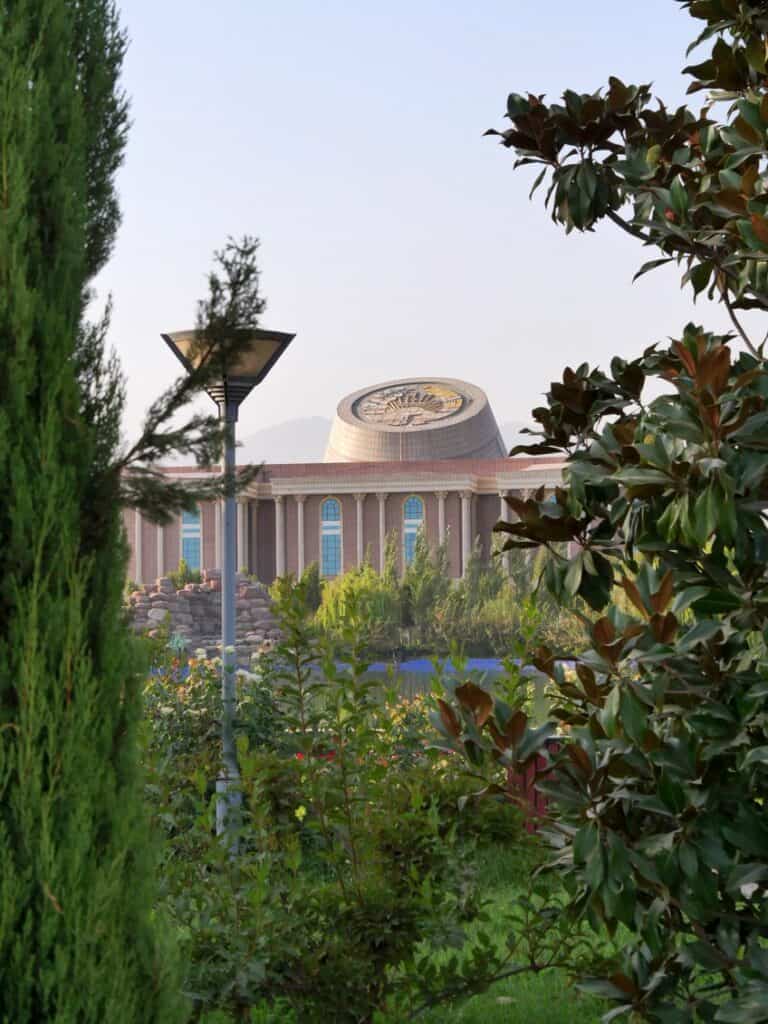
9. Tajikistan National Museum
Tajikistan National Museum, which was officially opened in 2011, offers 22 exhibition spaces offering ancient historical artefacts and traditions of the Tajik people.
Paintings, still life, sculpture and exhibits are among the items shown on all three floors. You can learn about the Samanid period right upto Soviet rule.
The building itself is impressively designed and at night it lights up as a beautiful spectacle. Entry costs about $3 and the museum is open daily from 08:00 – 16:00.
14. Day trips from Dushanbe
1. Kuli kalon Lake hike, Fann Mountains
Trip duration: 3+ days
Distance: 13km one way
Elevation: +1,300m -300m one way
Starting elevation: 1,850m one way
Difficulty: moderate-challenging

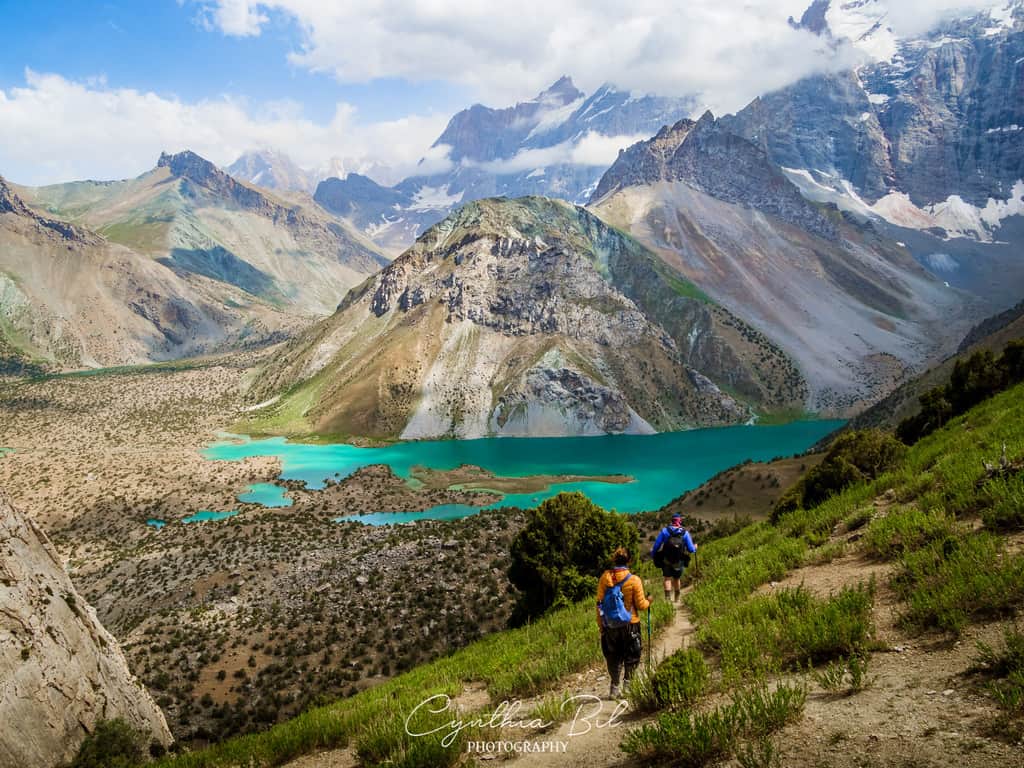
The Fann Mountains is the highest part of the Zarafshan Range and the Gissar Ranges. If you’re unsure about where to start for hiking in Tajikistan, start your inspiration here. Logistically, this range is way easier to get to than somewhere in the Pamirs and there are more tours/transport running here.
This area of the Fann Mountains is breath-taking and was my one of favourite spots to explore.

I’d recommend staying in a guesthouse in Artuch the night before to break up the drive from Dushanbe. The track heats up pretty quickly, so you’ll want to set off early.
To get to Artuch, you’ll probably have to hire the services of a private driver, which we can help you organize. It’s about a 3hr drive and costs about $500 per car.
I’ve tried to find cheaper alternatives, but there is no direct public transport to Artuch and due to the rough roads, many shared taxis won’t be able to take you.
The route itself from Artuch to Kuli Kalon is easy to follow, as many shepherds and other hikers have forged a path. I’ve written more about the hike here and if you send us a message I can send you a GPX file of navigation for the route.

2. Hissar Fortress
Trip duration: 1 day
The 3,000-year-old Hissar Fortress is one of Tajikistan’s most prominent historical monuments. Like many sites along the Silk Road, it provides a fascinating insight into Central Asian heritage.
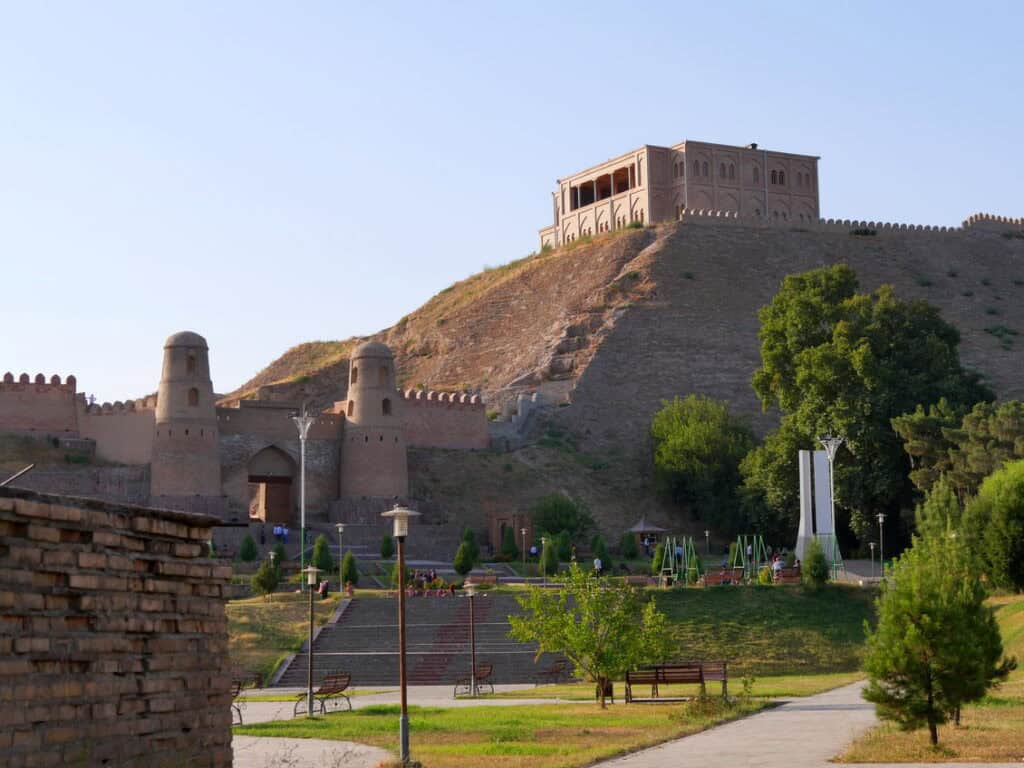
Hissar is located about 26km west of Dushanbe and there are plenty of day tours – with travel included from Dushanbe.
3. Seven Lakes hike, Fann Mountains
Trip duration: 3+ days
Distance: 10km one way
Elevation: +802m
Starting elevation: 1,598m
Difficulty: moderate
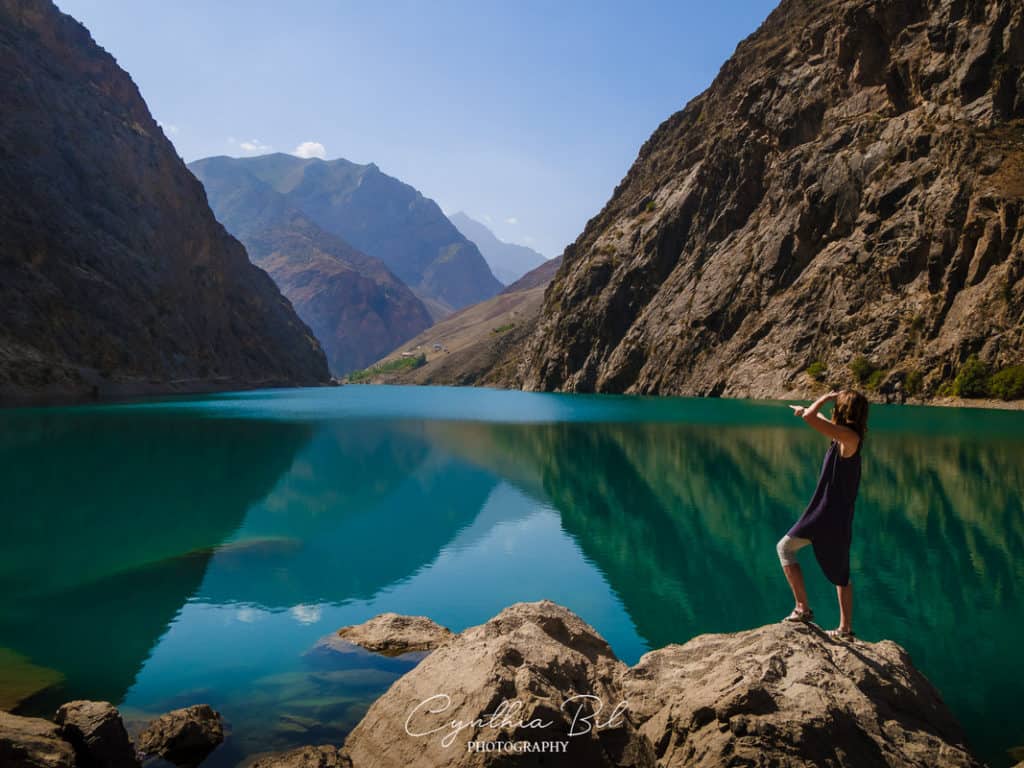
The Seven Lakes in the Fann Mountains are also referred to as the Marguzor Lakes or Haft Kul. Haft Kul literally means Seven Lakes in Tajik.
The waters are a series of glacial-melt lakes that form a chain along a narrow windy road in a rocky valley. Each lake has a different name, shape and color and they are all connected by the Shing River.

The name of the lakes are as follows: Mijgon (lake #1) – Soya (lake #2) – Gusbor (lake #3) – Nofin (lake #4) – Khurdak (lake #5) – Marguzor (lake #6) – Hazorchazma (lake #7).
You’ll need to get to the village of Mogiyon to start the hike. You can get in a shared taxi from Dushanbe to the city of Panjakent (for about $15), where I’d recommend staying the night. Then you can get into a shared taxi to Mogiyon from there.
An easier option is buying the services of a local driver. Please feel free to contact us and we can put you in touch with reliable drivers.
JoN’s founder Cynthia went to check out the Seven Lakes hike in 2019. She has written a really helpful guide about how to do it here.
4. Iskanderkul Lake
Trip duration: 1+ days
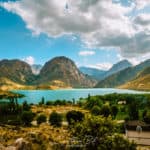
Iskanderkul lake is surrounded by beautifully-shaped rocky peaks and on a sunny day, the crystal-clear turquoise water contrasts with the red rocks of the mountain slopes. The highest visible mountain peak is Mount Kyrk-Shaitan, with an altitude of 3950 meters.

Iskanderkul is a great destination to visit on a weekend trip from Dushanbe and do some light hiking if you’re limited in time and/or can’t go on a multiple-day trek in the Fann Mountains.
Cynthia has written a full guide about her visit here and she noted that it wasn’t her favourite lake in Tajikistan and I have to say I agree 😉
While it was very pretty, I was left feeling spoiled after seeing the mighty Alauddin and Kuli Kalon Lakes. There was also a complete ban on swimming in the lake and it seemed like a tourist hot spot.
There is however, plenty of other things to do in the area so if you’ve got a few days to spare, go and explore!

The easiest way to get to Iskanderkul is by taking a day tour from Dushanbe to the lake. The extra advantage of going on a day tour to the lake is that you’ll be accompanied by an English-speaking guide who’ll tell you all about this historical place and will show you the best spots.
To get from Dushanbe to Iskanderkul lake, you’ll first have to take a shared taxi from Dushanbe to Sarvoda. These shared taxis leave at the shared taxi station at the end of Rudaki Street in Dushanbe. The journey is around 100 kilometers and should cost between 50 – 65 somoni per person.
Once you’re in Sarvoda, you’ll have to search for another taxi towards Iskanderkul. Even though it’s only 30 more kilometers, it’ll be harder to find a shared taxi there. You’ll very likely have to take a private taxi, which will cost around 100 somoni (for the car, not per person!).
15. Where to eat in Dushanbe
Caf. This is a lovely Eastern European coffee shop. Great coffee and lots of salads and lunch items on offer.
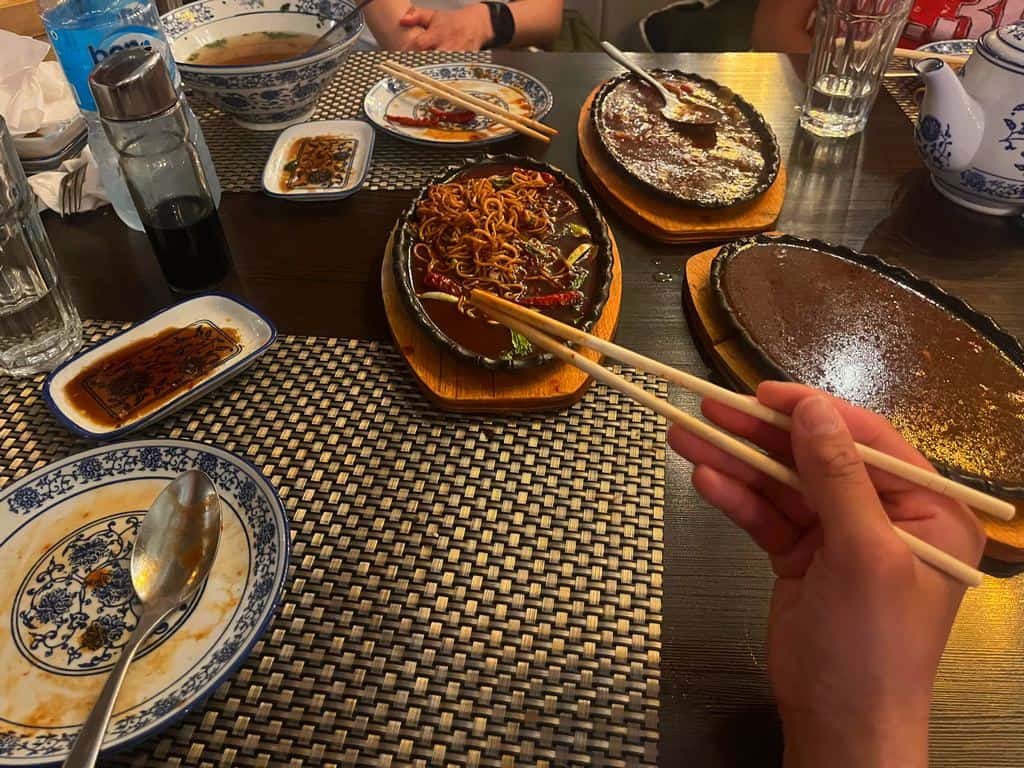
Lan’chzhou. This is a great Western Chinese noodle restaurant. It has a wide variety of options and offers vegan and veggie dishes.
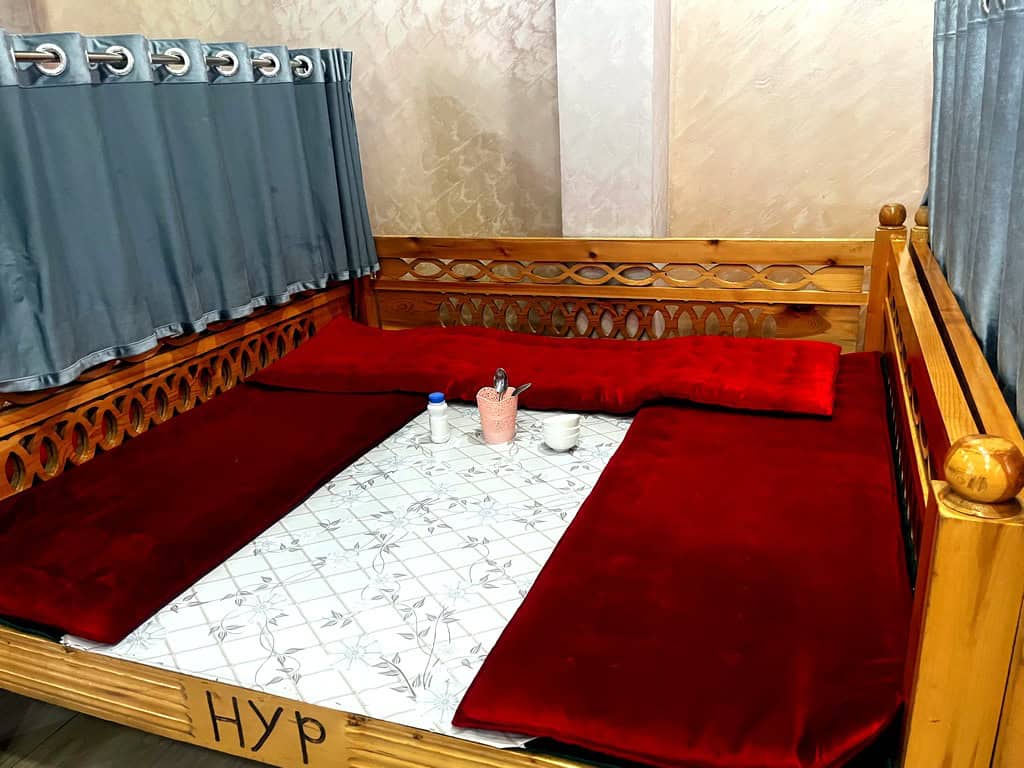
Qurutob Restaurant Noor. If you’re after some authentic Tajik cuisine, make sure you visit here. Qurutob, Tajikistan’s national delicacy, is a massive bowl made up of veggies, lamb, flaky pastry and yoghurt. This restaurant offers private booths, veggie options and is always bustling with locals. Make sure you’re hungry because a half-size portion is about the size of a bowling ball 😉.
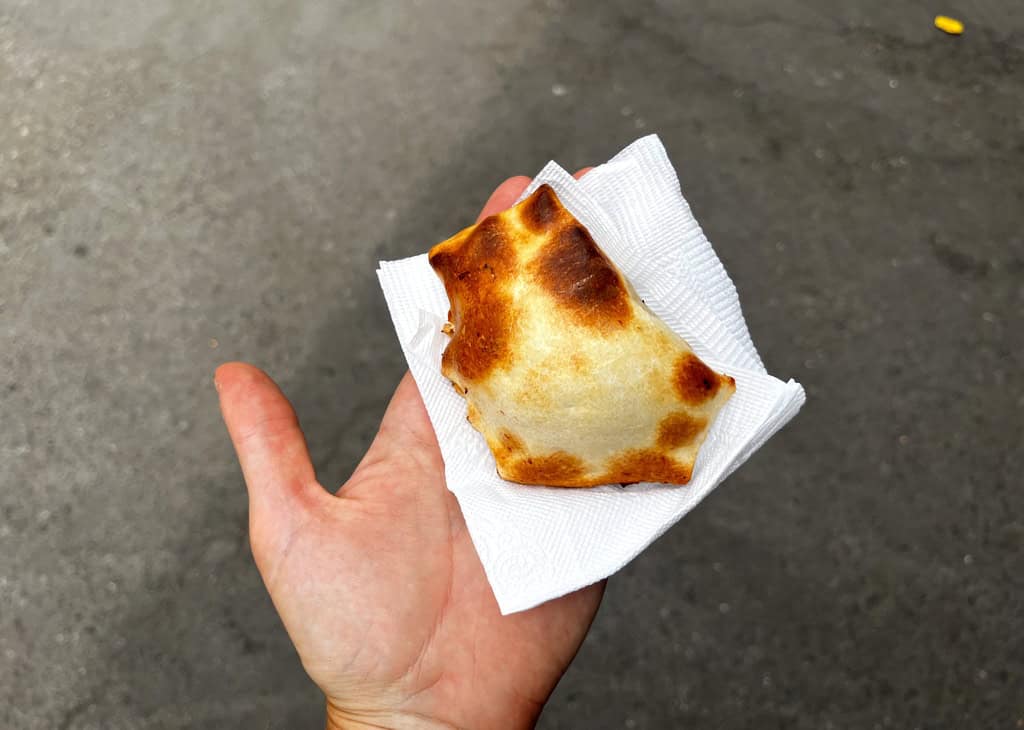
Mehrgon Market. There are hundreds of market stalls offering Tajik sweet treats and hot food. The delicacy to try here is the sambusa… these are triangular pastry parcels filled with vegetables and lamb. They are cooked in a large tandoor oven.
Merve Restaurant. This is a popular Turkish restaurant and the food is amazing! I would recommend the pide, which is a cheesy bread with different toppings.
16. Where to stay in Dushanbe
16.1 Budget accomodation in Dushanbe
Ultra Hostel. I stayed here in August and really enjoyed it. It offered clean showers, toilets and kitchen facilities. You can get a private double room for about $28 per night. The hostel offers free shuttles to and from the airport.
Green House Hostel. This hostel offers cheap prices averaging about $28 for a private room with excellent reviews. It’s conveniently located really close to the airport.
16.2 Mid-range accommodation in Dushanbe
Shumon Hotel. A really beautiful hotel with huge rooms, luxurious showers and in a great location. The hotel offers an amazing Georgian-style breakfast and good coffee. It costs about $80 for a double room per night. I stayed here after a long thru-hike and had a decent night’s sleep.
Asia Grant Hotel. This four-star hotel offers good value for money at $63 for a double room per night. Reviews include great customer service, with the reception speaking English, Russian and other languages.
16.3 High-end accommodation in Dushanbe
Dushanbe Serena Hotel. This is a five-star hotel offering the best of the best in Dushanbe. I haven’t stayed here so I can’t personally comment, but it has good reviews. A king-sized room averages about $120 per night with a full breakfast and use of fitness and pool facilities.
17. Useful things to know before your trip to Tajikistan
Smoking is not allowed in the streets of Dushanbe. I would be really careful about this rule as you’ll easily be identified as a tourist.
Prepare cash. Tajikistan is primarily a cash economy and it is very hard to withdraw cash once out of Dushanbe. Visa cards work in Dushanbe, but I could only find one ATM which accepted Mastercard. If you’re worried about not being able to get Tajik Somani before you arrive, withdraw USD. USD can be exchanged at most banks and even some banks in the villages along the Pamir Highway accept it for exchange.
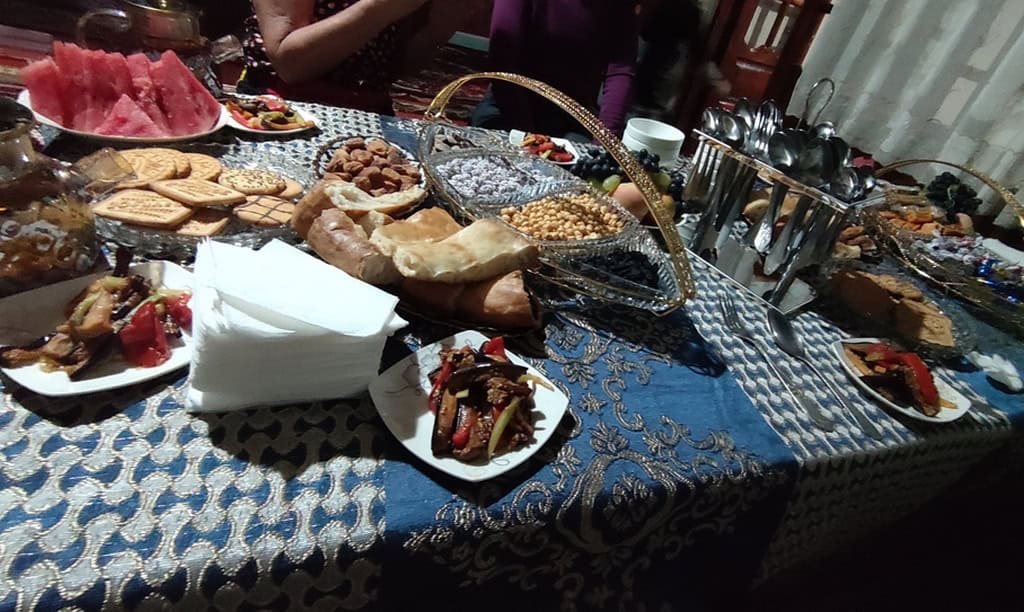
Bread is sacred in Islam. When at guesthouses in Central Asia, it’s so important not to waste bread or leave large chunks of it uneaten on your plate. A guide once told me about some tourists that once flushed bread down a toilet in a homestay which deeply offended the owner.
Take off your shoes before entering homes. This is a fundamental part of respect in Islam and you must remove shoes before entering yurt camps and homes.
Veggie/vegan meals. You will likely eat with many Tajik people who will welcome you into their homes. Providing meat at dinner is a huge sign of honour to you, the guest. It is possible in most Pamiri homestays to ask for dinner without meat, but broth etc is obviously still cooked with meat residue. Vegetable selection depends on seasonal produce. Many Tajik families are working farmers, so slaughtering and preparing livestock is part of their daily life.
If you are squeamish about animal slaughter or have a strong moral opposition to the consumption of animals, you may have to rethink your trip.
Download Tajik and Russian on Google Translate. This was so helpful. You can download the two languages offline and then use it as a basic form of communication in homestays. If you have space on your phone, I’d also download Kyrgyz. In Murghab, people are predominately from Kyrgyzstan.
Rubbish. Tajikistan does not have advanced waste disposal systems. In the mountain villages, waste is often tipped into a large pit or thrown off the side of a hill. Please, please, please do not litter and help out the Tajik people. We did see some Western litter in the mountains which we, as a group, picked up. I would take plenty of small strong plastic bags to hold your waste.
Don’t flush loo roll! Tajikistan’s toilet systems are not strong enough to swallow loo roll. There are always bins beside the toilet to dispose of used loo roll. If you do flush loo roll, you’ll find it won’t properly work and it will often block the toilet – causing a nightmare for you and a lot of people.
Print out several copies of your visa and passport. If you need more information about the checkpoints because you are travelling independently, contact Visit Alay who can help with this. Never hand give out your passport to anyone. If a police officer asks to see your real passport, tell him to take you to the station to see the chief of police.
Don’t accept rubies. You may be sold rubies in Tajikistan. Don’t accept them. It is illegal to buy rubies in Tajikistan and you could get in a lot of trouble for it.
Download maps. When out in the mountains, it’s really important to download offline sections of Tajikistan so you can know where you are, even if you’re being guided. I tend to use Gaia GPS but another popular app is Komoot.
Greet people with hand on heart. A gracious way to say hello to Tajik people is by slightly bowing your head and placing your right hand on your heart. The main greeting is “As-salaam Alaykum” which means “peace be upon you”.
Ramadan. Think about booking your trip outside of Ramadan dates. It will be harder to access food during the religious holiday… and guides will be more tired!
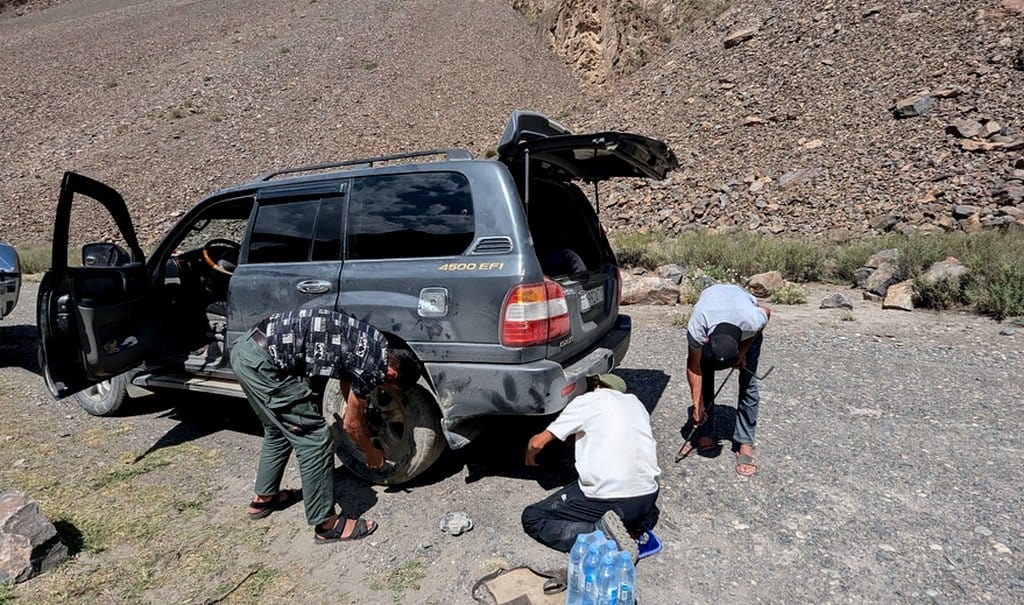
Not everything will go to plan… embrace it!
Know your ability. Tajikistan isn’t the place to really push yourself if you don’t know your limit. The altitude will dial everything up significantly and if you need to sit a hike out and rest for the day, do it. Cliche, but the mountains will always be there. Tajikistan’s landscapes are captivating… so learn to find peace in stillness. This especially counts if you suddenly get struck by illness, which is common!
Unforseen hiccups! Not everything will go to plan… embrace it! In the weeks I was travelling the Pamir Highway, we all had a violent stomach bug, a mudslide blocked a main road in Langar, the car broke down and someone left their wallet in a remote village. Things will happen beyond your control but your reaction is within your control.

I hope this guide covers your questions about exploring Dushanbe. We’re always looking to improve our travel guides so if you have any advice or want to tell us about your trip, please get in touch! We’re also aware that public transport can change and it’s quite hard to keep on top of. So if you know better than us, we’d love to hear from you. We hope you have a wonderful time in Dushanbe and exploring the treasures of Tajikistan!
Related Posts
Tajikistan food: 10 delicious dishes and Central Asian delicacies to try

Is Tajikistan safe to travel in 2026? 18 Useful Things to Know before you go
Hiking in Tajikistan: 6 Mighty Mountain Trails to Explore
How to travel the Pamir Highway in Tajikistan: a Complete Guide

Best Tips and complete Packing List for Traveling in Central Asia in 2026 – When to go and what to wear when visiting Central Asia