
Here is a comprehensive guide to being safe in Tajikistan, including an equipment list and safety advice based off my experiences. We cover all the useful things you need know and how can you can plan a safe, but thrilling trip of a lifetime!
Tajikistan is a such an enriching country and its people are some of the most generous I’ve ever met. I cherish all the adventures and the friends I met on my August trip and I cannot wait to return.
Because of the suffix ‘stan, Central Asian countries are often associated with danger. In a world where there is so much conflict and polarized views, there is a lot of information out on social media and online so it can be very difficult to get an understanding of a place.
It’s understandable that Westerners have concerns when travel advisories recommend not to go.

But after traveling extensively across Tajikistan, including road-tripping along the Pamir Highway, staying in remote mountain villages, trekking to the Fann Mountains, and exploring the country independently, my experience was completely different from what I had expected before arriving.
That doesn’t mean Tajikistan is a destination where you should travel completely unprepared. The country is very mountainous and remote, infrastructure can be basic outside the main cities, and traveling in regions such as the Pamirs requires more planning than your average trip. Road conditions, altitude, long driving days, and changing weather conditions are often much bigger risks than crime itself.
So, is Tajikistan safe to travel to?
Based on my personal experience, I would say that Tajikistan is generally a very safe country for travelers, including independent travelers and solo female travelers, as long as you travel with common sense, stay informed about current situations, and come prepared for the realities of adventure travel in a remote mountain country.
This guide is based on personal experience, conversations with locals and travelers, and regularly updated travel information.
I’ll share my honest experience traveling through Tajikistan based on my recent trip and previous adventures in Central Asia, including safety advice about the Pamir Highway, solo female travel, border regions, hiking, road trips, food, transport, and everything else you should know before visiting this fascinating country.
Tip: See my Tajikistan Travel Page for a complete overview of all my travel guides and blog posts about Tajikistan!
Embark on the adventure of a lifetime: join the Pamir Highway Adventure Tour or explore the Highlights of Tajikistan, including the Jisue and Wakhan Valleys and the stunning Fann Mountains!

Disclaimer: This posts might contain affiliate links, meaning that if you make a purchase through these links, I may earn an affiliate commission. Thank you for helping to support this website!
Plan your trip to Tajikistan
Traveling through Tajikistan requires a bit more preparation than your average trip. These are the tools, guides, and services I personally recommend to make your journey smoother, safer, and more comfortable:
- ✈️ Find the cheapest flights → Check fares to Dushanbe
- 🥾 Bring proper travel gear → Mountain weather in Tajikistan can change very quickly
- 📱 Stay connected with an eSIM → Useful in cities and along parts of the Pamir Highway (use code CYNTHIA to receive 15% off)
- 🏨 Find hotels and guesthouses → From boutique stays in Dushanbe to family-run homestays in the Pamirs
- 🛡️ Get good travel insurance → Essential for hiking, mountain travel, and high-altitude adventures
Helpful Tajikistan travel guides
- → Tajikistan Safety Guide
- → How to Travel the Pamir Highway
- → Hiking in Tajikistan
- → Best Places to Visit in the Fann Mountains
- → Dushanbe City Guide
- → What to eat in Tajikistan
Explore Tajikistan with me
Looking for a deeper and more comfortable way to experience Tajikistan? Join one of my small-group adventure tours or let me help you plan your own unforgettable journey.
1) Is Tajikistan safe for tourists?
We get asked this a lot and I want to be as transparent as possible.
Tajikistan is safe for tourists, but you do need to be prepared and check in with risks that you can accept.
Tajikistan is actively trying to encourage tourists to visit, with the government investing in infrastructure and community based tourism groups opening more homestays.
Tajikistan is one of the least developed countries in Central Asia but villagers continue to be incredibly kind, welcoming you into their homes and eager to share their culture.
The most obvious risks are the mountains, potential road accidents and sickness.

2) Is Tajikistan safe for families?
Tajikistan has a predominately Muslim population. Family is at the heart of Islam and is a fundamental part of Central Asian culture.
In Central Asia, you’ll find that one of the first questions you’re asked when meeting is ‘Do you have family? How are they?’ instead of ‘What job do you have?’.
Tajikistan is a very family-friendly place. I was always asked if I had children and if I would bring my (unborn!) children to meet friends I made in yurt camps and guesthouses.
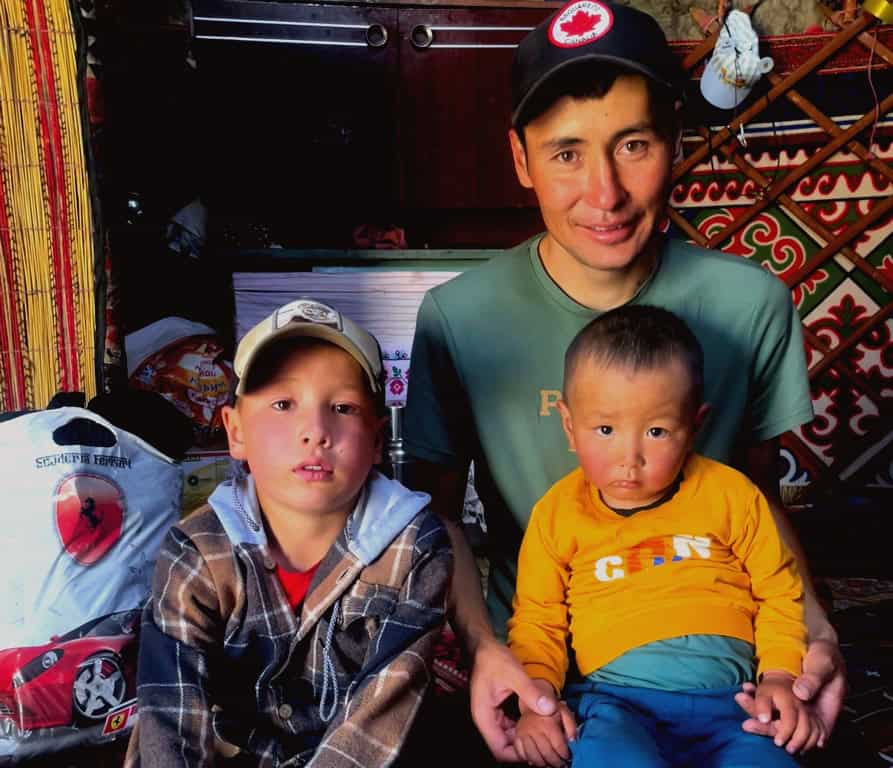
Something to consider is that if your children don’t like hiking or being in the mountains, Tajikistan may not be the destination for you. There isn’t a great deal to do other than to enjoy the beauty of this country and meet lovely people at yurt camps/guesthouses.
From a practical perspective, the logistics of finding and carrying litres of clean water may be a pain, especially if you have a large family or a newborn baby. It would be difficult to find baby food for children, although the homestays tend to offer very simple food such as potatoes and vegetables.
Caravanistan has a helpful article here with general advice about travelling to Central Asia with children.

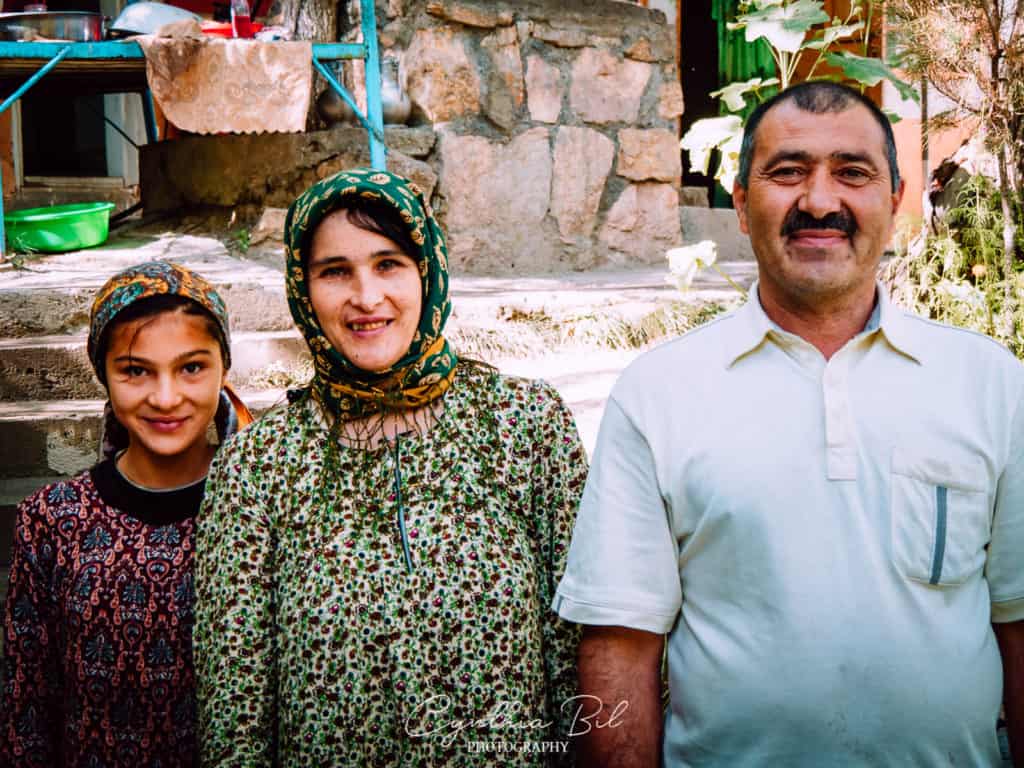
3) General mountain safety while hiking in Tajikistan
3.1 Avalanches
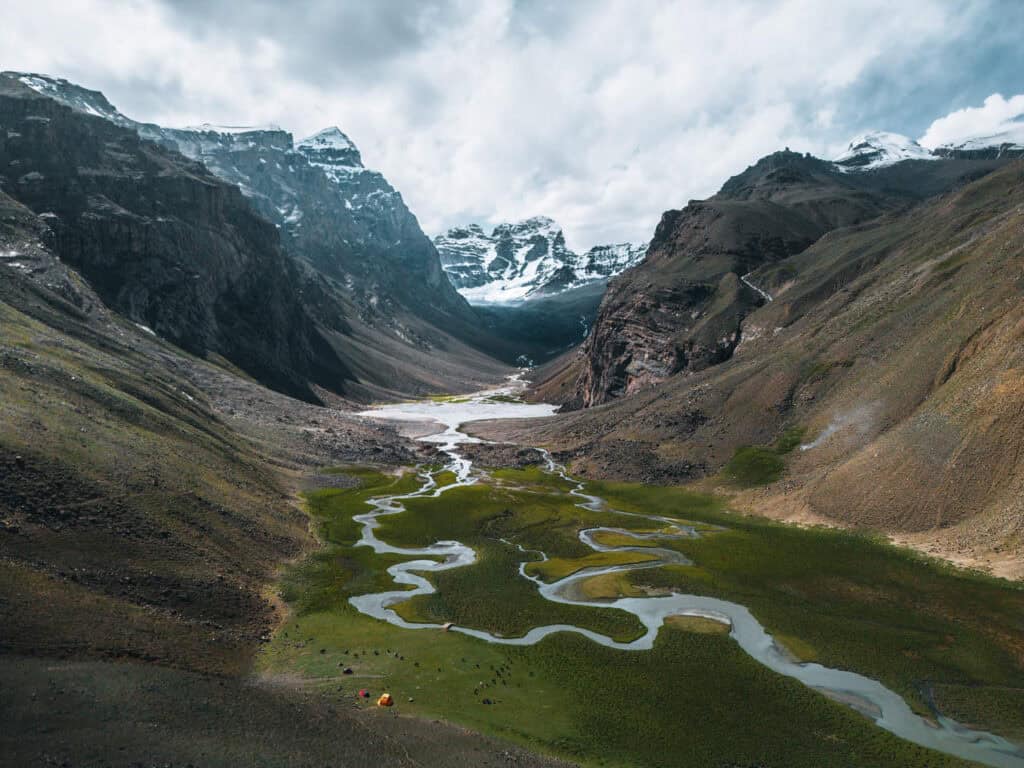
You’ll want to plan your trip in the window from late June to early October because of the high avalanche risk. Even during this time, you’ll likely come across snow and there is a continued risk of avalanche, just less than winter and spring.
Mountaineers have told me that if you’re trying to summit a high-altitude peak, August is the best window for weather. However, even passes such as Chimtarga Pass is touch and go on its conditions during this time.
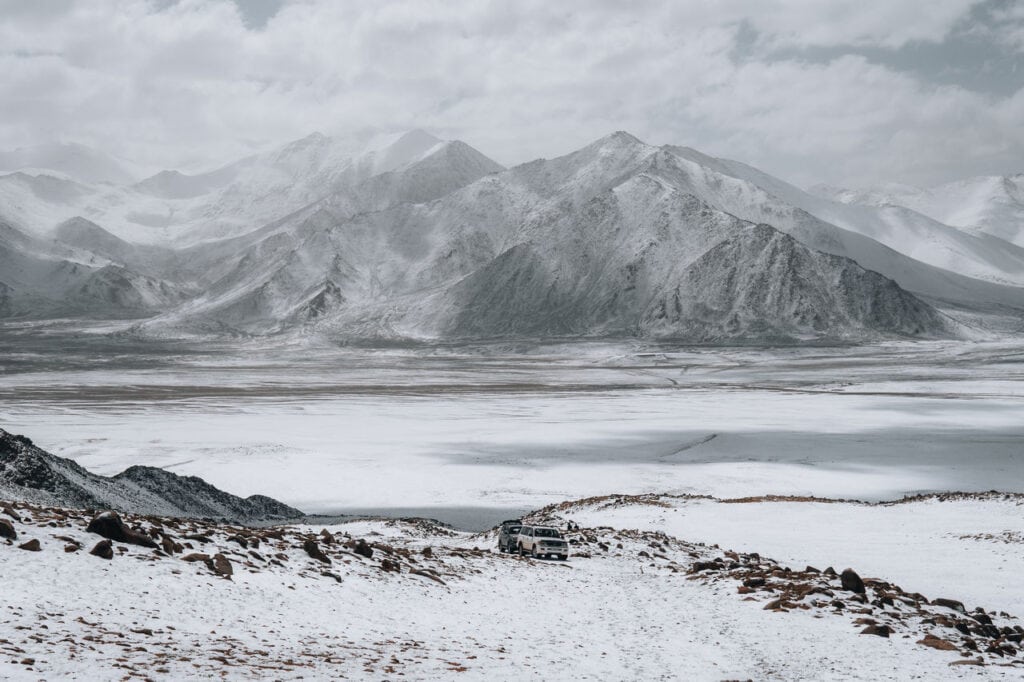
Snow can fall on the Pamir Highway from late August
It goes without saying but please prepare and ensure you have ice axes and crampons if you are venturing into steeper ground.
If you find yourself on gradients between 25 and 45 degrees and there’s snow, ask yourself if you are suitably trained with emergency procedures and avalanche equipment.
3.2 Mudslides
When the snow starts to melt in spring, it rushes down into the mountain villages, causing mudslides. Tajikistan is seeing the very real impacts of climate change, which is causing heavier rainfall and shorter winters.
Mudslides and landslides are pretty common, especially along the Pamir Highway. They can cause devastating results in communities.
When it comes to your trip, there is less chance of landslides during summer months, but they can still happen. If there is rain predicted, consult locals before driving on track roads near peaks.
In my trip in 2024, a mudslide did happen which blocked the road just outside of Langar – thankfully no one was injured and no infrastructure was seriously damaged.
Authorities immediately came to help the community and the road was open again within two days.
Our drivers were incredibly knowledgeable about the roads, they mitigated the risks and we came up with a plan B.
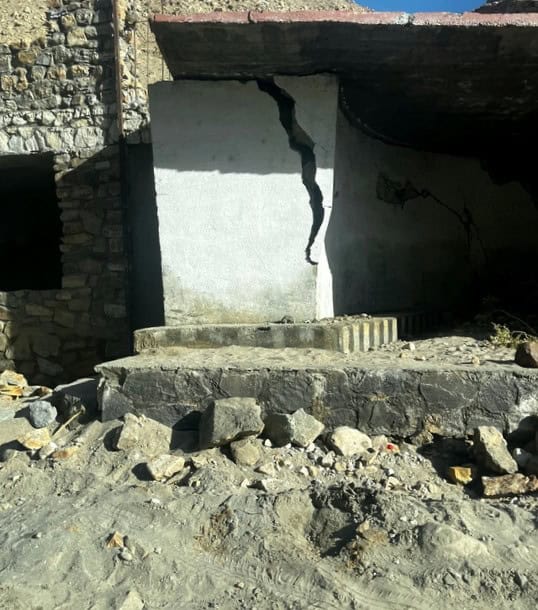
Mudslides can be devastating to a community
My advice would be to anticipate that a mudslide or roadworks could lengthen your trip, especially along the Pamir Highway. If you’re travelling on the Pamir Highway, I would factor in a few more days onto your itinerary.
It can be frustrating if you get stuck somewhere when a mudslide happens, but please bear in mind the wider impact these events have on the local community.
3.3 Altitude sickness
Tajikistan is the third most mountainous country in the world so you’ll likely experience some form of mild acute mountain sickness.
You can pick up Diamox from your local pharmacy to help with milder symptoms which include headaches, unsettled sleep, loss of appetite and shortness of breath.

However, when these symptoms become severe it becomes a serious situation. Classic severe symptoms include chest tightness, coughing blood, pale complexion and being unable to walk in a straight line.
I had some severe symptoms of AMS on my trip along with a stomach bug and it was not pretty 😝.
If you fall ill, make sure you are with someone, go to a lower altitude immediately and monitor your symptoms closely. AMS is way easier to treat in its earlier stages.

When thundering AMS hit me (yep, that’s me in the balaclava)
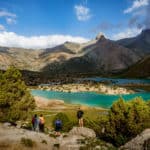
The Pamir Highway has an impressive elevation and the road alone can reach 4,655m (15,272 ft). Some of the easier hikes in the Murghab district hit about 5,000m (16,404ft).
The Fann Mountains has a general lower elevation starting from 1,900m (6,233 ft) but some of the passes such as Chimtarga Pass hit 4,750m (15,583ft).

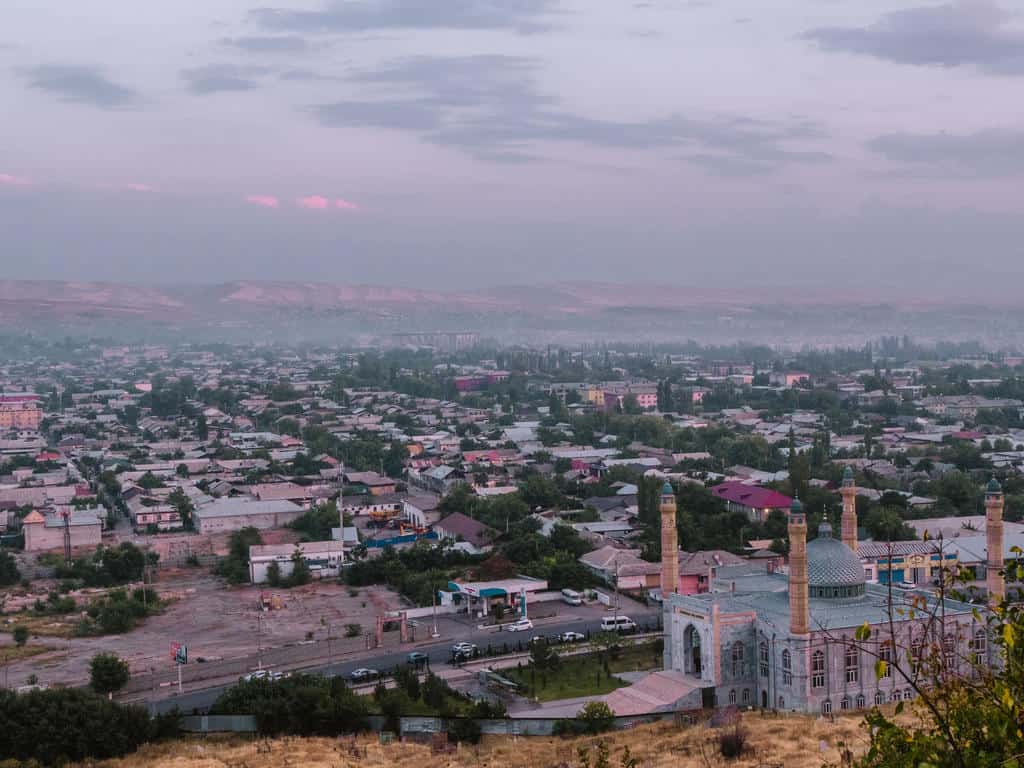
You can travel the Pamir Highway both from east to west, starting in Tajikistan’s capital, Dushanbe or west to east, from Kyrgyzstan’s second largest city, Osh.
Starting from Osh involves a sharp incline in altitude, especially travelling from Osh’s elevation of 963m (3,159ft) to the next village of Sary-Tash’s 3,170m (in Kyrgyzstan, just before the border).
Beginning in Dushanbe does give you the main advantage of flying in to 706m (2316ft) of elevation and slowly progressing in height.
3.4 Navigation
I have searched high and low for large-scale maps (1:40,000 or 1:50,000) of the mountain ranges in Tajikistan but I am at a loose end. *If you’re reading this and have access to a map, please get in touch, we’d really appreciate it!*
While I was out there in 2025, I used Gaia maps, which had a very basic terrain overlay and the occasional track. It was useful when getting to a rough waypoint using the GPS satellite function, but do not rely solely on this for navigation.
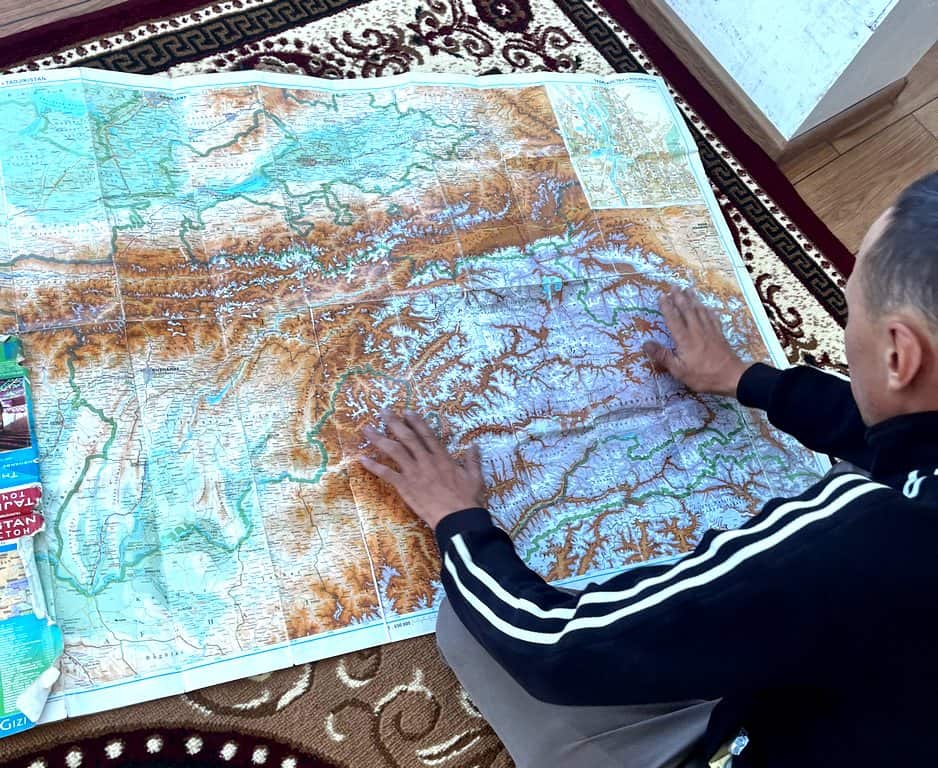
Always plot your routes, even if you’re being guided
Another app that I saw some people using in Tajikistan was Komoot. For exactly the same reasons as above, you need to be careful using it. I’ve also heard really positive things about Mapy.cz, but I haven’t had chance to use it yet. I’d have at least two navigation apps which you can comfortably use and that you have downloaded the maps for.
Even if you’re being guided, always ask for a few waypoints to input on your navigation app. It’s so important if anything were to happen (not trying to scare you, just for general reasons for being in the mountains) that you can get to a point of safety.
3.5 Assess risk of activities
If you’re heading to the Pamir Highway, you’ll likely be doing something active, whether it be hiking, cycling or climbing.
Due to lack of emergency help in the remote places, you really need to assess the risk of what you’re doing. Something you’d be quite comfortable doing back home with an easy possibility of rescue is very different to being in the Pamir mountains.
Tajikistan isn’t a place to push yourself to the absolute limit and it’s a good idea to dial down risk where you can.
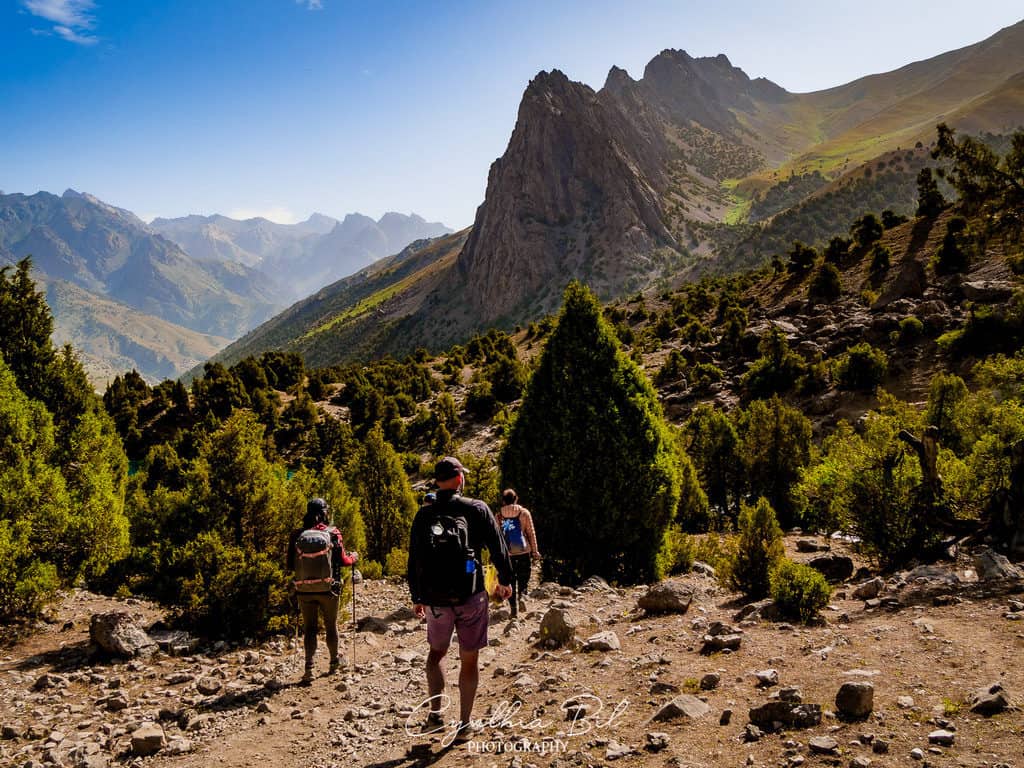
4) Is Tajikistan safe for women?
In my time travelling across Tajikistan, I want to reiterate I was treated only with warmth and generosity.
There was one incident at an Afghan market however that I do need to mention. We explored a small market close to the border with Afghanistan in the Wakhan Valley, which has far stricter rights for women.
Me, along with many other women in the group, were quickly surrounded by a lot of men. Most of them were stall owners, keen to sell their wares.
This felt similar to being in the souks in somewhere like Marrakech. The market was bustling with energy and noise which could be pretty intimidating for some people, especially given as it was only men.
We learned afterwards that one of the women in our group, who was dressed head-to-toe in respectful clothing, was inappropriately touched by one of the men. She was obviously really upset by what happened and our guides were horrified to hear about it.
So as a woman, I’d say you do have to exercise a certain degree of caution in some places. Cruelly, misogyny is still so prevalent everywhere in the world and sadly so much of being a woman is having to be on guard.
If you’re staying in a hostel, book a room for yourself. Homestays will always ensure that men and women stay separately but it’s always good to check.
In the more remote areas and also places which have stricter religious ideals, I would be slightly more vigilant, but not necessarily more concerned for your safety.
Another point is that you must dress appropriately, especially while in remote villages on the Pamir Highway. Please read further to what to wear in Tajikistan.

In many of the remote parts, it’s good to wear clothing that covers shoulders and knees
A great deal of countries in the world have Western influences so many visitors can fall into the habit of applying these ideals and expectations to remote places.
Tajikistan’s population are predominately Muslim, it’s so important to respect this.
If you’ve never been to any of the ‘stans before, travel advice can be overwhelming so it’s important to speak to people who have actually been there and talk through your concerns.
I’m happy to answer any queries or concerns so please get in touch if you want to chat. I found this blog by Adventuresoflilnicki to be an honest and helpful insight about her experiences.
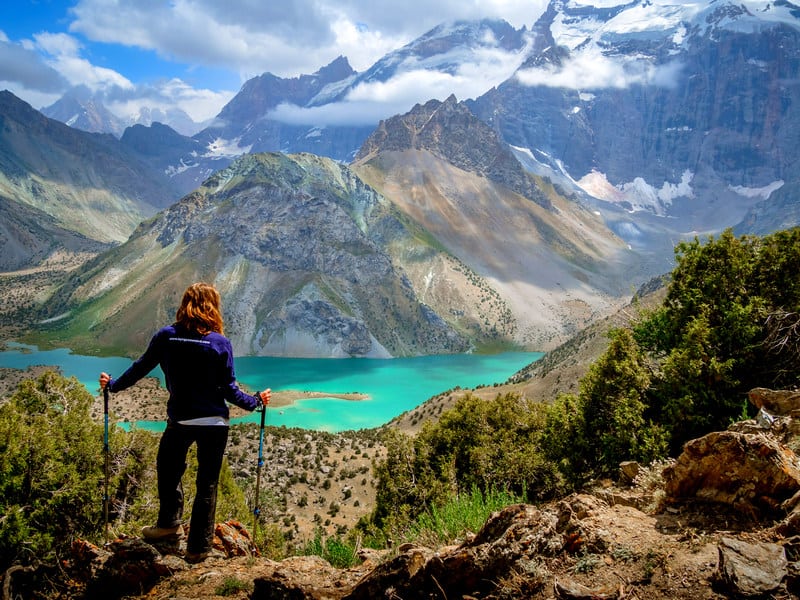
5) Is Tajikistan safe for an LGBTQ+ person?
According to the UK’s government travel advice, same-sex sexual activity is not illegal under Tajik law.
However, local attitudes are conservative and the levels of tolerance and acceptance in society may vary, particularly outside the main cities. It would be wise to take care when showing affection in public.
6) Are there terrorist attacks in Tajikistan?
There have been incidents of terrorist attacks in Tajikistan, the most notable being the four Western tourists who were horrifically murdered on the Pamir Highway in 2018. It was reported that 17 people were killed in an armed attack on a Tajik security checkpoint on the Tajikistan-Uzbekistan border.
The latest concerns centre around Tajik people being recruited by extremists and carrying out attacks in Western countries.
A guide told me that there are concerns about the Taliban and extremists, especially along the 843-mile border between Tajikistan and Afghanistan. He told me that there was a “non-official ban” on men having long beards and women wearing Islamic headscarves at schools and workplaces in Tajikistan.

I’m not writing this to scare you, I just think it’s important to gather as much geopolitical background as you can before your trip, especially if you’re going off on your own. For general travel, it’s a good idea to research your country’s relations and inputs into ongoing global conflicts, even if you think it may not be linked.
Equally, I think it’s incredibly important to be open minded. There have been numerous horrific attacks happening in European cities in the past decade, so it could be said visiting Western cities pose just as much threat for terrorist attacks.
7) Is it safe to drive in Tajikistan?
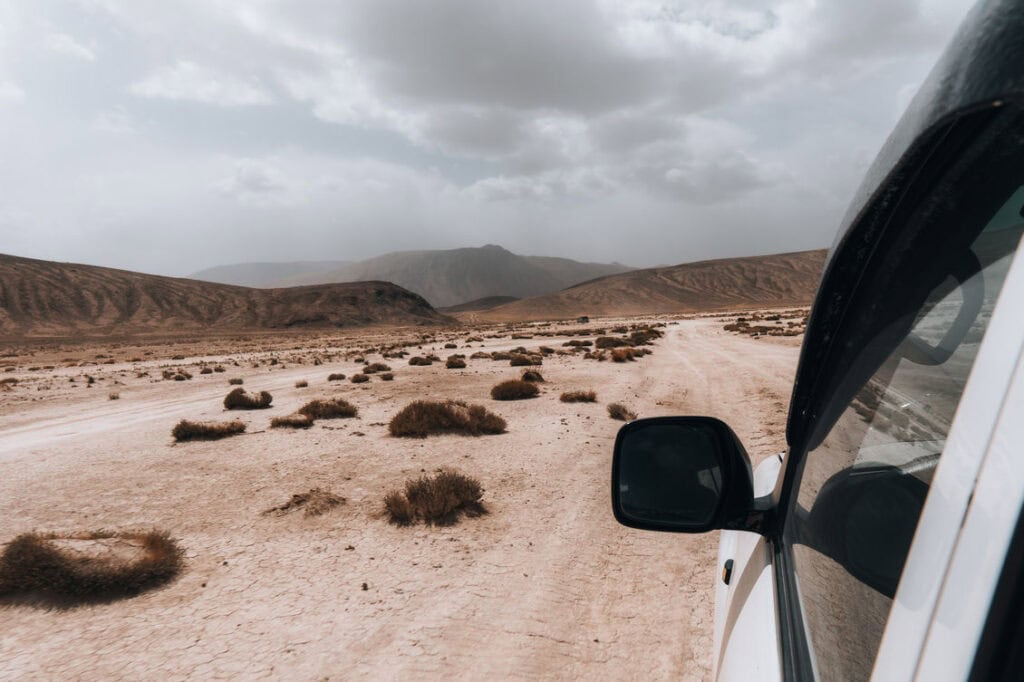
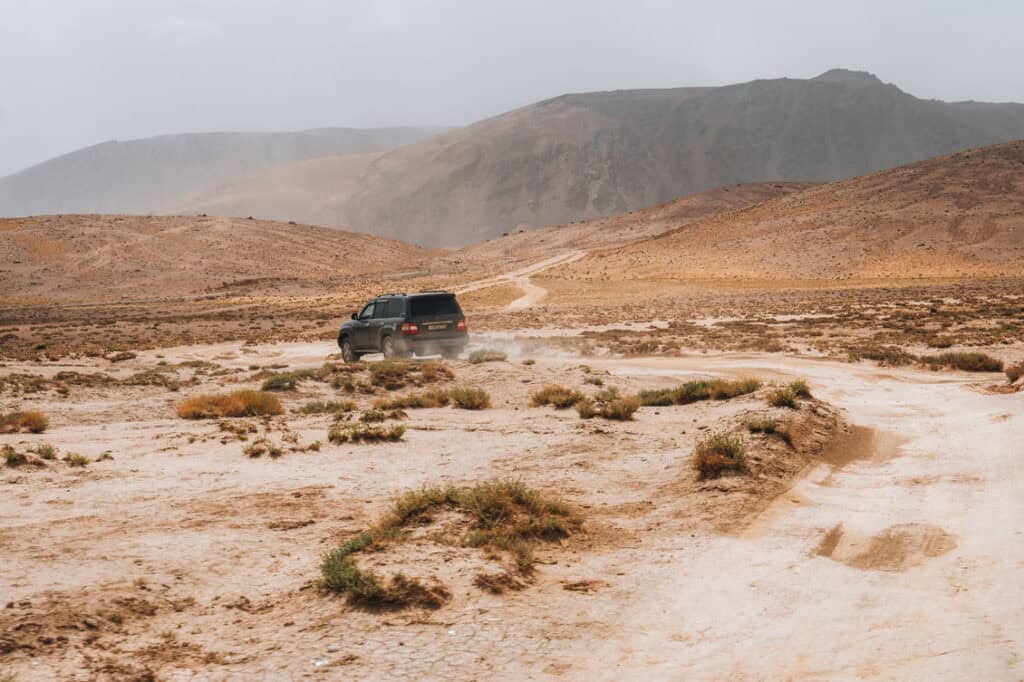
Most of the roads in Tajikistan are dirt tracks so they are uneven, dusty and merciless on vehicles.
If you’re heading into the Fann Mountains or on the Pamir Highway, you absolutely need to travel in a 4WD. I would not recommend renting one but hire a driver. There are so many obstacles on top of the dirt tracks, including mudslides and river crossings so you need to go with a skilled driver who know their vehicles intimately or join a tour.
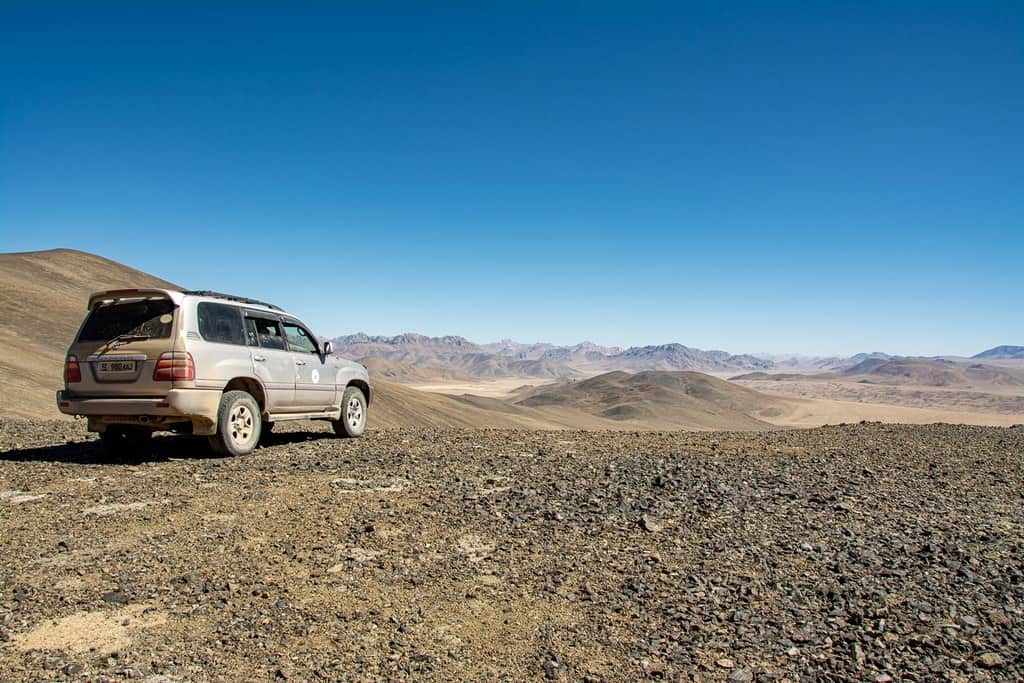
Most of the roads in Tajikistan are dirt tracks
Even then, punctures and minor breakdowns are a regular occurrence and it’s important to factor this into your trip.
The only real danger on the roads was on a huge section of track leading out of Dushanbe towards Khorog. The route is under construction as part of a huge investment project and it’s currently a single vehicle track.
This sounds ok, but the road is teetering over a steep precipice, the dust is so thick that you cannot see more than a few meters ahead of you, and you come withing kissing distance of massive oncoming lorries… so yeah, slightly hairy!
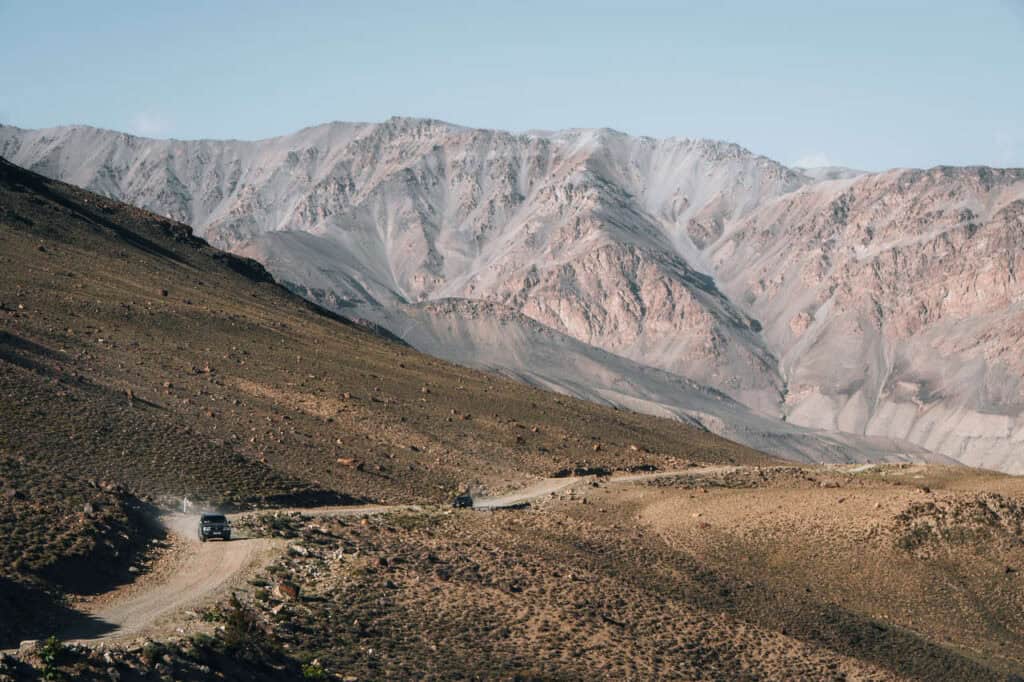
For cyclists wanting to explore the Pamir Highway, the tunnels outside of Dushanbe, near the Nurek Dam, can be frightening.
There are no lights in the tunnels and sometimes huge trucks can veer into incoming traffic. There is also no exhaust extraction so bring a good face mask.
8) Wakhan Valley: Is the Afghanistan border safe to go to?
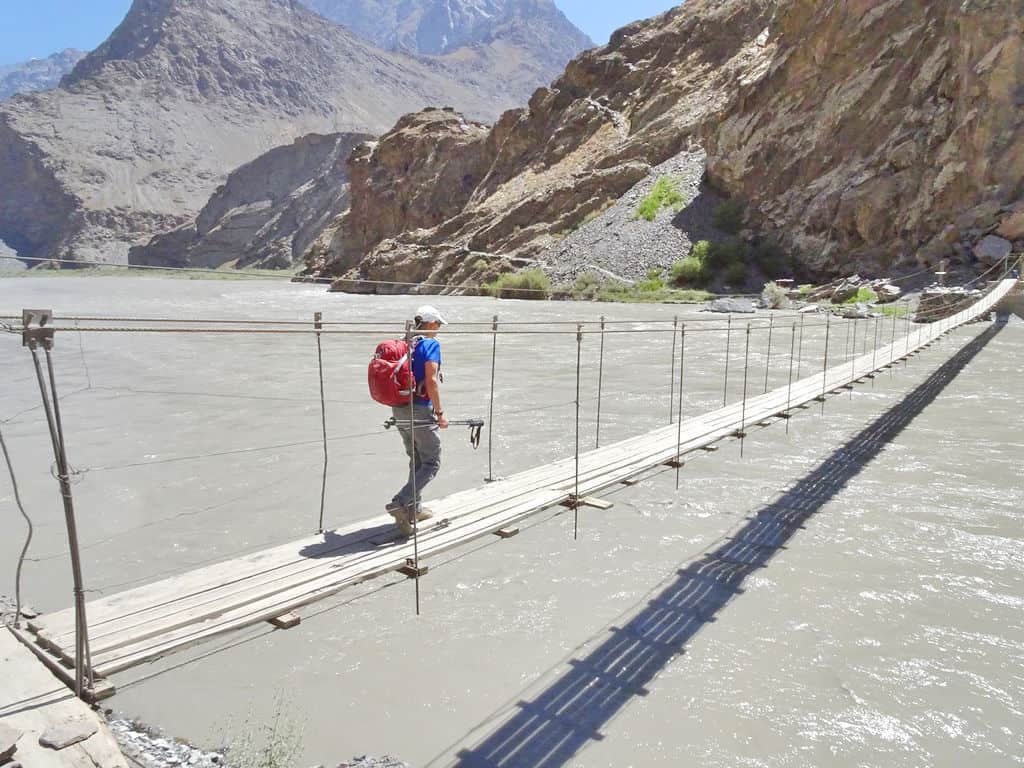
The Wakhan Valley bridges the border between Afghanistan and Tajikistan.
Tajikistan has many checkpoints and the GBAO visa is a strict visa security measure to regulate who travels in this area. I was told there are concerns from the Tajik government about extremists crossing into the country from the Afghan mountains.

There are risks, especially if you were to wander close to borders. However the Pamir Highway is well travelled and trafficked, especially among tour groups and locals.
I travelled to the Wakhan Valley with a tour organized by Journal of Nomads and I felt very safe. Visit Alay has a good hold on latest security developments and they wouldn’t put on tours if there was a dangerous risk.
Embark on the adventure of a lifetime: join the Pamir Highway Adventure Tour or explore the Highlights of Tajikistan, including the Jisue and Wakhan Valleys and the stunning Fann Mountains!

10) Is the water safe to drink in Tajikistan?
Western stomachs are not strong enough to handle the water in Tajikistan and you’ll likely get travellers’ tum while you’re out there so prepare yourself mentally for getting some diarrhoea (that’s sometimes half the battle when you’re not ready!).
Only drink bottled water while you’re out there. However, if you’re staying in a guesthouse or a yurt, sometimes the plates or vegetables will be washed in the water so it does become really difficult to avoid.

In the days before your trip, line your stomach with activated charcoal. Pack plenty of anti-diarrhoea medication, anti-cramping medication and wipes in preparation for the inevitable 😉.
If you’re high up in the mountains, ensure you have a water filter, UV Steripen and/or purification tablets. Even in the really high places, you’ll be surprised how many animals are about and can contaminate what seems like a pure source of water.
Another important thing to mention is that Tajikistan’s waste systems aren’t developed yet. In the remote mountain villages, waste is often dumped on the side of a cliff, which can sometimes work its way into water systems.

11) How is the healthcare in Tajikistan?
Tajikistan is one of the poorest countries in Asia and once leaving Dushanbe, the healthcare is slim to none. According to the World Health Organization, Tajikistan’s health system is influenced by the former Soviet legacy. It is ranked as the poorest country within the WHO European region.
There are a few pharmacies dotted about along the Pamir Highway (for example in Khorog and Murghab), but you won’t get much more than that. So if you break your leg or something similar in the mountains, you really will struggle to get treatment for days. It’s imperative to bring a good first aid kit to help treat minor injuries.
A large part of your trip planning should look at risk assessment, looking at your abilities, medicines, equipment and general mountain safety.
12) Travel insurance for Tajikistan
So as I’ve mentioned, healthcare in Tajikistan is incredibly different to Western countries. If you have a non-life threatening injury, it’s going to be difficult and you’ll likely be days away from treatment.
You absolutely need travel insurance if anything takes a horrible turn or you lose luggage. Make sure you check out the policies for high-altitude hiking and for the activities you’ll be doing.
The one I recommend for Tajikistan is HeyMondo. This insurance covers outdoor activities, including hiking in high mountain altitudes up to 5400 meters.
Need Travel Insurance for Central Asia? I use and highly recommend HeyMondo Travel Insurance. As a reader of Journal of Nomads, you get a 5% discount off your insurance plan!

13) Are there any dangerous animals in Tajikistan?
There are records of brown bears living in the mountains but when I talked to the guides they did not know of any sightings. The highest density of brown bears – according to wildlife sites – live in the Hissar-Alay mountains but they are shy and from what I’ve been told, not as aggressive as US grizzlies.
It goes without saying, but if you’re hiking in this range it’s a good idea to make lots of noise while walking and plan your camps carefully. I’ve not heard anything about bear attacks on people in Tajikistan – they’re much more common on livestock – but it’s better to be safe.
There are four venomous snakes found in Tajikistan – the Halys pit viper, the saw-scaled viper, the Levantine viper and the Central Asian pit viper. All of them are pretty venomous and you don’t really want to get bitten by these.
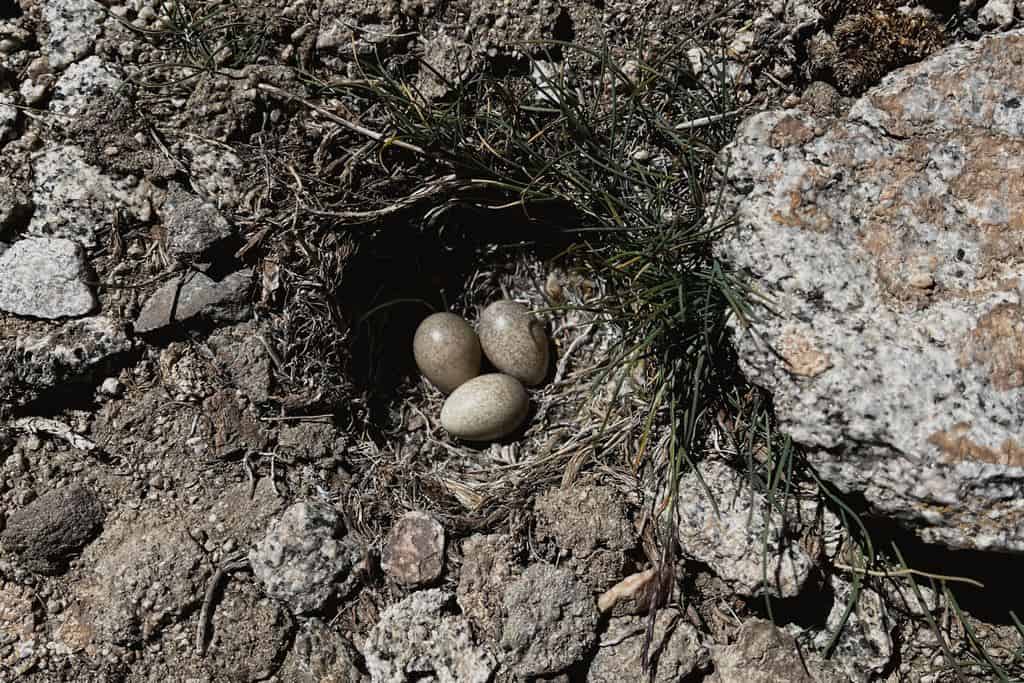
These vipers are found in rocky foothills, shrublands and some in forested areas. They are not aggressive and will only defend if provoked (or stood on!) so if you go off path it’s something to bear in mind.
There are wolves in the mountains, but again, they are not aggressive and they tend to keep away from humans.
The most likely dangerous animals you will come across are the shepherds’ dogs. An integral part of Central Asian farming is transhumance shepherding and having dogs are crucial in protecting their flock from unwanted visitors.
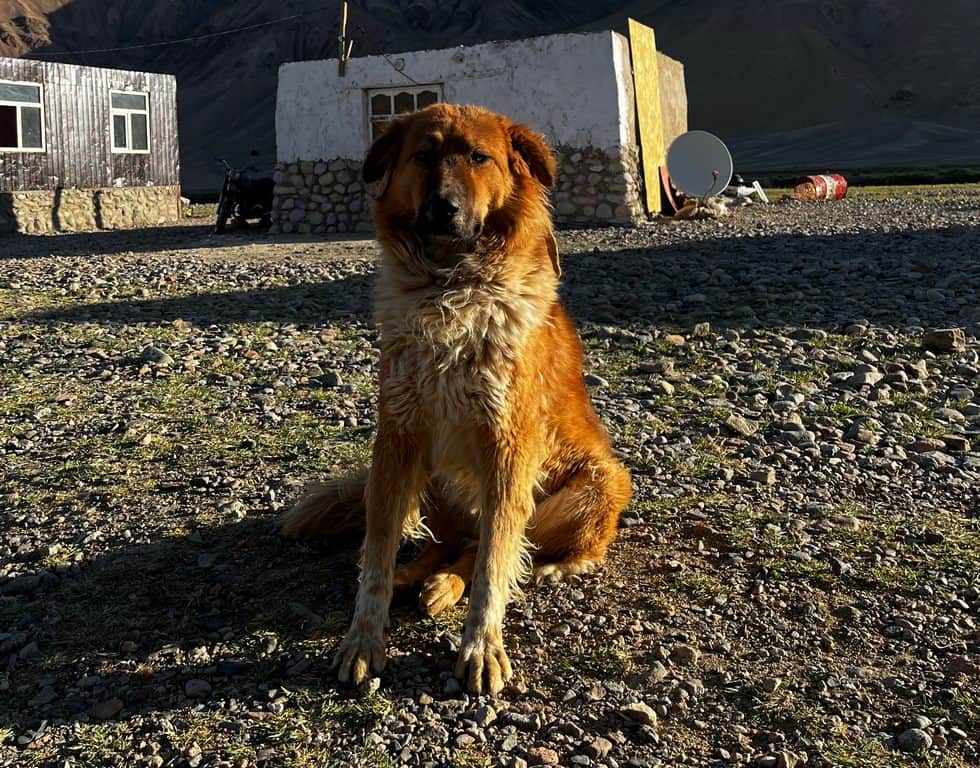
Shepherd dogs actually have a super placid temperament… once the shepherd gives the all clear!
Under the command of a good shepherd, the dog will be obedient and not bother you. However, I’ve had it happen where the shepherd has been elsewhere (or asleep!) and a pack of snarling dogs surrounded us… it was pretty scary! I’ve not read about any dog attacks in Tajikistan but when they defend their territory it can get hairy.
If it happens, stand tall, look the dogs in the eye and back away slowly. If they continue to be aggressive and you can’t safely retreat, grab rocks and throw them at the dogs – it’s a technique used by shepherds.
To avoid this situation, if you approach pastures and you hear dogs barking, stop and wait. Assess whether you can see their shepherd nearby and if not, consider a different approach. The ironic thing is that once the shepherd gives the all clear, they become fluffy teddy bears.
14) Is Dushanbe a safe city?
Some government advice warns about low-level robberies in Dushanbe. I never experienced anything like this, nor did I feel on edge when walking at night.
Something I’d like to mention is that I’ve been in way more danger in the streets of some UK/European cities. I’d recommend just being more street-wise incase of pick-pockets in the markets and be careful walking around walking on your own late at night, just like you would in any capital city.
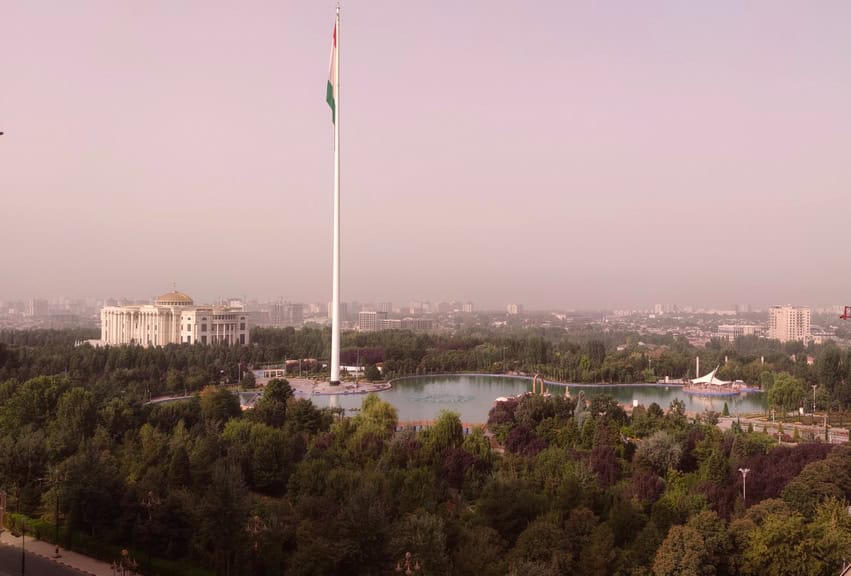
Taxi drivers can sometimes be very pushy and charge you more. Make sure you agree a price before you set off. In Dushanbe, you can use the Yandex Go app.
Cross busy roads at the allocated place, there are often streams of traffic in busy spots and it can get chaotic.
Smoking is not allowed in the streets of Dushanbe, however that doesn’t seem to deter people. I would be really careful about this rule as you’ll easily be identified as a tourist.

15) Are the borders safe in Tajikistan?
The two borders which, at the time of writing, are safe to cross are:
- Kyzylart Pass. A border between Kyrgyzstan and Tajikistan. The road passes through Markansu and runs up to Sary Tash, Kyrgyzstan.
- Panjakent. A border between Uzbekistan and Tajikistan. It’s the main route from Tajikistan’s Panjakent up to Samarkand.

Kyzylart Pass between Tajikistan and Kyrgyzstan
15.1 Police and documents in Tajikistan
Some tourists have reported issues when arriving at Dushanbe airport and being told their ‘documents aren’t in order’. Do NOT pay any ‘fines’ and ask to see the chief of police if you are questioned.
Always print out several copies of your visa and passport. You’ll be asked for copies in hotels and checkpoints.
There are several checkpoints in Tajikistan. Again, if you are asked to pay any fines, do not pay anything and ask to see the chief of police.
If you are driving with your own car into the country, I’ve read about a small import tax but you should not have to pay any other fines/taxes.
In Dushanbe, you’ll see police officers stopping vehicles on the side of the road. The government has issued strict laws which say tourist cars should not be stopped. Have your printed passport copies with you.
16) Useful things to know before your trip to Tajikistan
Here are some tips and tricks I learned in my time travelling in Central Asia!
Bread is sacred in Islam. When at guesthouses in Central Asia, it’s so important not to waste bread or leave large chunks of it uneaten on your plate. A guide once told me about some tourists that once flushed bread down a toilet in a homestay which deeply offended the owner.
Take off your shoes before entering homes. This is a fundamental part of respect in Islam and you must remove shoes before entering yurt camps and homes.

Food cooked at homestays will depend on seasonal produce
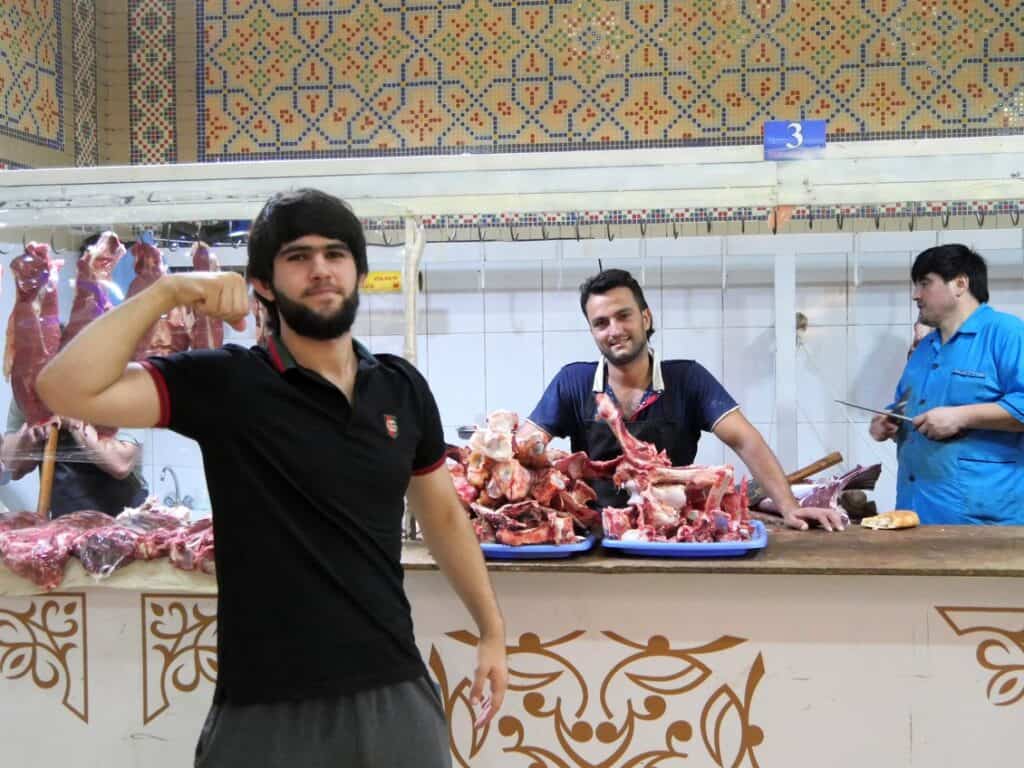
Veggie/vegan meals. You will likely eat with many Tajik people who will welcome you into their homes. Providing meat at dinner is a huge sign of honour to you, the guest. It is possible in most Pamiri homestays to ask for dinner without meat, but broth etc is obviously still cooked with meat residue. Vegetable selection depends on seasonal produce. Many Tajik families are working farmers, so slaughtering and preparing livestock is part of their daily life.
If you are squeamish about animal slaughter or have a strong moral opposition to the consumption of animals, you may have to rethink your trip.
Download Tajik and Russian on Google Translate. This was so helpful. You can download the two languages offline and then use it as a basic form of communication in homestays. If you have space on your phone, I’d also download Kyrgyz. In Murghab, people are predominately from Kyrgyzstan.
Rubbish. Tajikistan does not have advanced waste disposal systems. In the mountain villages, waste is often tipped into a large pit or thrown off the side of a hill. Please, please, please do not litter and help out the Tajik people. We did see some Western litter in the mountains which we, as a group, picked up. I would take plenty of small strong plastic bags to hold your waste.
Poo etiquette. Something I found a bit alarming was there was some crappy bog paper littered on the more popular hiking trails. I can confidently say that this was from foreign tourists and it’s really not cool that this is the way they have quite literally left their mark in Tajikistan. If you need a nature poop, it’s no problem. Move at least 50m from waterways and streams, dig a hole, bury it and then take your loo roll away with you. Please don’t litter this beautiful country! For more info, read TOILET TIPS FOR HIKING IN TAJIKISTAN.
Don’t flush loo roll! Sorry, another toilet tip but it’s really important. Tajikistan’s toilet systems are not strong enough to swallow loo roll. There are always bins beside the toilet to dispose of used loo roll. If you do flush loo roll, you’ll find it won’t properly work and it will often block the toilet – causing a nightmare for you and a lot of people.
Print out several copies of your visa and passport. There are many checkpoints on the Pamir Highway which need print-outs of your details in order to pass. If you need more information about the checkpoints because you are travelling independently, contact Visit Alay who can help with this. Never hand give out your passport to anyone. If a police officer asks to see your real passport, tell him to take you to the station to see the chief of police.
Don’t accept rubies. You may be sold rubies in the remote parts of Tajikistan. Don’t accept them. It is illegal to buy rubies in Tajikistan and you could get in a lot of trouble for it.
Download maps. Even if you’re being guided, it’s really important to download offline sections of Tajikistan so you can plot start and end points. I tend to use Gaia GPS but another popular app is Komoot.
Greet people with hand on heart. A gracious way to say hello to Tajik people is by slightly bowing your head and placing your right hand on your heart. The main greeting is “As-salaam Alaykum” which means “peace be upon you”.
Ramadan. Think about booking your trip outside of Ramadan dates. It will be harder to access food during the religious holiday… and guides will be more tired!
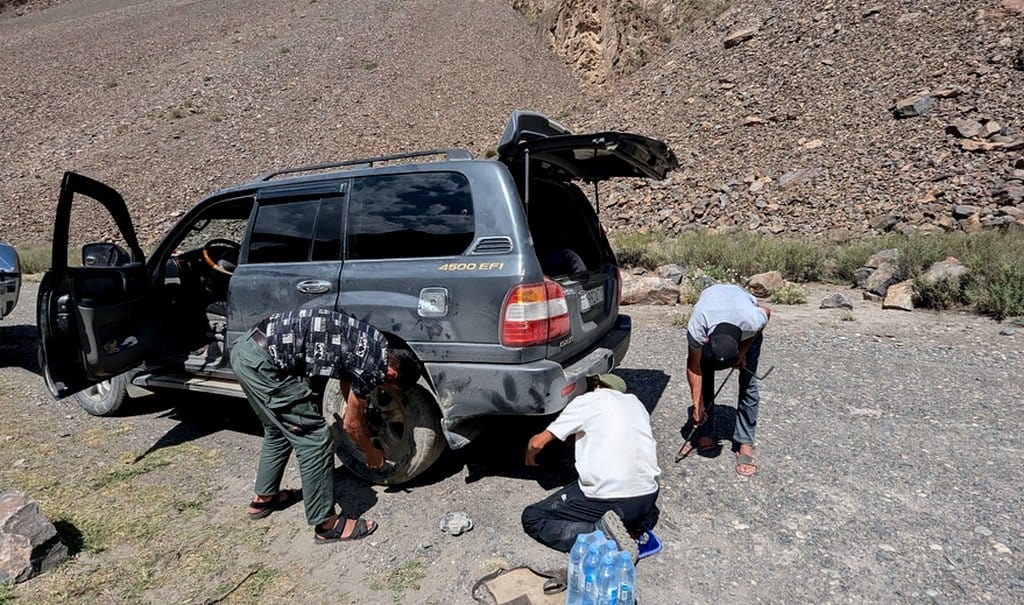
Not everything will go to plan… embrace it!
Know your ability. Tajikistan isn’t the place to really push yourself if you don’t know your limit. The altitude will dial everything up significantly and if you need to sit a hike out and rest for the day, do it. Cliche, but the mountains will always be there. Tajikistan’s landscapes are captivating… so learn to find peace in stillness. This especially counts if you suddenly get struck by illness, which is common!
Unforseen hiccups! This is an adventure trip and not everything will go to plan… embrace it! In the weeks I was travelling the Pamir Highway, we all had a violent stomach bug, a mudslide blocked a main road in Langar, the car broke down and someone left their wallet in a remote village. Things will happen beyond your control but your reaction is within your control.
- A good deal of the Pamir peaks are in the Gorno-Badakhshan Autonomous Oblast (GBAO) district, a province in eastern Tajikistan. You likely want to travel here if you’re wanting to explore some of Tajikistan’s most breathtaking scenery.
- As a security measure because of the neighbouring border with Afghanistan, a GBAO permit is needed and you can apply for one here. You may also need a letter of invitation which can be obtained from a travel company.
17) Language in Tajikistan
One of the most useful tools I had while in Central Asia was the Google Translate app. You can download Tajik, Arabic and Russian languages offline.
While Russian is widely understood by the older population, while Arabic phrases are very useful to speak to everyone. You’ll find in the mountain villages that some people speak Kyrgyz, Uzbek and Kazakh too!
- As-salaam ‘alykum – A standard hello greeting meaning “peace be upon you”. To be polite you can bow your head and place your hand on your chest
- Rakhmet [rah-k-met] – Thank you
- Afwan – you’re welcome
- Na’am – yes
- Laa – no
- Syz aglshynsha soileisesiz be? [sizz ahg-l-shin-sha so-ill-ice-is be?] – Do you speak English?
18) Medicines and toiletries to bring to Tajikistan
- First aid kit. Obvious but you really must bring one. Sometimes you’ll be travelling for days without access to a pharmacy, and even then, the drugs there are really limited.
- Lip balm with SPF. The sun rays are incredibly strong at high altitude! So get this packed or your lips will crack.
- Loo roll. Some toilets will have it, but there is a limited amount in yurt camps and homestays.
- Diamox. I’d really recommend getting some of these which help with acute mountain sickness. When you’re being active at high altitude, it’s really important to prepare. On my trip I was suffering with AMS and these pills did take the edge off.
- Activated charcoal. This is really great for lining your stomach and battling tummy bugs. You should be able to pick it up from your local pharmacy.
- Anti-diarrhoea medication. Oh yes. Do not scrimp on buying these boys. I had a *violent* stomach bug while I was out there which led to a bleak accident near Lenin Peak base camp… and on that note it’s well worth bringing extra pairs of knickers. Western tummies are not very strong and you need to be prepared 😉
- Ginger. You’re probably sick of hearing about how I got sick on my trip, but, I couldn’t stomach much apart from ginger cubes. They really worked wonders on both settling my stomach and giving my body some sugar. And on that note, I’d also recommend some Dextro Energy tablets.
- Dioralyte Blackcurrant. These are really great to restore vitamins and body salts if you get sick. Also, they’re good to way to hydrate you before a long hike.
- Mosquito spray. There were some mozzies in the alpine meadows and by the salt lakes.
- Factor 50 suncream. You’ll need high-quality protection regardless of time of year because of the altitude.
- Anti-bacterial wipes. Great way to keeping yourself clean without a shower for a few days.
- Biodegradable soap. If you do want to wash in the beautiful lakes, make sure the soap you use is biodegradable. So many Tajik people rely on water sources so let’s keep them clean!
I hope I haven’t overwhelmed you with all my advice but I think it’s important to be as honest as possible. Tajikistan is an enchanting place and we want you to have an enriching experience. Whatever your goals for your trip, we’ve every faith you will find beauty in Tajikistan.
Are you planning a trip to Tajikistan, or have you been recently? Let us know in the comments below!
Related posts

Tajikistan food: 10 delicious dishes and Central Asian delicacies to try

13 Best Things to do in Dushanbe: A complete City Guide

Hiking in Tajikistan: 6 Mighty Mountain Trails to Explore
How to travel the Pamir Highway in Tajikistan: a Complete Guide

Best Tips and complete Packing List for Traveling in Central Asia in 2026 – When to go and what to wear when visiting Central Asia

Hi, my boyfriend and I have booked a Pamir Highway tour in July with Visit Alay, but I am still nervous about it. I am a 22 year old woman who is well traveled, but this trip will definitely be the most out of my comfort zone that I’ve ever been. My fears are both rational and irrational, the top three being: road conditions and mudslides, terrorism, and rabid dogs. I was wondering if you have any other advice or stories about your experience to calm my concerns. Thank you!
Hi Chloe, you don’t have to worry about terrorism. If there would be a potential danger, the tour wouldn’t go ahead. As for the dogs, if you’re worried then you shouldn’t approach any and touch them. Usually, the dogs won’t attack you. As for the road conditions, the drivers should be experienced and will know what to do when the road conditions get challenging. There was a mudslide on my Tajikistan tour last year and the drivers handled it very well. They don’t take unnecessary risks. Hope this helps to put your mind at ease.
Wow. I am currently in Kyrgyzstan and was thinking about traveling around the region. I wasn’t considering Tajikistan, but I still clicked this link. Your writing is so informative that I read the whole thing. I couldn’t help myself. Thanks for detailing your experiences. Thanks for encouraging people to be respectful of other countries and cultures.
Thank you Jay!