
In 2026, the 6th World Nomad Games return to Kyrgyzstan, the country where it all began. From August 31 to September 6, 2026, Bishkek and Issyk-Kul will host one of the most unique festivals in the world, gathering thousands of athletes, artists, musicians, and spectators from dozens of countries. If you’ve ever dreamed of experiencing nomadic traditions first-hand, this is your chance. Here’s your complete travel guide to the World Nomad Games 2026.
The World Nomad Games are more than sports, they’re about reviving and celebrating traditions that risk being lost in modern times. For travelers, they offer a rare chance to immerse in authentic nomadic culture, not in a museum or performance hall, but in the living landscapes of Kyrgyzstan.
You’ll walk among yurts, taste kumis and local dishes, and watch eagles dive from the skies. You’ll cheer for horsemen galloping across the steppe, feel the drums and music reverberate in your chest, and carry home stories that can’t be replicated anywhere else in the world.

In 2026, as the world gathers once again at Issyk-Kul, you won’t just be a spectator. You’ll be part of a tradition as old as the Silk Road, as enduring as the mountains, and as alive as the nomads who still ride across these lands today. Keep on reading to learn everything about the World Nomad Games and how to visit this event in 2026!
Tip: See my Kyrgyzstan Travel Page for a complete overview of all my travel guides and blog posts about Kyrgyzstan!
Join the 7-day World Nomad Games tour, and visit the World Nomad Games along with the breathtaking beauty of Kyrgyzstan’s wild landscapes: from the alpine shores of Issyk Kul Lake to the serene high-altitude pastures of Son Kul Lake!

Disclaimer: This posts might contain affiliate links, meaning that if you make a purchase through these links, I may earn an affiliate commission. Thank you for helping to support this website!
Plan your trip to kyrgyzstan!
✈️ Find the cheapest flights → Check fares to Bishkek or Osh
🏨 Find hotels & yurt stays → Browse the best accommodation deals
📱 Stay connected → Get a Kyrgyzstan eSIM
🛡️ Travel insurance → Don’t travel Central Asia without coverage
🎒 What should you pack? → Read my Kyrgyzstan packing list
🥾 Want to go hiking? → Discover the most beautiful hiking trails in Kyrgyzstan
🐎 Want to go horse riding? → Check out my favorite horse trekking experiences
🗺️ Need help planning your route? → Learn about my itinerary planning services
⛰️ Prefer traveling with a group? → Join one of my Kyrgyzstan adventure tours
Why you should visit the World Nomad Games in 2026
For centuries, nomads measured strength not by medals but by endurance, agility, and connection with the natural world. Wrestling wasn’t just sport, it was preparation for survival. Archery wasn’t recreation, it was skill for the hunt. Horse games weren’t entertainment, they were a way of life.
At the World Nomad Games, these traditions live again, but in a way that welcomes the whole world. Athletes from nearly 90 countries gather to compete, share, and learn. What unites them isn’t nationality, but the ancient spirit of movement, resilience, and respect for the land.
It’s not just about sport. Wander through the yurt villages of Kyrchyn Gorge and you’ll hear epic poetry recited, see felt carpets woven by hand, smell fresh bread baking in tandoor ovens. The Games are part festival, part homecoming, part living museum.
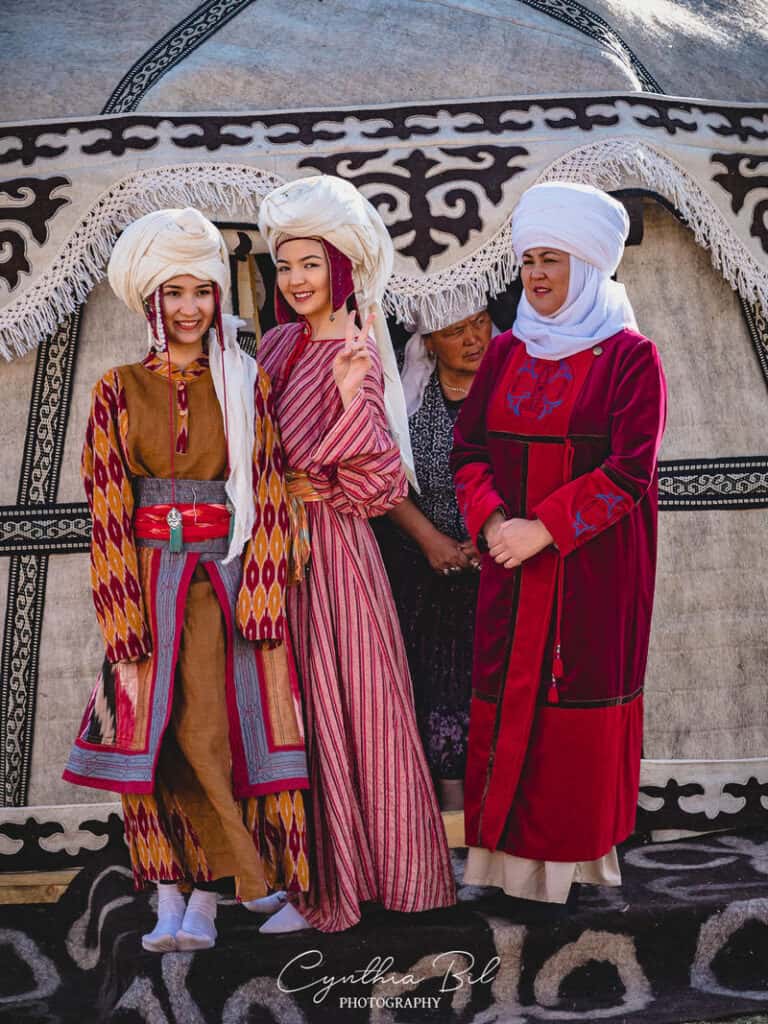
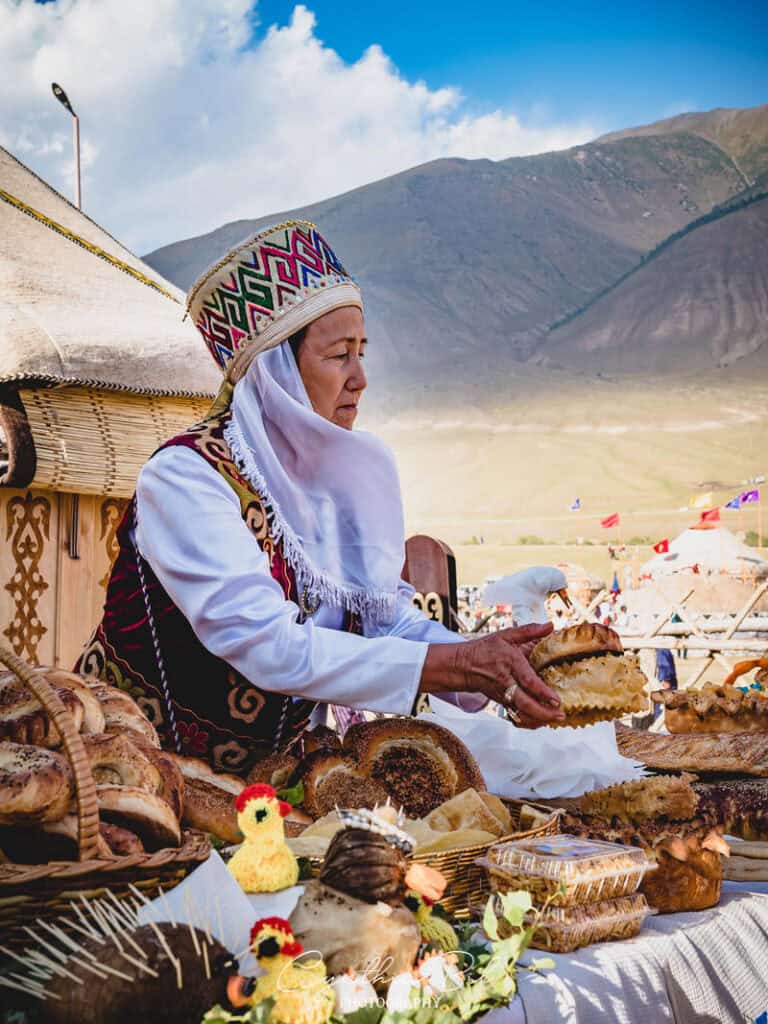
The Games began in Kyrgyzstan in 2014, grew bigger in 2016 and 2018 (that’s when I attended the World Nomad Games for the first time), then traveled abroad. First to Turkey in 2022, then Kazakhstan in 2024. But in 2026, they return to Kyrgyzstan, to the landscapes that inspired their creation.
- The opening ceremony will take place in Bishkek on August 31, coinciding with Kyrgyzstan’s Independence Day – a double celebration.
- The main competitions and the closing ceremony will unfold at the northern shore of Issyk-Kul Lake from September 1-6, with Cholpon-Ata and the Kyrchyn Gorge serving as central stages.
For locals, this isn’t just a sporting event. It’s a matter of identity, pride, and continuity. For travelers, it’s an invitation to witness something unique: nomadic traditions alive in the very place they were born.
The World Nomad Games are always a balancing act. On one hand, there’s the spectacle: dazzling ceremonies, stadiums filled with lights, international media coverage. On the other hand, there’s the substance: elders teaching ancient songs, young people learning the craft of their ancestors, herders leading their best horses into the arena.


As I prepare for 2026, I hold both hope and fear.
I hope the Games will stay authentic, rooted in lived traditions rather than polished performances. I hope the yurts in Kyrchyn Gorge will be filled with real families, not just actors. I hope the eagle hunters will bring birds they’ve hunted with for years, not just for show.
I fear the opposite: that over-commercialization could flatten the culture into a theme park version of itself. That mass tourism could strain Issyk-Kul’s delicate ecosystem. That the raw edges, the very soul of nomadic life, might be lost under glossy surface.
Still, I believe the spirit of the Games is strong enough to withstand these pressures. Nomadic culture has survived for centuries against empires, borders, and modernization. It will survive spectacle, too.
Watch my video about the World Nomad Games in Kyrgyzstan in 2018 to see what you can expect!

How to visit the World Nomad Games in Kyrgyzstan in 2026
If you’re dreaming of experiencing the World Nomad Games for yourself, here’s everything you need to know.
1. What are the World Nomad Games
Think of the World Nomad Games as the Olympics of nomadic sports and culture. The Games feature:
- Traditional Sports: wrestling, archery, horse racing, eagle hunting, and kok-boru.
- Cultural Showcases: yurt-building, felt-making, traditional music, epic poetry, dance.
- Global Participation: in 2024, nearly 2,500 athletes from 89 countries competed in Kazakhstan.
They’re not only competitions, they’re a living celebration of nomadic heritage.
2. Where and when to see the World Nomad Games 2026 in Kyrgyzstan: Dates and Venues
- Opening Ceremony: August 31, 2026, Bishkek (likely at the new Bishkek Arena).
- Competitions: September 1 – 6, 2026, Northern Issyk-Kul Lake region (Cholpon-Ata and Kyrchyn Gorge).
- Closing Ceremony: September 6, 2026, likely at Cholpon-Ata.
Plan to spend at least 7 to 10 days in Kyrgyzstan to experience the Games fully.


3. How to get tickets for the World Nomad Games 2026
You’ll need to buy tickets if you want to attend the Opening Ceremony in Bishkek. You can buy them here.
You need to provide personal identification (passport, name, photo) and tickets will have QR codes tied to personal data.
Most of the other events in Cholpon-Ata and Kyrchyn Gorge are free to attend, with a few exceptions such as the Kok Boru Games at the hippodrome in Cholpon-Ata. Tickets for the specific events can be bought at the same platform, as soon as they’re available.
The 7-day World Nomad Games tour combines the excitement of the World Nomad Games with the breathtaking beauty of Kyrgyzstan’s wild landscapes: from the alpine shores of Issyk Kul Lake to the serene high-altitude pastures of Son Kul Lake.
4. Getting there & Visa Requirements
4.1 Visa requirements for Kyrgyzstan
Kyrgyzstan has the most liberal visa regime in Central Asia. Citizens from Europe, North America, Australia, New Zealand, Japan, South Korea, Singapore, Brunei, Qatar, Bahrain, Kuwait, UAE and Saudi Arabia can visit the country for up to 60 days within 120 days without a visa.
Citizens from Mongolia and Ukraine can stay up to 90 days within 180 days without a visa and citizens from Malaysia and Turkey are allowed to stay visa-free in Kyrgyzstan for up to 30 days.
Travelers from Armenia, Azerbaijan, Belarus, Cuba, Georgia, Japan, Kazakhstan, Moldova, North Korea, Russia, Tajikistan, and Vietnam can stay for an indefinite time!
All the other countries have to obtain a visa. Check this website to see what visa you’re eligible for.
Since 1 September 2017, the Ministry of Foreign Affairs of Kyrgyzstan has launched the e-Visa system, for which you can apply here. The e-visa for Kyrgyzstan costs US$61 and it takes about one week to get it.
However, sometimes these things take longer in Kyrgyzstan so apply at least one month ahead to be certain! Some nationalities will also need a Letter of Invitation (LOI) while applying for the visa.
You can check your visa requirements for Kyrgyzstan here:

4.2 How to get to Kyrgyzstan
Manas Airport (BSZ) in Bishkek, the country’s capital city, is the largest international airport in Kyrgyzstan.
There are a number of airlines that fly into Bishkek. I recommend Turkish Airlines or Pegasus (via Istanbul) or Fly Dubai (via Dubai), depending on where you’re flying from. Search for the best deals here.
You can also enter Kyrgyzstan by land from Kazakhstan, Uzbekistan and Tajikistan.
You can usually enter Kyrgyzstan overland by bus, mashrutka (minivan), shared or private taxi or self-driving.
If you’re driving with your own vehicle, you need vehicle insurance and sometimes a special permit to cross borders. You also need to pay an eco-tax if you arrive from Uzbekistan, Tajikistan or China but you don’t need to pay import tax or have a customs-cleared document.
- Kyrgyzstan’s land borders with China are currently still closed for tourists. The land borders with Kazakhstan, Tajikistan and Uzbekistan are open.
4.3 HOw to get from bishkek to Cholpon-Ata and Kyrchyn Gorge
Here’s how to get to Cholpon-Ata from Bishkek by public transport.
The cheapest option is to take a marshrutka (minibus). Most minibuses to Issyk-Kul region leave from the New Bus Station in Bishkek. (look for minibuses marked for Issyk-Kul, Balykchy, Karakol or directly “Cholpon-Ata”).
There are multiple departures daily in high season (early morning through late afternoon). If you want a specific departure time, you can check online local ticket platforms (e.g. Tezket.kg). Expect a 3 to 4-hour journey, depending on route, stops, and traffic. Some routes along the northern shore are very scenic; others that go via Balykchy may take slightly longer because of transfer/waiting times.
It costs between 250- 400 KGS per person one-way (prices depend on the route) and you have to pay cash at the ticket office or to the bus driver when boarding the minibus.
Most marshrutkas will stop near the main promenade / lakefront at Cholpon-Ata or the local bus station; the Rukh Ordo complex and public beaches are within walking distance from common drop-off points. If your accommodation is near the lake, mention the hotel name and the driver will usually stop close by.
Some practical tips:
- Arrive 20–30 minutes early in summer; minibuses fill fast. Bring exact change (drivers rarely have big change).
- Luggage: small bags fit inside; for big suitcases you may need to pay a small extra or load them on the roof — check before boarding.
- Seat: choose the right side of the minibus for better lake views along the northern road.
- Language: drivers may not speak English; have your destination written in Cyrillic: Чолпон-Ата / Cholpon-Ata.
Another option is to take a (shared) taxi or arrange private transfer. The journey will take around 3 to 3,5 hours, you can easily bring all your luggage but… you’ll pay considerably more. Prices can vary from $30 to $70, depending on vehicle class, tour operator and whether or not a return journey is included.
I don’t have current info if there are going to be any marshrutkas or special buses going from Cholpon-Ata to the Kyrchyn Gorge. You can always take a taxi but expect prices to be higher than usual…
The most convenient way to get to the different locations of the World Nomad Games (and have everything organized for you) is by joining a tour. I’m organizing a 7-day World Nomad Games Tour, including entrance tickets to the opening ceremony in Bishkek, attending the Games at Cholpon-Ata and Kyrchyn Gorge for a couple of days and visit some more highlights in Kyrgyzstan.
The 7-day World Nomad Games tour combines the excitement of the World Nomad Games with the breathtaking beauty of Kyrgyzstan’s wild landscapes: from the alpine shores of Issyk Kul Lake to the serene high-altitude pastures of Son Kul Lake.
5. Where to stay during the World Nomad Games
If you’re attending the Opening Ceremony in Bishkek, then you’ll have to book a ho(s)tel for at least the night of August 31st in Bishkek. Don’t wait too long to make these bookings as rooms might sell out fast.
Here are my recommendations for accommodation in Bishkek:
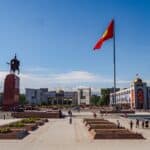
Cholpon-Ata is a small resort town on the northern shore of Issyk Kul Lake. You’ll find plenty of hotels and guesthouses there but you should also book in advance as Cholpon-Ata is a popular destination for local and foreign tourists in the summer.
My recommendations for accommodation in Cholpon-Ata:
There are many more places in and around Cholpon-Ata where you could stay. If you’re depending on public transport to get to the site at Kyrchyn Gorge, I would recommend staying close to the town’s center.
I don’t have reliable information yet about yurt stays (or other types of accommodation) at the Kyrchyn Gorge.
What to expect on the World Nomad Games
Here’s an overview of the sports, cultural performances, and scientific games that together form the heart of the World Nomad Games.
Sporting Disciplines on the World Nomad Games: Where Strength Meets Spirit
In nomadic culture, sport was never a pastime — it was survival, ritual, and celebration all at once. Each discipline has roots in daily life on the steppe, passed from generation to generation.
Kok-Boru (“dead goat polo”)
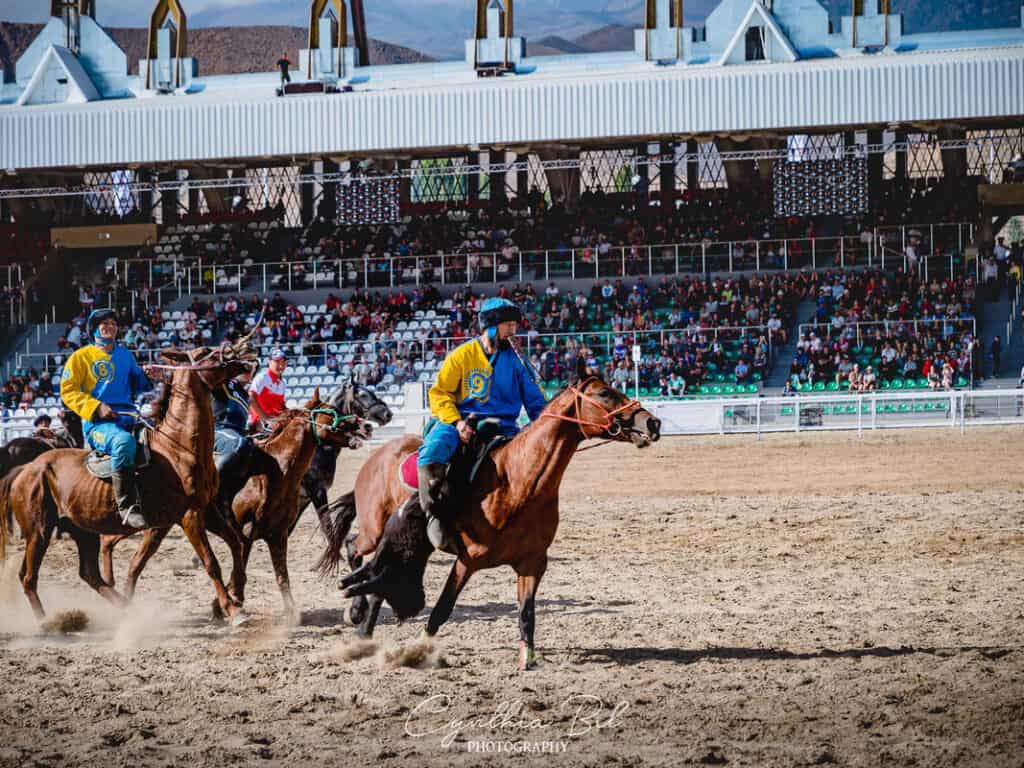
The crown jewel of the Games. Picture riders galloping at full speed, wrestling over a goat carcass (or a synthetic substitute), and thundering toward the goal. It’s fierce, unpredictable, and deeply symbolic, a test of courage, teamwork, and endurance.

Er Enish (Horseback Wrestling)
Two riders face each other in a contest of strength and balance, trying to pull the other from the saddle. It’s one of the most dangerous events: a battle of wills where every muscle, human and horse, is engaged.


Alysh, Kurash & Kazakh Kuresi (Nomadic Wrestling Styles)
These forms of belt-wrestling are practiced across Central Asia. Wrestlers lock arms, grip belts, and use pure technique to throw their opponents to the ground. Every move echoes centuries of martial tradition.
Horse Racing (At Chabysh, Baige, Kunan Chabysh)
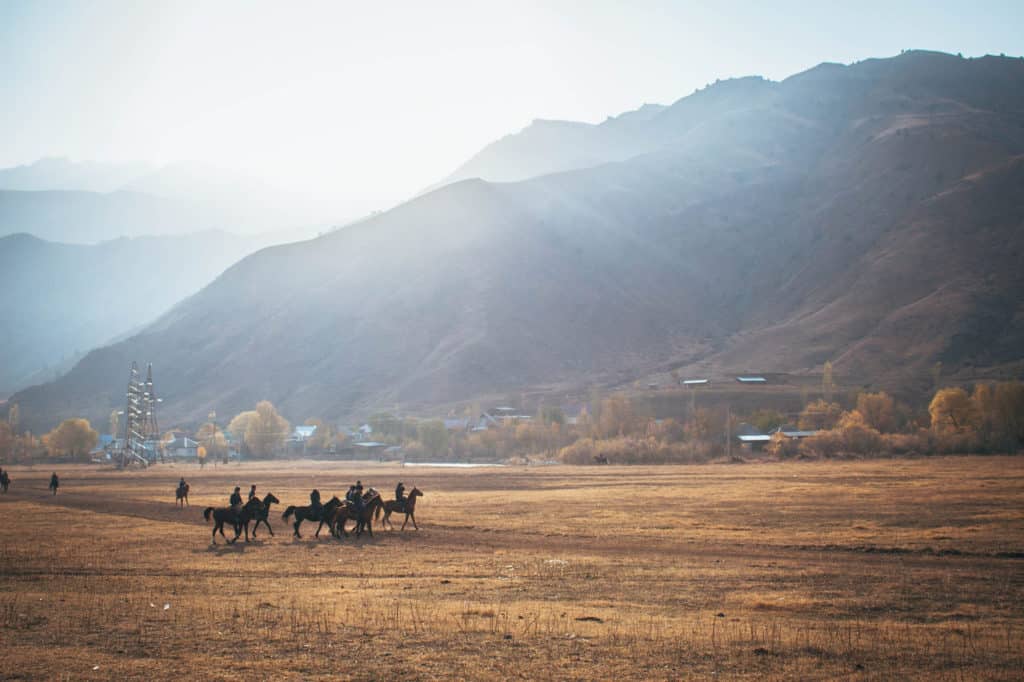
Horses are the nomads’ wings. In these long-distance races, riders thunder across open steppe and mountain passes. The bond between horse and rider is everything; endurance and trust decide the winner.
Archery (Sadak Atu, Zhamby Atu)
With bows crafted from wood and horn, archers test their precision on foot or horseback. Some aim for static targets, others at gold coins hung high in the air. Every arrow carries a whisper from the past, when hunting and defense depended on such skill.


Salbuurun (Traditional Hunting)
A stunning collaboration between human and animal: eagles diving at full speed, sighthounds racing, hunters demonstrating centuries-old techniques of falconry.
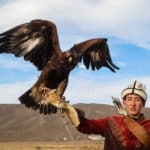


Mas-Wrestling & Strength Games
In mas-wrestling, two athletes sit facing each other, feet braced, pulling on a single stick, a raw test of power. Other contests showcase endurance, balance, and brute force, reflecting the physical demands of nomadic life.
Ordo & Tenge Ilu (Games of Skill and Strategy)
Ordo is a symbolic re-enactment of nomadic warfare, played by tossing bones or disks to “capture” the opponent’s khan. Tenge Ilu challenges riders to pick up coins from the ground at full gallop, a perfect mix of speed, dexterity, and daring.
Toguz Korgool & Asyk Atu (Mindful Movement)
Toguz Korgool, the nomadic version of mancala, tests strategy and foresight, while Asyk Atu — played with sheep knucklebones — combines chance, skill, and quick reflexes. Both games remind us that strength of mind is as vital as strength of body.

The Cultural Program
The cultural heart of the Games beats in song, color, and hospitality. Beyond the stadiums and race tracks, entire villages of yurts spring to life, places where stories are shared, instruments are played, and the living spirit of the steppe unfolds. It made me think of a Central Asian version of Glastonbury.
Music & Dance
Each day brings performances of traditional instruments: the haunting sound of the komuz, the rhythmic beat of drums, the swirling dances that speak of wind and movement.

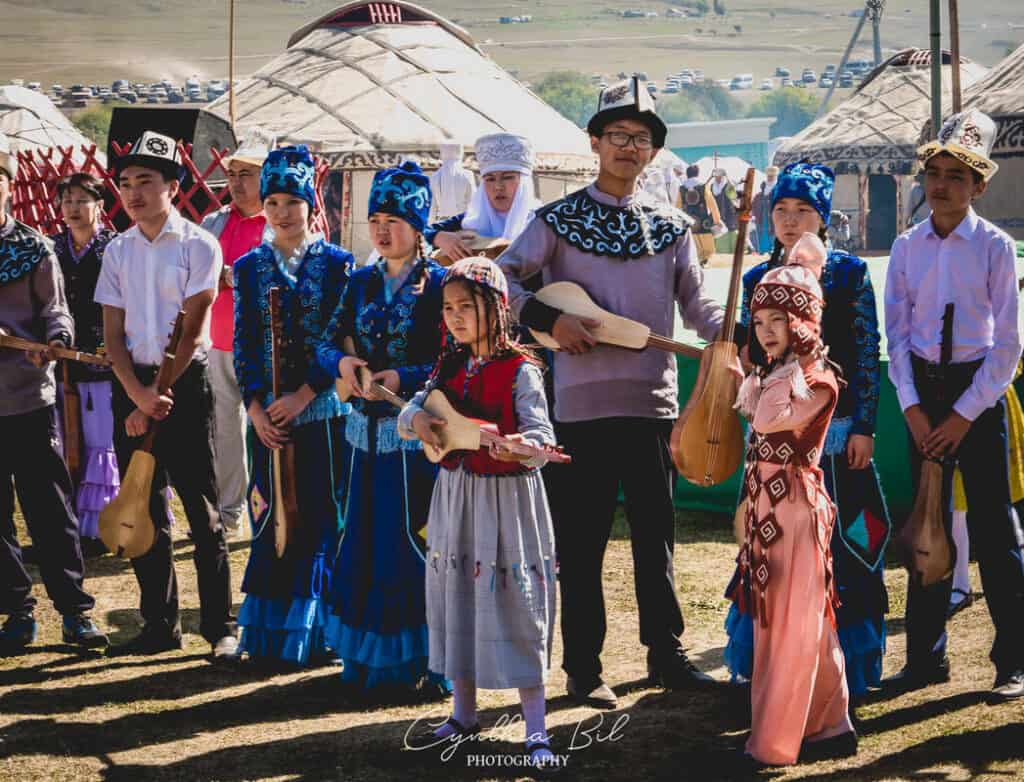
Epic Poetry & Aitys
Poets take the stage to improvise verses, sometimes playful, sometimes profound. Aitys, a Kyrgyz form of poetic duel, is both performance and conversation. It’s where language becomes music and storytelling becomes competition.
Art & Craftsmanship
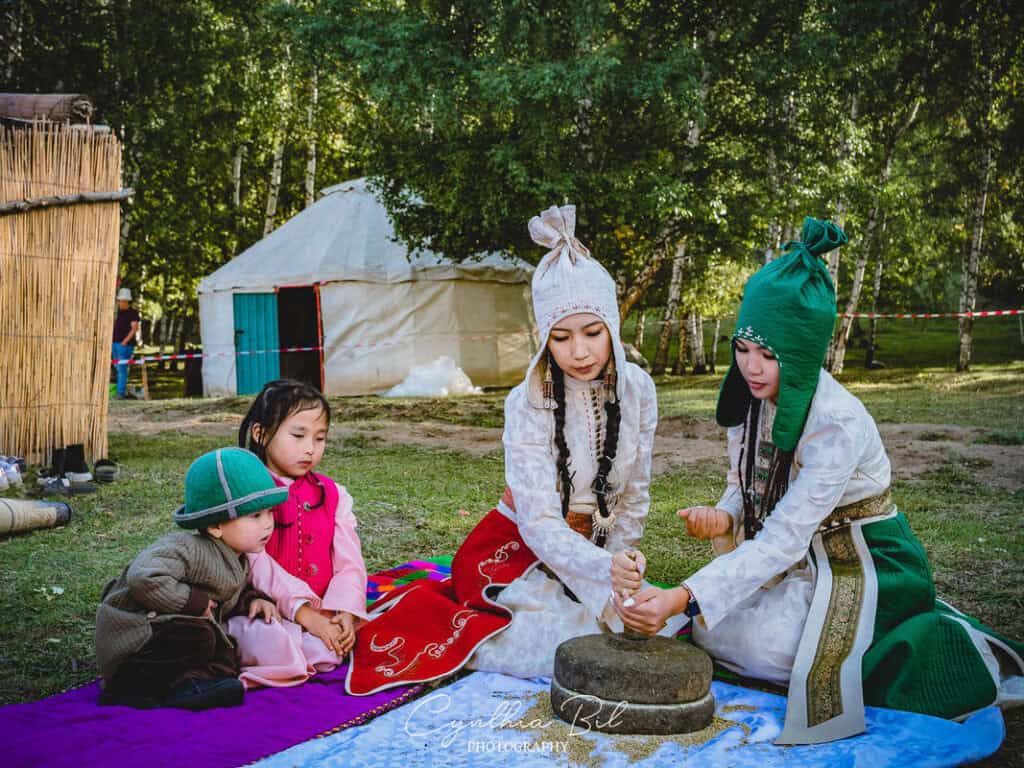
Watch artisans carve, weave, and sew. You’ll see the making of felt carpets, the etching of leather, the shaping of wooden bowls, crafts that once sustained nomadic families. Visitors can join workshops, learning how to create with their own hands.
Traditional Dress & Fashion
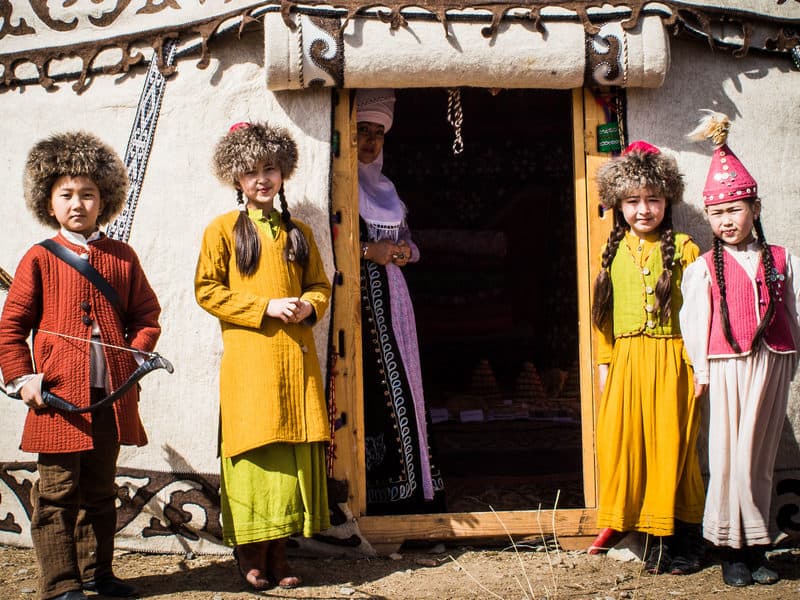
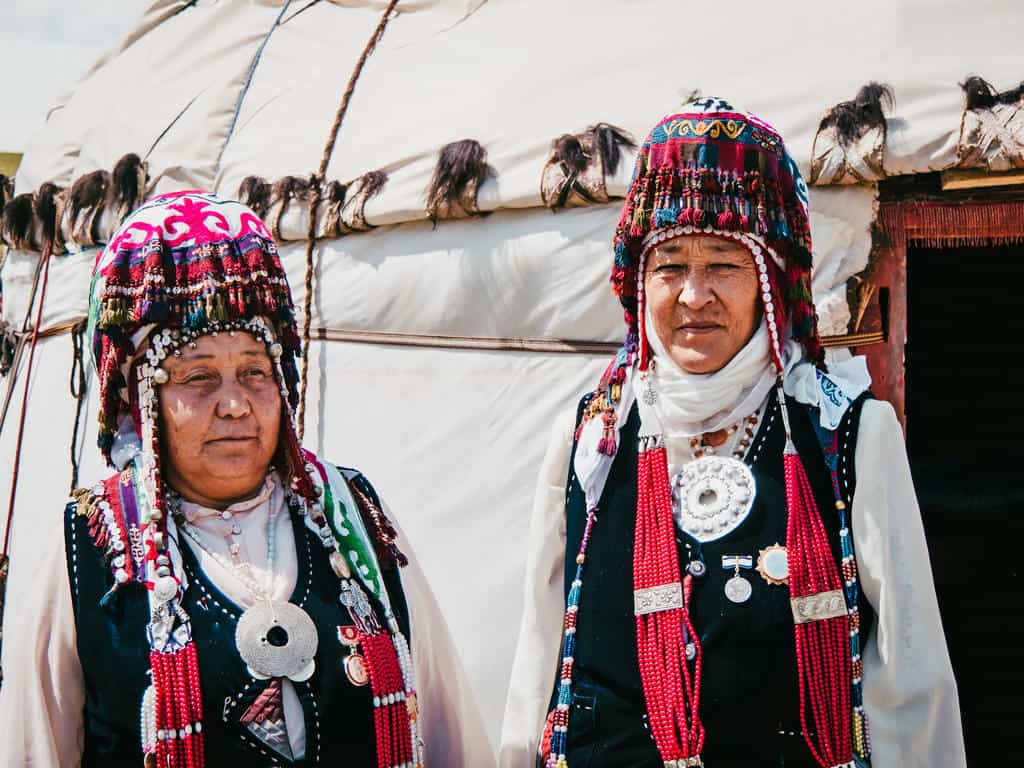
Every detail tells a story, from the embroidery on a woman’s collar to the tall felt kalpak worn by Kyrgyz men. Fashion shows and exhibitions celebrate how nomads dressed not just for beauty, but for resilience in mountain climates.
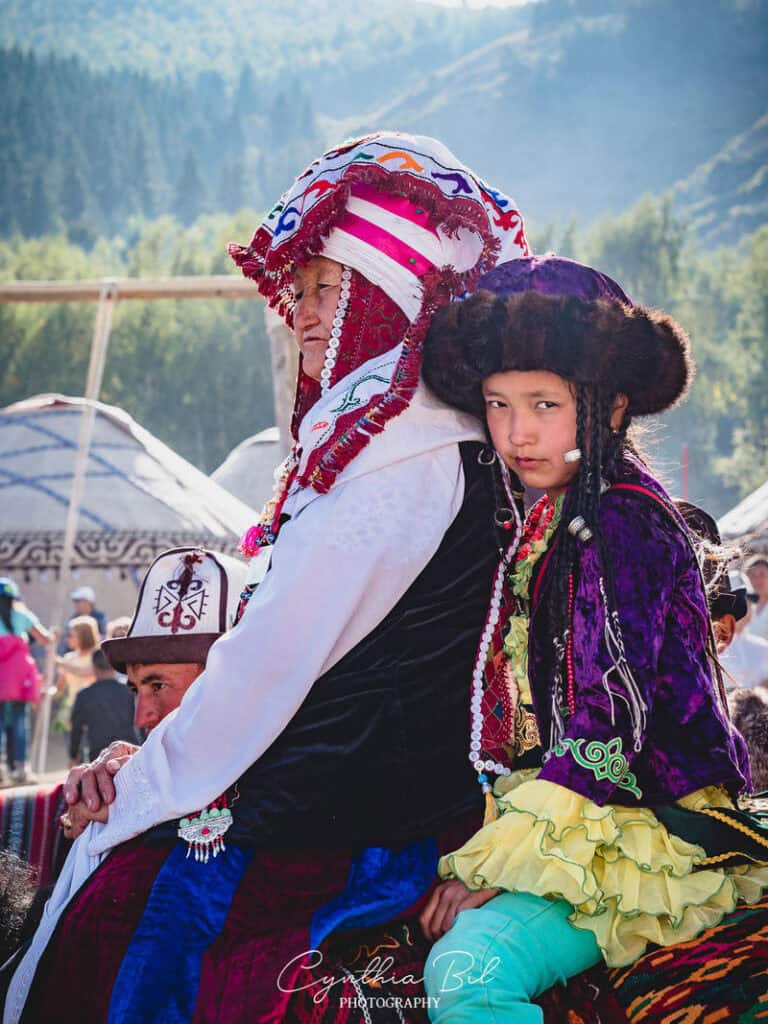
Culinary Heritage
Food is the language of welcome. Taste beshbarmak, Kyrgyzstan’s national dish; sip kymyz, the slightly sour fermented mare’s milk; enjoy boorsok, golden fried dough offered with endless tea.
Scientific & Intellectual Games: The Mind of the Nomad
To be nomadic is to be observant — to understand weather, animals, stars, and routes. The scientific and intellectual program of the World Nomad Games honors this wisdom.
Toguz Korgool & Strategy Tournaments
This ancient counting game — known across Asia and Africa in different forms — becomes a battlefield of logic. Players drop stones into small pits carved in wooden boards, trying to outwit their opponents through foresight and calculation. It’s calm, quiet, and deeply intense.
Asyk Atu (The Knucklebone Game)
Half game, half ritual, Asyk Atu uses sheep bones to test dexterity, accuracy, and a bit of luck. It’s usually played by children, but in the Games, it becomes a serious contest. One that connects modern players to generations before them.
Academic & Scientific Forums
Parallel to the Games, scholars, ethnographers, and cultural experts gather to discuss topics such as:
- The preservation of nomadic heritage in the modern world
- Environmental sustainability in high-mountain ecosystems
- The ethics of ethnosports and animal welfare
- Standardizing traditional games for international recognition
These panels give the Games intellectual depth, ensuring tradition isn’t just performed, but also understood, protected, and adapted for future generations.
Workshops & Knowledge Exchanges
Expect open discussions, demonstrations, and collaborations between craftspeople, historians, and researchers. You might learn how to construct a yurt, read ancient Turkic runes, or hear a local herder describe the medicinal plants of the steppe.
The World Nomad Games are an invitation, not just to watch, but to participate. To step into a world where hospitality is sacred, where the land and animals are respected, and where community matters more than competition.
If you go, you won’t just return with photos and souvenirs. You’ll carry home something harder to describe: a piece of the nomadic spirit, a sense of freedom, resilience, and connection to the earth. See you on the Games in Kyrgyzstan in 2026?
Plan your trip to Kyrgyzstan

Kyrgyzstan Itinerary: The Ultimate 7, 10, 14 & 21-Day Travel Guide
Kyrgyzstan Money Guide: Costs of Living and traveling in Kyrgyzstan in 2026

Best Tips and complete Packing List for Traveling in Central Asia in 2026 – When to go and what to wear when visiting Central Asia
Kyrgyzstan Horseback riding: Everything you need to know about horse riding in Kyrgyzstan+ the 9 best horse Riding destinations

Kyrgyzstan Travel Guide: 20 Useful Things you should know to visit Kyrgyzstan in 2026
i have been absolutely mesmerized by the visual and aural emotions of watching and listening to this incredibly emotive display of pride, More please ABC Aus put this on our arts cultural and sports reports next time please