
Here’s the complete travel guide on how to visit Moyaq and the Aral Sea in Uzbekistan, including info on what happened to the Aral Sea, what is there to visit in Moynaq, how to visit the ship graveyard, is it safe to visit the Aral Sea disaster, is it even worth visiting, and much more!
The Aral Sea was once a thriving ecosystem and used to be one of the largest saline lakes on Earth.
Currently, the water straddles North Uzbekistan and South Kazakhstan but its location continues to shrink. Compared to 1960, there is only 10% of the Aral Sea left (we’ll get to that later).
If you take a look on Google Earth, you can see pearly-jade blemishes painting the area. This is not water but the opposite: desert.

There are two lonely stretches of water left – one in Kazakhstan (known as Small Aral or North Aral) and the other in the north of Uzbekistan which dips into Kazakhstan (known as Large Aral or South Aral). Ship graveyards, former fishing ports and barren sea beds pepper what was once the lively Aral Sea shores.

In this travel guide, I’ll tell you all about how to visit the Aral Sea in Uzbekistan and the ship graveyard in Moynaq.
Tip: See my Uzbekistan Travel Page for a complete overview of all my travel guides and blog posts about Uzbekistan!
Disclaimer: This posts might contain affiliate links, meaning that if you make a purchase through these links, I may earn an affiliate commission. Thank you for helping to support this website!

Plan your trip to Uzbekistan
- 18 important things to prepare your trip to Uzbekistan
- 26 beautiful places to visit in Uzbekistan
- Uzbekistan Itineraries: 1 to 4 weeks in Uzbekistan
- How to travel around Uzbekistan by train
- What to pack for Uzbekistan
- Uzbekistan Safety Guide
- Uzbekistan Money Guide
- Tours & Experiences: Guided City Tours in Uzbekistan, Adventure Tours in Uzbekistan
What happened to the Aral Sea?
*Geology time* The Aral Sea is actually an endorheic lake, which basically means it is a big basin of water that doesn’t flow into any oceans. Endorheic basins are geologic depressions that have not formed an outlet to the sea.
Prior to the 1960s, the Aral Sea was fed by the Syr Darya and the Amur Darya rivers, rainfall and snowmelt in spring.
In the 1960s, the Soviet government hatched a program to expand its agricultural prospects. It was ordered that the Syr Darya and the Amur Darya rivers be diverted to irrigate land and cotton plantations. The short-lived scheme had shattering consequences for its land and people.
Because the Aral Sea was stripped of its source of nourishment, its shores gradually began to shrink. In 1997, the sea had depleted by 90% and split first into two separate salty lakes – the Small Aral in the North (Kazakhstan) and the Large Aral in the South (about half of it in Uzbekistan).


The result was deadly for animals and fish. The sea’s concentration of saline became at toxic levels which killed its habitants. Freshwater fish like bream and carp – which played essential parts of the ecosystem – died. As more and more salt was deposited on the banks, animals ate the salt-laced grass unknowingly and became ill.
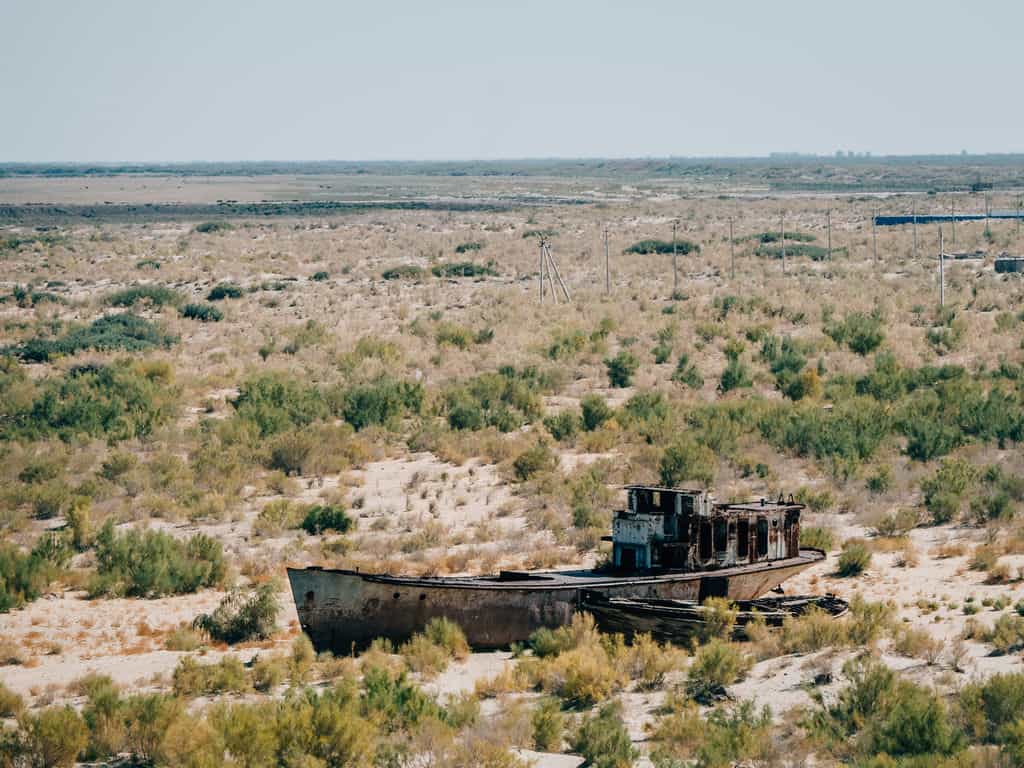
As the water dried up, so did the economy. Infrastructure in fishing ports were abandoned and ships were grounded.

What happened to the Aral Sea? Visiting the Aral Sea and ship graveyard in Kazakhstan
The people living by the Aral Sea developed severe health issues. The winds whipped up toxic dust storms containing salt, fertilizers and pesticides. Currently in the Aral region in Uzbekistan, the infant mortality rate is still high and many mothers are warned not to breastfeed their babies.
It’s said the Aral Sea disaster is one of the most dreadful man-made environmental catastrophes on Earth. When you arrive and see the barren fields of sand and stand in what was once its flourishing waters, you are slapped with how sobering the tragedy is.

However, not all hope was lost. In 2005, the Kok-Aral dam was constructed in the northern Aral Sea in Kazakhstan.
By 2011, saline levels matched those of the 1960s. The project is in its third phase which is replacing canals in the Syr-Darya basin to manage its flow. The water levels have risen, kick-starting a new lease of life for the fish too.

EXPERIENCE UZBEKISTAN BEYOND THE SILK ROAD
Go on an active 14-day adventure combining legendary Silk Road cities with remote mountain trails, desert camps and meaningful local experiences.
Moynaq and the Aral Sea
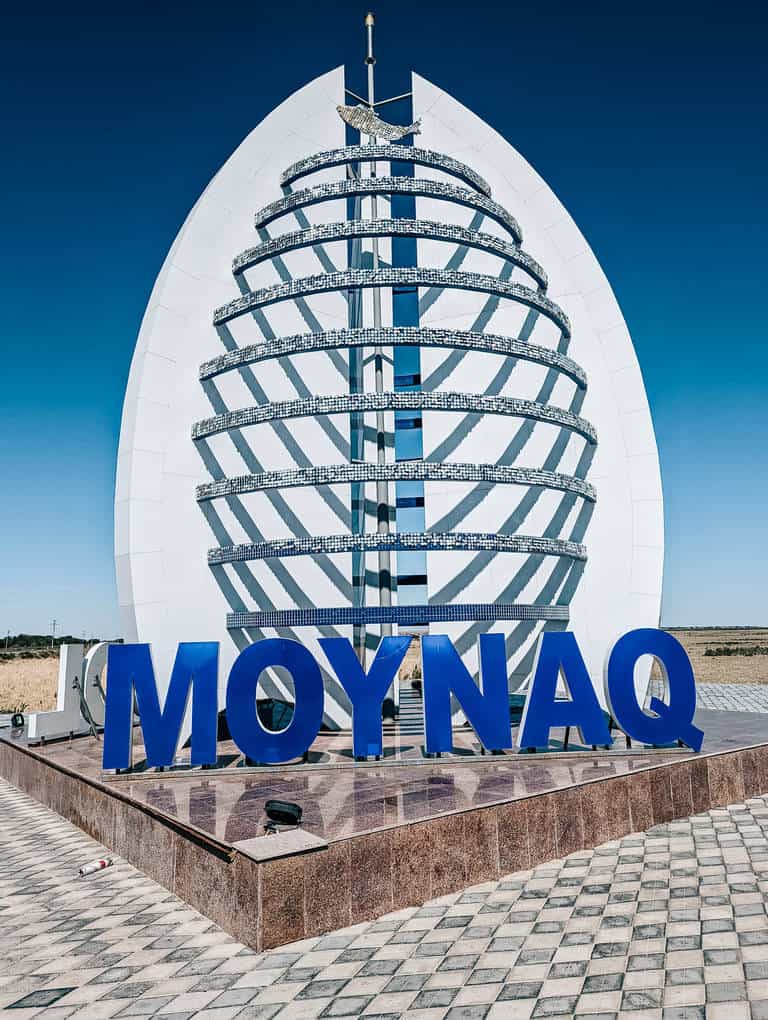
Moynaq, also known as Moʻynoq and Muynak, sits in North-West Uzbekistan. The city is now a husk of what it once was: the beating heart of the Aral Sea’s fishing industry.
Prior to the disaster, Moynaq was a pivotal port and prosperous asset to Uzbekistan, providing thousands of jobs. Waters were teeming with life and docks simmered with boats. Its bountiful sea life and picturesque beaches enticed many holidaymakers.
Once the water sources were cut off, the consequences struck Moynaq hard. Its fishing economy crumbled and the bustling city began to lose its pulse. As the waves retreated, buildings were abandoned and boats were breached on the sands.

Barren plains now engulf Moynaq and the sandbeds are potent with salt and concentrated remains of fertilizers from the former cotton plantations. Occasionally strong winds whip up the particles and create toxic dust storms.
This has caused respiratory diseases for many of its residents. Many say Moynaq was one of the worst-hit areas due to the devastating impacts on its economy and its ecosystem.

Nowadays, gas companies try and cash in on the possible resources beneath the ground which has provided some jobs for the Uzbek people.
Tourism has taken a totally different form here today. Many come to reflect and fathom how disastrous the impact was to Central Asia. Moynaq’s main attraction is now not its beaches, but its ship graveyard, which provides a humbling experience and is a blatant reminder to respect nature.


Visiting Moynaq: 3 places to see
1. The Regional History and Aral Sea Museum

It’s a very modest museum home to Soviet artifacts, photographs and paintings. It was built in 1984 and some parts haven’t changed much, including a small outdated film about the disaster.
Truthfully, I don’t really think it was worth a visit… Walking around the area will give you a better grasp of Moynaq’s history.
- Opening hours: Tuesday – Sunday, 9am – 6pm
- Entrance fee: 30.000 UZS
2. Moynaq ship graveyard

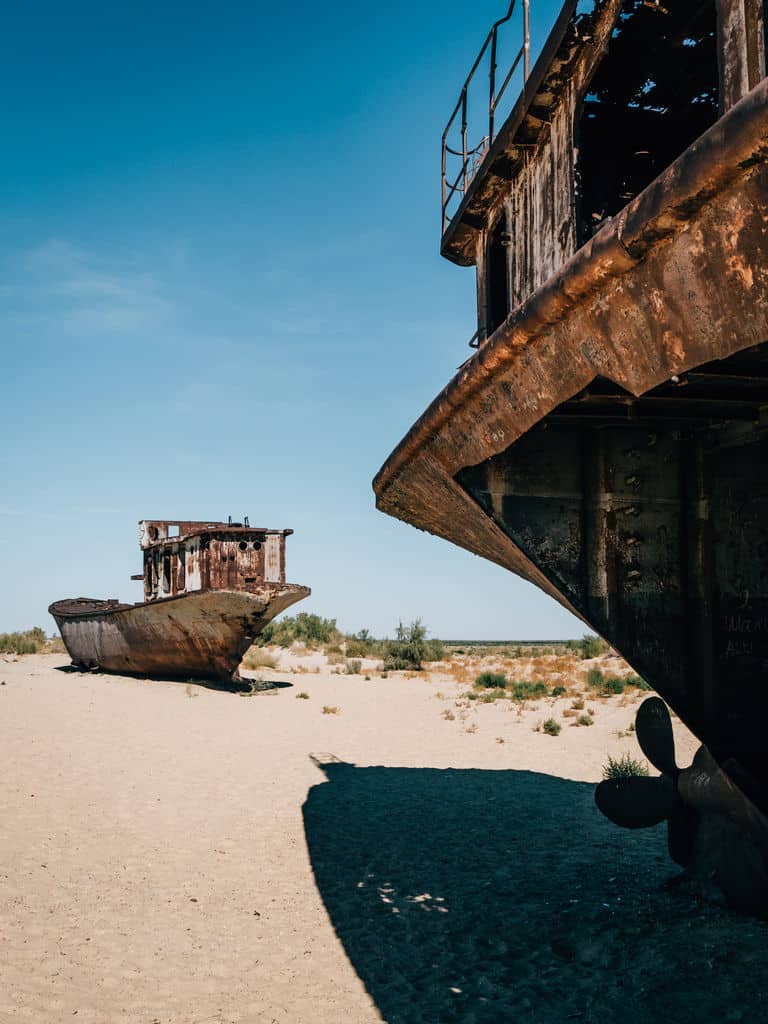
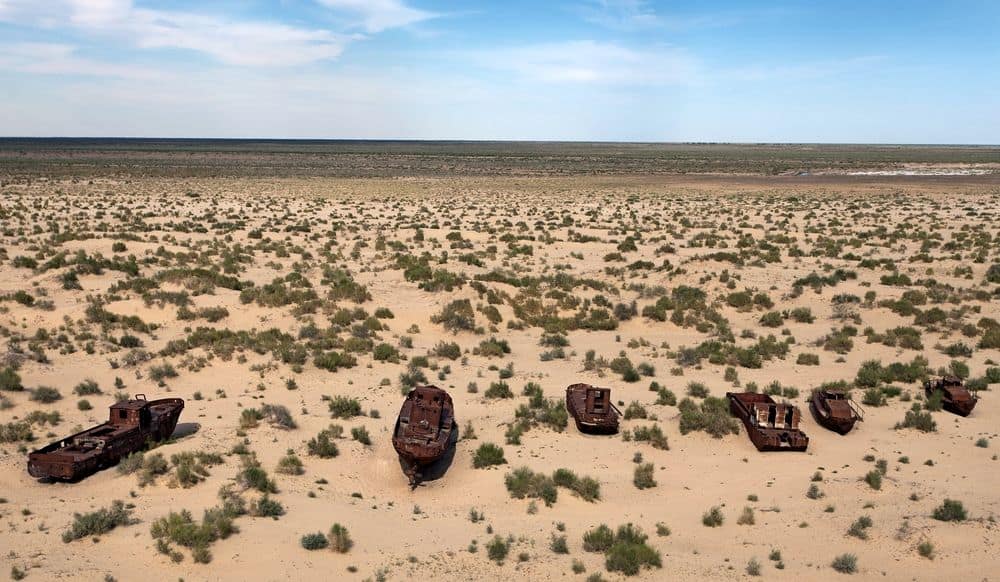
Moynaq’s ship cemetery is perhaps the starkest reminder of how the disaster decimated not only the fishing industry but a whole ecosystem. I was free to weave in between the ships and reflect, which was like being in an outdoor museum.
Many websites say you must travel far into the desert to see the rusting boats, but this isn’t the case. Moynaq’s ship graveyard is located next to the Regional History and Aral Sea Museum.



3. Aral Sea Memorial
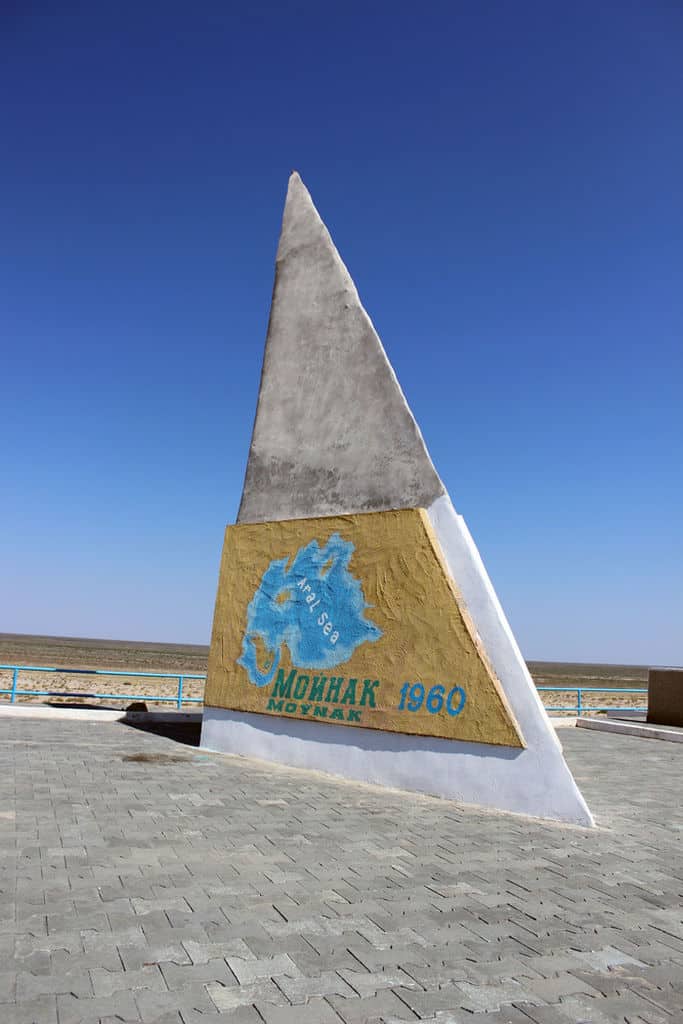
Situated overlooking the ship graveyard, the monument towers over the sands and its spike acts as a permanent reminder of where the sea’s waves once were.
There is a small historical summary to read, and it is a good place to look over at the boat cemetery.
How to get to Moynaq from Nukus?
From Nukus to Moynaq is a 3-3½ hour journey. Despite how remote it is, Moynaq is accessible by public transport, all that is needed is a little planning. Here are some options:
How to get to Moynaq from Nukus by public transport
1) By Marshrutka
There are daily marshrutkas (minivans) to Moynaq from Nukus bus station. The bus leaves at 9am. Ensure you arrive early (ideally 8:30am) at Nukus bus station as the marshrutkas get busy.
The price is around 20,000 SOM for a ticket. The final marshrutka back to Nukus departs at 3pm.
2) By shared taxi
Taxis to Moynaq can cost around 700,000 SOM ($60 USD), so if there’s a group of you, it could be worth splitting the fare. Bare in mind if you book from a hotel, some may charge a little higher. Always agree on the fare before you depart.
If you’re struggling to find a direct taxi to Nukus, an option could be to grab a taxi halfway to the town of Kungrad (two-hour trip) and then take another taxi from Kungrad to Moynaq (another two-hour trip).
3) By train
If you are travelling from the capital Tashkent, an option could be to take a train from there to Kungrad and then take a two-hour shared taxi to Moynaq.
For more information about rail travel in Uzbekistan, read my complete guide here.

Moynaq Tours
To save yourself planning accommodation and transport, why not combine this trip as part of a tour group? I provide tour planning services and can help with itineraries.
You can also browse online for tours to Moynaq and the Aral Sea. Here’s a suggestion:
Visiting the Aral Sea Disaster: 8 places of interest
Here are the places of interest you can include on your visit to the Aral Sea from Nukus, or areas that will be part of a tour. Other blogs may mention more places, but I’ve stripped it down to the ones I found most interesting and have a good range of things to do.
1. Necropolis of Mizdakhan

Located in the hills about 20km from Nukus, this ancient monument dates back to the 4th century B.C.
The necropolis is a myriad of mausoleum ruins, burial grounds, and citadel walls and is considered by Muslims one of the most sacred places in Uzbekistan.

2. Fortress of Gaur Kala
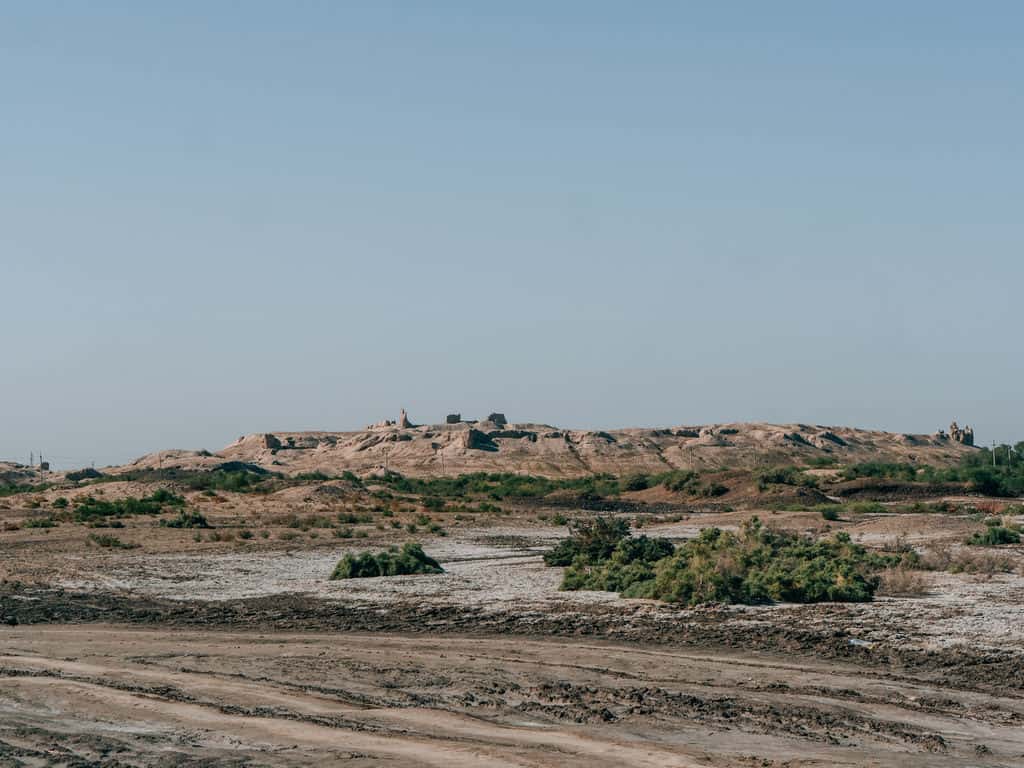
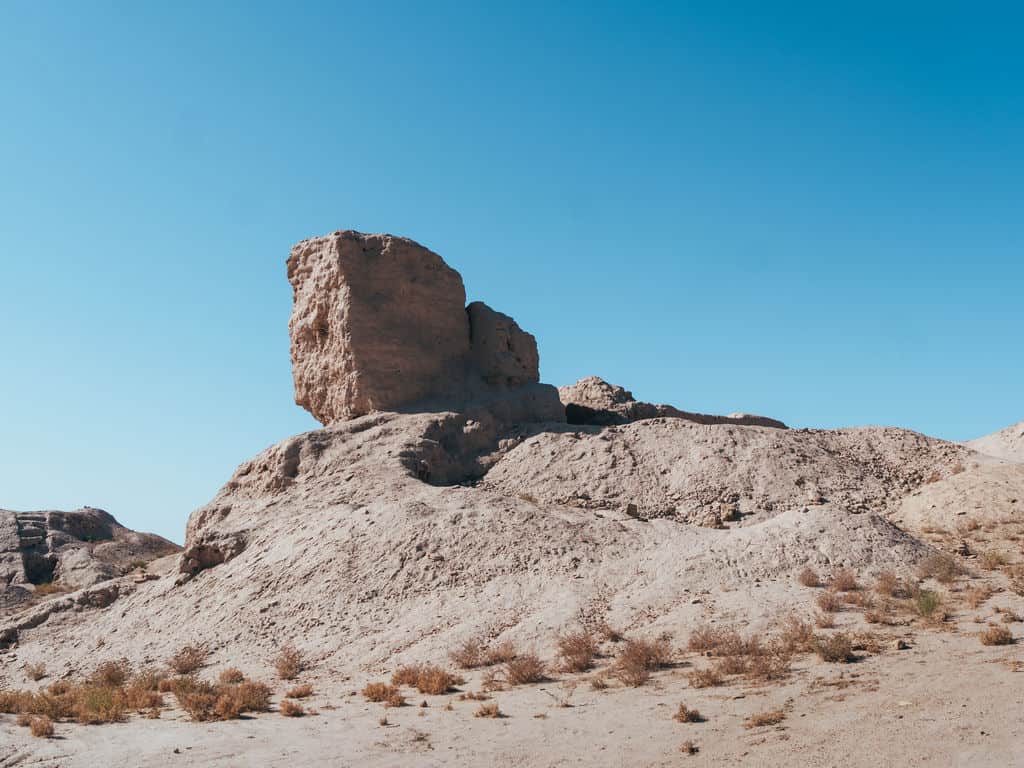
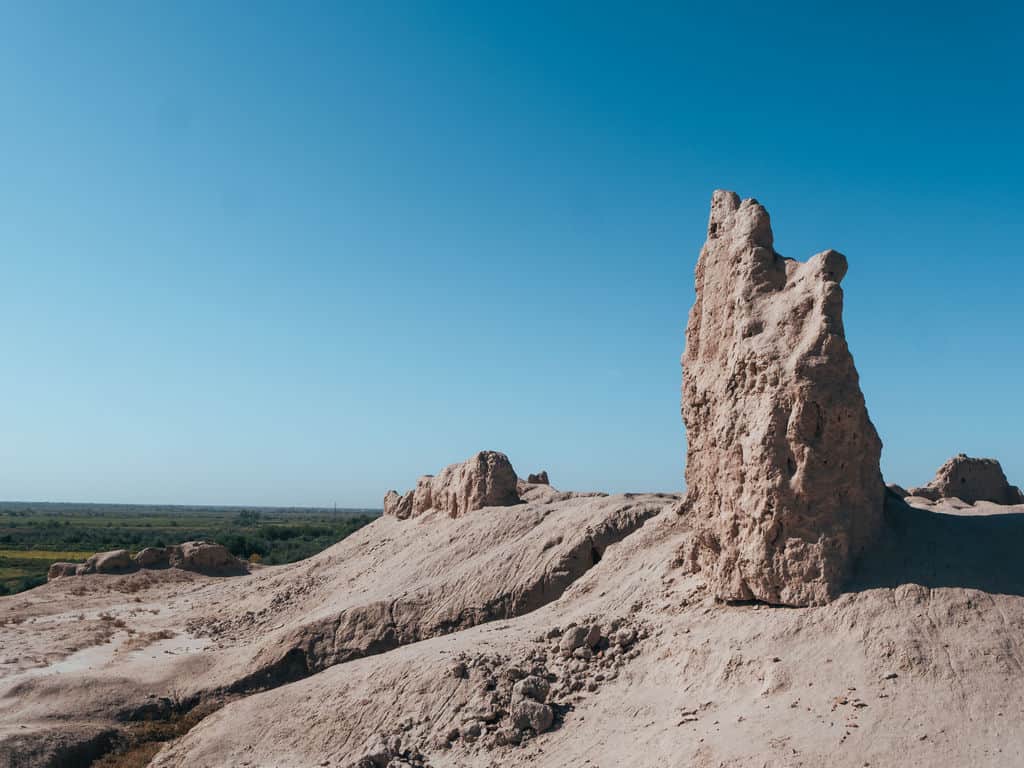
These ancient defense walls sit around 149km east of Nukus and were built in the 4th century B.C. The settlement, which translates as ‘fortress of the infidels’, still stands strong with its 10-meter-tall towers.
The monument reveals glimmers of early Uzbek life, and it’s so impressive to be on the grounds of a 2,400-year-old building.
It’s disputed that it was once a palace after archaeological digs uncovered women’s jewelry, decorative cloths, and decorative throne items.
3. Moynaq
See Moynaq and the Aral Sea above.
4. Ustyurt Plateau
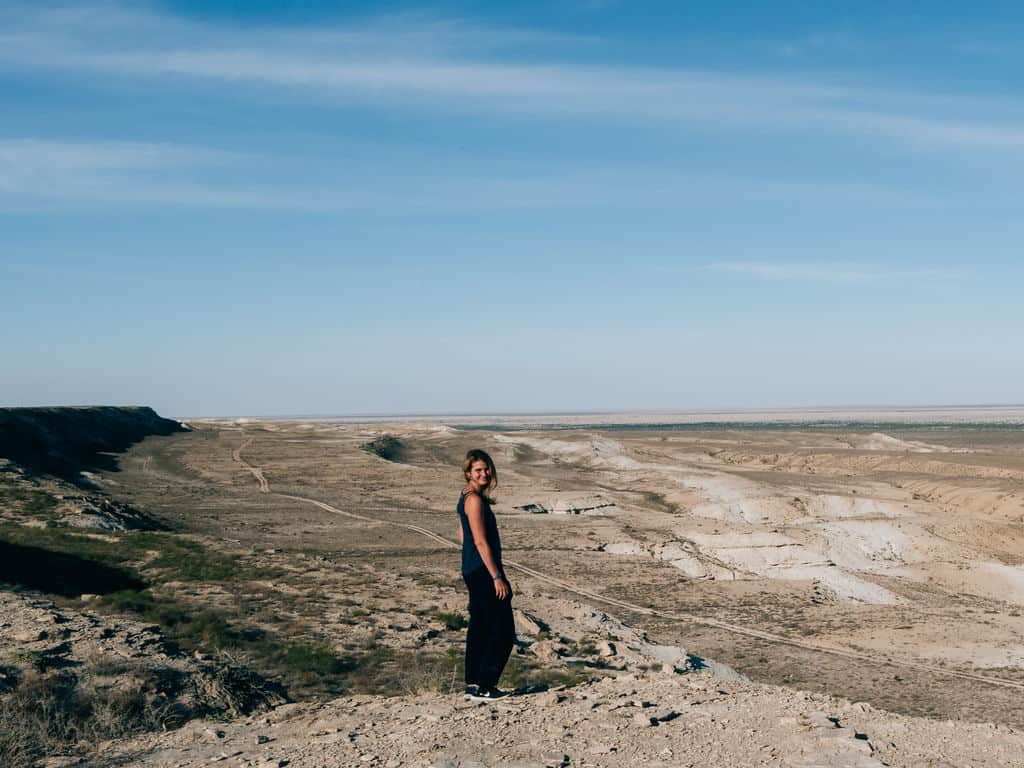
The great Ustyurt Plateau, located between Kazakhstan and Uzbekistan and occupying a huge area between the Aral and Caspian Seas, is a clay and stony desert with the total area of about 200 000 km².
“Ust-Yurt” means “flat elevation”, rising above the surrounding plains at 180-300 meters. According to scientists, Ustyurt is the bottom of a dried-up sea, which existed here in the early and middle Cenozoic Era (21 million years ago).
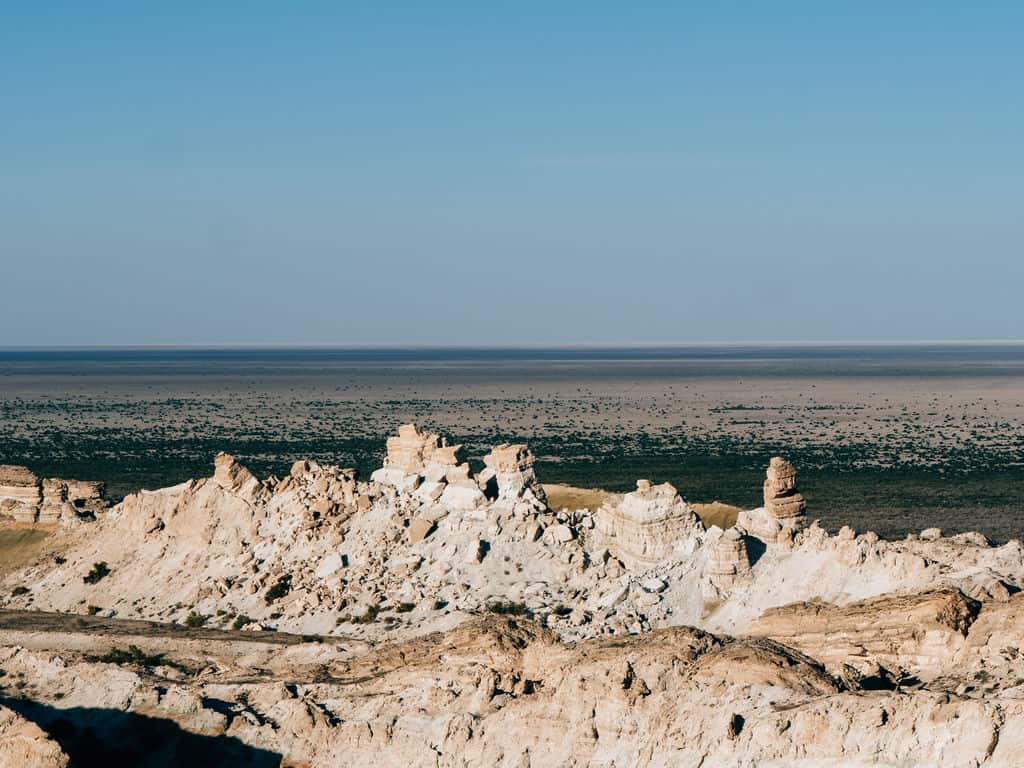
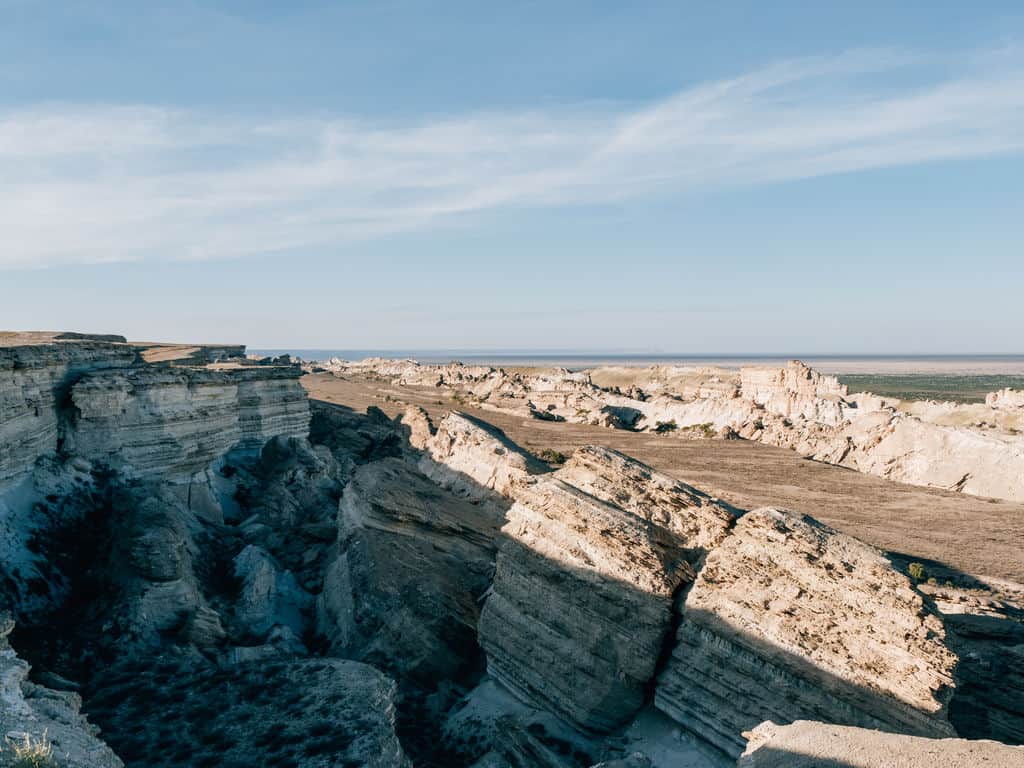
It’s a very photogenic and impressive area – a desolate landscape of flat desert terrain broken by chalk rocks and rock escarpments – and worth stopping on your way to the South Aral Sea Shore (see below) to snap some pictures.
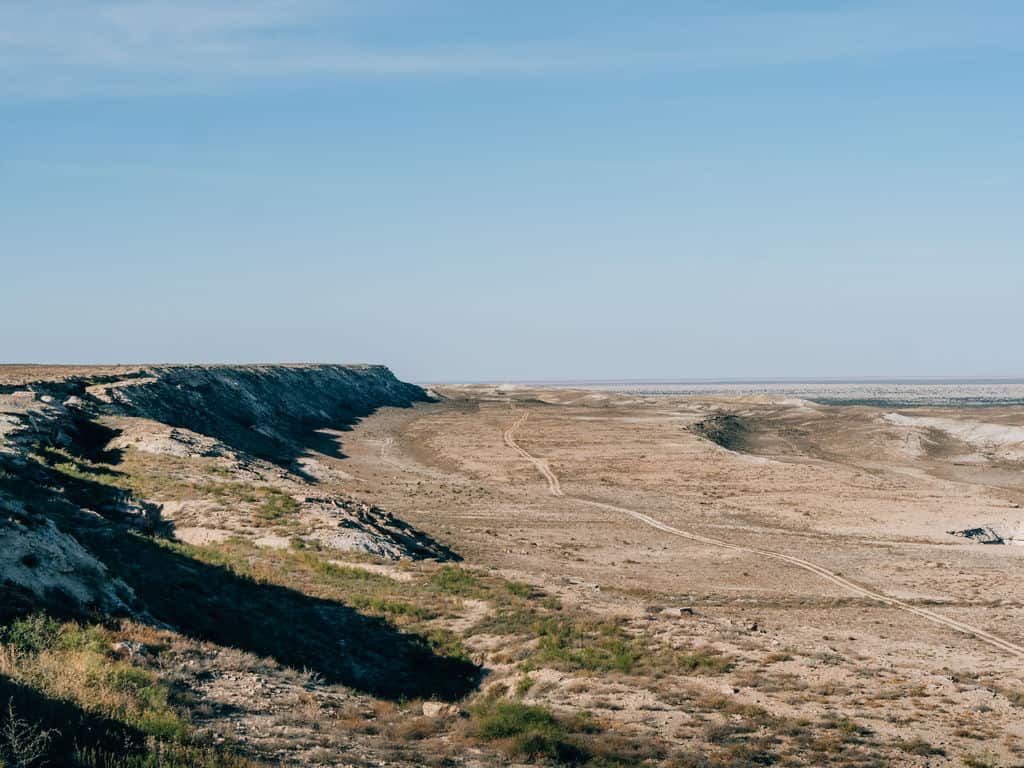
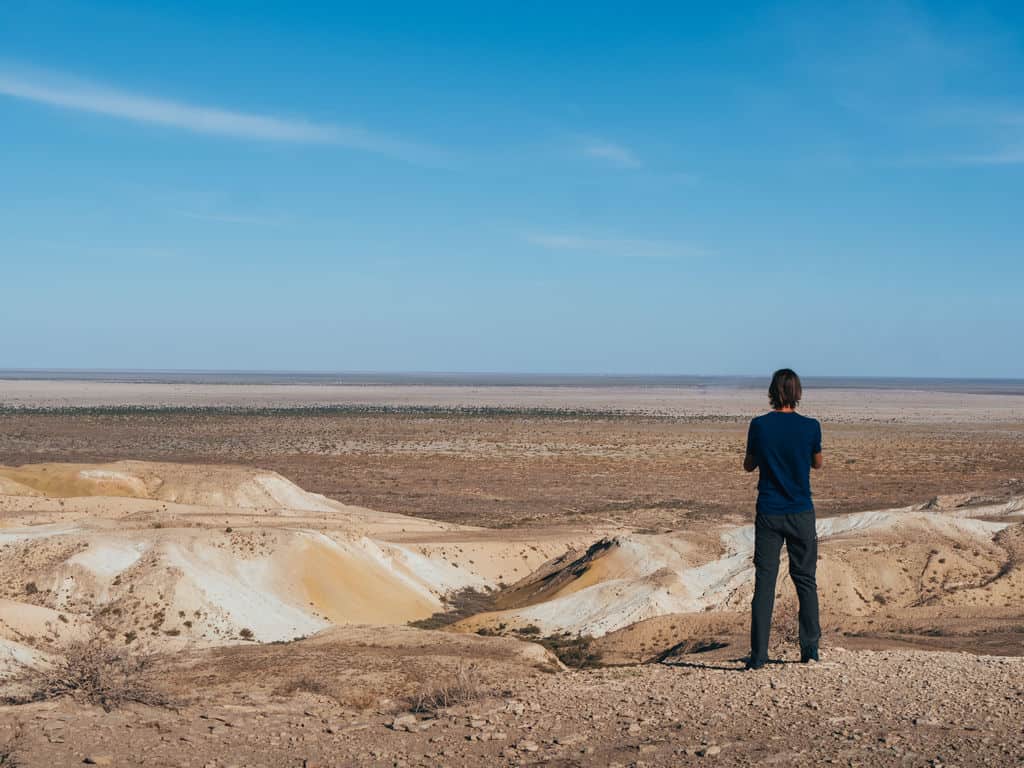
5. South Aral Sea Shore
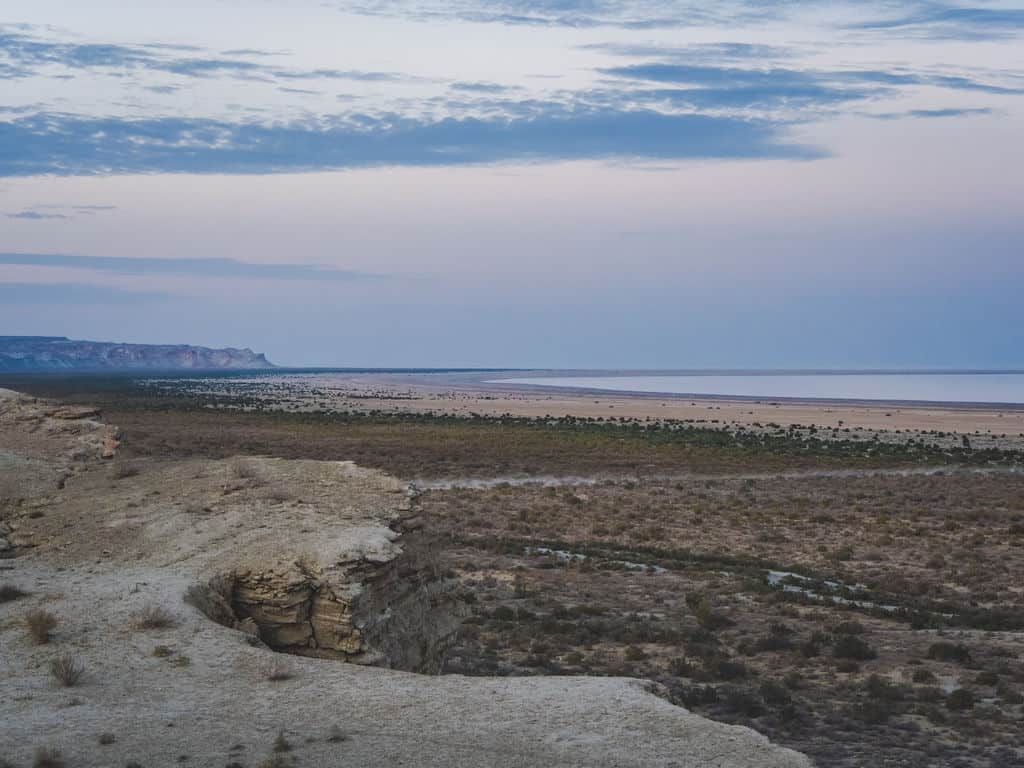
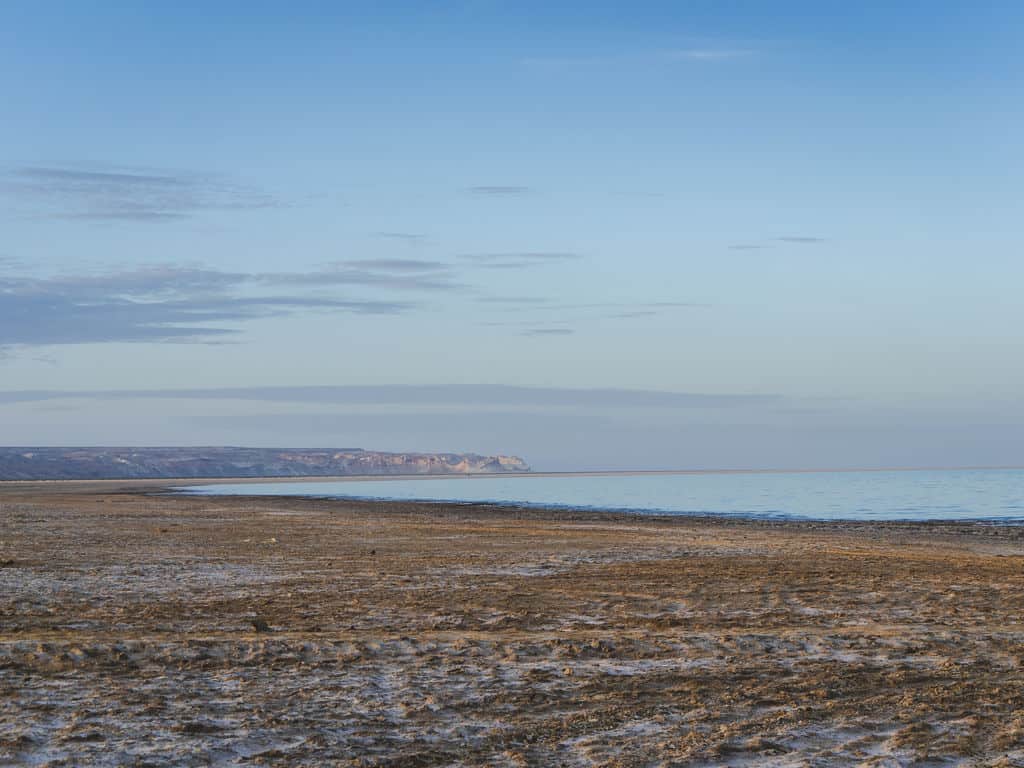
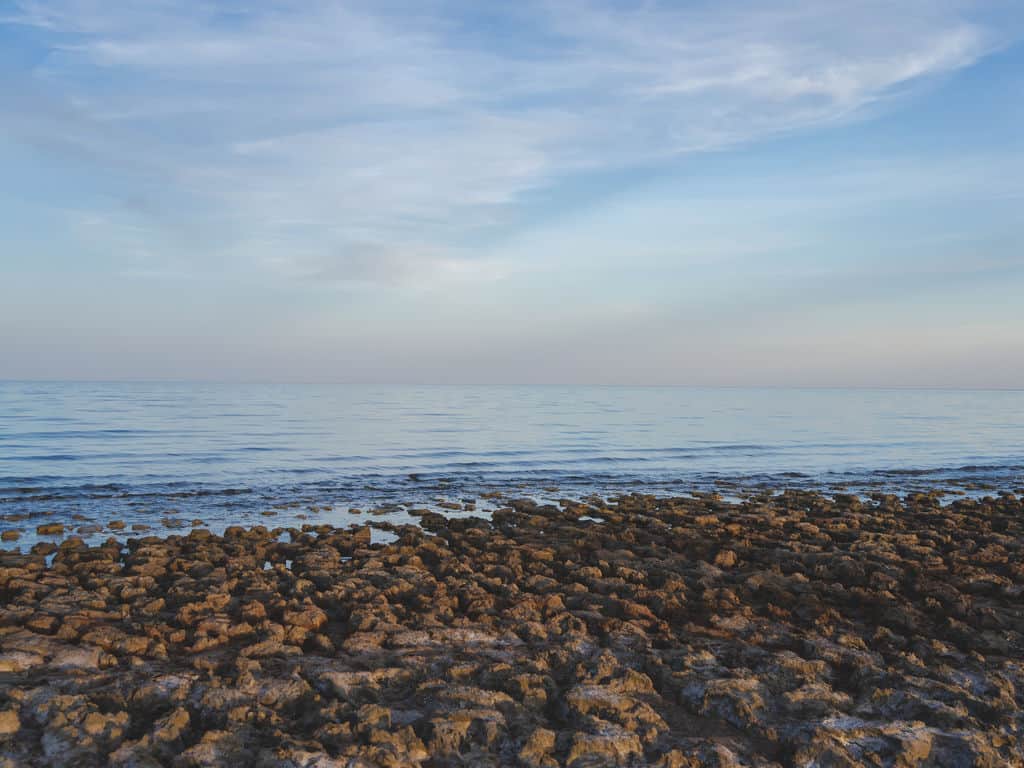
After the Aral Sea had shrunk and split into two bodies of water in 1987, it left behind the smaller North Aral Sea and the larger South Aral Sea. In 2003, Uzbekistan’s South Aral Sea split again into two. By 2014, the eastern lake had withered away, and now there is only the western stretch of water left.
It goes without saying, but swimming in this sea is a no-go (the pong from the water and the dirt on the shore should be enough to stop you from taking a dip!). The same goes for drinking from the water, don’t do it. However, please know that visiting the waters for short periods will not cause you any harm.
6. Sudochye Lakes
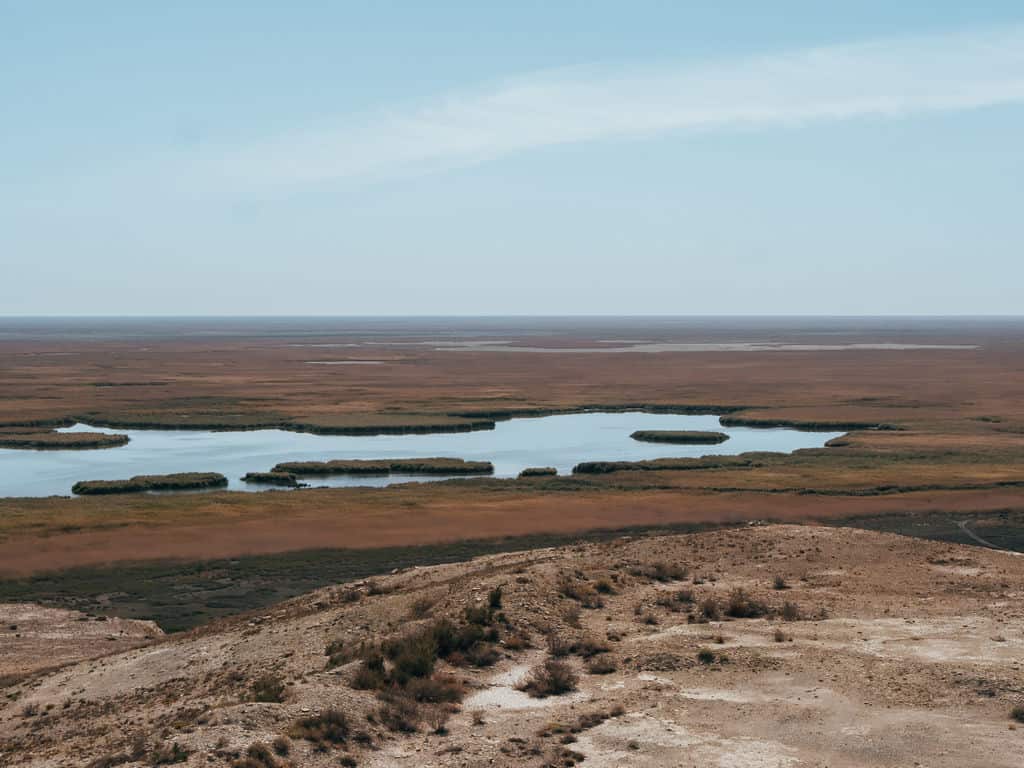
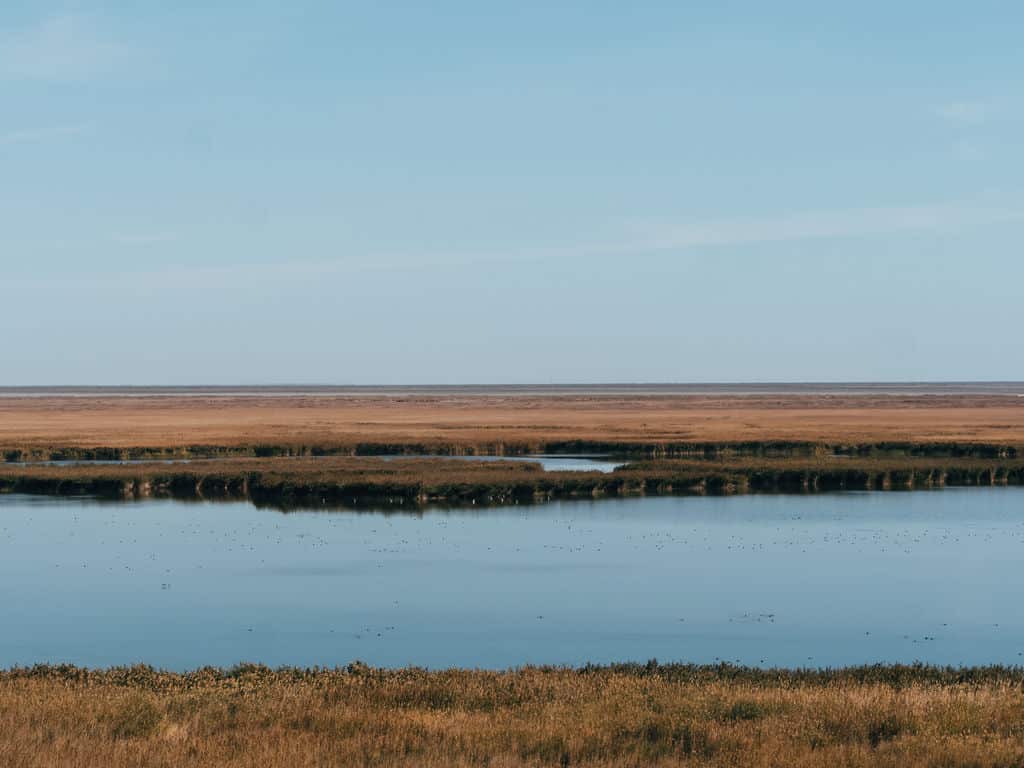
Fed by the Amudarya river, Lake Sudochye was once a water basin in the Moynaq district of the Kungrad region. It was a popular spot for fishermen and was a hub of ecological activity. Sadly it too was struck by the Soviet irrigation program and its thriving waters were depleted.
In recent years, people made efforts to save the lake and drain water into it. The area is now a system of reservoirs, and its reedbeds are bustling with endangered species of birds and flamingos.
7. Barsa-Kelmes Salt Flats
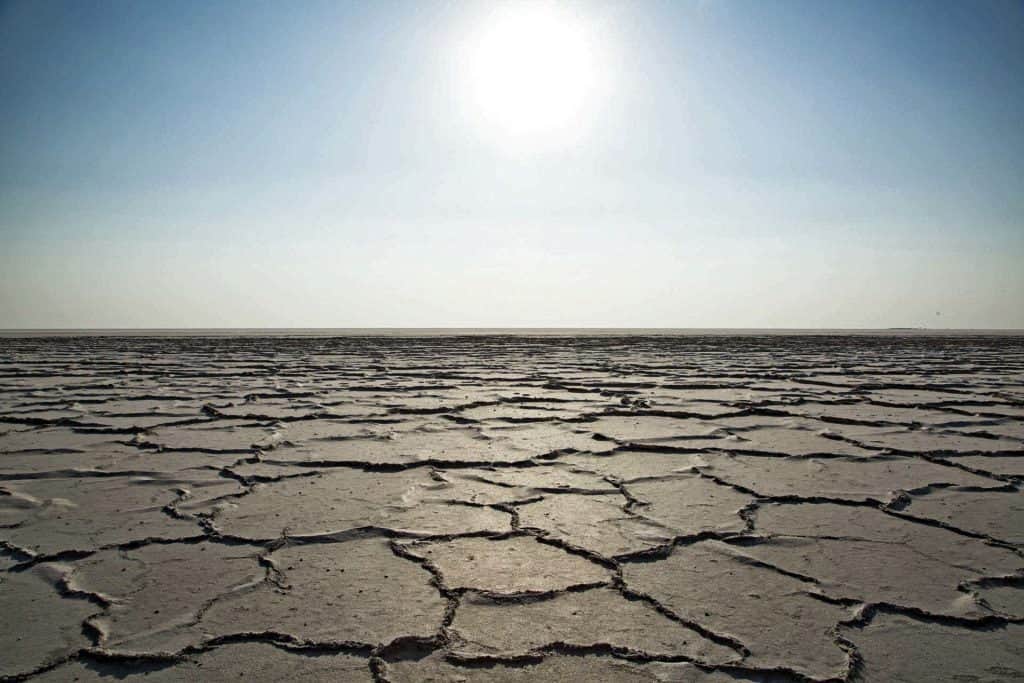
These salt marshes are the crisp, crystalized leftovers of an ancient lake. Situated southwest of the Sudochie Lakes, this stretch of lifeless land is one of both beauty and loneliness.
It’s great for photography as the white particles dazzle against Uzbekistan’s blue skies. Make sure to plan your journey here in spring or autumn though, as the white acts like a mirror for the sun’s rays and it can get HOT.
Note: Before you start exploring, apply sunscreen to the bottom of your chin and under your nose (unless you fancy getting some seriously weird sunburn).
8. Stihia Festival
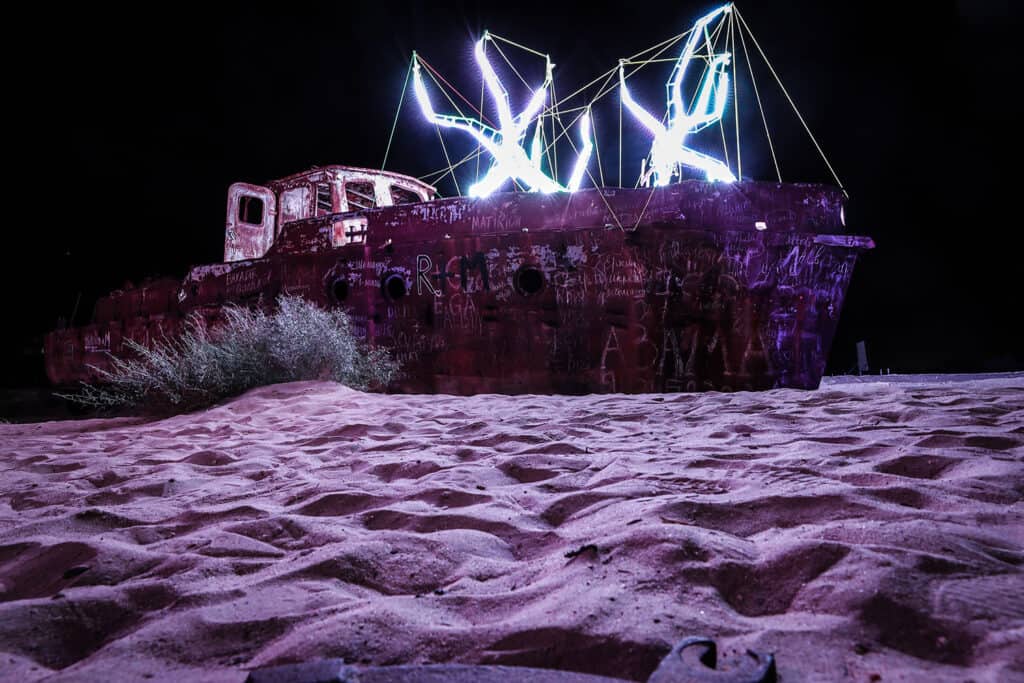
Since May 2017, electronic music lovers annually flock here for some serious techno… in the desert. It may at first seem somewhat inappropriate to be hosting a knees-up on the sandbeds of a huge disaster, but Stihia’s ethos actually helps the region.
The festival combines music, art and science to raise awareness about the environmental catastrophe and raise money for Aral Sea communities. The festival has hosted techno pioneers like Nina Kraviz, Boston 138 and Vladimir Dubyshkin so be sure to check out next year’s lineup.
How to get to the Aral Sea in Uzbekistan
To get to the shores of the Aral Sea and visit all the places mentioned above to delve further into its history, you will have to arrange a tour or use private transportation.
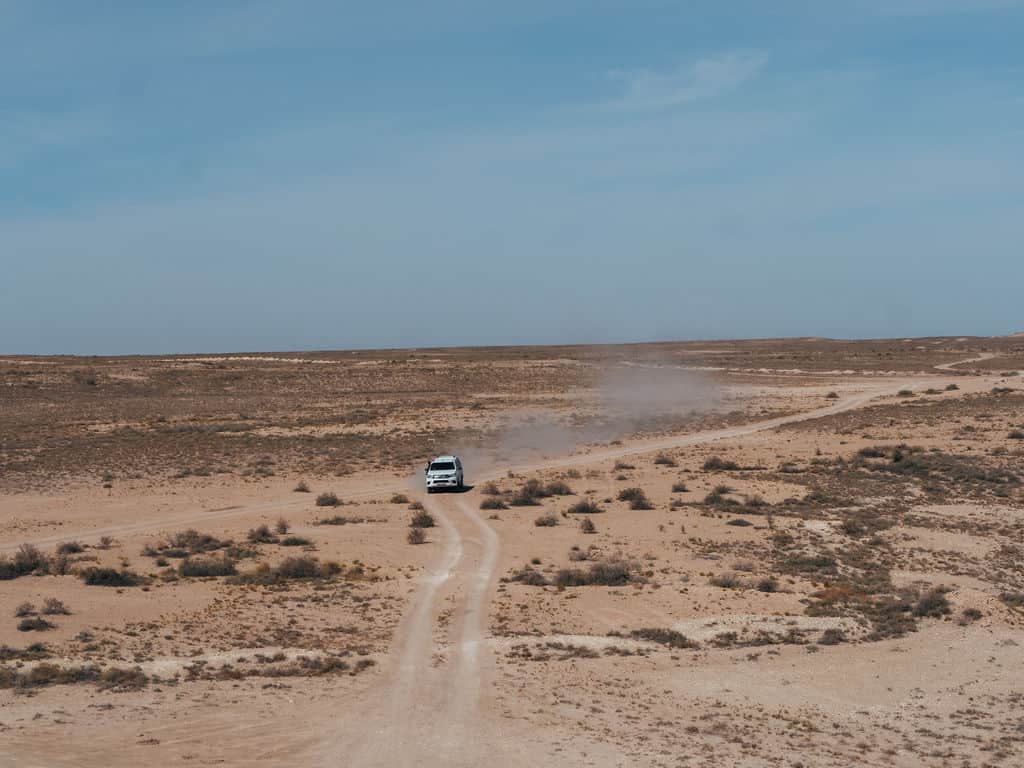
With the exception of going to Moynaq (see above section on how to get to Moynaq), there’s no public transport going to any of these places. With its climate and terrain, a 4×4 vehicle is needed to get about safely.
By Renting a car
I haven’t found any availability with the online car rental companies in Nukus. I’m not even sure if you can hire a 4×4 car in Nukus… Your best option, if you want to visit the Aral Sea independently, would be to rent a car in Tashkent and drive all the way to the other side of the country.
In my honest and humble opinion, I think this will be much more expensive than hiring a car and driver or joining a tour (see below) for the 2 to 3-day trip from Nukus to the Aral Sea shores and back…
By Hiring private transport +driver
Most travelers visiting the Aral Sea choose to get there by hiring a 4×4 vehicle with driver. This is also the way I made this trip. Prices for a 2-day trip, covering all the places of interest mentioned above and including dinner, breakfast and a one-night stay at a yurt camp on the Aral Sea shores, start from USD $440 for 1 person (without a guide).
With the more people you are, the cheaper the price will be. You can inquire at your hotel/hostel in Nukus to hire a driver + car.
If your budget allows it, I would highly recommend getting a guide though (usually an additional $100). The drivers usually don’t speak English and won’t interact much with you. If you truly want to learn more about the history of the Aral Sea and the place you’ll visit on this trip, you should get an English-speaking guide or join a group tour.
By joining a group tour
The best and most budget-friendly option to visit the Aral Sea in Uzbekistan would be to join a group tour from Nukus. You can inquire at your hotel/hostel in Nukus if there are any group tours planned or you can book the following tours online:
Plan your perfect Central Asia journey
Dreaming of exploring Uzbekistan and Central Asia, but not sure where to start? Whether you’re looking for a custom itinerary tailored to your travel style or a fully organized guided tour, I’m here to help you create a journey that goes beyond the typical route.
With years of on-the-ground experience in the region, I’ll help you travel deeper, smoother, and with confidence.
👉 Get in touch for a custom itinerary
👉 Explore my small group tours in Central Asia
Where to stay during your visit to the Aral Sea
Places to stay in Nukus
- Budget: Besqala Guest House
Besqala Guest House is very similar to a hostel. You can book private rooms or shared rooms. Prices start from $8 per person per night. The guest house also offers tours to the Aral Sea. Check prices and availability for Besqala Guest House
- Mid-range:
- Ratmina Hotel: If you’re travelling from the airport, this hotel is within walking distance. It averages around $45 per room per night. Check prices and availability for Ratmina Hotel
- Hotel Jipek Joli: For travelers with a bigger budget and seeking more comfort. Prices are around $50 per room per night. It is close to the Nukus Museum of Art. Check prices and availability for Hotel Jipek Joli.
Places to stay in Moynaq
Many of the small guesthouses in Moynaq close up late autumn through to late spring. The facilities here function veeerrrrrry differently to the western world – it’s more of a laid-back approach of rocking up and seeing what’s available rather than having a secure booking months in advance…
- Mayak Yurt Camp: Yurts are a proper way to understand the heritage of Central Asia. This yurt camp is next to a former lighthouse and for around $10 you can get some rest and breakfast. You can’t pre-book but there should be beds available. If you’re backpacking, you can pitch up your tent here for a small fee.
- Guest House Timur: The traditional small guesthouse is around $10 per person, including breakfast, $15 for including dinner. Tea and sweets are always on offer, and they may have some tours operating to the Aral Sea. The guest house is located north of the bus station on Nasyrova str. Pre-booking is not available, but the contact number is +998944502952.
- Hotel Ratmina 2: Good base for getting around Moynaq and averages around $39 per room per night.
Places to stay on the South Aral Sea Shore
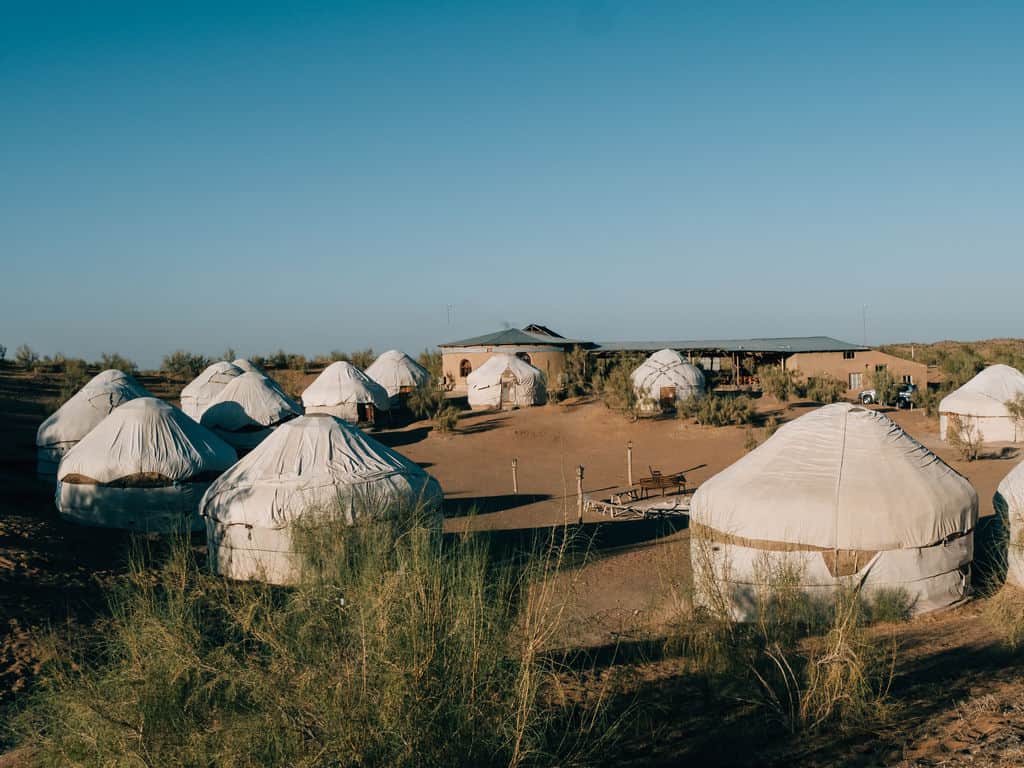
There are a few yurt camps on the Aral Sea shore, offering food and accommodation to tourists. You can’t pre-book these yurt camps as they’re usually included in the price when booking a private driver or tour.
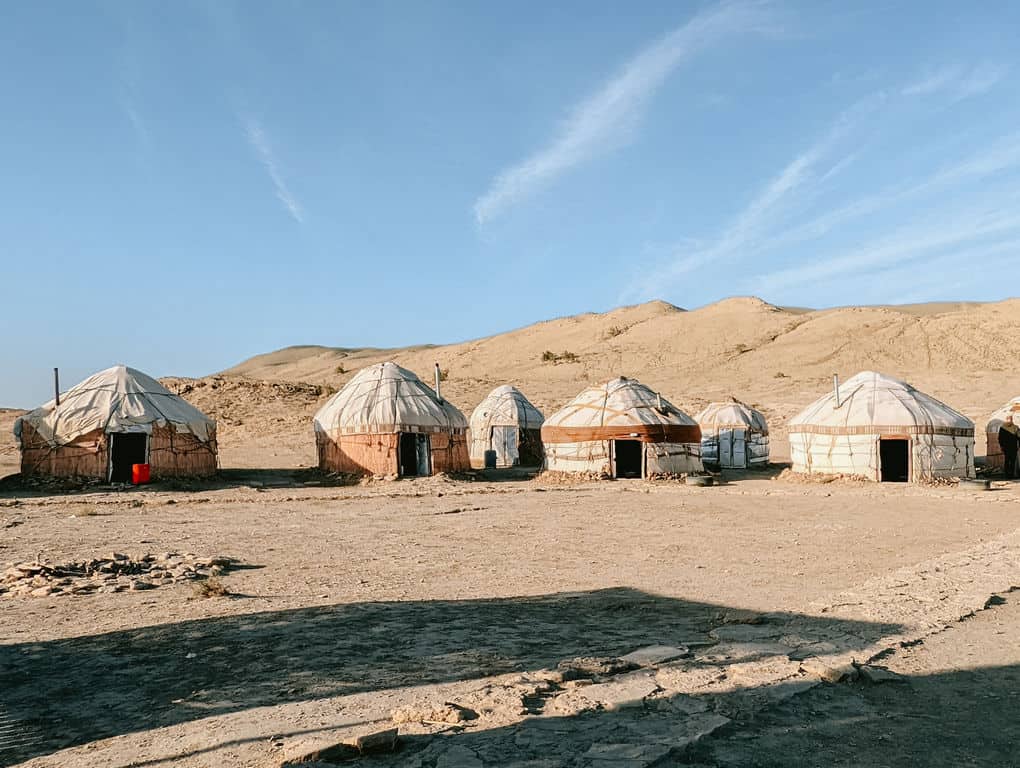
However… I don’t recommend staying at these camps. The location is nice and offers great views but I didn’t like the state of the yurt camps. The yurts weren’t very nice and the toilet facilities were awful! It really felt very touristic here and even the people working at this yurt camp didn’t show much joy.
If you really want to experience a nice yurt stay whilst in Uzbekistan, you should go to Aydarkul Lake in the Kyzyl-Kum desert.
When is the best time to visit the Aral Sea
The Aral Sea is very much a desert climate now. In the height of summer, the plains get to scorching temperatures of 40°C.
Its winter packs in a punch too, with low temperatures of around -15°C. I’d really advise planning your trip in April, May, September, October, or early November.
What to bring on a trip to the Aral Sea
If you’re planning to travel here in spring and autumn, it will be very hot during the day. Wear clothing that is both cooling and respectful to the Uzbek people.
Due to its desert climate, the temperatures will drop in the night so if you’re wild camping or staying in a yurt camp, bring an extra jumper/jacket.
If your trip is in late November to late March, brace yourself for biting winds, ice and snow. Temperatures can creep down to a nippy -15 °C so be prepared with the right clothing and gear!
There are no shops once you get to the Aral Sea. The final stop to possibly stock up on essentials like water is Moynaq, but there are only a few very small stores so don’t rely on this being your only option.
Ensure you pack plenty of drinking water before your trip and that you have enough food to keep you going (and some more if disaster strikes and your car breaks down!). There are no restaurants in Moynaq either so bring food that can withstand the heat of the day.
Note: if you go on a 2-day trip to the Aral Sea by tour or with a private driver, 1L of water per day and food (2x lunch, 1x dinner, 1x breakfast) is usually foreseen and included in the price.
You won’t find ATMs around here, so take out enough cash in Nukus to get you from A to B (and spare if you have to stay at a guest house!).
Due to the barren sand plains, the Aral Sea gets pretty dusty so bring a scarf to cover your mouth and nose (you’ll probably still get sand bogies regardless but hey-ho).
Bring quality sunglasses with a good UV rating as the rays are very strong when they reflect off the sand. Don’t forget sunscreen.

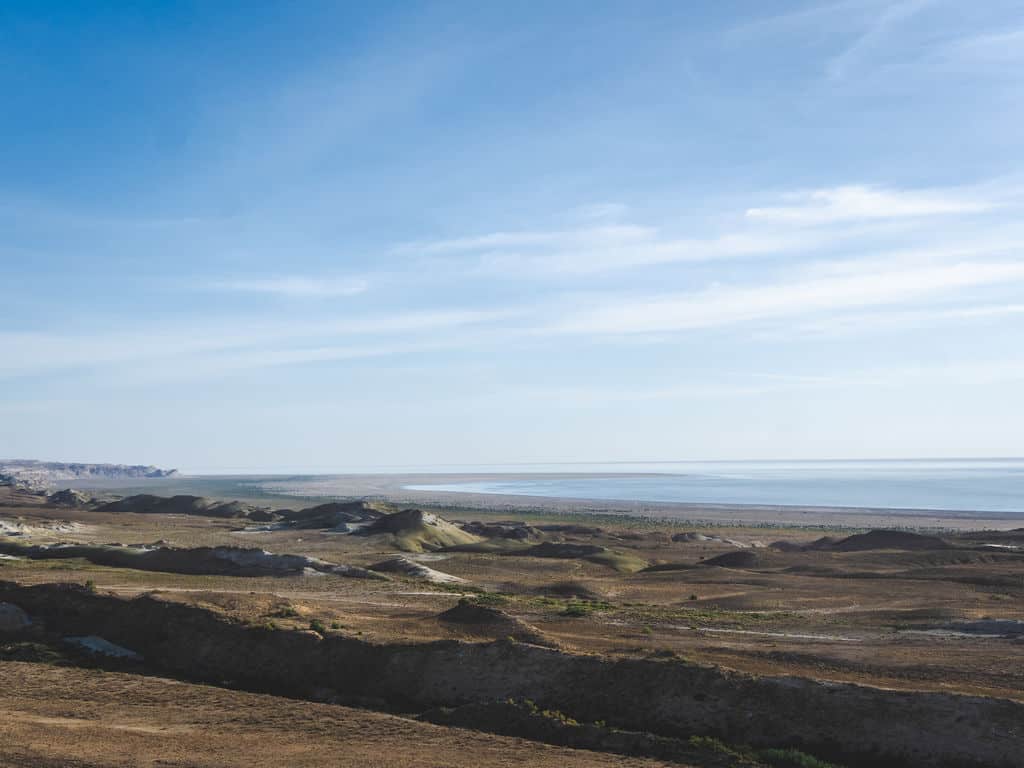
Is it safe to visit the Aral Sea Disaster?
As I mentioned before, don’t go galavanting into the Aral Sea – it’s not safe to swim in. People who have lived there for years suffer respiratory diseases caused by a mix of the salt and concentrated toxins left by the plantations. However, visiting its shores for short periods of time will not do you any harm so as a tourist, you don’t have to worry.
Uzbekistan is a very safe country to visit and so is the Aral Sea and its people.
Need Travel Insurance for Central Asia? I use and highly recommend HeyMondo Travel Insurance. As a reader of Journal of Nomads, you get a 5% discount off your insurance plan!


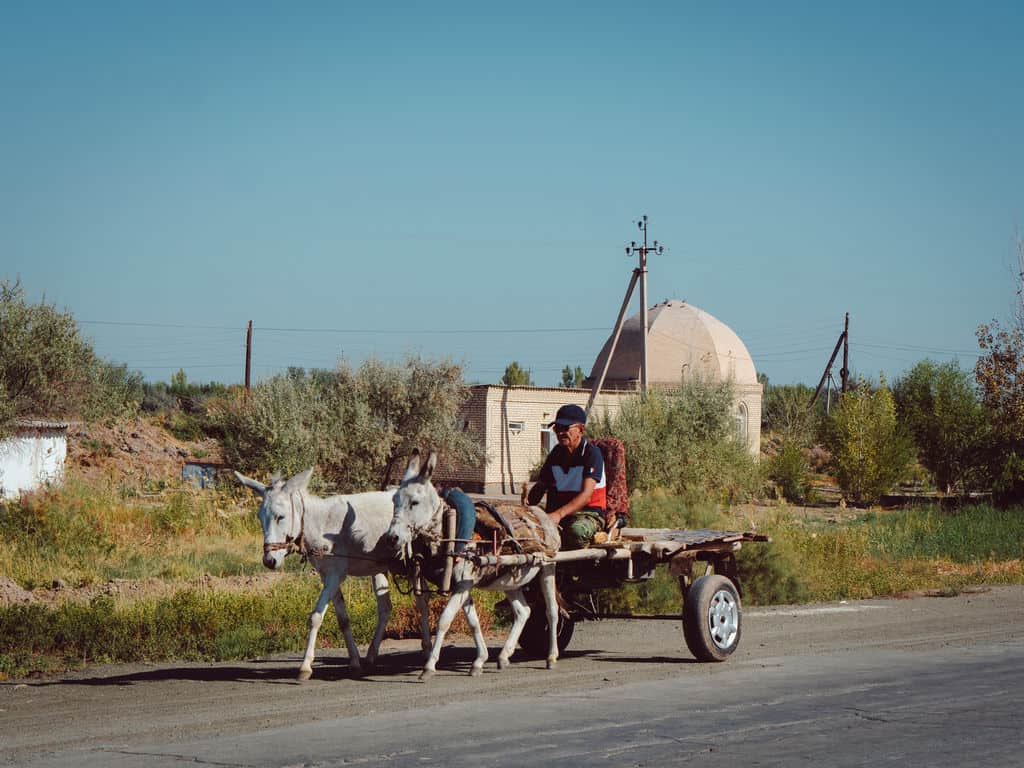
Is it worth visiting the Aral Sea Disaster?
Truthfully, I find this question really hard to answer.
If you are interested in this natural disaster and want to see the consequences with your own eyes, then yes. The Aral Sea disaster is a lesson for science, agriculture and ecology so if you want to understand the impact on Central Asia, then you should go. There’s plenty of space to reflect and with that comes the time needed to travel to the different spots in the area.
It’s a very long and bumpy drive for only a few noteworthy stops, so make sure you make the most of the trip. The local drivers don’t really share local knowledge or chat too much, and there’ll likely be a language barrier between you. It’s definitely worth buying the services of a local guide to learn as much as possible and explore everything you can.
I’m happy I’ve experienced the Aral Sea and researched the area for my blog, but I wouldn’t visit again. I felt the disaster is still incredibly prevalent, and its impact still hits its people. It was an eerie energy when exploring and so many of the places emitted sadness.
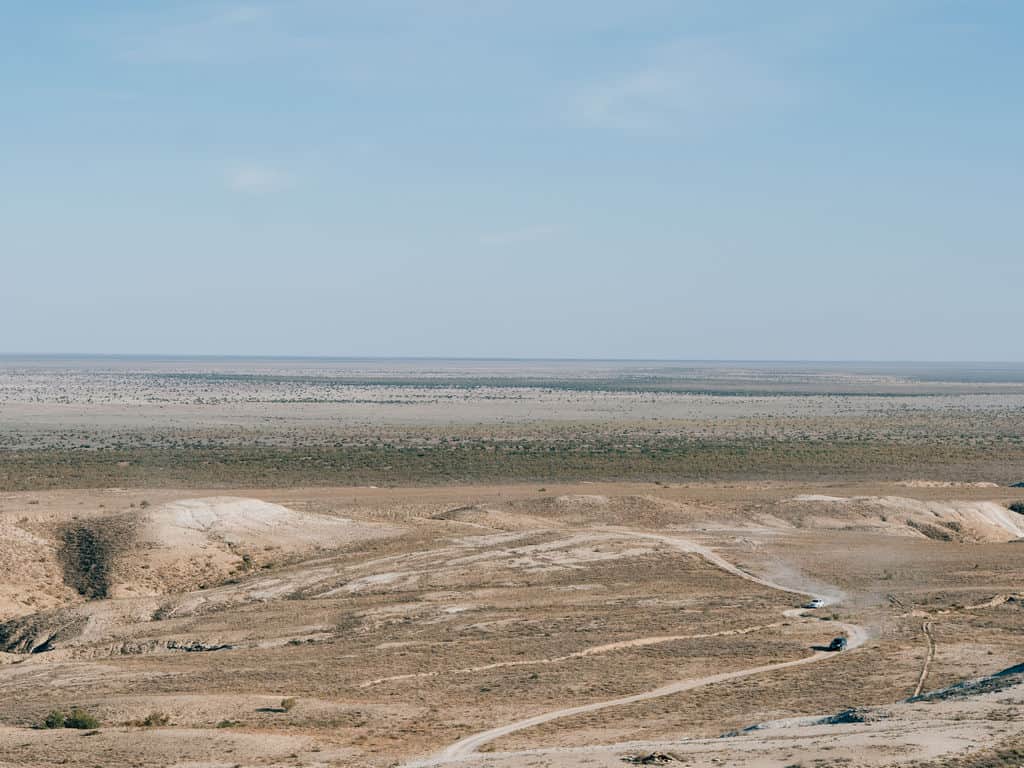
I’d recommend a day trip from Nukus to Moynaq, where you can see the memorial, ship graveyard and the desert of where the lake once was (for travel and other information about Moynaq, scroll back up to How to get to Moynaq from Nukus?). This way, you get a grasp on the history of the area but you can skip the monotonous drive to the Aral Sea.
Some people travel here to get to the yurt camps in Moynaq, but I’d in all honesty hold off for other places in Uzbekistan like the azure waters of the Aydar Lake.
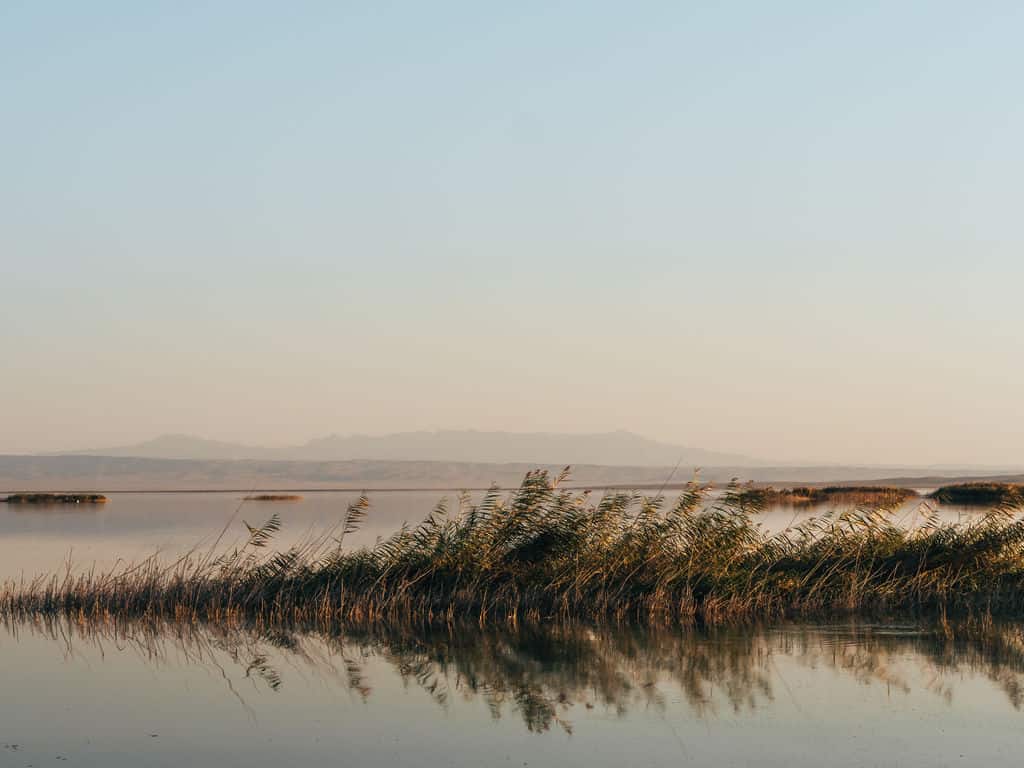
Thank you for reading until the end of this lengthy post! I hope this guide was useful in preparation of your trip to Moynaq and the Aral Sea. If you have questions, updates or any additional information to share, please let me and other readers know in the comments below!
| 👉Tashkent City Guide | 👉Samarkand City Guide |
| 👉Bukhara City Guide | 👉Khiva City Guide |
| 👉Shahrisabz City Guide | 👉 Karakalpakstan Guide |
| 👉Fergana Valley Guide |
Related Posts
What to wear in Uzbekistan – The Essential Uzbekistan packing list
The best way to get from Tashkent to Osh and from Osh to Tashkent, crossing the Dostyk border (Kyrgyzstan – Uzbekistan)
Uzbekistan Travel Itinerary (2026): 1, 2, 3 & 4 Week Travel Routes + Tips
Uzbekistan Money Guide (2026) – How much does it cost to live and travel in Uzbekistan?
What are the Best Places to visit in Uzbekistan in 2026?
Hello Cynthia. I am planning for a solo trip to Uzbekistan and your blog seems like a gold mine… I have a question, is there only one bus going from Nukus to Moynaq, the one at 9 a.m. ? Are there no other buses available the whole day if I miss this one? Likewise, is there only one bus back from Moynaq, the one at 3 p.m. ? Thanks in advance…
Hello Aritra, there might be more but I can’t confirm.
Hi Cynthia, Thank you so much for all your extremely informative guides. I’m thinking of doing a trip to Almaty+surrounding for a few days before taking the train to Tashkent and spending a week exploring Uzbekistan. I just wanted to let you know if you didn’t already that Silk Avia has started flying from Nukus to Moynaq by air. It seems to take 35min each way and they fly at 9am to Moynaq before returning to Nukus at 10:05 and it costs 109000som each way.
Hi Michael, thank you for this useful information! This can indeed be an option to go to Moynaq. I don’t know of anyone yet who went there by flight so please let me know how it was! Have a great trip!