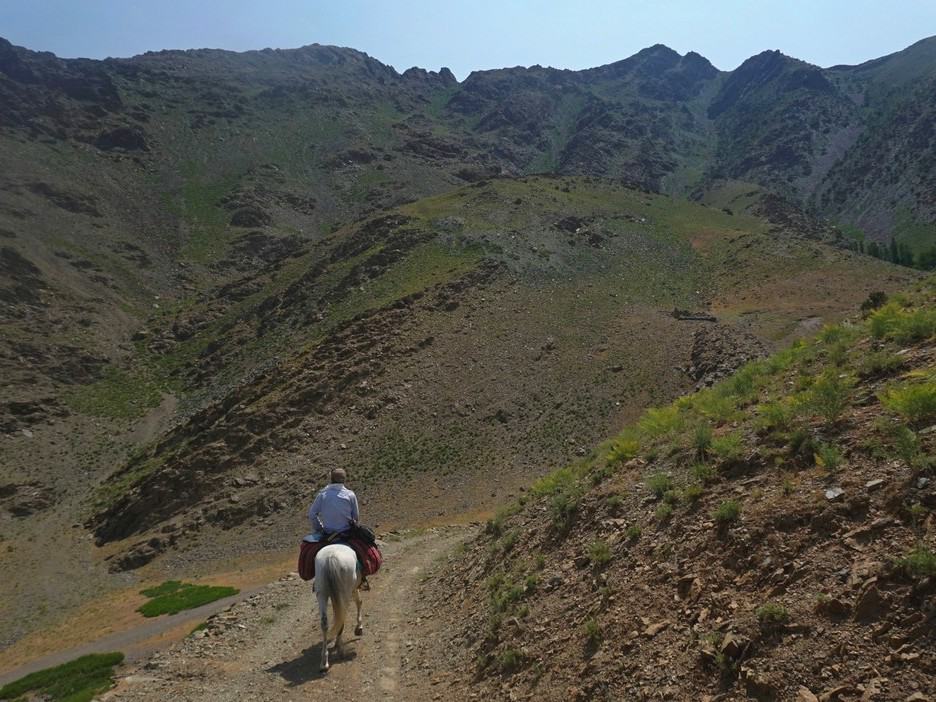
Here’s the complete Fergana Valley travel guide, including places to visit in Fergana, if the Fergana Valley is safe and if it’s worth a visit, info on how to get around and where to stay, and much more!
The Fergana Valley lies in eastern Uzbekistan and is the country’s agricultural beating heart. The area is steeped in history and has yielded so much to Central Asia, including its ties with the Silk Road.
The valley was once part of the main Silk Route between Samarkand and Kashgar (China). It’s said people in the Fergana Valley have produced silk for around 1,000 years (yep, that’s a lot of worms), while its bazaars continue to entice people in with beautiful stalls.
The valley’s towns are predominantly of Uzbek heritage (the most densely populated part of Uzbekistan) so if you really want to get to know its beautiful people and authentic traditions, the Fergana Valley is the place to learn. It’s also an incredibly beautiful place as it’s home to parts of the Tian Shan Mountains and the Gissar-Alai range.
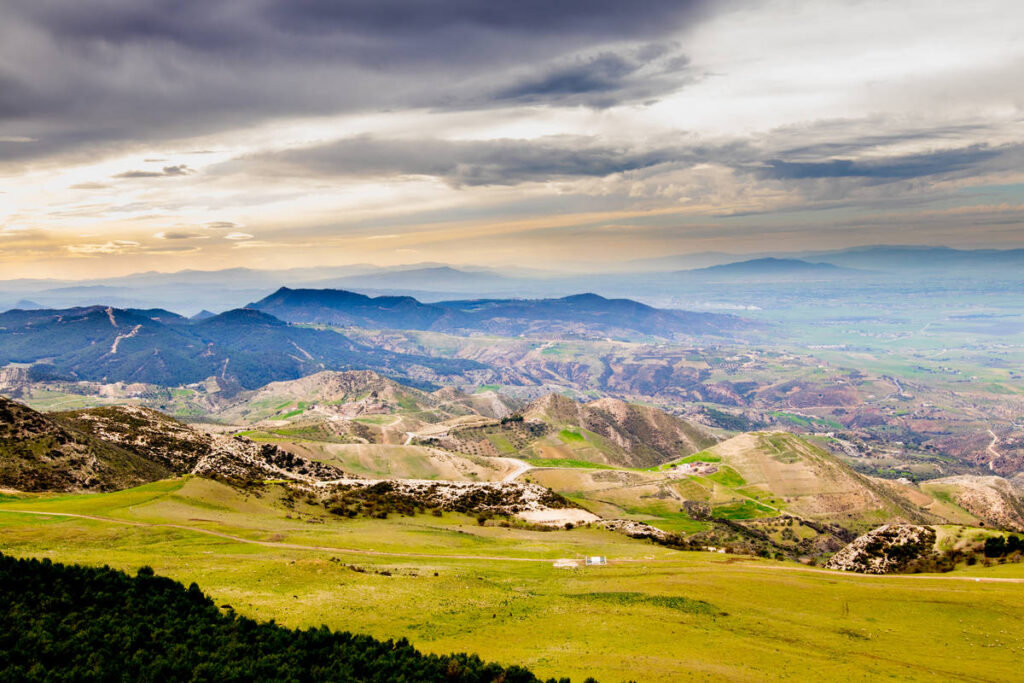
At times, its contested borders with Tajikistan and Kyrgyzstan have been peppered with conflict, but we’ll get to that later. Here is everything you need to know about traveling to the Fergana Valley in Uzbekistan…
Tip: See my Uzbekistan Travel Page for a complete overview of all my travel guides and blog posts about Uzbekistan!
Disclaimer: This posts might contain affiliate links, meaning that if you make a purchase through these links, I may earn an affiliate commission. Thank you for helping to support this website!

Plan your trip to Uzbekistan
- 18 important things to prepare your trip to Uzbekistan
- 26 beautiful places to visit in Uzbekistan
- Uzbekistan Itineraries: 1 to 4 weeks in Uzbekistan
- How to travel around Uzbekistan by train
- What to pack for Uzbekistan
- Uzbekistan Safety Guide
- Uzbekistan Money Guide
- Tours & Experiences: Guided City Tours in Uzbekistan, Adventure Tours in Uzbekistan
Where is the Fergana Valley located?
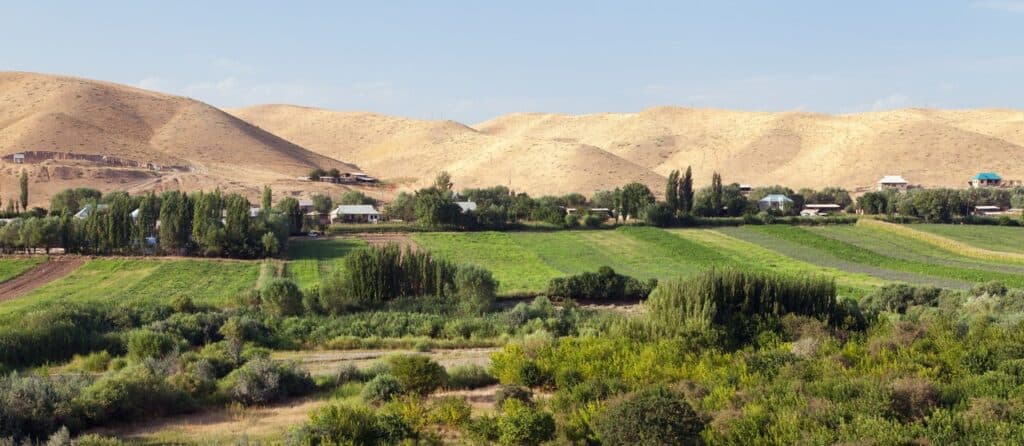
The Fergana Valley sweeps across eastern Uzbekistan and also dips into Kyrgyzstan and Tajikistan. Technically, it’s not an actual valley; it’s a basin of flat plains between the northern Tian Shan Mountains and the southern Gissar-Alai range. The Syr Darya River nourishes the valley, while other canal systems have been created to irrigate the land.
From Tashkent in Uzbekistan, the valley lies about 250km southeast of the capital. Looking at a map of the valley, there are five main districts: Ferghana, Andijan, Namangan, Khujand (Tajikistan), and Osh (Kyrgyzstan) which cover an area of 22,000 square km.

During the time of the Silk Road, the area’s flat lands and mild climate were a welcome sight to weary traders who had battled the merciless mountains. Ancient Chinese writers said the valley was considered a ‘resort’ for caravans who spent days resting there.
What is the Fergana Valley Uzbekistan known for?
The Fergana Valley is known for its soil. No, I’m not having you on, the soil is hot stuff here! Along with its mild climate, the land yields a growing season of around 240 days per year. Basically, it’s the Fertile Valley.
The valley is the largest provider of food in Uzbekistan and it doesn’t stop there. It’s a huge cotton and silk provider. It’s said the people living in the Fergana Valley have produced silk for around 1,000 years, with plenty of factories showing the process of spinning threads. The area is also a hotbed for minerals and mining resources such as oil, coal, gold, copper, and mercury.
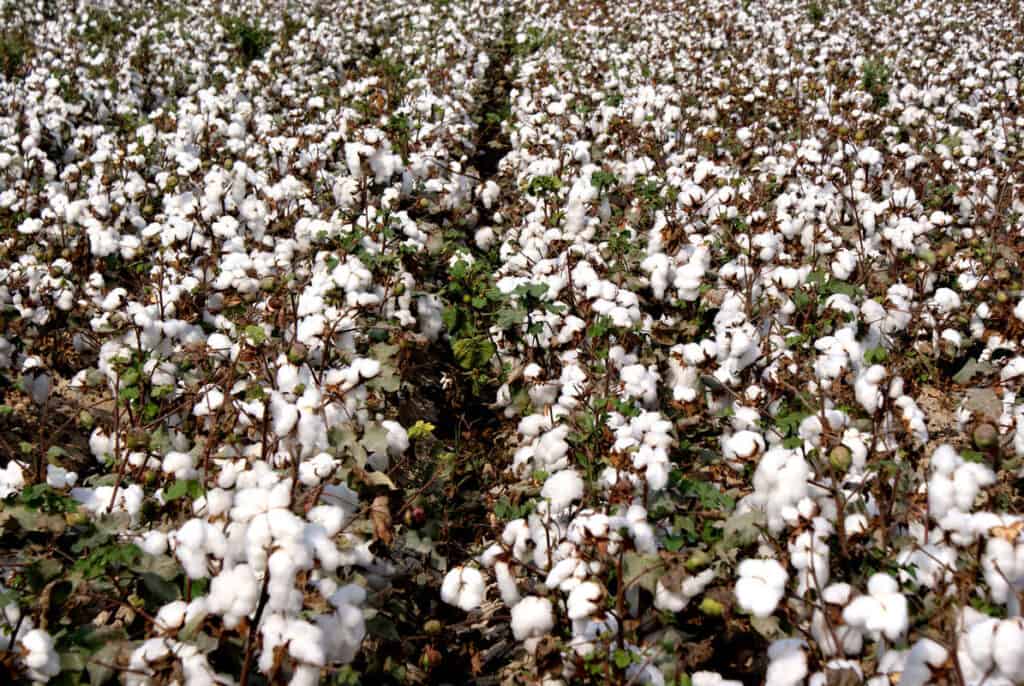
The Fergana Valley was once part of the main Silk Route between Samarkand and Kashgar (China) so it became a place of rest for Silk Road traders to recuperate. I think it’s cool how the area today still proudly recognizes its traders, with countless markets and handmade pottery stalls.
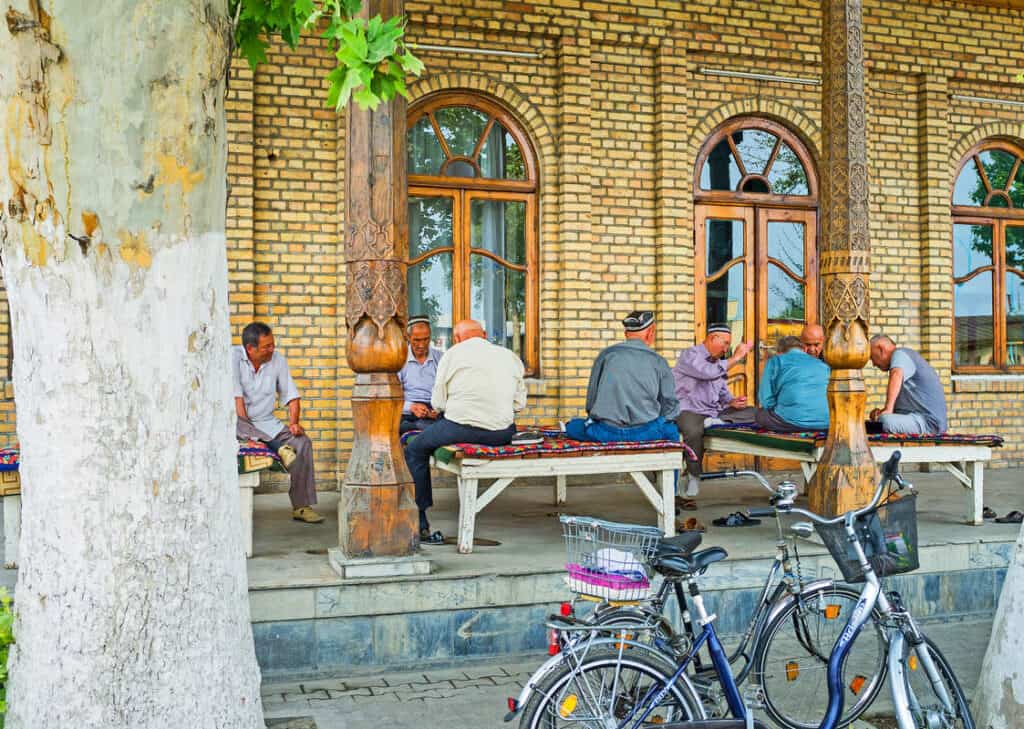
The area is also the most traditional and religious part of Uzbekistan, so talking to people in the valley is a valuable way to learn about the country’s rich history and culture.
Sadly the valley is also known for one of Asia’s worst oil spills. On 2nd March 1992, one of the oil wells in Mingubak blew open, eventually letting out around 2,000,000 barrels of oil. Scientists have since said that the overall impact of the oil spill had a small impact on the environment.

Is the Fergana Valley safe?
While most cities and towns in Uzbekistan are considered extremely safe for tourists, the border areas of the country are not always safe and should be avoided unless it’s for a border crossing. There have been a few violent disputes and several gunfire exchanges at contested borders.
So yes, the main part of Fergana Valley is super safe for travelers but you must be incredibly sensible about crossing land in the valley. It’s also important to understand why conflict does happen, its whereabouts and why.
It’s so easy to get swept up in horrifying news headlines especially when the word conflict is chucked around, so let’s delve some more into that.
Under the Soviet Union, borders were established between Kyrgyzstan, Tajikistan, and Uzbekistan. Prior to the Soviet Union, there were many different nomadic tribes living in the valley.
When republic borders were created, people living in the valley, especially those in different enclaves, felt their ethnicities were being forgotten and others struggled to access their home countries. After the Union’s collapse, the Fergana Valley’s borders became increasingly disputed and clashes broke out.
Conflict is exacerbated by the Fergana Valley’s resources and agricultural prospects. Different ethnic enclaves and those in the three countries often struggle to agree on which land is theirs to farm on.
Another lousy factor adding to all of this is due to the Fergana Valley being a landlocked area and with climate change raising the temperatures, the water resources are dwindling rapidly. This means farmers have competition with water allocation which also causes disputes.
Don’t let the above scare you. While there is nowadays still some tension (mostly from the Kyrgyz side), the region has been stable since 2010. Travelers are super welcome in the Fergana Valley.
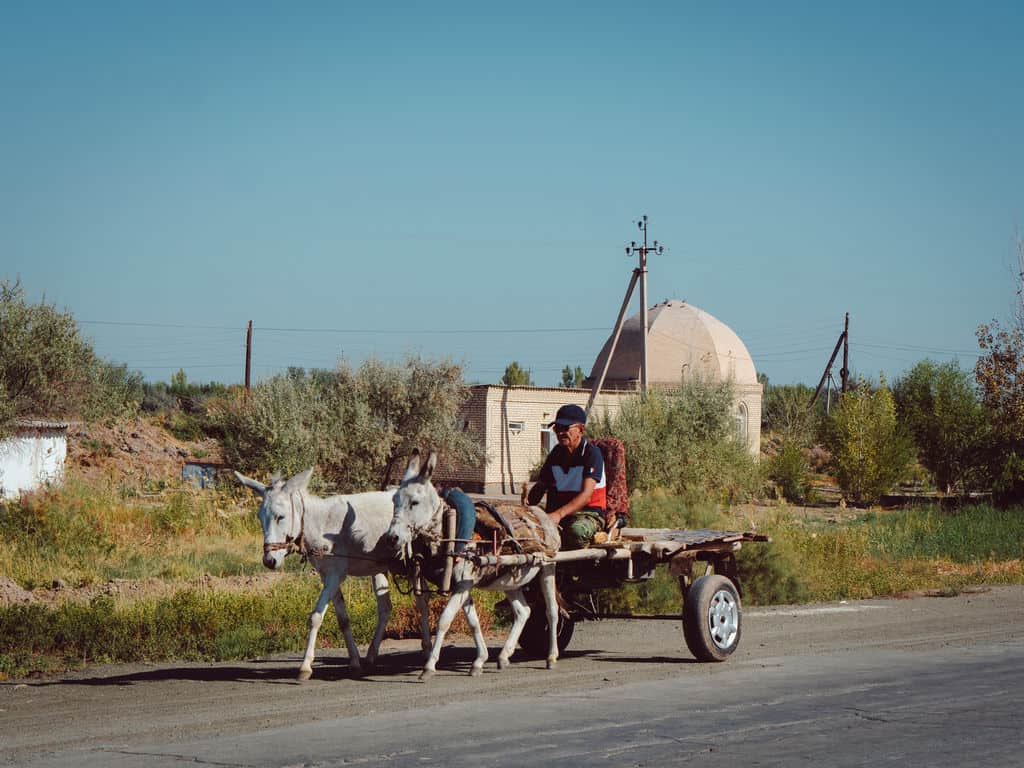
You’ll notice that the locals are some of the friendliest and most hospitable people you’ll meet in Uzbekistan. The main thing is to research recent disputes and if you’re heading off the beaten track, ensure you’re not wandering into a contested border.
Need Travel Insurance for Central Asia? I use and highly recommend HeyMondo Travel Insurance. As a reader of Journal of Nomads, you get a 5% discount off your insurance plan!

Is the Fergana Valley worth a visit?
This is actually a question for you!
When organizing a trip, I always ask myself: what do I want from this? Some are drawn in by history, the sea, or the city bustle (mostly I’m sucked in by the promise of hiking). The Fergana Valley has plenty to sate your appetite for history and there is so much nature to delve into. If you’re after the more obvious Silk Road spots, this isn’t the place for you.
However, if you want a real taste of Uzbekistan and its beautiful crafts and traditions, you’ll learn so much here. It’s truly a tapestry of so many hiking spots, ancient mosques, and madrasas and seeing Uzbek’s industries working away.


When to visit the Fergana Valley?
The best time to visit the Fergana Valley is in spring (March – May) and autumn (September – November). Like most of Central Asia, the Fergana Valley has a dry and arid climate during warmer months and its winters tend to pack a frosty punch.
In March, the average temperature hits 20 degrees which then soars to a sizzling 35 degrees in June, July, and August. Yep, it’s enough to melt your marbles. Obviously, this will vary in higher altitudes and lower lush pastures.
Something to think about is if you’re exploring the Fergana Valley, you won’t really be in the shade of mausoleums and city buildings. It will be a lot of meandering out in nature and traveling from place to place. Hiking and getting about in sweltering temperatures is not advisable (especially if you get hissy and snappy in the heat) so I’d stick to planning your trip in spring or autumn.
In spring, the festivities of Navruz will be in full swing. Navruz marks the start of the season and it has been celebrated in Uzbekistan for more than 2,000 years. It’s no surprise that the national holiday is one of the country’s favorite celebrations. The event is always on the 21st of March and festivities are spread out over the week.
Another beautiful time to see the Fergana Valley is in autumn. With the area’s vast agricultural produce, the bazaars burst with fresh fruit and vegetables during harvest season.
Generally speaking, the tourist months are also based on spring and autumn. If you’re traveling in winter, you may need to do a little more planning ahead with guesthouses and available transport.
How to get to the Fergana Valley?
Fergana Valley Tours
If you’re limited in time and only have 1 or 2 days to visit the Fergana Valley, the easiest and quickest way is to get there would be by booking a guided tour. The advantage of booking a tour is that you’ll learn a lot about this fascinating region’s culture and history.
Here are a few tours I recommend:
How to get to the Fergana Valley from Tashkent
I’ve written a handy guide with pretty much eveeeerything you need to know about Tashkent here and daily trips. Heads up, there is no direct public bus service from Tashkent to the Fergana Valley.
From Tashkent to Fergana Valley By Train
There’s a daily train leaving from Tashkent to Kokand, one of the first destinations you may head to in the Fergana Valley.
From Tashkent to Fergana Valley By shared taxi
Taking a (shared) taxi is a good option if you have an exact town in mind within Uzbekistan. I recommend installing the Yandex Taxi app on your phone.
This app allows you to order a taxi to easily get around and shows you the rate in advance. They’ll also save you the hustle of bargaining for a good price. This could be helpful if you’re considering doing the day trip on a shoestring budget.
From Tashkent to Fergana Valley By Organized tour
The Fergana Valley Tour is a great day tour for learning more about Uzbekistan’s famous handicrafts from the masters themselves. Between visits to the Fergana Valley’s most famous sights, you’ll stop to meet artisans and master craftsmen in their workshops. The tour offers a pick up from Tashkent.
If you have more time, you can also go on a 2-day organized tour in the Fergana Valley.
FROM TASHKENT TO FERGANA VALLEY BY Bus
From Tashkent, you can reach Fergana, Andijan or Margilan on the Yutong buses of Uzautotrans Service JSC. Due to the service heading to Tajikistan, having your passport with you is mandatory.
How to get to the Fergana Valley from Osh (Kyrgyzstan)
Osh is perched at the cusp of the Fergana Valley and remains one of the oldest Silk Road dwellings. I’ve written another handy guide with some handy tips about Osh.
There’s also some useful advice here about crossing the border from Osh into Uzbekistan. The border is open 24/7 but closes for lunch at 13:15 to 13:45.
FROM Osh TO FERGANA VALLEY BY shared taxi
While it is possible to try to grab a (shared) taxi to Fergana city, I’d recommend starting from Osh and traveling west to Andijan. Andijan is a city that sits cozy southeast of the Fergana Valley (we’ll delve more into Andijan soon). You can then plan your route from the east and make your way around.
You’ll need to do two trips in a (shared) taxi, one to the Dostuk checkpoint between Kyrgyzstan and Uzbekistan, and then grab another from Dostuk to Andijan. There are plenty of taxis at the border which travel to most cities in the Fergana Valley and Tashkent.
FROM Osh TO FERGANA VALLEY BY minibus
You can take a minibus between Osh and Andijan which takes around two hours. It costs around 100 som and leaves every 20 minutes from Osh. You can read more about how to make the journey here.
How to get to the Fergana Valley from Khujand or Istaravshan (Tajikistan)
Khujand is the main city in the Tajikistan part of the Fergana Valley and was once a bustling stop-off in the Silk Road history. Meanwhile, Istaravshan sits 78km south-west of Khujand and is an ancient trade and craft center (which is more than 2,500 years old!).
If you’re travelling from Istaravshan, it may well be worth getting to Khujand before heading to the border. I’ve found this blog a good read for passing through the border from Tajikistan to Kokand.
By miniBus
In Khujand, marshrutkas (minibus) to the Uzbekistan border depart from the northern bus station. When you’re on the Uzbek side, you can grab a small marshrutka to the nearby town Besharyk. From there, you can either grab another marshrutka or take a taxi.
By shared taxi
In Khujand, shared taxis to the Uzbekistan border depart from the northern bus station. When you’re on the Uzbek side, you can get in a small marshrutka to the nearby town Besharyk. From there, you can grab a taxi to Kokand.
By Bus
If you want something more simple, a new bus line has been launched linking Khujand to Kokand, UaZ reported in 2022. The bus will run from 08:00 to 20:00 and costs around 100,000 som.
Note: I haven’t had the chance yet to try out this bus. Let me and other readers know in the comments below if you have and how your experiences were!
How to travel around in the Fergana Valley?
The best way to plan to get to the Fergana Valley is to go here after your arrival in Tashkent (on day 2 or 3) or once you’re back in Tashkent at the end of your trip through Uzbekistan. If you do the latter, you could continue traveling to Osh in Kyrgyzstan as it’s very close to the border. I suggest spending at least two to three days in this region.
When planning, think about whether you’re going east to west/west to east and what travel options there are (don’t worry that’s what I’m here for).
Shared taxis are an easy, affordable way to get about the valley. But remember, they’re not the same as Western taxis, they’ll leave once full of passengers (far more economical…right??). It’s a pretty reliable mode of getting from area to area in the valley, especially if you’re unsure about bus routes.
Sharq trains are older Uzbek trains that have been in use since the Soviet era. They are used to reach cities and regions farther from the Uzbek capital like cities in the Fergana Valley, Urgench and Khiva. I’ve written a full breakdown on what to expect on train travel.

Things to do and places to visit in Fergana Valley Uzbekistan
1. Fergana City
The city of Fergana sits south of the Fergana Valley and north of the magnificent Alai mountain range. You won’t necessarily find ancient monuments here because this city is a baby compared to its elder siblings. Fergana City was established in 1876 but the area still flourished with people for thousands of years prior to that.
The city is pretty modern and is an important industrial hub for Uzbekistan. The area is brimming with hotels and facilities so it’s a great place to base yourself before heading out trekking or on a longer trip.
The beauty of Fergana City is that even with its modern establishments, there are plenty of parks and green spaces to find some peace.

Things to do in Fergana City
There are no particular historical buildings of note here but maybe take your time to enjoy Fergana’s modern facilities.
There’s a tennis court, a bustling indoor bazaar and plenty of gardens to wander around in. Definitely check out the ‘Gate of Independence’ which was built in 1992 after the Soviet Union collapsed.
Where to eat in Fergana City
If you’re heading here during the tourist months, there’ll be plenty of fresh street food stalls to take your pick from, especially in and around the indoor bazaar.
- Traktir Ostrov Sokrovish: a cozy restaurant offering a diverse menu of European, Russian and Eastern European. It also has wifi if you need somewhere to chill and work.
- Brown Sugar Coffee House: a cute little spot to grab a bite to eat at a good price (also has veggie options!). Sometimes the piano is played.
- Pub #1 also has good recommendations. It again has a more diverse menu and you can sit in a chilled booth outside.
- If you’re craving some Uzbek cuisine, I’d try Ohu National Meals. They offer a good selection to eat in or take away.
Where to stay in Fergana City
- Status House is situated a little out of the city center, but it’s worth it if you want to save cash. The rooms in this hotel are newly renovated, there’s also a kitchen if you want to cook for yourself and even if you’re traveling solo, for $10 per night you can get a private room here.
- The Asia Hotel offers reasonable prices and includes sauna and pool facilities (just what you want after a sweat-a-thon in the heat). The rooms, in my opinion, are beautifully decorated and breakfast is included in the stay.
- The Tantana Hotel is in a cracking location if you need to be close to the airport or are heading to Margilan next. All rooms come with free WiFi, AC and a flat-screen TV.
How to get to Fergana City
By plane: Fergana has its own airport, so depending on your plans and amount of time/cash you have, it could be easier to land here.
Shared taxi: if you’re already in the Fergana Valley, I’d recommend grabbing a shared taxi. You’ll be able to settle a good price and you won’t be consigned to public transport schedules.
By bus: From Tashkent, Andijan or Margilan, Yutong buses of Uzautotrans Service JSC will take passengers to Fergana. Due to the service heading to Tajikistan, having your passport with you is mandatory.

2. Margilan
Margilan is the beating heart of silk production and has been since forever really (ok, since the Silk Road but still, a long time). Uzbekistan is the world’s third-largest silk importer and the small village of Margilan is the workhorse behind its legacy.
Legend has it that when leader Alexander the Great arrived at the village, he was given ‘Murgh’, meaning chicken, and ‘Nan’, meaning bread… and so Margilan was born.
Things to do in Margilan
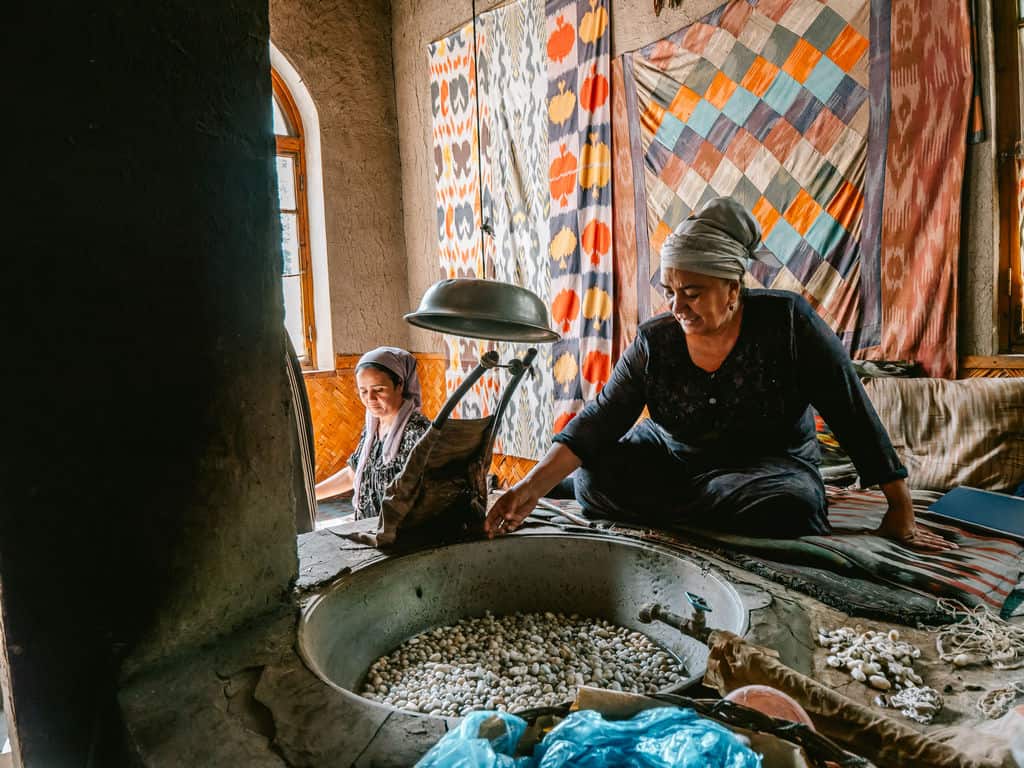
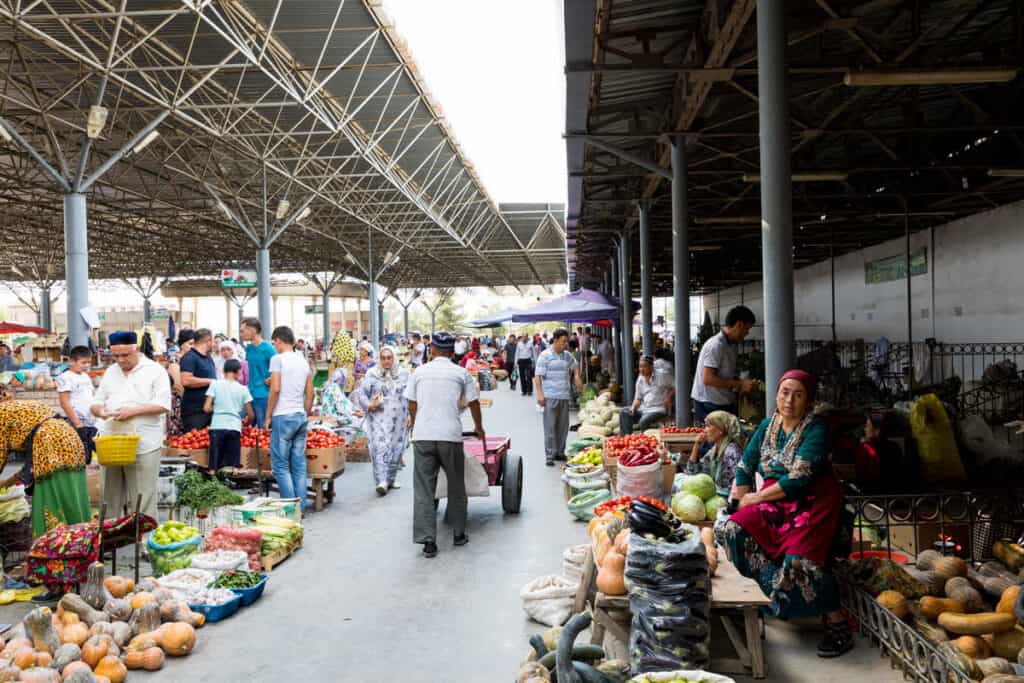
If you want to see the whole silk manufacturing process – from how the silk is made, the traditional silk-weaving techniques to the final product, you should definitely visit the Yodgorlik Silk Factory. The entrance, including a guided tour in this factory, costs 30.000 som per person.

You should also visit the colorful Kumtepa bazaar (only on Thursdays and Sundays), the Said Akhmad-Khoja Madrasah, and the Pir Siddiq Complex.
Where to eat in Margilan
Anor is a sweet little family café with a terrace. It offers a diverse menu with delicious local dishes.
I haven’t seen any others so can’t really recommend more but it’s always worth making up a sandwich or grabbing something from the supermarket if you get hangry (hungry and angry).
Where to stay in Margilan
I’d recommend checking out Guesthouse Evergreen coming in at around $10 per night. It does what it says on the tin… it’s pretty green! It offers free bikes, garden, wifi, a shared lounge and terrace in Marghilon.
How to get to Margilan
Margilan is only a 30-minute drive away from Fergana City, so if you’re staying there it may well be worth planning a day trip via shared taxi to Margilan.
You can take a direct train if you’re traveling from Kokand or Tashkent. You can find the time schedule and book tickets here.

3. Rishtan
What I love about each dwelling in the Fergana Valley is that they all have unique characteristics. Rishtan’s is pottery.
The area has some mighty fine red clay, providing potters with endless ceramic opportunities for thousands of years. You’ll see its iconic blue glaze, called ‘ishkor’, made from mineral pigments and ash mountain plants.
Rishan sits south of the valley, north of Kyrgyzstan, between Kokand and Fergana. It’s a great place to make a day trip from either place.
Things to do in Rishtan
The International Ceramic Center opened in 2021 and is like an art space for pottery masters. Workshops and stalls are located on the first floor, while the potters and their families live on the second floor. If a throwdown is your thing, you can arrange a private workshop.
You’re also always welcome to visit the Ceramic Workshop of Rustam Usmanov, one of Rishtan’s local ceramic masters.


The Bolsheviks destroyed many historical monuments of Rishtan but remains of an ancient settlement can be found in the Sohibi Hidoya cemetery. Kilns for firing ceramics and even glazed products were found… dating back to the 2nd century B.C.!
While you’re there, have a wander around the Khoja Ilgor Mosque, a small mosque within the grounds of the Sohibi Hidoya cemetery.
Where to eat in Rishtan
Chaykhana Nosirbek is a traditional Uzbek soup restaurant. If you’re a strict veggie, maybe this won’t be for you 😉
Fancy a sweet treat? Head to Мороженое Gnomik Domik for a dose of ice cream.
Where to stay in Rishtan
Why not stay at the home of a pottery master? Said’s Ceramics offers private rooms to his guests in his beautiful decorated house.
How to get to Rishtan
There aren’t any public transport options to Rishtan, so you’ll have to grab a shared taxi.
You can take a shared taxi from Margilan to Rishtan. It’s about a one-hour drive. From Fergana to Rishtan is around a 45-minute drive; from Kokand, the journey is around 35 minutes.

4. Kokand
Kokand, sitting in the southwestern edge of the valley, is usually overlooked by travelers in favor of the more famous cities of Bukhara, Samarkand and Khiva.
It does, however, boast some interesting history and played an important part during the ancient Silk Road, linking South Asia and East Asia and acting as a crossroads between these routes.
In the 18th century, Kokand was a huge powerhouse for Central Asia when it became home to the Kokand Khanate empire. Years later, the Khanate’s power soared and its territory housed not only Uzbekistan but southern Kazakhstan, Kyrgyzstan, and Tajikistan.
Kokand has since changed a fair bit…, especially during the Soviet Union. The city was known as ‘Cottonopolis’ after the cotton production rapidly increased under government orders in the 1920s.
As you can imagine, Kokand is bursting with history and it’s a wonderful place to learn about how this place influenced not only Uzbekistan and so many other areas.

Things to do in Kokand
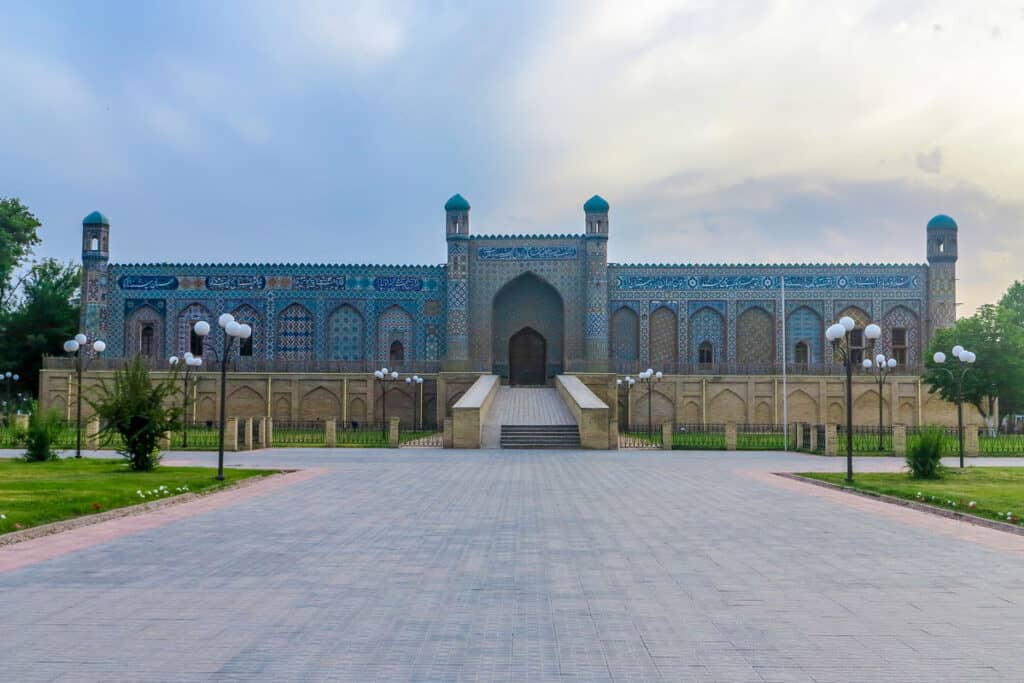
Check out The Palace of Khudayar Khan (entrance fee is 25.000 UZS). This was once home to the most famous Khan with the Khanate of Kokand. The palace once had 118 rooms, each decorated with magnificent carved wooden features and intricately painted ceilings. The complex now houses a local history museum on the World Heritage List.
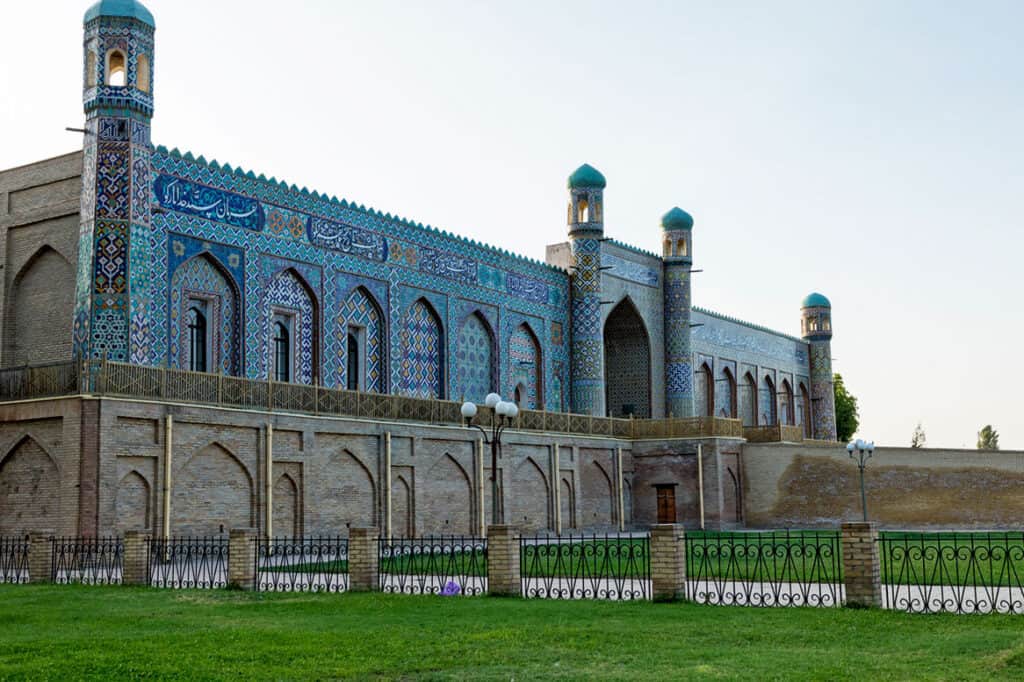

The Kamol Kazy Madrasah is one to marvel at for its architecture. The building was created with baked bricks and is adorned with dazzling geometric designs and Arabic inscriptions.
Take your time visiting the Jome Mosque, because there is a lot to learn here. The holy building was built by Umar Khan in 1812, then shut during the Soviet Union and then was reopened after some TLC in 1989.
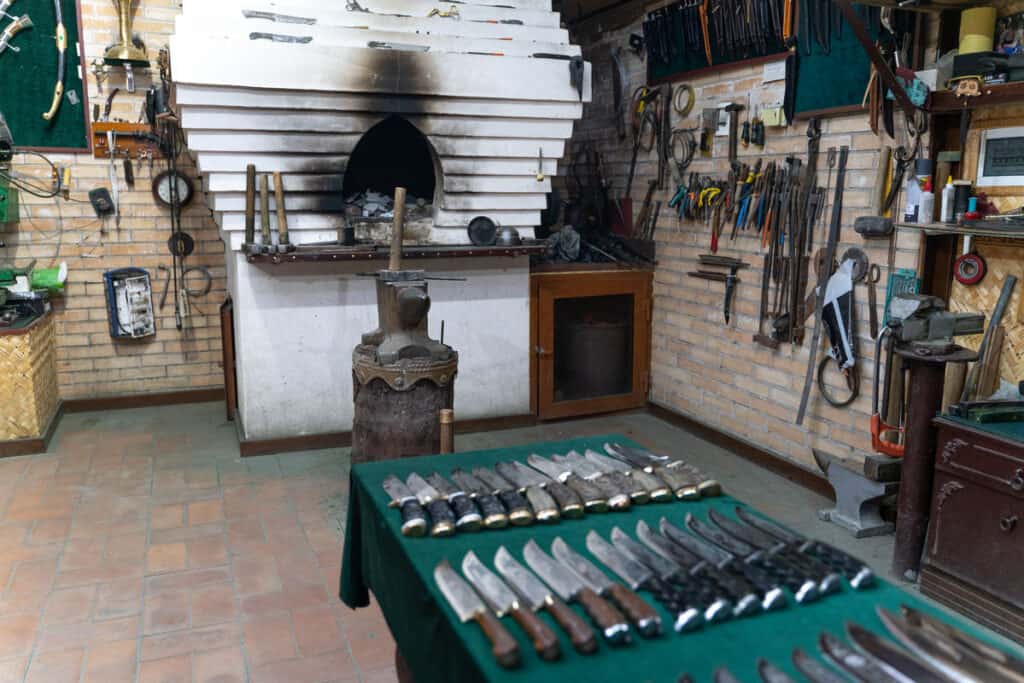
Inside the Jome Mosque complex there are several exhibitions and workshops of the handcraft work in the Fergana Valley: wood, ceramics, silk, knifes,… Each workshop is lead by a master who will proudly share more info about his art. I would foresee at least 1,5 hours to visit all the workshops and exhibitions.
The entrance fee to visit Jomi Mosque and the workshops is 25.000 UZS per person.

Where to eat in Kokand
There’s a decent strip of restaurants and stores along Istikol Street between Muqimi Park and Abdulla Nabiev Maydoni Square.
Where to stay in Kokand
- Rohat Hotel is currently the only budget-hostel in Kokand that is cheaper than $20 per person per night.
- Silk Road Kokand Hotel is a really beautiful building offering bike hire, wifi, a range of amenities and a garden!
- Reikartz Kokand is a three-star hotel and is great for location being in Kokand’s center. It also offers wifi, a fitness center and a continental breakfast.
How to get to Kokand
There are trains connecting Kokand with Tashkent, Margilan and Andijan. You can check time tables and book tickets here.
If you’re travelling from Rishtan, it may be worth jumping in a (shared) taxi which will take you around 50 minutes. In the other areas I’ve cover, it’s a pretty long drive (two hours or more), so I’d recommend planning your itinerary accordingly.
5. Andijan
Nestled in rolling hills, Andijan is one of the valley’s oldest dwellings. Its history dates way back before the Silk Road… archeological digs have revealed people lived here more than 2,500 years ago! Despite its ancient roots, Andijan has evolved into an industrial city and an Uzbek powerhouse for oil and cotton in the republic.
Andijan’s story is also one of tragedy. In December 1902, a catastrophic earthquake shattered the city with a surface wave magnitude of 6.4. Records at the time claimed a number between 700 and 4,800 people were killed.
The earthquake devastated its ancient architecture too but the people’s spirit wasn’t defeated. Andijan continues to be the most populated place for Uzbek people in the Fergana Valley.
Things to do in Andijan
Markets are always a fascinating way to take in a city’s characteristics and I love pottering about in them (especially for photos!).
The Yangi Bazaar is the largest market in the Uzbek side of the Fergana Valley. Open daily from 09:00 to 18:00, you can catch a multitude of traders in action. Meander around the stalls and take in the sounds, smells and sights… you won’t get bored here! The bazaar is at its best on Thursdays or Sundays.
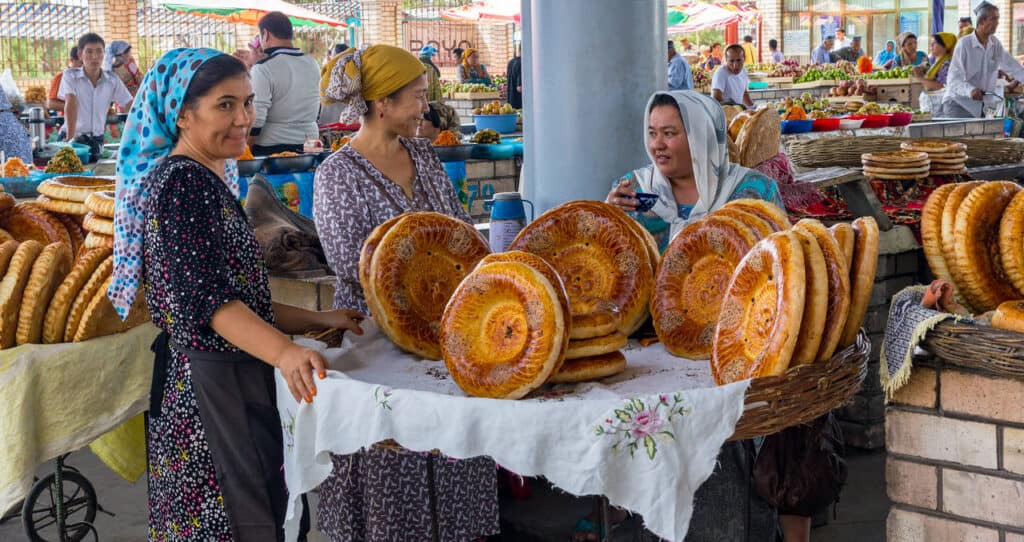
The Dekhon Bazaar, also known as the central market, sits in the ‘Old Town’ part of Andijan. It has many traders and is a little quieter than the Jahon Bazaar.
The Jami Complex is one of the only remaining historical treasures standing after the 1902 earthquake. Opened in 1890, its minaret and madrasah are particularly unique in the valley… the madrasah’s length is around 123 meters while the minaret looks over Andijan from 32 meters.

If you’re craving some nature, there’s a stunning 28km hiking trail from Andijan passing through the Sary Tash Valley. It takes around 9-10 hours so I’d either recommend getting up super early, or try to organize a homestay in the villages you’ll walk past. AllTrails has the full details here.
Where to eat in Andijan
The Yangi Bazaar is where many of the locals come to get food and I’d recommend checking it out. There are so many stalls to take your pick from and if the food can’t tempt you, take a look at all the other trinkets being sold.
For a traditional Uzbek dining experience, head to EcoFish. The menu is classically Uzbek and the restaurant has such a beautiful interior.
Where to stay in Andijan
- Hostel Хостел Eski Shahar is known for its brilliant location and costs around $11 per person, per night. It also offers cycling to its guests!
- The Chinor Hotel is relatively new but has racked up good reviews as a clean, cozy place to stay. It costs around $45 per standard room per night.
How to get to Andijan
If your starting point is Osh (Kyrgyzstan), jump in a shared taxi at the border and head to Andijan. It’s around an hour and 30 minutes drive. You’ll probably need to do two trips in a shared taxi, one to the Dostuk checkpoint between Kyrgyzstan and Uzbekistan, and then grab another from Dostuk to Andijan.
You can also take a mashrutka (minibus) between Osh and Andijan which takes around two hours. It costs around 100 som and leaves every 20 minutes from Osh. You can read more about how to make the journey here.
From Namangan, the journey is around an hour and 15 minutes drive and will cost around $3. You can make the trip also from Fergana and Margilan, but it’s a tad longer at around an hour and 30 minutes drive.
You can also take a train to get to Andijan from Tashkent or Kokand. You can check time tables and book tickets here.
6. Namangan
Namangan is the religious center and one of the most conservative cities in Uzbekistan. There used to be more than 600 mosques in this city but most of them were destroyed during the Soviet rule and by an earthquake in 1926.
It’s also the third-largest city in the country! Built close to the Naryn and Kara Darya rivers, the city became established as a pretty big settlement in the north of the valley by the 17th century.
Namangan’s name was derived from nearby salt mines (namak kan means salt mine in Uzbek). Like so many places in the Fergana Valley, the city is home to beautiful crafts including talents from potters, weavers, cobblers, blacksmiths and jewelers. Today, those talents still remain an integral part of Namangan.
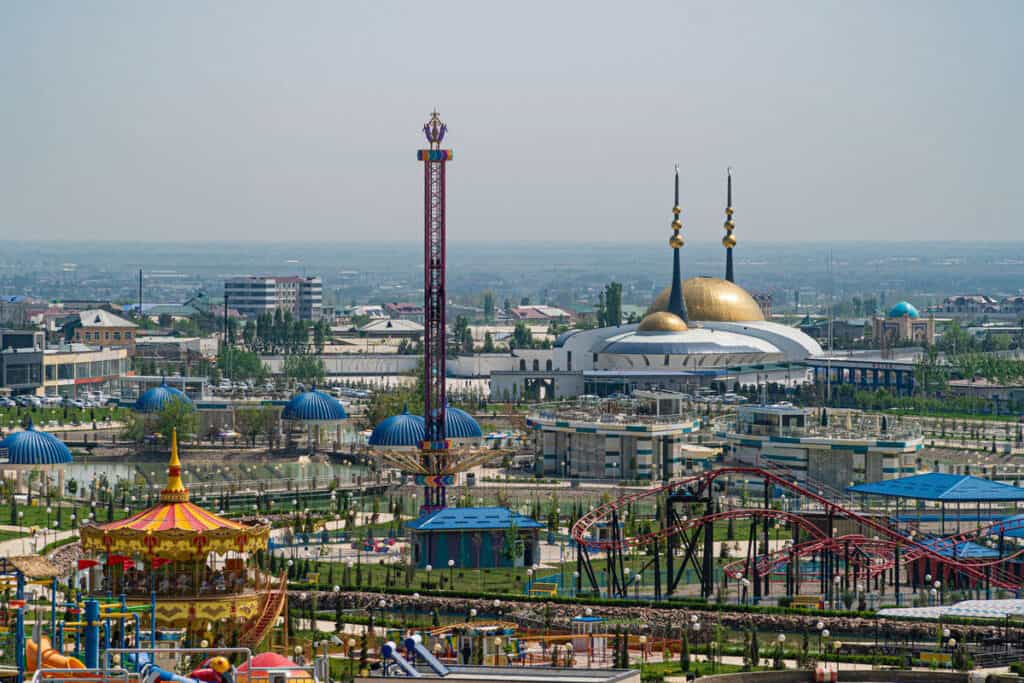
Things to do in Namangan
Babur Park was built in 1884 and covers a whopping 13 hectares in the city center. It’s a peaceful place to walk around and watch the locals play games in the shade of the trees.
Namangan State Museum of History and Culture houses hundreds of ancient relics and finds of geology, zoology and mineralogy!
The Mullah Kyrgyz madrassah functions now as a museum dedicated to the craftsman who created it. You can walk up to the roof and marvel at the bazaar in the square.
There are also many beautiful mosques and mausoleums to explore including the Khodja Amin Cabri Mausoleum and mosque.
The Atavalikhonture Mosque, also known as Ota Valikhon Tur Mosque (check maps.me for the exact location), is the place where the now-banned Wahabi Islamic Movement of Uzbekistan was founded. Ensure you are wearing appropriate clothing and check before you go in that it is allowed as some mosques do not allow women in.
If archaeology is your thing, definitely check out the ancient settlement of Akhsikent. It’s around 22km from Namangan and delves so much into the area’s history. Digs unearthing items from the 8th and 9th centuries revealed that Akhsikent was actually called Ferghana!
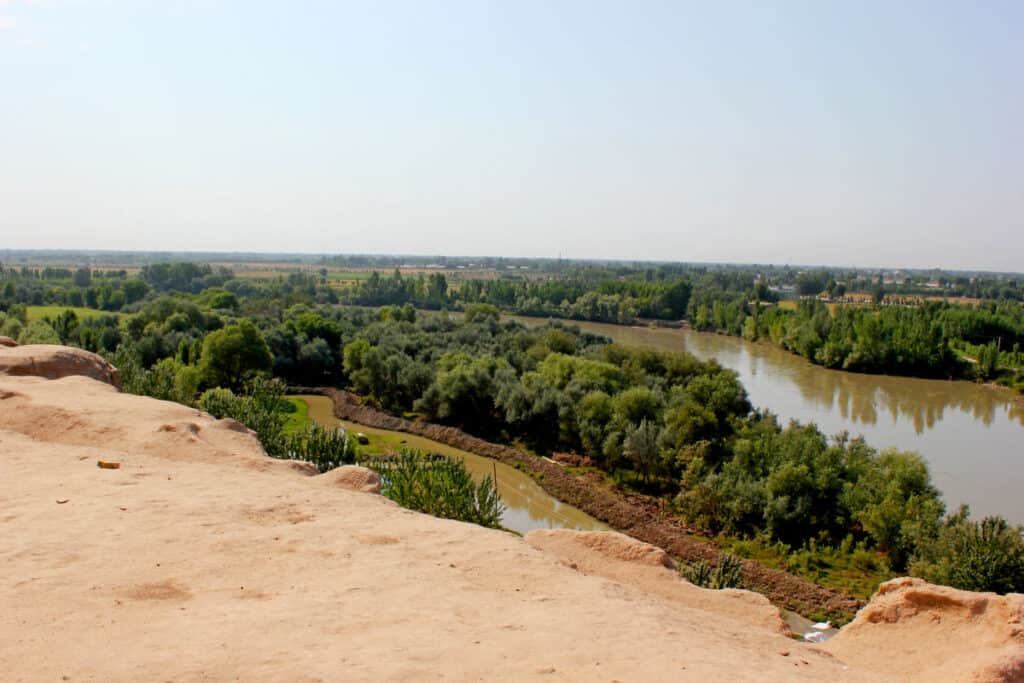
Fancy a swim? There are hot springs north-east of Namangan near the town of Chartak. The springs are also known for the mineral water brand Chortoq. Head to the top of the springs and there is a spa facility called Chortoq Sanatorium where you can bathe and chill.
Where to eat in Namangan
Sayohat Oshxonasi is a traditional Uzbek cafe with a gorgeous outdoor terrace to sit and relax in.
Guliston Cafe sits on the canal waters and has a decent menu of Uzbek cuisine. Many people like the pilov and kebab dishes here.
Where to stay in Namangan
- Sardoba Hostel is Namangan’s only hostel, so it may be worth staying there if you’re on a tight budget.
- Orzu Hotel is in Namangan’s center and offers rooms for around $40 per person, per night. The hotel also offers wifi and breakfast.
How to get to Namangan
Namangan can be done as a day trip from Margilan which is an hour’s drive by shared taxi. You can spend another evening in Margilan or Fergana or take the train from Margilan back to Tashkent in the late afternoon.
If you’re coming from Fergana, you take a shared taxi from there to Namangan. It’s around a 1 hour and 30 minutes drive.
Thank you for reading and hope this guide inspired you to visit the Fergana Valley in Uzbekistan! If you’d have more questions or any updates, let me and other travelers know in the comments below!
| 👉Tashkent City Guide | 👉Samarkand City Guide |
| 👉Bukhara City Guide | 👉Khiva City Guide |
| 👉Shahrisabz City Guide | 👉 Karakalpakstan Guide |
| 👉Fergana Valley Guide |
Related Posts
What to wear in Uzbekistan – The Essential Uzbekistan packing list
The best way to get from Tashkent to Osh and from Osh to Tashkent, crossing the Dostyk border (Kyrgyzstan – Uzbekistan)
Uzbekistan Travel Itinerary (2026): 1, 2, 3 & 4 Week Travel Routes + Tips
Uzbekistan Money Guide (2026) – How much does it cost to live and travel in Uzbekistan?
What are the Best Places to visit in Uzbekistan in 2026?