The complete travel guide to Karakalpakstan Uzbekistan, including a travel guide to Nukus and the Khorezm Fortresses
Sitting northwest of Uzbekistan, Karakalpakstan is a district of deserts, ancient fortresses, and the Aral Sea. Karakalpakstan’s story stems back thousands of years and its people have lived through ancient battles and one of the world’s worst environmental disasters.
Uzbekistan is renowned for its fascinating Silk Road trade trails, and its tourism complements this. However, unbeknown to many are its mud-brick settlements from well over 2,000 years ago which still stand strong in Karakalpakstan today.

Politically, historically and environmentally, this autonomous republic has so much to teach you… so let’s jump in!
In this guide, I will provide some of the best areas to visit in Karakalpakstan, Nukus and the Khorezm Fortresses.
Tip: See my Uzbekistan Travel Page for a complete overview of all my travel guides and blog posts about Uzbekistan!
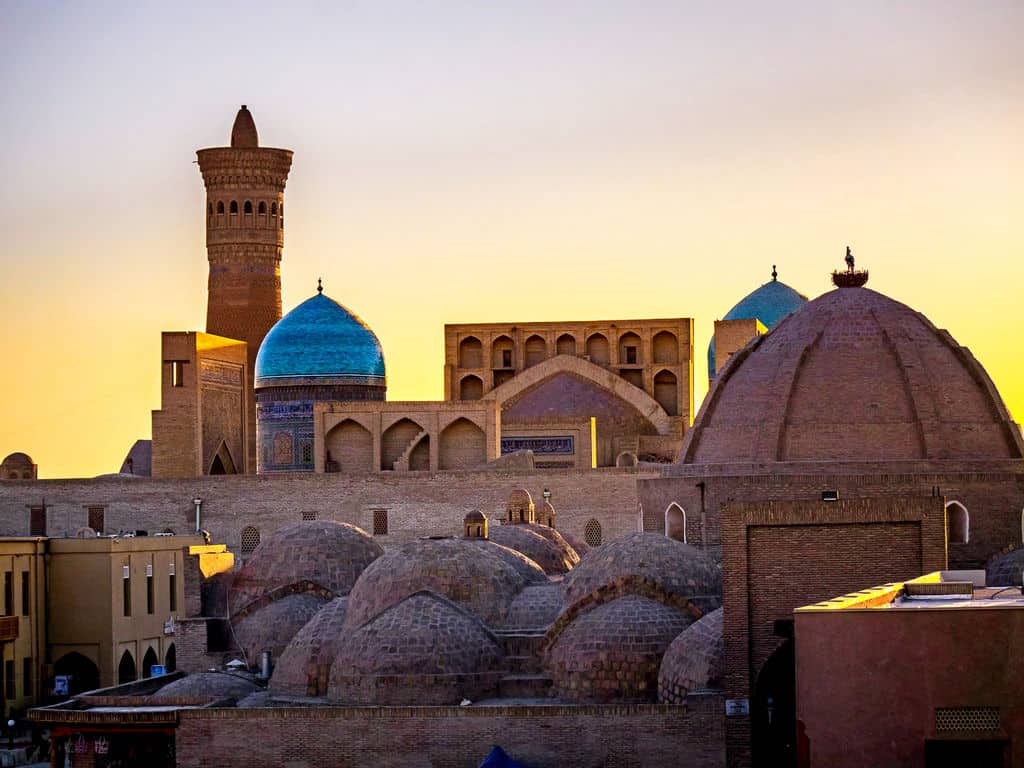
EXPERIENCE UZBEKISTAN BEYOND THE SILK ROAD
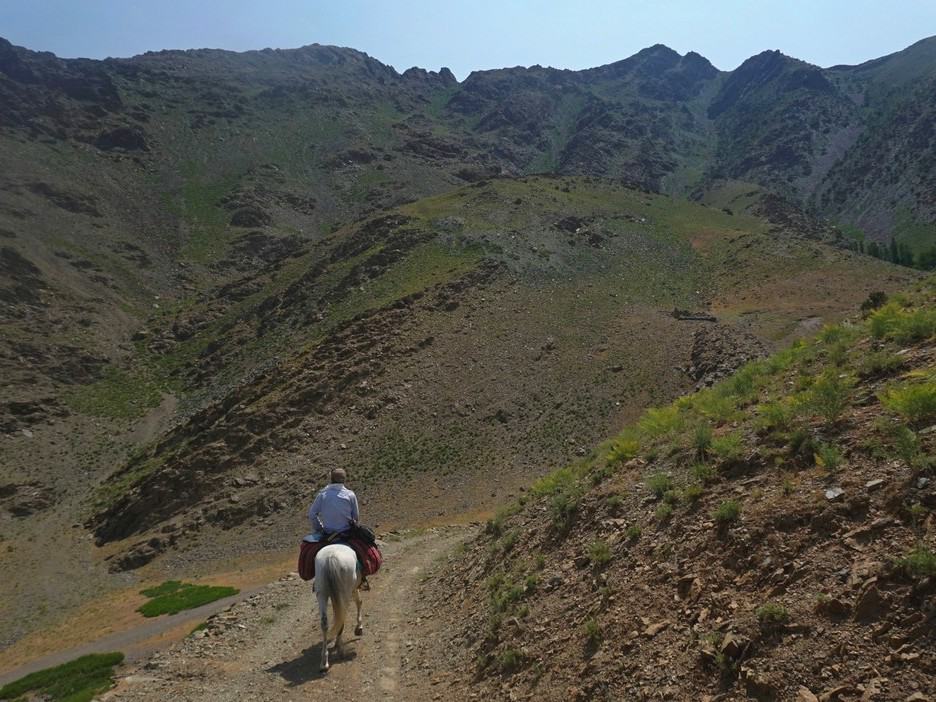
Go on an active 14-day adventure combining legendary Silk Road cities with remote mountain trails, desert camps and meaningful local experiences.
Disclaimer: This posts might contain affiliate links, meaning that if you make a purchase through these links, I may earn an affiliate commission. Thank you for helping to support this website!
Plan your trip to Uzbekistan
- 18 important things to prepare your trip to Uzbekistan
- 26 beautiful places to visit in Uzbekistan
- Uzbekistan Itineraries: 1 to 4 weeks in Uzbekistan
- How to travel around Uzbekistan by train
- What to pack for Uzbekistan
- Uzbekistan Safety Guide
- Uzbekistan Money Guide
- Tours & Experiences: Guided City Tours in Uzbekistan, Adventure Tours in Uzbekistan
A brief history of the Autonomous Republic of Karakalpakstan
Karakalpakstan translates to ‘land of the black-hatted people’ and is home to the Karakalpaks, who set up shop in the 18th century as nomadic herders and fishermen and women (that was when they were first recorded… I’m sure they were around for many years before!).
Karakalpaks speak a Turkic language, and the area is teeming with history. Archaeologists have found dozens of ancient cities, ruins of castles, and royal palaces spread over the arid steppes. These are called the fortresses of Ancient Khorezm.

Uzbekistan is pretty unique in that Karakalpakstan is a self-governing province, which means it can politically ‘break away’ from the country -strap yourselves in for a tiny political lesson.
With the arrival of the Soviet Union in Central Asia in the 1920s, various groups were designated and given territory. Karakalpakstan was one of them and it became a self-governing province within the Republic of Kazakhstan.
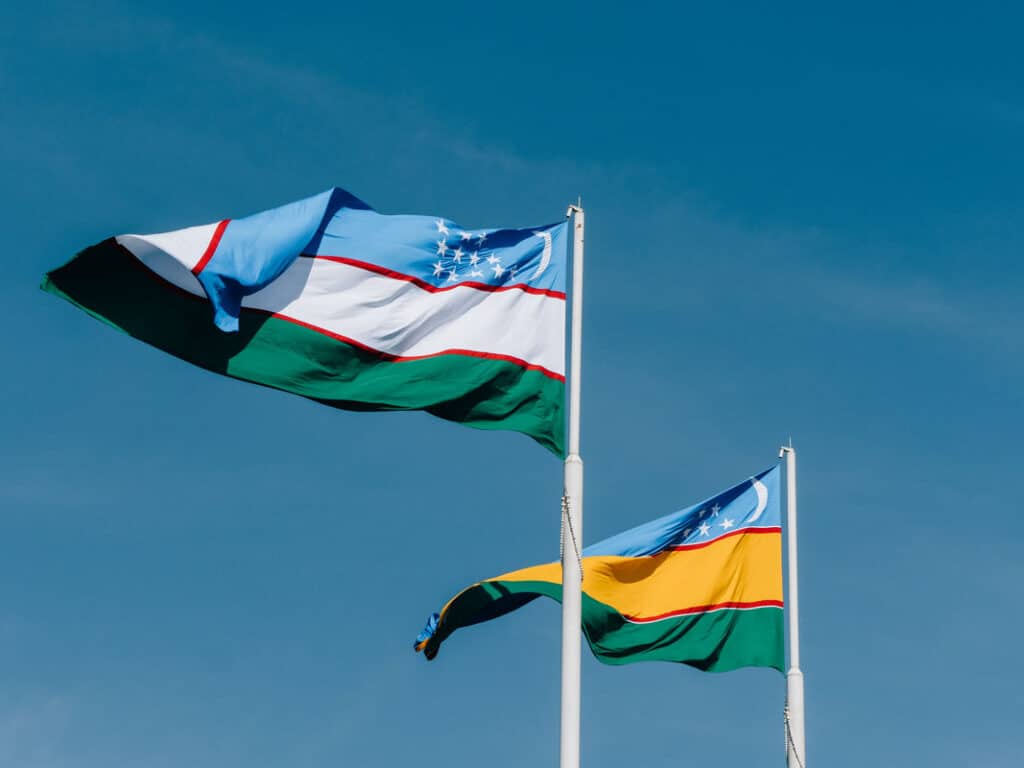
It was given autonomous Soviet socialist republic status in 1932. After the collapse of the Soviet Union in 1991, Karakalpakstan became the only autonomous republic allowed to retain its position within the then-new Republic of Uzbekistan.
While Karakalpakstan is home to the Karakum desert and the Kyzyl Kum desert, it wasn’t always such a sandy place. The province once provided one of the largest saline lakes on Earth, the Aral Sea.
The water currently straddles north of the republic and South Kazakhstan but its location continues to shrink after the Soviet authorities used the water for agricultural projects. Compared to 1960, there is only 10% of the Aral Sea left.

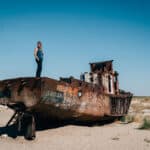
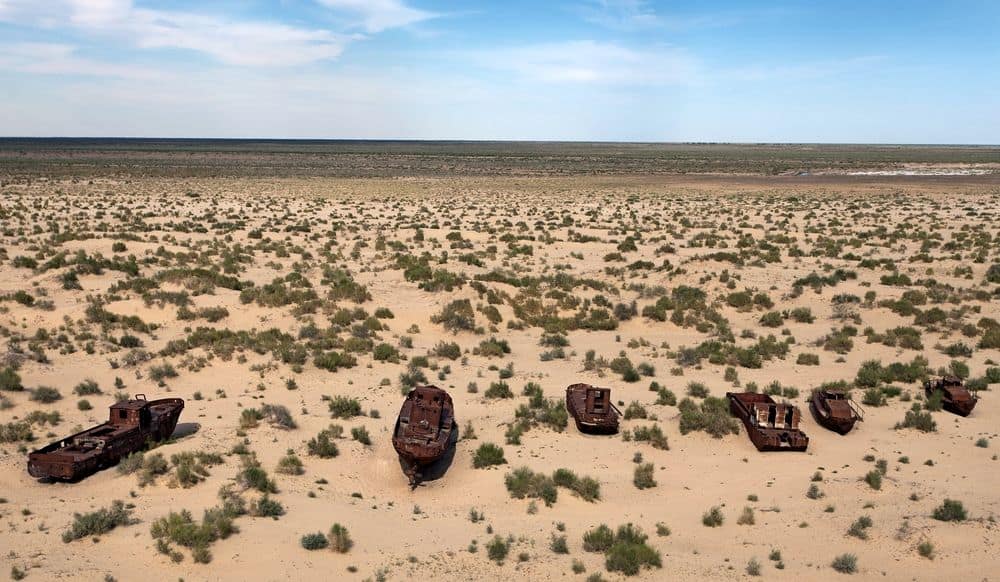
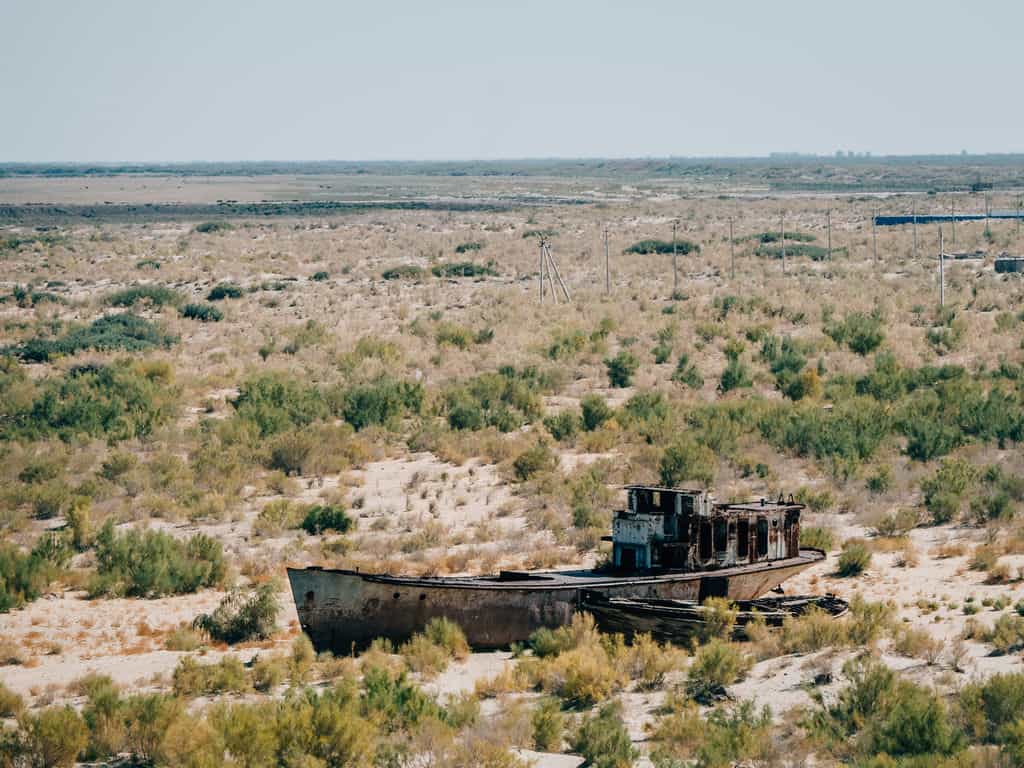
As the water dried up, so did Karakalpakstan’s main economy. Infrastructure in fishing ports was abandoned, and ships were grounded. Ship graveyards, former fishing ports, and barren sea beds pepper what was once the lively Aral Sea shores.
Is the Republic of Karakalpakstan safe?
Disclaimer: Yep, more political history coming your way but I’m serving it to you in digestible, easy chunks… promise.
Karakalpakstan made headlines for violent protests, where at least 18 people died. This came about in June 2022, after constitutional changes were proposed, which included stripping Karakalpakstan of its autonomy and its right to secession. Human rights protests then erupted in Nukus, Karakalpakstan’s capital, between demonstrators and Uzbek security forces.
President of the Republic of Uzbekistan, Shavkat Mirziyoyev, insisted that the proposed changes were still plans. He later announced any amendments to the autonomy were to be dropped and emphasized the close ties between the Uzbek and Karakal people.
Don’t let the above scare you. Like many places in Central Asia, contested borders have caused violent outbreaks in the past. As a traveler, it’s vital to understand and respect the history of a place.
Travelers are super welcome in Karakalpakstan. You’ll notice that the locals are so kind and are very hospitable. The main thing is to research recent disputes and if you’re heading off the beaten track, ensure you’re not wandering into a contested border.
Need Travel Insurance for Central Asia? I use and highly recommend HeyMondo Travel Insurance. As a reader of Journal of Nomads, you get a 5% discount off your insurance plan!

Is Karakalpakstan in Uzbekistan worth a visit?
The answer to this truly depends on what you’re wanting to take from Uzbekistan. If you’d like something more in bustling cities with Silk Road links, I don’t think Karakalpakstan is for you.
However, if you’re fascinated about Uzbekistan’s ancient history and its ties with the Aral Sea then I would definitely try and explore here for at least two days. I believe sometimes the beauty in a place isn’t necessarily what’s glaringly obvious… it’s about discovering what unique cogs make the country work.

When to visit Karakalpakstan?
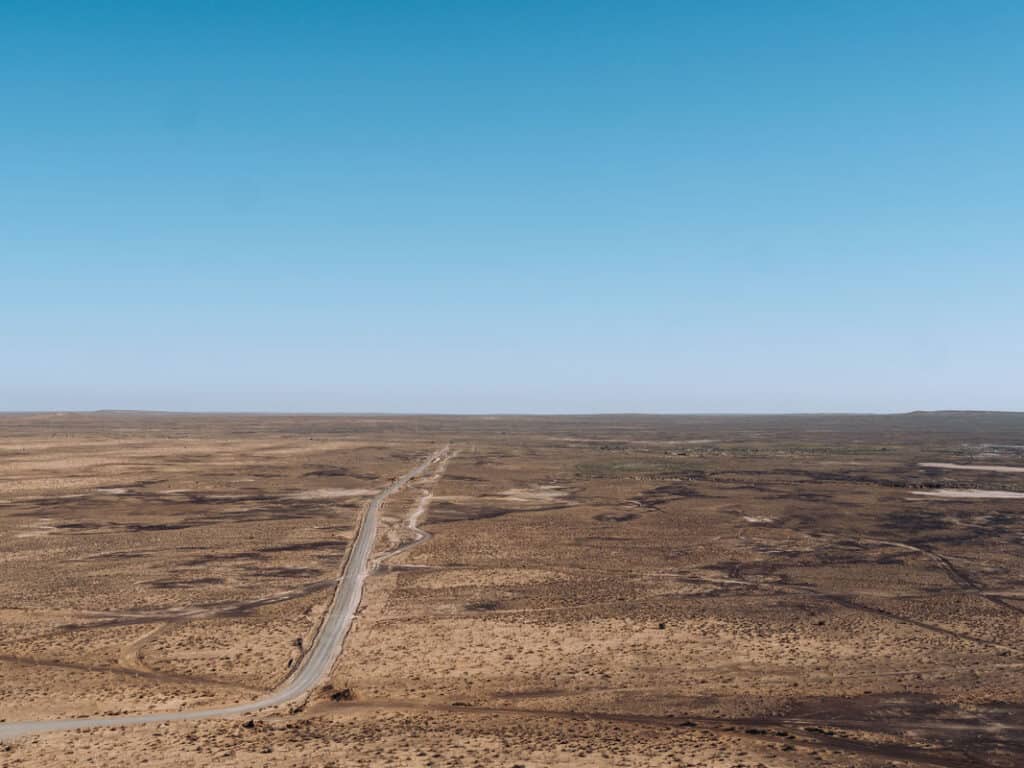
A huge chunk of Karakalpakstan is desert, so the region has extreme climates with scorching summers and biting winters.
From June to August, average temperatures can sizzle to around 35 degrees Celsius, which, if you’re in the desert with no shade, is screeching hot. There’s also very little rainfall in Karakalpakstan so in summer it’s drier than your grandma’s crackers.
Like many places in Central Asia, it’s wise to plan your trip in spring and early autumn. Generally speaking, the tourist months are also based between spring and autumn.
If you’re travelling in winter, you may need to do a little more planning ahead with guesthouses and available transport. Winter temperatures wander down into minus figures so make sure you’re wrapped up cozy!
Money in Karakalpakstan
Karakalpak currency is the same as Uzbekistan’s.
On arrival into Uzbekistan, if you arrive in a tourist city, take out your cash there before traveling to Karakalpakstan. You can find plenty of ATMs all around Tashkent and in tourist cities like Samarkand, Bukhara, and Khiva to withdraw money. There are also two ATMs at the international airport in Tashkent.
Most hotels and restaurants in the popular cities will also accept payments by credit card. The only thing I’d still recommend is bringing 200 US dollars or Euros in cash, just as a backup for when the ATMs are empty or credit card payments aren’t accepted.
You can also pay with these currencies at hotels and restaurants in Uzbekistan or exchange it in the bank for Uzbek Som. Visa is probably the most widely accepted credit card.
However, Uzbekistan still has a cash economy which means you won’t always be able to pay with your credit card. It’s also worth mentioning many guesthouses prefer cash so I would try to work out your costs before travelling to work out how much to bring.
Before you leave Uzbekistan, you can exchange your remaining som at the bank or in one of the exchange offices at the land borders or at the airport.
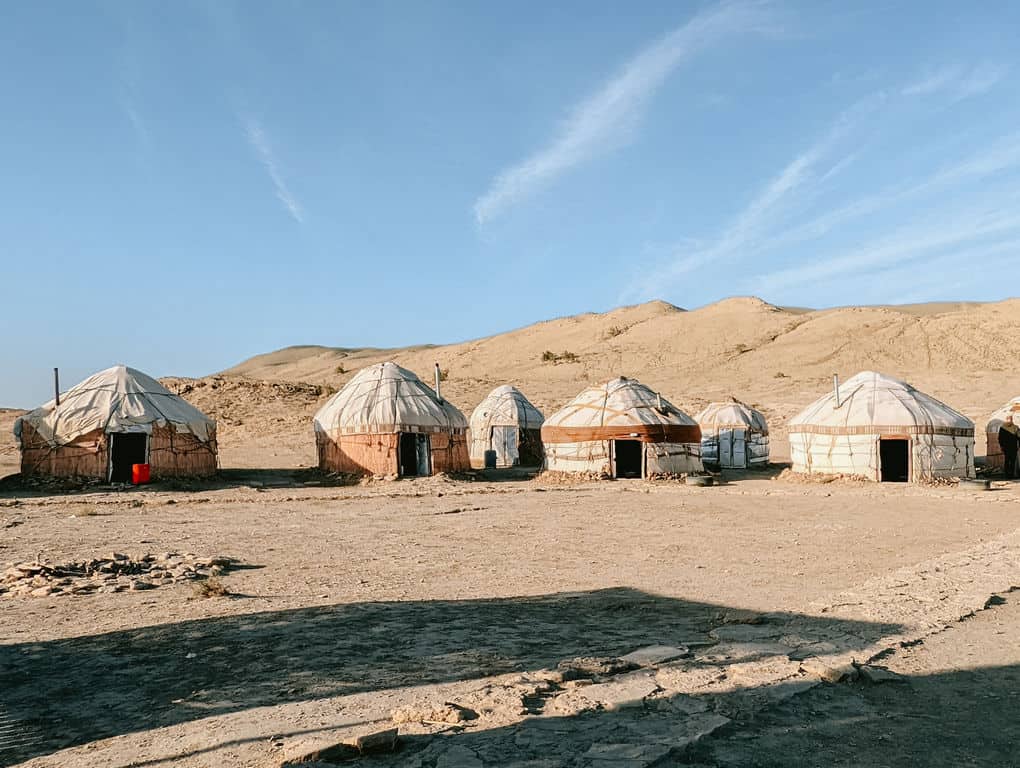
Note: There are some desert yurt camps in the Kyzyl Kum and Aral Kum deserts and also near Urgench. These have been specifically set up for tourists so if you have your heart set on staying in a yurt, you can experience it here. However, budget for this before you set off on your trip as they can be quite expensive.
How to get to Karakalpakstan in Uzbekistan
I’d make your starting point to exploring Karakalpakstan in Nukus, the province’s capital city (we’ll cover Nukus in a bit).
How to get from Tashkent to Nukus
By plane
If you don’t have much time and you want to cover the distance quickly, you can take a domestic flight between Tashkent and Nukus, which takes 1 hour and 40 minutes.
You can easily book your tickets on the website of Uzbekistan Airways. If you book well in advance, the average price for a flight between Tashkent and Urgench costs 60 USD. You can pay online by Visa and Mastercard.
By train
A really cool option is to travel by night train! Not only will you get to chat with locals, but you’ll also see stunning Uzbek landscapes along the way.
Getting around Uzbekistan by train is way more comfortable than by shared taxi or marshrutka. You’ll have plenty of leg space, and you’ll be able to actually enjoy the ride.
The night train is called Passenger (Пассажирский). You can book a 2-person private sleeper (Lux / CB), a 4-person private sleeper (Kupe), or a shared sleeper (Platzkartny).
At the time of writing this, trains run from Tashkent to Nukus every day apart from Mondays. They leave at 14:00 and arrive early in the morning. Click here for timetable details.
I’ve got you covered on all things train travel too – read here for my full guide on railways in Uzbekistan.
Important tip: Arrive at least 30 minutes in advance at the train station. There may be long queues at the entrance (especially in Tashkent) where luggage and passports get checked.

How to get from Khiva to Nukus
By train
The city of Urgench, a 30-minute drive from Khiva, has a train station that operates a service to Nukus. The five-hour route only runs on Thursdays and you can book it here. To get to Urgench, grab a shared taxi.
By shared taxi
There are no marshrutkas or shared taxis running directly from Khiva to Nukus so you’ll have to split your journey and change at Urgench.
From Khiva north gate, there are both shared taxis and minibuses going to Urgench which will cost you around 4,000-7,000 UZS per person.
After arriving at Urgench, you’ll most likely be dropped off at the Dekon bazaar. From there, either walk or take a taxi to the Olympic Stadium, where you can get in a shared taxi to Nukus for around 40,000-50,000 UZS ($4).
Private car
I haven’t done this option myself, but if you’ve got some cash to spend and you’re a last-minute planner, you can always try to negotiate a fare with a driver.
Some travelers say it costs around $50. Remember though, Uzbek people are paid much less than Westerners, so try not to take advantage of them and haggle too much.
How to travel in Karakalpakstan
It goes without saying, but Karakalpakstan has a heck of a lot of sand. Mix that in with driving a car in a desert in a barren country, you’re playing with some fire. Basically, I’m saying I wouldn’t risk hiring a car because if you get stranded, it will be a pretty diabolical situation (not as traumatic as 127 Hours though).
I’d recommend basing yourself in Nukus and taking shared taxis to surrounding areas – if it’s not a remote though. Shared taxis are pretty affordable and if you plan cleverly (pick the sights you want from north to south or east to west), you can cover a lot of ground.
Another great hassle-free way is to go by tour. Obviously, this will be more expensive but everything will be taken care of for you.
If you scroll up, I’ve covered travel between the main cities in Karakalpakstan, but I’m happy to help with your itinerary planning too if you wanted to drop me a message . There are plenty of one/two-day tours that combine the sights of Karakalpakstan too which I’ve included below.
Places to visit in Karakalpakstan
1. Nukus
Nukus, Karakalpakstan’s capital, is a great place to base yourself to get around the region due to its travel links with wider Uzbekistan.
Even though the city is nestled in between three deserts, it still has plenty of trees and lush gardens. On a quick Google research of Nukus, the impression I got was that it was very barren and desolate. Those reviews were very wrong! The city has undergone a shed load of redevelopment and the streets were clean.
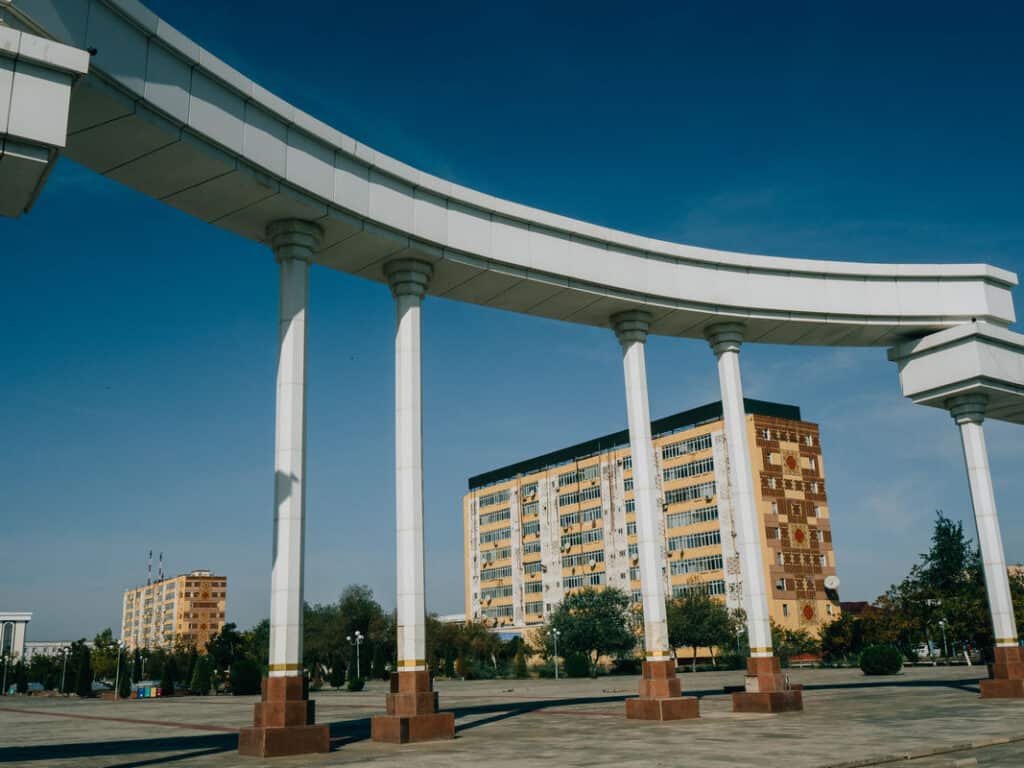
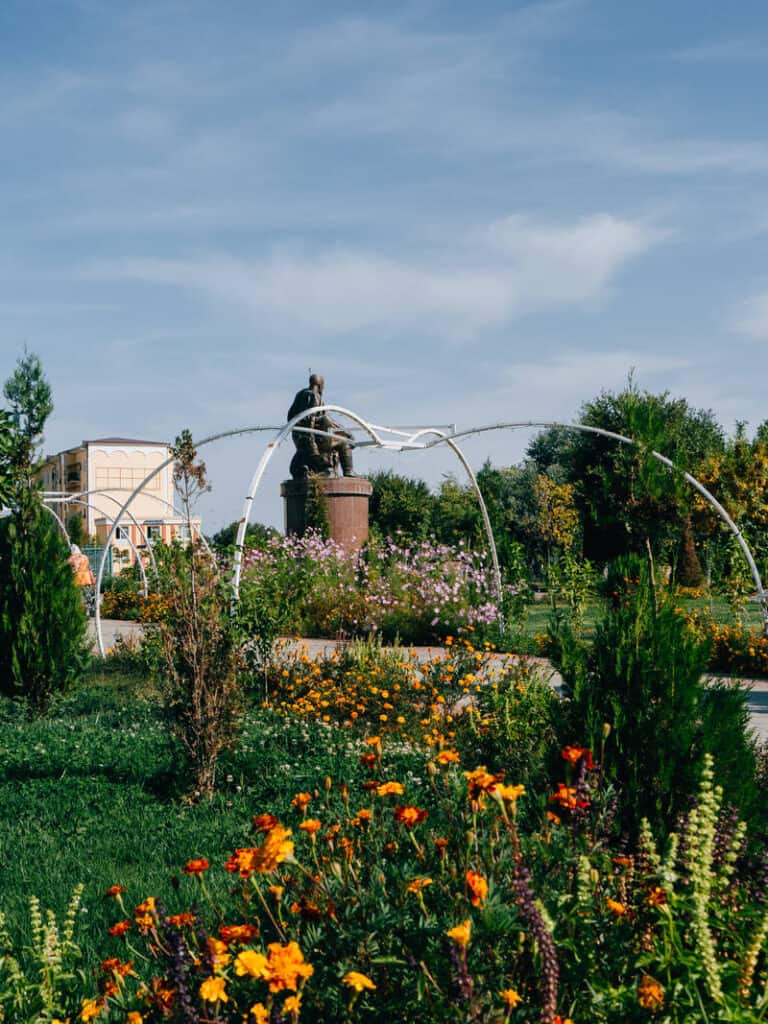
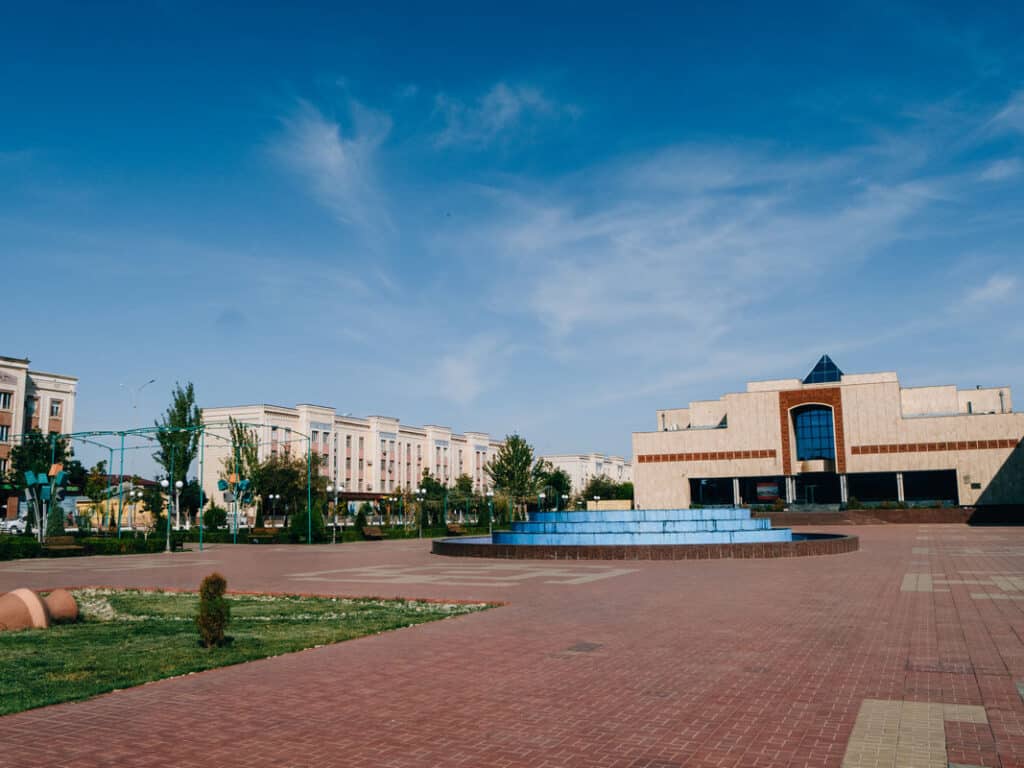
Like many dwellings in Uzbekistan, Nukus has a deep history that looks back thousands of years. The original settlement of Nukus was called Shurcha and was used as a defensive structure to protect the Amu Darya waters and the borders of the Khorezm state until the 4th century A.D.
Some researchers say the origins of the city name derive from a Karakalpak family, due to Nukus translating to ‘nine people’ in Persian, whereas others say the historical name of the Amu Darya River (Oxus) inspired it.
Nukus remained a town until it was granted city status under Soviet rule in 1932. Even today, there are many stark reminders of its influence, especially in the city’s architecture.
If you visit here, it’s also an ideal opportunity to try Karakal cuisine which fuses Ubek, Kazakhstan, Turkmenistan, Tajikistan and other cultures. Tuck into pilaf, manti, samsa and fish dishes at the restaurants. I reckon you could see a lot of the city in a day and then combine other trips to the sights in addition to your stay.
Things to do in Nukus
1) Savitsky Museum
- Entrance fee: 70,000 UZS
- Opening hours: Tuesday to Friday 09:00-17:00, Saturday and Sunday from 10:00-17:00.
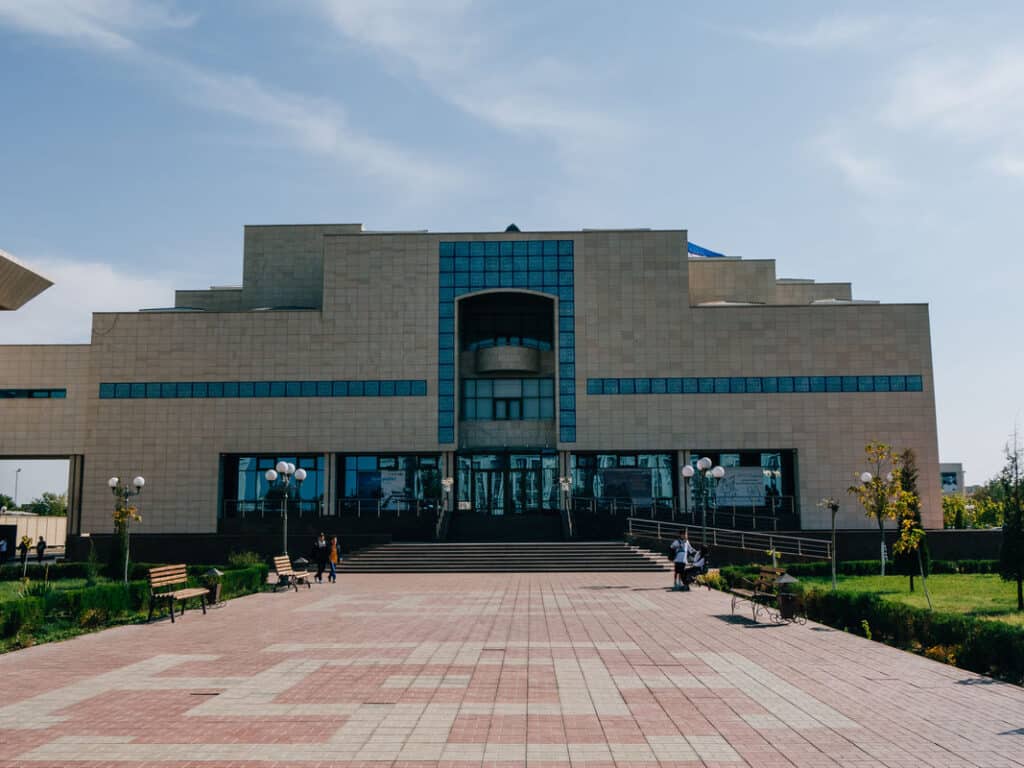
I touched upon it above, but just so you know, the city isn’t teeming with cultural activities. The most fascinating place to definitely check out is the Savitsky Museum. It’s said the gallery hosts one of the largest Soviet art collections in the world and is known locally as the ‘lost Louvre of Uzbekistan’!
The art house was the hiding place for Avant-garde art which was banned by dictator Stalin. The museum was named after Igor Savitsky, a Russian electrician, who fervently burrowed away artifacts, jewelry and paintings. He opened it in 1966 and unbelievably, had squirreled the collection away from the eyes of the authorities.
Disclaimer: Taking photos on your phone is cool with the owners, but like me if you’ve got a chunky camera there will be an extra fee.
2) Karakalpakstan State Museum of History and Culture
- Entrance fee: 50,000 UZS
- Opening hours: Tuesday to Sunday from 09:00-17:00
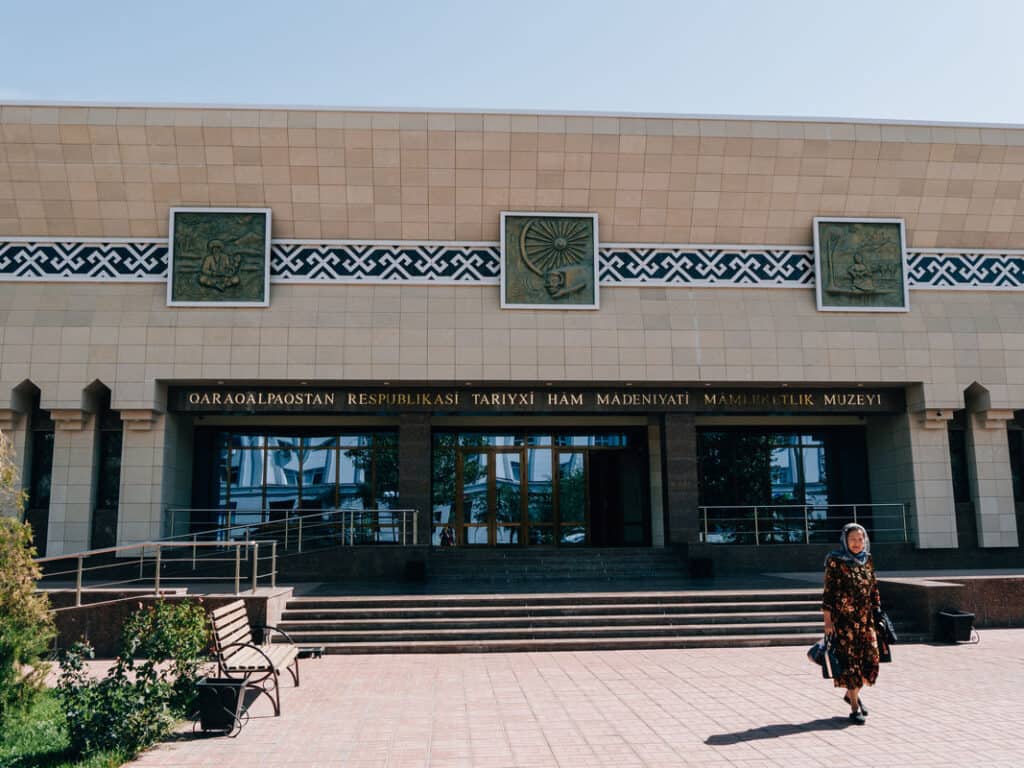
Another place I checked out was this museum which is one of the oldest institutions in Central Asia. If it’s too baking outside, head in for a few hours and weave in between more than 65,000 exhibits. The building is pretty old but it’s part of its charm.
Where to eat in Nukus
There may not be an abundance of museums here, but Nukus more than makes up for it with cakes. I ate a lot of cakes here. On many of the street corners, you can find bakeries selling sweet treats.
For something more savory, head to Neo Restaurant in central Nukus. Like many Karakalpak eateries, it serves all kinds of cuisine until late. Neo has had raving reviews and plus its interior is pretty funky.
Premier Lounge is another beautiful eatery where you can chill in and tuck into European cuisine. It’s pretty close to the Savitsky Museum so you could head here before or after.
Where to stay in Nukus
Budget-friendly hostels:
Besqala is one of the top-rated hostels in Nukus. The chances are high that you’ll find other (solo) travelers here with whom you can share a ride or a tour to the fortresses of Ancient Khorezm. Click here to see the availability and rates for “Besqala”.
Mid-range hotels:
Jipik Joli Hotel is a really nice hotel and also very affordable if you’re traveling alone. Click here to see the availability and rates for “Jipik Joli Hotel”.
2. Mizdarkhan Necropolis
- Entrance fee: 5,000 UZS per person
Located in the hills about 20km from Nukus, this ancient cemetery dates back to the 4th century BC. and is considered by Muslims as one of the most sacred places in Uzbekistan. The necropolis is a myriad of mausoleum ruins, burial grounds, and citadel walls and is widely known as one of the largest cemeteries in Central Asia.

If you look closely at some of the graves, you can still see some of the stretchers that bodies were carried on (sounds macabre, I know, but it shows how untouched the site is in terms of its history). The area continues to be one of the most popular pilgrimage sites in Karakalpakstan.

According to legend, above one of the mausoleums there is an ‘Apocalypse Clock’ which counts down until the end of the world. Every year, a brick from the building falls out of the wall. It’s said when the last brick falls out, the world will end. It’s a strong tradition for pilgrims to put bricks and stones back into the wall in a prayer to God.
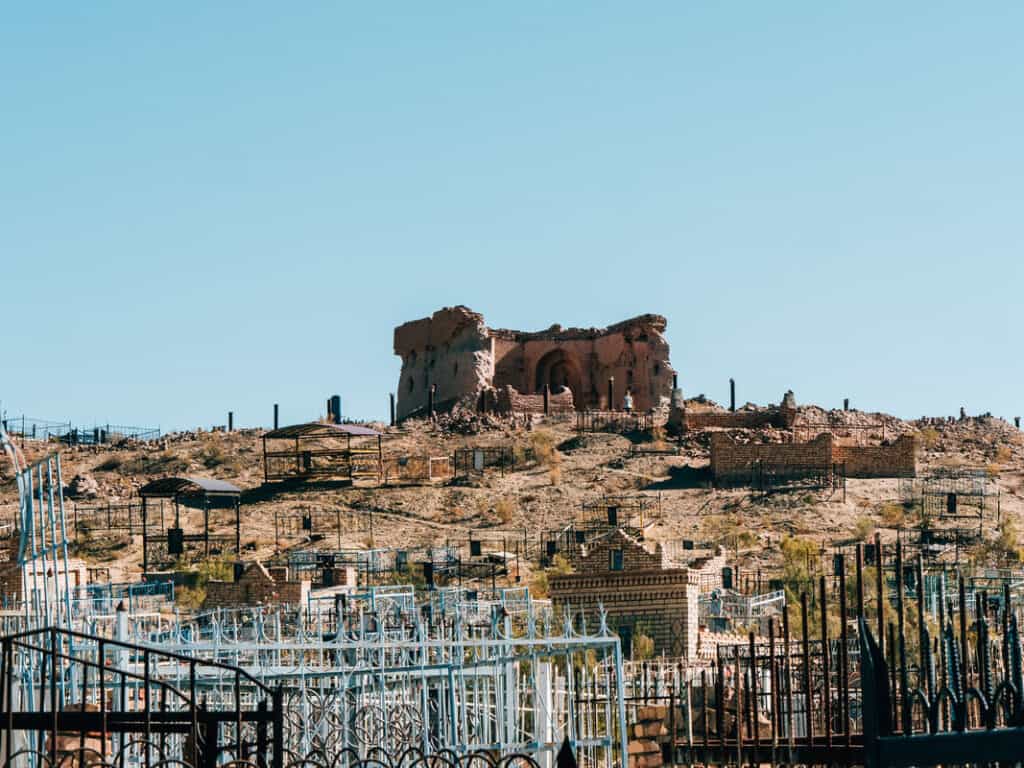
How to get to Mizdarkhan Necropolis from Nukus
There are no public transport services running to the site. However, the necropolis is a 30-minute drive from Nukus so grabbing a shared taxi from the central shopping complex is your best shout.

3. The ancient Khorezm Fortresses
While Karakalpakstan is now mainly one huge desert, it used to be called Khorezm and was one of the most historical and cultural regions of Central Asia.
The ancient Khorezm Fortresses were built well over 2,000 years ago and were a collection of over 50 desert monuments. Discovered by archaeologists, dozens of ancient cities, castle ruins and royal palaces were unearthed from the arid land.
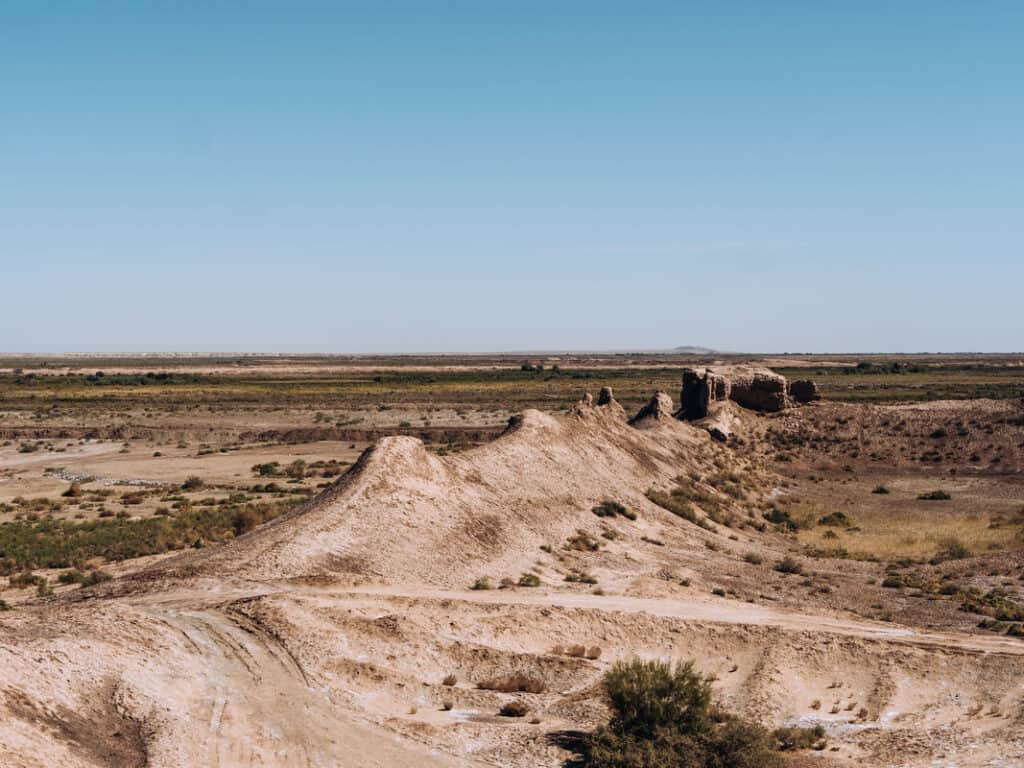
The Khorezm Fortresses, or Ellik Kala in Uzbek, are listed as the Desert Castles of Ancient Khorezm on the UNESCO World Heritage List.
During the Arab conquest period, the site was called ‘a country of thousand fortresses’. It is also the homeland of the Zoroastrians, one of the world’s oldest religions.
Once sturdy structures which defended ancient kingdoms, wind and sand has eaten away at the site’s walls. Many of the 50 succumbed to agricultural projects and were destroyed during the Soviet Union. Now around 20 monuments remain.
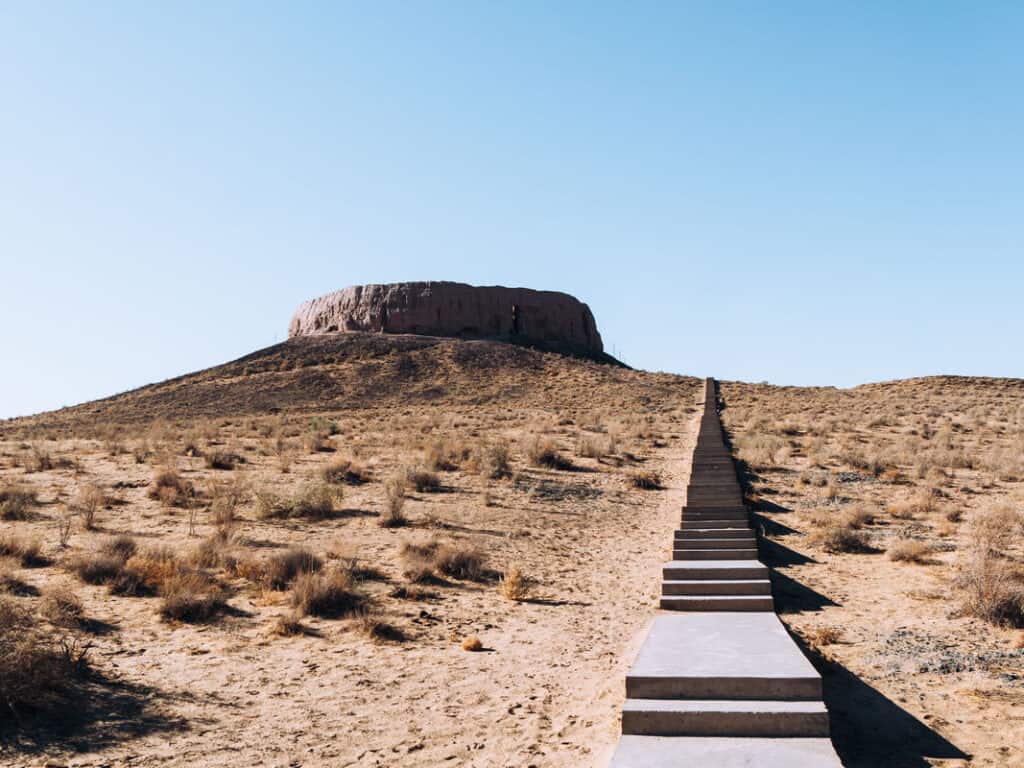
Nevertheless, it’s so humbling being able to meander in such rich history and with a little imagination, you can grasp how impressive they were in ancient times. And let’s face it… if this existed in Western countries, it would be blocked off with five-inch-thick glass.
Note: Remember! You’ll be in a sizzling desert. There will be no shade so ensure you bring sunglasses, a hat and sunscreen to avoid you cooking like a chip. Oh, and lots of water.
Khorezm Fortresses worth visiting
After exploring for myself, in my opinion, some fortresses aren’t really worth visiting because there’s very little or nothing to see. Below are the ones that I think are worth a visit:
1. Gyaur Kala
- Entrance fee: none
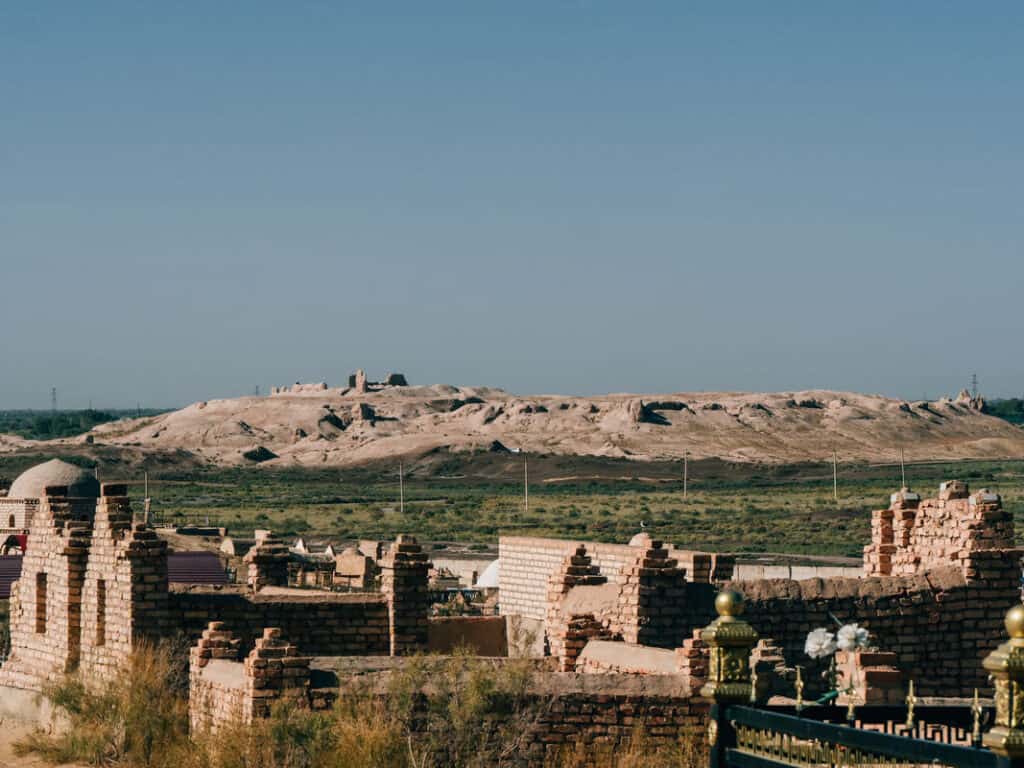
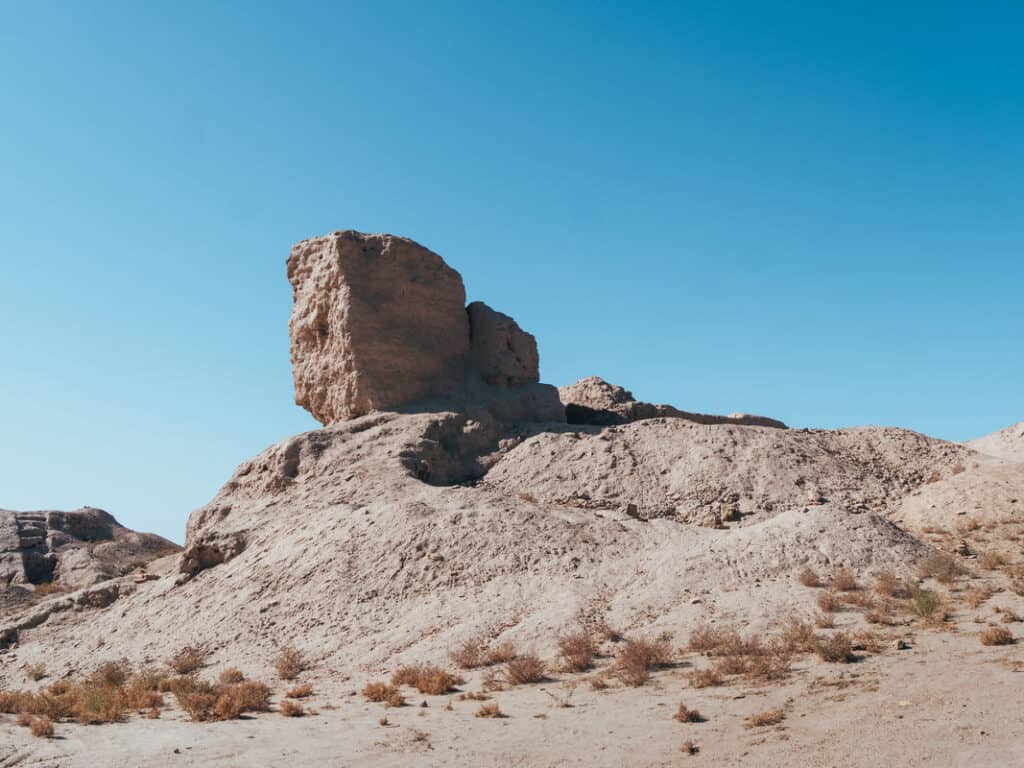
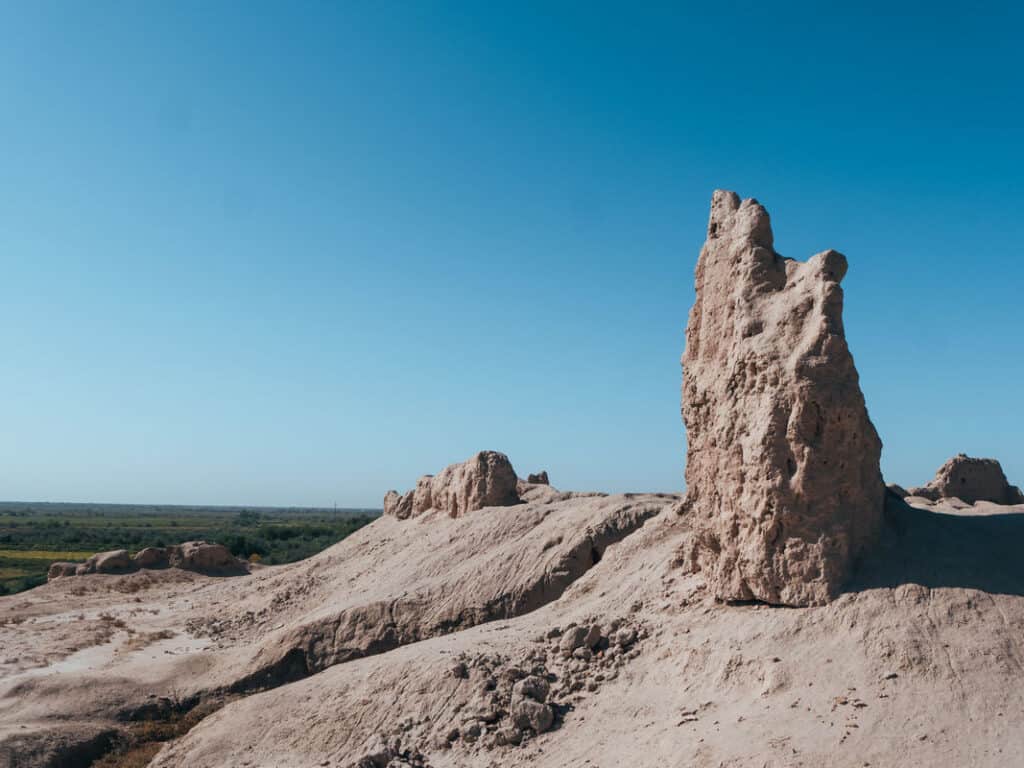
Built in the 4th century BC, the monument was named ‘a fortress of infidels’ in Arabic, because archeologists discovered those living there used to be Zoroastrians (one of the world’s oldest religions).
For hundreds of years, the site was proven as an integral part of the Silk Road after archeologists found coral beads, shells from the Indian Ocean and golden thread fabrics.
The fortress was once home to two citadels, one a temple and the other was a governor’s palace. There aren’t huge amounts that remain, but if you’re planning to see Mizdarkhan Necropolis, it’s well worth checking out because it’s next door. There is no entrance fee.
2. Chilpik Kala
- Entrance fee: 5,000 UZS.
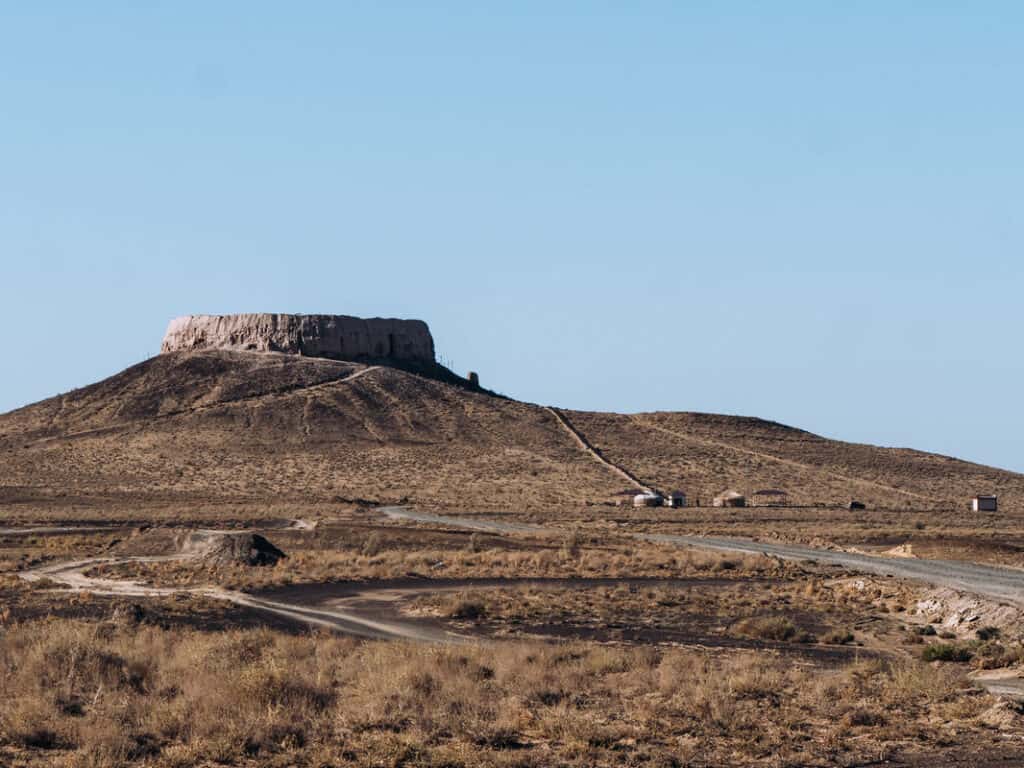
The Chilpik Kala was used by Zoroastrians for sky burials and is otherwise known as the ‘Tower of Silence’.
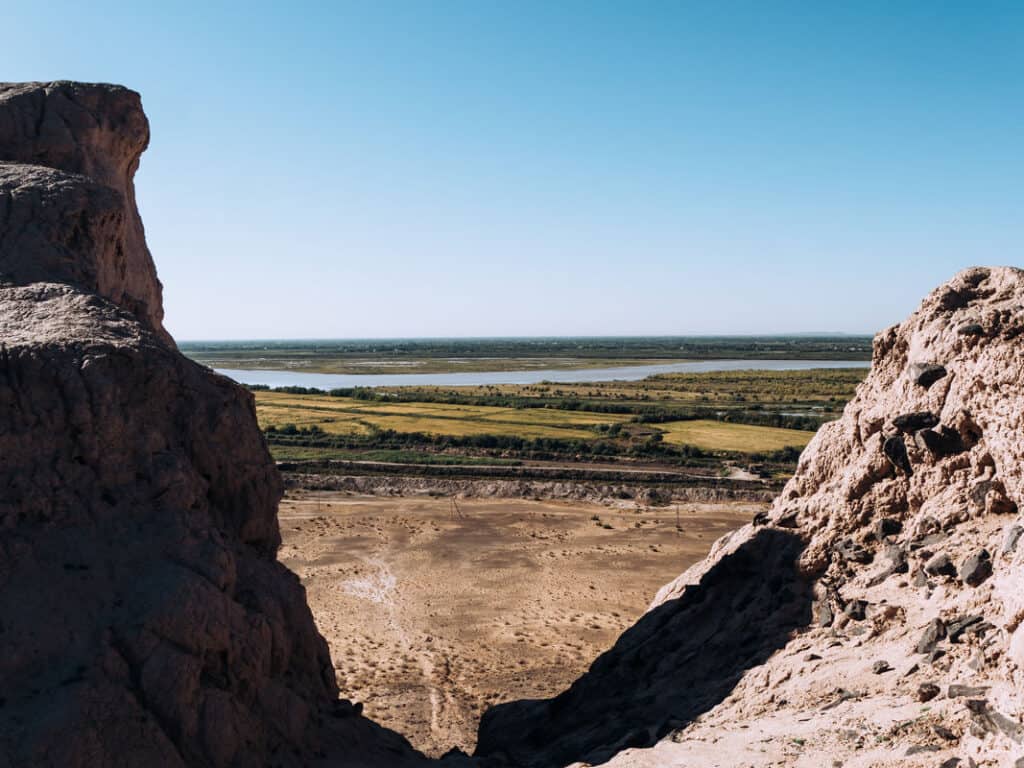
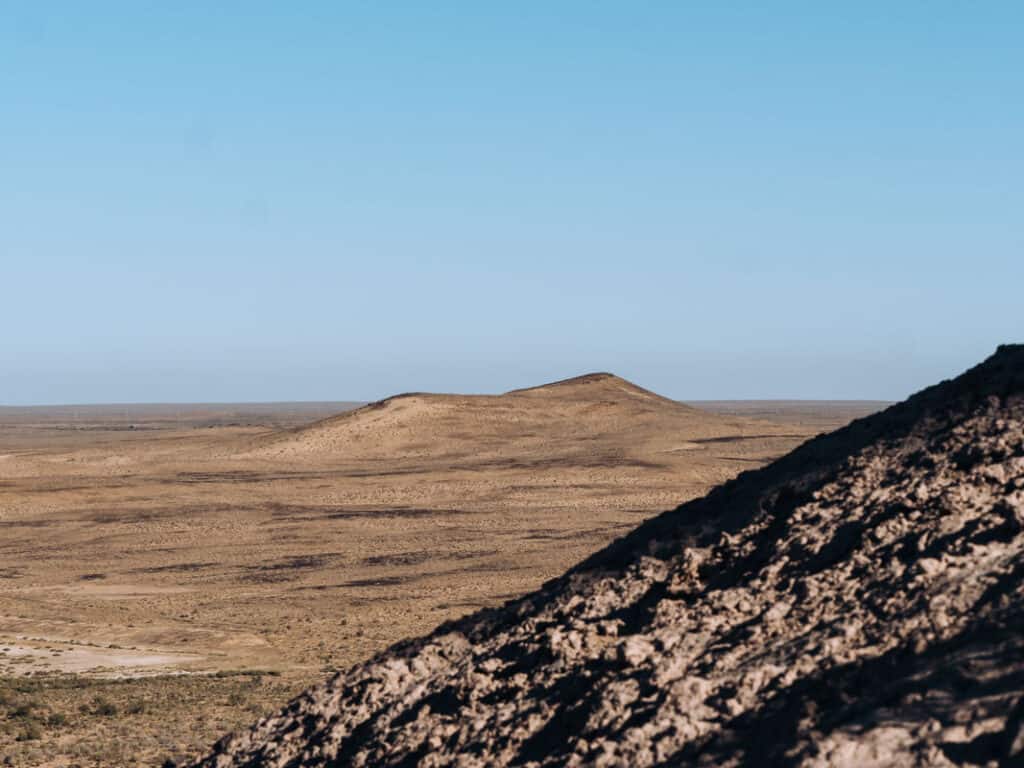
The structure was built on top of a rounded hill on the banks of the Amu Darya Delta and overlooking the Kyzyl-Kum desert.
Around 200 BC, bodies were carried up and laid out on the top of the tower so vultures and scavengers could scurry along and clean the bones. The Zoroastrians would then place the bones in ossuaries (chest or chamber for bones). Researchers have said this is one of the earliest examples of traditional funeral rituals.
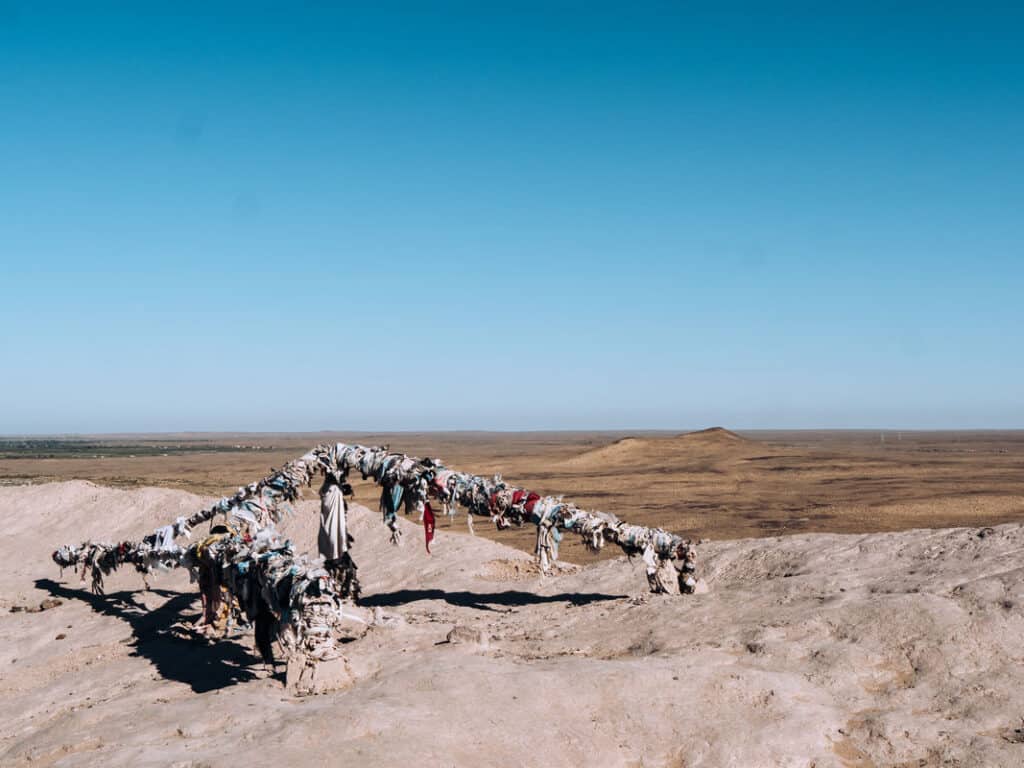
The site is 43 kilometers south of Nukus, near the main road to Turtkul. Head here early in the morning or for sunset because the views are pretty spectacular!
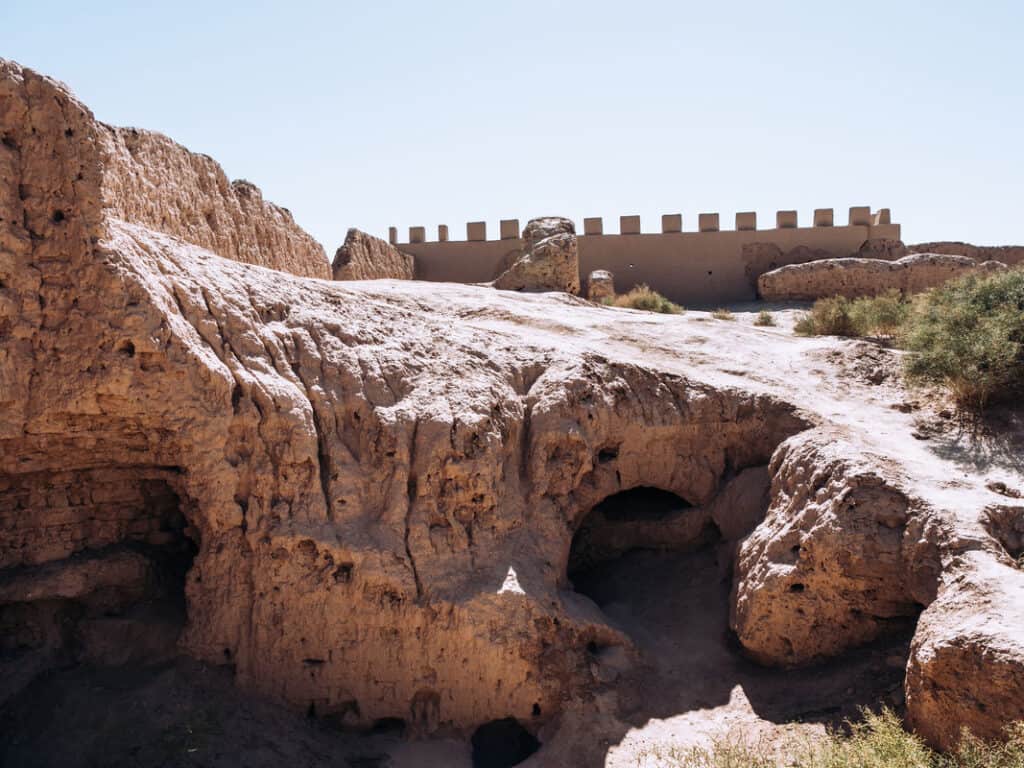
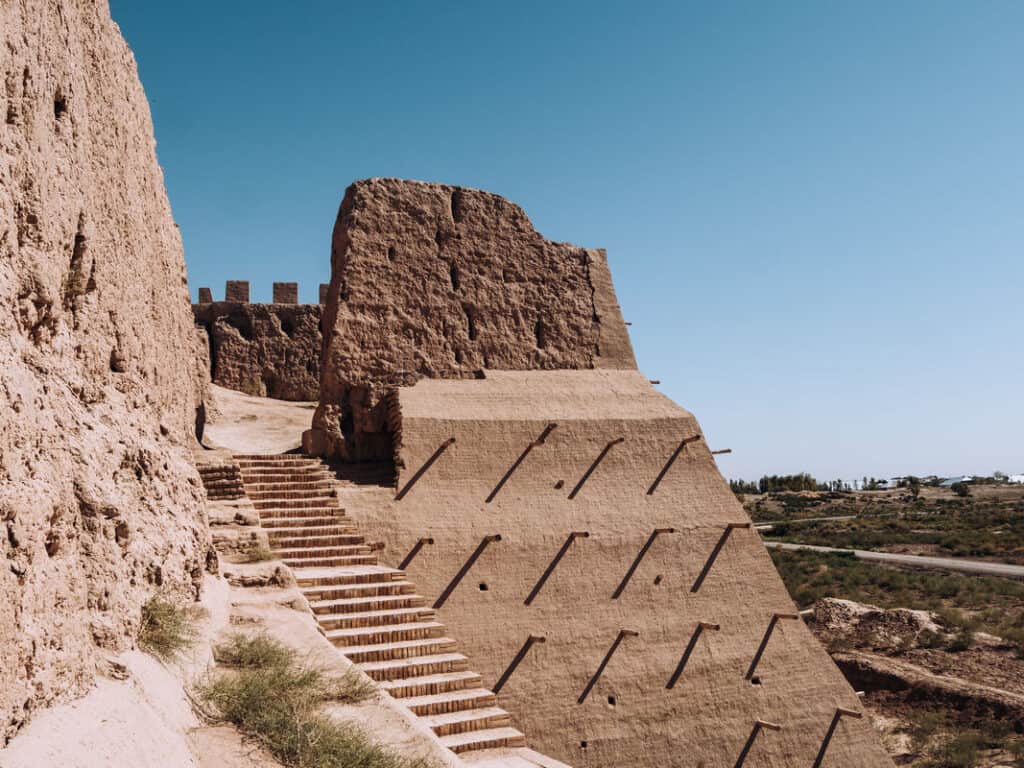
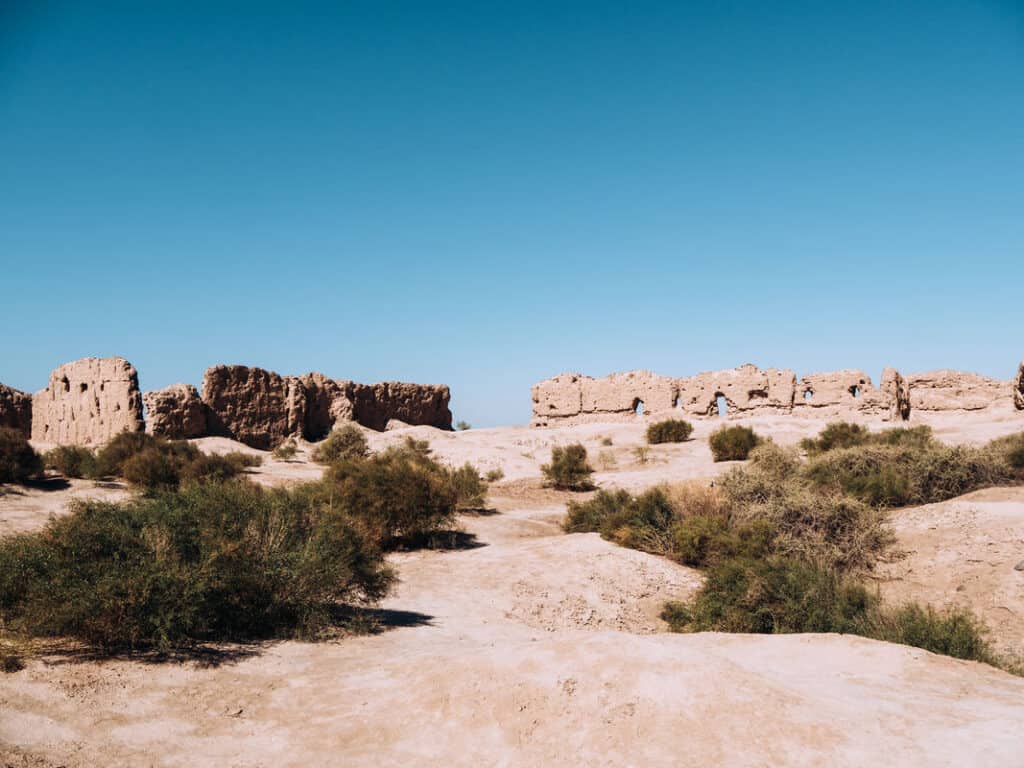
3. Kyzyl Kala
- Entrance fee: 5000 UZS, which needs to be paid at the Toprak-Kala fortress (see below).
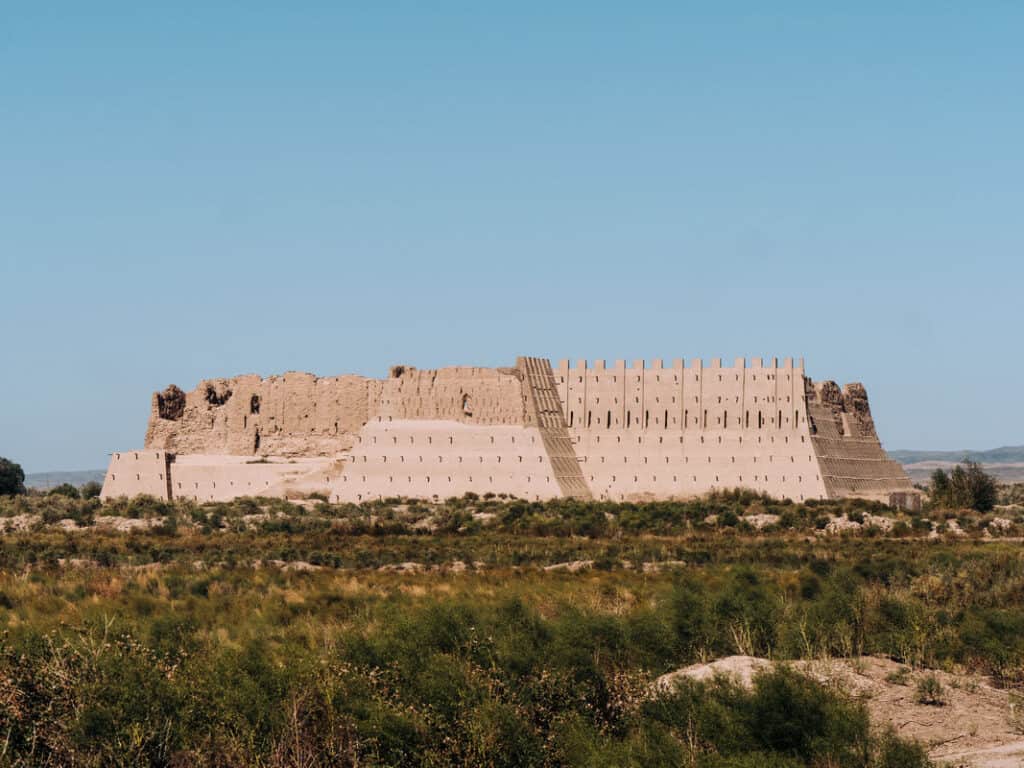
Some archaeologists have said Kyzyl Kala was a defensive structure, constructed as a garrison post for troops to protect the ancient palace city of Toprak-kala (next door). There’s no hard evidence of what Kyzyl Kara’s function was, but the walls were once eight meters thick so it was a beefy place to be in.
Kyzyl Kara means ‘red fortress’ and researchers estimate it was built around the 1st to 4th centuries AD but was reconstructed around the 12th century.
Legend has it that the underground chambers are packed with gold but no one can get to it because of a sneaky snake demon (I didn’t hear a hiss from him during my visit).
4. Toprak-kala
- Entrance fee: 5000 UZS
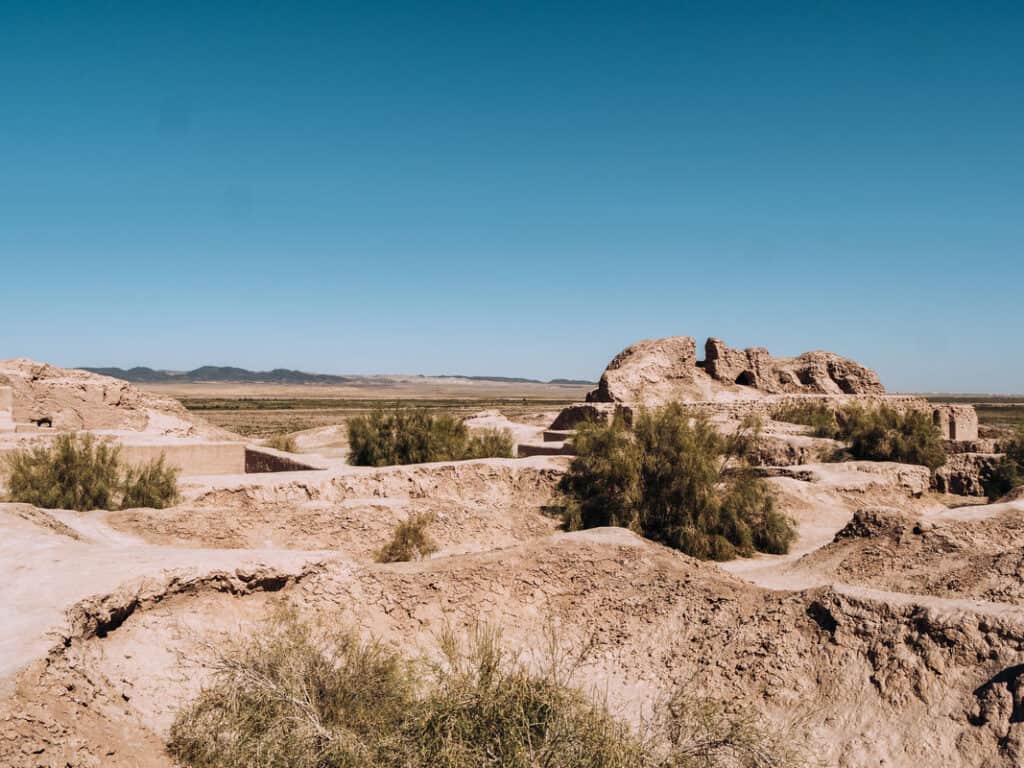
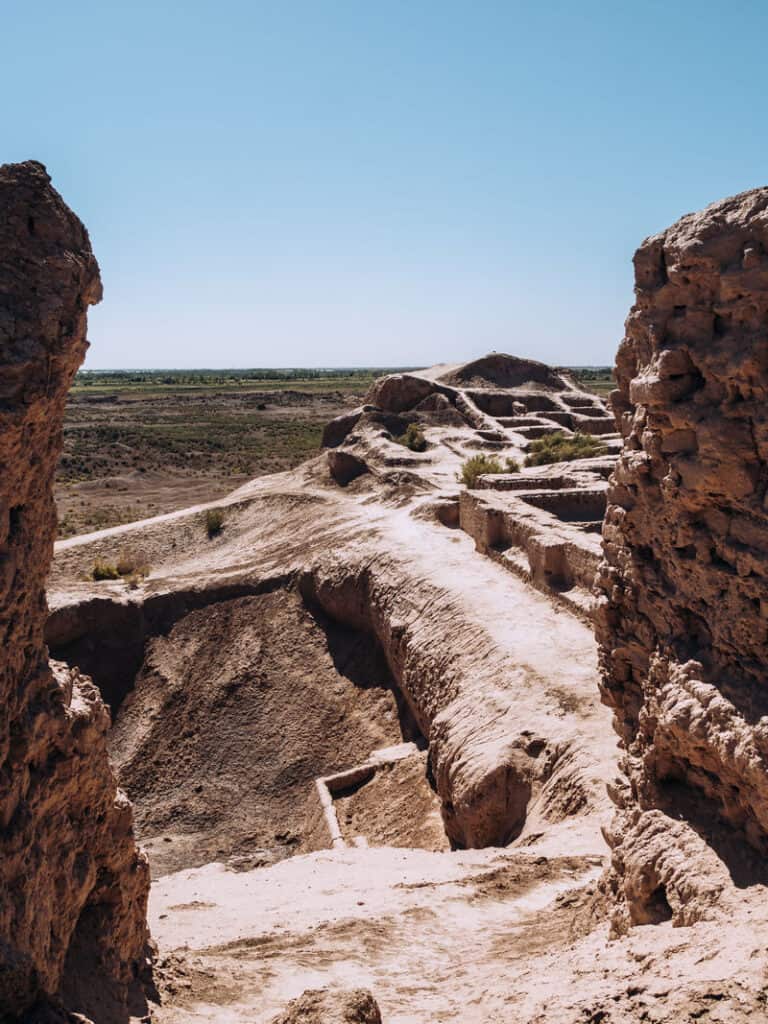
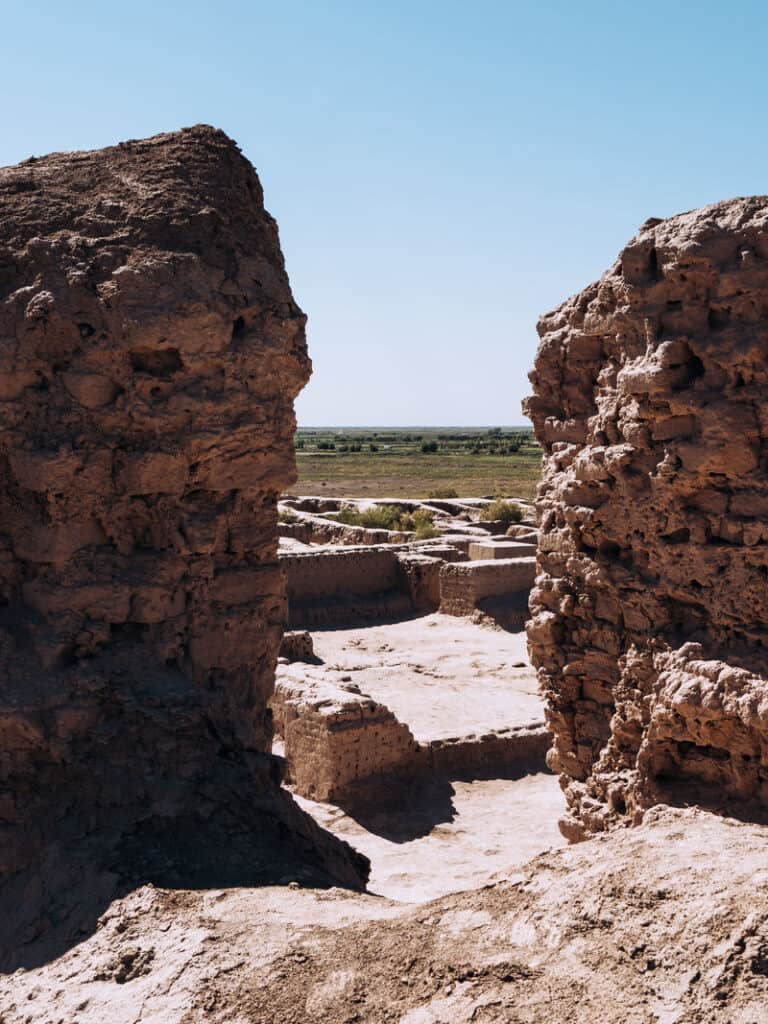
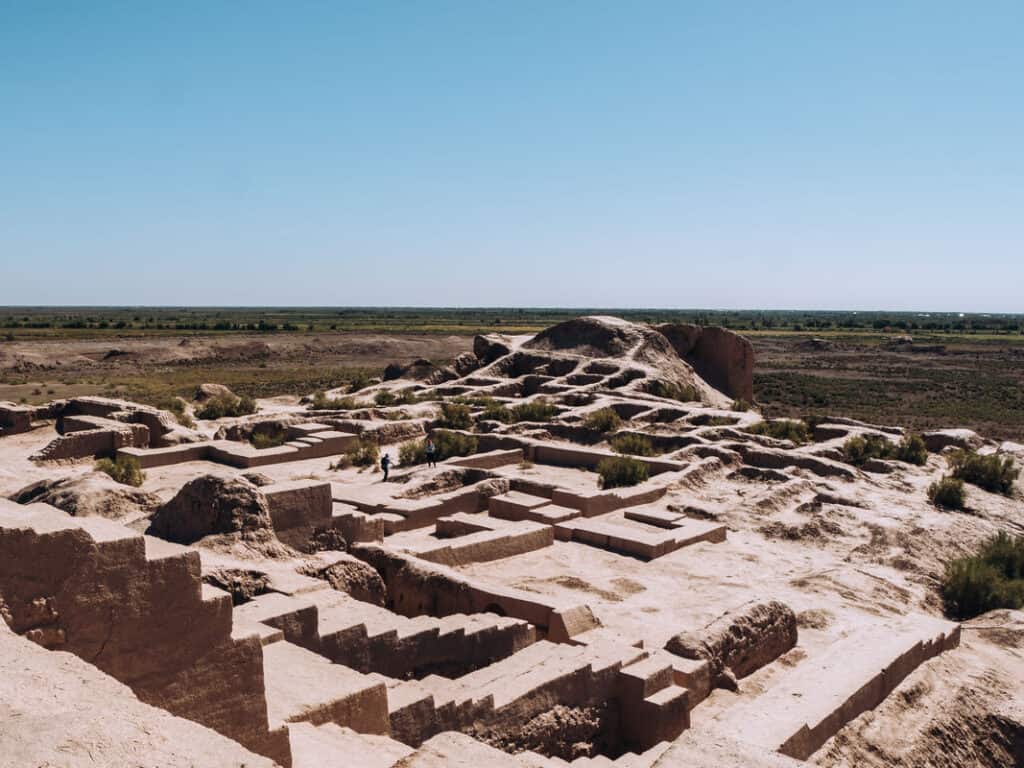
In the 1st century, Toprak-kala was a palace for the Khorezm kings. Treasures such as coins, art samples, ceramics, wool, silk, necklace glass beads and gold were unearthed at the site.
As a result of the finds, the site is known as the ‘museum of fine arts of Khorezm’. Rooms closer to the center of the palace are larger and were found to be better decorated, which signified the royal hierarchy.
Of many of the Khorezm fortresses, these ruins are in pretty good shape (they were also recently renovated so you can cook up some imagination when you wander around). The site sits around 58 km by the road from Urgench.
5. Ayaz Kala
- Entrance fee: 5000 UZS
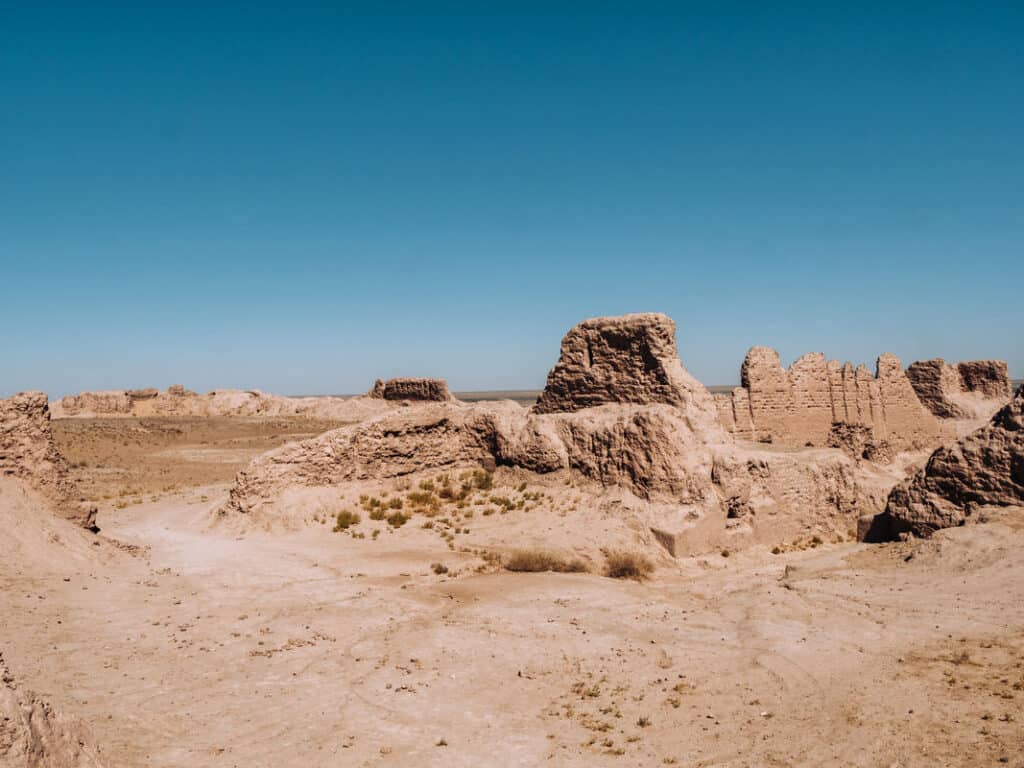
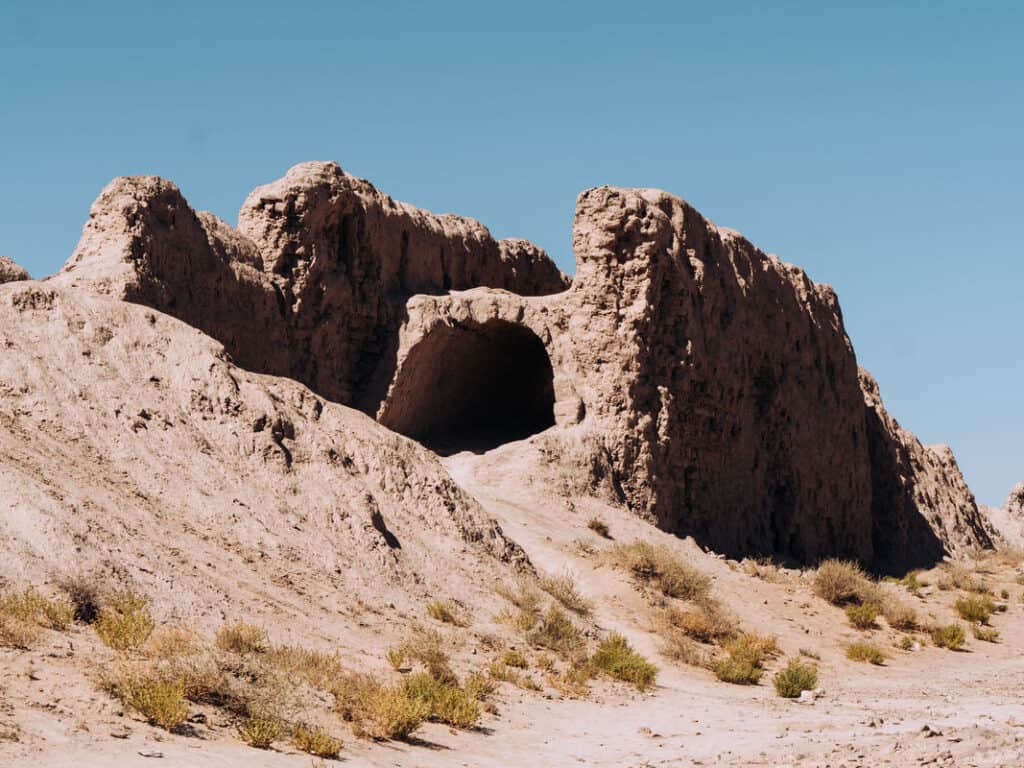
Huddled in the sandy hills sits the famous and oldest Kala which consists of three forts. Translated as “fortress in the wind”, the castle served as a defensive site protecting the Kushan kingdom. Each of the forts were built in different stages from the 4th century BC and continued… until the 7th century AD!
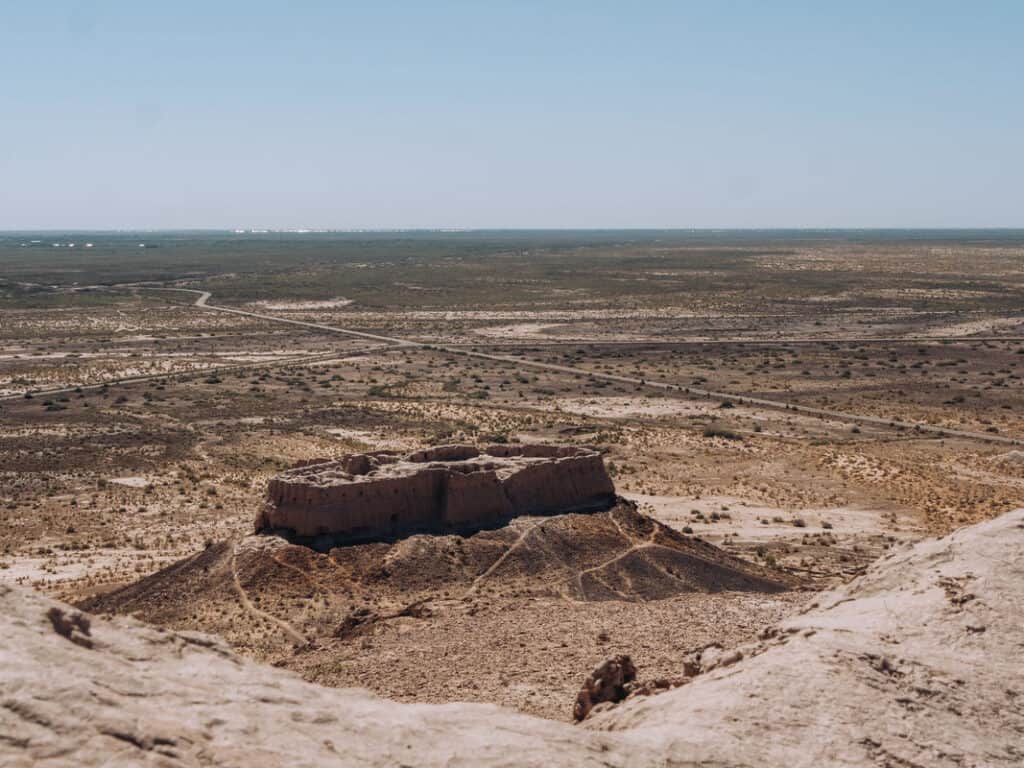
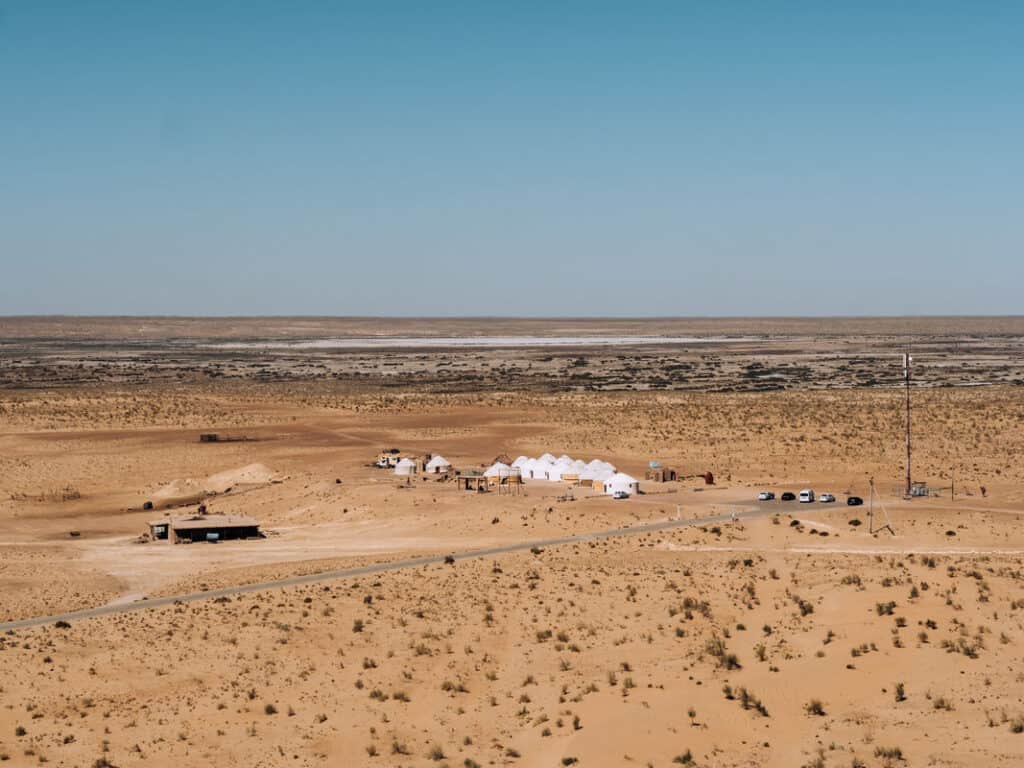
The castle ruins, which are made from mud bricks, are unusual in that there are rural settlements in the grounds. If you’re keen to see the whole site, I’d head in cooler temperatures as one of the forts is on a hill so it will involve a lot of sand, sweat and… sweat.
There’s also the Ayaz Kala Yurt Camp if you’re feeling peckish or if you fancy spending an evening in the desert.
6. Guldersun Kala
- Entrance fee: none

Built in the 12th and 13th centuries, this fortress is a baby compared to its siblings, but not in size. Guldersun is one of the largest sites in Khorezm and was used until 1220 AD.
The history of the Kala inspired folk poem ‘Guldursun’ written by Sergey Tolstov, which portrays the struggles of the Khorezm people against the Mongol invaders.
7. Janbas Kala
- Entrance fee: none
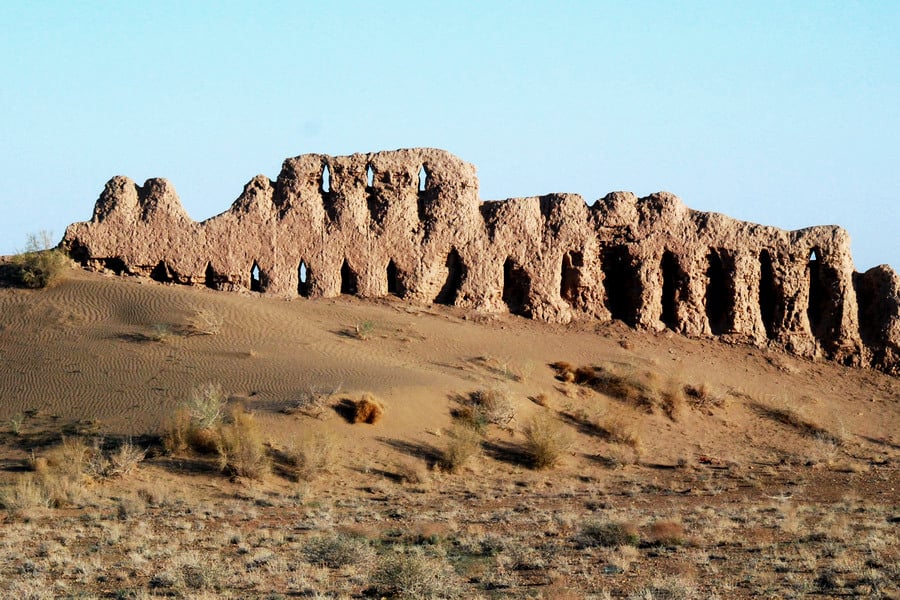
The Janbas Kala fortress is located on the southeastern border of ancient Khorezm and was founded in the 4th century BC. You’ll soon see why this structure was built to defend – it had 10-meter-high walls, archer shooting platforms and a gateway that funneled the enemy into a narrow corridor (target practice for the archers).
Historians claim that Janbas stood strong until an army of nomads (no, it wasn’t my ancestors) battered down its doors in the 1st century AD. Weapons and arrows were found at the scene of a possible battle, but where the people were taken remains unknown.
On a lighter note, the walls of Janbas look like a really cool bubby form of limestone.
How to get to the Khorezm Fortresses
There’s no public transport going to the Khorezm Fortresses so you’re only options to visit the most interesting fortresses are a day tour from Nukus by road. Or if you’re looking to head south from Nukus, you can also organize a trip from the fortresses to Khiva (which is what I did).
Most people hire a private driver for the day to get there – enquire at your hotel/hostel in Nukus. Prices start from 40 USD.
Another option is booking a combined tour of all of the fortresses from Nukus or Khiva. You can book a guided tour via a local agency or your ho(s)tel.
You can also book the following tour online, starting from Khiva:
4. Moynaq
Moynaq, also known as Moʻynoq and Muynak, sits in North-West Uzbekistan. Prior to the Aral Sea disaster, Moynaq was a pivotal port and prosperous asset to Uzbekistan, providing thousands of jobs. Waters were fizzing with life and docks simmered with boats. Its bountiful sea life and picturesque beaches enticed many holidaymakers.
The consequences of the disaster struck Moynaq hard. Its fishing economy crumbled and the bustling city began to lose its pulse. As the waves retreated, buildings were abandoned and boats were breached on the sands.
Tourism has taken a totally different form here today. Many come to reflect and fathom how disastrous the impact was to Central Asia. Moynaq’s main attraction is now not its beaches, but a ship graveyard, which provides a humbling experience and is a blatant reminder to respect nature.

Top things to do in Moynaq
1. Moynaq ship graveyard
Moynaq’s ship cemetery is perhaps the starkest reminder of how the disaster decimated not only the fishing industry but a whole ecosystem.
I was free to weave in between the ships and reflect, which was like being in an outdoor museum. Many websites say you must travel far into the desert to see the rusting boats, but this isn’t the case. Moynaq’s ship graveyard is located next to the Regional History and Aral Sea Museum.


2. Aral Sea Memorial
Situated overlooking the ship graveyard, the monument towers over the sands and its spike acts as a permanent reminder of where the sea’s waves once were. There is a small historical summary to read, and it is a good place to look over at the boat cemetery.

Where to eat in Moynaq
There are only a few cafes dotted about in Moynaq which serve Uzbek dishes like plov. I’d recommend eating at your accommodation or packing some snacks for the day.
Places to stay in Moynaq
Many of the small guesthouses in Moynaq close up late autumn through to late spring. The facilities here function veeerrrrrry differently to the western world – it’s more of a laid-back approach of rocking up and seeing what’s available rather than having a secure booking months in advance…
- Mayak Yurt Camp: Yurts are a proper way to understand the heritage of Central Asia. This yurt camp is next to a former lighthouse and for around $10 you can get some rest and breakfast. You can’t pre-book but there should be beds available. If you’re backpacking, you can pitch up your tent here for a small fee.
- Guest House Timur: The traditional small guesthouse is around $10 per person, including breakfast, $15 for including dinner. Tea and sweets are always on offer, and they may have some tours operating to the Aral Sea. The guest house is located north of the bus station on Nasyrova str. Pre-booking is not available, but the contact number is +998944502952.
- Hotel Ratmina 2: Good base for getting around Moynaq and averages around $39 per room per night.
How to get to Moynaq from Nukus by public transport
There are daily marshrutkas (minivans) to Moynaq from Nukus bus station. The bus leaves at 9am. Ensure you arrive early (ideally 8:30am) at Nukus bus station as the marshrutkas get busy. The price is around 20,000 SOM for a ticket. The final marshrutka back to Nukus departs at 3pm.
Taxis to Moynaq can cost around 700,000 SOM ($60 USD), so if there’s a group of you, it could be worth splitting the fare. Bare in mind if you book from a hotel, some may charge a little higher. Always agree on the fare before you depart.
If you’re struggling to find a direct taxi to Nukus, an option could be to grab a taxi halfway to the town of Kungrad (two-hour trip) and then take another taxi from Kungrad to Moynaq (another two-hour trip).
Most travelers visiting the Aral Sea choose to get there by hiring a driver with a 4×4 vehicle. This is also the way I made this trip. Prices for a 2-day trip, covering all the places of interest mentioned above and including dinner, breakfast and a one-night stay at a yurt camp on the Aral Sea shores, start from USD $440 for 1 person (without a guide). The more people you are with, the cheaper the price will be. You can inquire at your hotel/hostel in Nukus to hire a driver and car. If your budget allows it, I would highly recommend getting an English-speaking guide though (usually an additional $100).
You can also browse online for tours to Moynaq and the Aral Sea. Here’s a suggestion:
5. Ustyurt Plateau (Mangyshlak Peninsula)
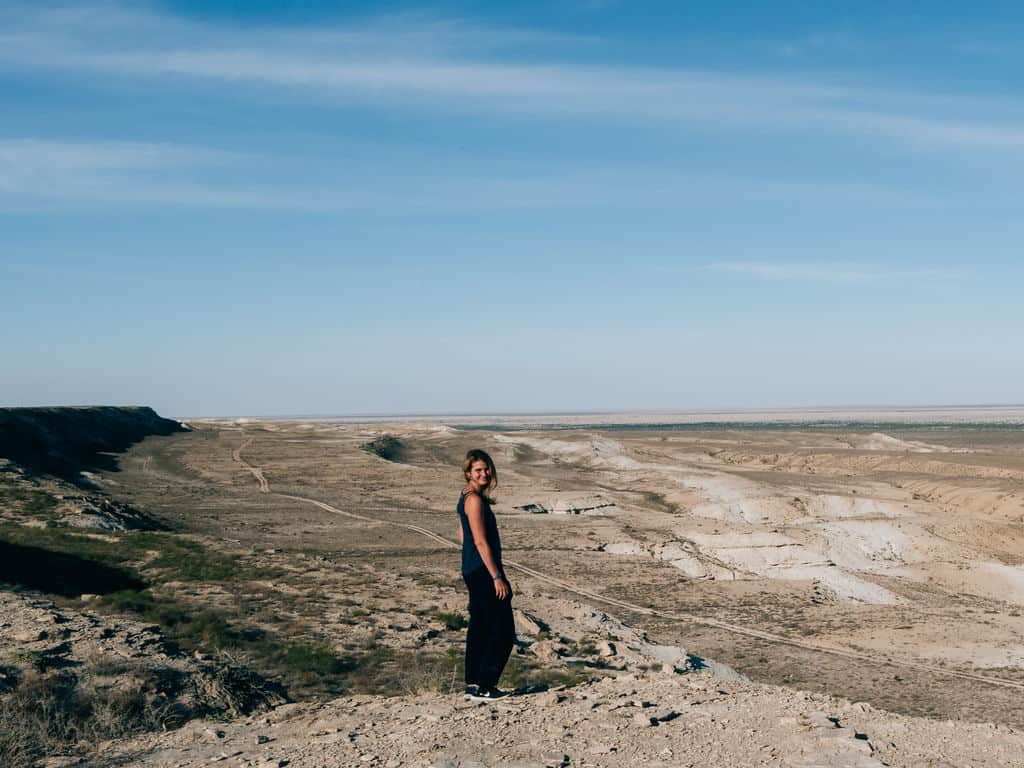
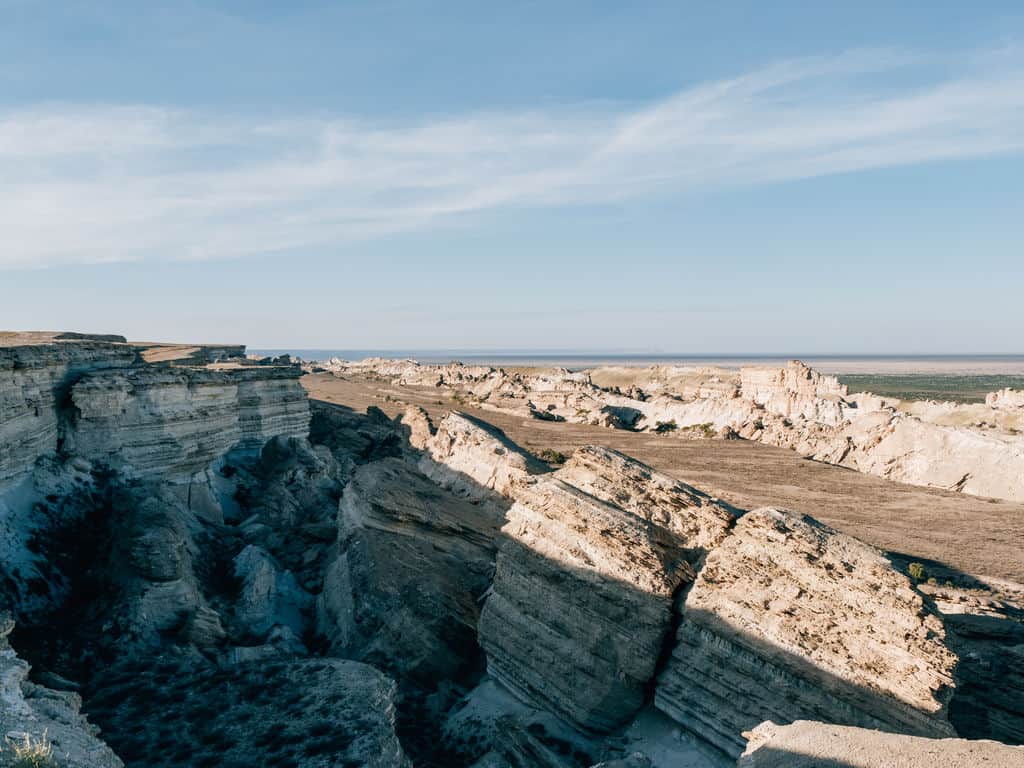
The great Ustyurt Plateau sits in the Mangyshlak Peninsula between southwest Kazakhstan and west Uzbekistan. It is a spectacular clay desert with chalk cliffs.
Translating “Ust-Yurt” works out as “flat elevation” and this is one big hunk of a plateau, occupying a total area of about 200,000 km². According to scientists, Ustyurt is the bottom of a dried-up sea, which existed here in the early and middle Cenozoic Era (21 million years ago).
It’s a very photogenic and impressive area – a desolate landscape of flat desert terrain broken by chalk rocks and rock escarpments. The landscapes here are very Martian which is cool if you’re wanting some nature and a break from urban sightseeing.
Top things to do at the Ustyurt Plateau
1. Animal watching
From photographs, you could be fooled into thinking this landscape looks barren, dry and lonely. Nope, not for animals.
Scientists have recorded at least 30 different species of reptiles and amphibians, 45 mammals and 50 breeding birds who have made themselves cozy here. Look to the skies too – there are vultures and eagles that swoop among the cliffs!
2. Short walk
I admit I usually go galavanting off on a hike as soon as I can and with views like this I would be very tempted. However, if you’re here in the warmer seasons, it gets blazingly hot and you’d need ridiculous amounts of water to keep you hydrated.
It’s not really a place where you can give a waypoint to a driver for a later pick-up either – if a slight mistake happens you could be stuck here. So I’d say don’t walk more than one hour away from your driver.
How to get to the Ustyurt Plateau
If you’re after just a private driver to take you there, I’d try to organize this at your accommodation. Alternatively, many tours combine Ustyurt with the Aral Sea.
I’d recommend a multi-day tour, starting at Khiva, which combines the Mizdakhan and Gyaur-Kala fortresses, the Aral Sea cemetery, and a remote settlement at the Ustyurt Plateau.
6. The Aral Sea South Shore
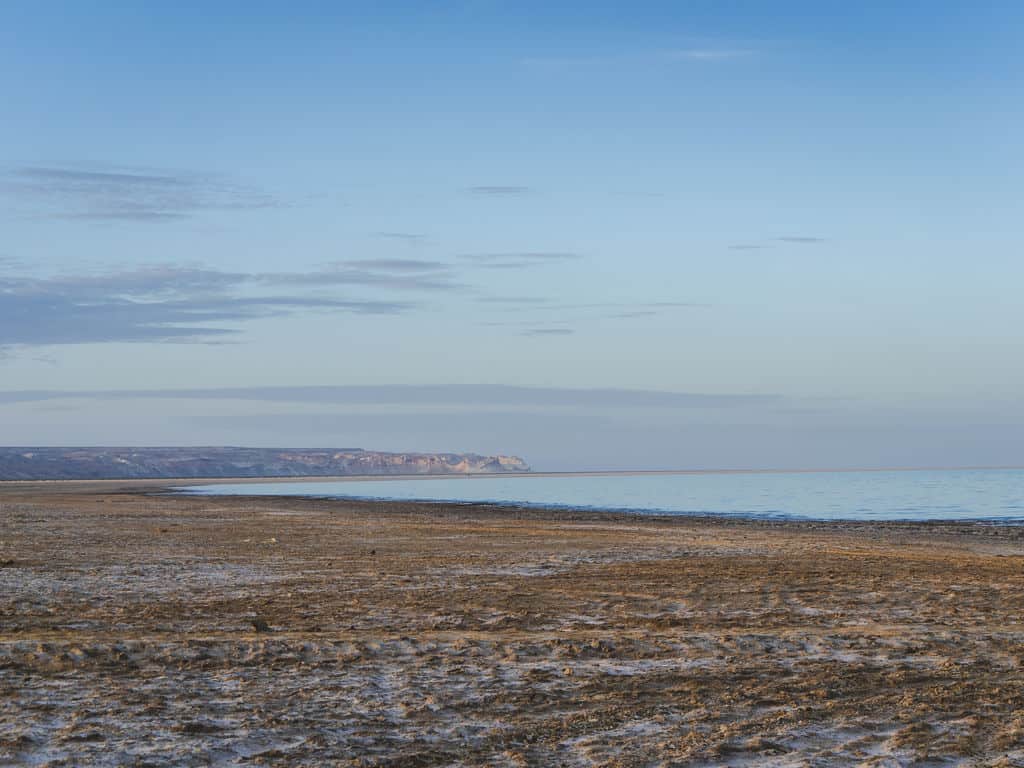
So to quickly recap, the Aral Sea was once a thriving ecosystem and used to be one of the largest saline lakes on Earth. The water currently straddles North Uzbekistan and South Kazakhstan but its location continues to shrink.
There are two lonely stretches of water left – one in Kazakhstan (known as Small Aral or North Aral) and the other in the north of Uzbekistan which dips into Kazakhstan (known as Large Aral or South Aral).
It goes without saying, but swimming in this sea is a no-go (the pong from the water and the dirt on the shore should be enough to stop you from taking a dip!). The same goes for drinking from the water, don’t do it. However, please know that visiting the waters for short periods will not cause you any harm.
How to get to the Aral Sea South Shore
If you’re after just a private driver to take you there, I’d try to organize this at your accommodation. Alternatively, there are many tours which combine the Aral Sea:
7. Khiva
Khiva lies in the region of Xorazm, which neighbours southern Karakalpakstan. While on my journeys around Central Asia, people kept telling me that I absolutely had to visit Khiva in Uzbekistan. They described the city of Khiva as a mystical place.
Well, Khiva surprised and charmed me. From carpet weaving workshops and stunning minarets overlooking the ancient town to old mosques and azure-tiled towers, everything I saw was stunning!
Khiva is now a touristic town that waits for buses of tourists instead of slave caravans (it once had a brutal connection to being a slave-trading post). The city now functions like an “open air museum” and although you have to pay an entry fee, Khiva is a city that you shouldn’t miss. It has many architectural treasures of the past and is brimming with history.
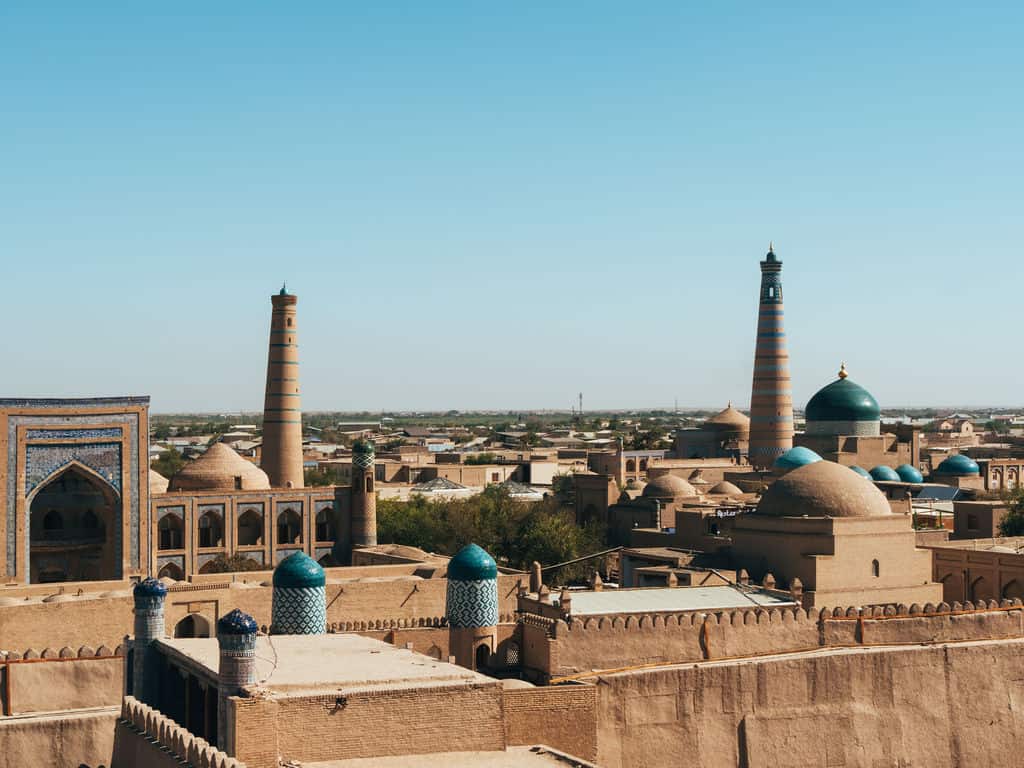
Things to do in Khiva
There is a LOT to say about the wonderful Khiva. So much that I like to refer you to my Complete Khiva Travel Guide:
Thank you for reading! I hope this travel guide was useful and that you’ll have a great trip to Karakalpakstan. If you have any questions or new updates from your recent trip to Karakalpakstan, I’d love to hear it in the comments below!
| 👉Tashkent City Guide | 👉Samarkand City Guide |
| 👉Bukhara City Guide | 👉Khiva City Guide |
| 👉Shahrisabz City Guide | 👉 Karakalpakstan Guide |
| 👉Fergana Valley Guide |
Related posts
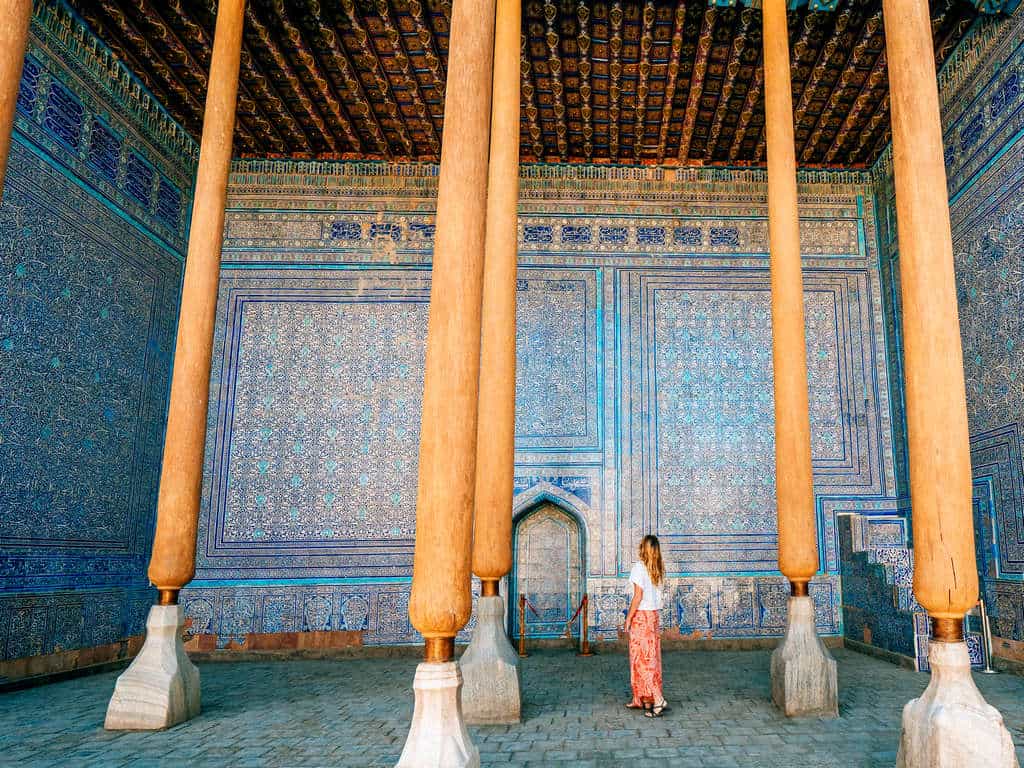
What to wear in Uzbekistan – The Essential Uzbekistan packing list
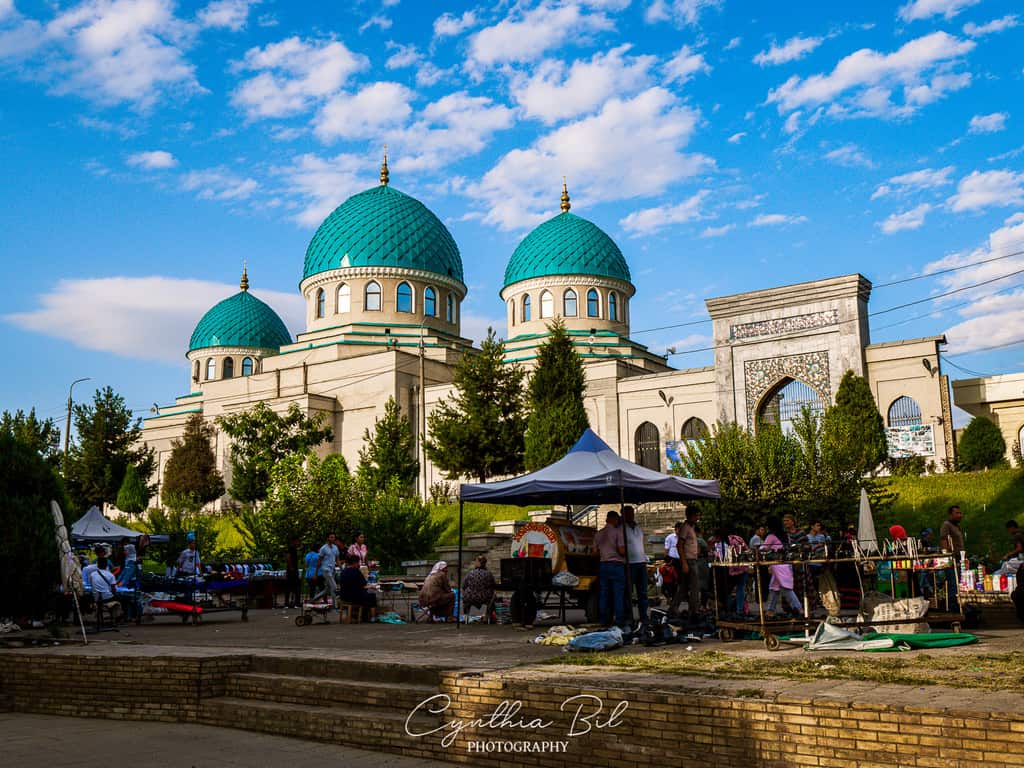
The best way to get from Tashkent to Osh and from Osh to Tashkent, crossing the Dostyk border (Kyrgyzstan – Uzbekistan)
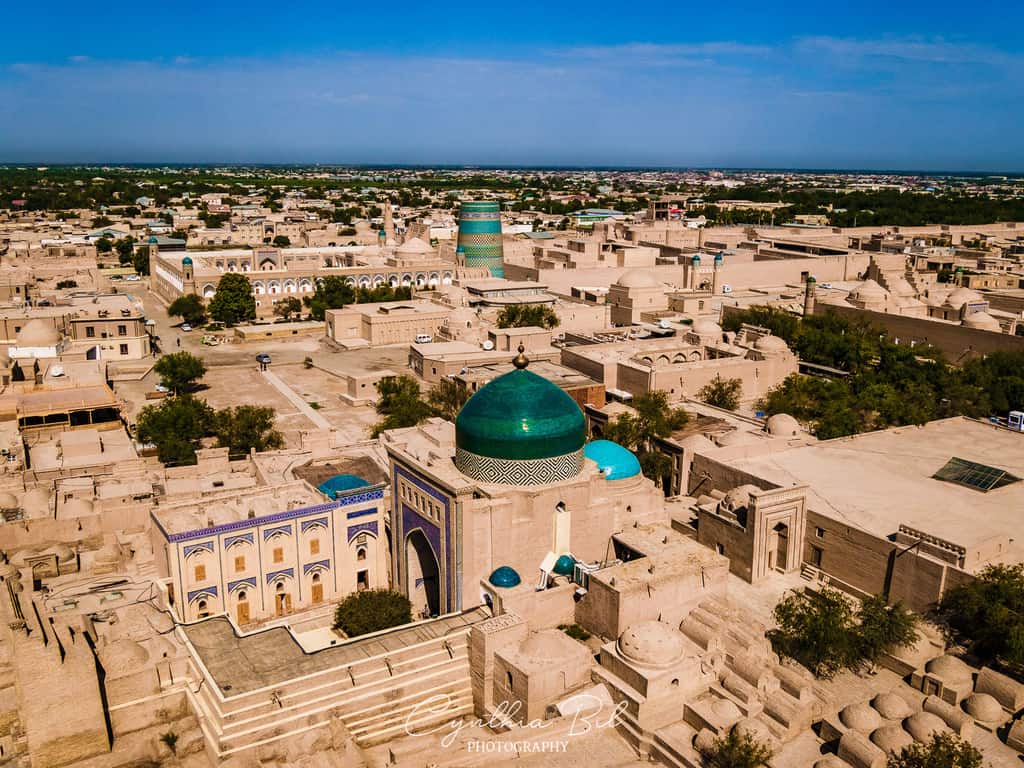
Uzbekistan Travel Itinerary (2026): 1, 2, 3 & 4 Week Travel Routes + Tips
Uzbekistan Money Guide (2026) – How much does it cost to live and travel in Uzbekistan?
What are the Best Places to visit in Uzbekistan in 2026?