
If you have a look at the map of Kazakhstan, you’ll see a huge blue spot between the southern part of Kazakhstan and the northern part of Uzbekistan. It’s hard to overlook it on an otherwise plain map.
This blue spot represents the Aral Sea, one of the four largest lakes in the world. Or at least it used to be a huge saline lake up until the 1970’s. Now barely 10% of it is left.
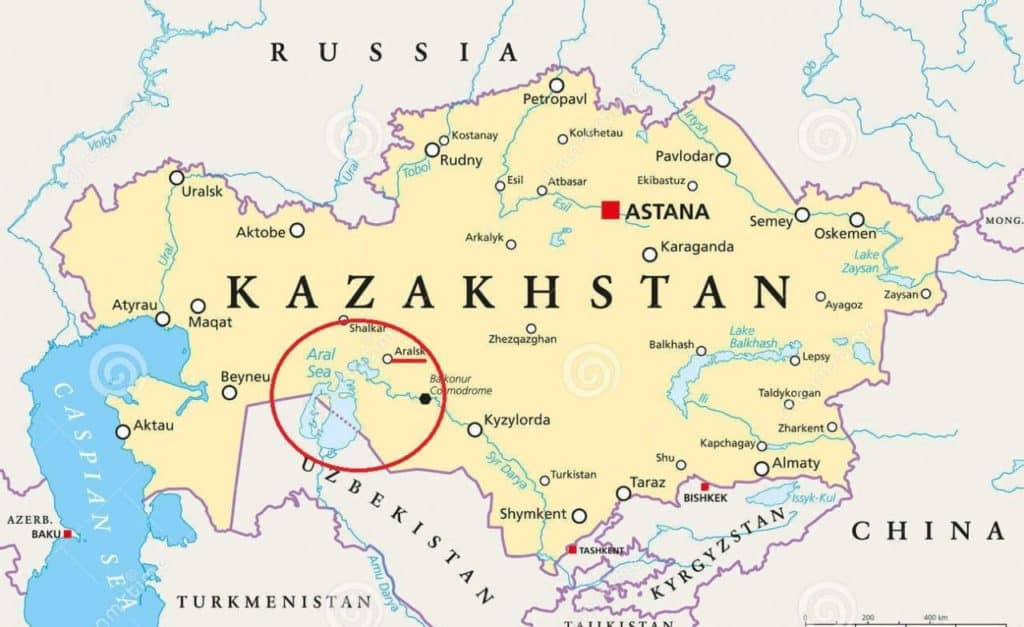
On the fifth day of our road trip through the endless featureless deserts of Kazakhstan, we arrived in Aral, a small town which used to be on the coast of the Aral Sea.
Looking at the dusty roads and dry surroundings with no water in sight, it was hard for me to imagine that this was a once a booming fisherman town.
Almost everyone who lived here 60 years ago used to fish for a living but in the 70’s the fish started to die and the sea began to dry up.

Planning a trip to Kazakhstan? Start here!
- ✈️ Find the best flight deals → Compare routes & prices easily (most international travelers fly into Almaty)
- 🏡 Find the best places to stay →Book a room in a hotel, guesthouse or homestay
- 🚗 Rent a car for full freedom (highly recommended) → Find the best deals with full coverage here
- 🚖 Airport & city transfers → Book in advance or use Yandex Go locally
- 🚆 Book train tickets → Find schedules and buy tickets
- 📶 Stay connected → get an eSIM (instant data on arrival throughout Central Asia – use code CYNTHIA and get a 15% discount )
- 🛡️ Travel with peace of mind → travel insurance for your Kazakhstan trip
- 🧭Explore with local guides → best tours & day trips
- 🗺️Need help with your itinerary → Itinerary Planning for Kazakhstan
What happened to the Aral Sea?
The two biggest rivers of Central Asia – the Syr Darya and the Amur Darya – used to feed the Aral Sea. Those rivers were also the source of irrigation for the cotton industry.
Ambitious Soviet planners wanted to turn Central Asia into the world’s largest producer of cotton. They diverted the two rivers in such a way that the water would irrigate the desert where cotton could be grown for future exports.
For a period in the 1980’s Uzbekistan’s production of cotton grew more than any other country, but the project was a short-term success.

Due to the diversion and the usage of the river water for irrigated farmlands, the amount of water from the rivers that normally fed the sea started to decline.
By the 1980’s, the two great rivers dried up before they could reach the lake and the Aral Sea quickly began to evaporate.
By 1997, the sea shrank to 10% of its original size and split first into two separate salty lakes – the Small Aral in the North (Kazakhstan) and the Large Aral in the South (about half of it in Uzbekistan).
The Large Aral then split into eastern and western basins, and one small lake formed between these basins.
In 2014 the eastern basin also disappeared, which means that the Small Aral and the western basin of the Large Aral only remain.

Environmental and health consequences
The rapid shrinkage of the Aral Sea led to numerous environmental problems in the region.
The salt and mineral content of the lake rose drastically and the huge volumes of pesticides and insecticides that were washed into it over the years gradually became more concentrated.
The water became unfit for drinking purposes and it killed off the fishes in the lake. By trying to build a cotton industry, the Soviet planners had destroyed a sea and its fishing industry.
The contraction of the Aral Sea also made the local climate harsher resulting in hotter summers and colder winters. More and more people started moving away from the areas as the unemployment rate skyrocketed.
There wasn’t much left for them to live from.

The people who remained living in the areas started having severe health issues. The winds blowing across the dried-up seabeds produced toxic dust storms, containing salt, fertilizers and pesticides.
You can’t see the salt in the air but even when we were there, we could feel the salt on our skins.
Niko started having some issues with his sinuses, as did our two travel companions due to the large amounts of dust in the air.
We also learned that a lot of locals are suffering from chronic bronchitis to throat cancers and anemia. The infant mortality in the region is still quite high and a lot of mothers are warned not to breastfeed their babies.
The people who are affected the most are the Karakalpaks, who live in the southern region of the Aral Sea in Uzbekistan.

It is definitely clear to see why the disappearance of the Aral Sea is called one of the world’s worst man-made environmental disasters!

Trying to save the Small Aral Sea
Kazakhstan is trying to restore the Small Aral Sea with the construction of the Kokaral Dam. This 13 km long dam was built in 2005 about 80km from Aral, a town in Southern Kazakhstan.
Thanks to the Kokaral Dam, the water level is growing, more than 15 kinds of fish have reappeared, the fishing industry in this area is slowly returning and more than 5,000 people have returned to the area.


People are hoping that with this project, the Small Aral Sea will be fully restored in a few years time and its water will once again reach the port of Alar, which previously was a thriving port.
Phase 2 of the dam project is in the making – an enlargement of the dam that would raise the water level another 6 meters – and there are plans to increase the water supply from the river Syr Darya by building reservoirs to capture the floodwater.
It’s still a long way to go but the revival of the Small Aral is bringing hope, even though it’s only 5% of the size of the original Aral Sea.

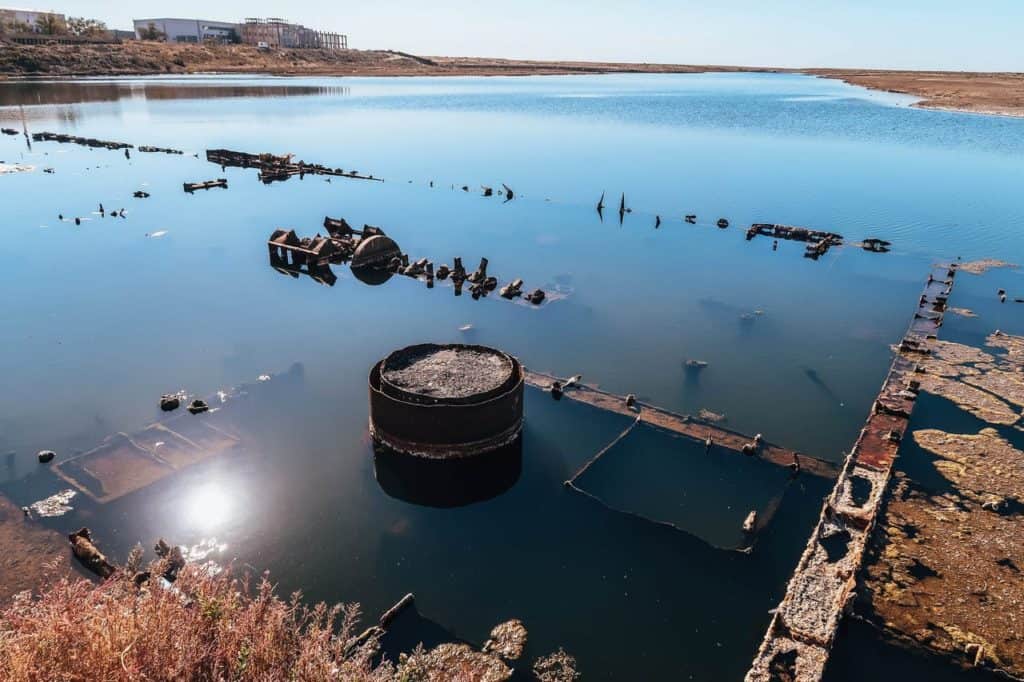
What the Sea left behind – the Ship Graveyard of Aral and Zhalanash
We were told that there was a ship graveyard with the rusting wrecks of ships that used to sail the Aral Sea near Zhalanash, a small town about 65 kilometers away from Aral.
The gravel road that leads to Zhalanash was very bumpy and dusty. Even with all the windows closed, the dust was still finding its way in the car and into our noses.
After two hours of driving and sneezing, we arrived in Zhalanash. The track leading to the ship graveyard is south-east of the town and very sandy.
Even though we had a 4×4, we still got stuck in the soft sand so we decided to walk the remaining 3km.

It was a crazy realization that we were walking on what used to be the bottom of the Aral Sea, now a dry and empty desert. The dry surface underneath my feet was crackling with every step I took.

After 15 minutes of walking in the heat, we spotted the first shipwreck. We were disappointed when we noticed that there wasn’t much left of it.
What we didn’t know was that in the last two years most of the ships have been almost completely dismantled for scrap metal. Even the last visual evidence of the former mighty Aral Sea was now disappearing.


The only place where you can still find a proper ship graveyard is in Muynaq, Uzbekistan.

We also saw some (dismantled) wrecks in the port of Aral. What was once a flourishing seaport was now a sad and abandoned place, a reminder of a plan that had gone wrong.


Let’s hope that the plans to revive the Small Aral will succeed and that one day the locals can live again from the fruits of the sea.
More about kazakhstan:
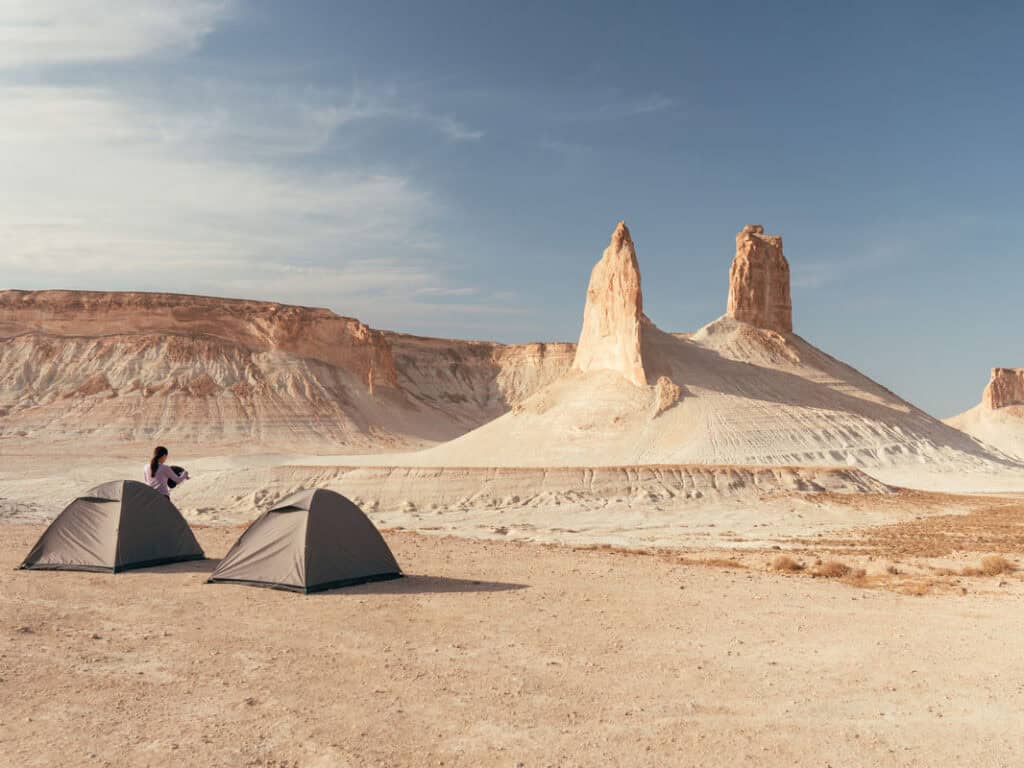
Mangystau Kazakhstan: Complete Travel Guide (2026) to Bozzhyra, Torysh, Sherkala & More

Best Tips and complete Packing List for Traveling in Central Asia in 2026 – When to go and what to wear when visiting Central Asia

How to visit Turkistan Kazakhstan’s spiritual and historical center
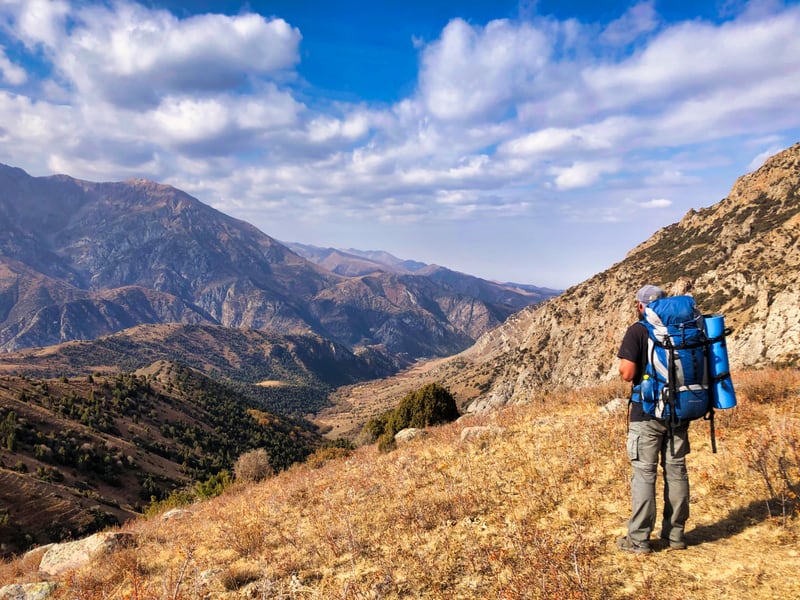
The Complete Hiking Guide to Sayram Ugam National Park, one of the most beautiful Kazakhstan National Parks
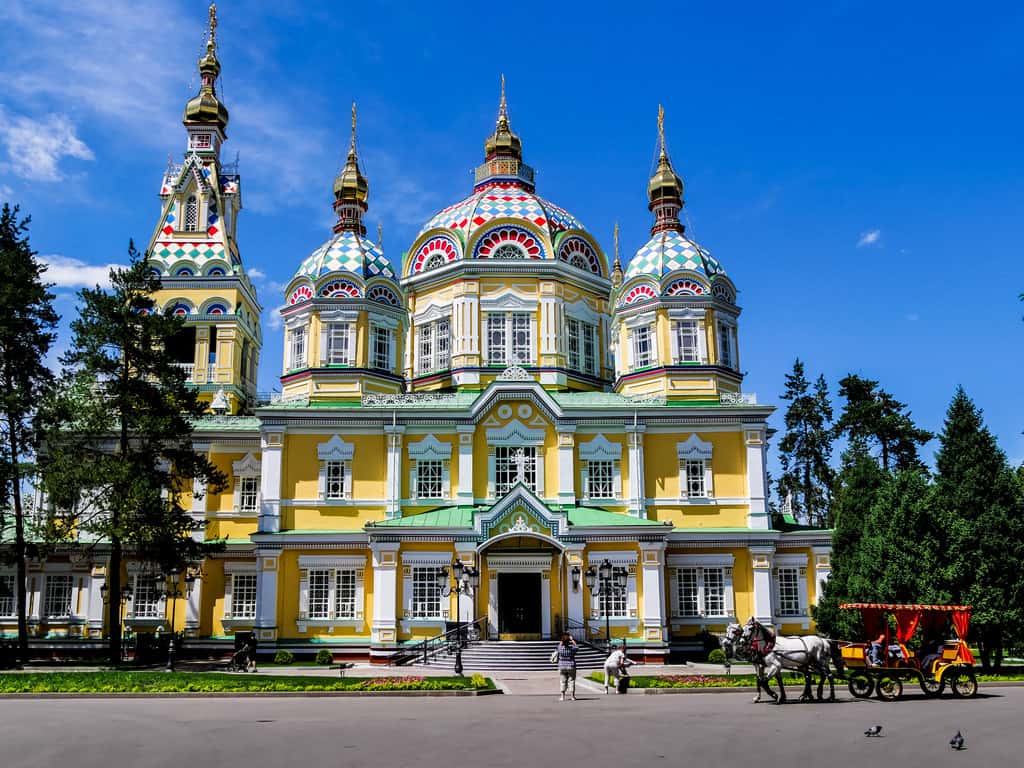
19 Best Things to do in Almaty Kazakhstan – The Complete Guide to visit Almaty City

The Best Guide to Travel in Kazakhstan: 18 things you should know to visit Kazakhstan in 2026
More KAZAKHSTAN TRAVEL Resources:
- The Travel Guide to Kazakhstan: 18 things you should know before you go
- The 26 most beautiful and interesting places to visit in Kazakhstan
- Is it safe to travel to Kazakhstan: 15 useful safety tips
- Almaty City Guide: The 19 best things to do in Almaty
- The 5 best and most beautiful hikes in the mountains near Almaty
- Charyn Canyon Travel Guide
- Kolsai Lakes and Lake Kaindy Travel Guide
- Sayram Ugam National Park Travel Guide
- Turkestan Travel Guide: discover the spiritual center of Kazakhstan
- Visiting the ship graveyard of the Aral Sea in Kazakhstan
- Trekking in Kazakhstan: 5-day hiking itinerary in the Northern Tian Shan Mountains
- A beginner’s guide to skiing in Shymbulak, Almaty
The article is rich with informations,
thank you!
Thank you Rima 🙂