
Here’s everything you need to know about Arslanbob walnut forest in Kyrgyzstan. In this travel guide you’ll learn how to get to Arslanbob, where to stay and the 13 most wonderful things to do, including a visit to the Arslanbob waterfalls, horse riding and hiking!
Arslanbob, known as Arstanbap in the Kyrgyz language, is a valley in the Jalal-Abad region of western Kyrgyzstan.
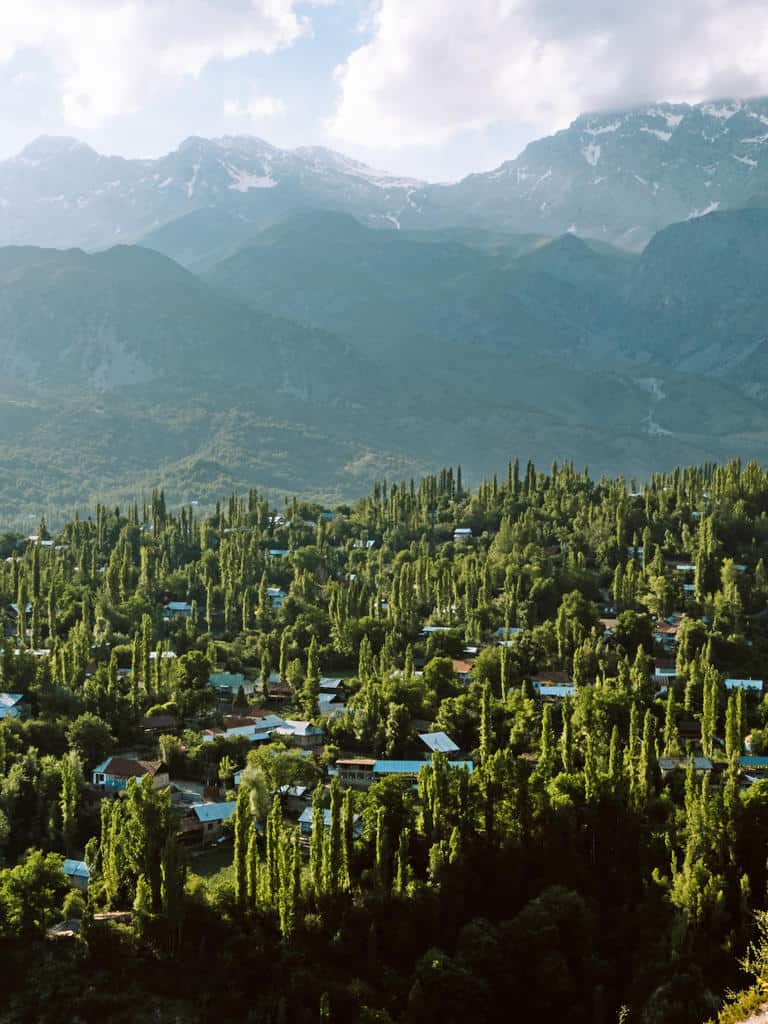
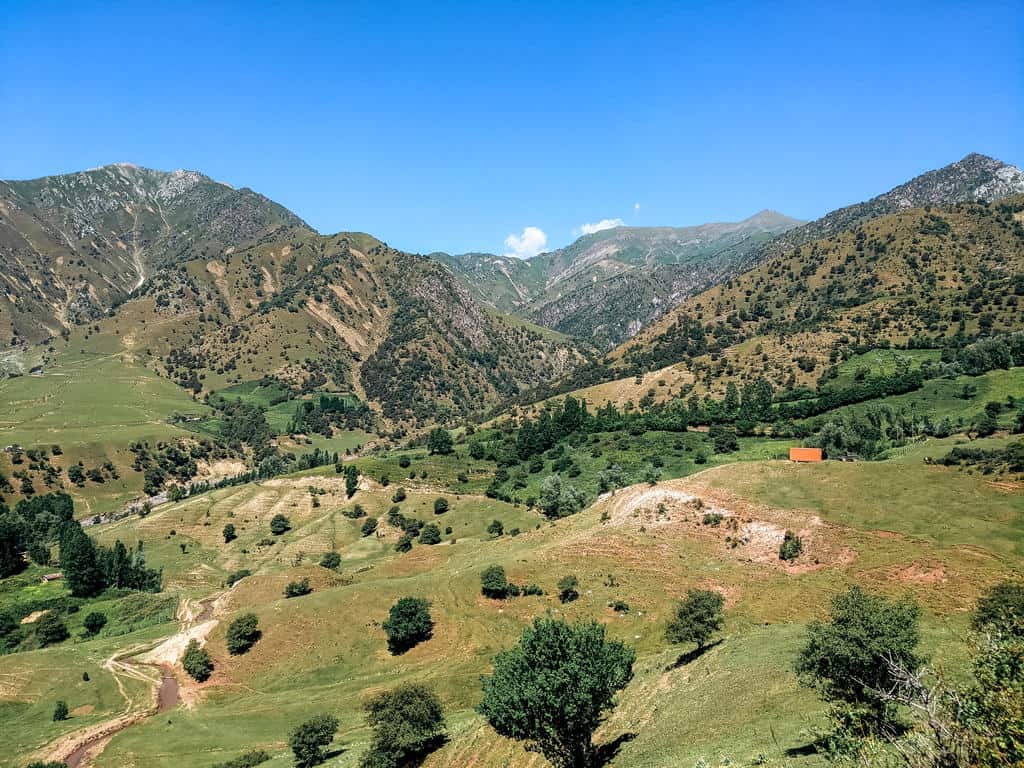
The valley is located at an altitude of around 1400m and is surrounded by the scenic and sacred Babash Ata mountain range.
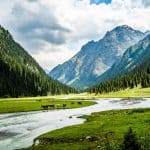

Arslanbob Valley is home to a population of 16,000 people who live in the five villages that are spread over the area. These villages are called Gumkana, Bel Terek, Kyzyl Alma, Kyzyl Unkur and Arslanbob.
Arslanbob village is the largest village and is located in the center of the valley. This is where you’ll find the shops, the market, the main sights, and transportation to travel from and to Arslanbob.
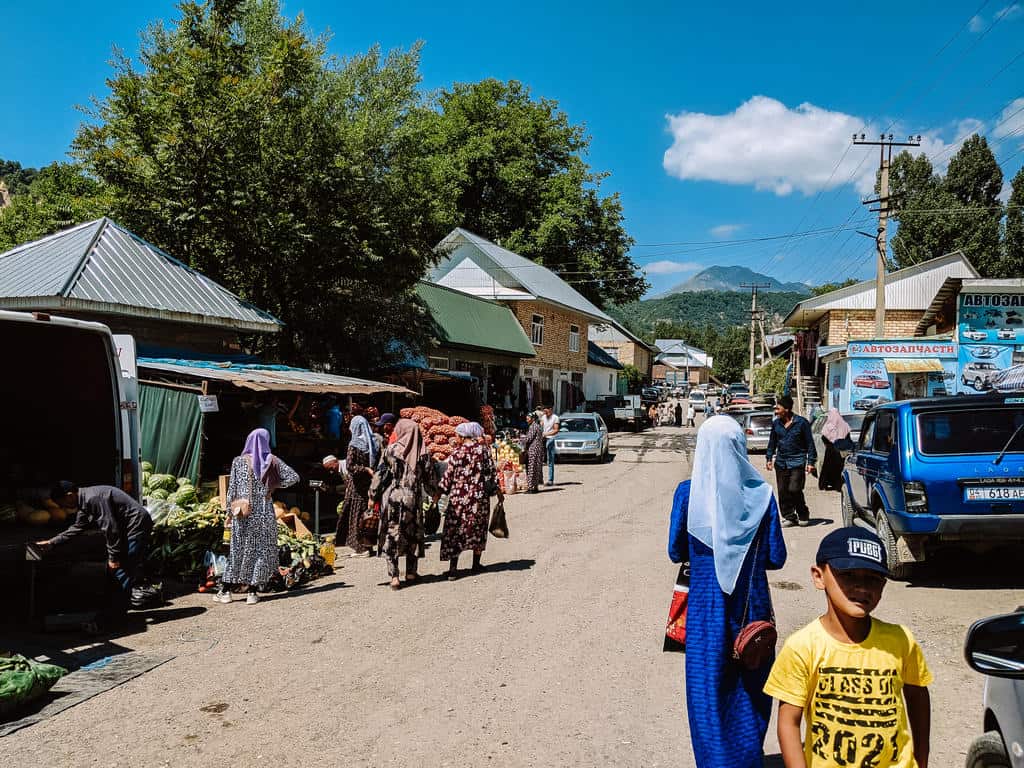
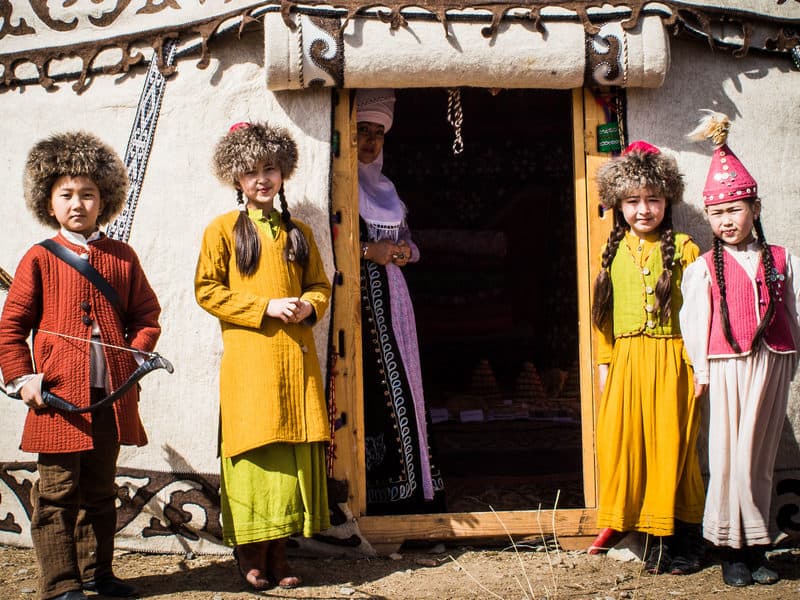
There are about 1000 Kyrgyz people living in the village of Bel Terek but the main population of the other villages is mainly ethnic Uzbek. They speak a local Uzbek dialect and still wear their traditional clothing. This is one of the things that makes Arslanbob special and different from other places in Kyrgyzstan.
It’s also one of the more conservative places in Kyrgyzstan so as a tourist you have to keep in mind to dress modestly in the streets and homestays.
This means wearing knee-length shorts or skirts and T-shirts with short sleeves (for women I recommend covering the arms as well) so no tank tops, and cropped shirts showing your cleavage or belly button. Don’t worry about wearing a headscarf as this is not expected from foreigners.

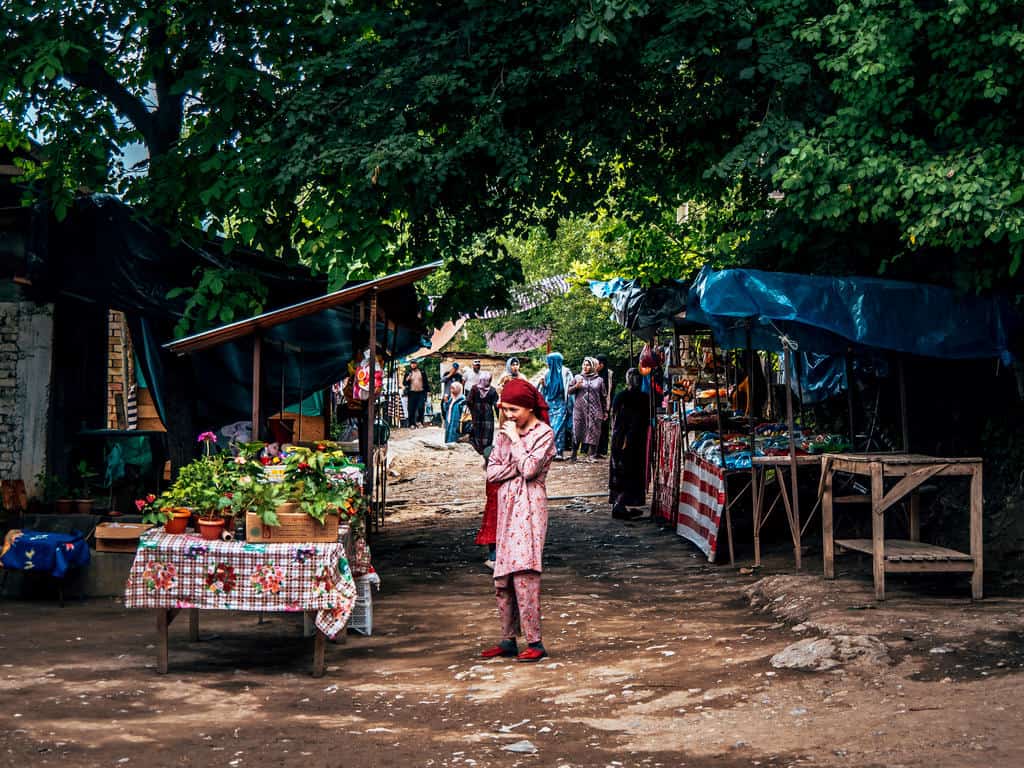
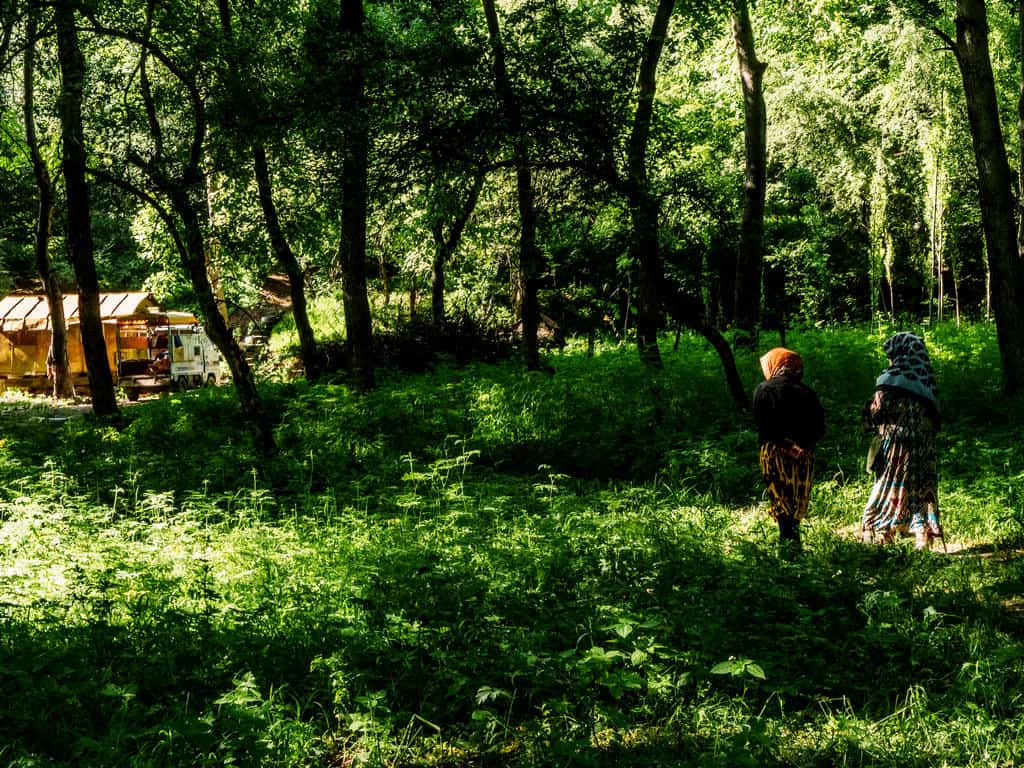
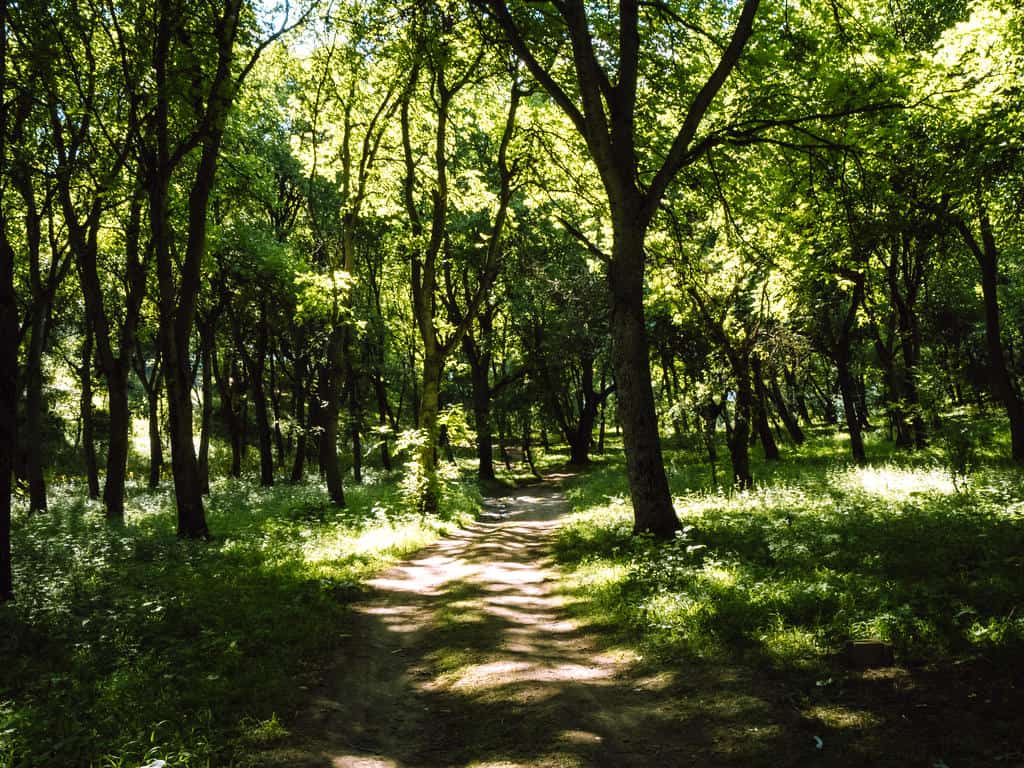
Another thing why Arslanbob is special is that it’s famous for having the world’s largest walnut forest (nowadays around 11,000 hectares) right at its doorstep.
The Arslanbob walnut forest is estimated to be 50 million years old and is also home to 130 varieties of other nut and fruit trees. Some of the trees are more than 1000 years old!
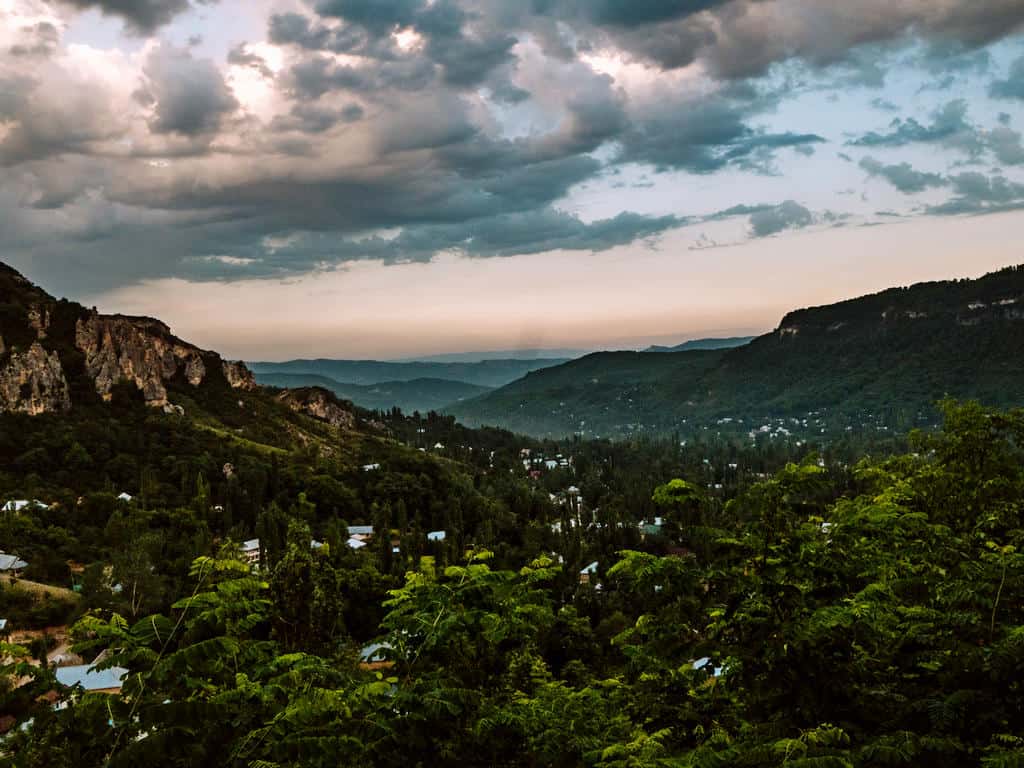
The ancient walnut forest isn’t the only reason why you should visit Arslanbob. There’s a variety of things to do and you don’t have to go far to visit the waterfalls, walk to the panoramic viewpoint, have a picnic in the forest or enjoy the village life and the picturesque mountainous views.
For those seeking more action and adventure, there are a number of outdoor activities, such a multiple-day hikes, horse treks, and options to go rock climbing and mountain biking.
Tourism is slowly increasing in Arslanbob but you still won’t see many other travelers (yet). Just as with Sary Chelek Nature Reserve, Arslanbob is a bit out of the way of the main sights of Kyrgyzstan.
That’s why most travelers tend to skip Arslanbob and the Jalal-Abad region. I saw maybe five other people during my five days there!
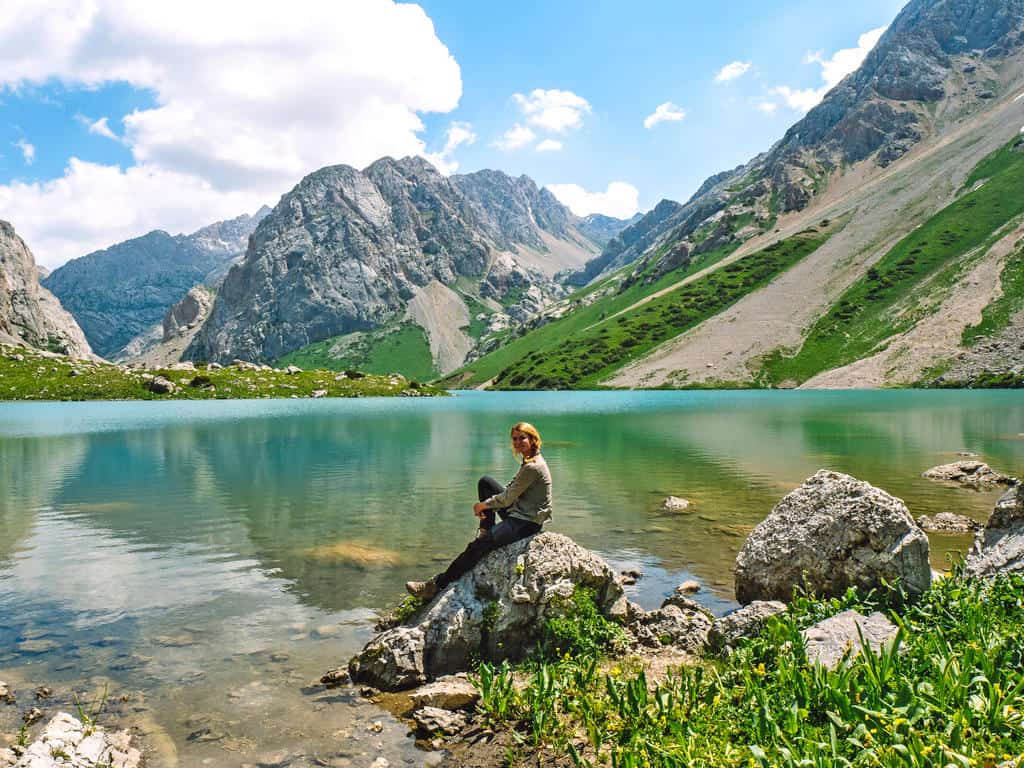
I wrote this travel guide to help you plan your trip to the Arslanbob Valley, villages, walnut forest, and the surrounding mountains so you can get the most out of your visit.
You’ll find out how to get to Arslanbob, where to stay and eat, and what to do in Arslanbob, including cultural and outdoor activities.
Disclaimer: This posts might contain affiliate links, meaning that if you make a purchase through these links, I may earn an affiliate commission. Thank you for helping to support this website!
Plan your trip to kyrgyzstan!
✈️ Find the cheapest flights → Check fares to Bishkek or Osh
🏨 Find hotels & yurt stays → Browse the best accommodation deals
📱 Stay connected → Get a Kyrgyzstan eSIM
🛡️ Travel insurance → Don’t travel Central Asia without coverage
🎒 What should you pack? → Read my Kyrgyzstan packing list
🥾 Want to go hiking? → Discover the most beautiful hiking trails in Kyrgyzstan
🐎 Want to go horse riding? → Check out my favorite horse trekking experiences
🗺️ Need help planning your route? → Learn about my itinerary planning services
⛰️ Prefer traveling with a group? → Join one of my Kyrgyzstan adventure tours
1. About Arslanbob Walnut Forest
There are many legends and stories about Arslanbob’s walnut forest.
One of the stories is that Arslanbob is named after the 11th-century missionary Salman Farsi who’s nickname was Arstanbob-Ata and that he founded the village and planted the walnut seeds.
Another story tells how the prophet Muhammed ordered a man to find paradise on earth. After a long search through many countries, he came across a valley that seemed perfect except that there were no trees.
The prophet sent him a big bag of fruit and walnut seeds from heaven. The man climbed on top of the Babash Ata mountain where he emptied the bag and the wind scattered them over the whole region of Arslanbob.
There are also legends involving Alexander the Great, as in many places in Central Asia.
One legend goes that the local people gave walnuts to Alexander the Great and his army while they were crossing the area during their journey from Asia to Europe. The walnuts cured his injured soldiers and he decided to take some with him to plant in Greece and later in other places in the world.
Whether or not these stories are true, it’s a fact that the walnut trees have been around for more than 1000 years and that the annual harvest of the walnuts plays a central role in the lives, economy, and culture of the 16,000 people living in Arslanbob.
The majority of the villagers are farmers but the annual walnut harvest is crucial for their income.
The harvest happens every year at the end of September/ beginning of October. For several weeks, almost every family living in Arslanbob goes camping out in the forests to collect the walnuts. The nuts are then exported, sold locally, or made into oil.
Unfortunately, the harvest in 2020 was very poor due to snowfall in spring. On top of that, 2020 wasn’t exactly the best year for tourism so many people had to leave Arslanbob and move to Osh or even Russia in search of work.
Dreaming of hiking through wild mountain landscapes, horseback riding across alpine pastures, sleeping in yurts, and exploring remote valleys by 4×4 with a small group of adventurous travelers?
2. When to visit Arslanbob
You can visit Arslanbob all year round and the best time to go will depend on the intentions of your trip.
If you’re interested in the walnut harvest, the best time to visit Arslanbob would be late September/ early October.
I haven’t been there yet during the harvest season but would love to participate one day. Apparently, the families invite you to join them and help with the harvest (if you like) and the atmosphere is very festive, especially in the evenings when everyone enjoys a meal together.
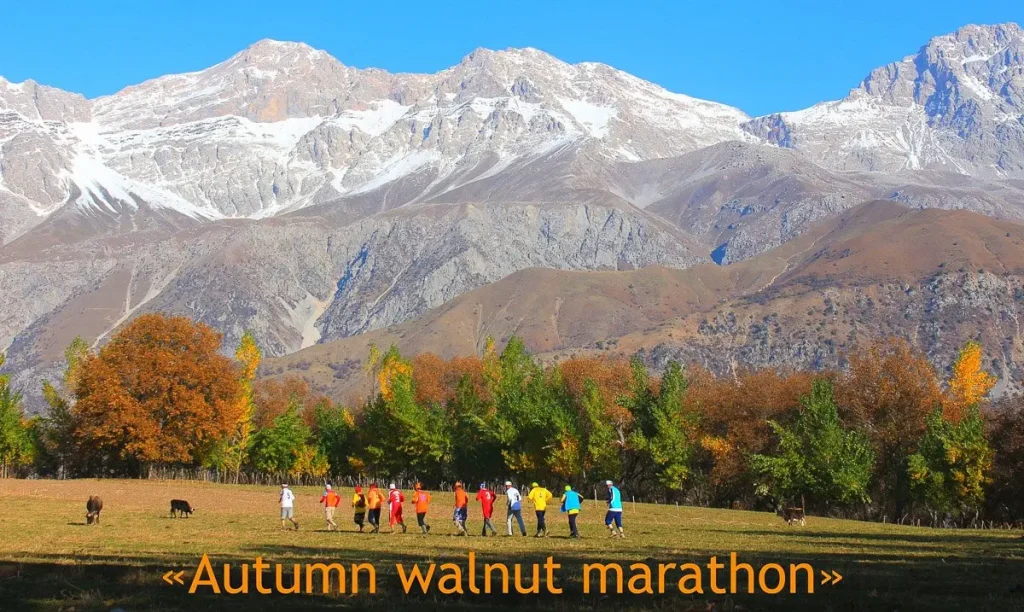
There was even a Walnut Festival this year with a walnut trail run, walnut-related traditions and games, and a folkloric show.
If you want to do some hiking and horse riding in Arslanbob and the surrounding mountains, then you should go between early May and early October when the snow is cleared.
The most popular time for tourists visiting Arslanbob from neighboring cities and even Uzbekistan is summer.
The weather in Arslanbob is very pleasant in summer and the temperatures are around 28°C, which is a lot cooler than in most of the lower-located cities. The local and Uzbek tourists (mainly coming from the Ferghana Valley) love seeking the coolness and shade of the walnut forest.
Arslanbob is also very beautiful in winter and the months December and January have the best snow if you want to go skiing or snowboarding.
3. How to get to Arslanbob
3.1 How to get from Osh to Arslanbob
There’s a mashrutka (minibus) that goes directly from Osh to Arslanbob village. This mashrutka leaves daily around 1.30 pm at the new bus station in Osh,located on the corner of Lenin and Kasymbekova street.
It’s better to go at the latest at 1 pm to the bus station if you want to be sure of a place. These marshrutkas also leave once they’re full, even if it’s before their official departure time.
The mashrutka from Osh to Arslanbob costs 200 som per person and the journey takes around 4 to 5 hours, including the 30-minute stop at Bazar Korgon.
3.2 How to get from Jalal-Abad City to Arslanbob
In case you’re coming from Sary Chelek National Park or another destination in the Jalal-Abad region, you’ll first have to travel to the Central Bus Station in Jalal-Abad, located in Lenin Street.
To get to Arslanbob from Jalal-Abad Central Bus Station, you’ll first have to take a mashrutka (minibus) to Bazar Korgon (60 som per person/ 45 minutes). They go daily every 2 hours between 9 am and 6 pm. At Bazar Korgon, you’ll have to take another mashrutka going directly to Arslanbob (60 som per person/ 1 hour).
You can also travel directly from Jalal-Abad City to Arslanbob by taking a shared taxi at the Central Bus Station for 200 som per person. The journey takes around 1,5 hours.
3.3 How to get from Bishkek to Arslanbob
You can take a shared taxi from Bishkek New Bus Station that goes directly from Bishkek to Bazar Korgon. This costs 800 som per person and the journey takes around 8 hours.
Upon arrival in Bazar Korgon, you can take a mashrutka directly to Arslanbob (60 som per person/ 1 hour).
3.4 How to get around in Arslanbob
The mashrutka or shared taxi will drop you off at the center of Arslanbob Village.
Arslanbob Village isn’t very big so you could walk to your guesthouse or ask your guesthouse in advance to arrange a ride for you.
If you want to get around in Arslanbob, either to one of the sights or to one of the other villages in the valley, you’ll have to take a taxi as there is little or no public transport.
You’ll find most taxis at the bazaar in Arslanbob Village. You can always ask the people of your guesthouse for a taxi or a ride as well.
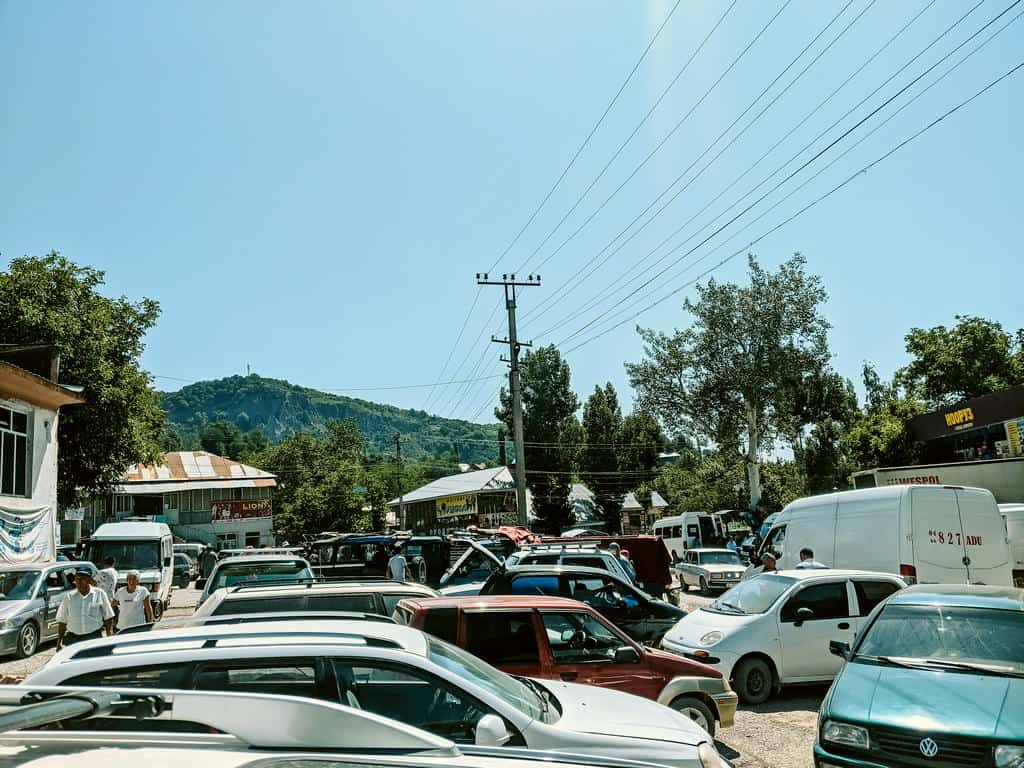
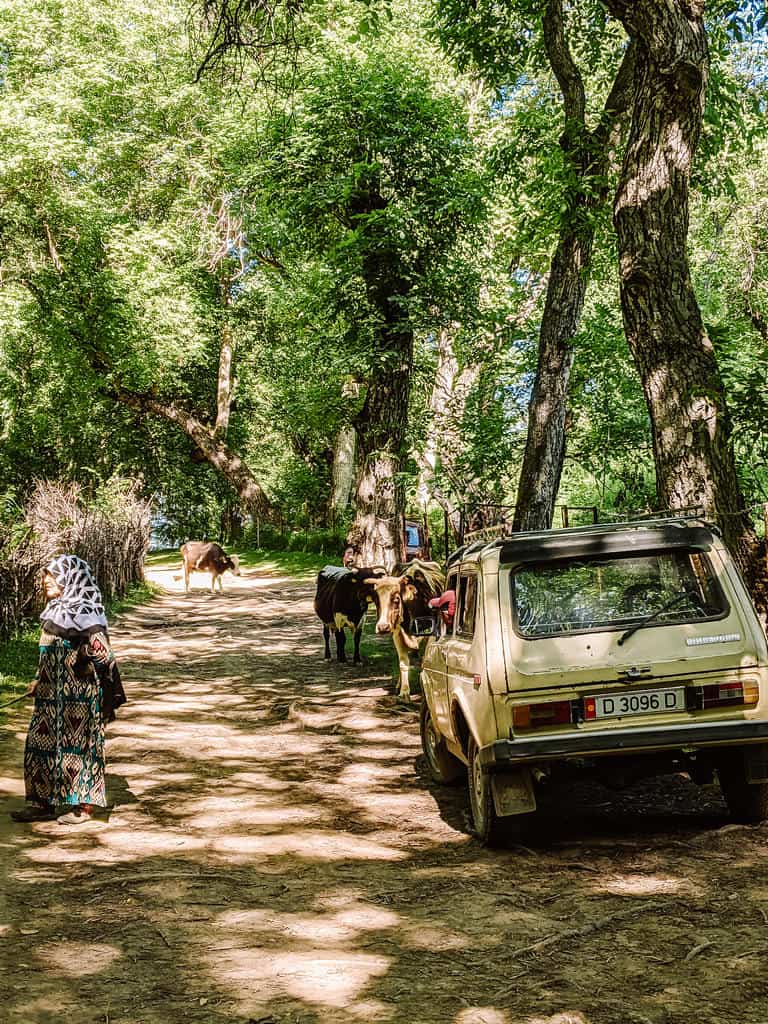
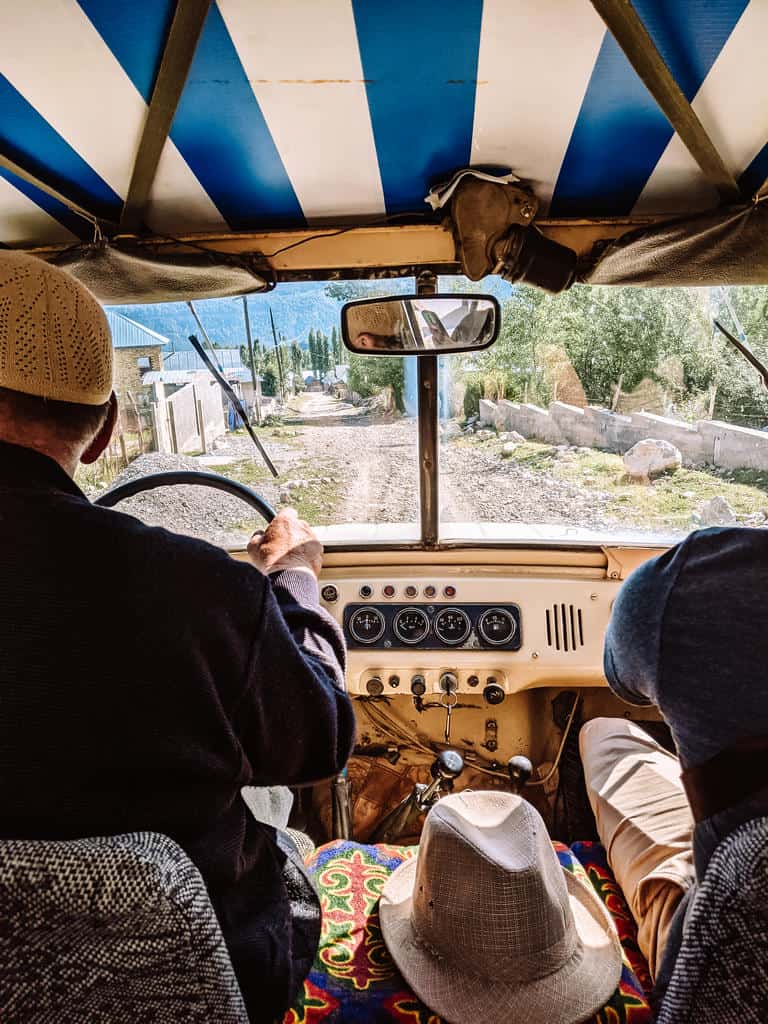
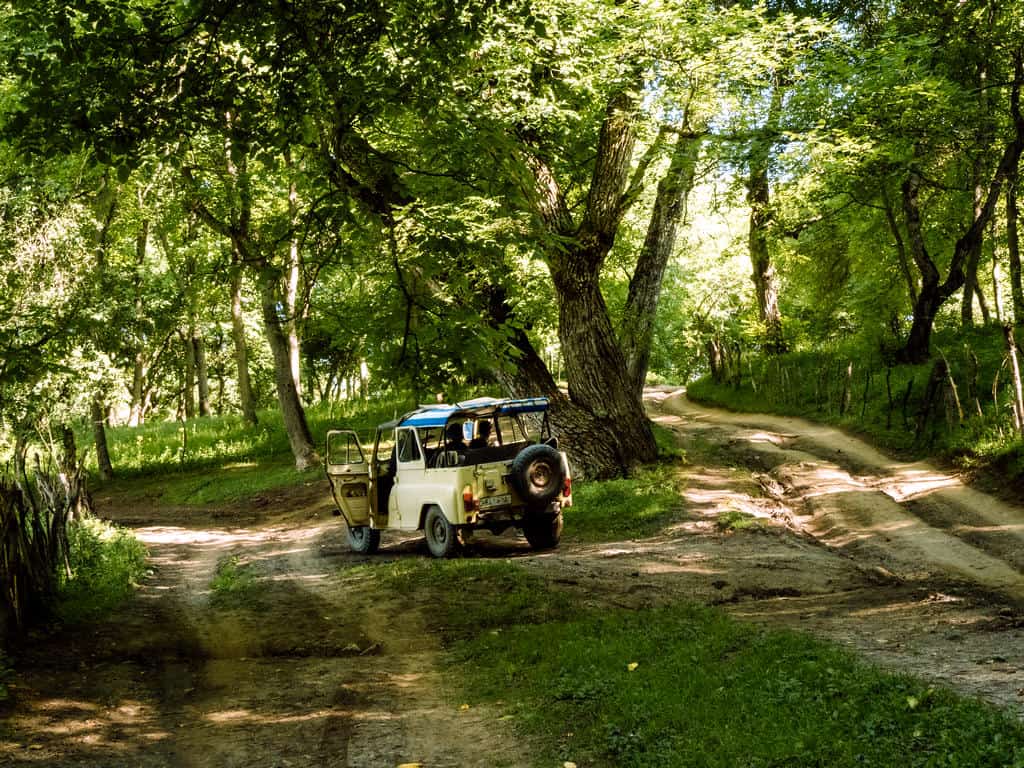
These taxis will usually be Lada Nivas or Soviet Army Surplus jeeps as most of the roads outside Arslanbob Village are more identifiable as steep piles of boulders with tracks in them than proper roads…
4. Where to go and what to do in Arslanbob Kyrgyztan
Arslanbob has a lot of fantastic outdoor opportunities to offer: from easy one-day walks from the village to the ancient walnut forest and rushing waterfalls, to mountain biking, rock climbing, skiing, and adventurous multiple-day hikes and horse riding treks in the Babash Ata mountains.
There are also activities to learn more about the unique local culture and daily life in Arslanbob.
Some of these activities can be done alone, for others you’ll need to join a private or a group tour. I’ll mention the options for every activity.
The CBT (community-based tourism) in Arlsanbob and Destination Jalal-Abad, a non-profit Destination Management Organization, are the main providers for tours and homestays in Arslanbob. Both organizations are dedicated to working towards local sustainable tourism and community development activities.
You can find Destination Jalal-Abad at the Visitor Center in Jalal-Abad or you contact them by email or WhatsApp (they speak English).
CBT Arslanbob is located in Arslanbob Village near the market. Hayat Tarikov, the coordinator of CBT Arslanbob, speaks fluent English and is always happy to help. You can contact him here.
4.1 Things to do in Arslanbob Walnut Forest
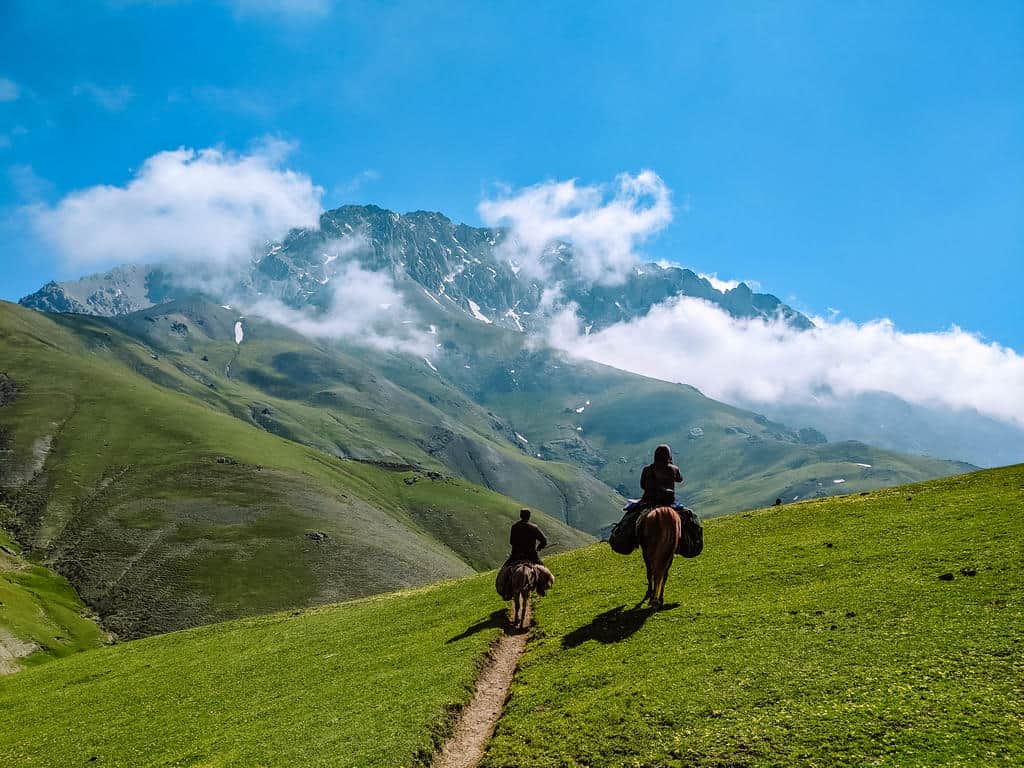
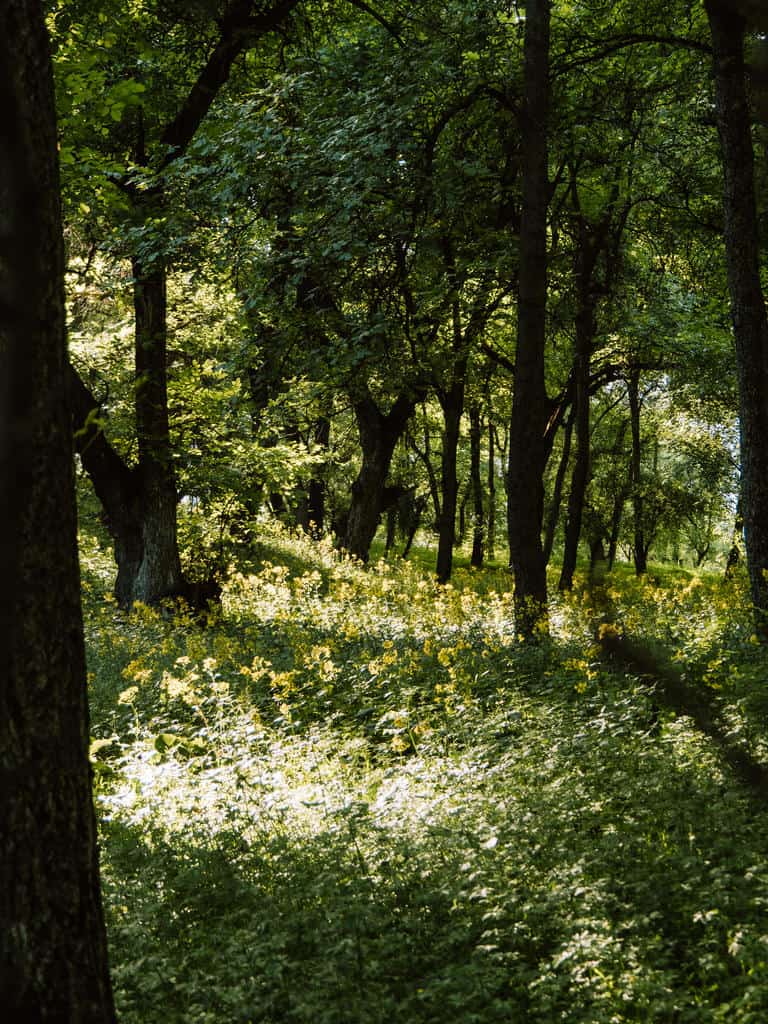
The lush walnut forest is a popular place during the summer months for locals and tourists to enjoy its shade. It’s really nice to go for a relaxed stroll through the trees or have a picnic in a quiet and peaceful place.
Near Panoramic Hill (see 4.3 below), you’ll find some tapchans (raised platforms with thin mattresses, cushions, and carpets that are used in Central Asia) where you can relax or eat and large swings attached to the trees.

The only time when it gets really busy in the walnut forest is in autumn during the annual walnut harvest.
Almost all Arslanbob’s residents will camp out in the forest to collect the walnuts for nearly a whole month. You’re very welcome to join in for an afternoon, a day, or even a week. This is something I really hope to experience one day!
You can also go on a (multiple) day hike or horseriding trip towards Kyzyl Unkur to explore and experience the vastness of the walnut forest with all its fauna and flora. Contact CBT Arslanbob for more information about this Relic Woods Tour.
4.2 Visit the Arslanbob Waterfalls and Sacred Caves
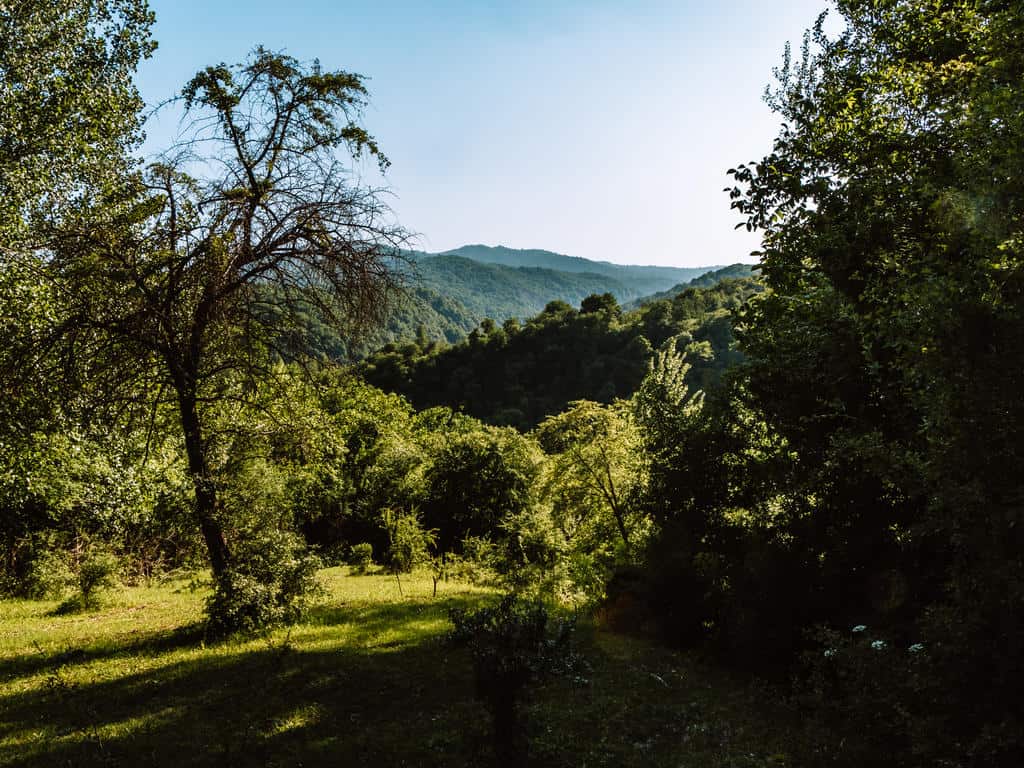
There are several waterfalls in the Arslanbob Valley. The two most popular ones go by the creative names “Big Waterfall” and “Small Waterfall”.
You can visit both waterfalls on foot and you don’t need a guide.
The 25-meter high Small Waterfall is the easiest to visit. It can be reached by a leisurely 40-minute walk (1,5 km) from Arslanbob Village.
Walk to the CBT office and take the path north of the office and beyond the mosque to the right. It will lead across the river towards a steep hillside. You’ll pass some games and food stalls at the end and you’ll also have to pay an entrance fee of 10 som before reaching the waterfall.
You can find the path towards and the location of Small Waterfall on maps.me. I highly recommend installing this app and downloading the map of Kyrgyzstan for offline use.
There are also some small prayer caves near the Small Waterfall. The most special one is the Cave of Forty Angels, where a holy woman used to live. People used to come to her for guidance and healing.
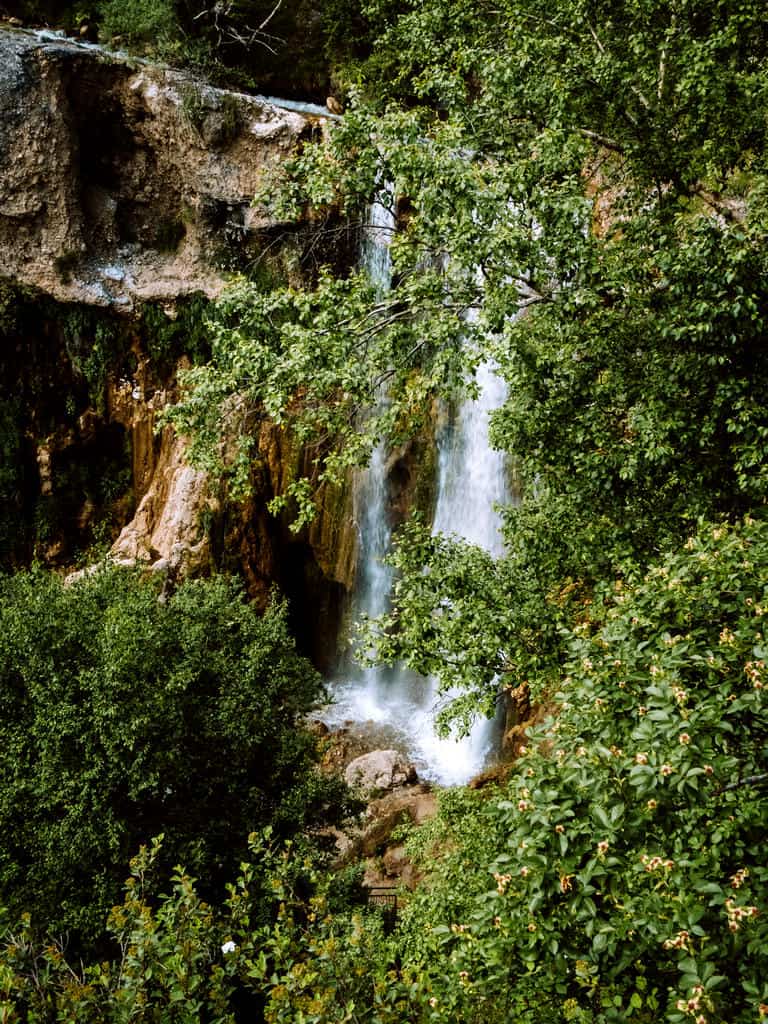

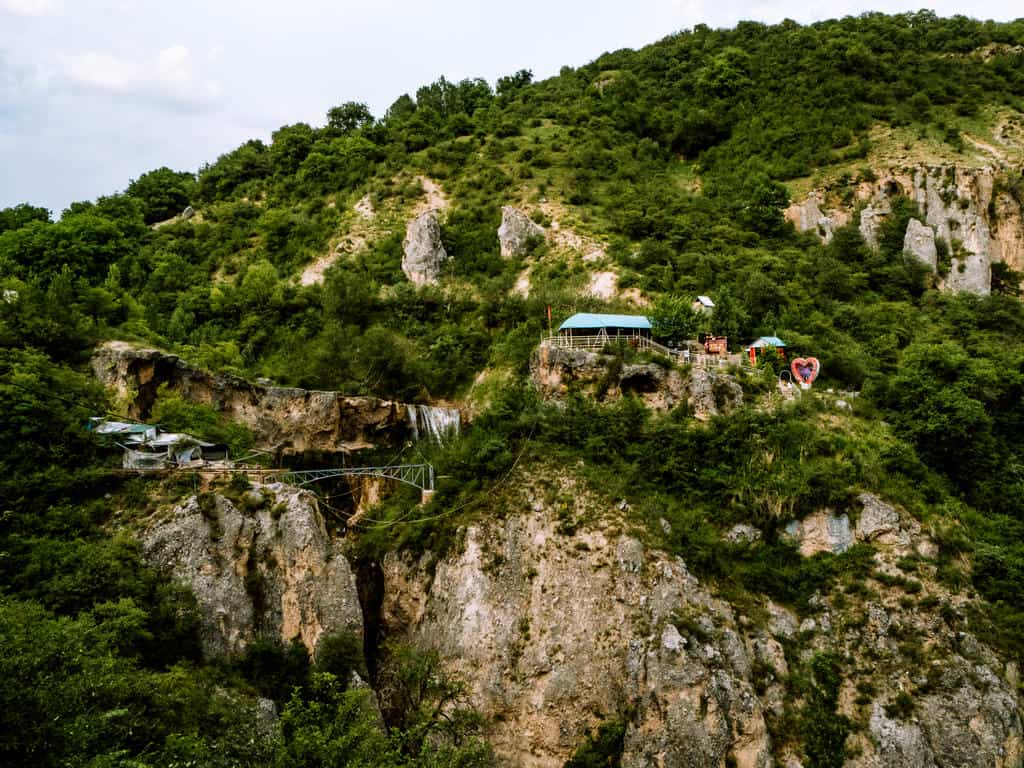
The hike to the 80-meter high Big Waterfall takes around 2 hours from Arslanbob Village (7 km). You can reach this waterfall by following the road from the CBT office towards the mountains.
The first 1,5 hours is a scenic and easy walk along the road that slowly turns into a dirt and rocky track. You’ll come across a small suspension bridge that leads you across the water to the final stretch of path.
You’ll pass an entrance gate with some food and souvenir stalls where you need to pay the entrance fee of 50 som. From there is another 30-minutes steep hike along a rocky trail to the viewpoint that looks onto the waterfall.
You can also take the path to the left and visit the base of the waterfall. Wear good hiking shoes as part of the paths can be slippery.
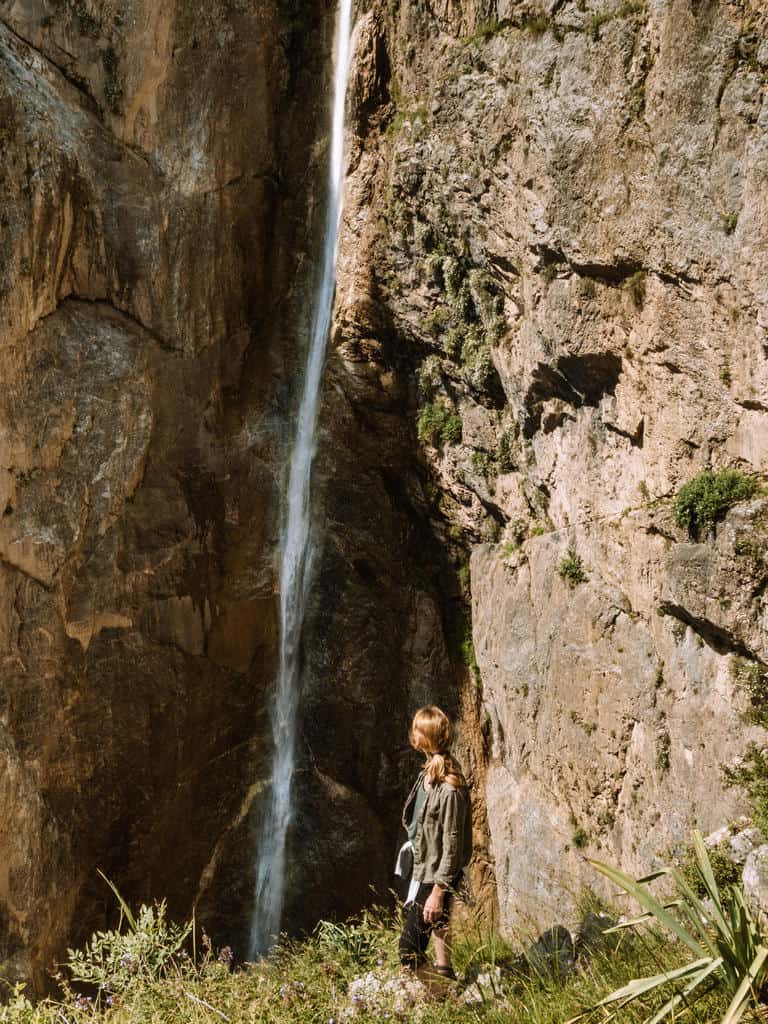
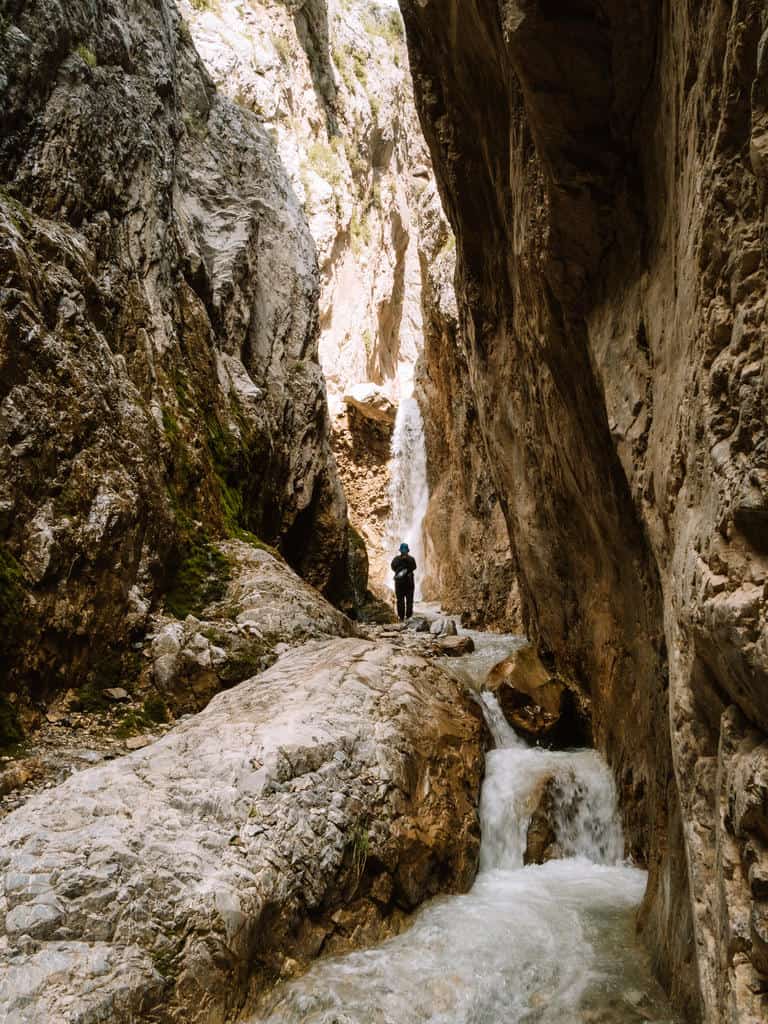
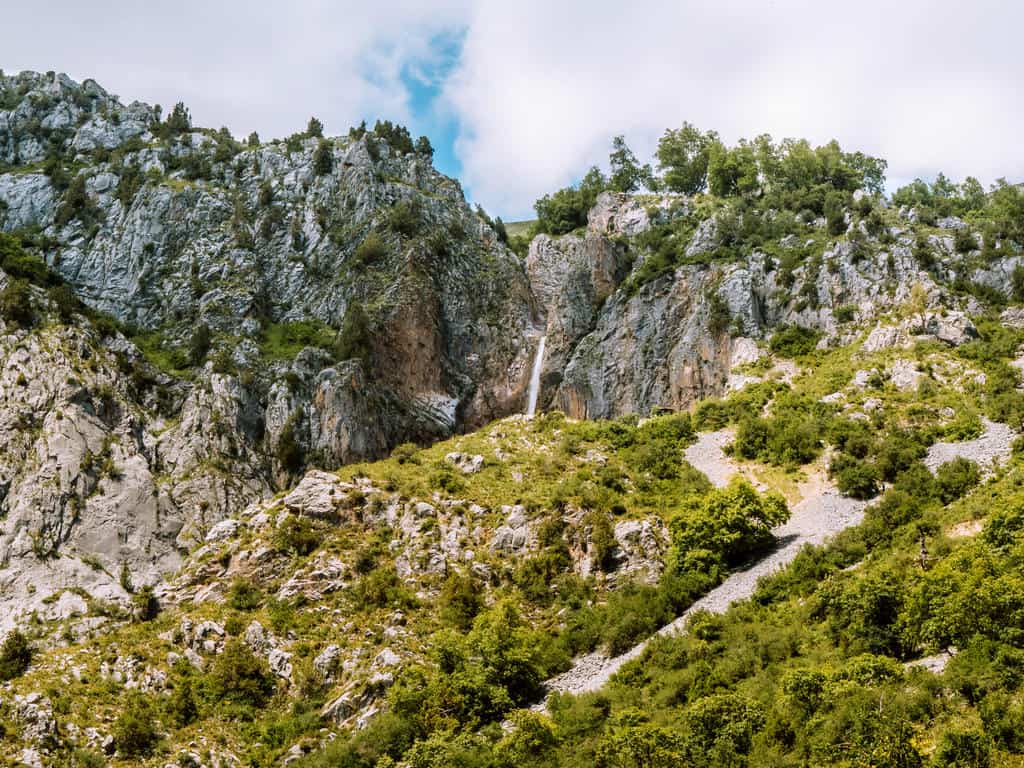
You can also combine the hikes to both waterfalls. You’ll see that there will be a path going up beyond Small Waterfall leading towards the main road toward Big Waterfall. You can see this path clearly on maps.me.
If you’re not up for the hikes, you can also go by taxi (around 1000 som) or make it as part of an organized day tour in Arslanbob. Contact the CBT or Destination Jalal-Abad for more info.
4.3 Take great photos at Panorama Hill
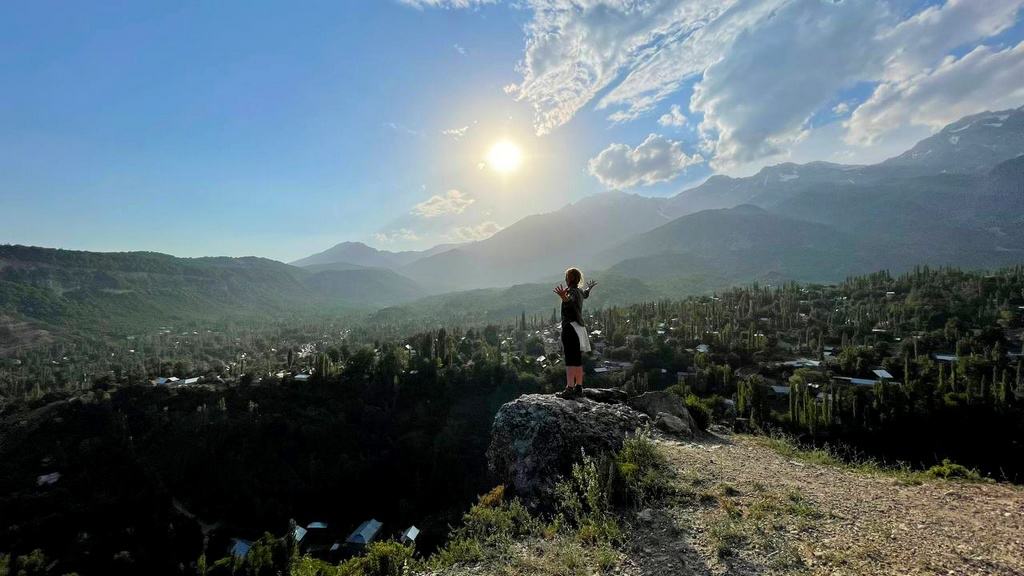
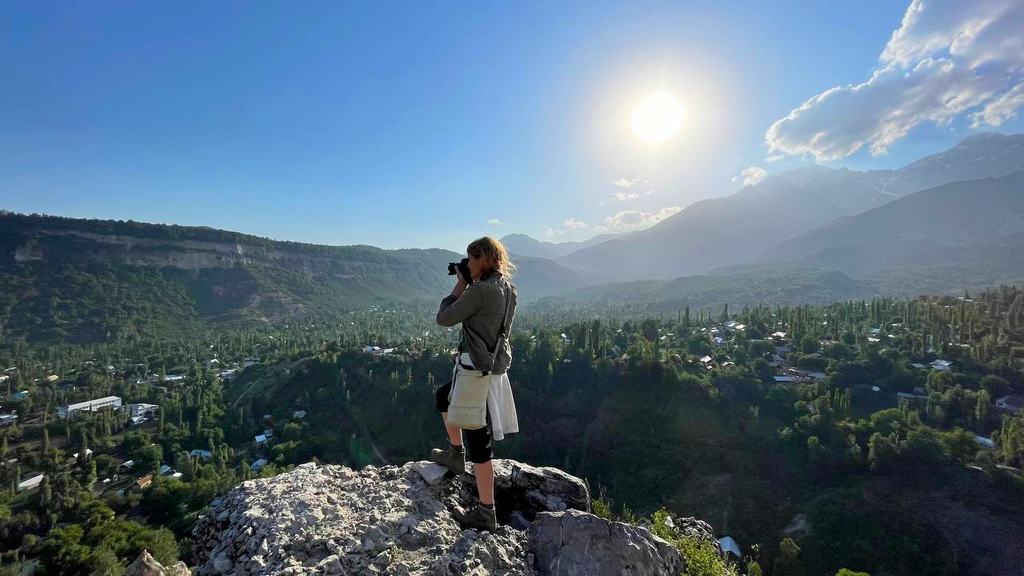
When you continue the path beyond the small waterfall you can walk to Panoramic Hill. It’s a 1,5 hours hike and really worth it as you’ll get some spectacular views over Arlsanbob with the Baba Atash mountains surrounding the valley.
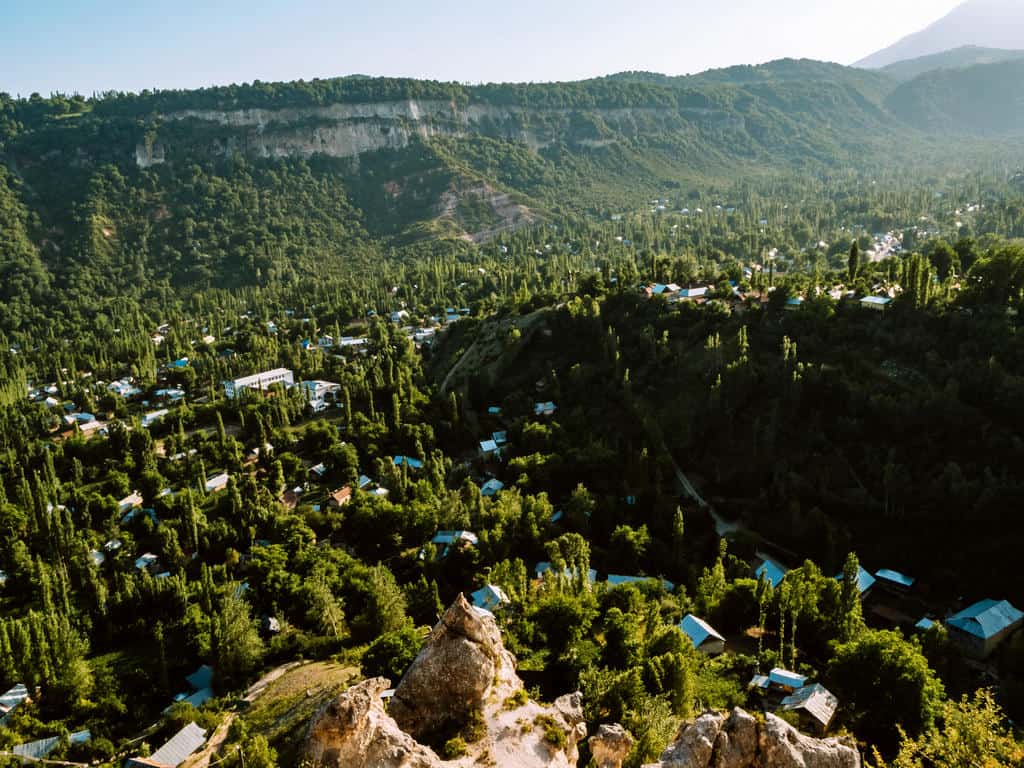
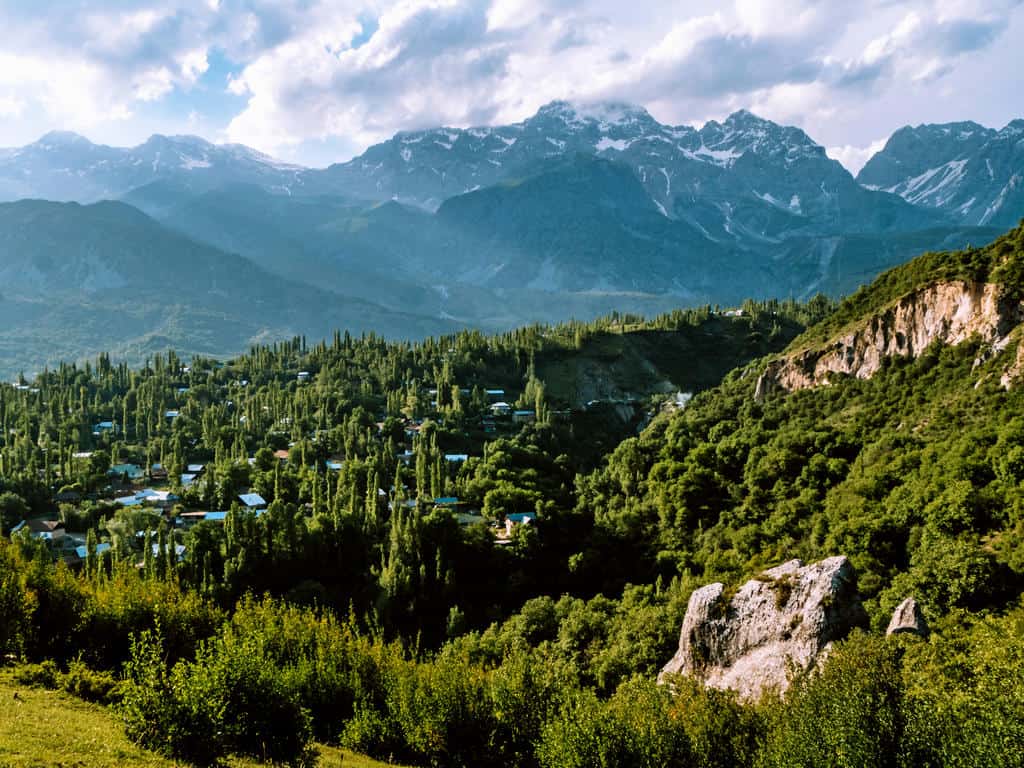
This viewpoint and the trail leading towards it are also indicated on maps.me (mentioned as Panoramic Point).
From there it’s another 20-minute walk to the walnut forest where you’ll also find the swings that I mentioned before (see 4.1 above).
You can combine the hike to Panoramic Hill with the hike to Small and Big Waterfall. This makes a nice 10 km day tour in and around Arslanbob Village.
You can also do this day tour as a guided walking or horse riding trip. Contact CBT Arslanbob or Destination Jalal-Abad for more info.
4.4 Enjoy village life and visit the market
Whenever I visit a town or village, I love strolling through its streets and observing the environment. Even if you can’t speak the language, I find you can already learn so much by just watching how people get on with their daily lives.
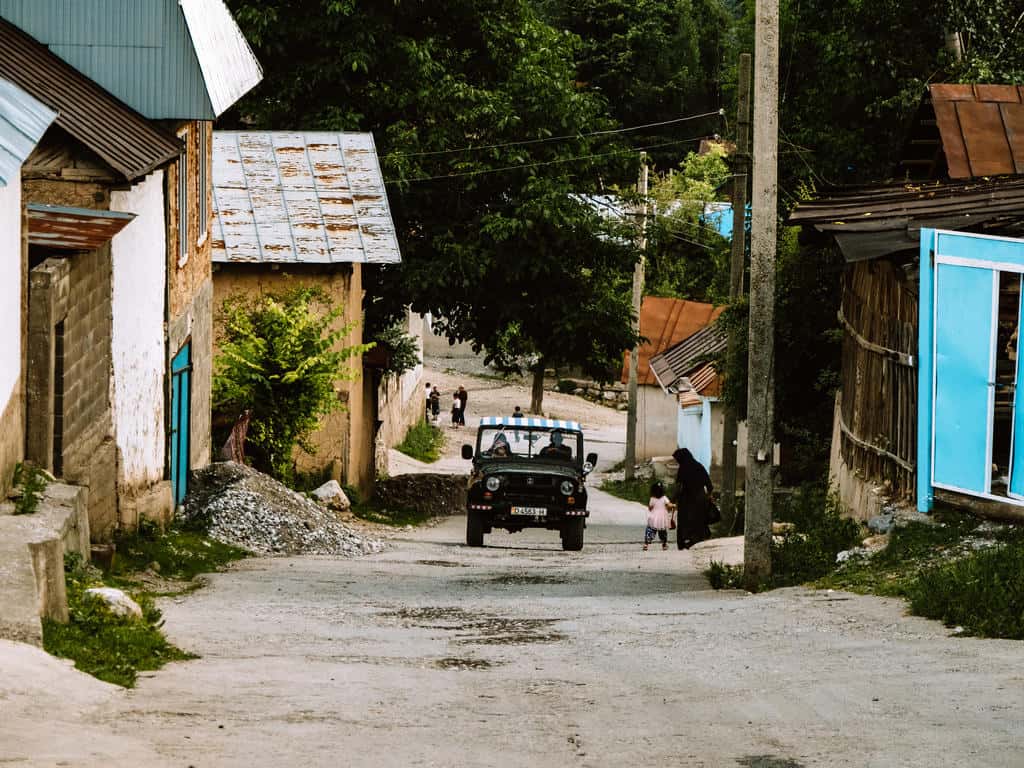
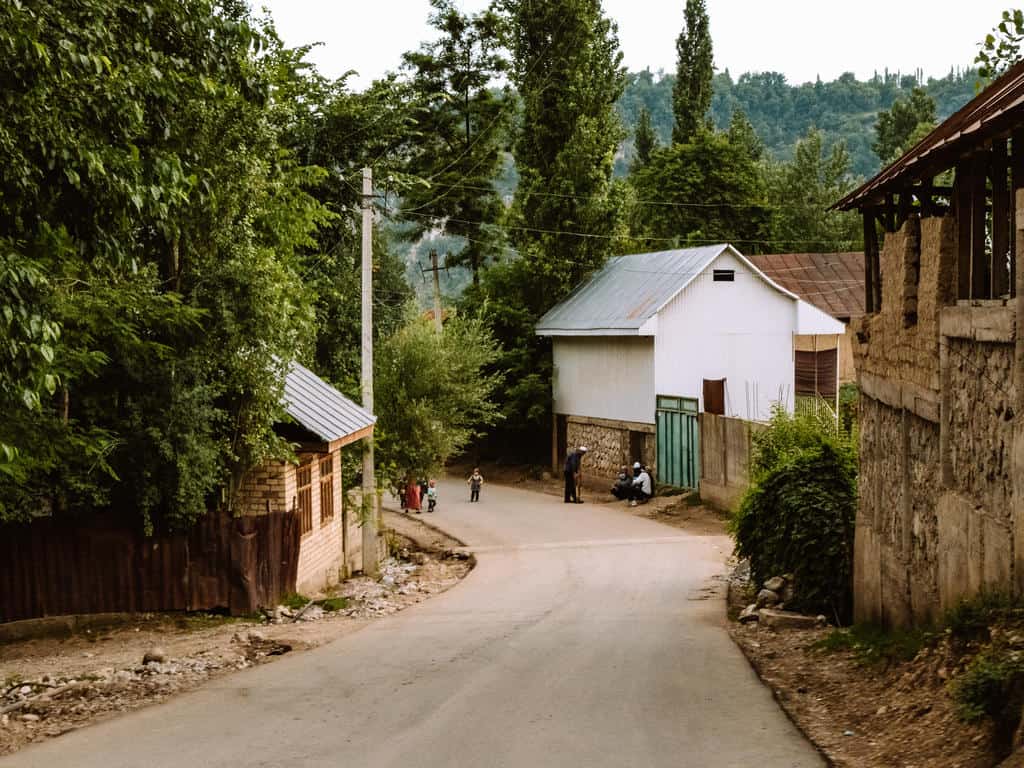
I loved the peaceful atmosphere in the villages in Arslanbob, interrupted by the sounds of the clanging engine of an old Lada Niva trying to get up a steep dirt road, the shouts of a kid jeering the cows home, the giggles of women sitting outside while keeping an eye on their children playing,…
Another way to really get a sense of a place is by going to the local market. Arslanbob’s buzzing market is located in the center of the village.
You’ll get curious (but friendly!) looks from the locals and some will approach you to ask you where you’re from. You can expect a lot of welcoming smiles and some invitations to try out some local food (and walnuts!)
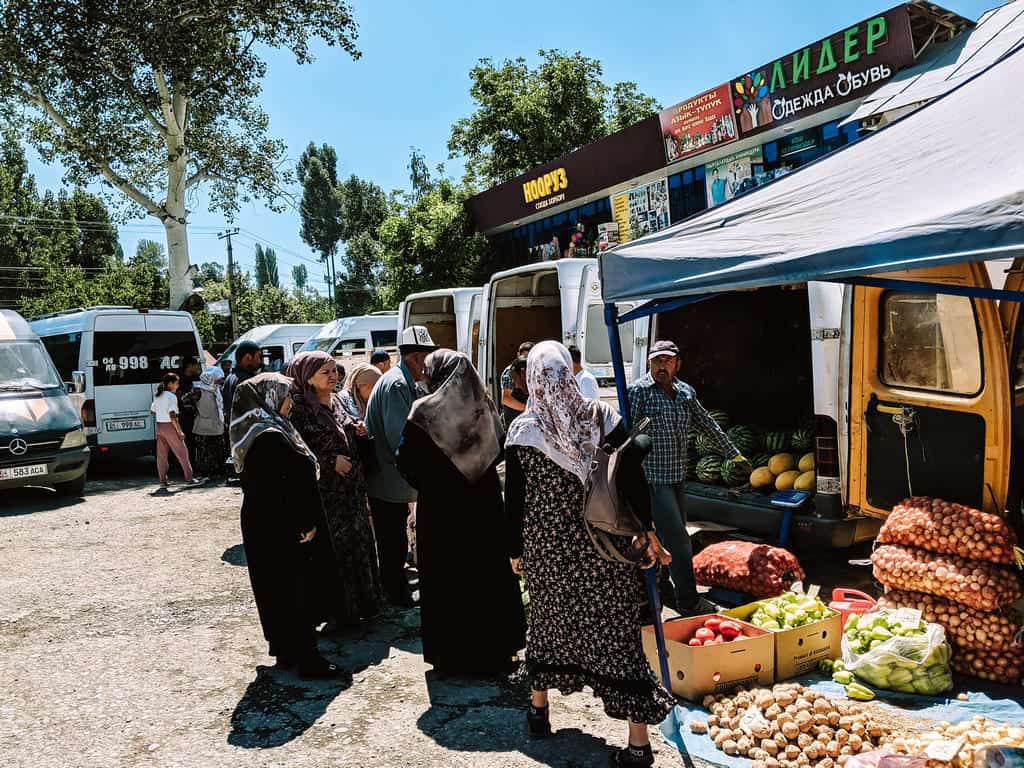
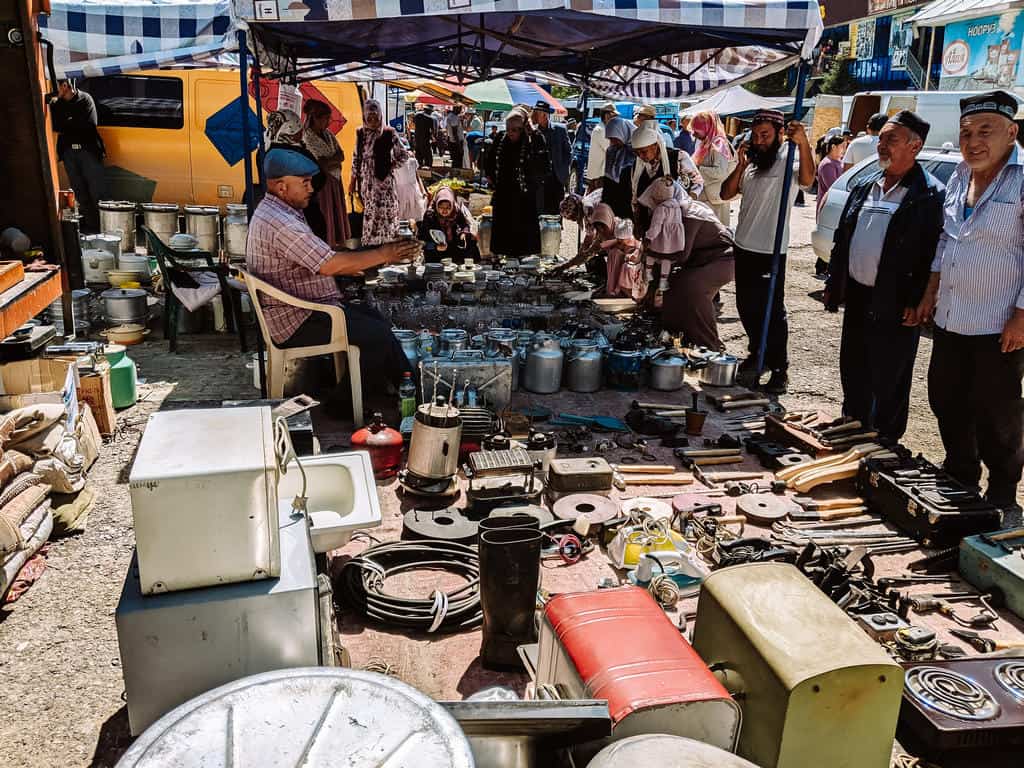
If you want to learn even more about the daily life in Arslanbob, there’s an agricultural tour organized by CBT Arslanbob that takes you along the potato, sunflower, and cornfields and you get a chance to meet with the farmers. Contact the CBT for more info.
4.5 Visit the Walnut Oil Factory
There’s a small walnut oil factory near the CBT office in Arslanbob where you can see how the walnuts are being processed into oil.
You’ll learn how they’ve been doing this for years in the old way and you’ll also see a new way, as the factory recently was sponsored with an ecological cold press mill.
The CBT organizes a small tour to the factory, which costs 100 som per person and includes a tasting of local bread with walnut oil.
4.6 Go on a trek to Holy Lake
There are a number of beautiful hikes and horseriding treks that you can do in Arslanbob and the surrounding Babash Ata mountains. There’s an overview of them in the sections below (4.7 and 4.8).
If you only have the time to do one, then I highly recommend going on the trek to Holy Lake!
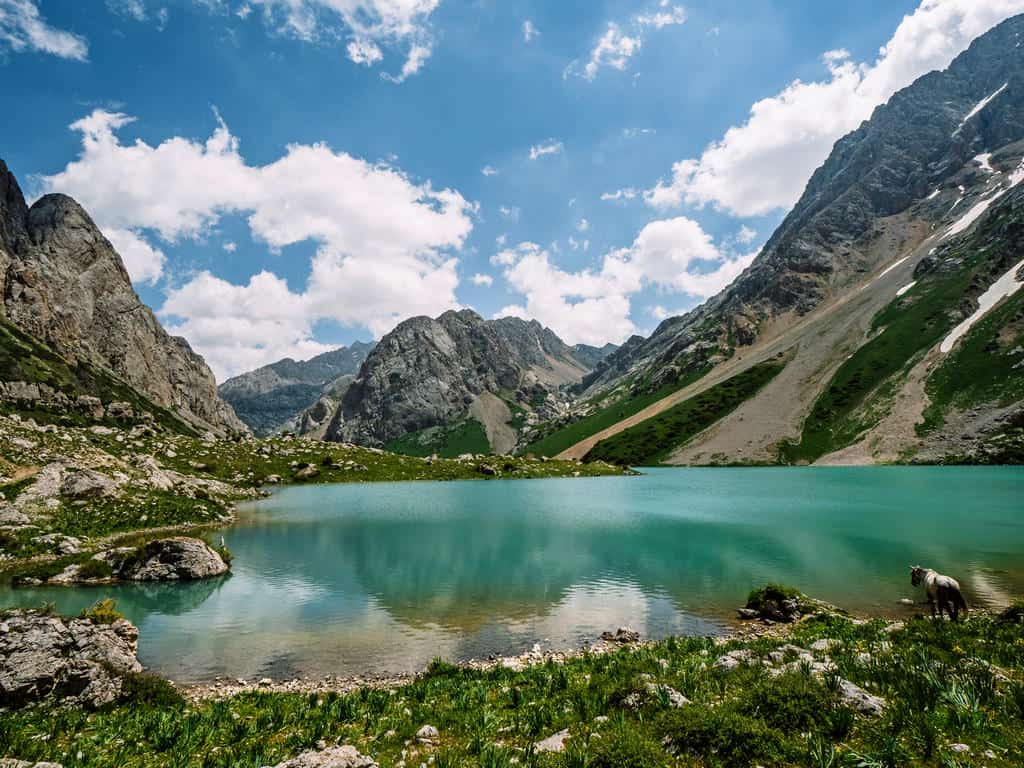
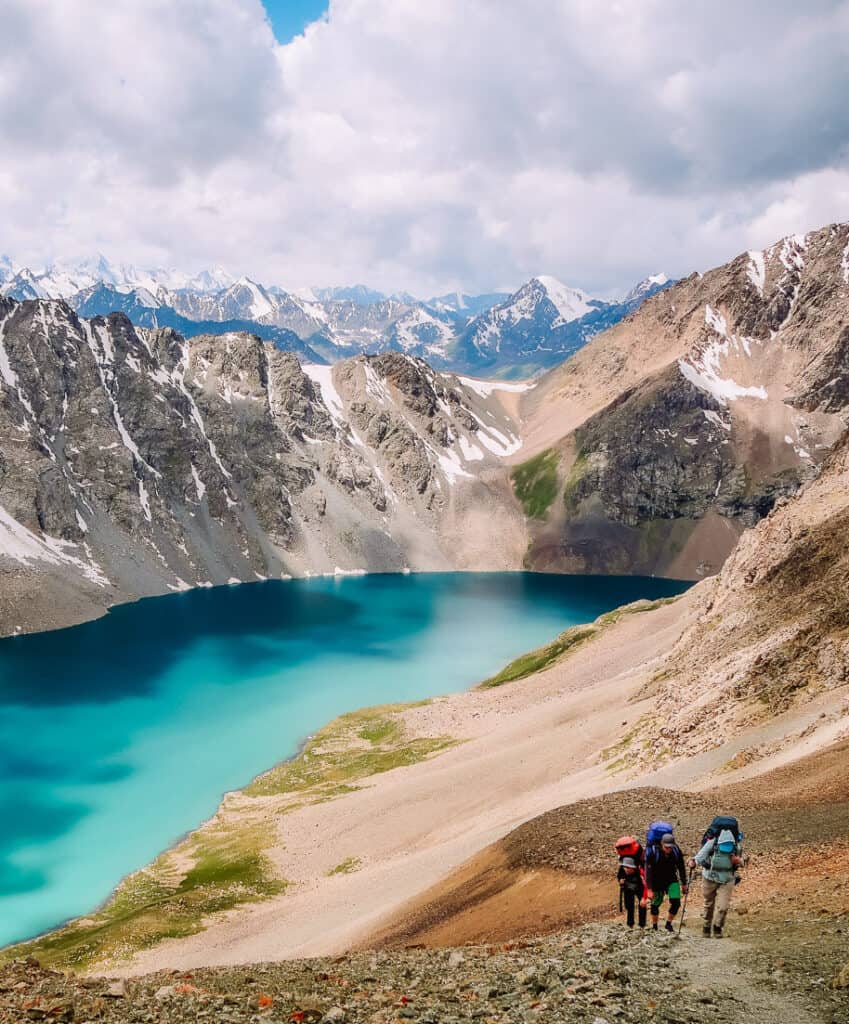
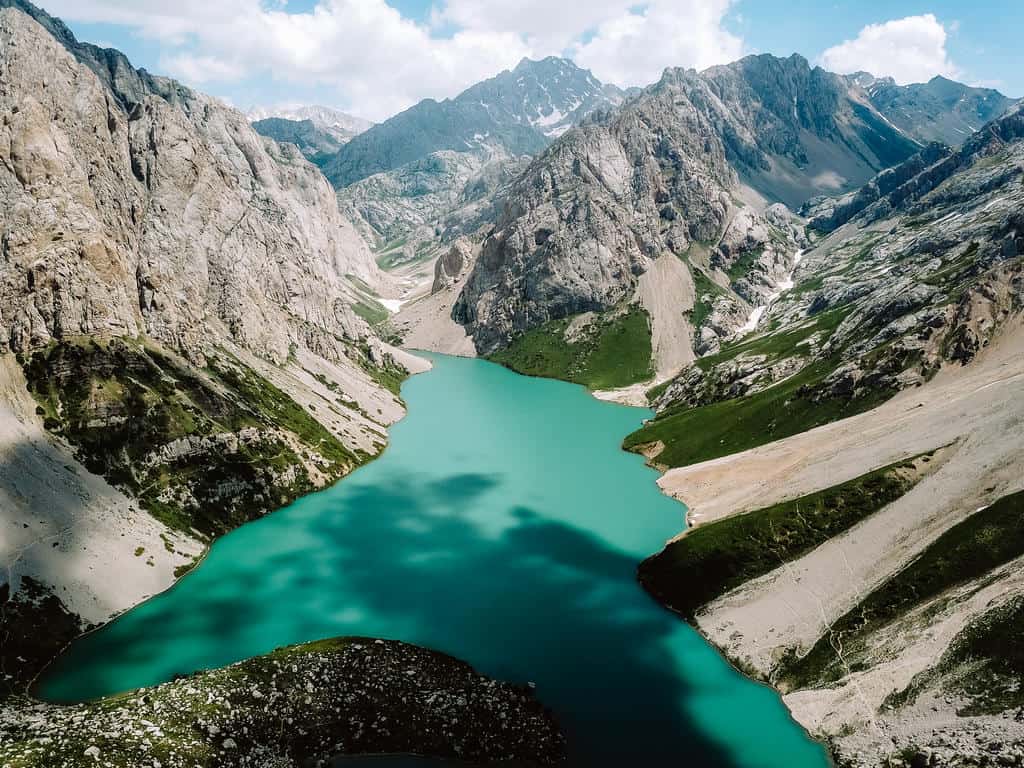
Holy Lake, also known as Kolkupan Lake, was for a long time an important pilgrim’s site in the sacred Baba Atash Mountains.
Nowadays, local villagers still go to the lake for a day or a weekend to make goat and sheep sacrifices or just to relax and spend time together with their family, friends, and community at the pilgrim’s huts near the shore of Holy Lake.
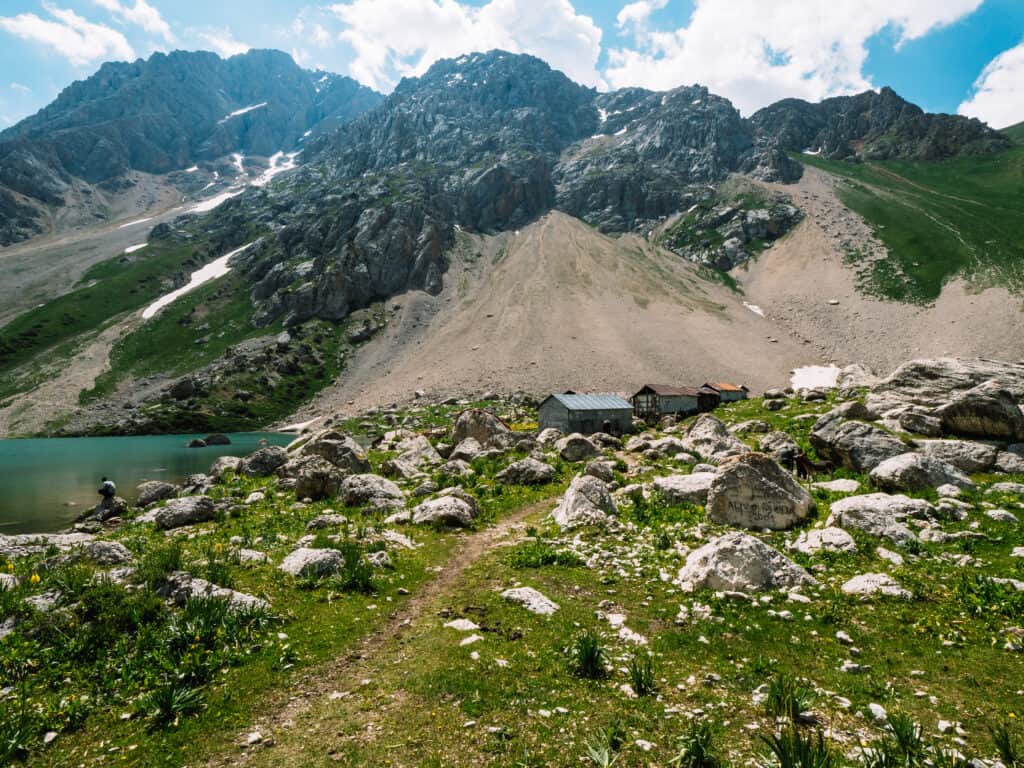
I was amazed to see quite a few young kids and elderly people at the lake as it’s not so easy to get there. You can only reach Holy Lake on foot, on horseback, or by donkey as you have to cross the Babash Ata mountains and it’s definitely not an easy trek!
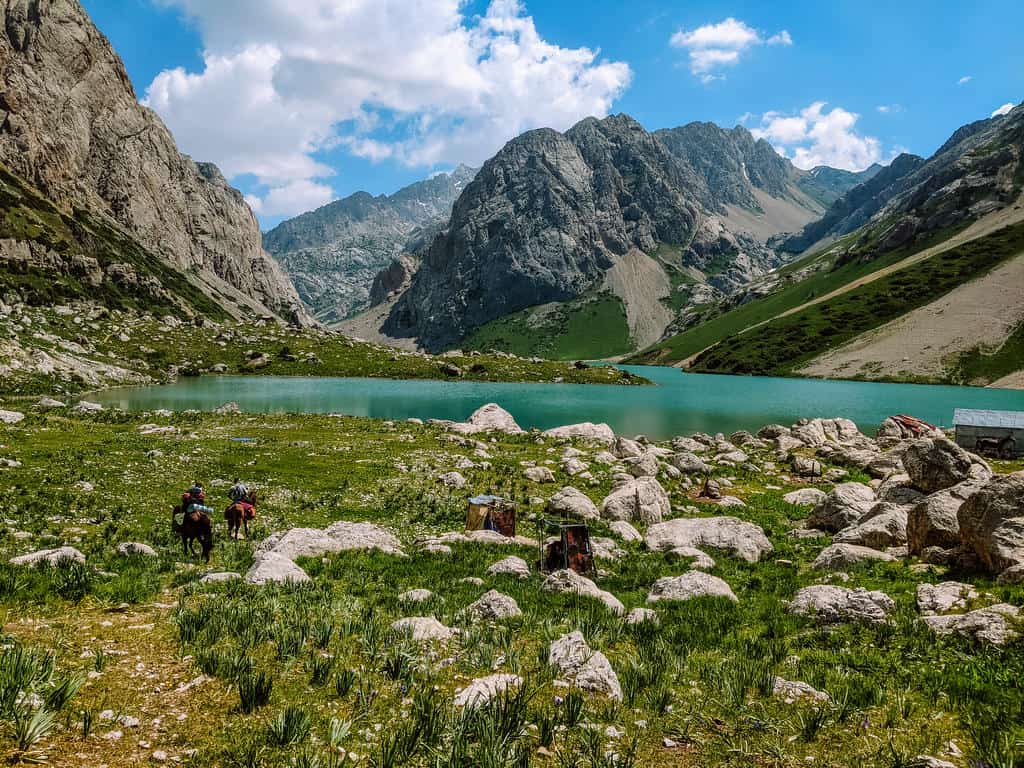
- HIKING TO HOLY LAKE:
- trekking distance: 46km
- trekking time: 4 days/ 3 nights
- max elevation: 3,670 meters
- min elevation: 1,485 meters
- total elevation gain/loss: 3129m+ / 3390m
- difficulty: moderate/demanding
The trek to Holy Lake is only possible between the months of June and September when the mountain passes are cleared of snow.
During this 4-day trek, you make a loop from Arslanbob Village across Dostuk Pass, also known as Friendship Pass (3676m), reaching Holy Lake (3000 m) on the second day.
On the third day, the trail takes you along a smaller alpine lake (Aina-Kol) towards the steep Tash Gorgon Gorge and over the Ontomo (3400m) and the Chakmak Tash (3262m) passes and you’ll arrive back in Arslanbob on the fourth day.
Every day will be different on this trek as you’ll hike through very diverse landscapes. You can read a detailed description of the Holy Lake trek here.
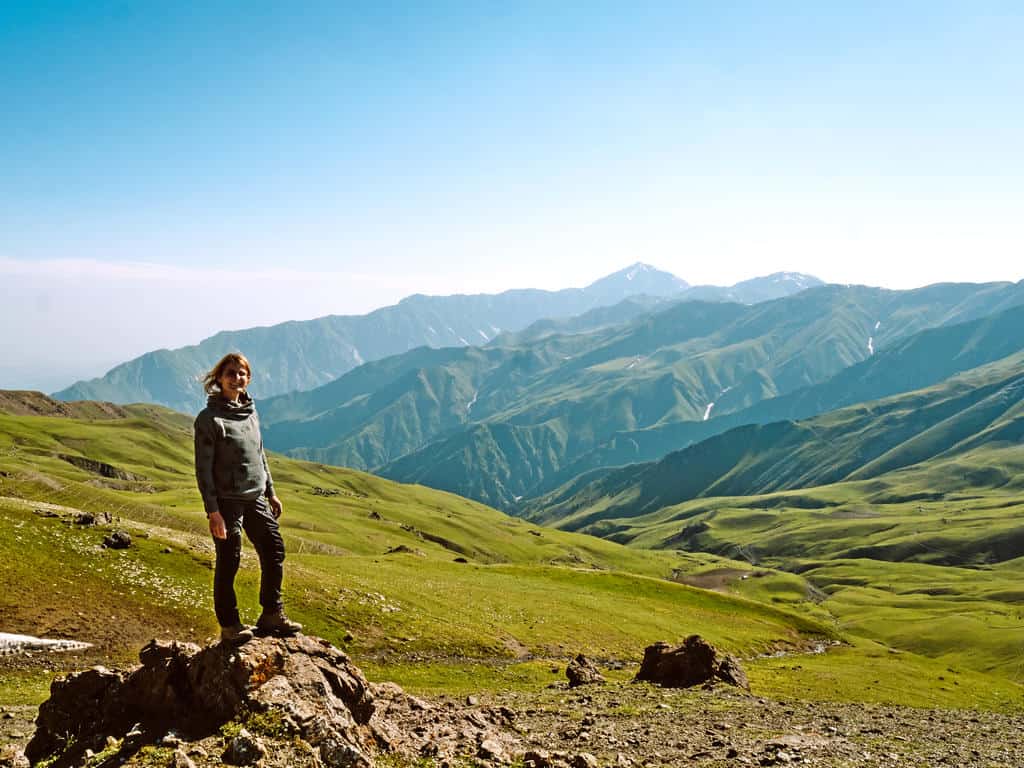
I don’t recommend doing this trek without a guide as the trail isn’t always very clear. I met two travelers who undertook this hike by themselves and they lost their way by taking a wrong turn. In the end, they found their way back to Arslanbob but without reaching Holy Lake.
In case you decide to do this trek on your own, bring enough food for 4 days. You’ll find potable water and fresh mountain springs along the way but I highly recommend filtering the water by using a reusable filter, a steripen, or boiling the water before drinking it as our stomachs are not used to the local minerals and bacteria!
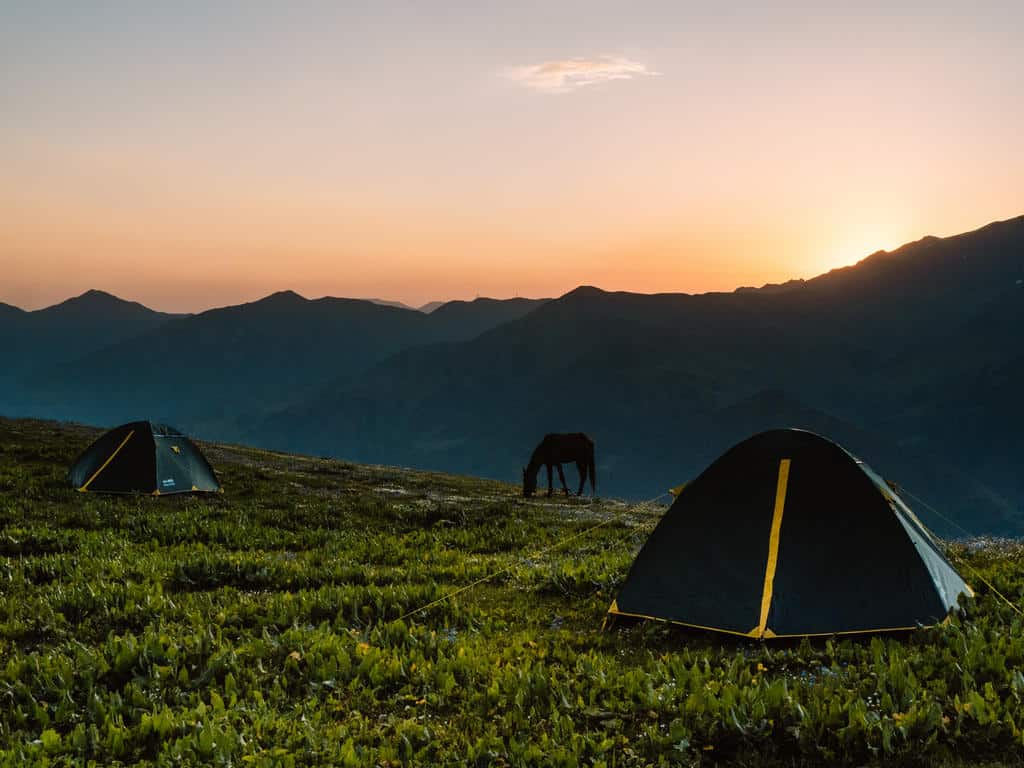
There are no yurt camps on this trail, only a few shepherd settlements here and there, so you’ll have to bring camping gear.
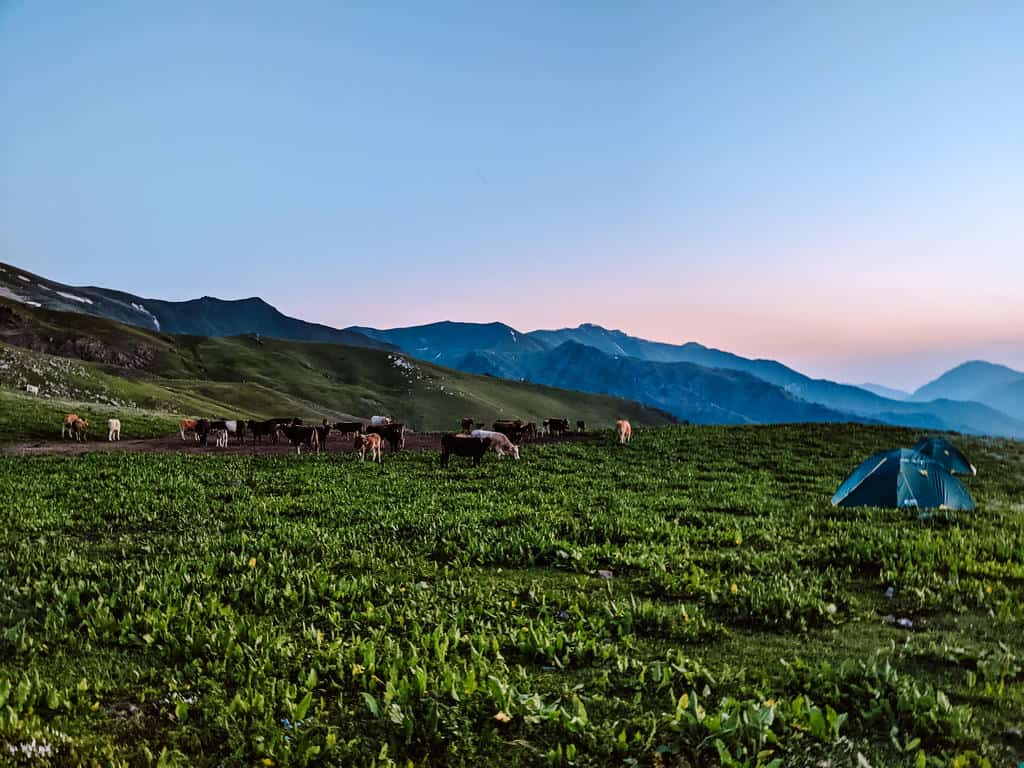
You can normally set up camp anywhere you like but keep in mind that there are many shepherds with their herds wandering in the area and that you don’t take their camping place. You also don’t want to wake up surrounded by hundreds of sheep or cows licking your tent, as has happened to me…
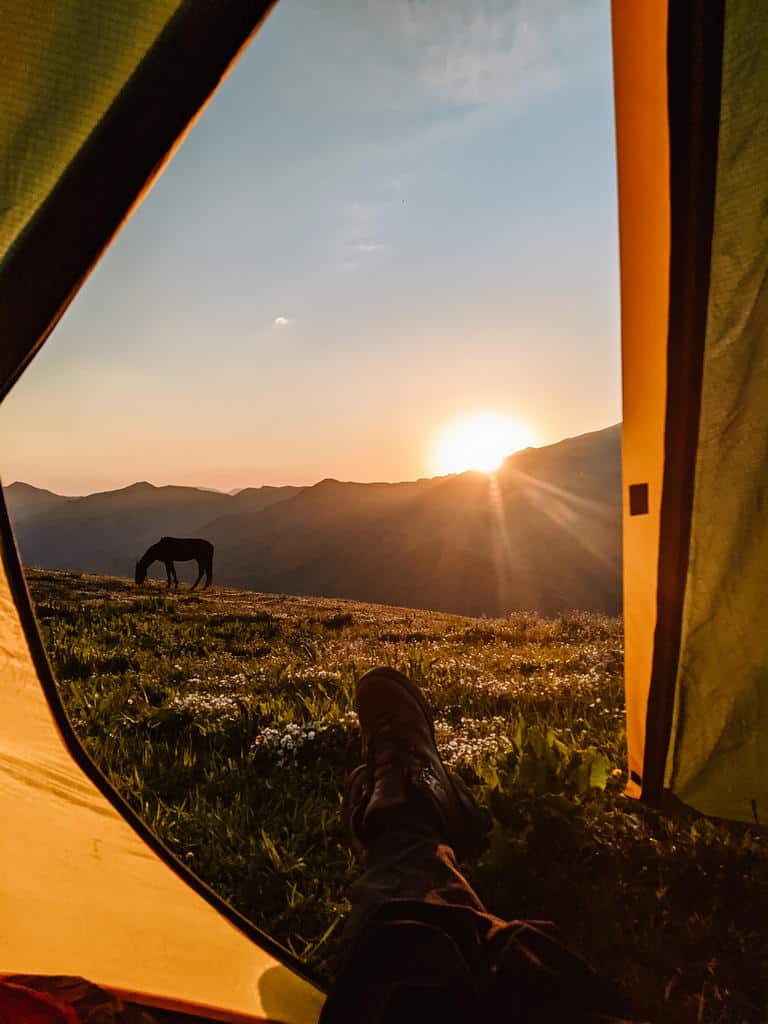
For your own safety and convenience, I recommend hiring a guide. You can contact CBT Arslanbob or Destination Jalal-Abad for more info. They’ll also provide you with camping gear.
- HORSE RIDING TO HOLY LAKE:
- riding distance: 60 km
- duration: 3 days/ 2 nights
- max elevation: 3,270 meters
- min elevation: 1,490 meters
- total elevation gain/loss: 4029m+ / 4030m
- difficulty: moderate/ demanding
You can only go to Holy Lake on horseback if you’re a relatively experienced horserider. This horse trek isn’t suitable for beginners as the days of riding are long and quite demanding on the body. You also can’t just rent a horse and do this trek on your own so you have to join a tour.
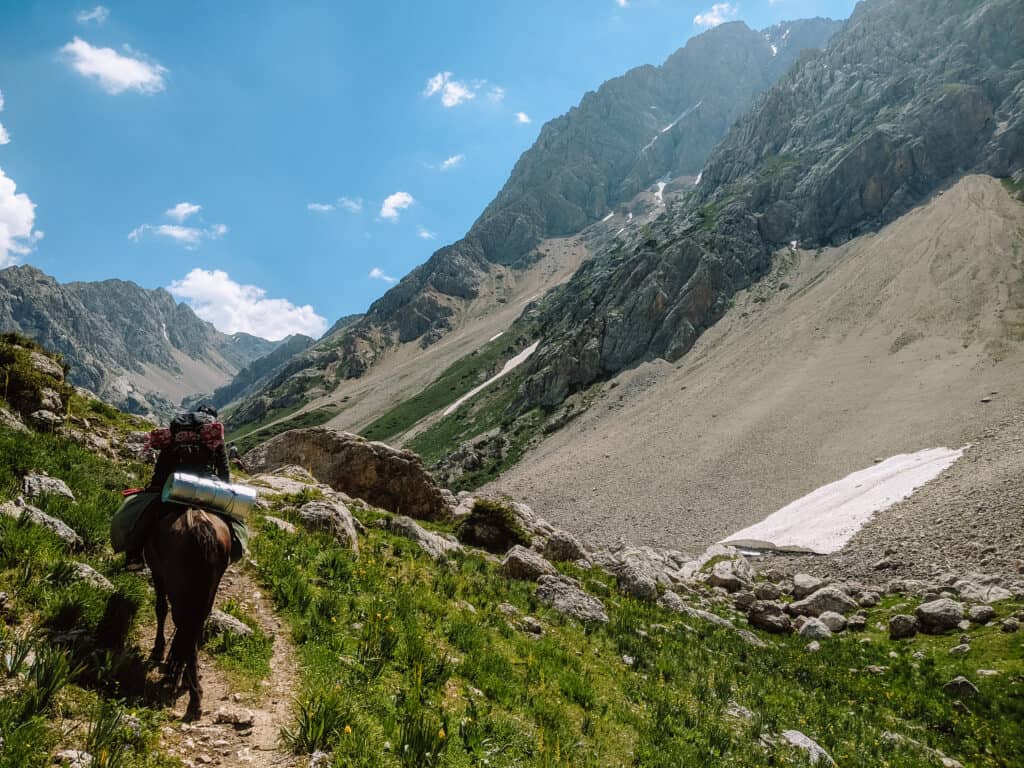
I did the 3-day horse trek to Holy Lake and it’s definitely one I recommend! It’s even one of my favorite horse treks I’ve done so far in Kyrgyzstan!
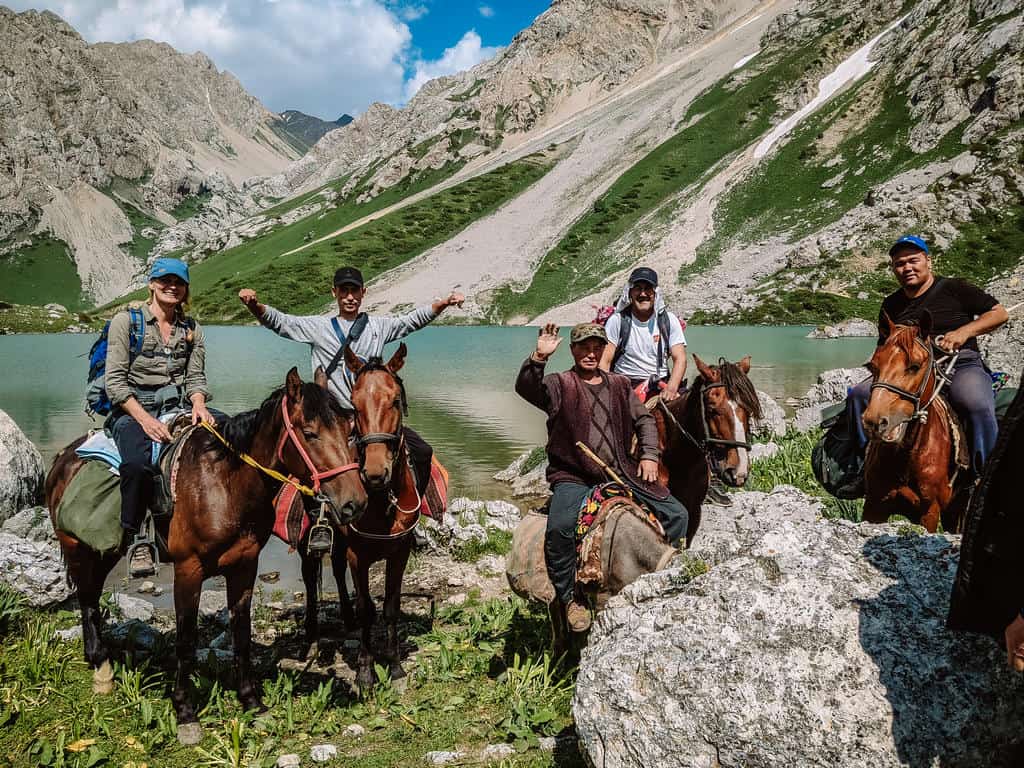
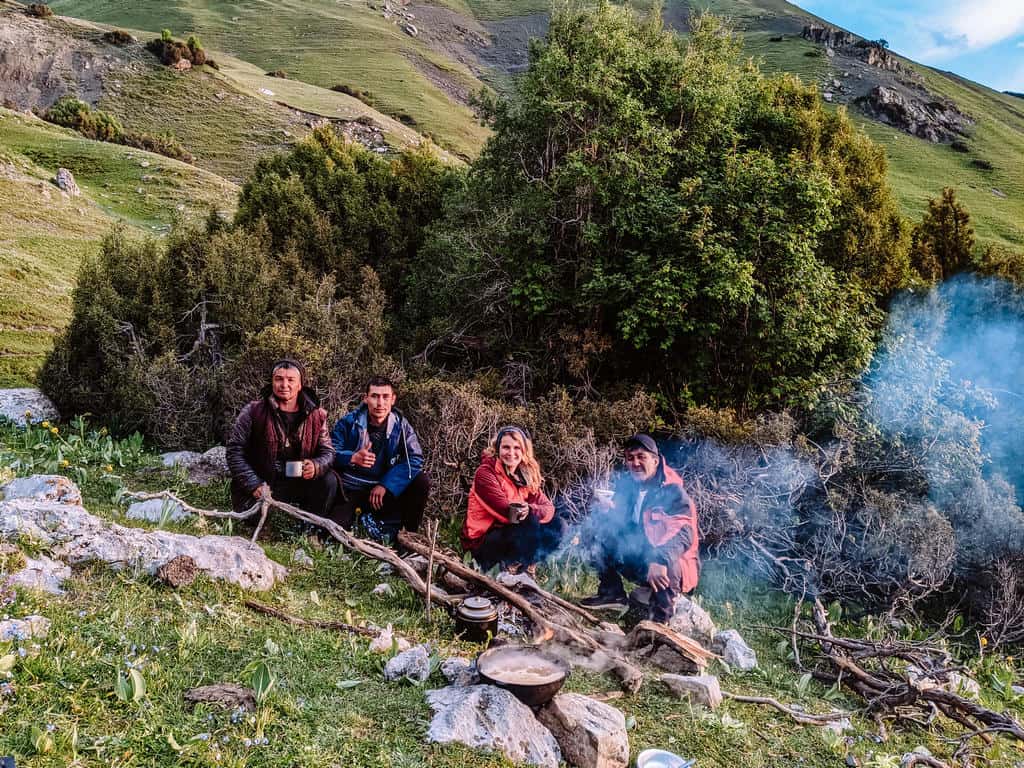
On this 3-day trek, I was accompanied by my personal guide (disclaimer: I did this trek as part of a tourism development project in collaboration with Destination Jalal-Abad), a local guide from CBT Arslanbob and his assistant, and a guide in training. We were quite the team!
On the first day, we rode for about 8 hours with some breaks in between. We started in Arslanbob Village and rode across the Chakmak Tash Pass (3262m) and Ontomo Pass (3400m) descended into the Sere Valley (2600m) where we set up camp for the night.
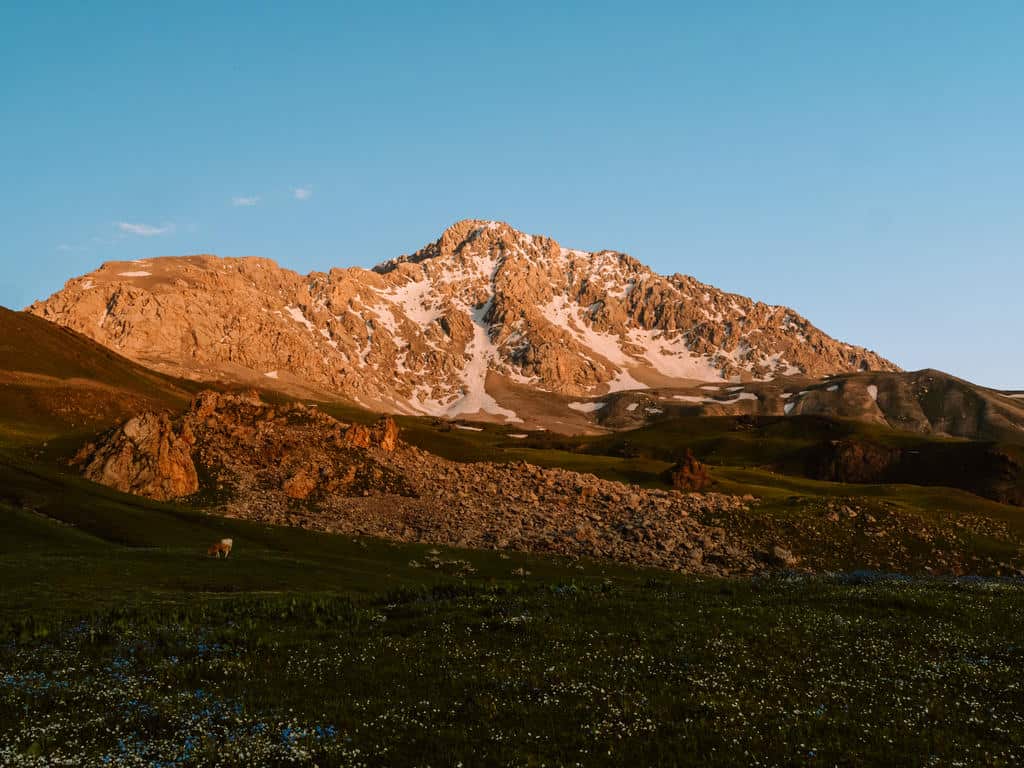
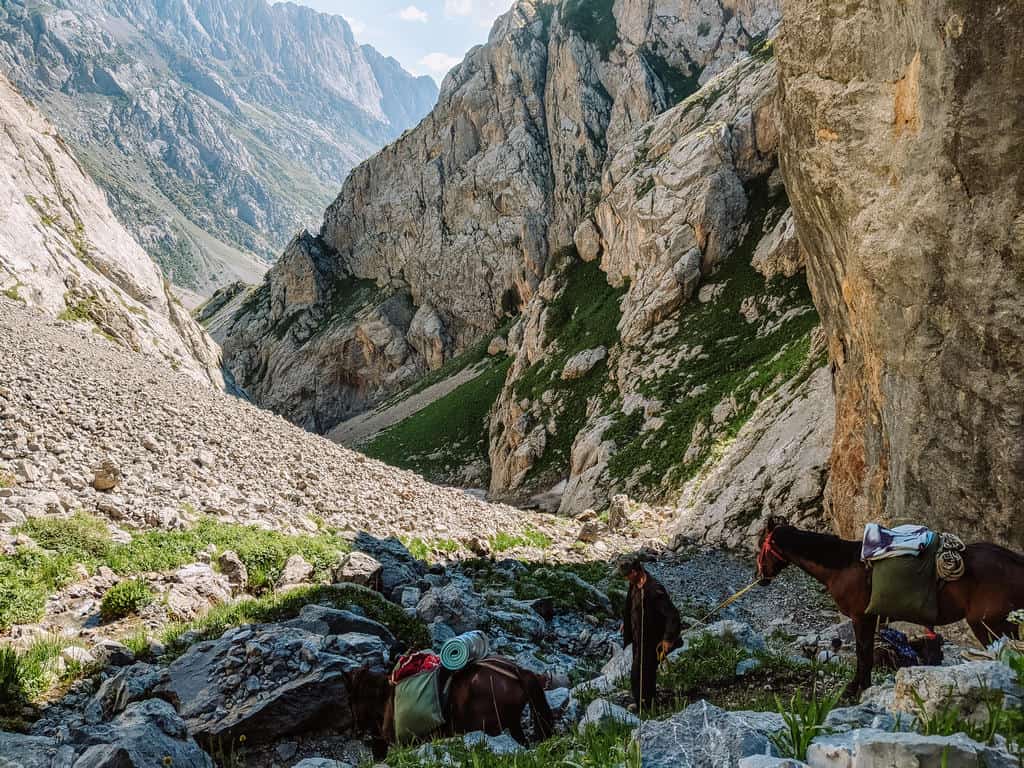
On the second day, we rode into the Tash Koro Canyon but we had to hike down as it was too steep and dangerous to do it on horseback due to the loose scree on the trail.
We then passed Aina-Kol lake, a small alpine lake, before reaching Holy Lake in the early afternoon.
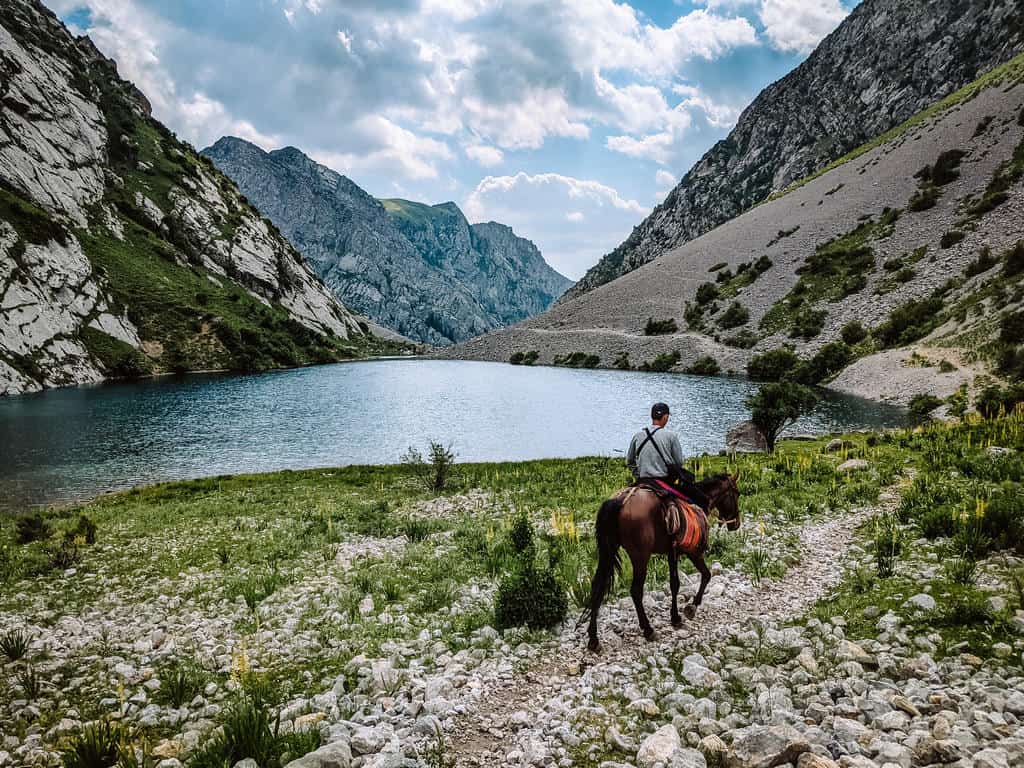
We were supposed to camp there for the night in the original itinerary but as we made good progress, we decided to return the same day to another camping spot in the Sere Valley.
The horses can’t get over Friendship Pass, as described in the hiking route, so we had to take the same route back to Arslanbob. I didn’t mind it tho as the scenery remained stunning!
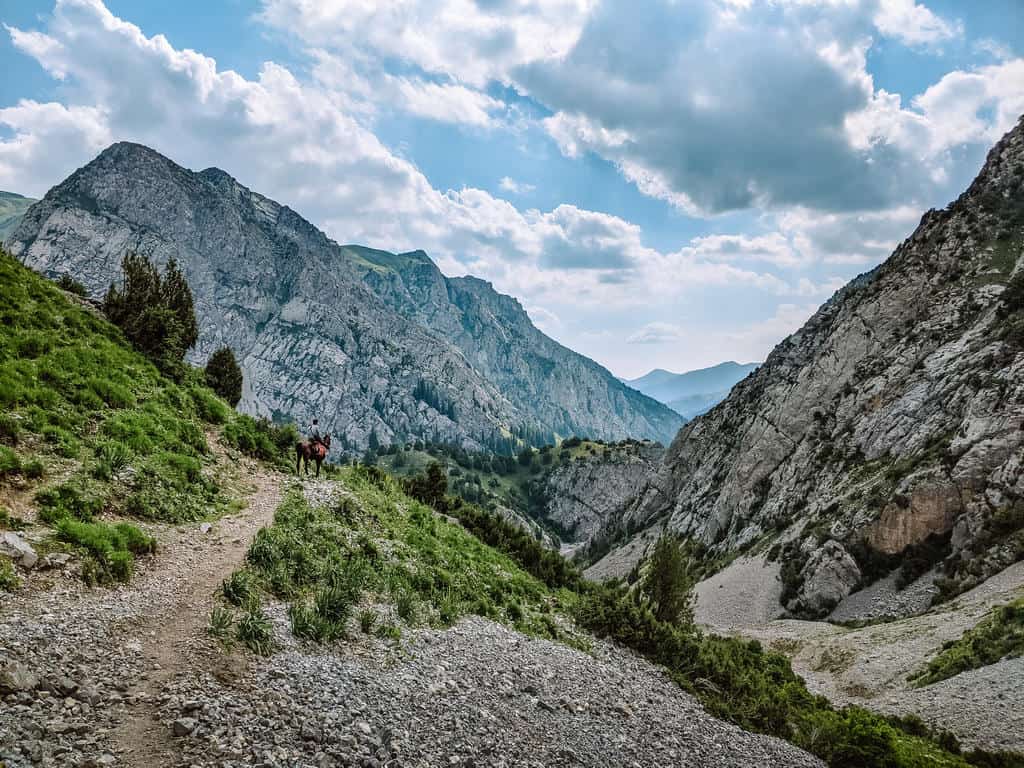
The only downside was that we had to hike the steep trail back up into the Tash Koro Canyon… So while you’re mainly horse riding, don’t underestimate the physical demands of this trek!
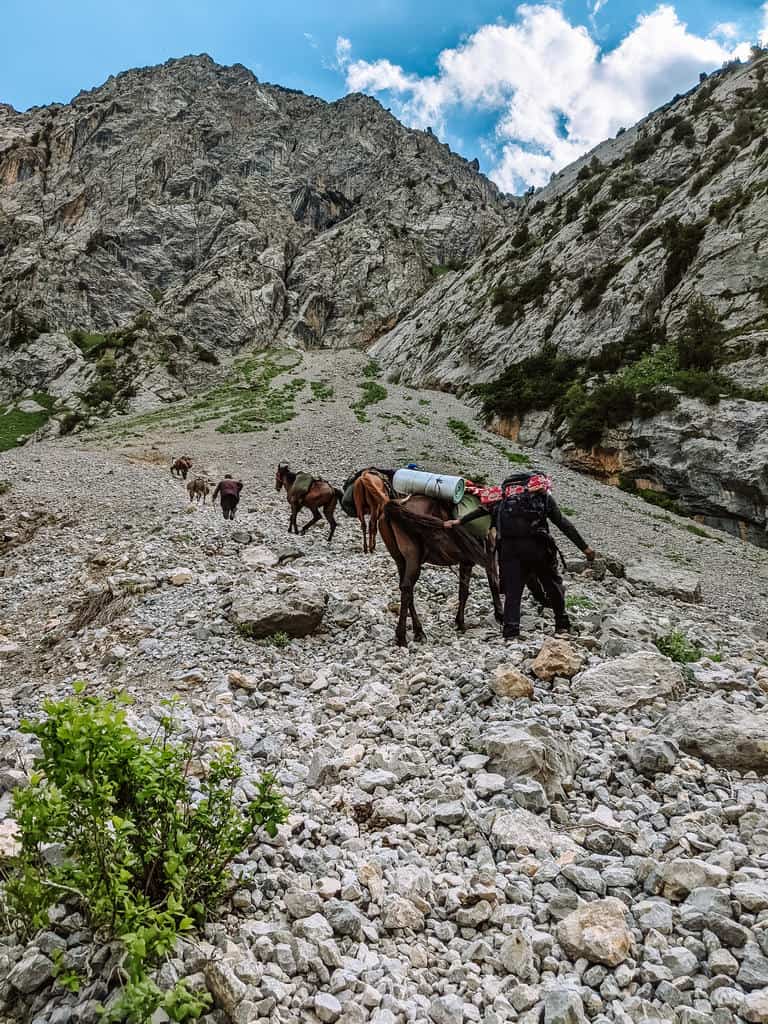
My lower back and my bottom were aching after hours of riding. I only found out later that padded cycling pants could have made the ride a lot more comfortable…
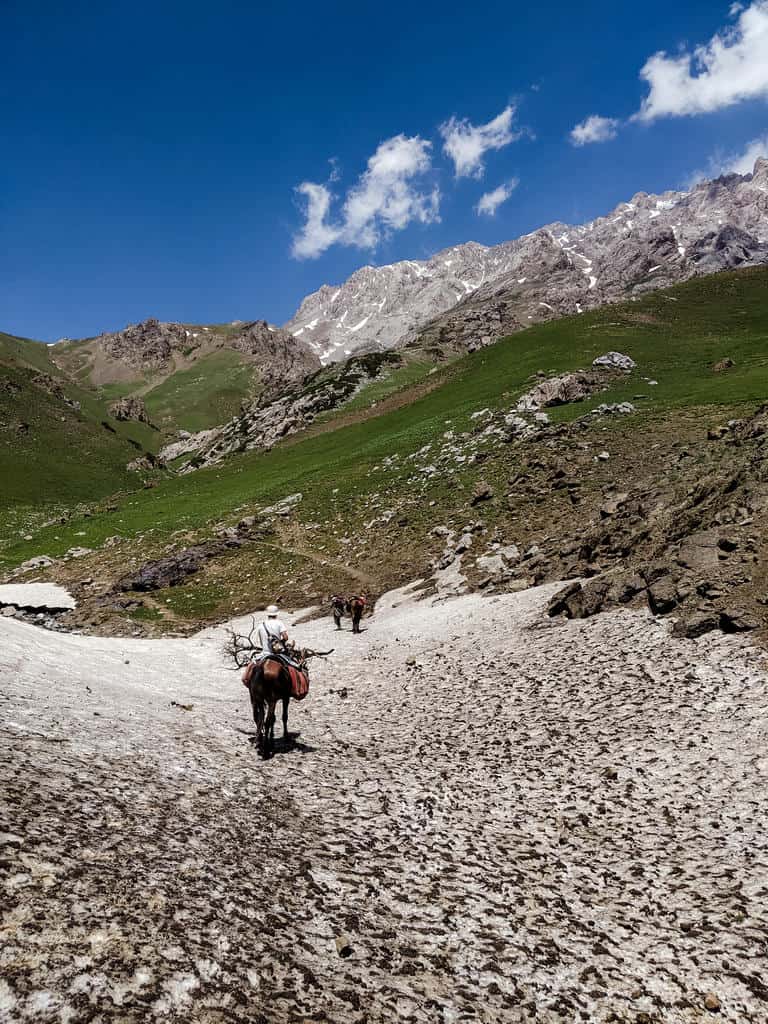
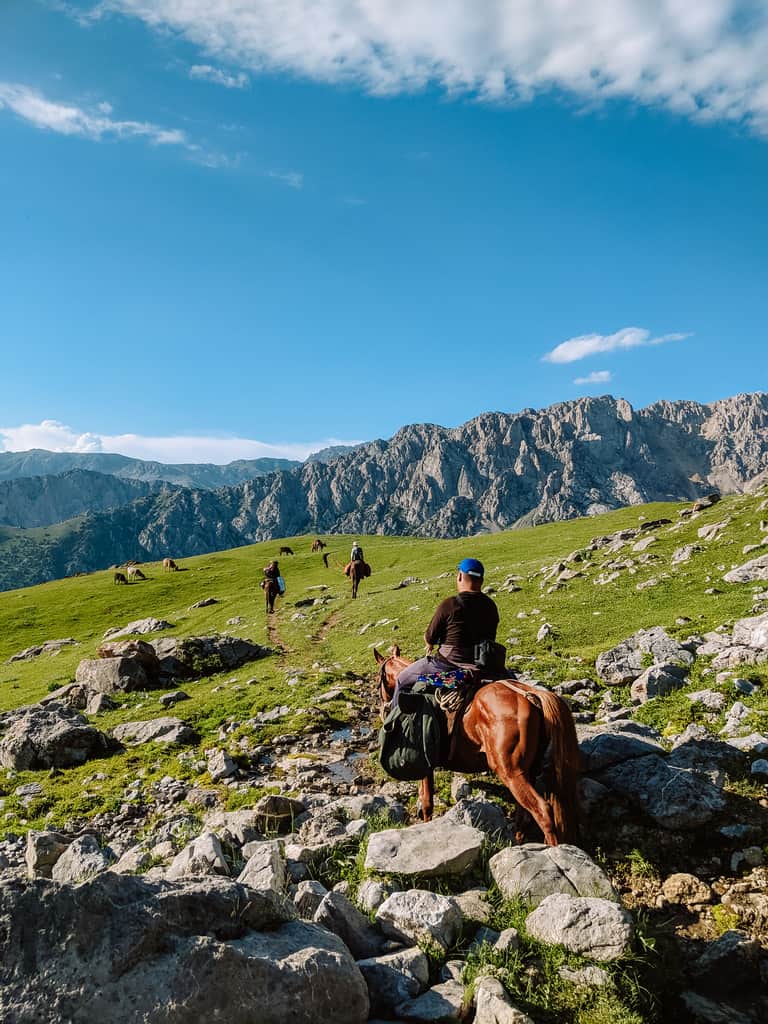
By the third day, my body was more accustomed to being on horseback and the ride back was a very pleasant one. It was nice to ride through the same landscapes as on the first day but see it from a different point of view.
If you love to go on this horse riding adventure, you can book the tour through CBT Arslanbob or Destination Jalal-Abad. The tour costs around 30000 som (which is about €300), including food, a guide, horses, a horseman, and camping gear.
4.7 Horseriding and Hiking in Arslanbob: 5 Beautiful Treks
There are many trails in Arslanbo, from single day-hikes to multiple-day (horse) trekking adventures.
Here’s an overview of the ones I recommend and why, including treks I haven’t done yet but would love to do when I return to Arslanbob. I also mention whether or not you can do the trek by yourself and if you can do it on foot, on horseback or both.
You can buy a trekking map, ask for more info, or arrange a tour at the Destination Jalal-Abad tourist office in Jalal-Abad or at the CBT Arslanbob. You can also inquire about renting camping gear at the Destination Jalal-Abad office.
1) Day-hike around Arslanbob
- Trek info:
- Trekking distance: 10km
- Duration: 6 hours
- Max elevation: 2088m
- Difficulty: easy/moderate
- When: from May to October
- How: on foot or by horse (beginners to experienced)
- Why you should go on this trek:
This hike allows you to see all the natural attractions in and around Arslanbob Village, including a visit to the walnut forest, the waterfalls and Panorama Hill. Read more info here.
You can do this hike independently (the trail and main attractions can be found on maps.me) or get a guide to learn more about Arslanbob.
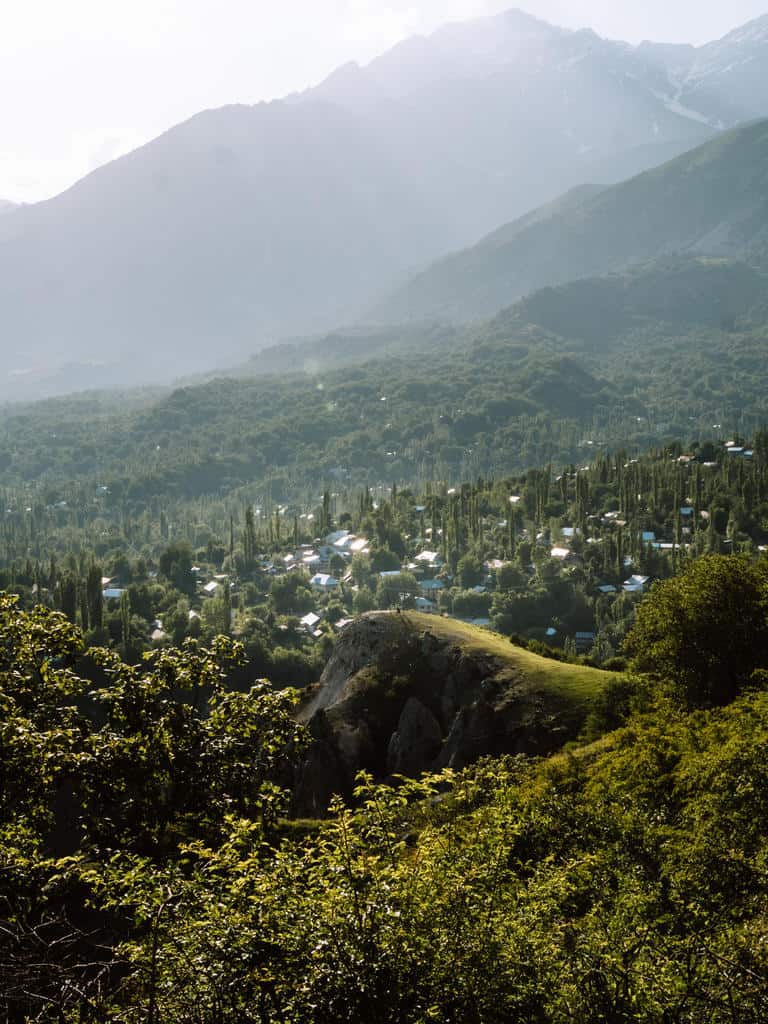
2) Holy Rock day-Trek
- Trek info:
- Trekking distance: 16km
- Duration: 7 hours
- Max elevation: 3200m
- Difficulty: moderate/demanding
- When: from May to October
- How: on foot or on horse (riding skills are required)
- Why you should go on this trek:
During this one-day trek, you’ll go to the Toguz-Bulak (Nine Springs) pastures where you’ll see a lot of underground springs and a wide variety of flora and fauna.
The highlight of this trek is Holy Rock (3200m) that offers a great panoramic view over the Arslanbob and surrounding mountains. Find the GPS coordinates here to go independently or arrange a tour at CBT Arslanbob.
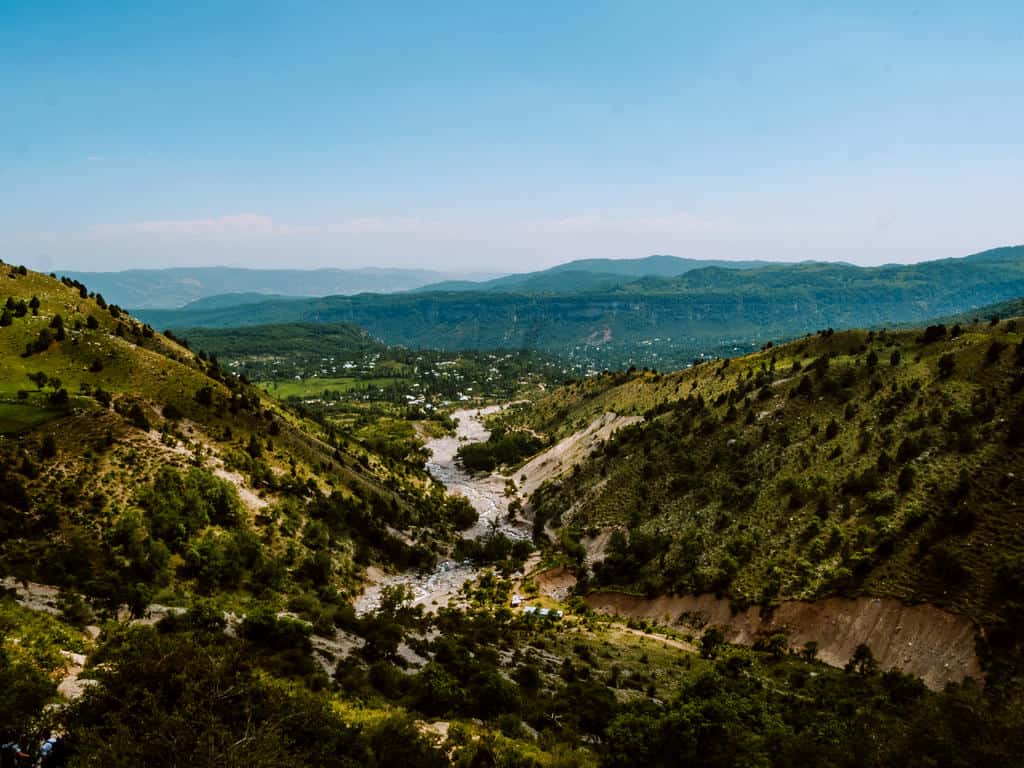
3) 2-day Mountain sunset Trek
- Trek info:
- Trekking distance: 34km
- Duration: 2 days/ 1 night – overnight in tent
- Max elevation: 3262m
- Difficulty: moderate
- When: from June to early September
- How: on foot or on horse (some experience is required)
- Why you should go on this trek:
I’ve done this trek on horseback as it was part of my trip to Holy Lake. This part of the trek isn’t as demanding as going all the way to the lake and you still get the chance to explore the stunning Babash Ata mountain range.
On the first day, you hike 17km through the Arslanbob Valley, across the juniper forests of the Chaar Archa gorge towards the Chakmak Tash Pass (3262m). Then you ascend until the base of the pass where you can set up camp and watch the sunset over the Babash Ata Mountains.
On the second day, you hike along the same trail back to Arslanbob. This hike can be done independently if you have camping gear (no yurt camps along the way) or can be booked a guided trek through Destination Jalal-Abad or CBT Arslanbob.
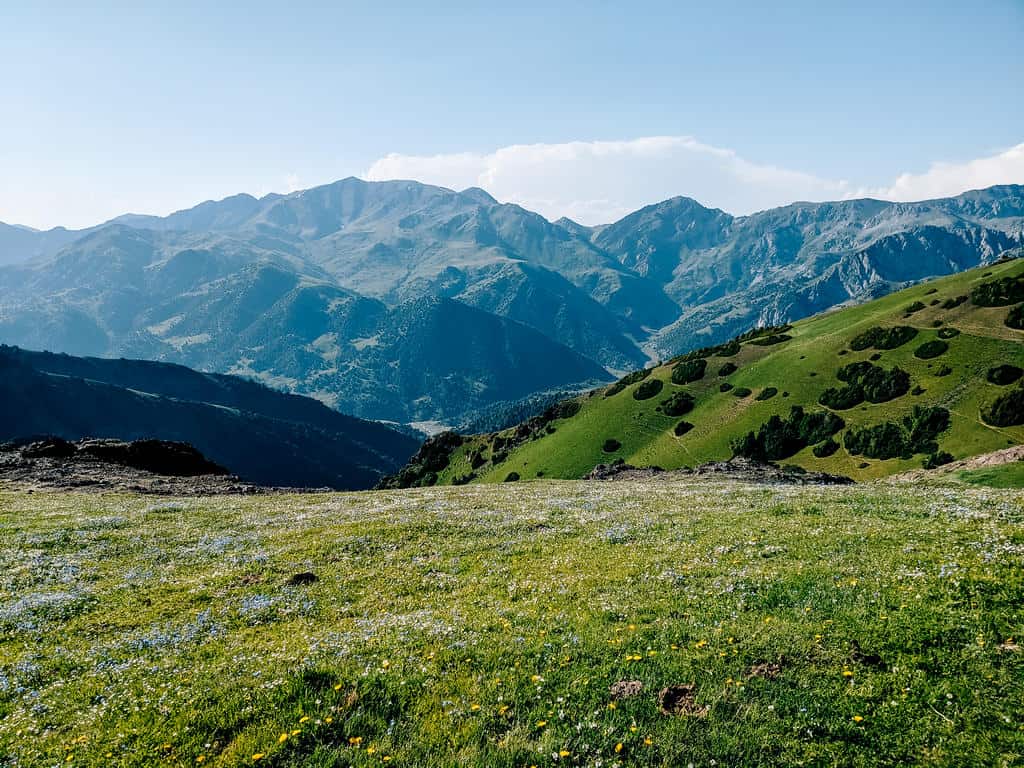
4) Holy Lake Trek
I’ve already described this trek thoroughly in 4.6 Go on a trek to Holy Lake, where you’ll find info on both the hiking and the horse riding trip.
5) 4-day Babash Ata Trekking Adventure
- Hike info:
- Trekking distance: 40km
- Duration: 4 days/ 3 nights – overnight in tent
- Max elevation: 3676m
- Difficulty: moderate/demanding
- When: from mid-June to early September
- How: only on foot
- Why you should go on this trek:
This Babash Ata Trekking Adventure takes you across some phenomenal mountain passes, along glacier-fed alpine lakes and through alpine meadows where you’ll meet local shepherds.
This trek combines the best of the Babash Ata Mountains as you hike on the first day from Arslanbob Village to Holy Rock (3200m), cross Dostuk Pass (3676m) and arrive at Holy Lake (3000m) on the second day.
On the third day you hike into the Kerei gorge, across the Kerei Pass (3500m) and camp in the Kerei Valley. The last day you trek through the lush Kerei Valley and end at Kenkol Gorge. Read all the details about this trek here.
I highly recommend getting a guide for this trek as the trail isn’t always clear. You also need to arrange pick-up at the Kenkol Gorge from where you can return to Arslanbob Village or head over to Jalal-Abad City.
These aren’t the only treks available in and around Arslanbob.
You can even go on a (guided!!) expedition to climb the Babash Ata peak (4490m), go on a 4-day horse trek from Arslanbob to Kara Suu Lake, or on a 4-day (horse) trek to Toktogul Lake. The trekking options are endless in Arslanbob and Kyrgyzstan!
4.8 Rock Climbing in Arslanbob
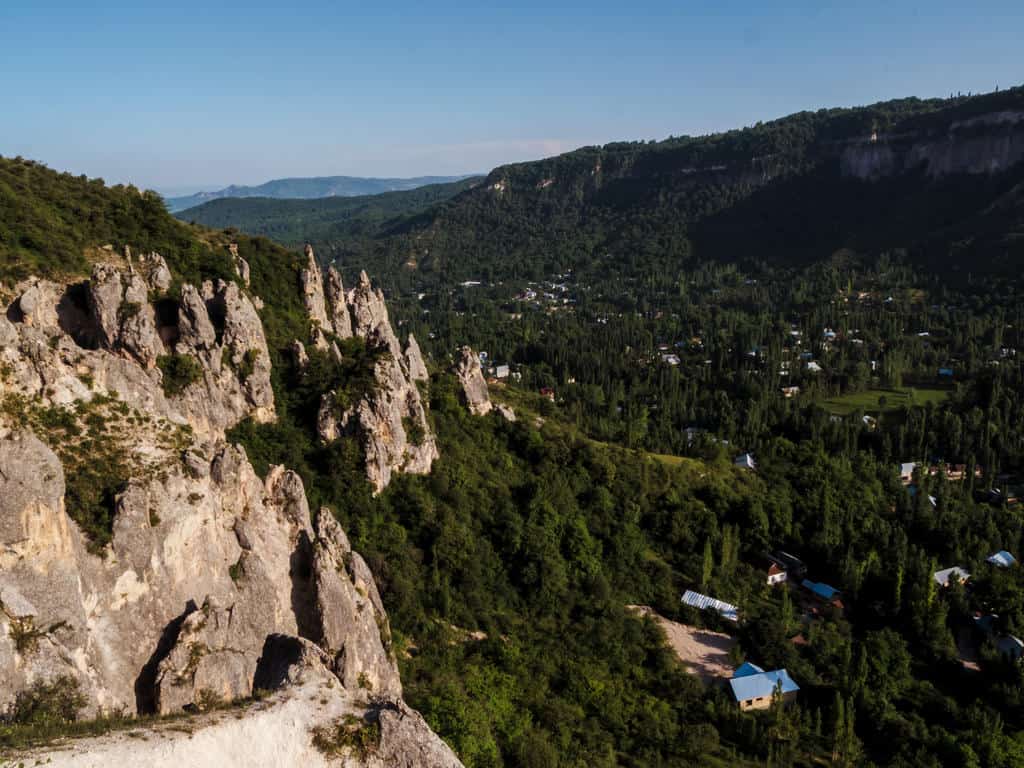
Kyrgyzstan has a lot of potential for rock climbers but it’s not very popular yet. That’s why I was surprised (and excited) to hear that you can go rock climbing in Arslanbob!
Unfortunately, I didn’t have the required skills to try it out as I’ve only been indoor climbing for a year now but would love to return one day and join the rock climbing trip organized by CBT Arslanbob!
During this 2-day tour, a guide takes you to some really nice mountains and gorges in the Arslanbob Valley like Kosh Terek and Kapkak Tash where you can go trekking and climbing. You need to bring your own climbing gear.
Contact the Arslanbob CBT office for more information!
4.9 Mountain Biking in Arslanbob
Arslanbob has several easy and short mountain bike trails going through its walnut forest as well as more difficult trails in the surrounding mountains.
If you want to rent a mountain bike, rental fees are currently 1500 som per day if the bike is rented and returned in Arslanbob and 2000 som per day if you f.eg. rent the bike in Arslanbob and cycle all the way to Jalal-Abad with it.
A mountain bike day-tour in Arslanbob costs around 2000 som and 3500 som for the mountain bike tour from Arslanbob to Jalal-Abad city (rental fees excluded).
Contact CBT Arslanbob or Destination Jalal-Abad if you want to rent a bike or need help organizing a mountain bike trip.
4.10 Go on a bird Watching Tour
If you want to learn more about Arslanbob’s fauna and flora, you can join the guided bird-watching tour organized by CBT Arslanbob!
During this tour, you’ll visit the small waterfall and Panorama Hil and go on a walk through the walnut forest and surrounding pastures where the guide will show and teach you more about the local birds, wildlife, plants, and trees in the region.
4.11 Snowboarding and Skiing in Arslanbob
The mountains surrounding are a great winter destination for freeride skiing and snowboarding. You can also go snowshoeing through the Arslanbob walnut forest or through the nearby mountains.
Ski rental (including boots) is 600 som per day and snowshoes cost 500 som per day. You can rent them in CBT Arslanbob. You can also hire a local ski guide through the CBT who will take you skiing around Arslanbob or on a ski trip to a nearby destination.

4.12 Volunteering in Arslanbob
If you like to stay for a longer time in Arslanbob, immerse yourself fully into the culture and help the community, you can do volunteering work in exchange for free accommodation at a local family’s home.
CBT Arslanbob always welcomes volunteers. The work can be either teaching English to hosts and guides in training, helping develop and/or improve routes, or assisting with sustainable tourism projects.
5. Arslanbob Accommodation & Food
5.1 Where to stay in Arslanbob
There are a number of CBT guesthouses in Arslanbob Village that offer food and accommodation. You can book some online in advance or you can go to the CBT office to help you arrange your stay.
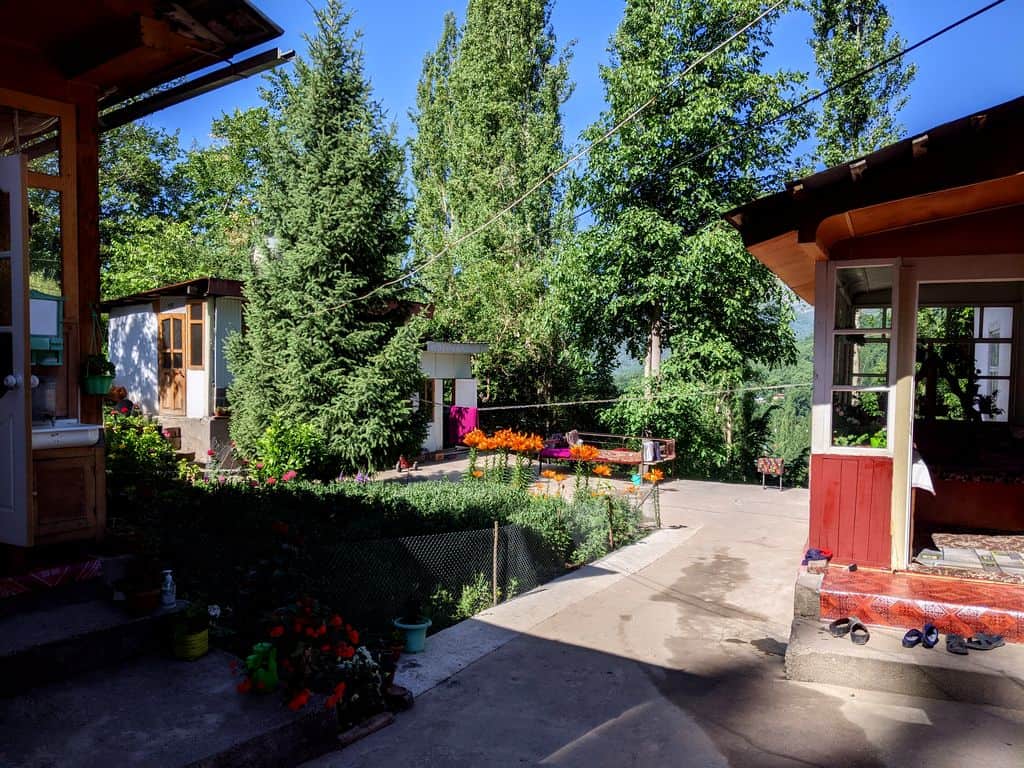
Most guesthouses are equipped with warm showers and (outdoor) toilets and have beautiful courtyards filled with fruits and flower gardens.
The average cost is around 600 som per person per night, including breakfast. Your host will also provide dinner at an additional cost of 250 som. Note: these prices are subject to change.
I stayed at Guesthouse Ibrahim (CBT Guesthouse 6) in Arslanbob Village. The owner Ibrahim and his family gave me a very warm welcome and his place was so beautiful and peaceful (he even has a yurt built in his backyard) that I would have stayed longer if I could!
Ibrahim speaks English and you can contact him directly by email (ibragimhouse6-k@mail.ru) or by phone (+996 777733056).
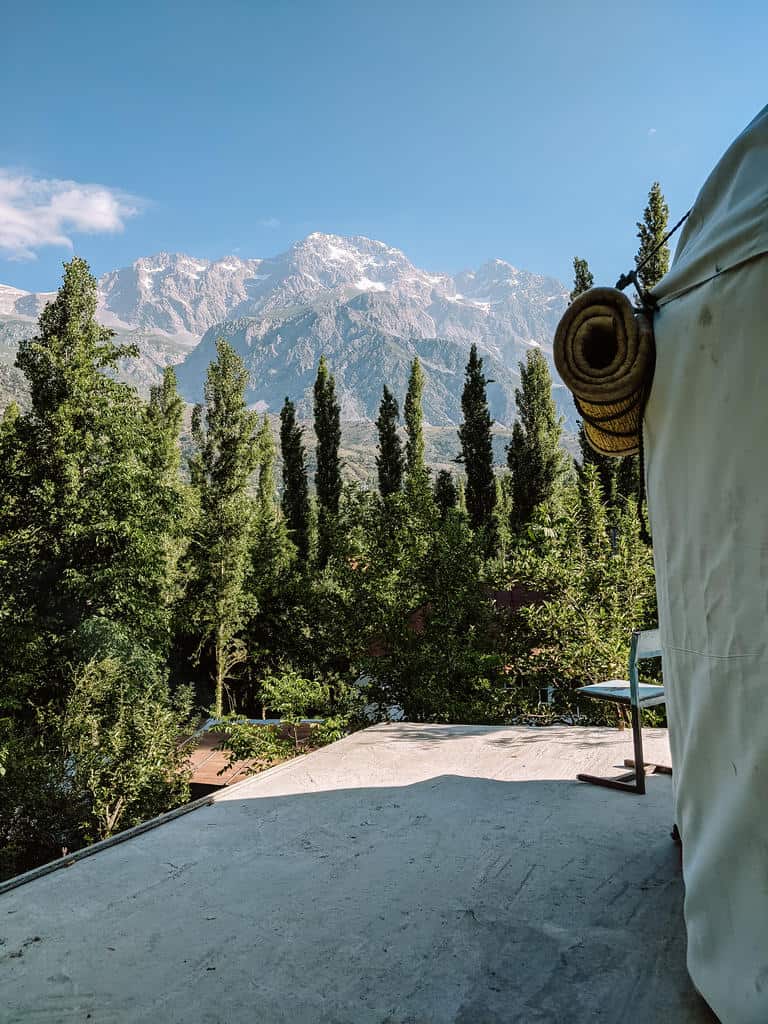
Another homestay I highly recommend is Homestay Kelechek. This beautiful homestay is run by a very hospitable Kyrgyz family.
Belterek is the only village in Arslanbob that is populated by Kyrgyz families so staying here will give you a different cultural experience.

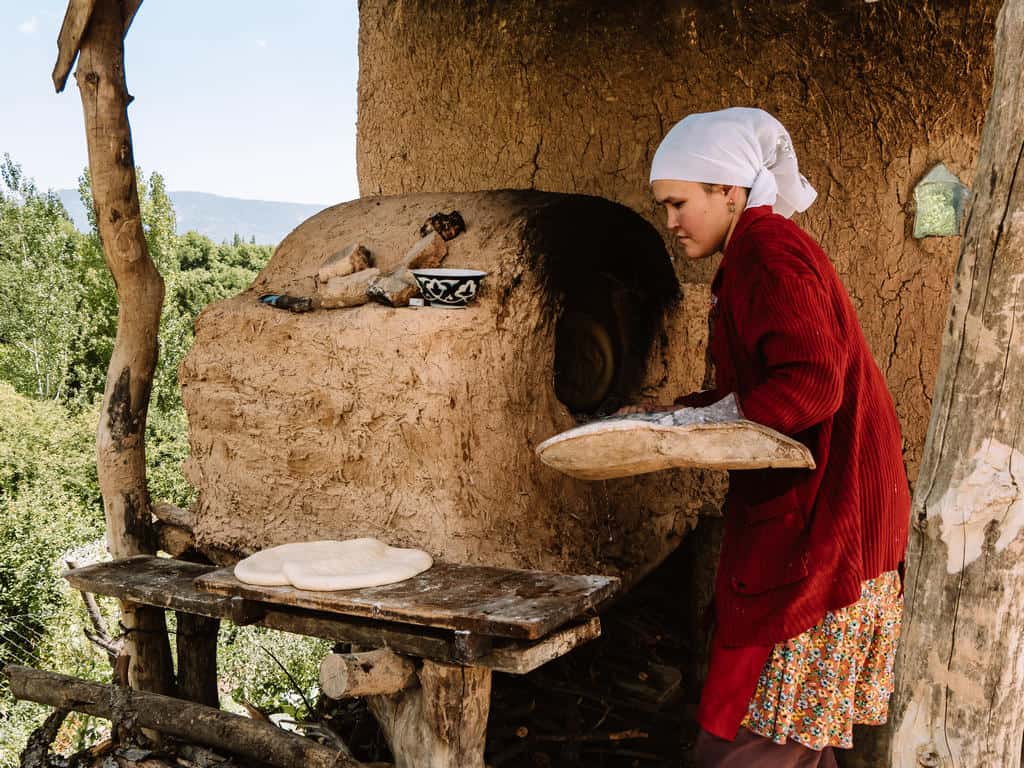
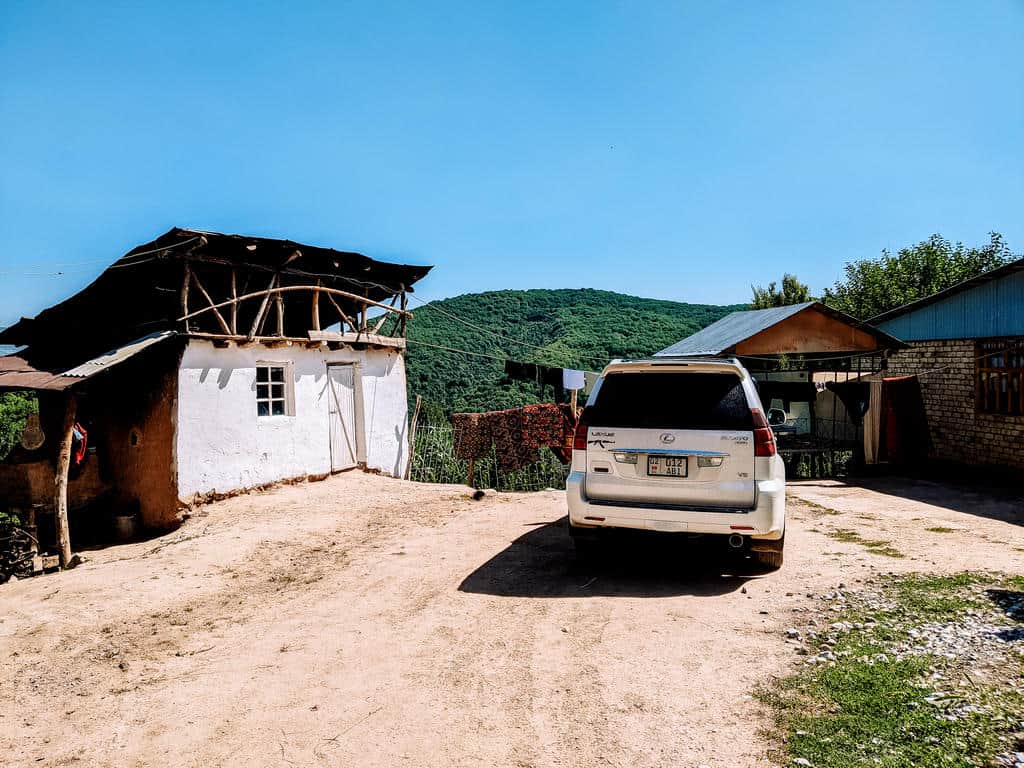
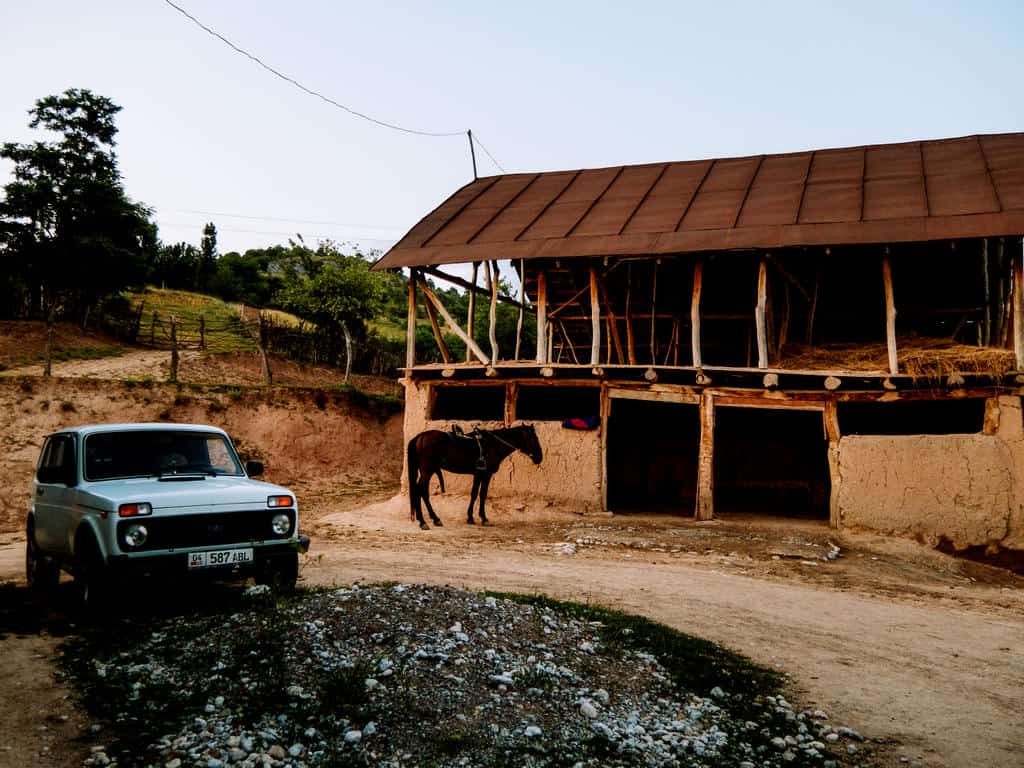
5.2 Where to eat in Arslanbob
There aren’t many restaurants in Arslanbob. You’ll find a few near the market or on your way towards the small waterfall. The best place to eat in Arslanbob is at your homestay.
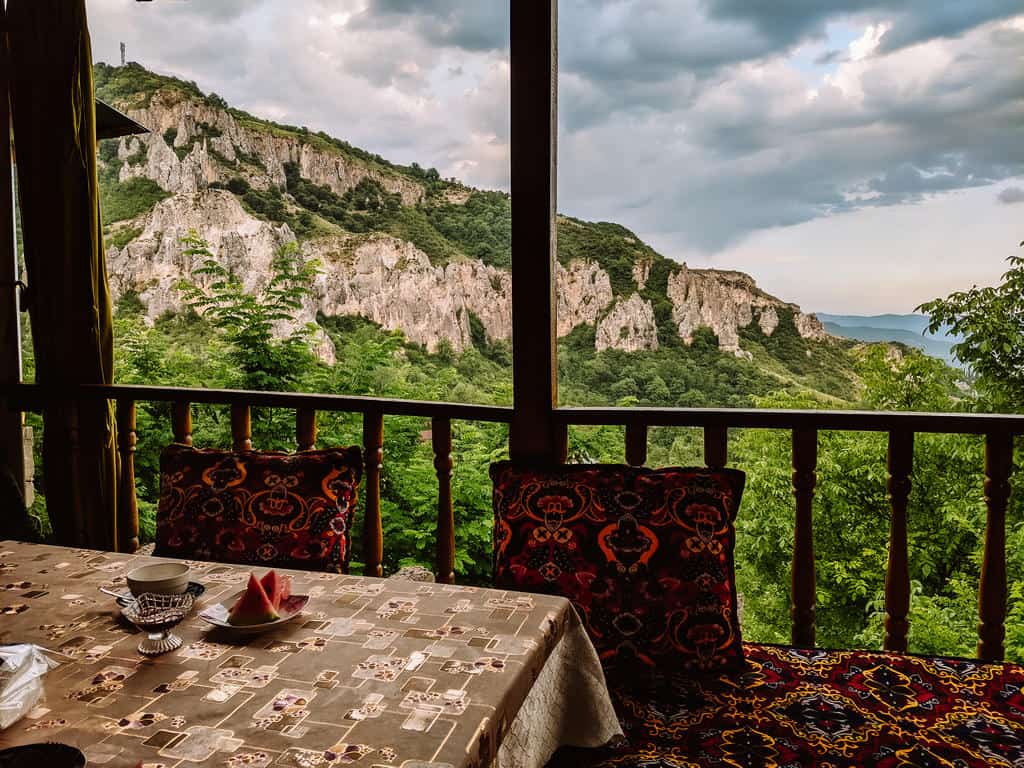
However, there is one place in Arslanbob village I highly recommend for eating out. Sky Topchan is a homestay but also functions as a restaurant.
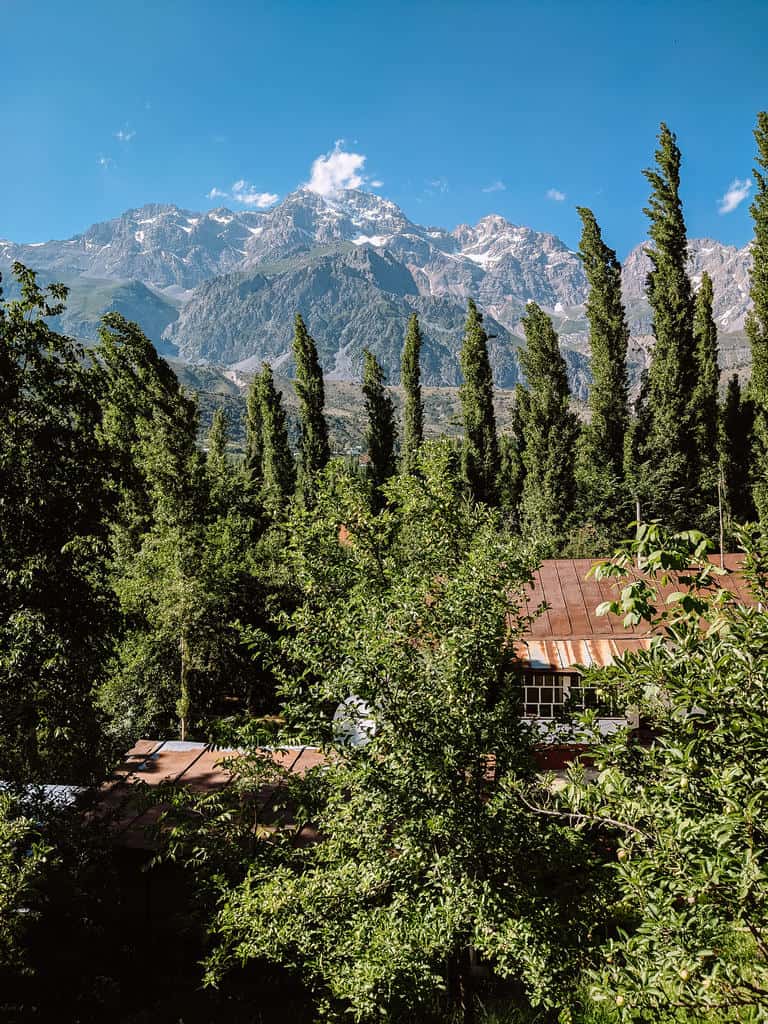
Their outdoor dining place is located right at a viewpoint where you can overlook the village and its surrounding mountains! You get great food with a great view!
6. A few more things to know before you visit Arslanbob
Here are a few more important things to know before your trip to Arslanbob
- Dress appropriately:
I’ve already mentioned at the beginning of this post that Arslanbob is one of the more conservative places in Kyrgyzstan. It’s therefore important to dress modestly in the village and in your homestay.
This means that you should wear knee-length shorts, skirts or dresses and T-shirts with sleeves (short sleeves are fine but no tank tops!). Don’t go parading around in frivolous dresses or cropped T-shirts showing your buttocks, belly button, and cleavage… Be respectful of the people and their traditions!
You don’t need to worry about wearing a headscarf, this is not expected from foreigners.
- Bring cash:
There’s only one bank in Arslanbob Village that closes on the weekend. The ATM doesn’t always work so bring enough cash to cover the costs for your food, lodging, transportation, and optional tour.
- There’s no wifi:
Most guesthouses and homestays don’t have wi-fi. If you have a local SIM card, know that you’ll only be able to receive mobile data in Arslanbob if you have O! as your network provider.
7. Where to go from Arslanbob
7.1 How to get from Arslanbob to Sary Chelek
I’d highly recommend combining your visit to Arslanbob with a trip to the stunning Sary Chelek Nature Reserve!
To get to Sary Chelek from Arslanbob by public transport is quite the journey so I’d try to leave as early as possible.
You first have to take a mashrutka (minibus) from Arslanbob Village to Bazar Korgon. These marshrutkas leave from the market in Arslanbob. It costs 60 som per person and it takes around 1 hour to get to Bazar Korgon.
There you’ll have to take another mashrutka going directly to Jalal-Abad Bus Station (45 minutes, 60 som per person).
The annoying this is that there’s only one mashrutka going daily from Jalal-Abad to Sary Chelek and this one leaves around 8 am. This leaves you the following options:
- You spend the night in Jalal-Abad and take the time to explore the city, or
- You take a shared (or private taxi) from Jalal-Abad to Sary Chelek. A shared taxi costs roughly 800 som per person and the journey takes around 5 hours.


7.2 How to get from Arslanbob to Osh and the Alay Mountains
Another place I highly recommend visiting from Arslanbob is the city of Osh and the Alay Mountains in the south of the country.
To get to Osh from Arslanbob by public transport, you’ll have to take the direct mashrutka that leaves daily at 6.50 am from the market in Arslanbob. Be there earlier as this mashrutka tends to fill up quickly!
The journey takes around 4 to 5 hours and costs 200 som per person.
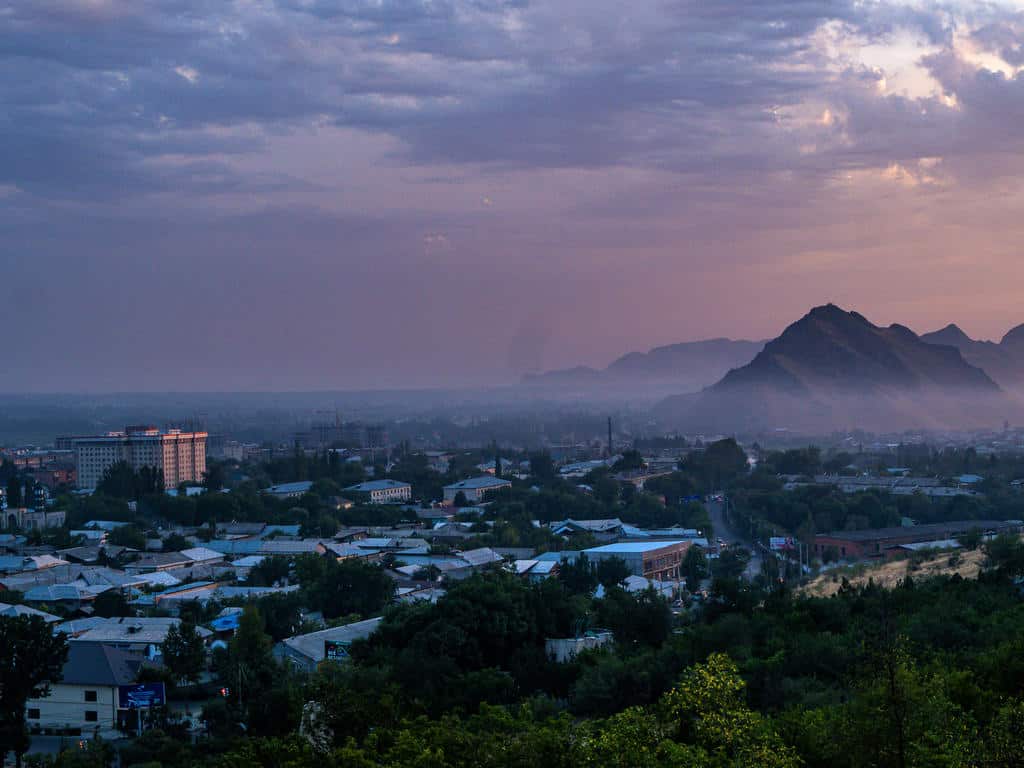
You can then choose to spend a day in Osh or travel directly further to Sary Mogul Village (5 hours by mashrutka), which you could consider as a base for your stay in the Pamir-Alay Mountains.


7.3 How to get from Arslanbob to Bishkek
To travel to Kyrgyzstan’s capital city Bishkek from Arslanbob, you’ll first need to travel to Jalal-Abad by taking a mashrutka from Arslanbob Village to Bazar Korgon (1 hour, 60 som) and from Bazar Korgon to Jalal-Abad Bus Station (45 minutes, 60 som).
You’ll find shared taxis just outside the bus station that will take you from Jalal-Abad to Bishkek. The taxi leaves when full. The journey to Bishkek takes around 9-10 hours and costs 800 som per person.
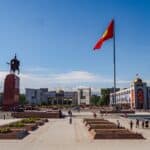
- If you want to travel to another destination in Kyrgyzstan from Arslanbob by public transport, the best thing is to first travel to Jalal-Abad City where you’ll find mashrutka’s and shared taxis to other towns and regions in the country.
I hope this post will help you organize your visit to Arslanbob. I’m wishing you a great trip and if you have any questions concerning traveling to Arslanbob (or to Kyrgyzstan), email me or ask in the comments below!
Disclaimer: This post has been created in the framework of the project «Visit Jalal-Abad» of Youth of Osh and Destination Osh within the frame of the Integrated Rural Development Programme implemented by Deutsche Gesellschaft für Internationale Zusammenarbeit (GIZ) GmbH with co-financing by the European Union and the German Federal Ministry for Economic Cooperation and Development (BMZ). All thoughts and opinions are, as always, my own.
RELATED Posts

Kyrgyzstan Itinerary: The Ultimate 7, 10, 14 & 21-Day Travel Guide
Why Visit Kyrgyzstan: 12 Reasons why I fell in love with this special country in Central Asia
The best things to do around Issyk Kul Lake in Kyrgyzstan: Highlights, Hiking & one-week itinerary

The Complete guide to the World Nomad Games 2026 in Kyrgyzstan

Naryn Travel Guide: 12 Best Hikes & top things to do in Naryn Kyrgyzstan
I would like to thank you for this valuable information and the clear effort in writing down the useful details. I wish you progress and prosperity.
Thank you so much Suzy, this really means a lot to me!