
This article covers all the common Morocco scams you might come across and tips on how you can avoid them.
Morocco is a gorgeous country where most people are generous and always ready to help you. It’s also a very safe destination. I lived there for more than a year and it was a fantastic experience.
Whether you are planning to go to the Sahara Desert, spend time in Marrakech, visit Chefchaouen, climb to the summit of Toubkal or relax on the beautiful beaches of Essaouira, traveling to Morocco is an experience not to be missed.
It’s a country that has excellent food, beautiful landscapes, and very friendly people.

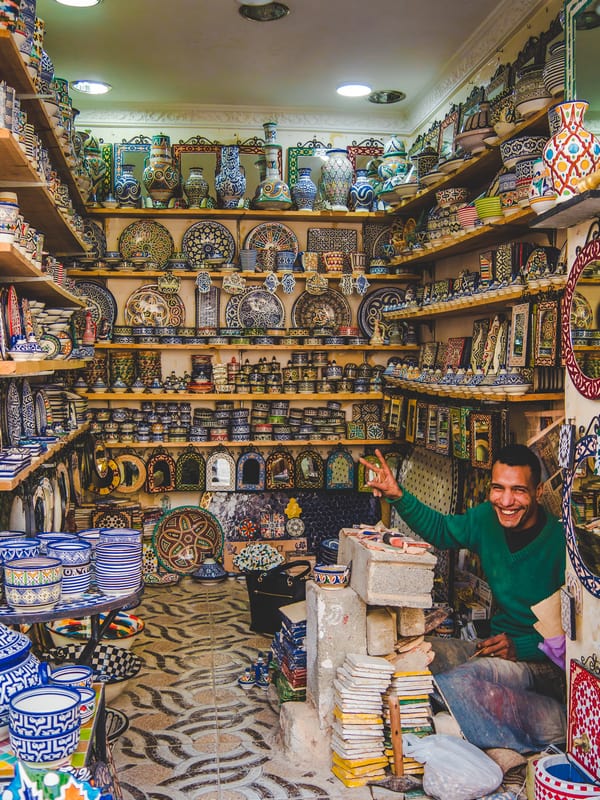
Most Moroccans are honest and very helpful to travelers. However, the country is a very popular destination and just like every other touristic destination, scamming unwary travelers is quite a common thing.
You will find warm and friendly people all around the country but if you’re not careful, you could easily fall for a scam or a tourist trap.

Most Moroccans are very hospitable and helpful people!
The sad part is that most victims don’t realize what happened until someone points out the ridiculous price they ended up paying for a product. It’s a sad experience to feel cheated and it can change the happy mood of a trip pretty quickly.
In this article, I’ll tell you about the most common scams in Morocco and give you tips and pointers on how to avoid them.
Tip: See my Morocco Travel Page for a complete overview of all my travel guides and blog posts about Morocco!
Disclaimer: This posts might contain affiliate links, meaning that if you make a purchase through these links, I may earn an affiliate commission. Thank you for helping to support this website!
Morocco Travel Planner
Planning a (road) trip in Morocco? These are the tools I personally use to make it smooth and flexible:
✈️ Search for flights to Morocco: Compare routes and prices
🚗 Car rental: Compare prices and find reliable companies
📍 Navigation: Download offline maps on Google Maps or Maps.me
📶 Stay connected: Get an eSIM for easy mobile access. Journal of Nomads readers get 15% off with code CYNTHIA
🛏️ Accommodation: Find riads, boutique hotels and desert camps
🛡️ Travel insurance: I use either HeyMondo or SafetyWing, depending on the length of my trips and insurance needs
🎟️ Book tours & experiences → Check day trips, desert tours and local experiences
12 Common Morocco scams
1. Nice guy showing the way
This scam can be encountered everywhere in Morocco and comes from the very low wages Moroccans are paid (the daily wage in Morocco is about 10 USD). This dishonest trick is particularly rampant in big cities.
It consists of offering unsolicited help such as pointing out the way to a hotel or guiding you to a restaurant. Once you arrive at the location the scammer will ask you for an overinflated tip in exchange for his service.
For example, while you’re walking with your backpack in the streets of the old medina of Fez or Marrakech, someone approaches you and suggests guiding you to your hostel.
Once you arrive there, he asks for 30 or 50 MAD for the five minutes it took to help you and will not leave until you give him a tip.
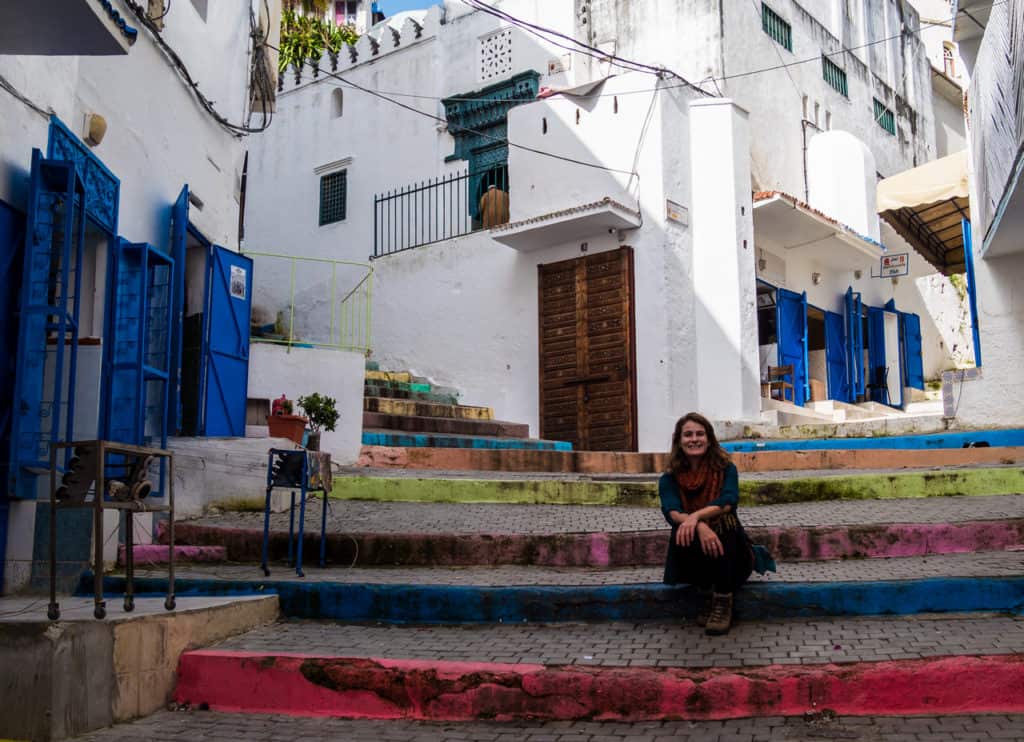
While walking in the old Medina of Tangier, I encountered such scammers trying to bring us to restaurants or shops on a daily basis.
It was really common but after months of backpacking around the country, we were used to it and knew what would happen if we followed these people.

The Old Medina of Tangier
How do you avoid this scam
Unfortunately, it’s not very likely that the police is going to help you if you find yourself harassed by someone that brought you to your hostel.
Be very wary of exaggeratedly friendly strangers who approach you out of nowhere and offer their help. Only ask for help if you absolutely need it, and if so only ask people inside their shops or traffic and police officers.
If there are young guys around just ask for directions but always remember to insist that you don’t need them to guide you.
Quick tip: Learning some words in Moroccan Arabic will help you avoid this trap.

2. Over-inflated price for a camel or horse ride
This scam is more common in places like Merzouga, Marrakech or in coastal towns where camel tours are very popular.
People there will offer you a ride on their animal and either bring you farther than agreed and then overcharge you or simply charge you an inflated price from the very beginning.

Another variant of the scam is when the camel owner brings you very far from your starting point and demands double the payment just in order to return you to the village you started from.
This can be a very stressful and scary experience but there are ways to ride camels in Morocco without putting yourself in such a situation.
How to avoid this scam
If camel riders ever try to strand you in the middle of nowhere, threaten them to call the authorities. Mentioning the police will make them change your attitude towards you immediately.
The best way to avoid this classic con is to refuse to ride a horse or camel unless it’s from a trustworthy company. You can find these companies by booking your camel or horse tour online beforehand.
You can find some great and affordable tours on Get Your Guide:
Click here for more location-specific camel and horse tours.

3. Fake items sold at the market (Argan oil, carpets, saffron)
Popular items sold at the markets, such as Argan oil, pottery, carpets, saffron, etc. will usually be fake and overpriced. For example, sellers might claim that a carpet is over 100 years old or that it came from a Berber tribe in the mountains and then ask a ridiculous price for it.
They might even insist that you can make a very high profit by reselling it in your country and then they’ll lower its price just for you.
If you pay the asked amount of money, you’ll be scammed at a hugely inflated price and it’s also very unlikely that you’ll be able to resell the carpet for a higher price back home.

Argan oil is often diluted with other more common types of oils but its price will remain the same.
If you want to buy Argan oil, it’s better to get the oil in the region surrounding Essaouira or Agadir. This is where the oil is locally produced so the chances that you’ll buy fake Argan oil there are very small.
However, watch out in cities like Marrakech and Fez.
Saffron is a very expensive spice that is unfortunately commonly faked and sold at a super high price in Morocco. It’s one of the most widely faked spices on the market and it’s quite hard to distinguish the real thing from the fake copies.

How do you avoid this scam
What I would recommend is to first check with your hotel or hostel staff how much certain items should cost and if you can trust the quality of these souvenirs.
If you have local friends that you trust, you could always go to the market with them to buy gifts. Not only can they recommend items and tell you which ones to avoid, but they can also help you haggle the prices.
When it comes to saffron, a good way to distinguish the real from the fake is to smell it. Never buy this spice in a sealed container. Real saffron has a very intense and strong distinctive odor.
If you put your nose in a jar that is supposed to contain saffron and you don’t smell anything, it’s likely you’re being sold safflower. It’s a very similar flower but it doesn’t have the same flavor.

4. Fake tour guides
This scam is quite similar to the one where a ”friendly Moroccan” shows you the way to your hostel.
The scammer pretends to be an official guide who is being paid by the tourism board of the city and offers to bring you on a tour.
Very often he also has a fake ID resembling the ones carried by the official guides. This fake guide, however, is not paid by the city council nor is he officially working for them.
Although at first he may not ask for money, he’ll bring you to shops where he will receive a commission if you buy something. He might also try to bring you to the restaurant of one of his friends.
We encountered one of these fake tour guides while we were visiting the city of Tinerhir. He invited us to visit the city with him and even after we politely refused, he kept insisting that he would bring us to the best carpet shop in town (probably his brother’s or uncle’s shop).
In the following days, every time we met him in the streets, he would insist on bringing us there and started to become even slightly aggressive.
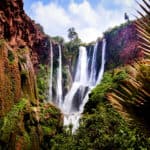
Another version of this scam is when a self-proclaimed tour guide claims that the only way you can visit a destination is by using his services. We had that happening to us when we visited the Ouzoud waterfalls near Marrakech.
A guide was waiting for our group far away from the official entrance of the site.
He went on saying that it was impossible to visit the waterfalls independently and that each member of the group would have to pay him 3 euros at the end of the tour for his services. The driver of our van was on the scam with him as he had dropped us off far from the entrance.
Because I spent a lot of time in Morocco and I learned Moroccan Arabic, I was well aware of what was going on. Cynthia and I managed to leave the group and we explored the area around the falls by ourselves.

How do you avoid this scam
Avoid any tour operators or guides that do not have an official website or reviews that you can look up online. Always ask them if they have an office that you can visit and what exactly will be covered in the price of the tour.
I would suggest booking a tour with Get Your Guide. They offer various day trips or multi-day tours from Marrakesh and other Moroccan cities and you can also check the customer reviews for each tour.

Ait Ben Haddou – only a day trip away from Marrakech!
5. Pickpockets in Morocco
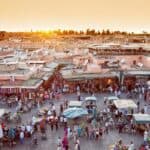
Something you should definitely be aware of in the more touristy cities of Morocco is pickpocketing. This is particularly likely to happen in Jema El-Fna in Marrakech or in the small busy streets of Fez.
Unwary tourists visiting these cities can get their most precious valuables stolen (often wallets or passports) while they’re walking around in the crowds.
A skilled pickpocket in Morocco can take off with just as much money or valuables as an armed robber would anywhere else. And there isn’t much danger of confrontation or risk of being identified.
By the time the poor victim realizes what’s happened, the pickpocket will be far away.
Pickpockets usually work in gangs and will try to look around to spot anyone carrying expensive valuables or someone neglecting to keep an eye on his phone or bag.

Be careful in crowded places!
How to avoid pickpockets in Morocco
The best solution to avoid this scam is to stay very alert and aware of your belongings at all times.
You should leave all your important and valuable items at the hotel and walk around only with what is absolutely necessary.
Keep your wallet in your front pocket or carry a money belt. Another great option is to travel with a slash-resistant and lockable anti-theft bag.
Keep a low profile and avoid walking around with very expensive jewelry. I would also recommend making a copy of your passport and only carrying this copy with you around if you need to show some ID.
Just in case, get good travel insurance that covers theft.

6. Henna women of Jemna El-Fna
Imagine this scenario: you’re standing on the main square of Marrakech when all of a sudden you feel something warm on your hand.
You turn around to see an overweight Moroccan lady who spilled some ink with her ink syringe on your hand. She kindly offers to fix her mistake by giving you a full henna hand tattoo.
Now here’s the catch; as soon as the tattoo is finished (and there is no guarantee it’s going to be a nice one) she will ask you for one hundred to two hundred Dirham for the few minutes it took her to draw the art piece on your hand.
She won’t care whether you like the end result or not. It’s also likely she will harass and follow you if you refuse to pay.
Note that even if you were the one who approached one of these ladies for a Henna tattoo, any price that was initially agreed upon is not likely to be honored once the tattoo is done.
Another reason to avoid Henna tattoos in the streets of Morocco is that most of these scammers will use something known as black Henna instead of the real deal.
It’s an ink that stains your skin black instead of brown and it’s really dangerous because it contains paraphenylenediamine (PPD), a hair dye. When it’s applied to your skin, it may look like a real tattoo, but allergic reactions to PPD can cause blisters, open sores, and scarring.
It’s easy to tell whether the Moroccan henna ladies are using black henna or the traditional one. Traditional henna paste is usually dark green, khaki, or greenish-brown color. It’s never black. If a henna artist is applying a thick black paste on your hand, stop her immediately.
How can you avoid this scam
If a woman spills some ink on your hand, you should immediately wipe it off and walk away.
Even if she is super insistent on fixing her mistake by giving you a complete hand tattoo, do not accept her offer. For one, it will be overpriced and you don’t know if she will be using the dangerous black henna ink.
The best way to get a safe, fairly priced henna tattoo is to ask your hostel staff what could be the most reputable place to go to.
7. Pictures with live animals
In the large squares of very touristic cities such as in Jemma El-Fna in Marrakech, you might encounter people walking around with animals such as snakes or monkeys.
When you walk by, these scammers place the animal on you and invite you to take a picture.
They may even snatch your camera out of your hand to take a picture of you with the animal. They then try to convince you into paying them a super large sum of money for the picture you took with their critters.
If you give less than what they’re expecting (which is usually something around 100 MAD or 10 euros), they’ll throw the money back at you and start shouting while asking you to pay more.
How do you avoid this scam
The first way to not fall into this trap is to avoid people insisting on you taking a picture with their animals. If you do like a photo, however, pay them only what you consider to be a fair price and then walk away.

8. Restaurants with hidden prices or two separate menus
Some Moroccan restaurants use very dodgy techniques to cheat unwary travelers. For example, the waiters may claim that bread and water are complimentary with the meal but then charge for them afterward. They may also charge you for food you have never ordered.
Another more sinister trick is to have two separate menus. They’ll show you one before you order on which the food is cheaper.
When it will be time to pay, you’ll notice that your bill is much more expensive than what you expected.
If you ask for an explanation they will bring a different menu with much higher prices. There is no point in arguing with them because you’ll never see the first menu with cheaper prices again.
This happened to me during my first week in Marrakech. I ordered a lot of food in a restaurant after seeing how good the prices on the menu were, only to be conned when they brought a different menu at the end of the meal.
The waiters were all standing around me like a mob, insisting that I was wrong about the prices while they were holding a completely different menu with different prices. In the end, I just got angry and walked away without paying anything.

How do you avoid this scam
If you ever are the victim of this scam, simply pay what you assume the initial price was and walk away.
The restaurants operating this type of racket are known by the cops, so they will never file a report against you if you just walk away without paying their ”tourist” prices.

9. Tannery scams
Morocco is famous for its leather tanneries. The ones located in Fez and Marrakech are particularly popular among tourists. The problem is that they became a center for a nefarious ”fake guide” scheme.
When walking in the vicinity of these tanneries, you are approached by overly friendly ”guides”.
They assure you that if you visit the tanneries by walking through the main entrance, you’ll have to pay a super high price. They then guide you through a different entrance where they assure you that you won’t have to pay for a ticket.
The problem is that once you are in the tanneries, they start asking for money, and usually much more than what you would have paid if you had bought the ticket.
Some travelers reported being aggressively pressured into paying for that overly charged ”exclusive tour” of the tanneries.

How can you avoid this scam
If you want a tour of the tanneries, it’s better to go through the main entrance. If you want to get closer to the workers, agree on a price beforehand and insist that you will not pay more.
It’s always better to ask your hotel or hostel staff for a professional tour guide or book a tour via a trustworthy tour operator.

10. Fake Moroccan fossils and minerals
Morocco is a famous destination for fossils but most of those sold in the shops are fake.
It’s common to see dinosaur jaws and trilobites being sold at the souk of the old medinas but none of them are actually millions of years old. They’re usually fake concrete sculptures designed to imitate the real thing.
Morocco is also a big hub for fake or enhanced geodes and other quartz crystals. The sellers might have real geodes with quartz crystals but will then add purple dye to the inside of it to simulate the appearance of amethysts.
How do you avoid this scam
The odds of you finding actual fossils on the Moroccan markets are getting smaller day by day. Here are a few tips to distinguish fake fossils from real ones:
- If you see many identical looking fossils side by side on a stand, they will usually be mass-produced concrete castings. You can tell they’re fake because they all look the same.
- Rare fossils will never be cheap. If it’s really a fossil it should cost a fortune.
- Dinosaur teeth are almost never found attached to a jaw so finding a jaw with teeth attached to it in the souk is a clear indicator that it’s a fake.
- Perfect looking fossils are likely to be fake copies. Most of the actual fossils are cracked and have a lot of missing parts.
There is no problem in buying a fake fossil if you think it would be a nice addition to your living room, just remember that it might not be worth the price you’ll pay for it.
11. Kif and hashish drug Morocco scams
This is probably the most sinister of all the Morocco scams in this article. The way it works is quite simple and that makes this racket even scarier.
A hashish dealer will sell you a big amount of the drug and even smoke a part of it with you. Once you’re high as a kite, a cop (who works together with the dealer) will show up and demand that you pay a huge bribe to cover up the crime. You’ll end up paying twice and if you don’t, you could end up in a Moroccan jail.
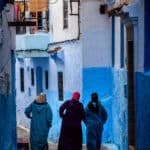
While we were traveling in Chefchaouen, we got many times approached by hashish dealers. We simply brushed them off and continued walking, well aware that there is a whole illegal scheme at work in that part of Morocco.
We’re not saying that buying hashish in Chefchaouen will end up in a scam as it’s a place where many tourists typically buy it without any problems but we wouldn’t risk it.
How do you avoid this scam
Never buy any drugs in Morocco. If caught you will face serious jail time and there will be no way around it.
12. Fake beggars
In Morocco, some people will pretend to be poor and afflicted by different ailments such as blindness or being unable to walk. They will then stand on the side of the road and put on a show for a few pennies.
In some cities, there is a racket in place that enables begging ladies to rent a baby for a day. By sitting with ”their” baby they look miserable and inspire pity even more. This is gross and shouldn’t be encouraged.
How do you avoid this scam
Unfortunately, this scam is encountered all over the world.
I would recommend ignoring beggars, otherwise, you risk attracting more of them and this could potentially escalate into a dangerous situation.

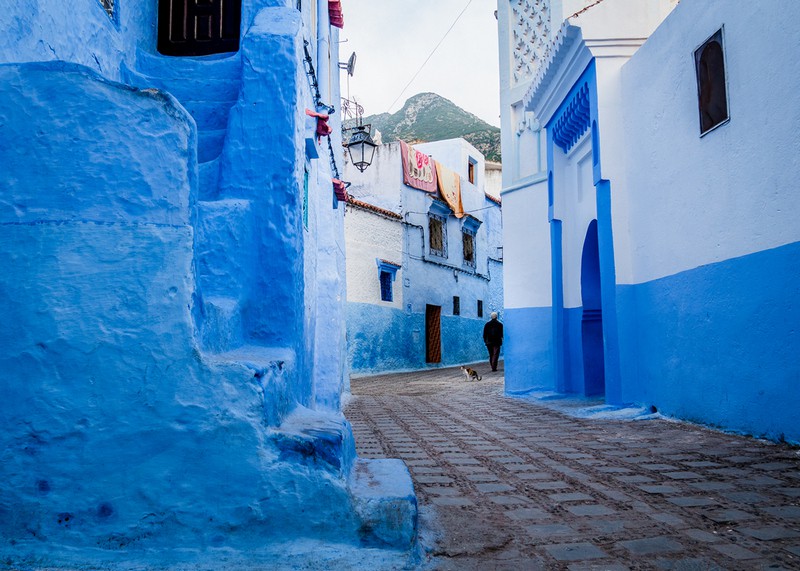
This cat might also beg – for cuddles and food
Bonus Morocco scams: Car rental scams in Morocco
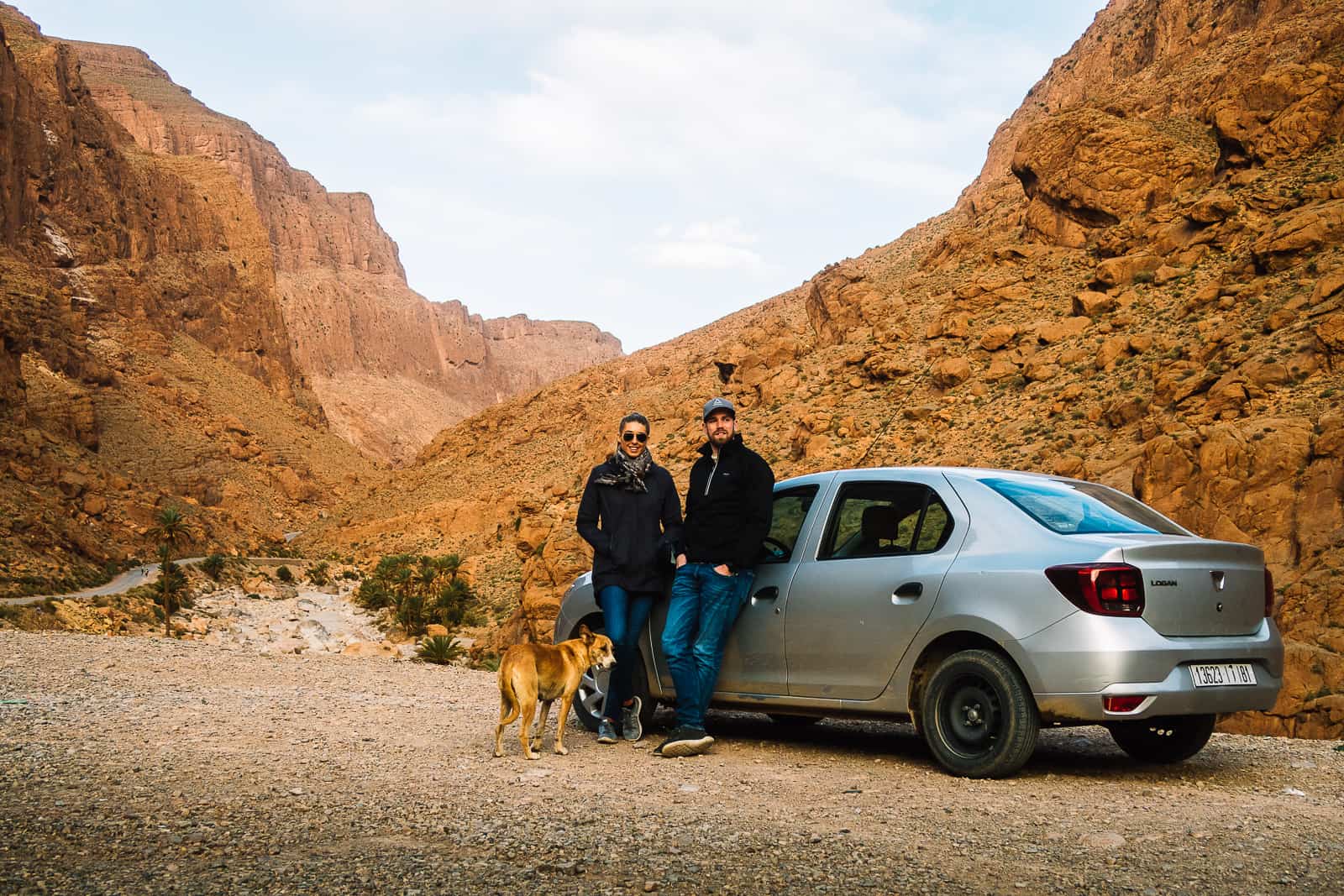
Morocco is a country where it’s very easy to rent a car and drive around the whole country. The roads are in very good condition, the landscapes are pristine and gas is cheap.
Renting a vehicle in Morocco is a great option if you want to see as much of the country as you can in a short time and have the biggest amount of freedom while doing so.
Here are a few car rental scams that many tourists fall for in Morocco:
Getting charged for damage that was already on the car
Although this is not very likely to happen with bigger companies, it’s something that you could fall for if you rent through a smaller agency.
It’s very important to inspect the car thoroughly and take note of every crack or damage that was already on the car before you take off with it.
Record a video with your smartphone of the car condition before you leave. This is a backup if the agency tries to charge you for damage that was already there.
Pay attention to the interior as well. There are many accounts online of foreigners who were charged for cigarette burns that were already inside the car.
Getting charged for a hidden cleaning fee
Another common scam when it comes to rental cars in Morocco is to be charged a cleaning fee when the car is returned. You only have to pay a cleaning fee if it was already stated on your initial contract.
Getting the car with a gas tank that is almost empty
Normally car rental agencies in Morocco have a policy of leaving you with a car that has a quarter of the tank already filled up with gas.
However, some dubious car rental agencies have scammed people by giving them a car with a gas tank that was almost empty and then sending them to a gas station owned by family members or friends to make an even bigger profit.

Emergency phone numbers in Morocco
If you ever run into a dodgy situation in Morocco and need to call the police, you can do so by typing 190 or 112 in big cities.
If you’re outside the city, the number to call is 177. This will contact the Royal Gendarmerie.
A few other useful numbers for when you travel around Morocco are 150 to call an ambulance and 15 for the fire brigade.

I hope this list of common scams in Morocco helps you have a better and safer trip around the country. If you think any scam is missing or should be added to this list, contact us or let us and other readers know in the comments below.
Have you ever been a victim of a scam while traveling around the world? Tell us your story in the comments below!
Related posts
Best eSIM for Morocco? My Honest Experience Using Simify During a Morocco Road Trip

Renting a Car in Morocco: Complete Guide with Driving Tips (2026)

Morocco Itinerary 2026: 3 Best Routes for a Morocco trip Through Imperial Cities, Atlas Mountains & Sahara
19 Very Useful Things to Know for Backpacking in Morocco in 2026 – The Complete Travel Guide to Morocco
The 17 Best Places to visit in Morocco in pictures

The Honest Guide to Meknes Morocco and Volubilis – 9 best things to do and what to skip
16 Top Things to do in Marrakech Morocco – The Complete Guide to Morocco’s Red City
Is Morocco expensive – Morocco Budget Guide for 2026

Thank you for the detailed blog
I was able to recover back my USDT taken from my wallet by some malicious threat actors. Got help with (asset resolute at g-Mail). Sorry for the format in which i wrote the email, the issue is that posting emails is not allowed on this comment section.
Is it safe to walk around with a camera in cities in Morrocco? Do muggings also happen?
Hi Thad, yes, it can happen in certain cities so I would recommend being careful.
I have read that you need to be aware of strangers on trains asking you if they can talk to you and practise their English and what hotel you are staying at. Their accomplice is waiting at the train station with a fake sign for your hotel.
Thank you for this warning Jenny!
Hi, i spent 5 months in morocco, travelling from north to south and to say that Moroccans are honest people isn’t so. The majority will try to scam you
Moroccan scams I encountered:
Taxi scam- As I arrived at the airport, a Taxi driver asked me if I needed a ride to my hotel. He told me it would cost 250 dirhams (close to 25 usd) to drive me 6 or so miles. I instinctively new it was a scam. The fair price is closer to 100 dirhams
One that someone mentioned above-Someone will strike a conversation and tell you about an amazing market in the area. Then he will take you to a shop. Then you will be encouraged to go shop to shop by the keepers. The man will show his face here and there to make sure you are still there and still buying. In my opinion, this a scam that is pretty mild. No one is forcing you and you just need to use willpower not to spend more than you want. In this case, I was actually glad to be shown these shops. I had an abidance of family members to get gifts and that was the main reason I was in the area.
Nice guy showing the way- This happened multiple times. One guy pretended to be so friendly and asked me to sit for tea. He was a little older and I wanted to give the benefit of the doubt, despite my suspicions. We sat down for tea and of course he asked for money. I gave him 60 dirhams or close to 6 dollars. And a not so nice look. I often have an issue saying no to people, and 6 dollars is really nothing
All in all, I didn’t experience the worst types of scams. For context, I’m a 6’4″ male and Muslim. Not sure if true or not, but multiple Moroccans said I could blend in by dressing like a Bedouin. I’m African American, but most people can’t really place exactly where I’m from. Many people were helpful, honest, and made my trip special. I will travel back soon and be mindful of some of these things.
Hello Usman, thanks so much for sharing your experiences with us so people know what to look out for. I’m hapy to hear you hade in general a good experience in Morocco!
Another one is the local man who will charm you through the winding streets of the Medinas to a ‘special’ shop, which I have heard twice referred to as a ‘cooperative’, which may or may not be true, and they will offer tea and sit you down to view the goods, making a big show of unfolding and laying out loads of fabrics, etc.
‘Made by Tuaregs, made by Berbers, made by hand, takes 25 days, we are come into the city only once a month (similar to count-down timers for online deals), made from sheep wool (many are), goat wool (whatever that is), cactus fibers (which is a real thing), etc., my prices are 3 times what you find elsewhere because these are REAL, + a whole lot of ‘we are good people, other shop owners are not-so-much’ type-deal.
The starting offer for my blanket, for instance, was €350 ! I found the (same) blanket in the regular markets at a starting offer of €15. I DID buy the special co-operative ‘Berber blanket’, and this is how I know these things.
My consolations, however, are numerous. For starters, the blanket itself is actually quite beautiful and I will keep it forever. Plus it has a story to tell behind it. And I not only enjoyed my experience in the shop, but the tea they gave me was excellent and I loved meeting the people in the shop and exploring the Medina completely away from the crowds 🙂 I also think €45 goes a long way to help people who can hardly get a visa to leave their own country..
I might be grasping at straws for this one, but aside from the other shop who offered me €15, I had trouble finding a blanket in the same style, seemingly making it more rare, and the pattern on the blanket I bought for €45 was much nicer and more regular than the €15 blankets I found, so I think whatever the difference in price would have been if I hadn’t been scammed is a relatively inexpensive lesson to have had to learn the hard way.
In conclusion, I really do love the blanket, which is patterned with beautiful tan blocks of color, and I genuinely enjoyed my trip through the un-touristed Medina in the company of my guide, the warmth of the people I met along the way, the hospitality at the shop, learning a bit of Arabic, flexing my bartering skills, and the takeaway from the experience as a whole. I felt like I was in a video game, following an NPC through some kind of tutorial, if the game was entitled ‘Welcome to Marrakech’
Pro tip: if you REALLY want something, just wait and see where else you can find it. There is nothing in these shops that is truly unique, and there are no prices on anything, so you might be wise to sleep on it.. not literally, though, like I ended up doing on my new blanket.
Also, in Tangier I was offered €28 for an ‘authentic’ nomad head scarf that can be found anywhere for less than €5.
I heard a hapless English man working a separate €28 offer down to €22… no rules here !
P.S. I have long, blonde-tipped surfer hair and blue eyes. I practically scream ‘money’
Thanks for sharing your story and the valuable tips!
Thank you for this information!!! Truly valuable!
Thank you!
A few others I encounter on a regular basis:
The meter of the taxi is ‘broken’ and they charge 50dh for a ride that is just worth less than 15dh. Now I just tell them I can call police and report you? Suddenly the meter works again!!
The ‘mistake’ by giving back too little change.. then when you notice and tell them., they say oh sorry! But it’s not a mistake it happens too often, so always check if you get the correct amount back!
And lastly I see this happening more and more, guys following you on their motorbike after you went to the ATM and they follow you till they find the right moment to grab your bag or phone out of your hand and driving fast away, with the risk that you get schlepped over the street because your bag is crossbody! This happened to me recently and 2 of my friends. My strap broke so I was luckily not dragged over the street. But my friend was not so lucky!! So keep an eye around you and walk on the sidewalks at all times!!
I would also like to add the historical and cultural scams, you will get things sold to you under the name of ” Moroccan Cultural thing” such as scarfs, and attires, however it’s all a made in china or india. You will also hear a lot of fake stories and cultural appropriation of many cultural things such as music ( Especially Rai Music and Andalousi of Tlemcen ) , Attires ( such as The Ottoman Caftans which they got from Algeria, Architecture ( Zayannid and Zirids Dynasties architecture) , or even famous personalities or tribes of boarding countries such as Tuareg Tribe, where they will show you white moroccans claiming to be Tuareg of the Westren Sahara while Tuareg exist only in Mali, Niger, Algeria, Lybia, and Chad , so try to do a research of every info you hear there, and no, not from Wikipedia beacuse they’ve been playing in Wikipedia as if it was an exam sheet of paper.
Thank you for letting us know Kathie!
I am unfortunate to say that I encountered if not all, most of these scams mentioned. I would definitely add the questions everyone seems to ask you “Where are you from?”, or “First time in Marrakesh?”. This is how they decide the approach they will have with you.
seems like full of scams lol
You’ve got to stay aware 😉
I would add a “fake love” for solo woman travelers to this list… I am going to write an article about this experience.
You’re absolutely right, scammers seducing foreign women to get money is an unfortunate but very real experience. Have you been the victim of such a scam before?
I appreciate your feedback and having travelled Morocco through from Marrakesh , Casablanca and Agadir I can safely tell you the best way to buy hash is through local connections , and that’s through your tour guides and hotel people because they won’t put you in prison .
The other comments are all wise also , I would say that having gone to ouzoud waterfalls and had the tour of the waterfall and mountain route I can say that Samir our guide charged us £3 or 30 dirhams to give us an in depth tour of how the Berbers live and what languages originate now in Morocco also how the Berbers fought the war to keep their land against colloniniasm.
I would simply go through local connections and also in Agadir and Marrakesh the further you go from Agadirs beachfront and Jemma Al fna square you will find much better prices. In the souls watch your handbags and pockets and anywhere in general you go in the world you trust no one 100%
A girl who pretended to LOVE me at first sight, stole 500 US Dollars in the first meeting and now I cannot do anything about it. Please be careful dear loved ones!
Sorry to hear you about this Ahmad!
Funny list haha! I love Morocco and some of these things I’ve found. I would add one: when a young guy approaches you and says “hey!! I’m the cooker of your hotel, don’t you remember me??, It’s my free day, wanna go tour”? So much laughs when I remember.
Greetings from Argentina
Hahaha, yeah that sounds like a scam that would work on a lot of people, unfortunately. Well even if there are a lot of scams in Morocco, it still remains one of my favorite countries. I hope you had a great time there!
Well, been to Morocco several times and except for Henna women I didn’t encounter anything else from this list. Argan Oil is oftentimes diluted with olives according to my experience and its really easy to notice, if you smell it. It really reeks of olive oil.
Hi Nina,
I’m very happy to hear that, aside from the Henna women, you didn’t encounter any scams in Morocco!
Thanks for the tip on how to easily make out the difference between real Argan oil and the diluted one! That will help people!