
Here’s the complete packing list for trekking and traveling in Central Asia, including info on when to visit Central Asia, essential travel documents and visas for Central Asia, what to wear in Central Asia, what to pack for trekking and backpacking in Central Asia and much much more!
For the past 5 years, I’ve been traveling in Central Asia extensively. From crossing the Caspian Sea, driving in the steppes of Kazakhstan and visiting the Silk Road cities in Uzbekistan to hiking the rugged and wild mountains of Kyrgyzstan and Tajikistan. The only country in Central Asia that I haven’t visited yet is Turkmenistan.
During that time, I’ve also done a lot of horse riding, (multi-day) trekkings and day hikes in the 4 countries and it’s been an absolutely incredible experience!
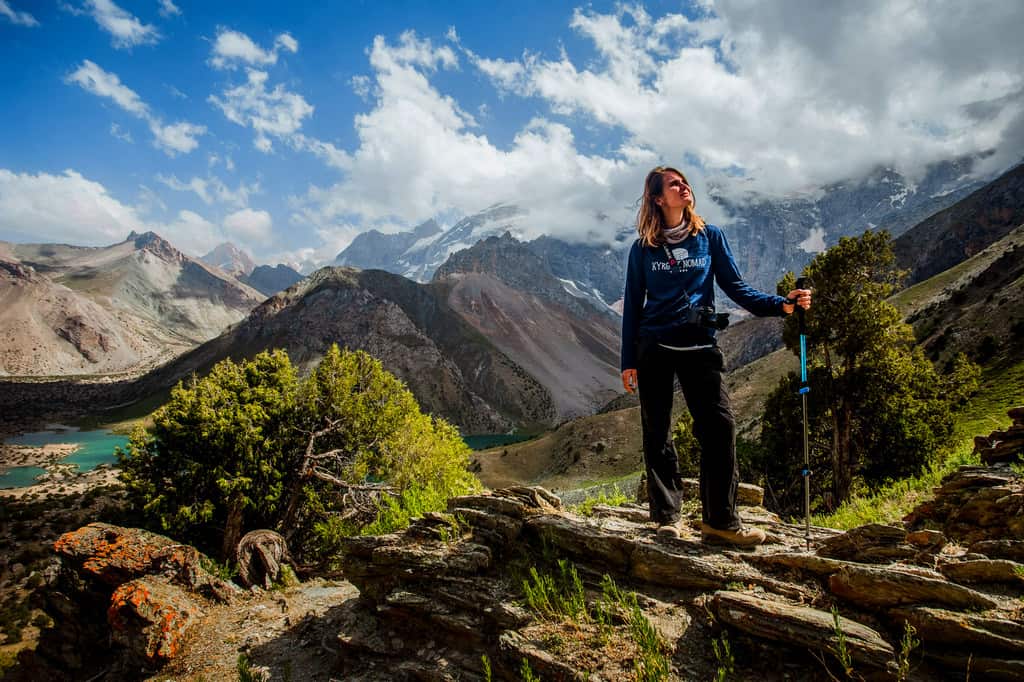
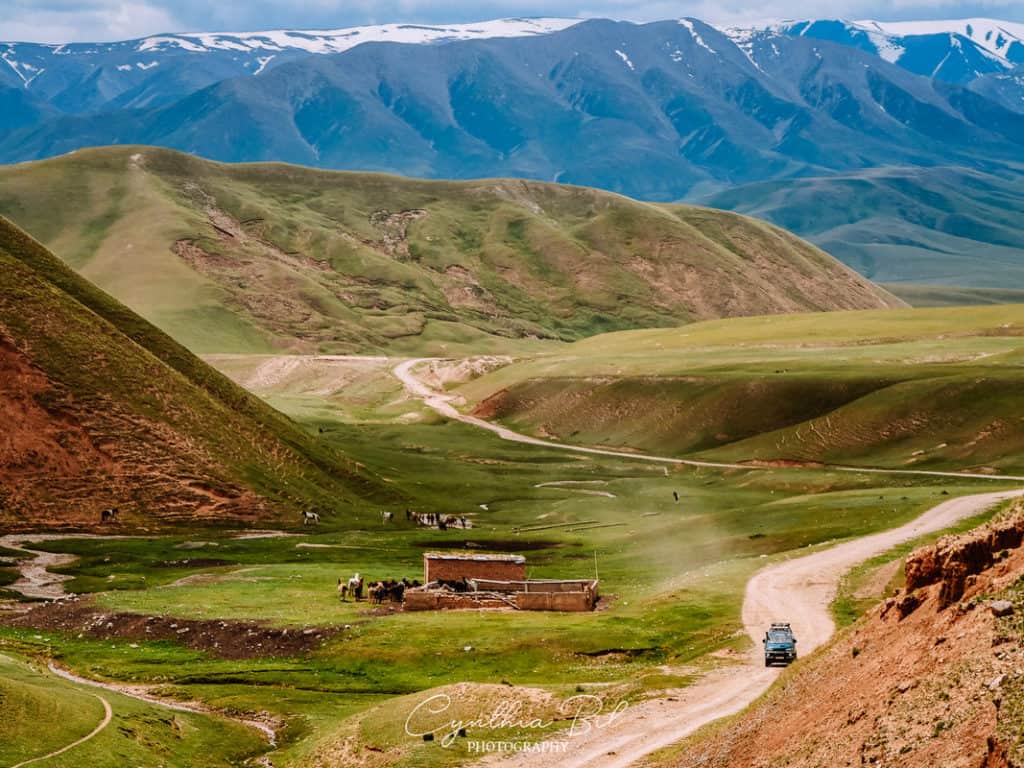
I often felt like I was the only person in the world while traveling and hiking through those remote and majestic landscapes. During my time there, I realized how important it is to prepare yourself well before traveling in Central Asia as the region is geologically very diverse – from vast deserts and grassy steppes to lush valleys and rugged mountaints, often at +3000 meters high elevations.
You need to know when to travel to which countries and regions in Central Asia as many places are hard to visit and even inaccessible due to the weather. It’s also important to know what to wear in each country out of respect for the local culture and religion, especially when visiting rural villages.
Central Asia is also a fantastic trekking destination! With the Tian Shan, Alay, Pamir and Urul Mountains, Central Asia is home to some of the highest mountain ranges and some of the most beautiful hiking trails in the world. If you like going off-the-beaten-track, then Central Asia won’t disappoint!
You’ll often find yourself completely isolated when hiking the majestic and wild mountains so it’s crucial that you have the right trekking gear with you and that you pack wisely.

To make sure you’re prepared for any type of travel in Central Asia – whether it’s visiting its stunning Silk Road cities, backpacking through its small villages, going on adventurous road or horseback riding trips to see countless alpine lakes or hiking its many mountain trails – I created a list of everything you need to pack and keep in mind when traveling in Central Asia! Note: the only Central Asian country that I’m not covering in this guide is Turkmenistan.
Would you like to go on an unforgettable adventure in Central Asia? Have a look at my Adventure Tours in Tajikistan, Kazakhstan, Uzbekistan and Kyrgyzstan!

Disclaimer: This posts might contain affiliate links, meaning that if you make a purchase through these links, I may earn an affiliate commission. Thank you for helping to support this website!
1. Important things to know for traveling in Central Asia
Below I’ve written some very useful information on when, how and what to visit when planning a trip to Central Asia. This is also important to know what to pack for your trip.
Note: I’m only covering Kazakhstan, Kyrgyzstan, Uzbekistan and Tajikistan as I haven’t been to Turkmenistan yet (it’s a country where you can’t travel independently to, only by organized tour).
For detailed info about traveling in one of the 4 countries, I highly recommend you read my following comprehensive travel guides:
1.1 What is the best country to visit in Central Asia
Travelers often ask me what is the best and most beautiful country to visit in Central Asia. It really depends on what you like to see and do as each Central Asian country has its own beauty and special features.
If you’re an outdoor lover who mainly wants to explore nature and/or go trekking in remote mountains, I’d suggest Kyrgyzstan and Tajikistan. If you prefer city trips, stunning architecture, Silk Road heritage and easy travel, I’d recommend Uzbekistan. If you want to visit modern cities and unusual natural wonders, I’d propose Kazakhstan.

Here’s a brief overview of each Central Asian country with its most important features to make it easier for you to decide which destination will suit your travel needs and wishes most.
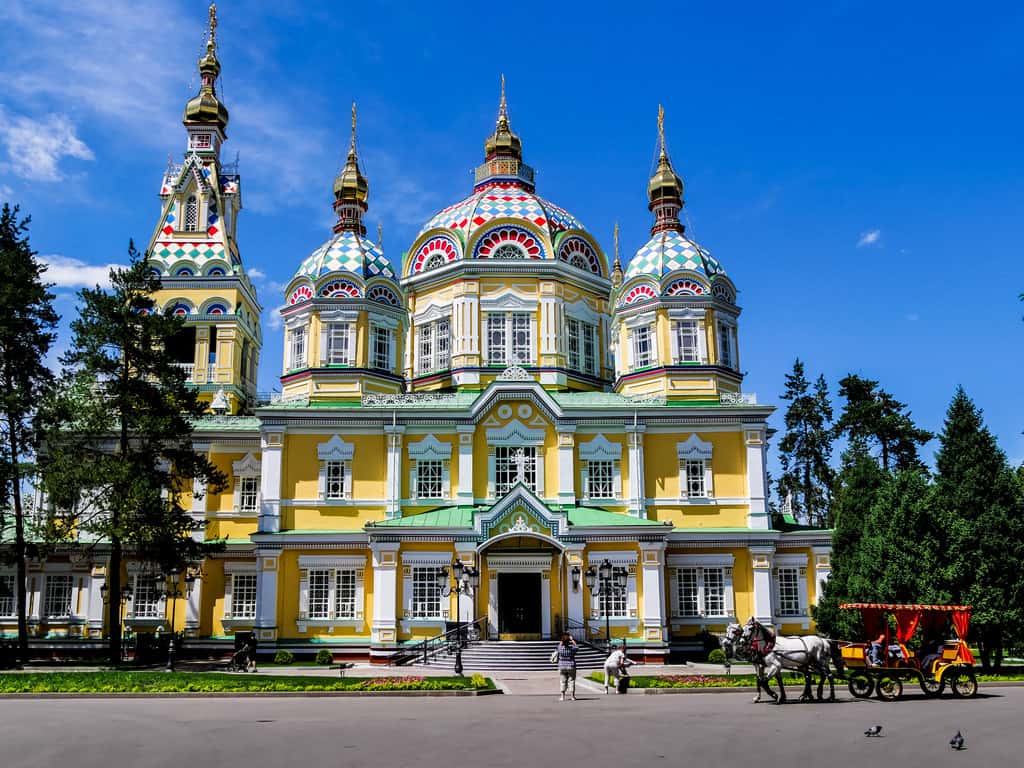
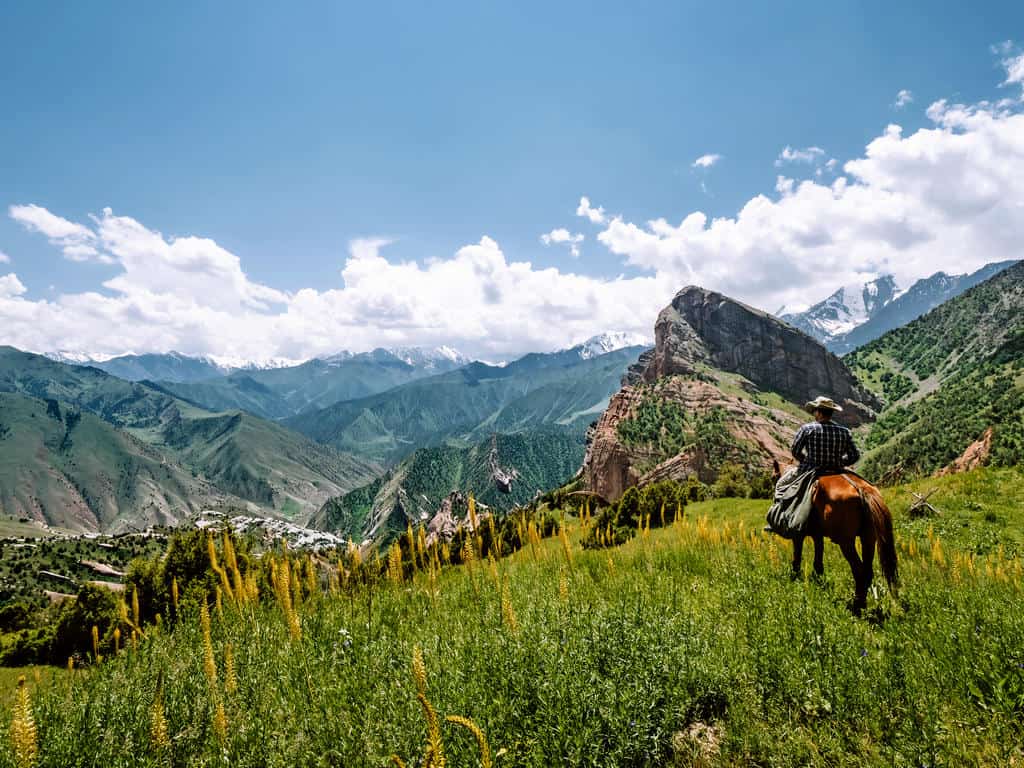
Kyrgyzystan travel is great for:
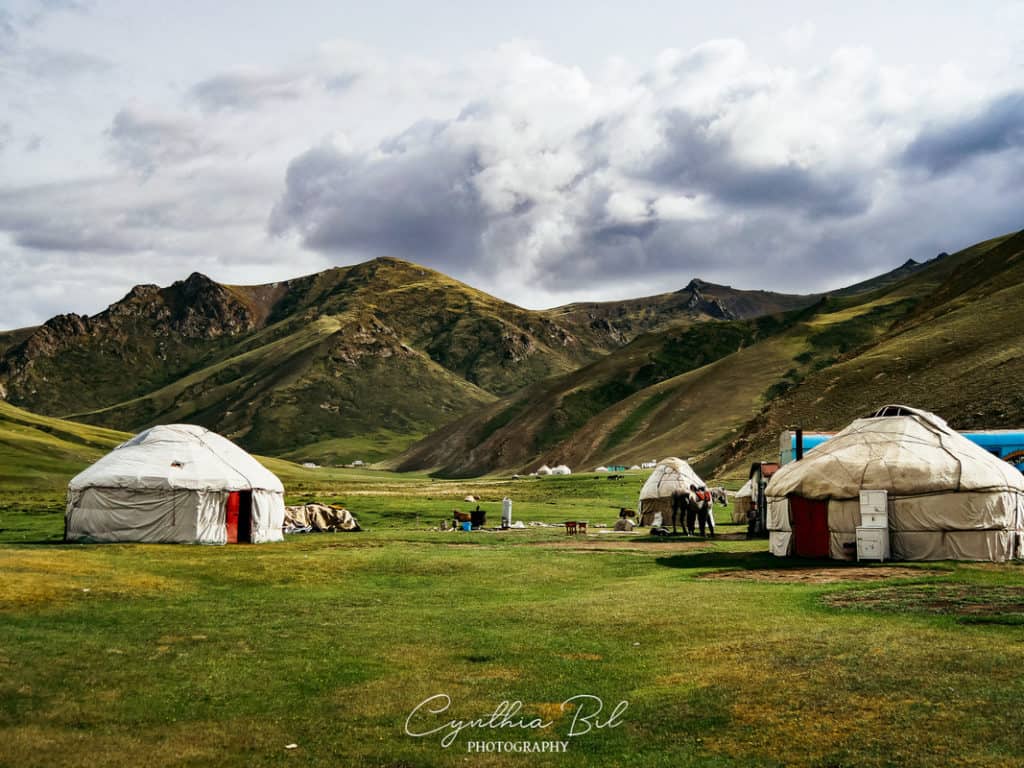
- nomadic culture and yurt stay
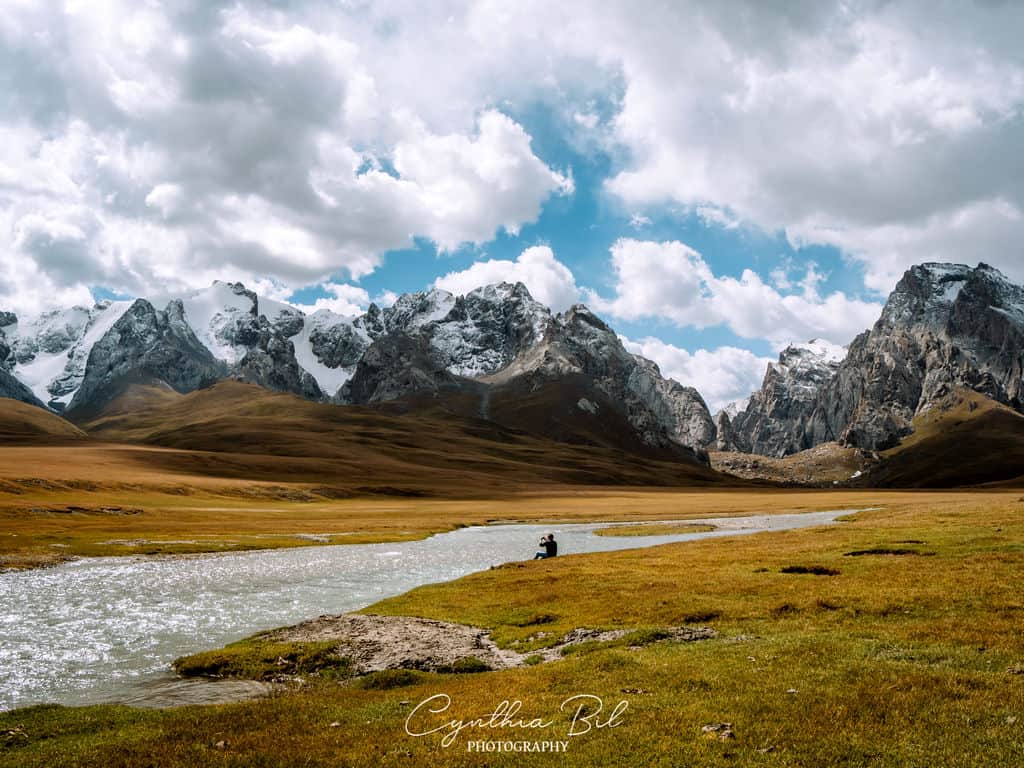
- wild nature: canyons, alpine lakes, lush valleys and snow-capped mountains
- hiking, trekking and horse riding in remote destinations, often at high-altitude (+3000 meters)
- 4×4 travel
- challenging to travel independently as most of its highlights can’t be reached by public transport
- guesthouses, homestays, tourist yurt camps and shepherd yurt stays
Uzbekistan travel is great for:
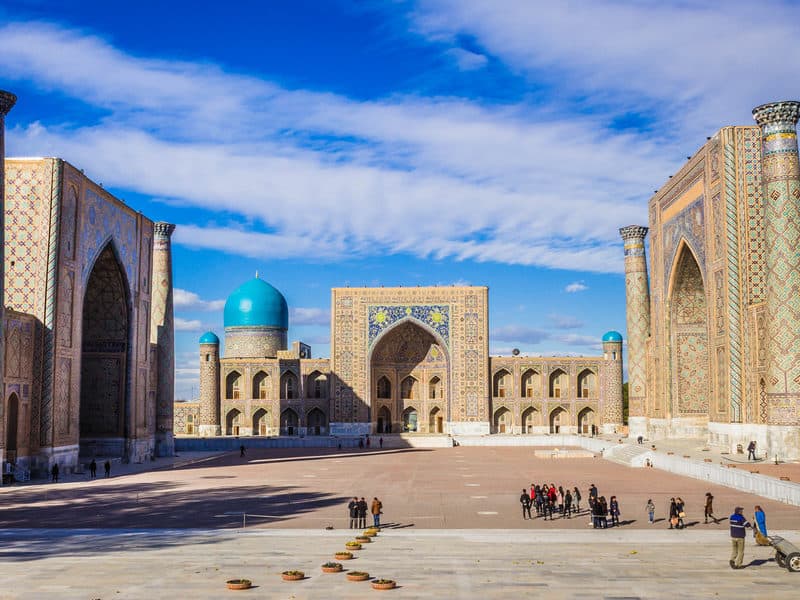
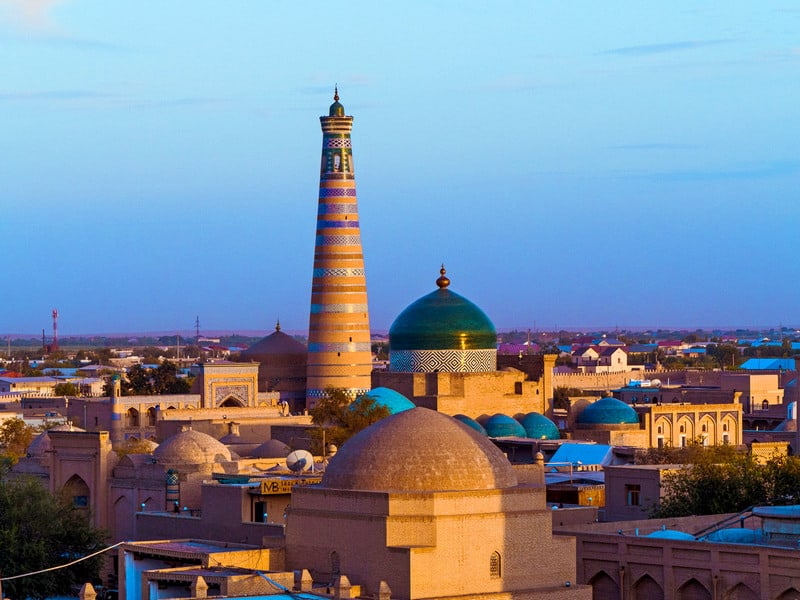
- Silk Road history, culture, and stunning architecture
- city trips
- semi-wild nature: deserts, steppes and mountains mainly below 3000 meters
- train travel
- easy to travel independently between the Silk Road cities
- boutique hotels, guesthouses, homestays and tourist yurt camps


Tajikistan travel is great for:
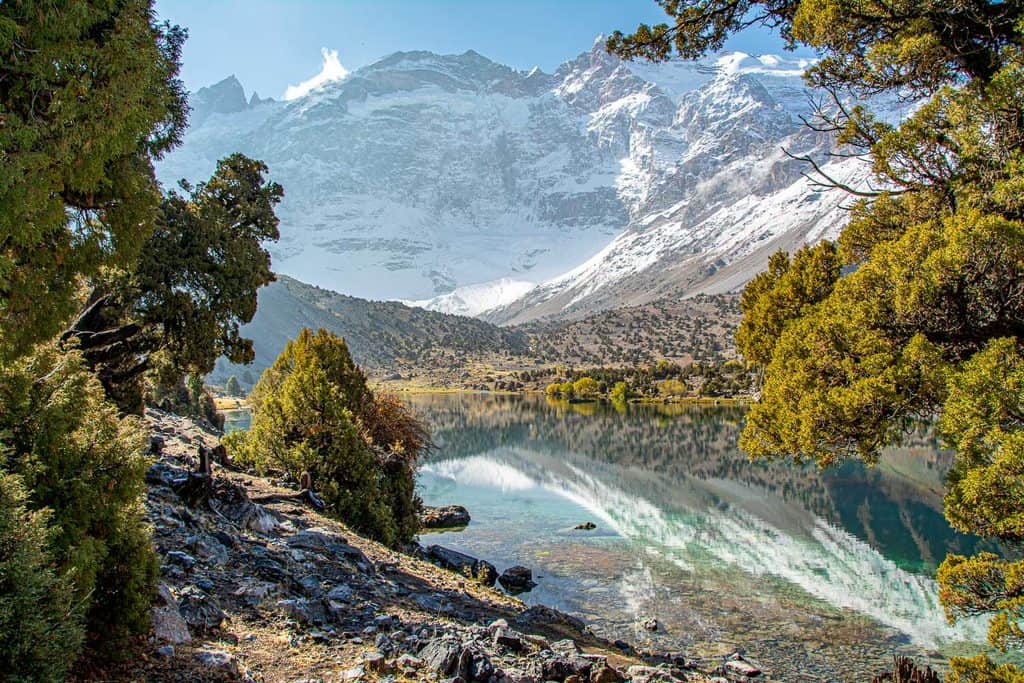
- Pamir Highway road trip and remote village-life
- wild nature: alpine lakes and rugged snow-capped mountains
- hiking and trekking in remote destinations at high-altitude (+3000 meters)
- 4×4 travel
- challenging to travel independently as most of its highlights can’t be reached by public transport
- guesthouses and homestays

Kazakhstan travel is great for:
- a mix of Silk Road Heritage, Soviet Architecture, modern cities and unusual natural sites
- city trips and day hikes
- semi-wild nature: deserts, steppes and mountains mainly below 3000 meters
- train travel
- semi-easy to travel independently
- hotels, guesthouses, homestays and tourist yurt camps


1.2 When is the best time to visit Central Asia
The best time to visit Central Asia depends on where you want to go and what you want to visit and do.
Generally, Central Asia has a continental climate with hot summers, cold winters and wet shoulder seasons. The mountainous regions are at high altitudes of above 3000 meters, with short and cool summers and freezing cold winters. Most cities and villages are located at altitudes below 1000 meters, with scorchingly hot summers and cool winters. The shoulder seasons are usually rainy and cool.
Each season has its own charm so below is a brief overview of each season and the best time for specific activities and places to visit in Central Asia.
Visiting Central Asia in summer (June – September)
Summer is the best time for visiting the mountain regions in Central Asia. Most of the snow has melted and all mountain passes, also the ones above 3000 meter altitude, are accessible.
Summer is the high season for all countries in Central Asia, with the exception of Uzbekistan. High-season doesn’t mean that the places of interest will be very crowed. You’ll meet more travelers than during the other seasons but in most places, you’ll still find yourself with only small groups of other people or even totally alone.

In the mountains, depending on the altitude, the average temperatures during the day vary between 10°C (50°f) and 25°C (77°f). At night, the temperatures vary between 5°C and – 5°C (41°f or 23°f).
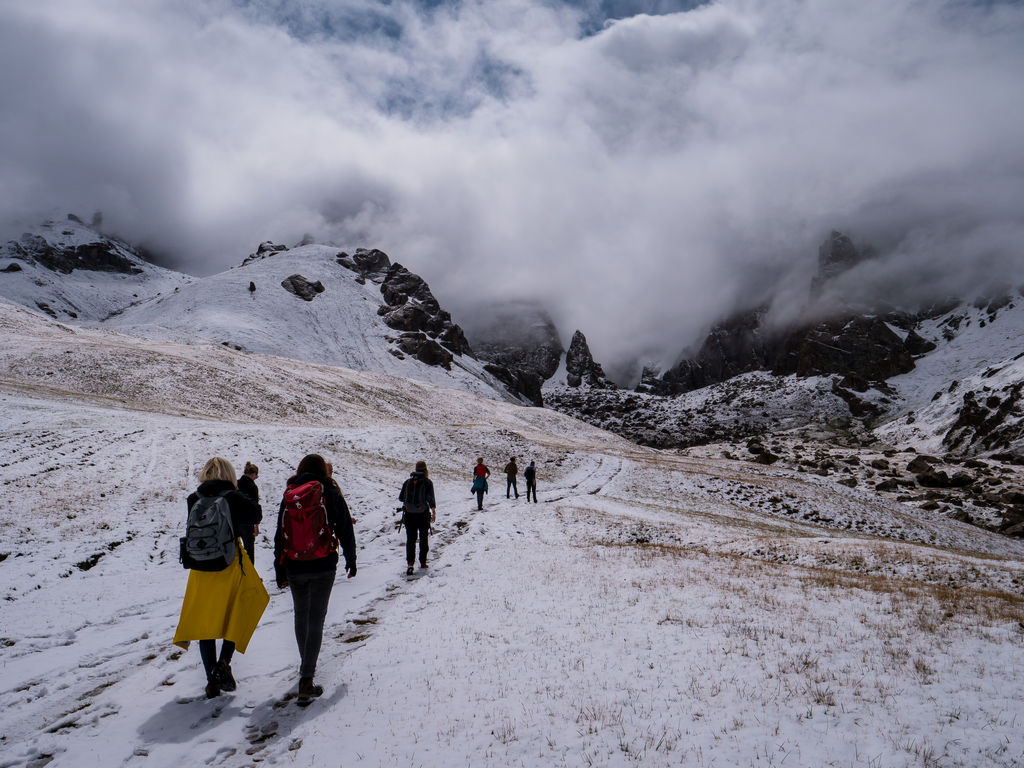
However, the weather in the mountains can change in the blink of an eye. It might be hot and sunny in the morning but you could end up in a cloudburst or small snowstorm in the afternoon. It’s not unusual to experience the 4 seasons in one day in the Central Asian mountains!
Summer in the cities and low-elevated regions are very dry and hot, with average temperatures of 35°C (95°F). It’s not unusal that the temperature goes up to 45°C (113°F) in the steppes and desert.
Therefore, summer is the best time for trekking in the mountains and traveling to the following destinations in Central Asia:
☞ Kyrgyzstan: all hiking trails are open and all alpine lakes are accessible. Summer is also the season when the semi-nomads head into the valleys with their lifestock and set up their yurt camps. All places in Kyrgyzstan can be visited during summer, making it high-season in the country.
☞ Tajikistan: the Pamir Highway is fully accessible and all hiking trails are open. All places in Tajikistan can be visited during summer, making it high-season in the country.
☞ Kazakhstan: all mountainous regions in Kazakhstan are accessible. The cities, desert and steppes should be avoided if you don’t deal well with heat.
☞ Uzbekistan: with the exception of the Chimgan Mountains, all places of interest in Uzbekistan will be scorching hot.


Traveling in Central Asia in spring and autumn (March – May and October – November)
The shoulder seasons spring and autumn are also a great time to visit Central Asia. While the highest mountainous regions (above 3000 meters) might not be accessible due to snowfall, there are still a lot of places that can be visited.
With the exception of Uzbekistan, spring and autumn are less croweded (not that it gets very crowded in Kyrgyzstan, Kazakhstan and Tajikistan anyways…).
However, spring and autumn are not a good time for trekking in the mountains in Central Asia. Most hiking trails and mountain passes are closed and it will still/already be freezing cold at higher altitudes. Spring is also the season during which avalanches occur so you should not head out into the mountains by yourself!
Spring and autumn is a great time for traveling to the following destinations in Central Asia:
☞ Uzbekistan: the shoulder seasons are the best time to visit all the highlights in Uzbekistan: from the Silk Road cities to the Kyzyl Kum desert. It’s also the perfect weather to go hiking in the mountains in Uzbekistan. The temperatures are pleasant and you won’t encounter much rain. May and September are high-season in Uzbekistan so you’ll encounter lots of crowds in the cities.
☞ Kyrgyzstan: while a lot of hiking trails and alpine lakes won’t be accessible, there are still beautiful places to visit and great hikes to go on during the shoulder seasons in Kyrgyzstan. The semi-nomadic yurt camps won’t be around but you can still stay in one of the tourist yurt camps, especially the ones around Issyk Kul lake.
☞ Tajikistan: similar as Kyrgyzstan. The Pamir Highway will be mainly inaccessible and the hiking trails in the Pamir Mountain Range will be closed. You can still go hiking in the Fann Mountains, although you’ll need to check beforehand which trails are open and where you need to watch out for avalanches.
☞ Kazakhstan: except for the mountainous regions, you can visit all places in Kazakhstan. You can still visit the southeastern region of Almay and go hiking in the mountains near Almaty (although, be careful there for avalanches in spring!).
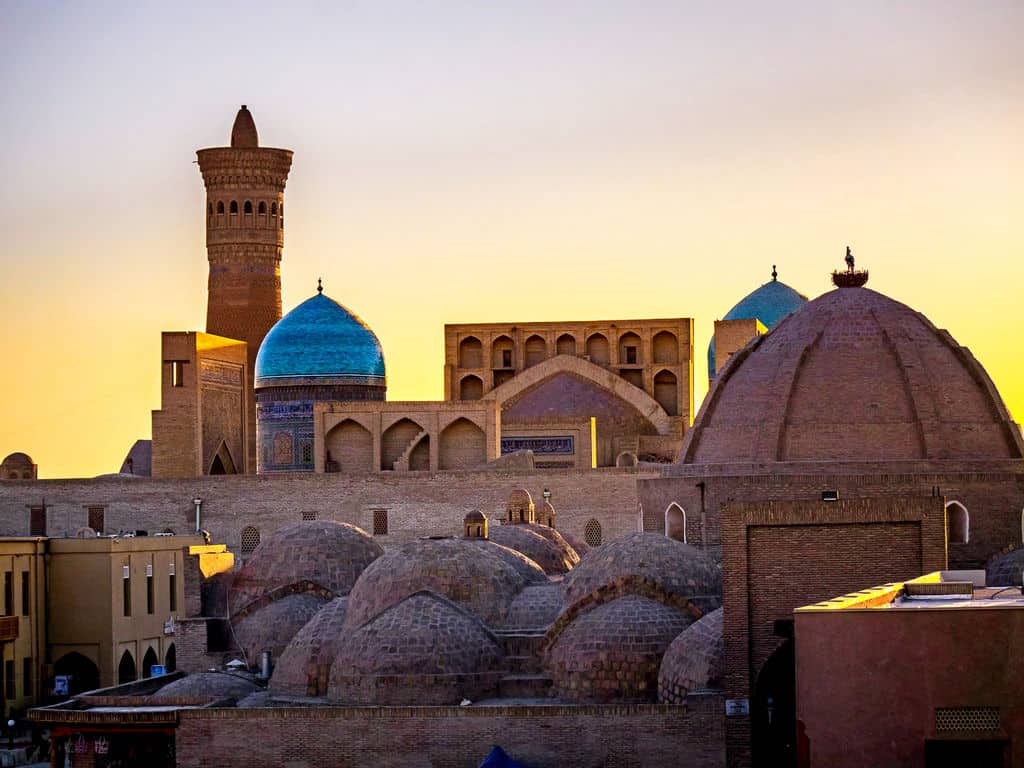
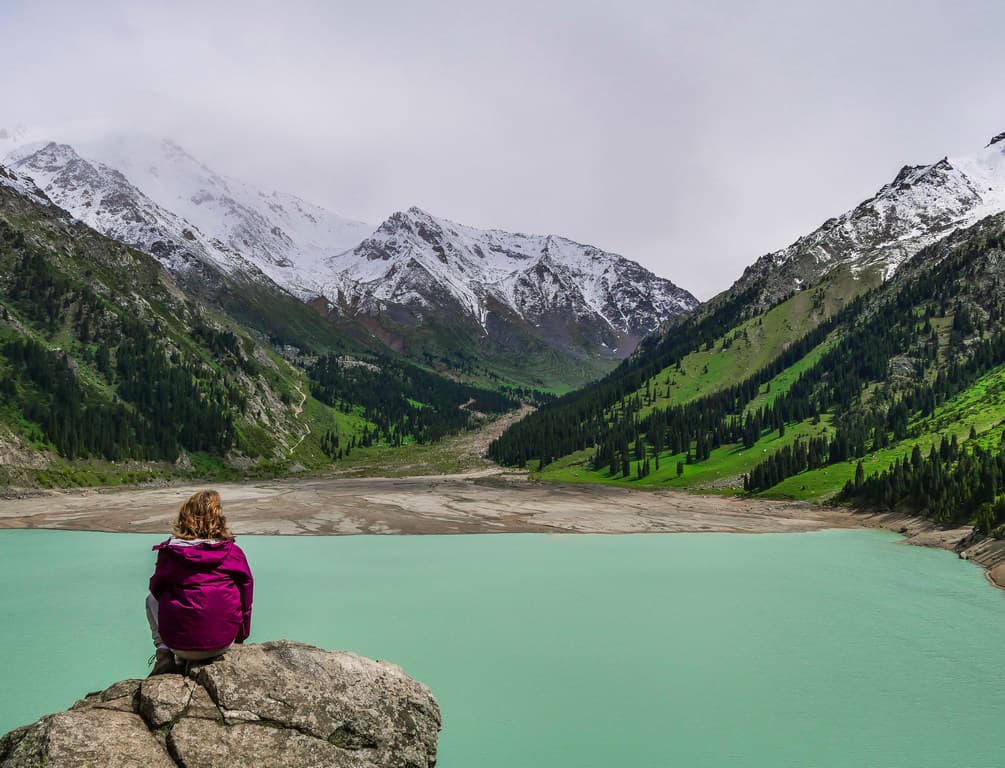
Visiting Central Asia in winter (November – February)
Most of Central Asia will be covered in snow. If the cold doesn’t scare you and you love winter activities, then you’ll enjoy traveling in Central Asia in winter! Not only is the scenery a magical winter wonderland, there will be almost no other travelers and you can go skiing and snowboarding in truly off-the-beaten-path ski resorts!
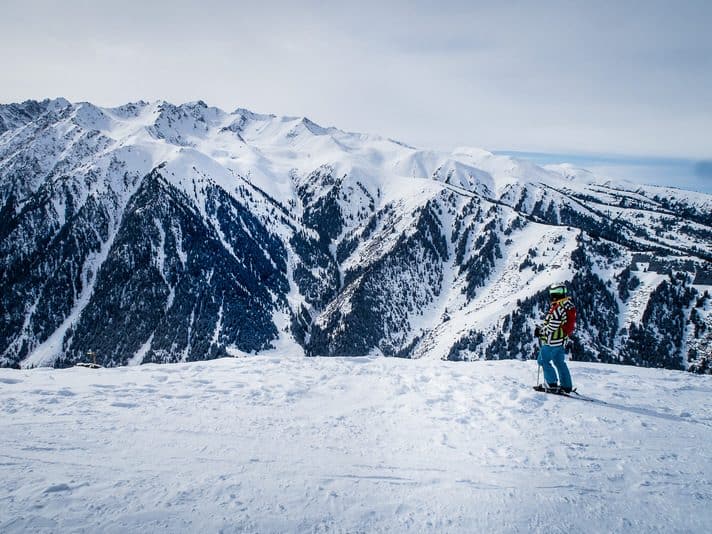
Winter is a great time for traveling to the following destinations in Central Asia:
☞ Uzbekistan: if you dress warmly and you don’t mind grey skies, you’ll have a good time visiting the Silk Road cities in Uzbekistan. You can also go skiing in the Chimgan Mountains.
☞ Kyrgyzstan: the country has some of the best ski-resorts, offering possibilities for first-time skiers and free riders. There are also plenty of winter activities around Issyk Kul lake and in Karakol and Jyrgalan.
☞ Kazakhstan: similar to Kyrgyzstan. It will be cold but the country has some great ski-resorts – and the highest ice-skating rink in the world!
☞ Tajikistan: not the best time to visit the country as you won’t be able to visit its highlights such as the Pamir Highway and the Fann Mountains. The main cities will be possible to visit but they are – in my opinion – not worth a winter trip to Tajikistan.
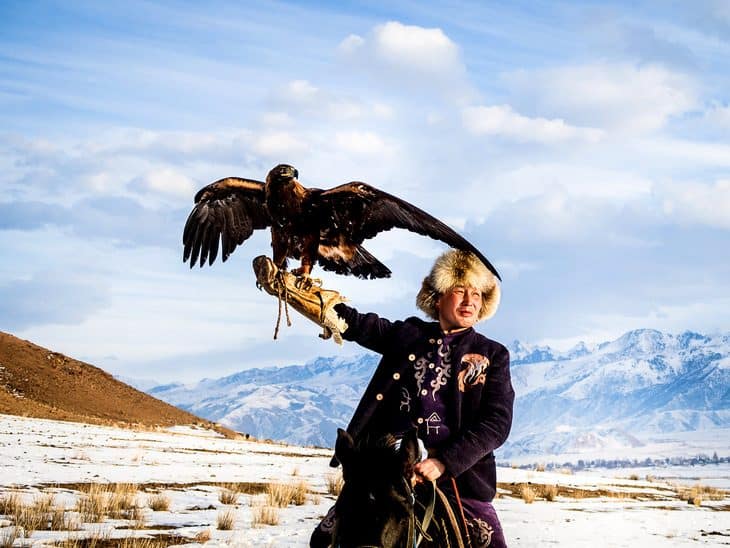

Are you looking for a customized guided tour in Kyrgyzstan or elsewhere in Central Asia? Or would you like help with planning your itinerary and organizing your trip with confidence?
👉 Explore my Central Asia tours and itinerary planning services!
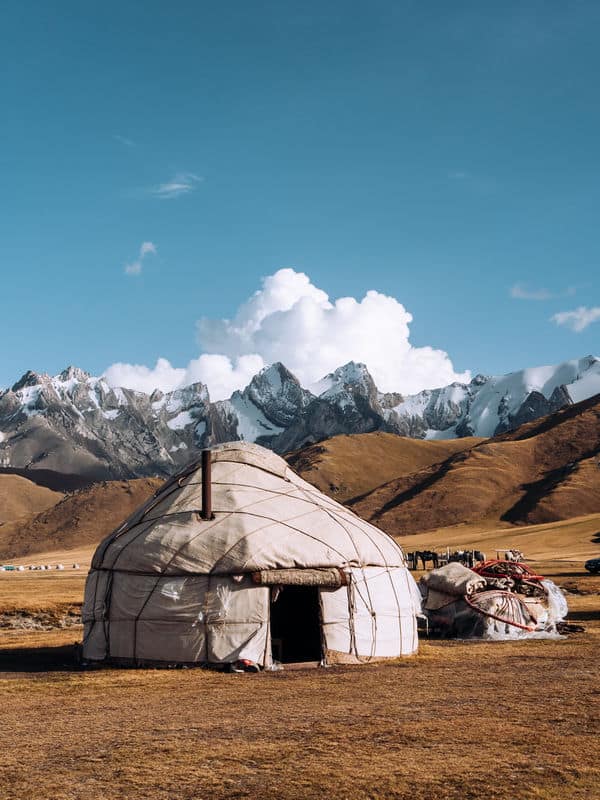
1.3 Is it safe to travel to Central Asia
I can honestly say it’s safe to travel to Central Asia. I dislike how most websites from the Departments of Foreign Affairs advise against traveling to the Central Asian countries as it’s supposedly dangerous and how there’s a chance for terrorist attacks and kidnapping…
Terrorist attacks can happen everywhere, even in Europe! Remember what happened in Paris and in Brussels a few years ago…And yes, the Central Asian people might kidnap you into their homes and force-feed you. But you’re free to leave whenever you’ve finished your plate (and shared some glasses of vodka…).

One of the main concerns in Central Asia is that political instability at the border regions between the countries is not uncommon, particularly in Tajikistan and Kyrgyzstan. If you’re planning to travel to any of the rural border areas, you should check the situation in advance.
Additionally, you should watch out for petty crime, such as pickpocketing and theft in larger cities and tourist areas. I never experienced or heard any stories of stolen belongings but it’s good to be aware of it, especially at busy markets.
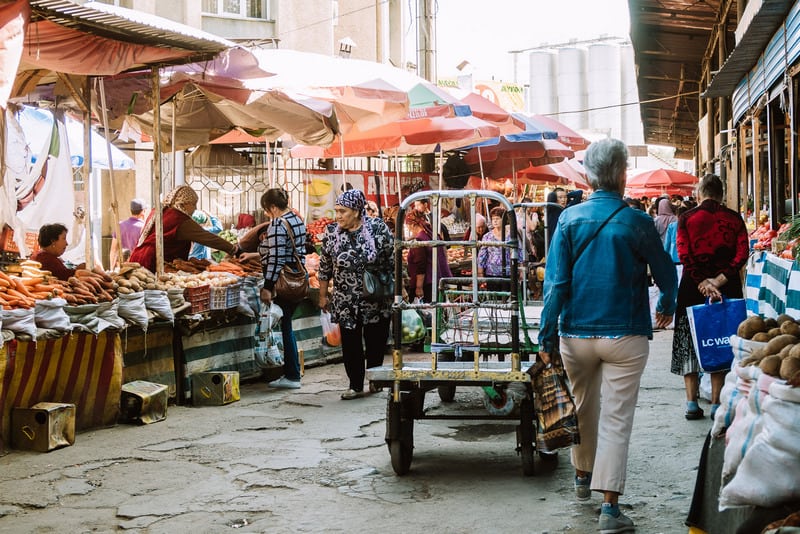
The biggest thieves, however, are taxi drivers who tend to higher their prices when they see you’re a tourist. Inform yourself about taxi rates beforehand and don’t be afraid to bargain or walk away if you have the feeling they’re ripping you off.
If you’re planning to go trekking in the mountains, you should be aware of the potential for natural disasters such as earthquakes and avalanches. Read my safety tips for trekking further below in What to pack for hiking in the mountains in Central Asia.
I suggest you read the following safety guides and tips:
- Uzbekistan Safety Guide: 14 useful tips
- Kazakhstan Safety Guide: 15 useful tips
- Kyrgyzstan Safety Guide: 15 useful tips
2. Central Asia Travel Essentials
No matter where and when you go and what you plan to visit and do in Central Asia, here’s what you definitely need to bring on your trip to Kyrgyzstan, Kazakhstan, Uzbekistan and Tajikstan.
Travel Documents
☑ Passport: your passport needs to be valid for at least 6 months when entering any of the 4 countries.
☑ Visa: The visa requirements for the 4 countries have become very easy in the last few years. A lot of nations are now eligible for visa-free travel or can apply for an e-visa without needing to go to an embassy. In case you need visa support, I recommend the services of iVisa. Always bring a printed version of the e-visa. Here are the resources to check if and what type of visa you need:
- Kyrgyzstan Visa Requirements
- Kazakhstan Visa Requirements
- Uzbekistan Visa Requirements
- Tajikistan Visa Requirements
☑ Travel Insurance: this isn’t mandatory to visit any of the 4 countries but I strongly advise to get coverage. You just don’t never know when you may need it! You should get cover for theft, illness and activities when traveling at high altitudes. If you don’t have travel insurance yet, I highly recommend HeyMondo as it covers medical costs, theft and activities at high altitudes.
It is generally a good idea to have paper and electronic copies of all important documents such as your passport, visas, tickets and insurance.
Need Travel Insurance for Central Asia? I use and highly recommend HeyMondo Travel Insurance. As a reader of Journal of Nomads, you get a 5% discount of your insurance plan!

Money
It will be hard to exchange money in advance as most (western) countries won’t have the currencies of Central Asia available at the banks.
☑ USD Dollars: widely accepted in any of the countries and easy to exchange at any of the local banks or exchange offices (make sure your bills are crisp and clean or they might give you a lower rate!). It might also be cheaper to exchange USD (or EURO) instead of using an ATM, depending on your withdrawal fees.
☑ Visa or Mastercard: while cash is still king in Central Asia, you can nowadays pay by credit card at most restaurants and hotels in the major cities. However, withdraw local currency at the ATMs before going to rural areas as you won’t be able to find ATMs or pay by card there.
☑ Moneybelt: as western people, we’re nowadays so used to pay cashless and not carry around much money so you might feel more comfortable with having a moneybelt to travel safely with cash and important documents.
Suitcase or backpack?
If you’re only planning on doing city trips in Central Asia, then you can bring a suitcase or trolley on your trip. However, if you want to visit Central Asia’s stunning nature, go hiking and trekking – even with an organised tour – and/or you’re planning a yurt stay, you better bring a backpack.
There are often no solid roads when visiting a yurt camp, let alone if you’d go hiking. You might have a hard time carrying your suitcase around, even if it’s a trolley (the terrain will be rough on its little wheels).
If you’d go on an organised trekking tour, porters, horses or donkeys are usually included in this trek to carry your luggage in special bags. These bags are suitable for a large backpack but not for suitcases.
☑ Large backpack (50L – 70L): You need a light but strong backpack that is capable of carrying weight but still sits comfortably on your back. Ideally, the backpack is made out of waterproof material. The zippers need to be big and strong and the material very durable. If you want to have an example, here’s a large backpack I recommend for him and one I recommend for her.
☑ Small daypack (20L – 30L): Whether you go city touring, day hiking or horse riding, bring a small and comfortable daypack to carry snacks, water and other essentials you need during the day.
☑ Waterproof cover for your backpack(s): This is an essential when traveling in Central Asia during spring, autumn or winter. You should also have a rainproof cover when going on a (day) hike or horseback trip in the mountains in summer. The weather can be very unpredictable and you need to be prepared. Nothing sucks like having a wet backpack and all of your belongings soaking wet! If you backpack doesn’t have one, you should get an additional waterproof cover.
Would you like to go on an unforgettable adventure in Central Asia? Have a look at my Adventure Tours in Tajikistan, Kazakhstan, Uzbekistan and Kyrgyzstan!
First aid travel kit
You should always bring a compact first aid kit with personal medication on any of your trips. Here’s what you definitely should bring along in your kit:
☑ Anti-diarrheal medicine: yes, I’m afraid that this is an essential… 80% of the travelers I’ve met struggle at some point with stomach issues in Central Asia, due to a certain bacteria in the food. I always have Furazolidone tablets (which you can buy over the counter at a local pharmacy) as it has proven its worth. These tablets tackle the bacteria causing bowel problems within a day.
☑ Paracetamol: always handy to have along for any aches or pains. It’s also useful to take it during your first days at high altitude, in case you experience some headache.
☑ Altitude sickness pills: Please seek medical advice first. If you’re planning on traveling to the mountains, especially when visiting Kyrgyzstan and/or Tajikistan, you’ll often find yourself at altitudes higher than 3000m. If you’re sensitive to high altitudes, Diamox could help you.
☑ Motion sickness pills: The mountain roads in Central Asia are extremely scenic but can be rough, windy and bumpy. If you’re prone to motion sickness, you should definitely bring them along.
☑ Here’s a great compact first aid kit specially made for traveling and outdoor adventures.
Toiletries
Aside from the usual toiletries such as toothbrush, toothpaste, shampoo and soap, you should also bring the following, especially when traveling to rural villages or planning a yurt stay:
☑ Biodegradable toilet-paper: With the exception of the major cities and tourist hotels, most toilets you’ll encounter will be squatting toilets (train those upper leg muscles, ladies!). Some squat toilets have toilet paper but of the rough type, some don’t have toilet paper at all. So it’s a must to bring your own toilet paper, preferably the compostable one, to stay eco-friendly. Also a must if you go hiking (toilets are non-existent in the mountains…).
☑ Hand sanitizer: I always carry a small bottle of hand sanitizer with me in case there’s no water source nearby when I want to clean my hands after going to the toilet or touching something suspicious.
☑ Biodegradable wet wipes: some homestays and most yurt camps don’t have hot showers (except for the fancy tourist yurt camps and even then it’s not always certain you’ll have hot water. That’s why I always carry biodegradable wet wipes to freshen myself up until I’m back at a hot water source.
☑ Travel towel: a microfibre towel the perfect travel towel as it’s small, light-weight and dries quickly.
☑ Biodegradable shampoo and body wash: I often spent multiple-days at a yurt camp in Kyrgyzstan, traveling through remote areas or hiking in the mountains without finding a hot shower. Whenever I came across a river or lake, I like to freshen myself up so I use biodegradable shampoo and bodywash to be kind to the environment.
☑ Sun block and lip balm: It’s important to bring good sunscreen with you, even if it’s not very hot. The sun is very strong in Central Asia, especially when you’re heading into the mountains as the impact of the sun is more intense as the air gets thinner. I recommend bringing SPF 30-50, even if you’re only doing city trips. Don’t buy sunscreen in small local grocery or corner shops as it’s often not good quality or even can be fake. If you forgot to bring some, then buy it in a large supermarket in the city. When hiking at high altitdue, a lot of people struggle with sore lips so bring protective lip balm too.
☑ For women: it’s not much fun having your period when traveling but we have to deal with it. A lot of female travelers recommend a menstrual cup. Although I’ve used one in the past and I’ve been happy with it, it’s been messy when traveling in Central Asia, unless you have a menstrual cup with a travel cleaning system. Most squatting toilets don’t have a nearby water source (and you don’t want to waste your drinking water). I prefer to take tampons with me and I collect them in a small bag when hiking, which I dispose of once I’m back in civilization.
Water bottle and filter system
I strongly advise not to drink tap water in Central Asia! Buy bottled water in the local supermarkets or better, bring a reusable water bottle to reduce the use of plastic. A reusable water bottle will also come in very handy when hiking in the mountains as you can often refill your bottle with fresh spring water instead of carrying liters of water on your bag. However: use a steripen or filter – see my explanation below.
☑ water bottle with a filter system: these are reusable bottles that filter water using a microfiltration device. When you drink tap water or even mountain spring water using a water bottle with a filter, any dirt, bacteria or parasites will be trapped in the fibers of the filter, while the clean water passes through. It’s not only good for your belly and wallet, but it’s also great for the environment because you don’t have to buy any plastic bottles of water. I often used and highly recommend the Lifestraw Water Filter Bottle.
☑ filter or steripen: if you already have a reusable water bottle, you don’t need to buy a new one, of course. I nowadays use a steripen, a compact and lightweight device which uses ultraviolet light to sterilize water. I never encountered any stomach problems while using it (and I’ve been drinking a lot of spring water in the mountains!). You can also buy a seperate Lifestraw Filter.
Electronics & camera gear
☑ Travel adaptor: the power sockets in Central Asia are of type C and F (the same as in Europe). The standard voltage is 220 V and the standard frequency is 50 Hz. In case you need an adaptor, I use and recommend this all-in-one Universal Travel Adaptor as you can use it worldwide.
☑ Portable charger: a portable charge is handy to have in case of a power outage (which sometimes happens, even in the major Central Asia cities), during long bus or train rides, or if you’re planning a yurt stay (no electricity there) or camping. I use and recommend the Anker Powercore as it has a 26,800mAh cell capacity providing at least 5 full charges for my phone. I can even charge my camera batteries with it!
☑ Camera gear: If you’re a professional and/or passionate photographer, you can’t visit Central Asia without capturing its beauty on camera! Below is an overview of the gear I use. You can also read my Photography essentials guide for more information and a detailed overview:
- Camera: Panasonic LUMIX DC-90
- Main lens: Panasonic Lumix G Vario 14-140mm f/3.5-5.6
- Wide-angle lens for landscapes and architecture: Leica DG Vario-ELMARIT 8-18mm f/2.8-4.0
- Prime lens for portraits: Leica DG Summilux 15mm f/1.7
- Tripod: Manfrotto Compact Action Tripod (Hybrid Head)
☑ Drone: Drones are allowed in Kyrgyzstan, Kazakhstan and Tajikistan. You can fly them everywhere, except near airports, border areas, military, and governmental buildings, and urban centers. Drones are strictly prohibited in Uzbekistan. If you would try to bring one in, it will get confiscated and you might spend your holiday in prison instead of in its stunning cities…

Other travel essentials
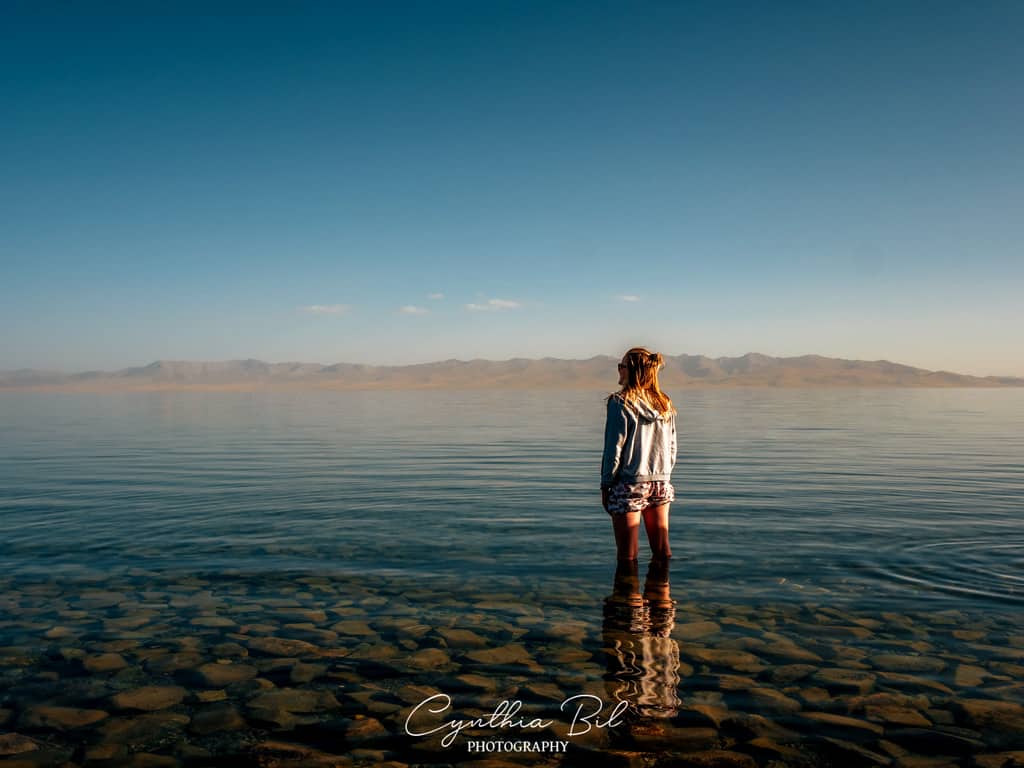
☑ Swimsuit: this applies the most for Kyrgyzstan where you can swim in the alpine lakes (if you can handle temperatures of around 5°C) and hot water pools.
☑ Head light: handy during power outages in the city but definitely an essential when going on a camping trip in the mountains or staying at a yurt camp. The tourist yurt camps run on generators which don’t always function very well. A yurt camp run by local families often don’t have (much) electricity so a head light will come in handy to find your way to the outdoor toilets at night.
☑ Ear plugs: very useful if you’re sensitive to noise. I get quickly auditory overstimulation, especially when traveling by public transport in Central Asia where locals don’t use earplugs to watch YouTube videos or have loud phone conversations. They can also come in handy during a yurt stay: yurts are like tents so any outside noises are easily heard (snoring of other travelers, barking dogs, munching cows and horses,…). Ear plugs will help you get a quiet night of sleep.
☑ Travel Guides: The Lonely Planet for Central Asia and the Bradt Travel Guides for Central Asia are good but most were published before 2020 and lots has changed since then. The Lonely Planet Central Asia Phrasebook is also a handy book to have.
☑ Open mind and good attitude: you’re in a foreign country with a different culture and habits so things often don’t go the way you’re used to. The best way to deal with getting out of your comfort zone: have an open mind, be respectful towards different cultures and people, and embrace the new experiences!

Useful Travel Apps for Central Asia
☑ Maps.me: This is one of the most practical apps you could use to navigate in Central Asia. You download the map of the country so you can use it offline. It gives you very accurate directions (Google maps gets lost in Central Asia…) and shows you where you can find the nearest restaurants, bus stations, ATM, hotels, places with wi-fi, points of interest, etc. This is also a great app to use while hiking as it shows most of the trails.
☑ Wikiroutes: a handy app if you travel by public transportation. It shows you the bus and/or metro route and tells you where to hop on and off.
☑ Google Translate: Translates written and spoken Russian, Uzbek, Kazakh, Kyrgyz or Tajik. Only Russian is available to download for offline usage.
☑ Booking.com: You’ll need internet to use this app but it’s a great tool to find (last-minute) accommodation throughout Central Asia.
☑ Yandex Go Taxi: Yandex is the Central Asian version of Uber. I use this app to get around the major cities in Central Asia by taxi without having to bargain for the price and/or getting ripped off by a taxi driver.
☑ Xe currency: very handy to check exchange rates, also works offline.
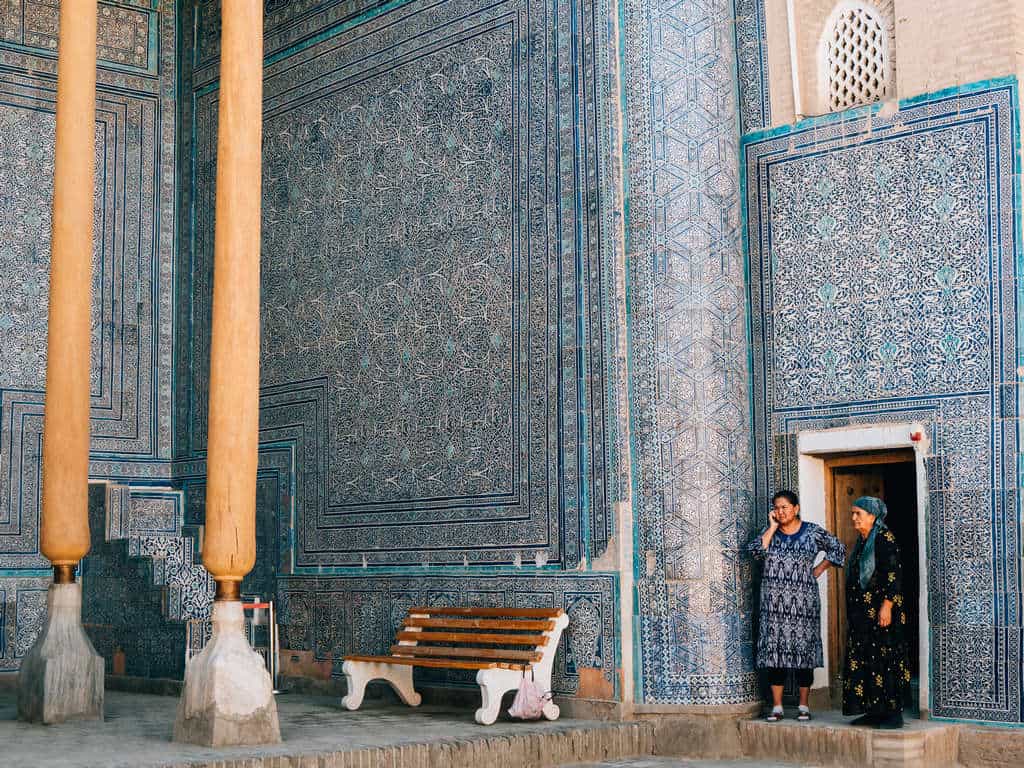
3. What to wear in Central Asia cities and villages
All of the capitals of Central Asia are located below 1000 meters, which means that the weather will be very hot in the summer (averagely 35°C/ 95°F), cool and rainy in spring and autumn (averagely 15°C/ 59°F) and cold and snowy in winter (averagely -10°C/ 14°F). Pack appropriate clothing for the season in which you’re traveling.
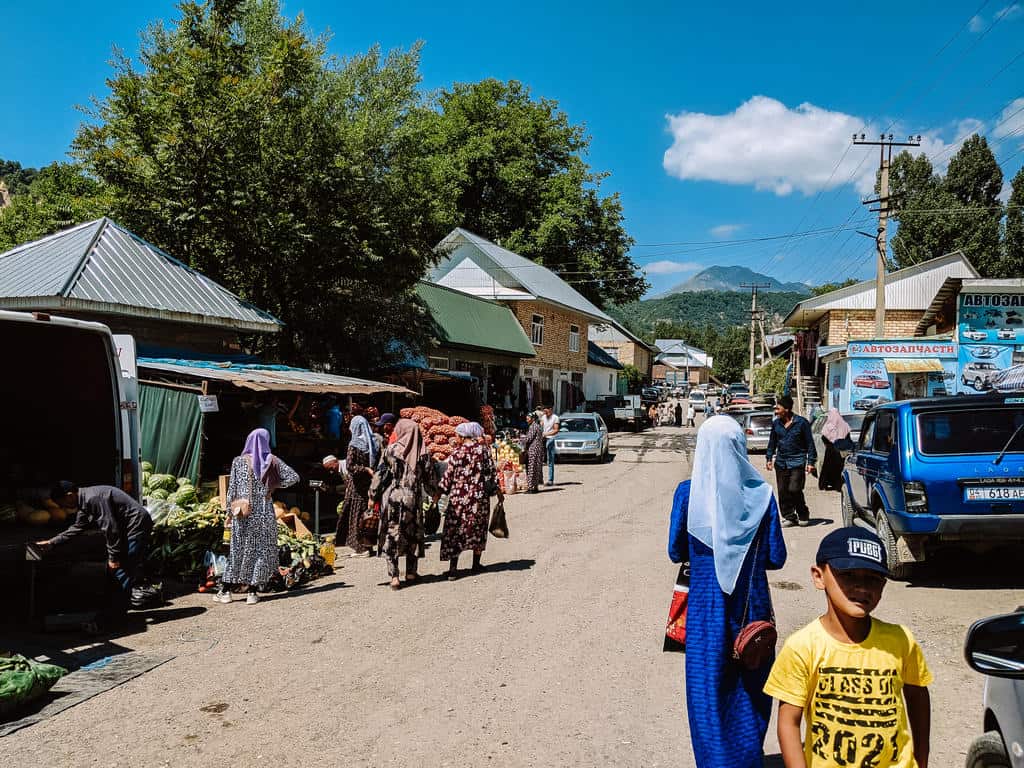
While you’ll see young girls and women walking around in short skirts, dresses, and shorts in the capitals of Central Asia during summer, most of Kyrgyzstan, Tajikistan, Uzbekistan and Kazakhstan and especially its rural areas and villages are conservative.
You’ll see many women wearing beautiful colored scarves tied around their heads. This is a cultural thing so female travelers don’t need to worry about covering their hair.
It’s okay to wear shorts, dresses, skirts and tops or T-shirts with short sleeves in the capital cities or tourist places like the Silk Road cities in Uzbekistan but it’s disrespectful to parade around in revealing mini-skirts, dresses and crop tops. If you’re an influencer who wants a nice photo for Instagram, please remain respectful for the culture.
If you like to explore less-touristic places like small towns and villages, dress modestly. Wear a T-shirt or a tunic over long trousers or a long skirt. Knee-lenght shorts or skirts are also fine, just don’t walk around the village in a vest top and short shorts/skirts. If you visit mosques and religious sites, even in touristic cities, cover up your shoulders.


What to wear in Central Asia as male traveler
☑ T-shirts, long-sleeved shirts, button-up shirts, sweater
☑ Knee-length shorts, long trousers
☑ Comfortable sneakers, sandals
What to wear in Central Asia as female traveler
☑ Loose-fitting tops and T-shirts (don’t show cleavage or belly buttons), loose-fitting long-sleeved shirts, blouses or sweater
☑ Knee-length shorts, dresses and/or skirts, long loose-fitting trousers, maxi dresses or skirt
☑ Leggings but wear then a long shirt or tunic on top
☑ Comfortable sneakers, sandals
☑ Scarf (to cover shoulders and/or head at religious sites)

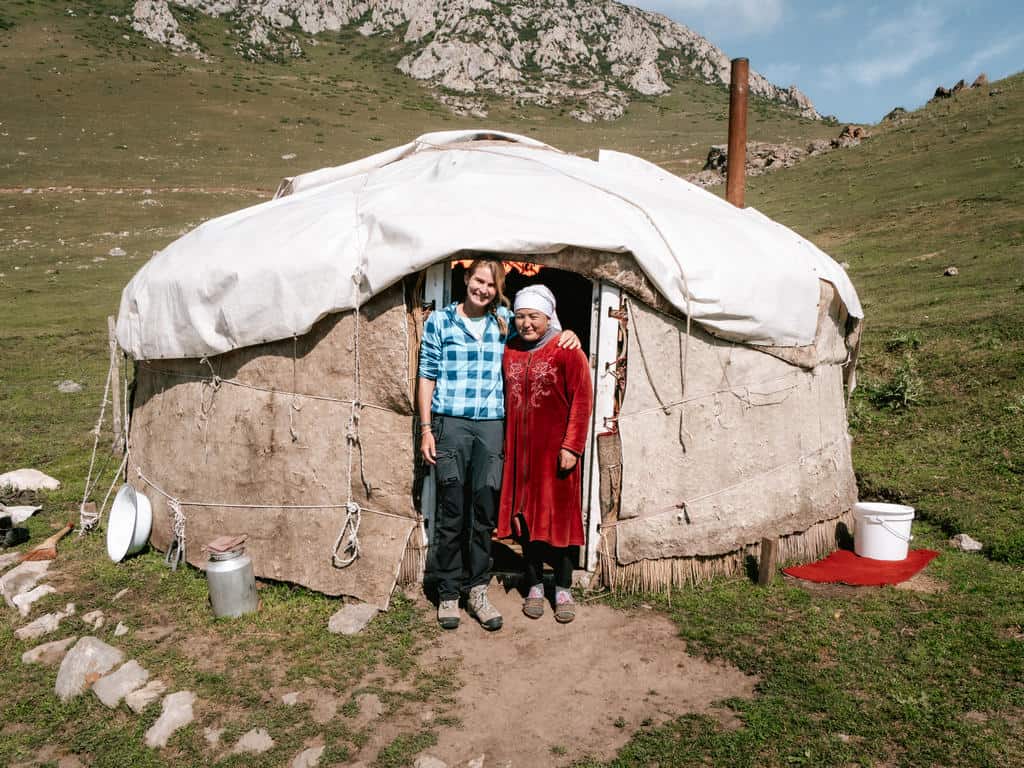
4. What to pack for horse riding, camping and hiking in Central Asia
The weather in the mountains of Central Asia is very unpredictable. You can wake up and start walking with sunny and clear skies but a few hours later, it can rain heavily or even snow. It will also be cooler in the mountains in comparison with the cities. The higher you go, the colder it gets. The average temperatures in summer at altitudes between 2500 meter and 3000 meter is 15°C – 20°C/ 59°F – 68°F during the day and 2°C – 8°C/ 35°F – 46°F at night.
You need to be prepared for all types of weather. Pack versatile, think in layers, and aim for functional, comfortable, and fast-drying clothing, suitable for hiking and/or horse riding.
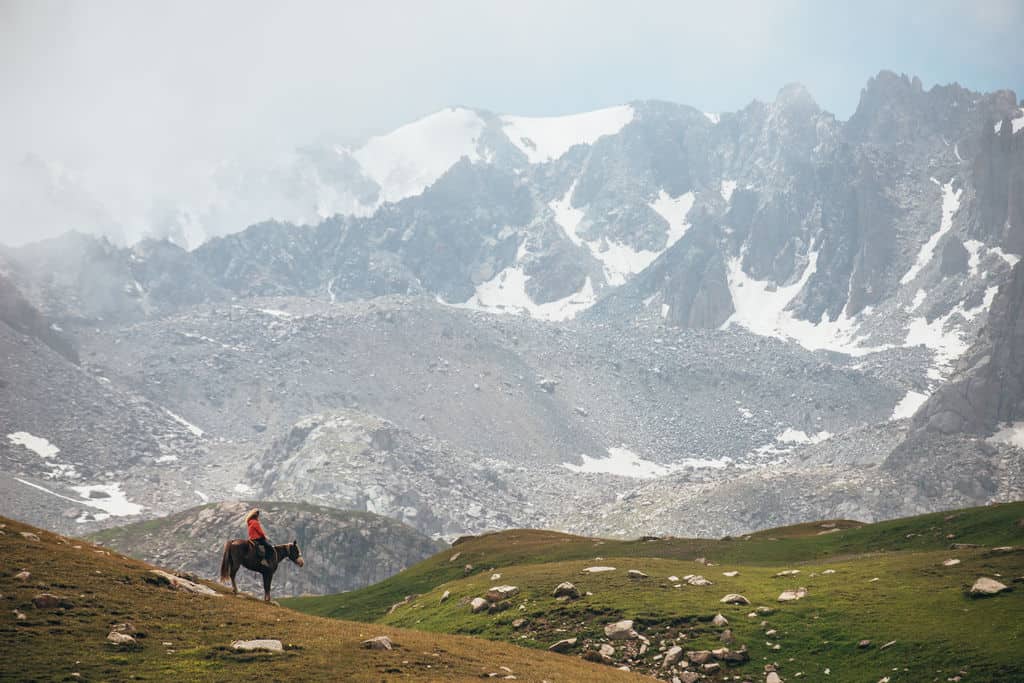
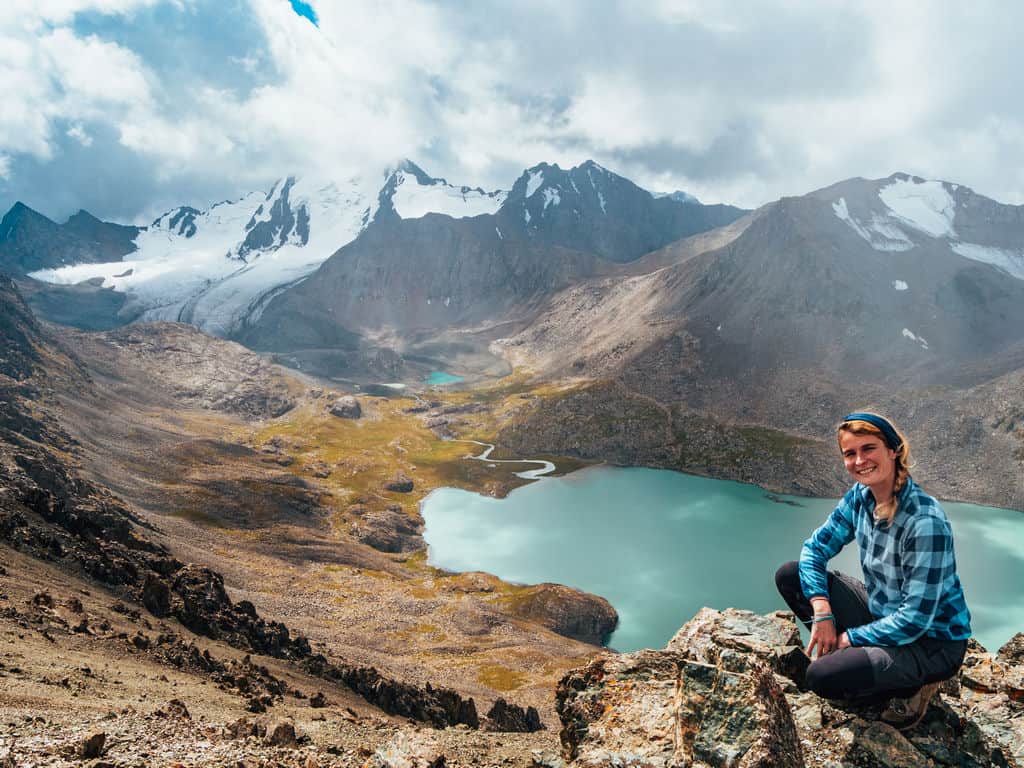
Rain gear Essentials
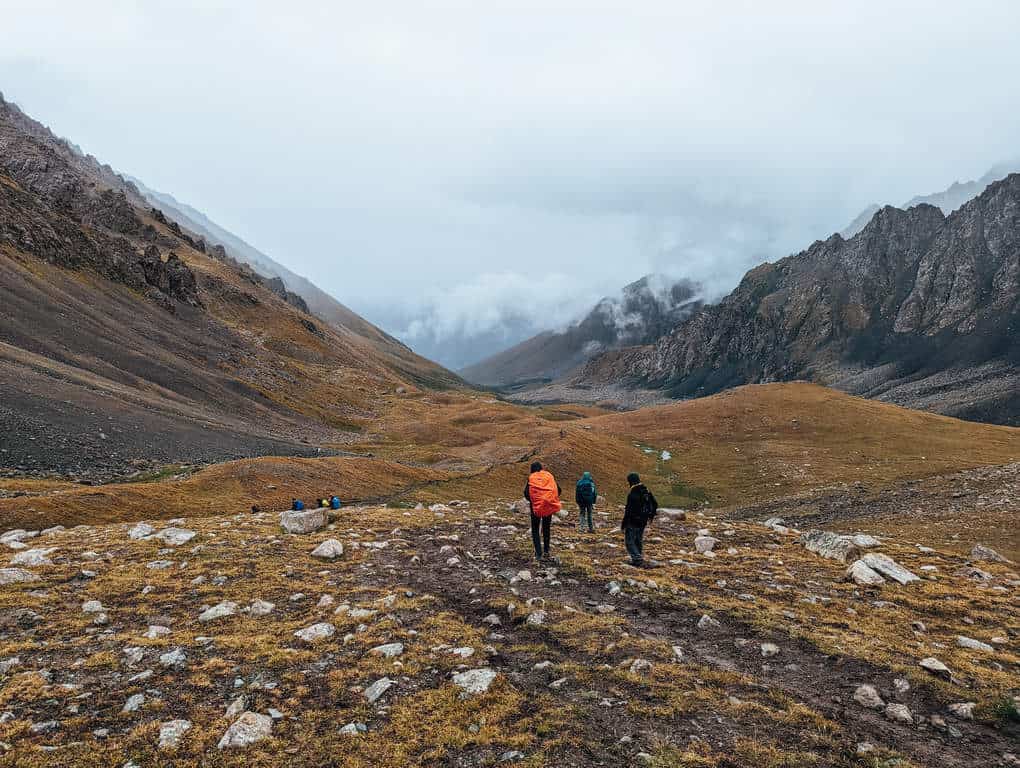
☑ Rain jacket: bring a lighweight rain jacket that can endure wind and rain. Here’s a waterpoof hiking jacket I recommend for him and for her.
☑ Rain pants: this is also a necessity, especially when horse riding or hiking. If there’s a lot of wind and your hiking pants are wet, you’ll get cold easily. Here are rain pants I recommend for him and for her.
☑ Poncho: a poncho is lightweight and compact and it covers both you and your backpack. However, don’t wear a poncho while horse riding as it scares the horses.
☑ Waterproof gloves: I always bring waterproof gloves along, especially for horse riding. You can’t stuff your hands in your pockets to keep dry and warm while riding. I used to wear my normal gloves on horseback trips but one day they got soaking wet and my hands were hurting from the cold. Since I got waterproof ones, I never had this issue again. These also come in handy when hiking at high altitudes.
☑ Raincover for your backpack: you want to keep your daypack and/or backpack with your sleeping gear dry in the mountains!
☑ Dry bags: put all your electronics, clothes (and sleeping gear when camping) in seperate dry bags in your daypack/ backpack. I once got so soaked during a trek that even my raincover wasn’t sufficient to keep my belongings dry! Luckily I could spent that night at a guesthouse where I was able to dry all of my things but if I had to camp that night, it wouldn’t have been a pleasant experience!

Horse Riding essentials
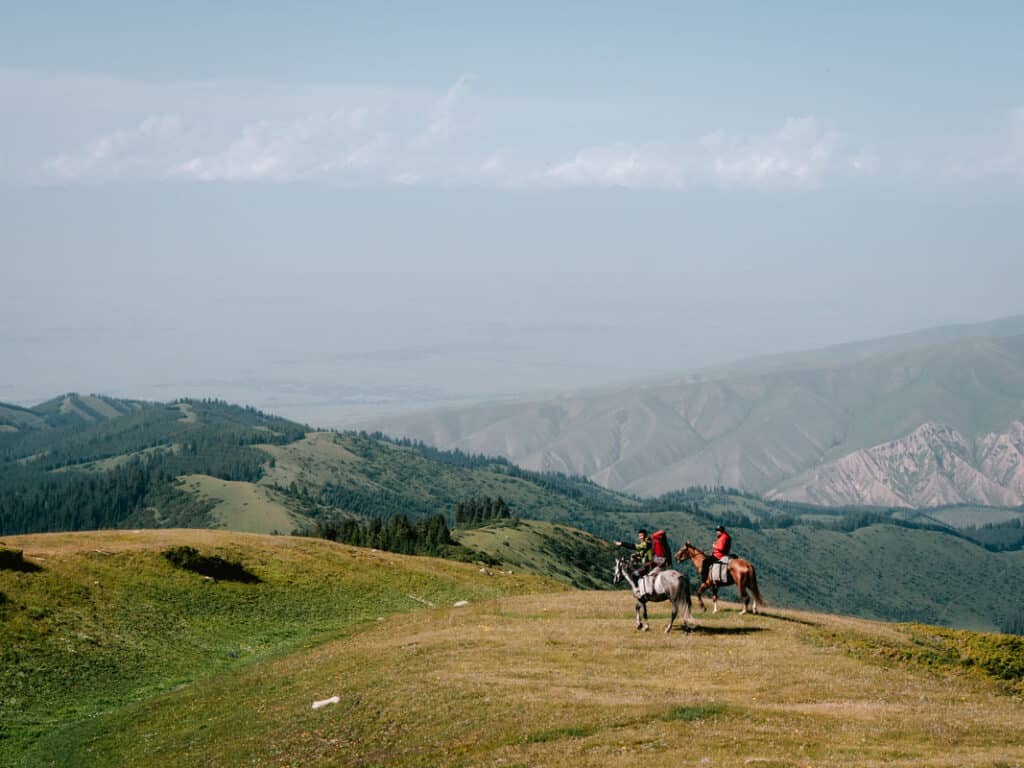
Aside from a daypack (20L – 30L) with rain cover that fits your water bottle, snacks, sunscreen, lip balm, camera, phone, and rain gear (no poncho!), you’ll need to bring the following along if you plan to go horse riding in Central Asia:
☑ Ankle-high hiking boots: High boots will protect your ankles in the stirrups while horse riding and will give you more protection while hiking on the rough mountainous terrain in case certain parts would be too steep on horseback. Here are good hiking boots for him and for her.
☑ Pair of long pants or leggings (can be hiking pants): don’t wear shorts or a jeans for horse riding as it will be very uncomfortable! Wear pants that are soft, comfortable and dry fast in case you get rain. Here are riding/hiking pants for him and for her.
☑ T-shirt or long-sleeve shirt
☑ Sweater with zipper: bring a sweater that you can easily take off or put on without losing control of the reins while riding. Also good to bring along in case it’s windy on the mountain passes.
☑ Downjacket: this is a lighweight, comfortable and warm jacket that keeps you warm while horse riding. Here’s a downjacket for him and for her.
☑ Hat and sunglasses: to protect your head and eyes from the sun and ones that don’t fall off easily
☑ Woolen hat, scarf and gloves: for riding on colder days
☑ Padded cycling pants: The saddles in Central Asia are very hard. Padded cycling pants or underwear (for him and for her) will give you a soft layer to sit more comfortably in the hard saddle. Tip: wear comfortable underwear, no strings or thongs…
☑ Equestrian helmet (optional). The horse riders in Central Asia don’t use helmets. Some tour companies offer helmets but not all. You can always bring your own to make you feel more safe.
Reading tips for horse riding in Central Asia:

Day Hike essentials
Aside from a comfortable day pack (20L – 30L) with rain cover that fits a water bottle, snacks, sunscreen, lip balm, camera, phone, and rain gear, you need to bring the following on a day hike in Central Asia:
☑ Waterproof hiking boots: You’ll need sturdy, ankle-high, waterproof hiking boots, suitable for rough, uneven and steep terrain in the Central Asian Mountains. Make sure your shoes are 1/2 size bigger than your usual size to give your toes and ankles some space while hike up and down steep hills. Coming across river crossings, rain or snow are is very common so make sure your boots are waterproof. Here are my hiking boots recommendations for him and for her.
☑ Hiking socks: I really recommend to get merino wool hiking socks! They keep your feet dry, they’re not too warm on hot days and they’re just super comfortable! I have 2 pairs of these hiking socks and I’m really happy with them!
☑ Comfortable and fast-drying hiking clothes
☑ Downjacket: this is a lighweight, comfortable and warm jacket that keeps you warm while hiking or when you take a break. Here’s a downjacket for him and for her.
☑ Hat and sunglasses: to protect your head and eyes from the sun
☑ Woolen hat, scarf and gloves: for hiking at high altitude or on cold days
☑ Hiking GPS or offline GPS App: comes in very useful when the path isn’t clear. I recommend using the apps maps.me (download the maps for offline use), Wikiloc or All Trails (you need to pay for offline use). You can connect these apps to the Garmin Foretrex Waterproof Hiking GPS. Check out its features here.
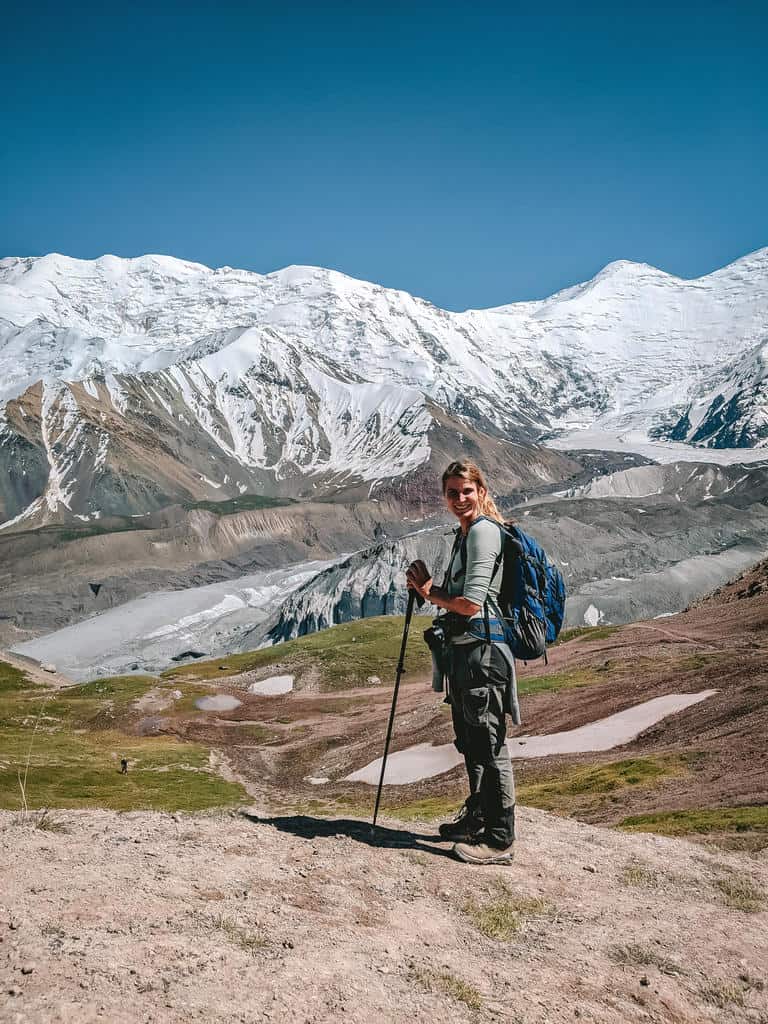
☑ Hiking poles: very useful when you go hiking in the Central Asian mountains! They don’t only make hiking more comfortable, they also help you maintain balance on slippery surfaces and rough terrain, add more grip when descending a steep hill and act as a probe to give more information about the depth of the snow, puddles and muddy paths. I recommend getting lightweight telescopic trekking poles so you can easily attach them to your backpack when you don’t need them.
☑ Emergency survival whistle: This might seem like an unusual tool to take with you on a trek. How small it might be, this whistle could save your life when you end up in an emergency situation. Blowing a survival whistle is less tiring than shouting for help in case you got lost or fell, and the noise can be heard from miles away across the mountains. Any shepherds or other hikers who might be in the area will be able to hear you and locate your position by following the noise.
Reading tips for hiking in Central Asia:
- Hiking guide with best day hikes in Kyrgyzstan
- Hiking guide with best day hikes in Uzbekistan
- Hiking guide with best day hikes in Almaty (Kazakhstan)

Essential Packing list for Camping & trekking in Central Asia
When it comes to packing for a trek, keep it as light as possible. Remember that you have to carry everything yourself and if you have ever done a 20 km hike that included ascending steep hills, you’ll know that there’s a big difference between hiking with 10kg and 15kg on your back!
Aside from the travel essentials (see 2. Central Asia Travel Essentials above), rain gear and day hiking essentials (see the above lists), here is a list of everything you need when hiking and camping for a few days in the mountains.
Note: You can rent camping and cooking equipment in Kyrgyzstan (Bishkek, Karakol and Osh) and Tajikistan (Dushanbe).
☑ Sandals or light sport shoes: It’s good to carry an extra pair of shoes with you in case your boots get wet. It will also do your feet well to take your shoes off at night and put on some comfortable footwear. Carrying an extra pair of hiking boots takes too much space in your bag but I suggest you pack a pair of sandals or light sneakers. There won’t be any fashion police around to judge if you walk around with socks in your sandals (and it’s soooo comfy!). I recommend Teva Sandals.
☑ Fleece jacket or sweater: It’s necessary to pack at least one warm sweater for the cold evenings. Unless you’re hiking outside the summer season, you won’t need a big winter jacket but it’s still essential that you’ve got something that will keep you warm in the mountains. A fleece jacket or sweater (for him and for her) doesn’t take up as much space as a winter jacket but they’re thick enough to protect you from the cold and wind.
☑ Thermal underwear: The last time I went on a trek, I forgot to pack my thermal underwear. I didn’t think I would still need it since it was June. Ooh, how I regretted that!! This type of underwear (ideally made from merinowool) is lightweight, doesn’t take much space and it really keeps you warm during the day or at night! It’s a must to pack when you’re in the mountains! I recommend thermal leggings for him and for her and long-sleeves for him and for her.
☑ Down socks: Buying down socks has been the best investment for me!! I easily get cold feet at night or while camping. Nothing is worse than trying to sleep and not getting warm feet. These down socks have made my camping life so much more comfortable, highly recommend them!!
☑ Lightweight tent: Having a good tent is very important! It has to shelter both you and your backpack from all the elements. Ideally, you have a lightweight one as some tents can be pretty heavy. Here’s a 2-person lightweight tent I recommend for trekking.
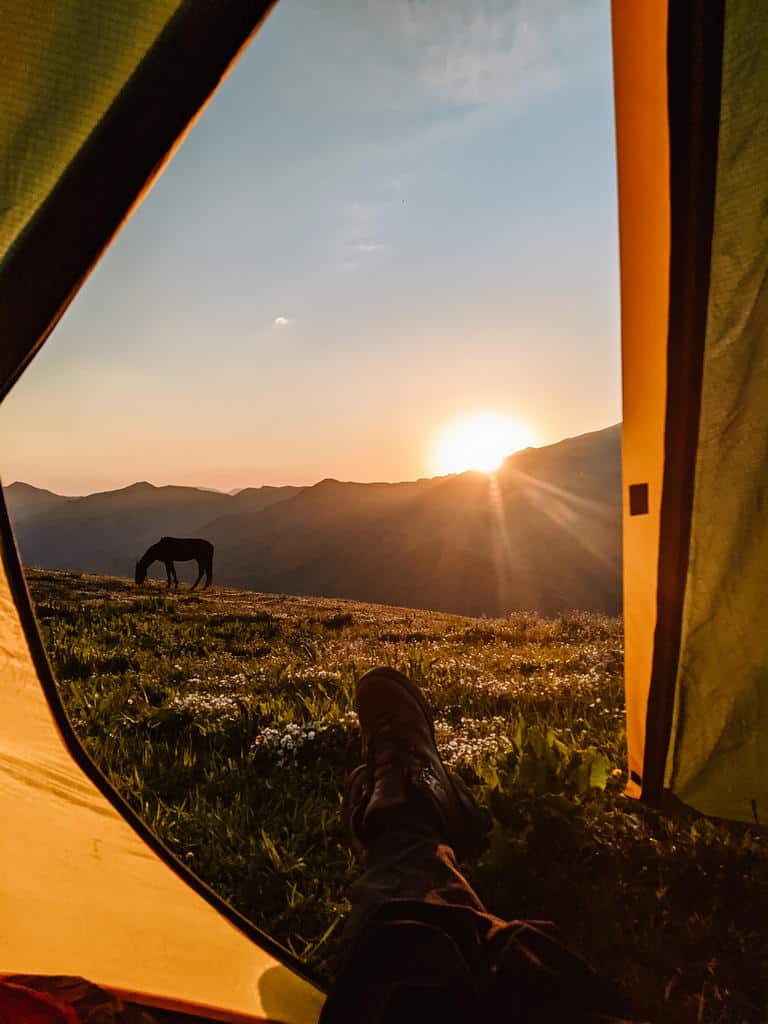
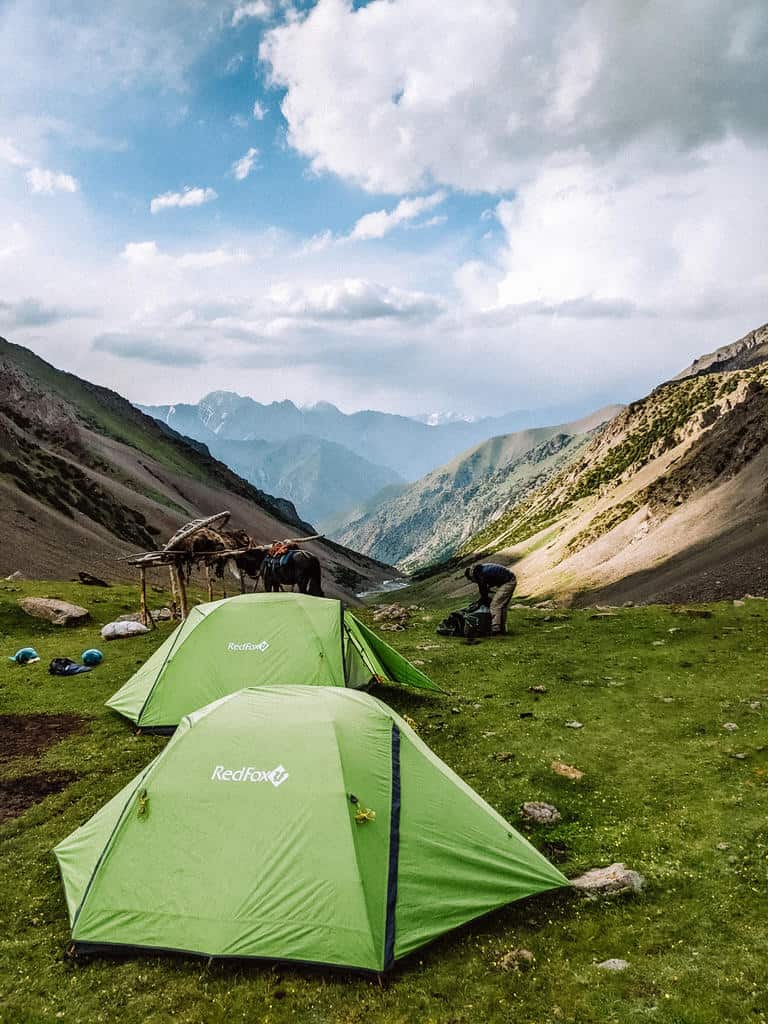
☑ Sleeping bag: You’ll need a lightweight sleeping bag that can keeps you warm at night. Keep in mind that when you’re camping at a higher altitude, the temperatures can go down to 0°C (32°f) or lower, even during summer! My 3-seasons sleeping bag is comfortable until -2°C/ 28°F and is pretty compact to travel with.
☑ Sleeping bag liner: I also have a fleece sleeping bag liner. These don’t take much space, they’re pretty light and they add an extra 10°C of warmth at night. Fleece liners are very affordable and can be a good addition if you want to be extra warm and comfortable at night.
☑ Inflatable sleeping pad: For a very long time, I used to travel with a cheap sleeping pad that you can roll up and easily attach to your backpack. However, those types of pads don’t insulate very well if you have to sleep on a cold surface and they don’t last very long. My back started suffering from the hard and cold surfaces I often slept on so last year, I invested in a Sea-to-Summit Lightweight Sleeping Pad. They’re lightweight to carry, comfortable to lay on and insulate your body well from the cold ground.
☑ Inflatable pillow: I usually put my head on my scarf wrapped around my backpack but it’s not as comfortable as having a lightweight inflatable pillow…
☑ Reusable emergency safety blanket: I’ve been traveling with a Reusable Emergency Safety Blanket ever since I started my overland journey from Ireland to Central Asia and it has proven to be super useful! Not only is it a good blanket to keep me warm in case of extreme weather, I’ve also been using it to insulate the tent from the cold ground. Before I put my sleeping pad in the tent, I always cover the bottom of the tent with this reusable blanket. It has made a big difference during cold nights and it doesn’t take much space!
☑ Swiss army knife: has all the tools you need when hiking and camping.
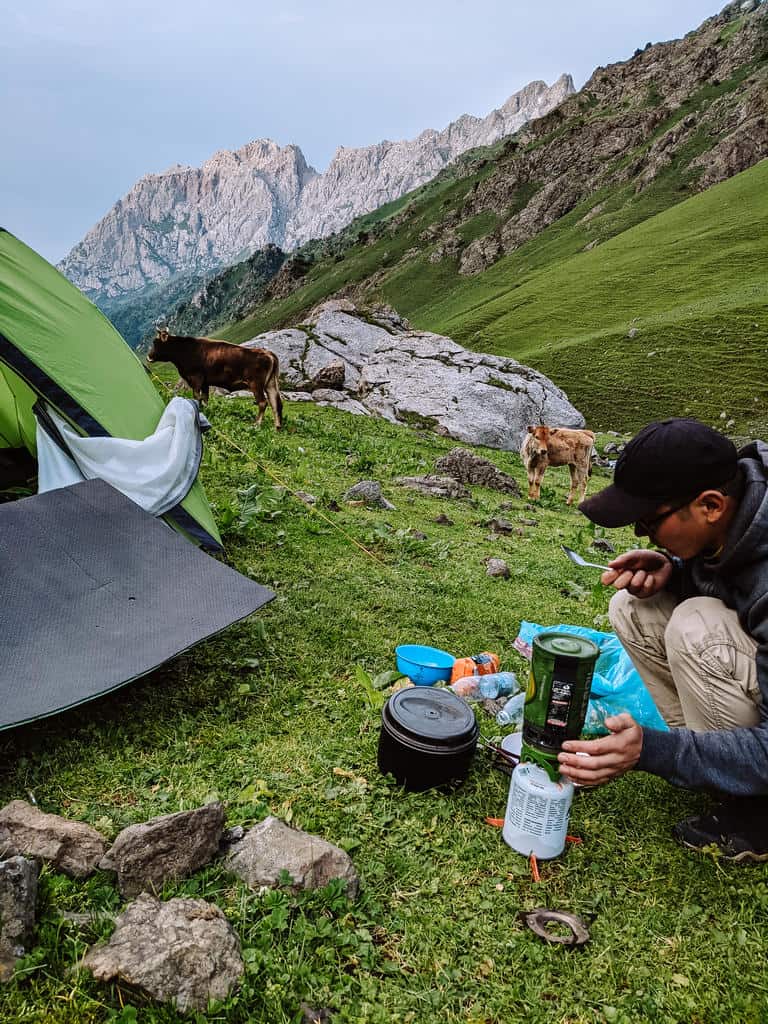
☑ Camping stove: A small and lightweight camping stove will allow you to cook a nice meal at night and boil some water for tea or coffee. I have a recommend the ultralight Jetboil camping stove, ideal for hiking and backpacking. Tip: bring matches instead of a lighter. Due to the changes in the atmosphere, some lighters won’t work at higher altitudes.
☑ Camping cookware, cutlery, and mug: You’ll need some good cookware to use on your camping stove. I recommend this lightweight cooking set, a spork-knife, collapsible camping bowls that you can use as a plate or a bowl and a lightweight thermal mug.

Reading tips for trekking in Central Asia:
What to pack for a Yurt Stay
And last but not least, what do you need to bring when planning a yurt stay in Central Asia?
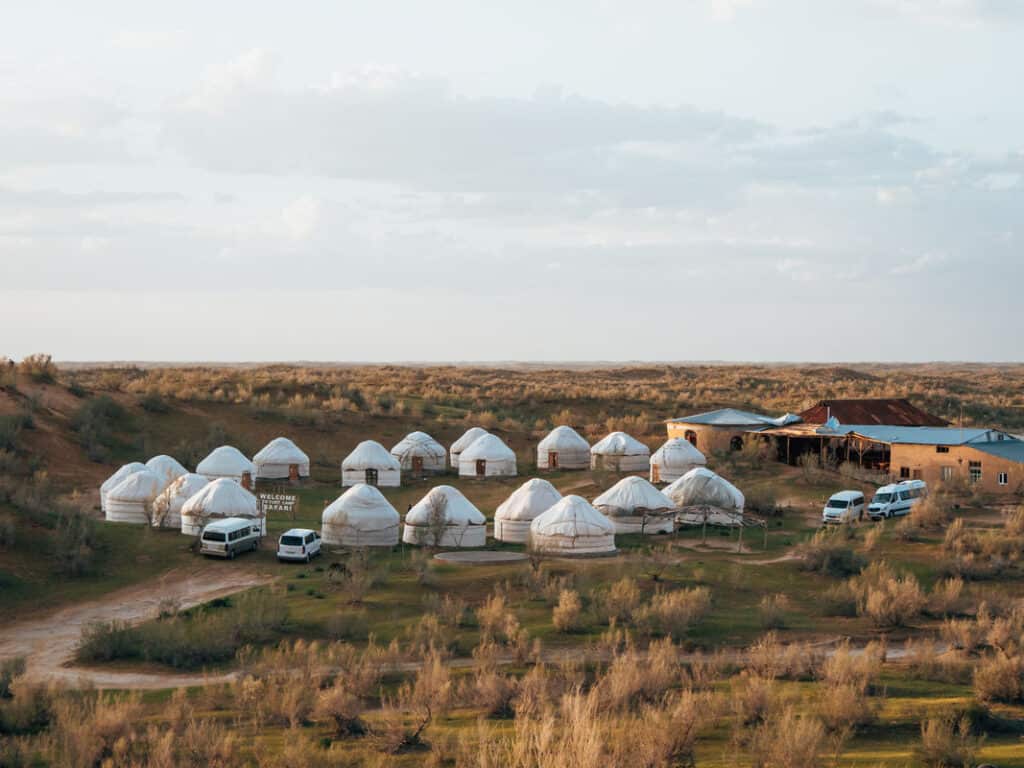
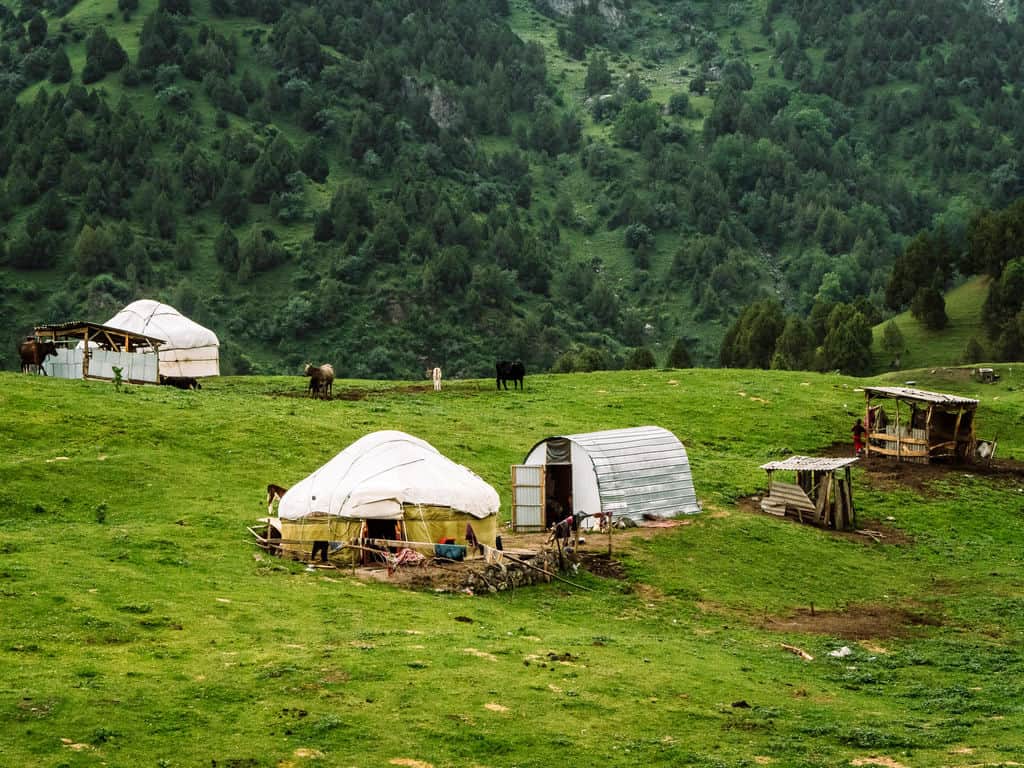
The yurt camps in Kazakhstan and Uzbekistan will be tourist ones as there are barely any nomadic shepherds in both countries. You might still come across nomadic yurt camps in the east of Tajikistan. If you really want to experience a yurt stay with a nomadic shepherd family, then you should head to Kyrgyzstan.
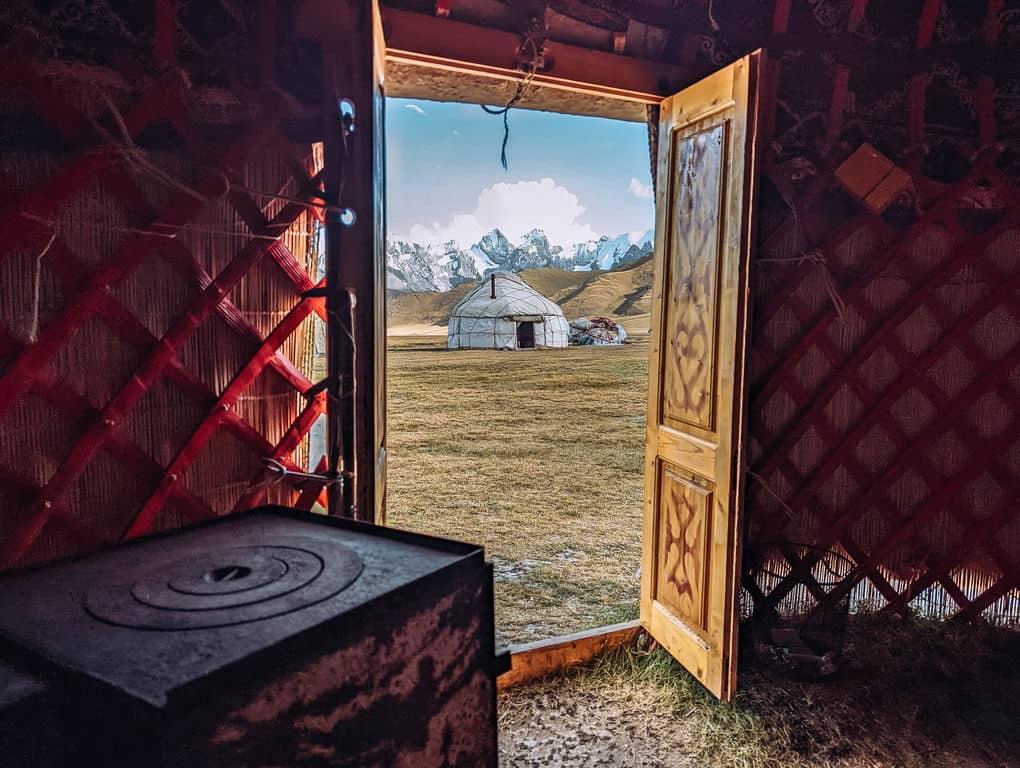
Most yurt camps are located at higher altitudes and while most of them have stoves inside, you should bring warm clothing for the evenings.
The tourist yurt camps have nowadays beds with blankets and pillows. The yurt camps from nomadic shepherds will offer thick floor carpets as mattress and they’ll have blankets and pillows. You don’t need to bring any camping or cooking gear but I’d bring a sleeping bag liner as it’s warm and more hygienic (the blankets don’t get washed on a daily basis).
There might be some sort of electricity at some camps but you should bring your portable charge and headtorch. Some tourist yurt camps have some sort of shower and outdoor sitting toilets, but most don’t. If you pack everything I mention in 2. Central Asia Travel Essentials, then you’re all set for a yurt stay as well.

I hope this guide will be useful for planning your trip to Central Asia. I you amazing adventures and feel free to contact me or comment below if you have questions or useful updates/ information to share!
Related Posts
Mangystau Kazakhstan: Complete Travel Guide (2026) to Bozzhyra, Torysh, Sherkala & More

Kyrgyzstan Itinerary: The Ultimate 7, 10, 14 & 21-Day Travel Guide
Why Visit Kyrgyzstan: 12 Reasons why I fell in love with this special country in Central Asia
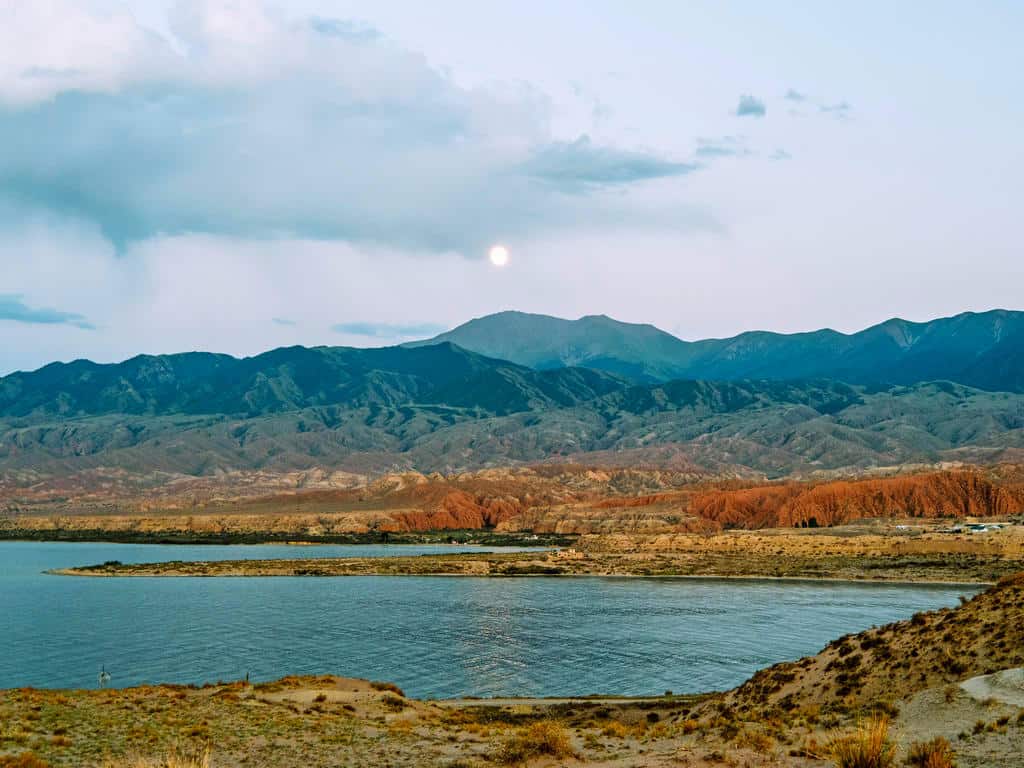
The best things to do around Issyk Kul Lake in Kyrgyzstan: Highlights, Hiking & one-week itinerary

The Complete guide to the World Nomad Games 2026 in Kyrgyzstan
Hi Lydia,
Thank you for all the amazing tips on your website!
I am travelling to Kyrgyzstan for one month (August) and was wondering if and where and which kind of stove fuel I can buy.
I was also wondering if I need to bring a special adapter for my Electronic devises.
Kind regards,
Nora
Hi Nora, you can check with RedFox if they have stove fuel there (they sometimes do). The plugs are the same as in Europe so if you’re coming from Europe, no special adapter needed.
Thank you for such a comprehensive blog, Cynthia! I’m living in Armenia right now and planning a 2 week trip to Kyrgyzstan and Uzbekistan in early June.
I’m planning to go to Kyrgyzstan the first week of June and then Uzbekistan afterward (simply because I’d rather refresh myself with hiking first and explore cities later). But I wanted to ask you if you think there is a notable difference in how rainy it is and what yurt camps are available even between the first and second weeks of June. Just thought I’d ask in case you think it’s worth it to switch the order of things.
Hi Christina,
The yurt camp availability will really depend on the weather (which is unpredictable at this moment in time), but it won’t make much of a difference between the first and second week of June. The chances of rain in June in Kyrgyzstan are high. I hope this helps!
Hey! I loved reading your blog 🙂 My boyfriend and I are going to Kyrgyzstan in August this year and are really looking forward to it! We’re doing the Ak-suu traverse and were wondering where you left your food while camping? (since you don’t wanna leave it in your tent in remote areas)
Hi Jill, I’m happy to hear you’re going to Kyrgyzstan! You’ll fall in love with the country 🙂
We usually hang our food in a tree in a closed bag so animals can’t reach it. If we’re camping at high altitudes above the tree line, we keep our food in a closed bag in or near our tent (at these altitudes, we usually don’t encounter many wild animals that are after our food 🙂 ).
Have a great time hiking and camping in Kyrgyzstan!
These maps are still not available for sale online! Very frustrating in 2019! It shouldn’t be difficult to have them available for sale.
Any idea where I can buy them before I travel?
Hi Jake, sorry to hear that. I’ll check today with a local friend how come they’re still not available. But one thing I know is that things in Kyrgyzstan take time 😉 I don’t think you can get them anywhere else online before you travel. In Kyrgyzstan, you should be able to buy these maps at the DMO offices of each region. Wishing you a great trip to Kyrgyzstan!
I couldn’t have found a better and more useful guide for packing and trekking Kyrgyzstan, Cynthia! As trekking in Kyrgyzstan is on my bucket list for a while now, I found your post very inspiring. When’s the best time of the year for hiking in Kyrgyzstan?
Thank you Lydia, I’m so glad to hear this! You will love hiking in Kyrgyzstan! It’s one of the few countries with such untouched nature. I’d say that the best time for hiking would be between June and September. All the mountain passes are open, it won’t get too cold to camp and you’ll come across many nomadic camps, which is already a reason on its own to hike in Kyrgyzstan 🙂 I’m currently working on a trekking guide with an overview of the treks in Kyrgyzstan, which I hope will be online within the next 4 weeks 🙂 if you would have any questions, feel free to send me an email!