
A detailed overview in photos of the 8 most beautiful lakes in Kyrgyzstan.
Over 1900 alpine lakes rest within Kyrgyzstan’s stunning mountain peaks, like hidden gemstones scattered throughout the country. The diverse Kyrgyzstan landscape makes every lake unique, with varying elevation, size, surrounding terrain and weather.
It would be difficult to write about each and every one as some are so tiny that they wouldn’t even show on a map. So I have selected 8 of the most beautiful and best lakes in Kyrgyzstan that will help give you detailed info about each, facts and Kygyz myths and legends connected to these Kyrgyzstan lakes.
Disclaimer: This posts might contain affiliate links, meaning that if you make a purchase through these links, I may earn an affiliate commission. Thank you for helping to support this website!
Plan your trip to kyrgyzstan!
✈️ Find the cheapest flights → Check fares to Bishkek or Osh
🏨 Find hotels & yurt stays → Browse the best accommodation deals
📱 Stay connected → Get a Kyrgyzstan eSIM
🛡️ Travel insurance → Don’t travel Central Asia without coverage
🎒 What should you pack? → Read my Kyrgyzstan packing list
🥾 Want to go hiking? → Discover the most beautiful hiking trails in Kyrgyzstan
🐎 Want to go horse riding? → Check out my favorite horse trekking experiences
🗺️ Need help planning your route? → Learn about my itinerary planning services
⛰️ Prefer traveling with a group? → Join one of my Kyrgyzstan adventure tours
8 stunning Lakes in Kyrgyzstan
1. Kel Suu Lake
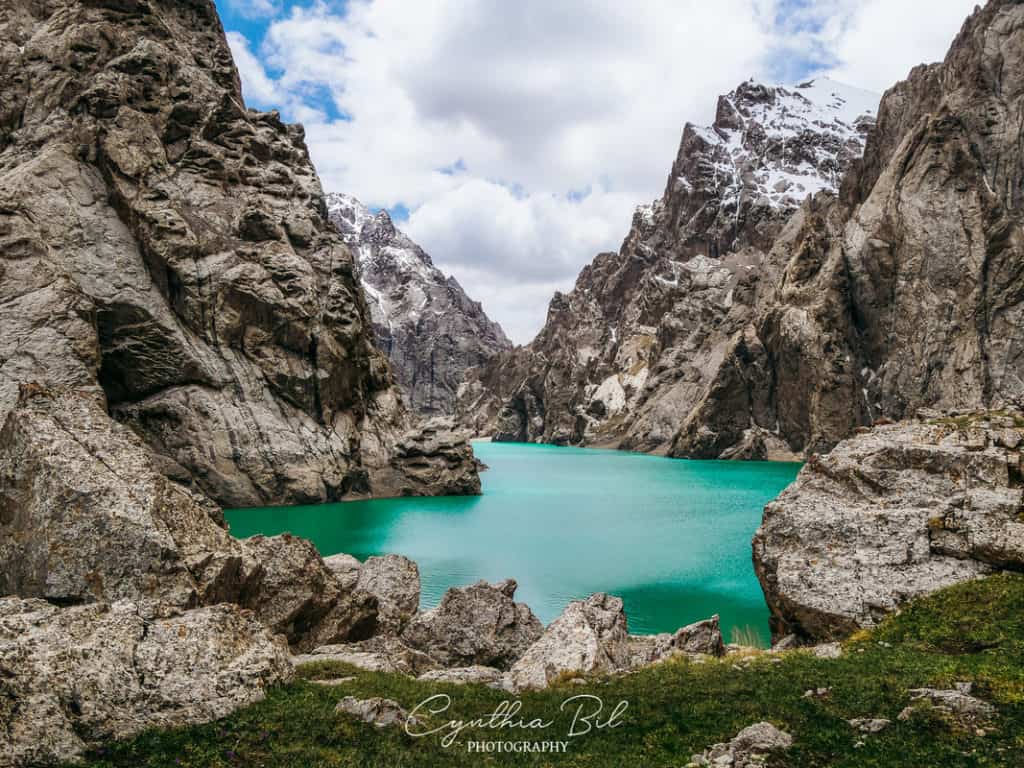
Kel Suu, also known as Kol Tetiri, translates to ‘coming water’ in Kyrgyz and relates to the fact that sometimes the water in the lake comes and goes, leaking into connected caves. This fascinating feature creates a somewhat magical and mysterious atmosphere and helps make this one of the most beautiful Kyrgyzstan lakes.
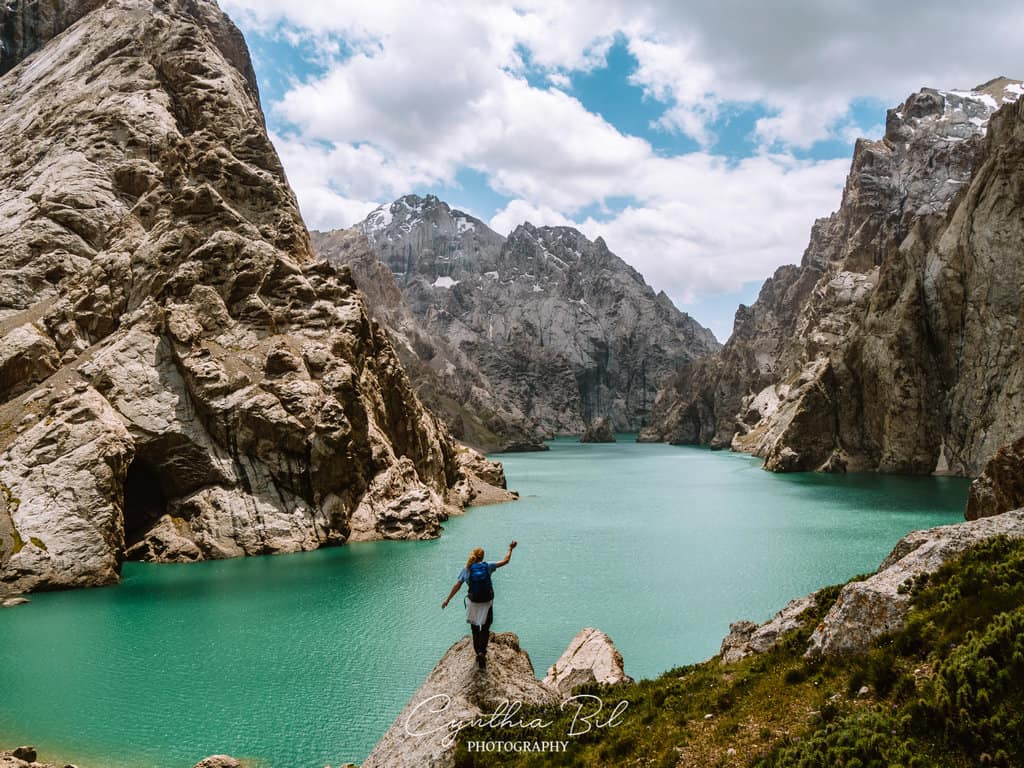
Alongside the waterfalls, bays, caves, rocky islands and epic Kyrgyzstan landscapes, the lake’s stunning turquoise water reflects off the dark, jagged rock faces which only adds to its uniqueness.
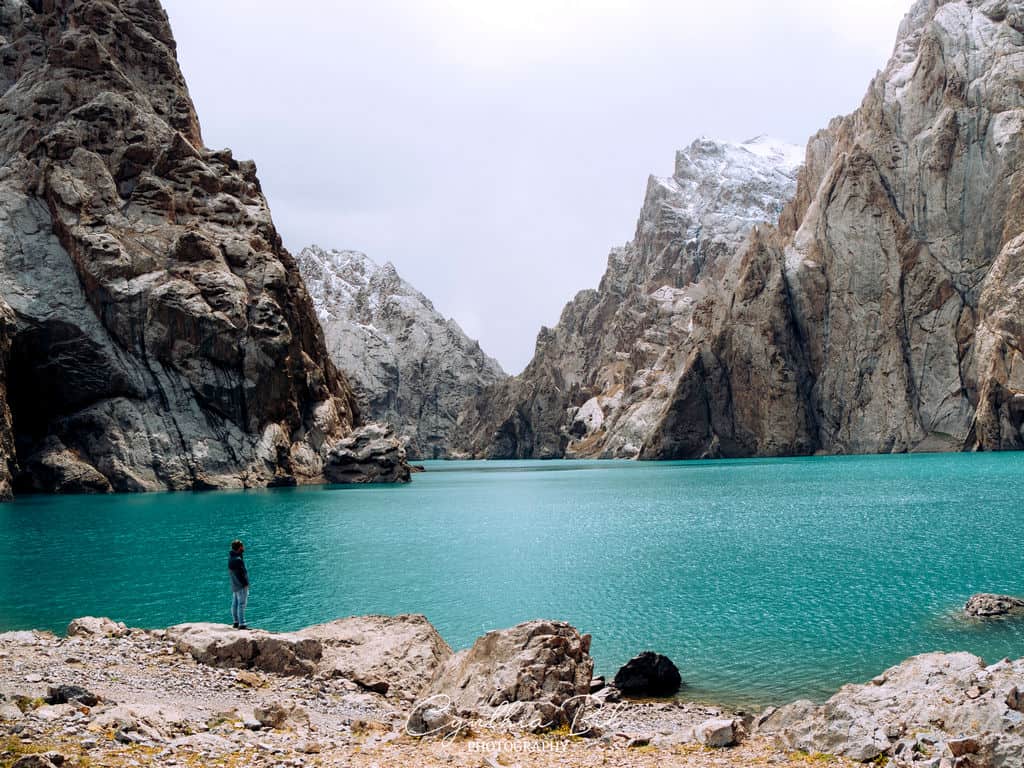
12 km in length and with varying width measurements between 500 meters and 2 km, this alpine lake crosses in and out of the surrounding mountain peaks, including the Sary-Beles summit (4726m) that overlooks it.
Formed thousands of years ago, during a strong earthquake that forced a large crevice and cleft between the rocks where the lake now resides, the Kyrgyzstan landscape dramatically shifted and the lake sits at an elevation of approximately 3515m.
During winter, Kel Suu is covered by a layer of thick ice that melts in the Spring, filling the lake, which is then only accessible between late June July and late September.
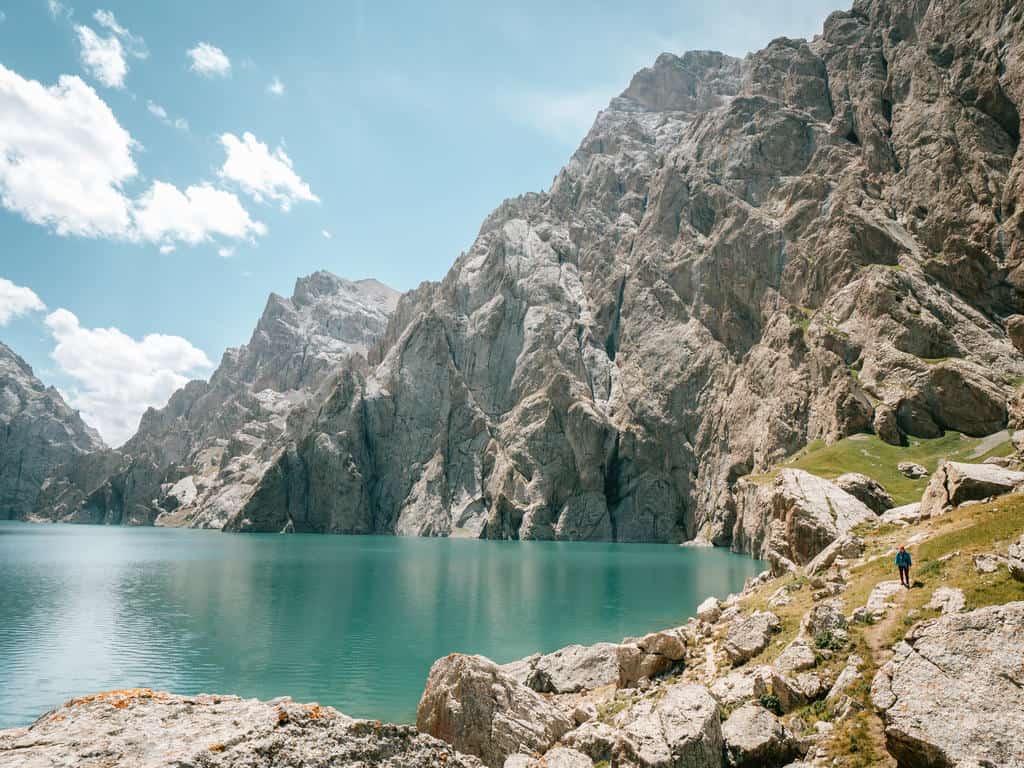
Located in the Kok-Kiya Valley, on the Kyrgyzstan-China border, in the Southeastern part of the Naryn region, a border zone permit is required to visit Kel Suu. The terrain en route to the lake is rough and an experienced driver and 4WD vehicle is required when traveling there.
With only one shore, it’s not possible to take in the entirety of the lake from one point.
The terrain here is ideal for horseback riding, hiking and boat tours are available here for you to take in the pure Kyrgyzstan beauty of this area. Passing shepherds often make camp here in the summer. Kel Suu Lake is definitely one of the most special and beautiful lakes in Kyrgyzstan.

2. Song Kul lake
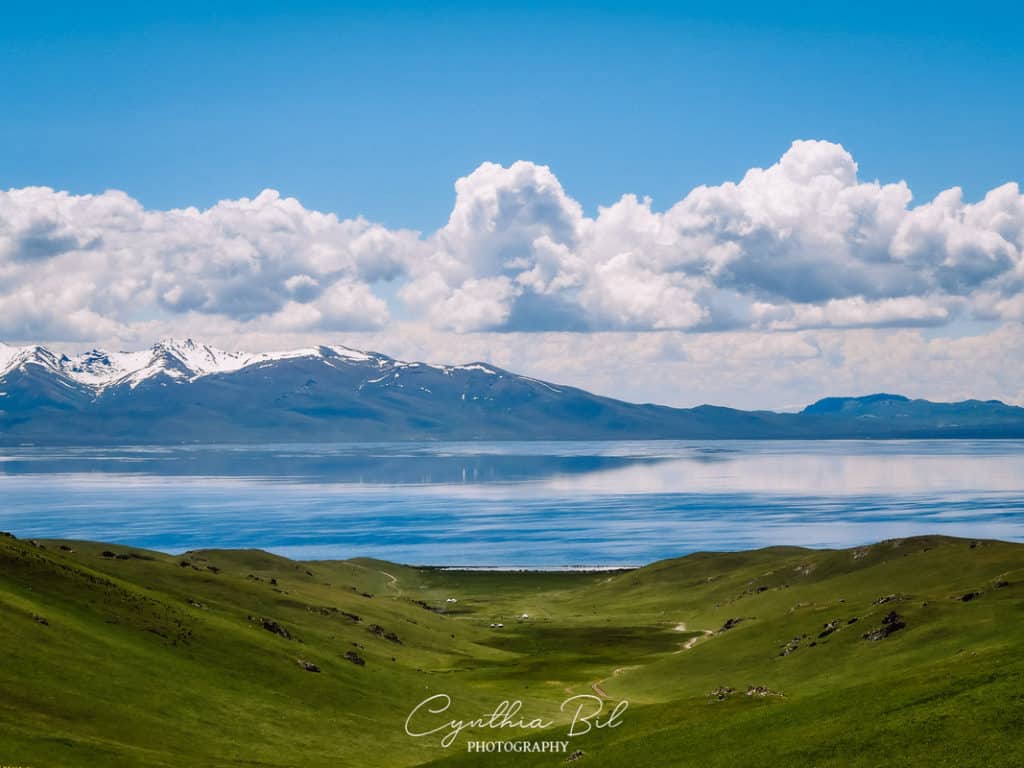
Lake Son-Kul or Song-Köl’s name translates to ‘‘following lake’. Situated in the northern Naryn Province, this is Kyrgyzstan’s second-largest alpine lake and the country’s largest freshwater lake.

Sitting at an altitude of 3016m, nestled between two mountain ranges, Song Kul overlooks a stunning pastoral valley. Being one of the most popular Kyrgyzstan lakes, Song Kul is large in length at 28 km and width at 18 km, but only 13 meters deep. Its isolated location and the fact that the lake sits above a glacier means that the water is always chilly.
Depending on the weather, the water in the lake can appear purple or blue and as it happens, it’s quite often Son-Kul that you’ll see on tourist guides and postcards of Kyrgyzstan. Part of the lake is located in the Karatal-Zharyk State Reserve, founded in 1994.
There’s an ethereal quality at this lake, the views are beautiful but in the evening, there is a calmness present alongside the millions of stars that fill the skies and reflect in the water.
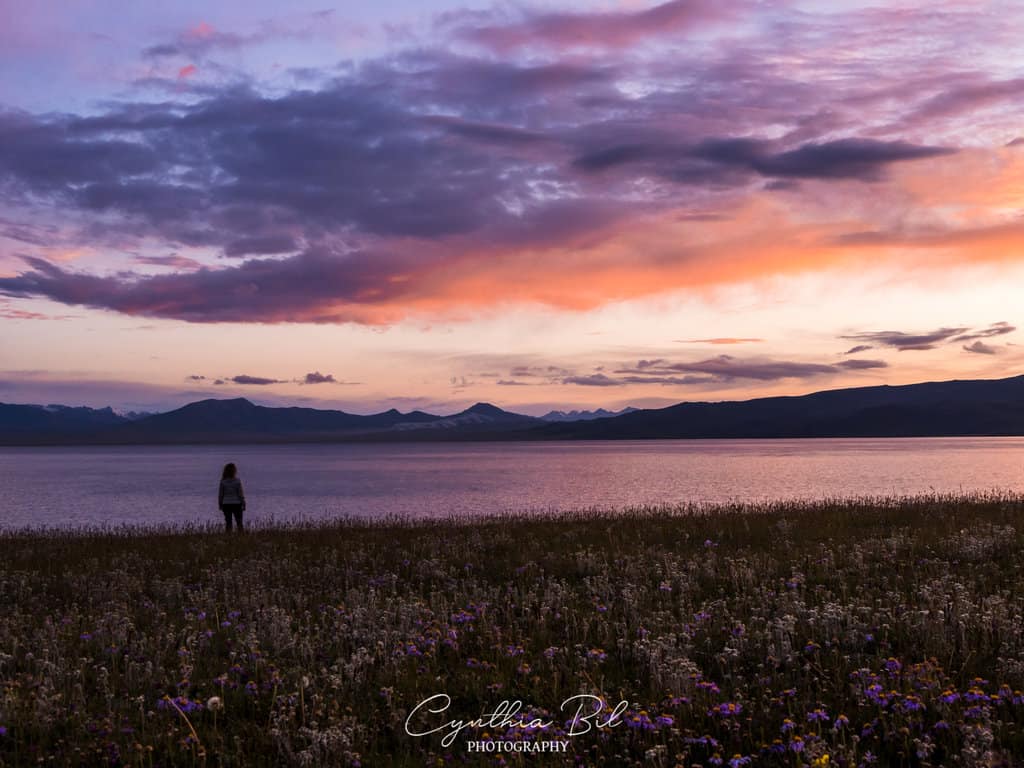
The ever-changing cloud formations create pictures on the water that are totally unique in any given moment spent here. Nomadic shepherds travel here in the summer and bring their horses, sheep and cows to graze and roam freely in the pastures.
The yurt camps at Song Kul are there four months of the year and you can pay to stay in one if you want to experience the epic charm and magic of the lake at night.

For most of the year, the roads here are impassable due to snow and this isn’t a place you come to for internet or good phone reception!
There is an option to access the lake on horseback via a local tour, allowing you to immerse yourself in nature and the local traditions.

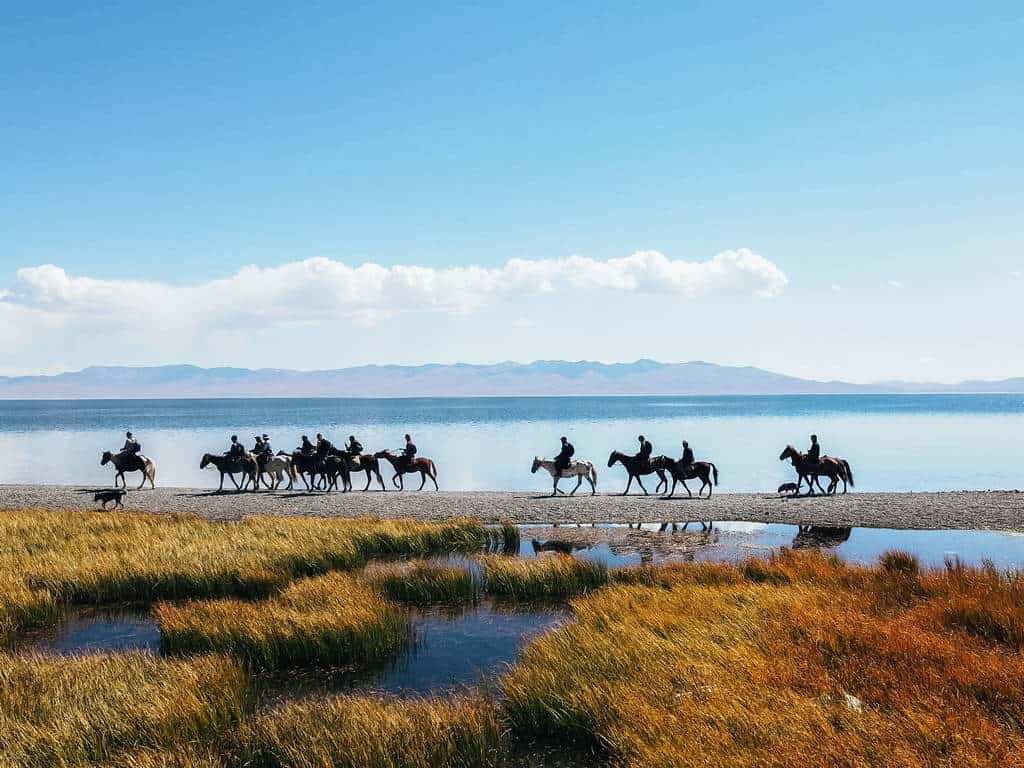
The cold climate and isolated location meant that the water was not home to any fish until 1959, when some were brought to the lake for breeding purposes. Now there are more than six different species living in Son-Kol’s waters.
A mass of wildlife and birds live in and around the area too. Foxes, snow leopards, wolves and many different kinds of birds all call this place home. This lake really is one of the best and most beautiful places to visit in Kyrgyzstan.
There’s an old myth about the lake called the Legend of Son Kul. It tells of an evil Khan who kidnapped women and brought them back to his palace. When the Khan decided to set them free, the women, full of sadness fled into the surrounding mountain valleys.
The mountain spirits could eventually no longer bear their pain and created an enormous sinkhole beneath the Khan’s palace. They diverted the flow of four nearby rivers towards the sinkhole and the Khan and his men were no more and the lake has remained there ever since.

3. Kol-Ukok
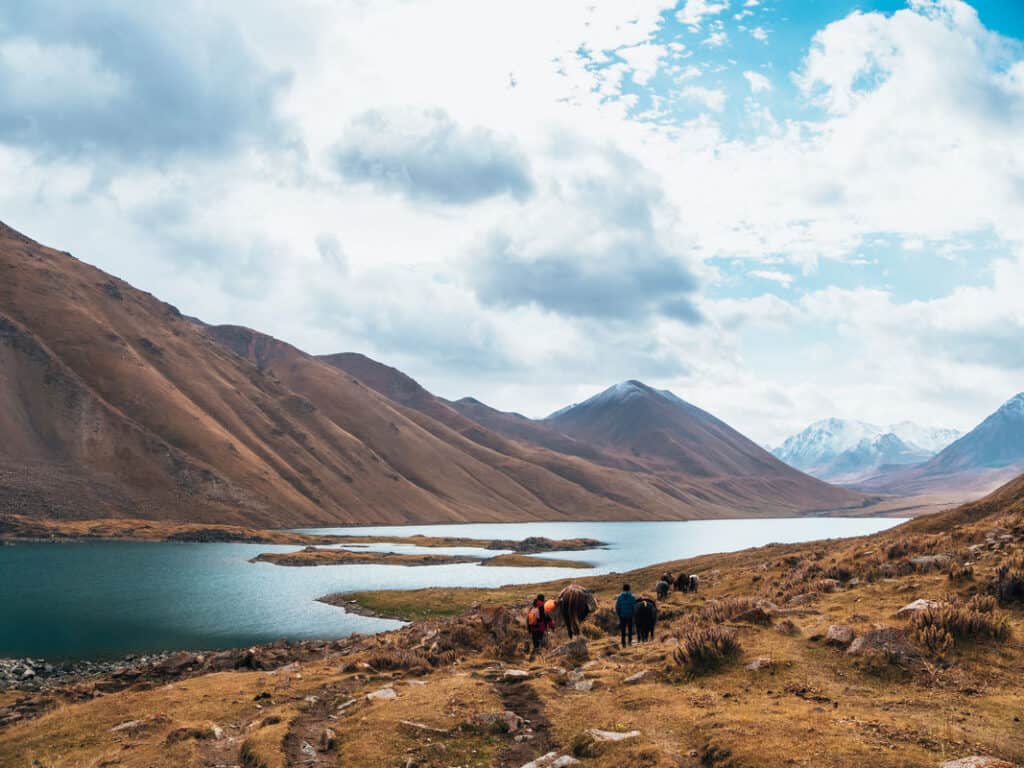
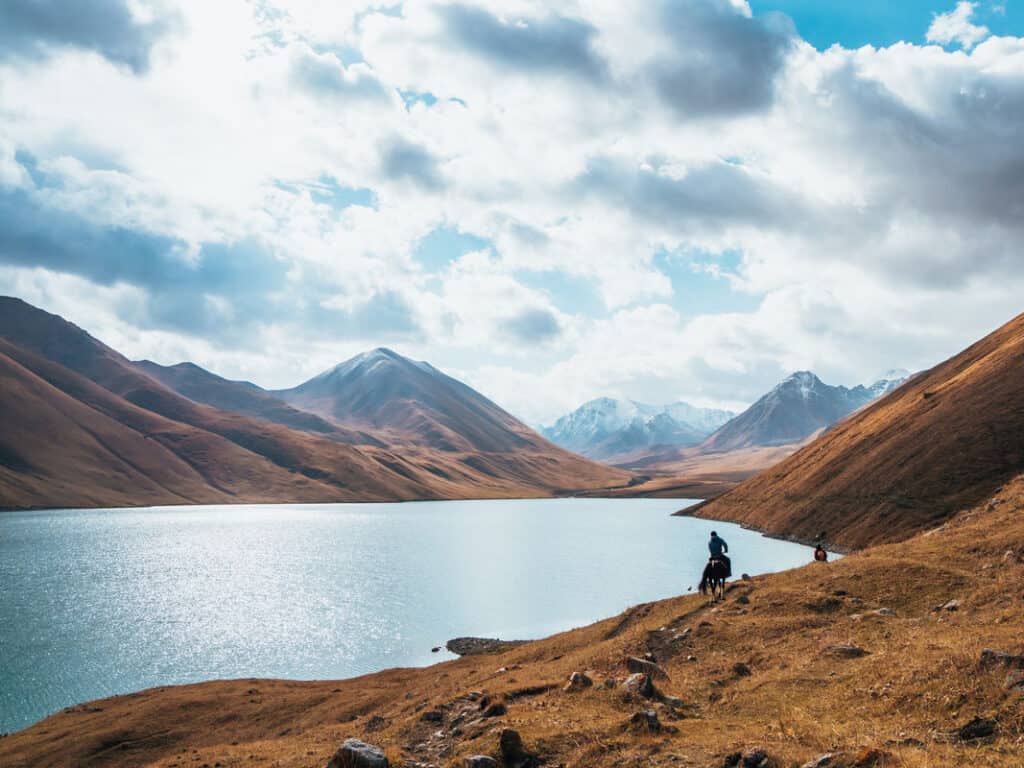
The caravans of the Silk Road once passed here whilst traveling through the Torugart pass to Chinese Kashgar. Kol-Ukok in Kyrgyz translates to ‘lake in a chest’ and is located in the Naryn region in the North-Eastern Terskey Ala-Too mountain range.

This beautiful small alpine lake (approximately 2 km long) sits in between two extremely steep mountain slopes at an altitude of around 3,000 meters and the deepest point is 17 meters.
Kol-Ukok is not for swimming as the water is very cold. But if you happen to be looking for some silence, clean air, and great views, this is a great lake to visit.
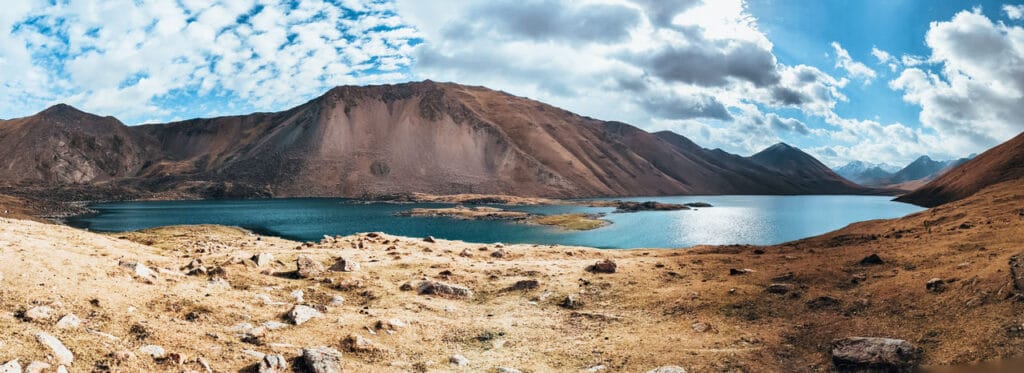
In recent years, this alpine lake has become a more popular Kyrgyzstan hiking spot but it’s advised to check the weather before departing to Kol-Ukok as unpaved roads can be washed away in heavy rain.
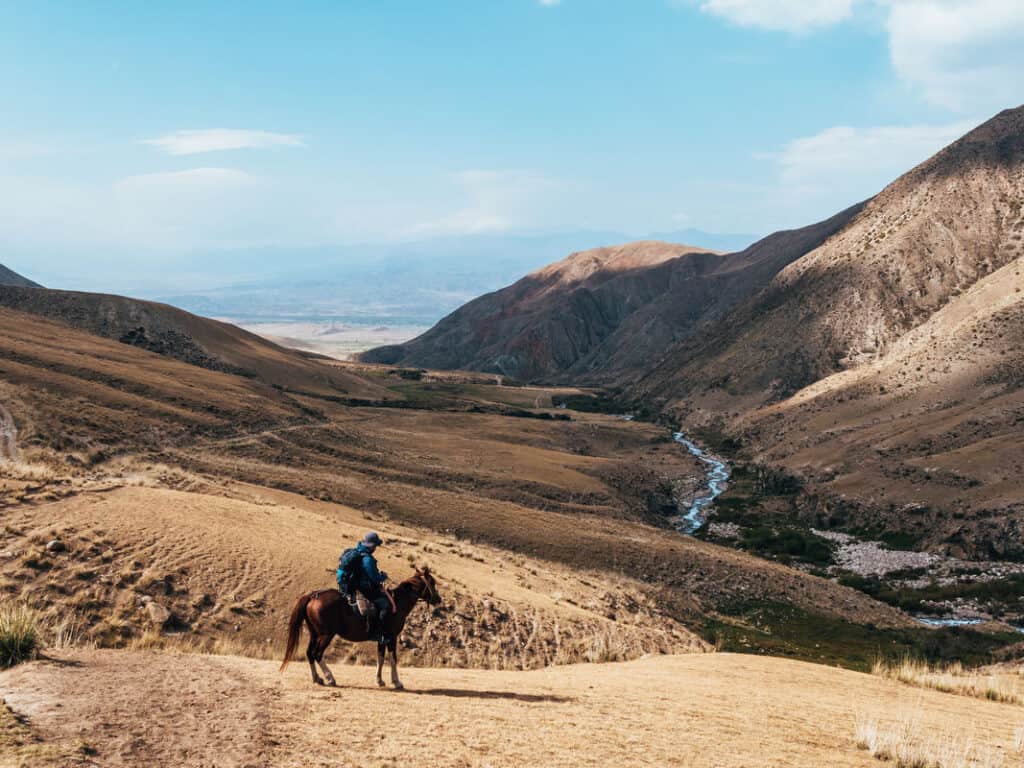
It is possible to experience the warm hospitality of the local Kyrgyzstan people and stay at the lake overnight in a warm Kyrgyz yurt. From May to October, shepherds travel here to set up camp tending to cattle who graze in the ‘jailoos’ meaning summer pastures. This is a nomadic tradition that dates back for centuries in Kyrgyzstan.
The flora and fauna here are rich and diverse. Different types of fish live in the lake itself, as well as many animals such as foxes, wolves, hares, and mountain goats who reside in the area surrounding it. Edelweiss, Forget-me-not, wild garlic and rhubarb are spread out around the meadows close to the lake.
4. Issyk Kul
Lake Issyk Kul Kyrgyzstan is one of the country’s most famous and visited alpine lakes. Once a stopover on the Great Silk Road, its name translates to ‘the warm lake’ because although it sits at an elevation of 1607 meters above sea level and endures freezing conditions, the lake itself does not ever freeze.
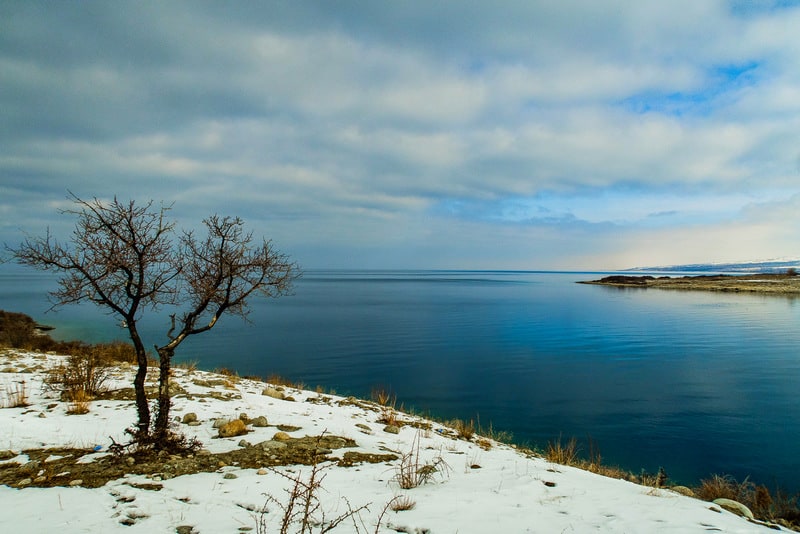
Issyk Kul is Kyrgyzstan’s largest alpine lake, the world’s second-largest saline lake, the seventh deepest (702m) and the tenth largest by volume (not by surface area). Around 118 streams and rivers flow into the lake, giving you some idea of its size.
The lake’s crystal clear, slightly salted water stretches so far that you cannot see the opposite shore from the beaches of the northern shore to the small villages at the southern shore, dominated by the beautiful Terskey Ala-Too Range of the Tian Shan mountains.
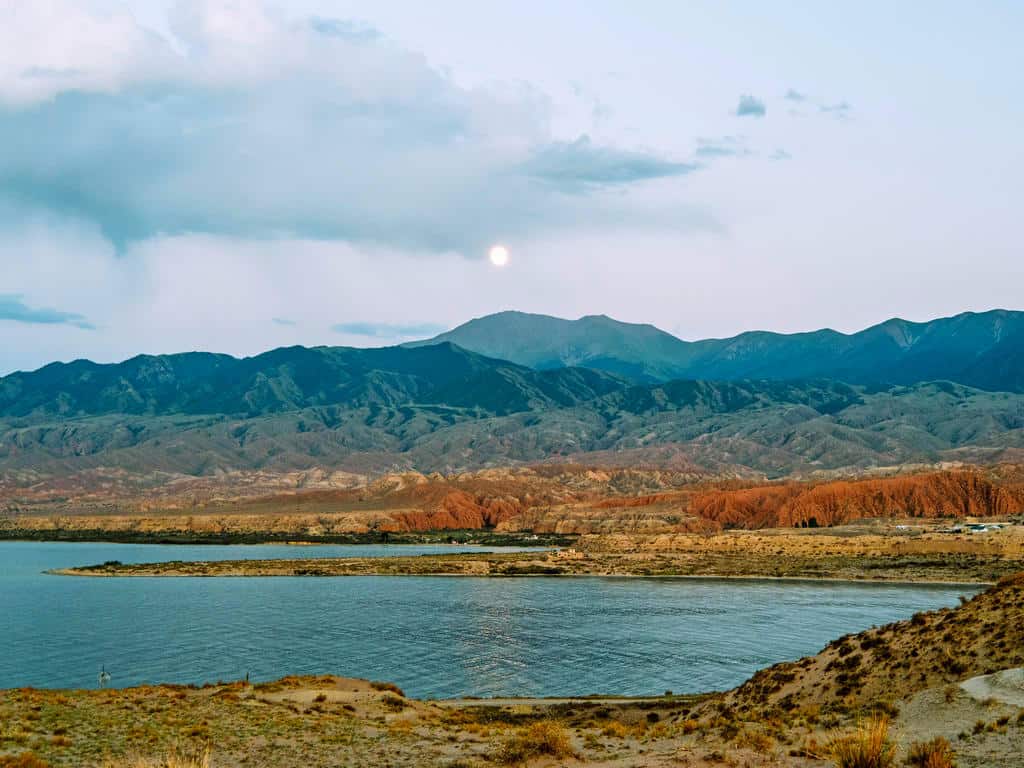
One of the biggest of Kyrgyzstan’s attractions, visitors from across the globe come to soak in the immense beauty of this dramatic lake. If you’re a fan of hiking, you can explore the surrounding valley, and throughout the summer, the warm temperatures draw in swimmers and water sports enthusiasts.
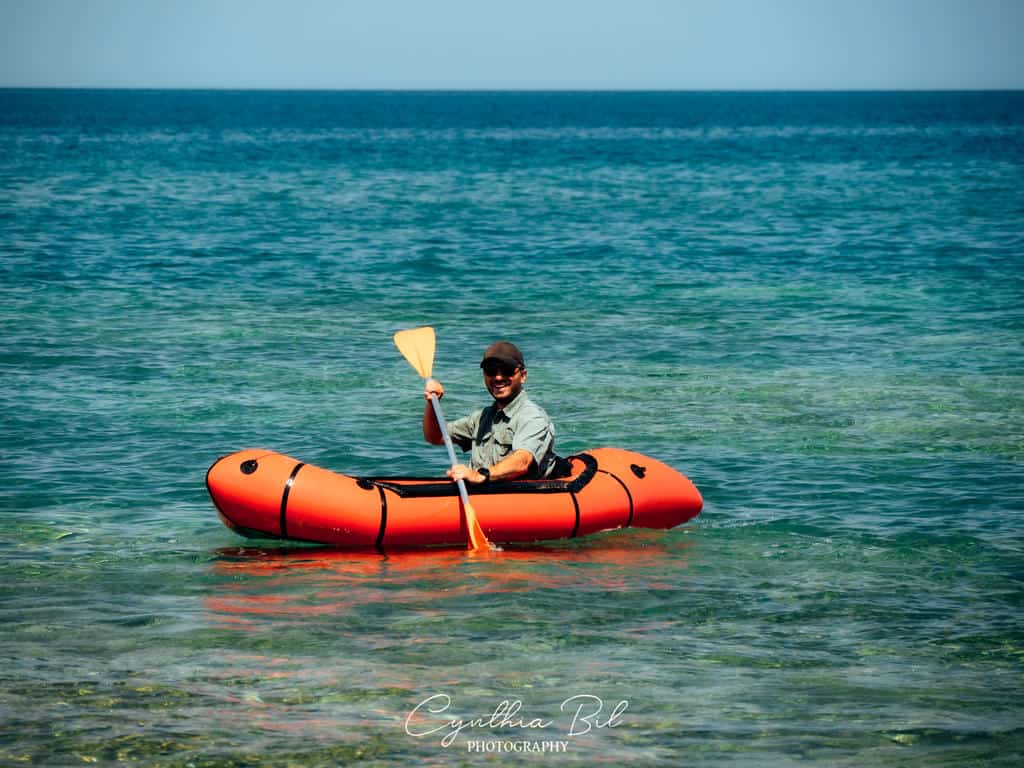
You can travel here as part of a Kyrgyzstan tour and unlike the smaller, more isolated lakes mentioned, Issyk Kul is not in any way secluded.
In 1948, the Issyk Kul State Reserve was established and in 2000 the site was covered by ‘The UNESCO World Network of Biosphere Reserves as a globally important place of biodiversity. There are 28 different species of fish in Issyk Kul.
This lake stretches out across a large part of Northern Kyrgyzstan, however, it is shrinking by around 5 cm with each year that passes because of water diversion.
There is proof that the Issyk Kul region was at one point the center of Eurasia. In 2007, archaeologists discovered the remarkable remains of a 2500-year-old settlement beneath the water. It is said that more than ten ancient settlements and a few monasteries are lying submerged at the bottom of the lake.
There are many myths and stories involving lake Issyk Kul. There is a pre-Islamic legend about how the lake was initially formed about the king of Ossounces, who happened to have donkey ears. Desperate to hide his secret, he killed each barber to stop them from revealing the truth.
One barber shouted the secret into a well, resulting in the well water to rise and flood the kingdom. The kingdom was submerged, and the lake was formed. It is also said that four cities lie at the bottom of the water, drowned by a flood.
Another is about the ‘Lake of Girl’s Tears’. Many years ago, the site of the lake was a vast desert and a white castle sat on the sand. The castle was the home of a beautiful girl named ‘Peri’. One day after hunting, a boy was drawn in by Peri’s beauty and they instantly fell in love. The boy had to leave but swore that he would return and told Peri that if she wanted to be with him, she would wait for forty days and nights without sleep.
Peri waited for her love to return but fell asleep on the fortieth night. The boy returned and when he saw his love sleeping, he stated that he was to leave her and never return as she didn’t wait for him.
Peri cried day and night until so many tears were shed that a lake was formed – Issyk-Kul – with water as pure as Peri’s love for the boy and as salty as tears. It is said that Peri was so overcome with sadness and grief that she turned to stone and remained petrified under the Tashtar-Ata mountains.
And lastly, it’s rumored that Genghis Khan himself was buried at Lake Issyk Kul. It’s said that his sons faked his funeral in Ordos, Mongolia and sent his body to be buried at the Issyk Kul instead. A large coffin was made from Turkestan juniper and Genghis’ body was buried deep in the lake along with burial treasure. The true resting place of the Khan has never been found, so who knows if there’s to this Krgyz legend!


5. Ala Kul
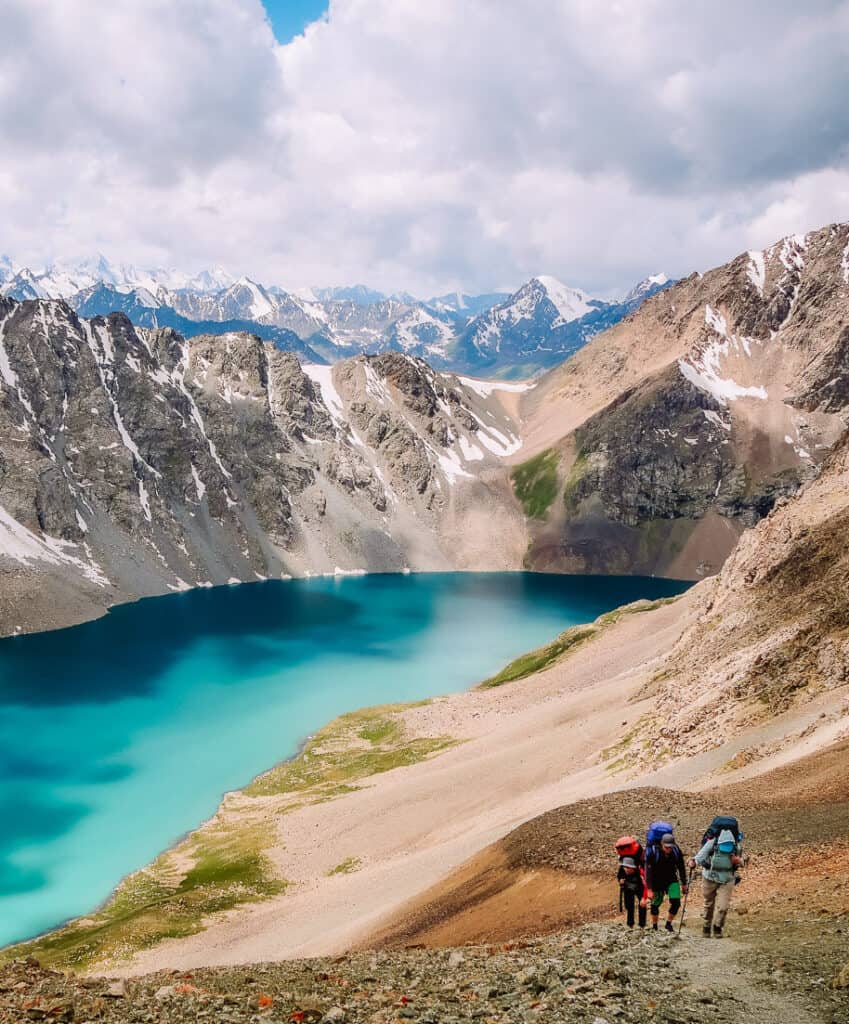
A firm favorite destination in Kyrgyzstan for trekking enthusiasts, Ala Kul is a small alpine lake that takes around three days of hiking to reach from Karakol.

The path takes you through green valleys, past forests and rivers where you can experience the stunning beauty of Kyrgyzstan.
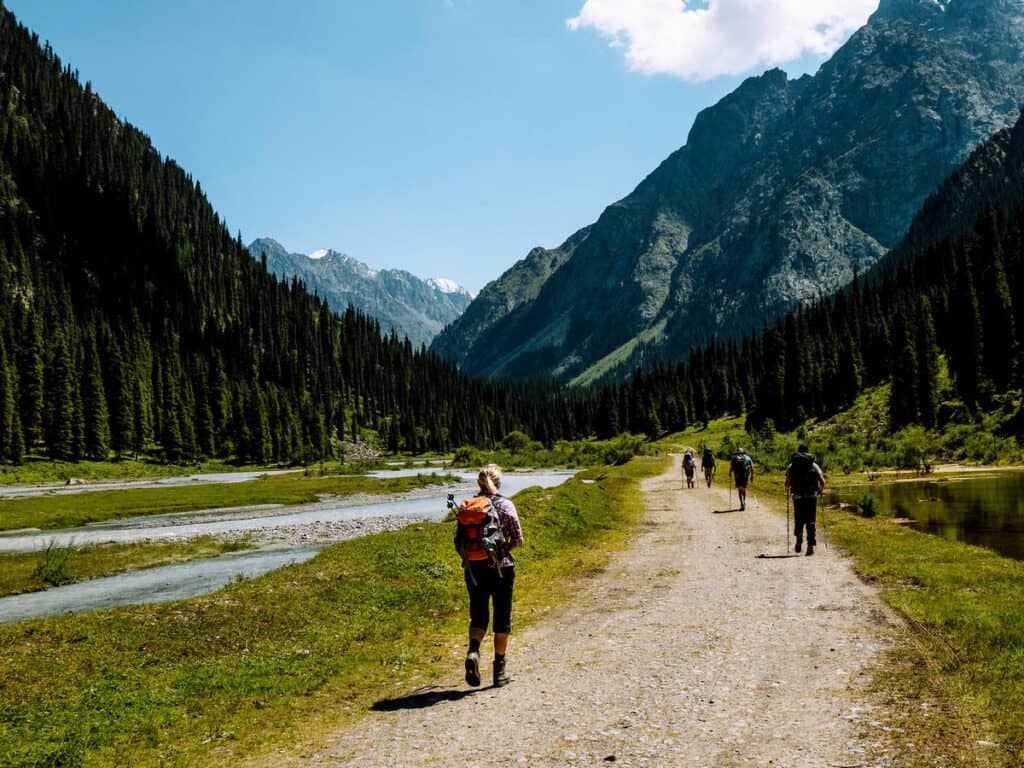
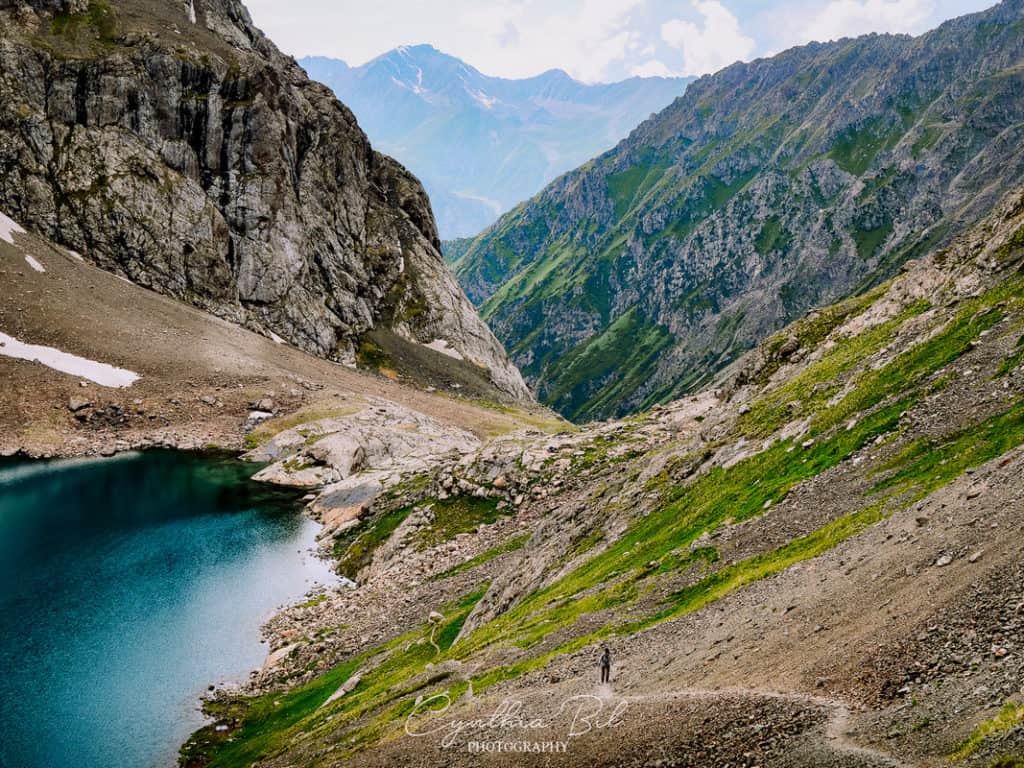
Located at an altitude of 3560 metres, the lake is part of the Karakol nature park and lies in a stunning valley within the Terskey-Alatau mountains, in the Ak-Suu district in the Issyk-Kul region of Kyrgyzstan. The name Ala-Kul literally translates to ‘variegated lake’ however the lake may have likely gotten its name from the more northern mountains of Ala-Tau.

The water within the lake is said to contain healing properties and the colours are stunning. Although small in size with a length of only 2.8 km, it is one of the most beautiful lakes in Kyrgyzstan due to the mountain peaks that surround it, the panoramic view and the glacier that feeds it.

Discovered in 1881 by a Russian traveller by the name of Putimtsoff, he described the lake well by mentioning the varying turquoise colours in the water and the strong winds around the lake. The view at Ala Kul lake in Kyrgyzstan is especially beautiful when the sunlight hits the snow covered mountain peaks.
Ala-Kul is in my opinion one of the most special lakes in Kyrgyzstan. The best time to visit the lake is between the months of July and September and attracts visitors from all over the world. It is possible to camp along the lake shores and you can do so solo or travel as part of an organised Kyrgyzstan tour.


6. Chatyr Kul
Chatyr Kul literally translates to ‘celestial lake’, ‘sky’ or ‘roof lake’. The origin of its name most likely comes from the fact that it is Kyrgyzstan’s highest lake. It sits at an altitude of 3,350m above sea level, near Tash Rabat right on the Chinese border in a tectonic cavity between the Torugart-Too and At-Bashy mountain ranges.
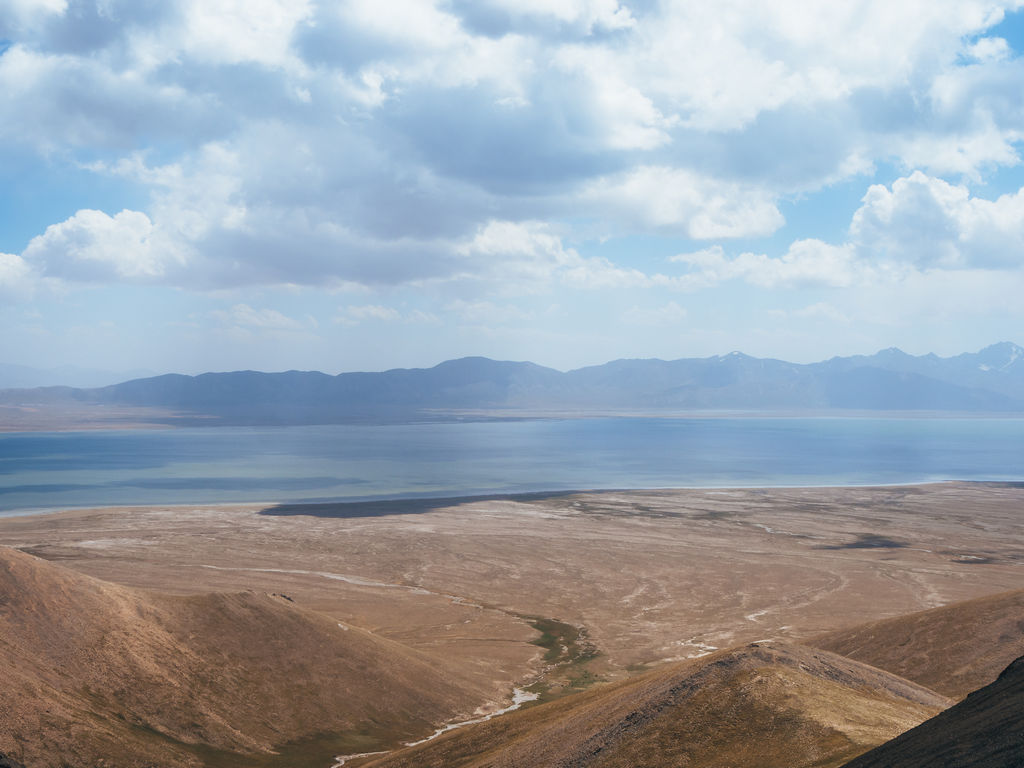
It’s the third largest alpine Lake in Kyrgyzstan (23 km long), 10 km wide and has a surface area of 180 km2. Although larger in size, its waters are quite shallow (5.6ft deep).
The lake is fed by glaciers that surround it meaning that for the most part of the year, the water temperature is very cold. In summer the water can rise to around 20 °C and the water freezes in October when in winter, the water temperature can drop to -20 °C. This alpine lake usually thaws in April time and the crystal clear water colour is a stunning light blue colour, reflecting the sky.
The lake was discovered in 1859 by the famous researcher and traveller, Shokan Valikhanov. The area that surrounds the lake is pretty spectacular and a wonderful example of how beautiful the Kyrgyzstan scenery is.

The reflections of the mountain peaks on the water are mesmerising. Around 17 rivers flow into this lake althought it’s completely devoid of fish.
You can explore the lake on foot or alternatively you can take a horseback tour. Due to the fact that the lake sits so close to the Chinese border, to visit you are required to have a special permit to access the area and spend the night there. If you only wish to hike along the pass and return the same day, you are not required to have a permit.


It’s wise to note that the shores of the lake are rather swamp-like and can be very dangerous. It’s advised that if you want to travel to Chatyr Kul, that you perhaps go with a tour guide who knows the area and can keep you on the right path. A lot of the shoreline is out of bounds as it is a sanctuary for nesting birds.
Chatyr Kul Lake itself is an area of biodiversity and a resting space for numerous types of wild birds. Goats, snow leopards and marmots all inhabit the surroundings of the lake and nearby mountains as well as many species of rare birds such as golden geese.
Dreaming of hiking through wild mountain landscapes, horseback riding across alpine pastures, sleeping in yurts, and exploring remote valleys by 4×4 with a small group of adventurous travelers?
7. Sary Chelek
The name Sary Chelek translates to ‘yellow barrel’, or ‘yellow vessel’. There are a couple of legends about how the lake gained its name.
One is about an old beekeeper who placed his hives around the lake shores. When harvest time came, the beekeeper was so shocked by how golden the honey was that he named the lake ‘yellow bucket’ relating to the full honey barrels along the shore. Another is about Sary, an old man who wove willow baskets shaped like buckets and gifted them to people.
A third notion is that in autumn, the lake fills with the yellow leaves from nearby trees and it is said to resemble a bowl of honey. And lastly, it was said that the lake seemed to take the form of a bucket and that the reflection of masses of yellow buttercups around the slopes were reflected in the water.
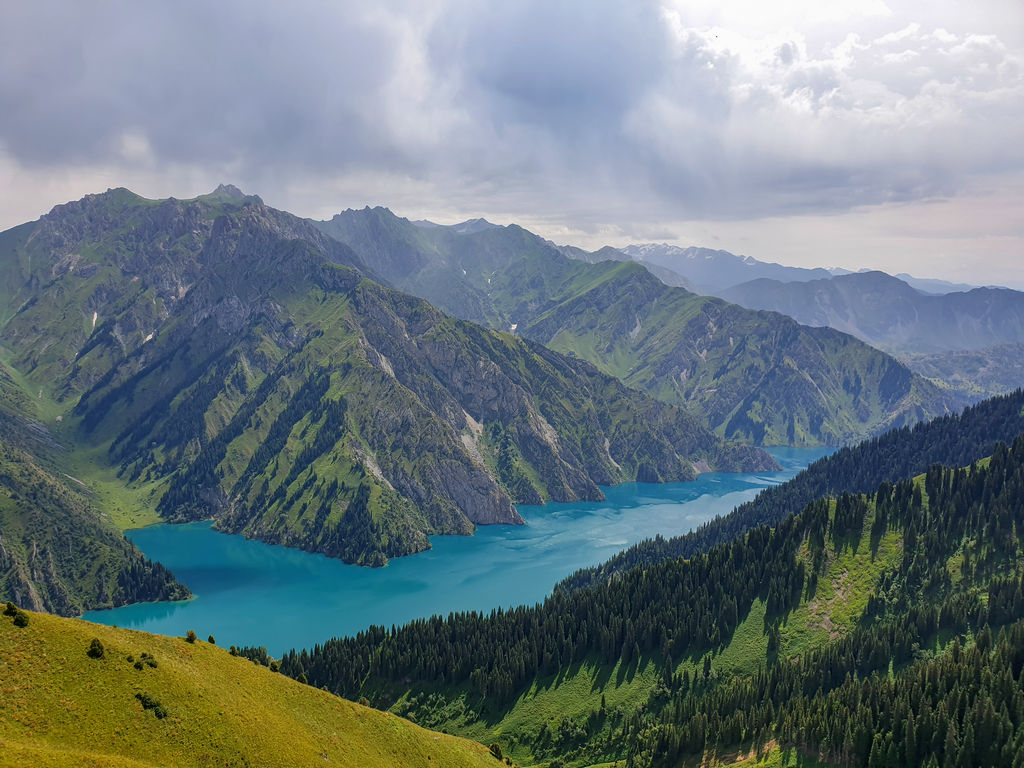
Lake Sary Chelek sits at an elevation of 1,940m above sea level and is one of a group of lakes that exist in the Sary Chelek Natural Reserve.
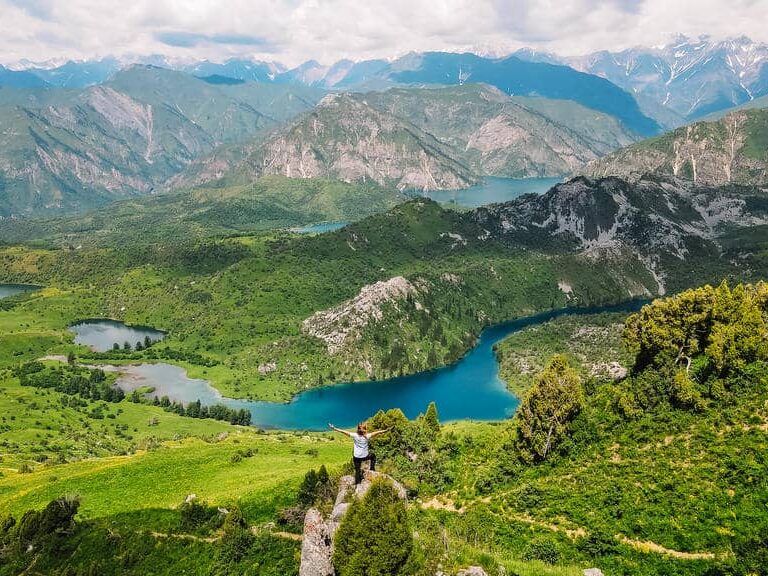
It is the second deepest alpine lake in the country and third deepest lake in Central Asia situated in the Jalal-Abad Province in the west of Kyrgyzstan, approximately 300 km from Osh city and 500 km from Bishkek. The lake is 7.5 km long and occupies an area of 4.8 km2 with a width of 650m.
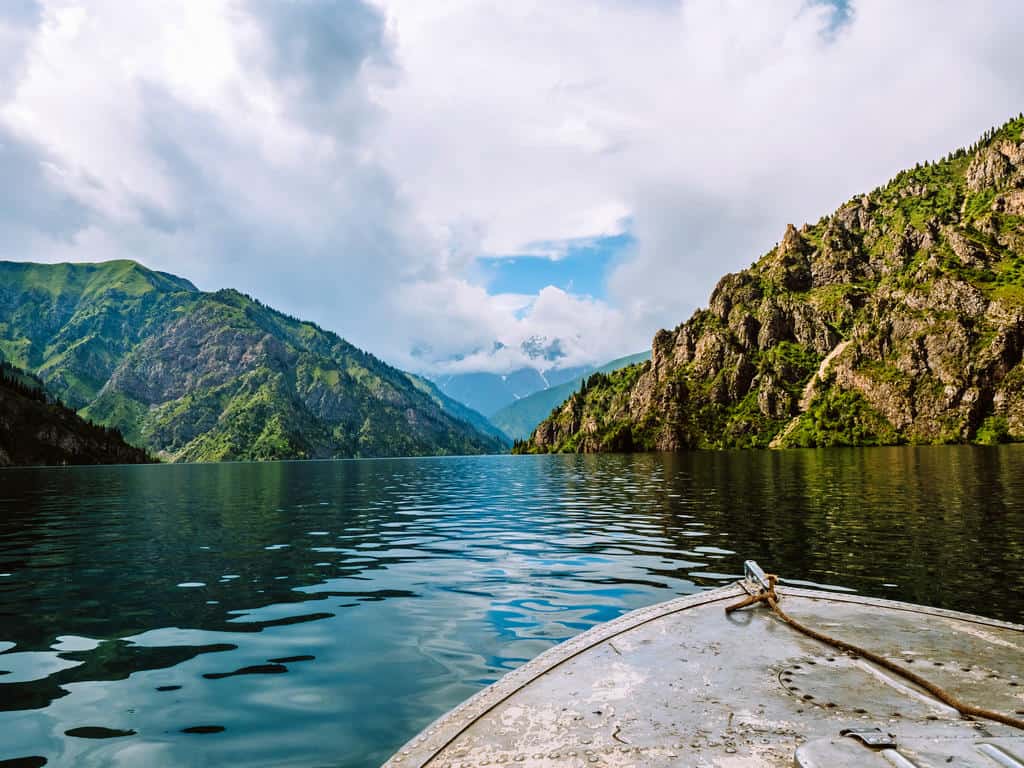
The most ideal time to travel here is between May and October and during the summer, the water has a greenish blue colour. The water temperature rises to 19°C in Summer and drops to between 4°C and 0°C during the winter Kyrgyzstan climate. Sary Chelek gains water from many smaller streams that flow into the lake and is then a source for the Kojo-Ata river.
The lake and surrounding mountains are the most popular part of the Chatkal range (part of the Tien Shan mountains) and the lake is considered to be not just one of the most beautiful lakes in Kyrgyzstan but in all of Central Asia.
Fir and spruce trees cover the lake’s northern shores and are beautifully reflected in the water. Fruit tree forests, multi coloured rocks, alpine meadows, snow capped peaks, wild rivers and swamps all combine in this untamed and diverse landscape to astound and amaze all who visit.
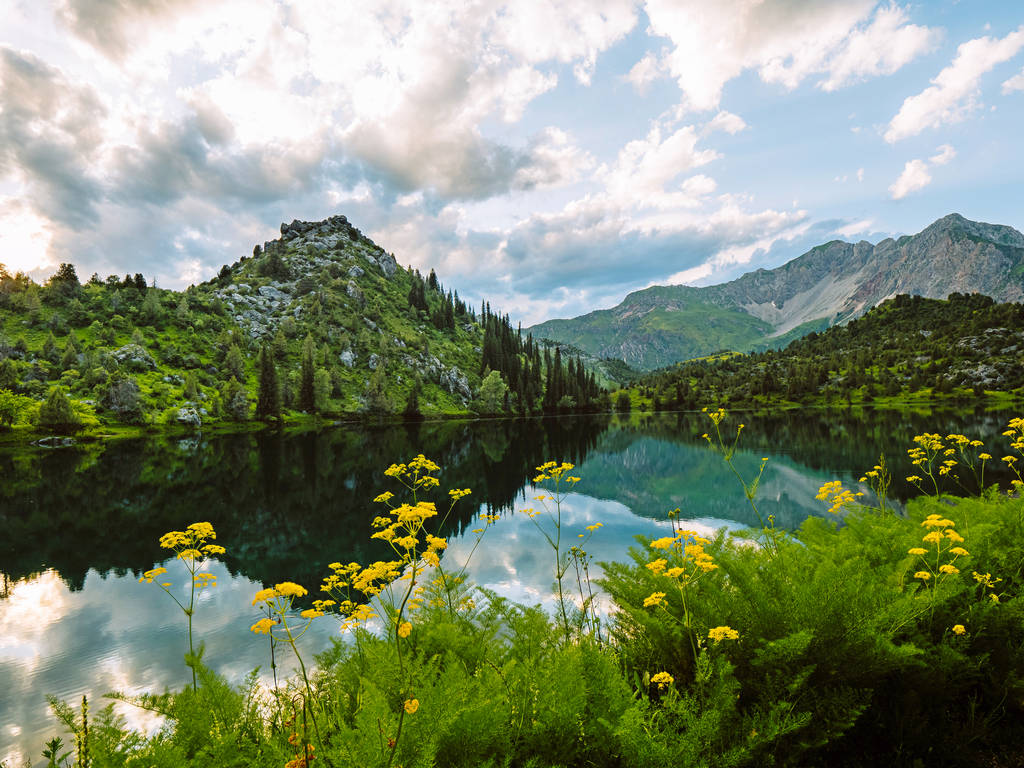
Part of one of the many national parks in Kyrgyzstan, the area is the home to a number of rare species of animals including the Ibex. Known as ‘teke’ in Kyrgyz, seeing one is a sign of great luck and joy. There are over a thousand plant species as well as 160 different types of birds, 34 types of mammals in this area and the lake is plentiful with fish.
There are several ideas concerning how the lake was formed. It is said that perhaps it was formed during an earthquake from the result of two mountain ranges colliding that produced a huge landslide that blocked one of the tributaries of the Kara-Su River. Others believe that the lake came to be around 2,000 years ago from a change in a fault line.

8. Kara Suu
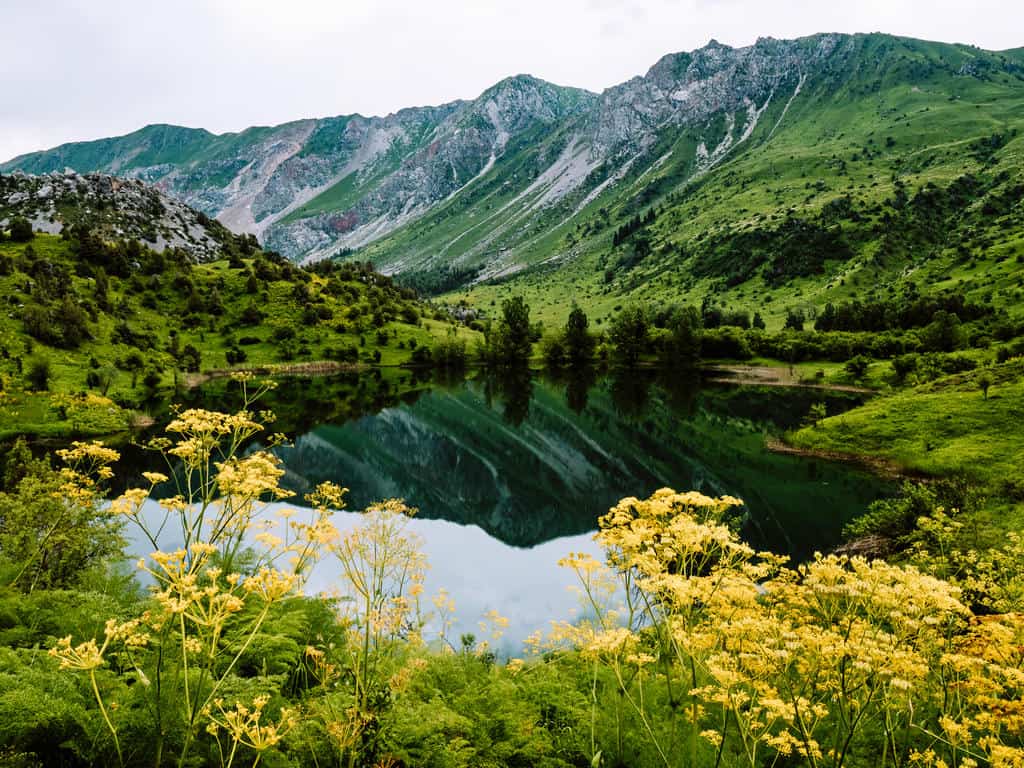
Kara-Suu Lake, also known as Kara Kamysh, is a rock-dammed lake in Toktogul District on the border of the Talas, Naryn and Jalal-Abad regions of Kyrgyzstan.
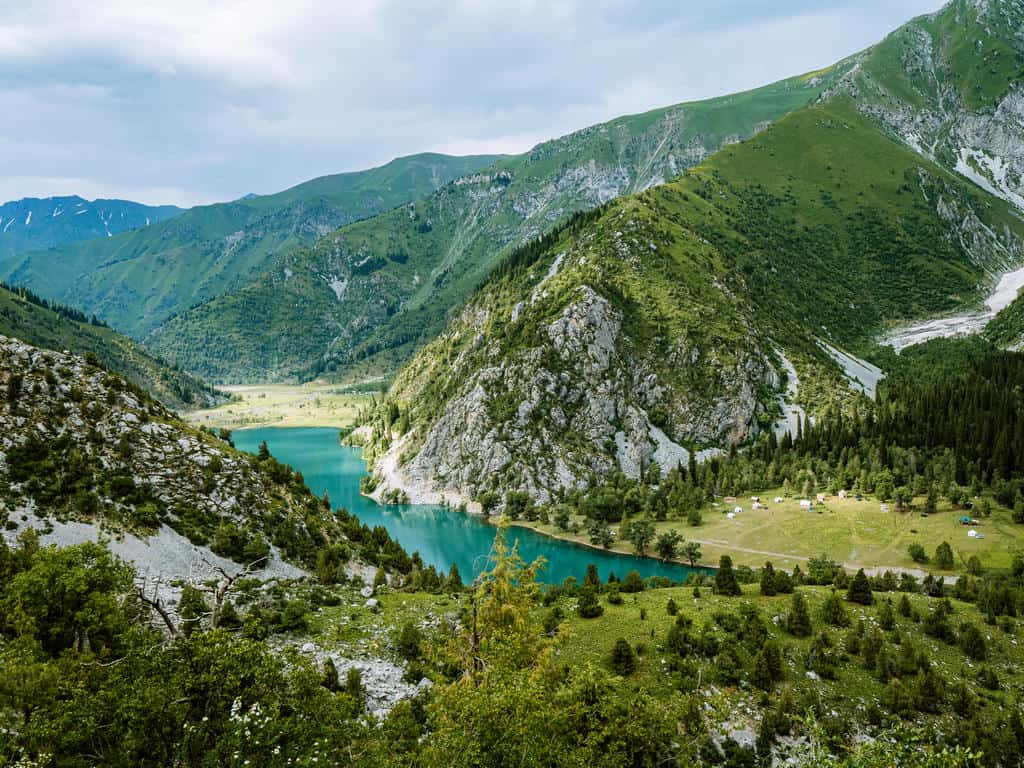
With a name that translates to ‘stone gate’, the lake sits in a gorge between the Ken-kel and Taktalyk spurs and was formed from the result of an earthquake after a mountain collapsed into the hollow in which the lake formed.
Situated at an altitude of 2022 metres above sea level, Kara Suu covers around 16 km2 with a maximum depth of 90 m. The Shibe river flows into the Kara-Suu and a tributary of the Naryn river – the Kara Suu river (85 km long), flows out of the lake.
The crystal clear water is a gorgeous blue, although you could sit and watch the ever-changing hues as the colour shifts dramatically moment to moment depending on the light and weather conditions. The lake remains chilly even during the summer.
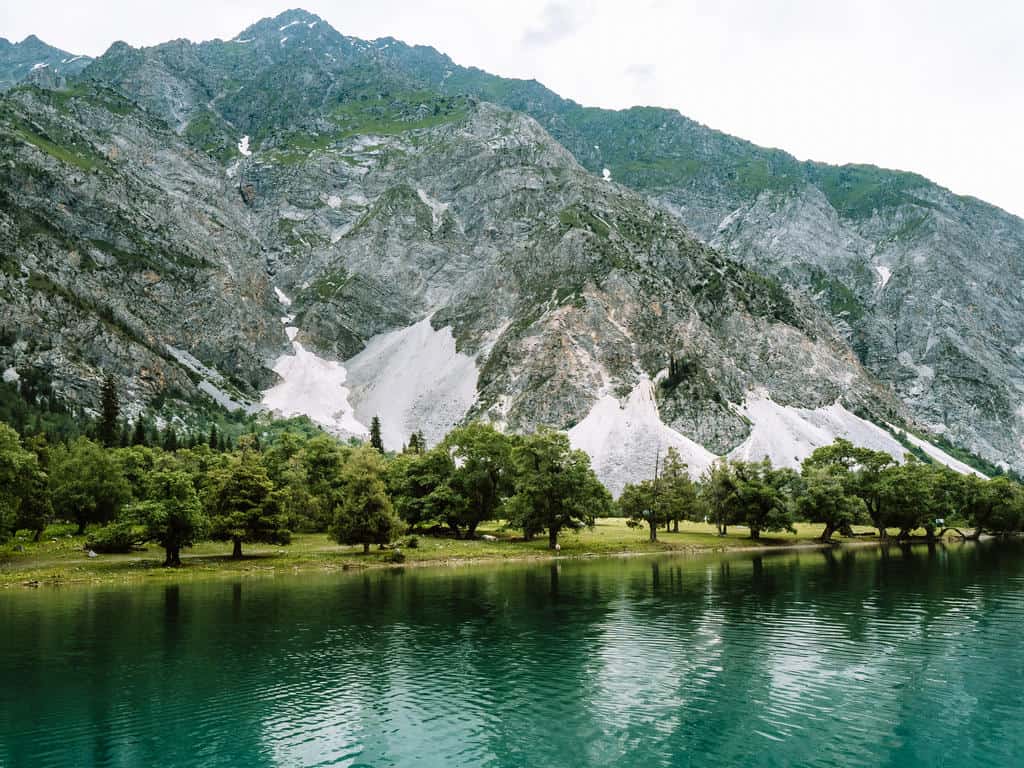
Although it’s far easier to reach the south side, the northern side is described as more beautiful, however it is mostly covered in jagged boulders and thorny shrubs. Nomadic shepherds bring cattle here to graze here, setting up camp on the southern shore during the summer months.
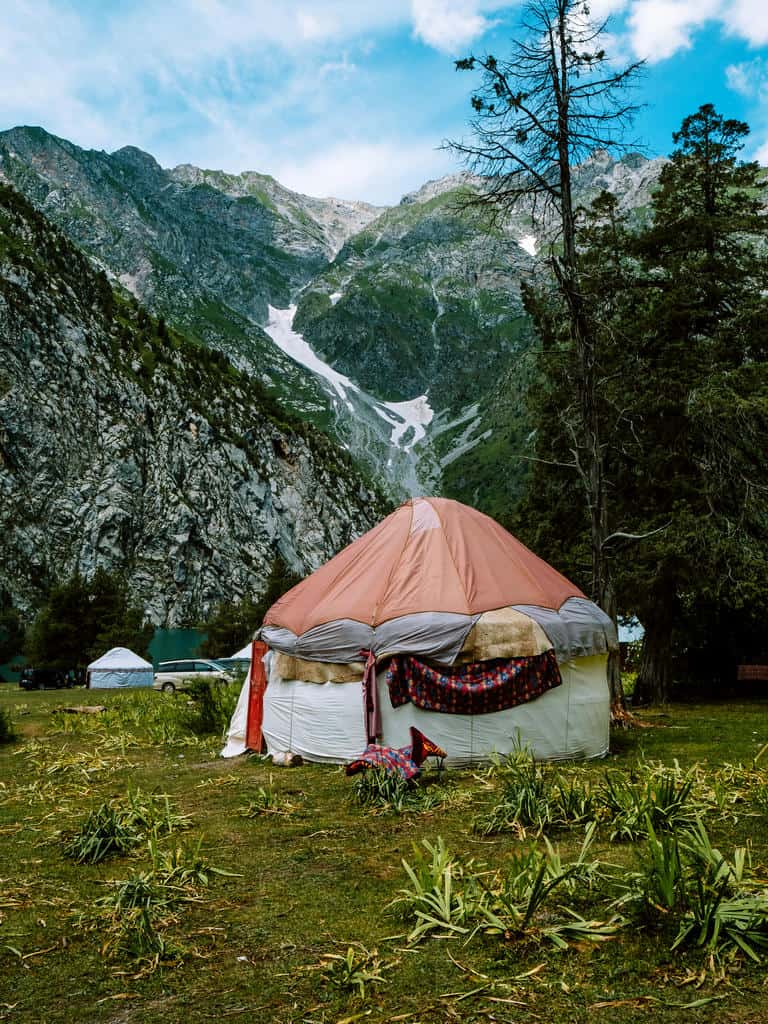
There are two routes from Lake Kara Suu, one to Kapka -Tas, upstream from the river and a pass to the Southern edge of the Ferghana Mountain range that leads to the forest of Arslanbob. You can see one of the peaks from this range whilst at the lake. It’s important to state that there are no paved roads up to the lake, only 30 km of dirt roads. The nearest town is at least 50 km away.
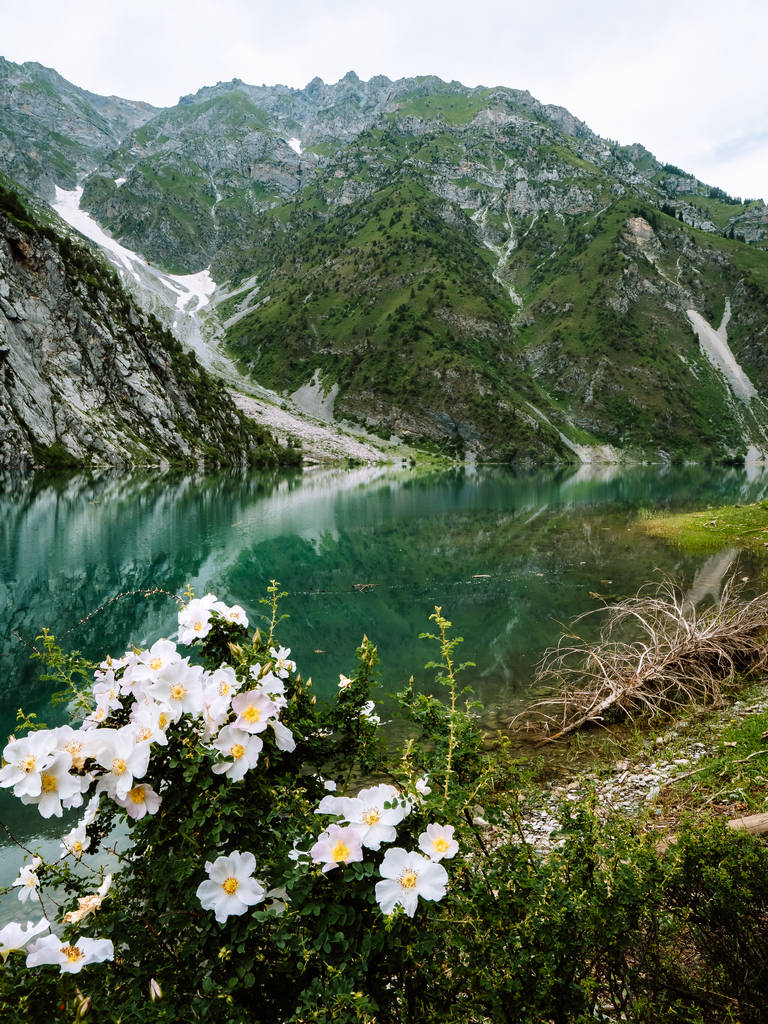
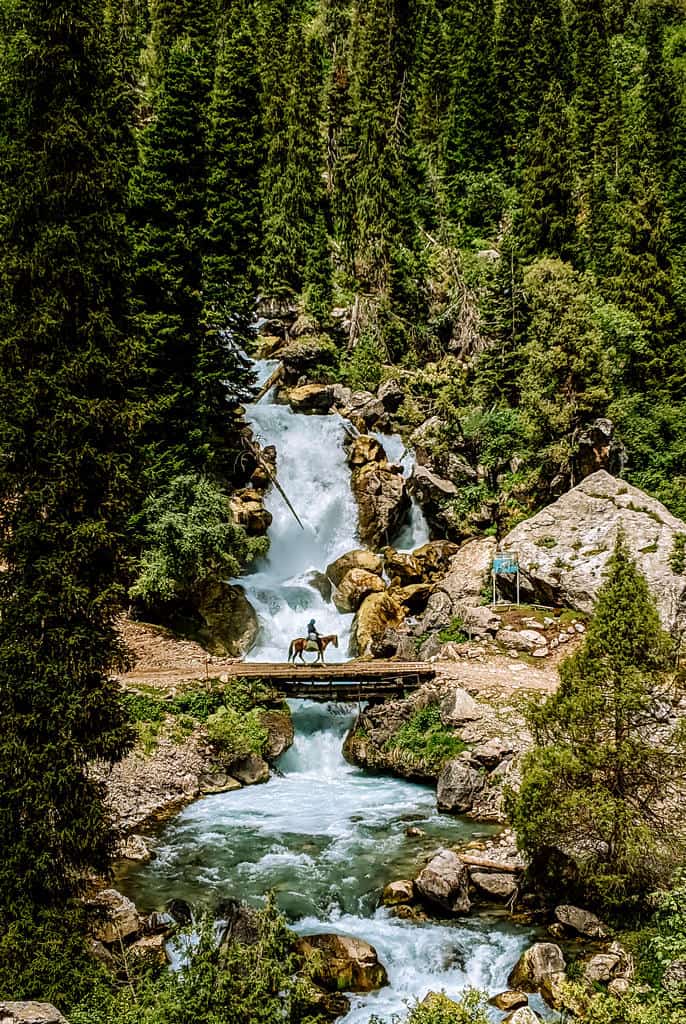
The flora and fauna found here gives you an idea about how varied and wonderful Kyrgyzstan nature can be. Fruit trees, Tien Shan spruce, barberry, mountain ash, birch, honeysuckle and rose hips all flourish in the rich soil here. A few species of fish breed here in the water but fishing is completely forbidden.

How to get to Sary Chelek Nature reserve and things to do at Sary Chelek
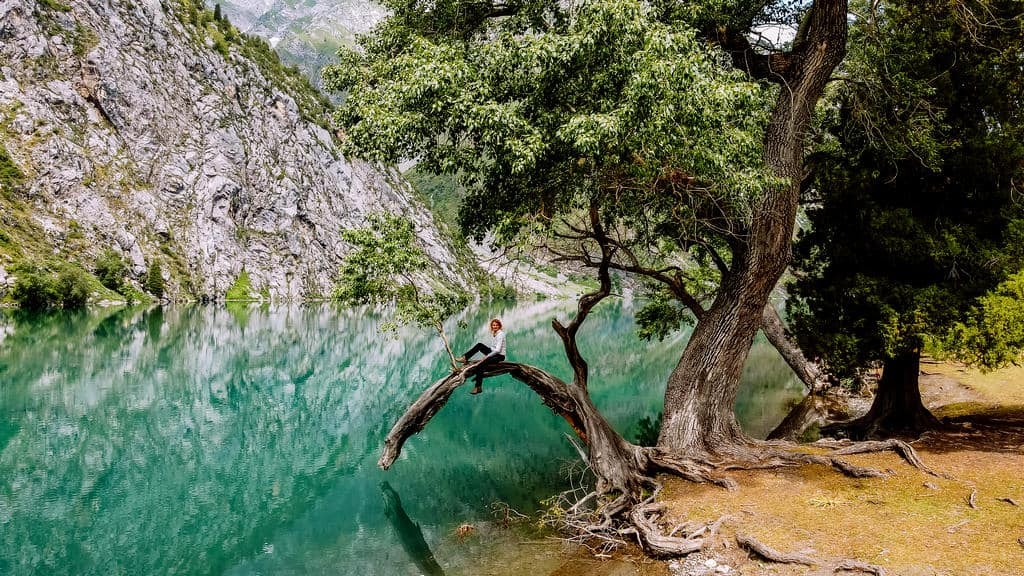
In this post, I’ve only scratched the surface of the most beautiful lakes in Kyrgyzstan. I also wrote a list of wonderful Kyrgyzstan places to visit as there are just so many destinations to explore in this special Central Asian country.
Thank you for reading and if you’re heading to Kyrgyzstan soon, I wish you an epic adventure!
More useful guides on Kyrgyzstan:

Kyrgyzstan Itinerary: The Ultimate 7, 10, 14 & 21-Day Travel Guide
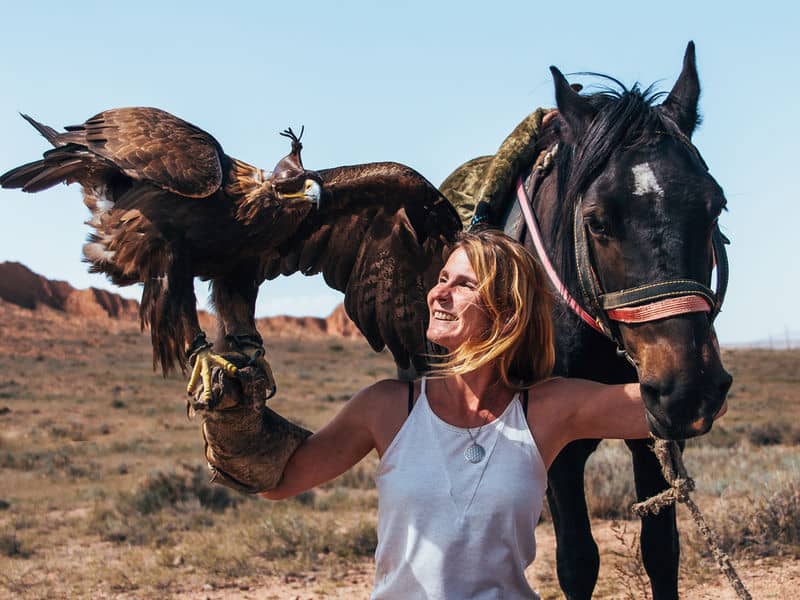
Why Visit Kyrgyzstan: 12 Reasons why I fell in love with this special country in Central Asia
The best things to do around Issyk Kul Lake in Kyrgyzstan: Highlights, Hiking & one-week itinerary

The Complete guide to the World Nomad Games 2026 in Kyrgyzstan

Naryn Travel Guide: 12 Best Hikes & top things to do in Naryn Kyrgyzstan
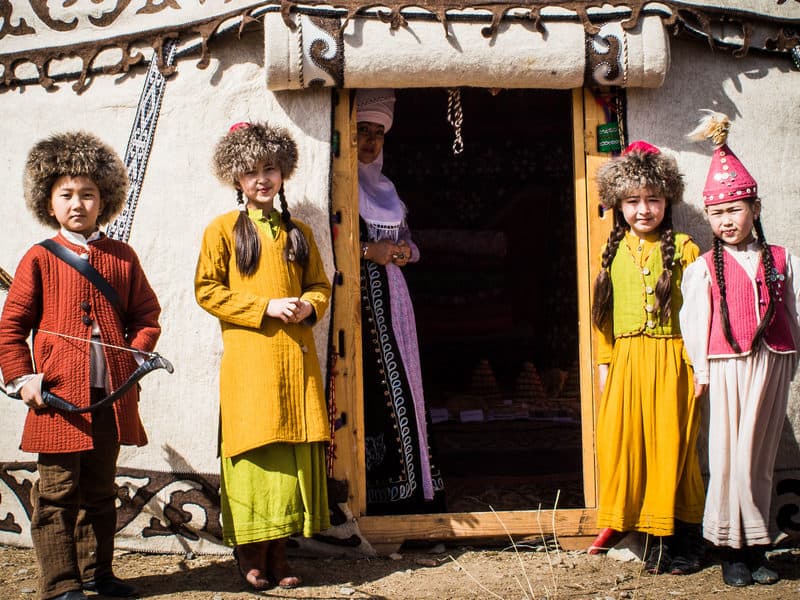
Kyrgyzstan Money Guide: Costs of Living and traveling in Kyrgyzstan in 2026
More Kyrgyzstan Travel Resources
- The Complete Travel Guide to Kyrgyzstan
- The 14 best hikes in Kyrgyzstan
- The 25 most beautiful places in Kyrgyzstan
- 8 beautiful lakes in Kyrgyzstan
- The 9 best horse riding destinations in Kyrgyzstan
- 15 useful safety tips for Kyrgyzstan
- The complete packing list for Kyrgyzstan
- 28 Things to do in Kyrgyzstan
- 13 Top Things to do in Bishkek – City Guide
- How to visit the Osh Bazaar in Bishkek
- 14 Top Things to do in Osh – City Guide
- 15 Best Things to do in Karakol – City Guide
- The 21 best hikes in Karakol and Jyrgalan
- Tash Rabat Travel Guide
- The complete travel guide to Kel Suu Lake
- The complete travel guide to Arslanbob
- How to visit Sary Chelek Lake and Nature Reserve
- Top things to do around Issyk Kul Lake, a one week itinerary
- Facts and legends of the Burana Tower
- Everything you need to know about horse riding to Song Kul lake
- A comprehensive guide to skiing in Kyrgyzstan
- 6 reasons why you should visit Kyrgyzstan in winter
- Visit Kyrgyzstan in winter by using this 10-day Kyrgyzstan winter itinerary
- Here are the 7 best hikes in the Alay Mountains near Osh
- Use this day-by-day itinerary to hike independently to Ala Kul lake
- Hike independently to Son Kul lake by using these 2 itineraries
- 8 great day trips and hikes near Bishkek
- Ready steady goat! An insight into Kok Boru, Kyrgyzstan’s unusual national sport
- Meet the Golden Eagle Hunters of Kyrgyzstan
What is the most beautiful lake in your personal opinion?
Ala Kul is my personal favorite